Humphrey William Bouverie Carpenter was an English biographer, writer, and radio broadcaster. He is known especially for his biographies of J.R.R. Tolkien and other members of the literary society the Inklings. He won a Mythopoeic Award for his book The Inklings in 1982.
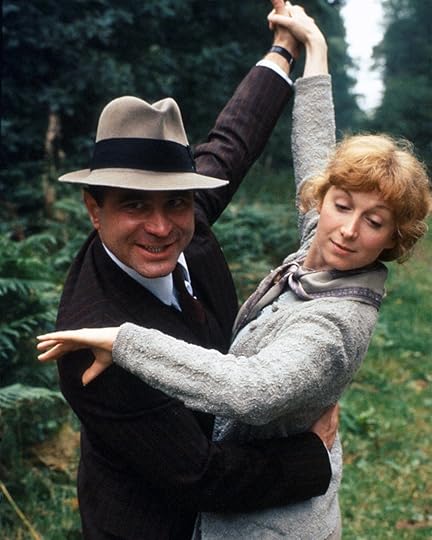
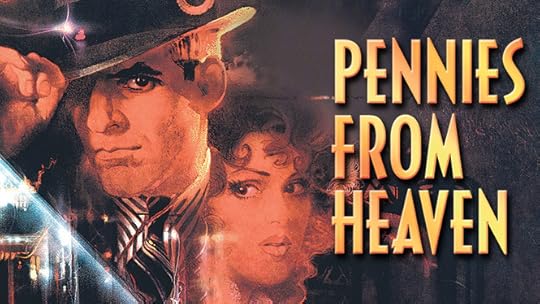
Nobody will be interested in this one, the overlong biography of a (really when you get down to it unlovable) guy who wrote plays and series for British television. His masterpiece is a six part drama called Pennies from Heaven. It’s brilliant!
But dismally most people will remember that in the form of its Hollywood remake, with Steve Martin, which is awful.
A thorough and very well researched and written biography of Potter - warts, and there are many of them, and all. If I have one criticism, it is that there is a huge amount of detail about his plays. However, his plays were his life and nearly always reflected aspects of his life, so this was probably unavoidable. One thing I found particularly interesting was that he was one of a generation of bright working class children who were able to make it in life thanks to being able to go to grammar schools without paying fees. His background, growing up in a poor mining community in the Forest of Dean is fundamental to his writing career.
This is comprehensive. Backed by copious Notes (worthwhile reading them) it pretty much acts as the final word about Potter. The detail of his early life, split between The Forest of Dean and Hammersmith (London) is fascinating. A bright pupil, he got to Oxford with a public grant and thrived. Initially toying with journalism, he gravitated to television screenwriting.
I have to say though, his output, though copious, is somewhat dominated by two works. And one of those was significant for myself as a budding screenwriter, but not the most significant.
For me, the finest example of TV drama writing (in play format) was Mike Leigh's Abigail's Party, originally produced as a stage play, but successfully adapted into a Play For Today drama and first broadcast in November 1977. I saw that broadcast, as a 14-year-old, and it gave me the first inkling of the power of screenplay writing.
The next year it was Potter's Pennies From Heaven and I remember watching every episode and being entranced.
It was though Troy Kennedy Martin's Edge of Darkness, first broadcast in 1985 which sealed-the-deal for me. I've never seen anything better than that on television. The script for Edge of Darkness was the first one I purchased.
1986 was Potter's next best, The Singing Detective.
Next, Charles Wood's Tumbledown from 1988. Strangely, Tumbledown is the inspiration for my current work, in draft.
The TV play, or short drama series seemed to die after that. I struggle to think of any really good dramas beyond Alan Bleasdale's GBH from 1991 and Caroline Ahern's The Royle Family. The format was replaced by Bang! Crash! Ouch! multi-season drama shows, invariably police procedures. Most of the time I have to give up in the first 30 minutes . Fleabag and Broadchurch being examples.
So Potter's work existed in a particular time, and that time has gone. He seemed to recognise this, and he railed against it, and the changes he saw occuring to the BBC. With no equivalent of Play for Today or The Wednesday Play being broadcast by the BBC (or Channel 4) it's been left to Channel 5 to resurrect the Play for Today format.
So few younger people know of the likes of Pennies From Heaven, or The Singing Detective. Bleasdales Abigail's Party had a recent revival, on stage, so that might not be unfamiliar. Otherwise, despite Channel 5's best efforts, the art and memory of the TV play may be lost . As for Potter, well, after watching the first episode of Blackeyes I confess I abandoned him, though I loved Gina Bellman in Coupling (2000). His early work is dated, his post Singing Detective output is...poor. Potter delivered two wonder ful gems; Pennies From Heaven and The Singing Detective. Just understanding how someone came up with those two is good enough reason to read this biography.
The book was well written and he took pains to cross reference and provide alternative view points. However as soon as I found out that Dennis was one of the boys and knew the commissioner for BBC ( Oxford) It became a bit boring