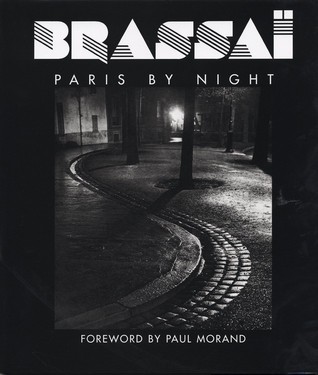
Roaming Paris streets by night in the early 1930s, Brassa created arresting images of the city's dramatic nocturnal landscape. First published in French in 1932, this new edition brings one of Brassa's finest works back into print. The back alleys, metro stations, and bistros he photographed are at turns hauntingly empty or peopled by prostitutes, laborers, thugs, and lovers. "Paris by Night" is a stunning portrait of nighttime in the City of Light, as captured by its most articulate observer. 62 photos.
George Brassaï (pseudonym of Gyula Halász) (9 September 1899 — 8 July 1984) was a Hungarian photographer, sculptor, and filmmaker who rose to international fame in France in the 20th century.
He was one of the numerous Hungarian artists who flourished in Paris beginning between the World Wars. In the early 21st century, the discovery of more than 200 letters and hundreds of drawings and other items from the period 1940–1984 has provided scholars with material for understanding his later life and career.
It's Brassaï. It's Paris. It's night. It's the 30s. I knew already this was likely to get the five star treatment before even flipping a single page. A stunning book.
Brassaï's famous, exquisite portrait of Paris under cover of the night; of humanity as light beaming out of holes punched in the darkness, simultaneously standing out against and hiding within the evening gloom. Forms dance in silent, slow movements beckoning you forward, hinting of a meaning slightly underwater, gently out of grasp. They move like fish in the still dark waters of a lake, men flitting through existence, stuck between two states of being. The roads ebb by like frozen boiling rivers, through the blinding lights all effervescent yellow forever dimming upwards, hawking wares like glittering salvations from the heart of the night's pure diversion from diurnal life. The most beautiful depiction of societal life I've ever seen.
A mysrerious one-night in Paris. And Brassai was there to capture the shadows, the whores, the drunks, the early morning workers, the all-night walkers, and basically a world that doesn't exist in the daytime. Close your eyes and you can see the action on your eyelids, like an on-going cinema of the mind. Brassai is the director!
This collection of night photographs filled with atmosphere. Urban scenes from the 1930s are lit by the moon and lamplight. The images are matte and not particularly contrasty, and I don't think they are shown to their full advantage. You still get a sense, however, of Brassai's nocturnal Paris. The introduction, by Paul Morand, is elegant and does a good job of describing what Paris was like at that time.
Extraordinary photographs that seem to my non-expert eye poorly reproduced. Compare the lovely, striking, somewhat mysterious image on the cover with the drab reproduction of the same photograph on page 14. The tiny versions at the back of the book in which each scene is identified are so much sharper with higher contrast than the photographs in the body of the book.
Almost every comment about this book here on Goodreads is strongly positive. I agree that the pictures as shown are fine. I suspect that they might have been glorious.
I went all the way to Brixton Library for this one - they had only a crusty version of this book in its small art & photography section. This book totally took my mind off my surroundings though and I was stuck in a reverie about summer and travel plans.
Wow! Why did I not know about this man before? I am pretty familiar with many American photographers. I don't think I have even seen his work in all the art museums that I have gone to. This book was recommended to be by a gardening book that said he was the master of shadows and boy oh boy was the author right. I love these nocturnal photographs and how he enhanced the image with the shadows. I also loved that many of his images focused on working people in the dead of night. Great artist! Great work! I need to read more on this wonderful man!
This book may not have all of Brassai's best works, but it is the most successful collection that I have seen in capturing the spirit of Brassai's photography. Specifically, these works (and the great introductory text by Paul Morand) encapsulate that certain magic which rises from the gutters after the sun has set. The publishers did well to frame these photographs on black pages. Other books do not, and the effect is rather like telling ghost stories under fluorescent lighting.