Let's travel in time together, a thousand or so years back, and meet Viking women in their hearth-lit world.
How did these medieval viragoes live, love and die? How can we encounter them as flesh-and-blood beings with fears and feelings - not just as names in sagas or runes carved into stone?
In this groundbreaking work, Lisa Hannett lifts the veil on the untold stories of wives and mothers, girls and slaves, widows and witches who sailed, settled, suffered, survived - and thrived - in a society that largely catered to and memorialised men. Hannett presents the everyday experiences of a compelling cast of women, all of whom are resourceful and petty, hopeful and jealous, and as fabulous and flawed as we are today.
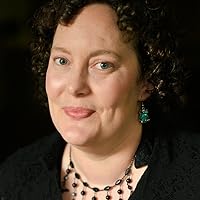
Lisa Hannett is an award-winning Canadian-Australian writer and academic.
Never have I googled so many words, places, concepts and people while reading a book. This obviously means it took me probably triple the time to read than it normally would but it made the reading experience so much richer. I love when a book tickles my curiosity like this.
And I found myself putting the book down after every chapter just to think about these women. About their lives, about what they went through, even if they never actually existed, they are a representation of women like them that did exist. And I think that was the point the author was trying to make.
I’m not a huge fan of historical fiction bc I always feel that I’m soaking up all this knowledge that isn’t even real and it may cloud my perception of the facts, but this format of coupling the historical fiction bits with the contextualization of these moments in history, really worked for me. Because it achieves what the author wanted, giving us a more personal perspective of these characters and a more intimate understanding of who they were, but the curtain is often pulled back to explain the context and give the reader a lesson in medieval Icelandic literature and history.
Another thing worth mentioning is that the author’s enthusiasm is absolutely infectious. The obvious love the author has for this culture and these people in this time period shines through every page. The writing is superb, as expected from someone with a PhD in literature, but the genuine passion put into this book makes the reader just as excited as the author to know more about this topic. I personally was left with so many questions (in a good way) and so many things to research about Iceland, Norway, Vikings and much more. I found myself wondering about the influence old Norse had on other languages, like old irish and English, and all the ways these cultures impacted each other. And I could go on and on.
Melkorka really made me think about genetics and how much “Irish blood” makes up the Icelandic population.
Bergthora and Hallgerd made me think about how much a woman’s existence and personal value at this time was based on how they served their husbands.
Bera and Thorgerd made me think about fostering and a mother’s love, about the social structures in place at the time, but also how powerless most women were to men’s whims, wants and violent outbursts.
Freydis story made me think about Viking colonization, their insane maritime prowess and how much they traveled in their lifetime.
Breeches-Aud (and BJ 581) brought up a lot of cool questions about gender and more things to research.
The next one, about the three witches was probably the hardest one for me to focus on, but at the same time it was really interesting to learn that we don’t actually know what “witchcraft” meant for these people. Also some more cool questions about gender, and of course, lots of questions about the spread of christianism in Europe. Something that Gudrun’s story also made me think about.
And Unn. The author loves Unn so much that it’s impossible not to love her too. What an amazing woman. Her story made me go look up bunch of maps of Scandinavia and the British isles and wonder again about all the influence they had on each other.
Overall, I think this book is really cool and extremely well written, and I definitely recommend it 😁
This is not a standard "here's what we know about Viking women" book. Those exist, and Hannett acknowledges them, and now I'm all keen to go buy them.
It's also not a "here's a reworked set of sagas", which of course also exist. I'm less excited about those, to be honest, not least because most of the new variations just keep on focusing on the dudes (as far as I can tell).
Hannett is both an academic and a writer of fiction, so this book brings together both in an intriguing and fascinating way. Each chapter generally takes one woman from the sagas (there's one chapter with two women, and another with three), whom Hannett both explores as a character in her own right, and also uses as a way of illuminating what we know about women in their positions more broadly. And in chapter, Hannett also tells the story of that woman, from her saga. So the history and the fiction are intertwined such that each reinforces the other. Also, Hannett wants you to be under no illusions about the lives of Viking women: while in some respects they did have advantages over the general perception of ancient and medieval European women, they were still absolutely second class citizens (or worse, as slaves).
Hannett describes the way she approached the fictional parts as "reasonably, carefully, colour[ing] them in" - which I think perfectly encapsulates what she's done. There's really so little about the women in the stories that a pencil outline just about covers it. Doing both the fiction AND the history means that the reader sees the research - archaeological, literary, intertextual and so on - that informs the fiction, and then how the saga also helps us understand the experiences and realities of life for Viking women. It brings together Hannett's strengths in a truly glorious way.
I particularly liked that Hannett focuses on 'ordinary' women. There's no royalty (well, not AS royalty), and there's no goddesses or other, otherworldly women. They are all women who could, actually, have lived - and several of them are documented in less literary sources, so they probably actually DID exist. And so there are enslaved women; there are wives, to men of varying levels of honour, with a variety of experiences; there are mothers with varying experiences of child-bearing. Women who are witches and nuns, women who wield power in a variety of ways; those whose lives were (in context) fairly easy, and others who experienced trauma and exceptional difficulty. So, the whole gamut of life.
This is a fantastic look at the experiences of Viking women, and nicely situates the Icelandic sagas in history and literature. You do not need any background in Vikings to appreciate this.
I love the perspective of women in history. Whilst this is non-fiction, Hannett weaves in a story-telling element that kept me engaged and wanting to know more about the lives of women from the Viking era. I will admit though, I did feel a little disengaged at times, but that’s just probably me.
Thank you @thamesandhudsonau for a copy of this novel in exchange for an honest review.
Már több északi történetet olvastam, volt közte kaland, thriller és fantasy vagy éppen az északi mitológiát feldolgozó novelláskötet / képregény. Sajnos egy kivételével mindegyikben kevés szerepet kaptak a nők, így mikor megláttam ezt a könyvet tudtam, hogy el kell olvasnom.
Tudtam, hogy ismeretterjesztőt fogok olvasni, de valamiért másra számítottam. Talán a filmek és fantasyk miatt harcos amazonokat vártam. De ahogy azt az írónő is írta, biztos voltak közöttük harcosok, de azok voltak a kivételek. A többség inkább anya, feleség vagy anyós, és azok között is voltak kedvesek vagy ármánykodók.
Minden esetre érdekes időutazás volt számomra bepillantani a viking nők hétköznapjaiba.
Ajánlom a történelmi könyveket szeretőknek és azoknak, akiket érdekel a viking kultúra!
This was an utterly fantastic book; ten out of five stars. Blew me away in SO many ways.
This author does something quite amazing, not unique perhaps, not quite as I have read similar workings of historical themes, but still done really well.
Lisa Hannett, in the introduction, titled "Time travelling" tells us about her long term, abiding love for the Viking era, how many books both fiction and non-fiction she has and how she has immersed herself in the stories for years. She has written a dissertation and fed her curiosity and now it feels like she has written the book about Viking women that she always wanted to read, but couldn't because no one had written it yet.
A short word about the 'Viking era'; this will be measured differently in Scandinavia or England, read the book to find out why, if you do not already know.
Women from the Viking age are rare and their songs not often sung. This is partly true of all elements of Viking culture, because it was not a literate culture and the stories and sagas that have come to us were written down much later, mostly. Or we have primary data from rune stones that give us names and events, but not much beyond those tantalising hints. And that is doubly true of women and slaves, because, if little is given us about warriors and wealthy land owners, virtually nothing is given us about their wives and daughters, let alone the serf who cleaned the cooking pots...
So what Lisa has done here, is take the little fragments that we have, add enough interpretation and personalisation to make us feel with those women, see their world through their eyes... but not so much that they lose their identity nor so much that the history is gone. Not ignoring the little history we do have (as has been done by some authors, in order to make the characters 'relatable') but rather expanding on it!
This is really, REALLY impressive writing.
Then, having told us what the know, historical story is and it's source (Egil's saga, for example), and having then made the women seem like a real people with their own back grounds and characters. THEN She goes ahead and gives us all the received knowledge of the era, the time and place possessions and social structures to make the woman, her actions, her era come fully to life.
This three step development is exceptional among any historical books I have read in how light, delightful and engrossing it is done. The authors love of her subject matter is exceptional and her knowledge comprehensive, and both come through!
I have been into historical reenactment myself for over a decade, I had read these sagas myself. I travelled to Sweden and the Baltic, devoured the museums, the open air museums, the archaeological sites. I have tried to recreate items found in digs (living history we call it). And the thing that this author does that is so astonishing is how she can distil a HUGE amount of background knowledge for the era and give the reader just enough for the society to come to life.
This seemingly effortlessly distillation of knowledge down, for the reader who is interested but not so interested as to read every thesis on the subject they could find is what makes this book exceptional and leaves you hanging on every word. She brings the sagas alive for those of us who find reading translated 12th century sagas tricky. She sympathetically and powerfully brings to life the women of long ago – and the reader enjoys every second of it:
1) Melkora's story. Concubine and Slave, Melkora is a fascinating one, because if women are often semi-invisible, slaves and serfs are almost entirely obliterated. But Melkora, though taken as a slave and sold to a Viking as essentially a sex slave gets a spot in the historical mention because she was an Irish princess before she was taken as a slave. I had read this story previously, and marvelled at it's uniqueness, but THIS version brings Melkora's journey to life.
2) Bergthora: A true and stalwart wife. Bergthora is the wife of Njal the beardless from Njals saga is a really famous story of a feud that ends poorly... This story packs and amazing amount of historical back knowledge in. The question of honour, of women's power, of precedence and social requirements. Just awesome, it would make a great film!
3) Hallgerd: The Wife with the thief's eyes. This was hard, going from Bergthora, who by the end one is quite invested in, to the other side of the feud that ended up burning her to death. Heavy stuff! Still, the author paints a realistic picture of how Hallgerd could have developed into the neglected and dissatisfied wife that caused so much trouble. And the points she makes about the writer of the saga setting Hallgerd up for the reader to dislike are good.
Tere is a fairy tale element to these sagas; the saga always telegraphs the way things will be. As a child an uncle foretold that Hallgerd had thief's eyes – and she stole. Njal foretold trouble if his friend, Gunnar did a certain thing – and he did and it was trouble.
That is the fairy tale element that the sagas posses, but here the fairy tale element is given a believable, human context in language that has just enough of the modern to make it feel contemporary and without making it trashy through too much modern speech - just enough to bring it to life for the modern reader.
4) Bera and Thorgerd Brak; Mothers at home. This one is good, but better for back story of fostering and the enormous role it played in Icelandic society. There is also a nod to the background that caused Norwegians to settle Iceland in the first place, (with a wonderful nod here to The Hitchhiker's Guide to the Galaxy).
Here the two mothers; blood mother Bera and thrall, foster mother Brak, are the mothers of Egil, of Egils saga. That mystifying saga with the person who is more anti-hero than hero (Vikings even did anti-heros first). While he gets admiration for his strength, subtilty and especially for his poetry skill (a talent much admired in the era). Egil is also violent, uncontrollable, he does nasty things and he gets away with them. His is a really wtf saga, I have always thought. It has a lot in it. As the young people say 'a lot to unpack'. Here, the author unpacks the two women in his life and how that life came to be.
5) Freydis: A Mother abroad. This one looks into a very small bit from the Greenland saga, (though it is also mentioned in Eiriks) there are a lot of interesting questions in this section because it relates to Vinland and the exact location of that is still under discussion. It also mentions the difficulty in making the different Freydis' line up. People mentioned in different sagas may sound like totally different people, as here and the author gives us a glimpse at how much work it is to makes the stories in the sagas line up.
The story of Freydis beating her breast with a sword and scaring away the scraelings is an awesome one. I love what the author has done with it.
6) Breeches-Aud from the Laxdaela saga: this section tells a small story (expanded from the much smaller part the saga gives it. But this chapter takes a look at the fascinating question of genders in the Viking age. That they were DIFFERENT to our own notions about gender roles, is certain. That they were inconceivable to the 18th 19th century archaeologists who first excavated theme is beautifully illustrated in the description of the dilemma of grave 581 at Birka, where the question of grave contents in the original excavation came down to "if the grave contains a sword it must be male, if it contained a needle and cooking pot it must be female" type . While the story was minimal the discussion regarding archaeology and cultural concepts, both of the Viking era and modern, is great.
7) Two Geirrids and Thorbjorg 'litilvolva' From Eiriks saga and the greenland sagas, this chapter gives us a fascinating look into witchcraft, magic, spell casting, seers and old Norse traditions of the uncanny in Iceland. I think we need to be specific about Iceland here, because the source material in this chapter is (I think) wholly Icelandic. Magic and witches are a part of Viking lore I have never got into, so this section was fascinating to me. I especially loved the story of Thorbjorg: the last, and very old seeress, brought in during famine, in desperation, even though the people are by now almost entirely Christian. Plying her trade, telling the future in which she can't help seeing the end of her craft and way of life as the 'white Christ' takes over.
8) Unn the deep minded, a paragon among women. Unn (also called Aud in other sources) is mentioned in the Laxdaela saga and I had read about her before, though I don't own that one and I don't know it well. Never however had my imagination brought her to life as strongly, vividly and beautifully as the author does here. Unn was one of the original settlers of Iceland, coming to it with her grandchildren (probably) after her son died in Scotland. She however was Norwegian, part of the contingent that left during the disturbances during Harold Fairhair's rule. Her two brothers were already settled in Iceland when she got there. She is mentioned in no less than six different sources, including the 'Book of Icelanders' and so there is pretty good evidence such a person existed, and for some of her deeds.
9) Gudrun; An unlikely Anchoress. If like myself, you are uncertain what the 'anchoress' means – well it seems to mean something like an abbess, a religious person. With Gudrun, Osvif's daughter, the author has saved the best for last. The best in terms of more information at least. As Gudrun became a nun (or something like that?!?) and ends up living her old age in a sanctuary it makes sense that she got a lot of press; as these stories were written long after the events, in the Christian era. The writers would have approved of traditional women following their own, Christian ideology. Gundruns story is also late on the Icelandic saga's timelines ; so many of the people we have read about in previous chapters are her ancestors, or those of her husband Bolli, or her lover Kjartan. It is a well known story but it is expanded upon, embellished with it's era and makes it's characters live and breath.
I loved this book so much!
One has to respect the HELL out of the enormous amount of research, reading, juggling facts and dates that went into this knowledge base. Along with the respect (bordering on awe) for the sheer amounts of information and research that went into this book. I was mesmerised by the talent and the love of the subject matter that brought these characters, so lightly sketched in the sagas, to life.
These amazing women from the Viking era who we know so little about, just crumbs gleaned here and there – with the authors skills they became strong, engrossing real people in ways that the saga never gave them scope to be. Reading this book I could see them; beautiful and proud, old and stooped but even prouder! The strong, the content, the discontent. I saw them standing tall, eyes sparking with character and doing amazing deeds both at home and abroad.
From my heart: thank you Lisa Hannett for doing such a phenomenal job at bringing these stories and these people to life, so incredibly!
This book is beautiful. The way Lisa crafts the environment, full of similes and metaphors, is stunning. Modern interpretation and analysis of the women who appear in the Sagas are so often maligned without examining their circumstances. Here, the author understands the: conflict, the constraints, and the expectations that bind them, without applying our modern attitudes to the situation. After all, it can inform the way we read the Sagas, but it shouldn't affect our understanding of it.
Viking Women: Life and Lore, is the book I have been longing for. A fantastic combination of years of detailed research and, exciting and imaginative narratives. An absolute triumph for the subject area.
Well done to the author for writing a book so different and so compelling. Something, I am sure, took considerable guts in pitching, and executing to such a high standard. I look forward to seeing which characters the author approaches next.
I enjoyed reading about Viking women, I'm not familiar with the sagas, have only heard some of these names in passing over the years. (eg Erik the Red etc)
Also good to separate some of our modern tales about Vikings and look back at the source material.
Whilst I appreciated the reframing of the Viking sagas abridged, in her own words (she's super passionate about them, which obviously comes through), personally I got most from the analysis rather than the retelling. I understand her want to do the retelling, but I just skipped a lot of that.
I really liked the way the author presented the information in this book. Each chapter was dedicated to a different woman in Viking history through a combination of storytelling, research and explanation of interpretation of the sagas. A great read for anyone interested in Vikings. For me, some chapters were more engaging than others, but overall it was a good read.
This is great and the fictionalized tellings of the womens lives really added to its depth and texture. I finished it in a weekend. Lots of stuff about Viking women I didn't know and a wonderful insight in to a scholars process as well.
Gave you a really great oversight of women in the Viking times and the stories were so detailed. I just really struggled to connect with the characters as I got lost with all of the Nordic names.
I recently read creative historical fiction Viking Women: Life & Lore by Australian-Canadian author Lisa Hannnet.
I was surprised by the sense of adventure that began the book. An engaging storytelling style that promised the Viking escapade and grandeur we all imagine.
The first story struck me hard. The tale of “Melkorka: Concubine and Slave” an Irish princess taken as a slave during a Viking raid. The hopelessness and loss of autonomy was immediate and powerful. Interspersed with this fictional tale were the academic facts and knowledge of slavery in the Viking Age.
My next favourite was a complete opposite to the opening tale. One of the most fascinating parts of Icelandic sagas, “Bergthora: A True and Stalwart Wife” which tells the story of a feud between two powerful women of influential households and the escalation of relation for slights that couldn’t be allowed to stand. The men are the ones who bear the brunt of the feud and in the end tragedy can only occur.
My third favourite “Breeches-Aud: Cross-Dressing Women” is the fictionalised tale inspired by a famous archaeological burial of a Viking warrior. Recent investigations have shown the burial is that of a biologically female warrior buried with the Viking warrior customs which showed the possibility that some Viking women were actively involved in warfare.
Throughout Viking Women, Hannett pauses in the stories to explain the historical and cultural context. These tales provide a sense of real characters, lives and empathy to these amazing Viking women.
Review
Hannet has brilliantly navigated the complex tales of Icelandic Sagas to uncover the lives of everyday women in the Viking Age. Some women are extraordinary and wield the power of their household status while others are powerless and stripped of identity as slaves. This remarkable book spans the academic and historical fiction genres with aplomb. Hannet is to be congratulated.
Conclusion
A highly recommended read for anyone interested in Viking Age history and culture. This is an amazing book that binds history and fiction in a skilful, entertaining and exciting way. Looking forward to the next book!
Pitch-perfect. Hannett keeps the distance between our world and that of the Icelanders free of modern sensibilities, even as she uses modern jargon and her own imagination (as well as serious scholarship) to illuminate the Viking world to contemporary readers. This is quite an accomplishment.