A group of leading intellectuals from all parts of Germany gather in 1647 for the purpose of strengthening the last remaining bond within a divided nation-its language and literature-as the Thirty Years' War comes to an end. Afterword by Leonard Forster. Translated by Ralph Manheim. A Helen and Kurt Wolff Book
Novels, notably The Tin Drum (1959) and Dog Years (1963), of German writer Günter Wilhelm Grass, who won the Nobel Prize of 1999 for literature, concern the political and social climate of Germany during and after World War II.
This novelist, poet, playwright, illustrator, graphic artist, and sculptor since 1945 lived in West Germany but in his fiction frequently returned to the Danzig of his childhood. He always identified as a Kashubian.
He is best known for his first novel, The Tin Drum (1959), a key text in European magic realism. He named this style “broadened reality.” “Cat and Mouse” (1961) and Dog Years (1963) also succeeded in the period. These three novels make up his “Danzig trilogy.”
Helene Grass (née Knoff, 1898 - 1954), a Roman Catholic of Kashubian-Polish origin, bore Günter Grass to Willy Grass (1899 - 1979), a Protestant ethnic German. Parents reared Grass as a Catholic. The family lived in an apartment, attached to its grocery store in Danzig-Langfuhr (now Gdańsk-Wrzeszcz). He has one sister, born in 1930.
Grass attended the Danzig gymnasium Conradinum. He volunteered for submarine service with the Kriegsmarine "to get out of the confinement he felt as a teenager in his parents' house" which he considered - in a very negative way - civic Catholic lower middle class. In 1943 he became a Luftwaffenhelfer, then he was drafted into the Reichsarbeitsdienst, and in November 1944, shortly after his seventeenth birthday, into the Waffen-Schutzstaffel. The seventeen-year-old Grass saw combat with the 10th Schutzstaffel panzer division Frundsberg from February 1945 until he was wounded on 20 April 1945 and sent to an American prisoner of war camp.
In 1946 and 1947, he worked in a mine and received an education of a stonemason. For many years, he studied sculpture and graphics, first at the Kunstakademie Düsseldorf and then at the Universität der Künste Berlin. He also worked as an author and traveled frequently. He married in 1954 and from 1960 lived in Berlin as well as part-time in Schleswig-Holstein. Divorced in 1978, he remarried in 1979. From 1983 to 1986 he held the presidency of the Berlin Akademie der Künste (Berlin Academy of Arts).
During the German unification process in 1989 he argued for separation of the two states, because he thought a unified Germany would resume its past aggression. He moved to the northern German city of Lübeck in 1995. He was awarded the Nobel Prize in Literature in 1999. In 2006, Grass caused controversy with his disclosure of his Waffen-Schutzstaffel service during the final months of World War II, which he had kept a secret until publishing his memoir that year. He died of complications of lung infection on 13th of April, 2015 at a Lübeck hospital. He was 87.
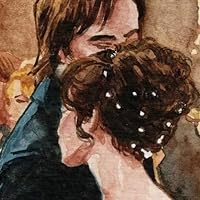
Judge this book by its cover, please: The hand holding a feather to write down the story of Germany's literature is emerging from a broken landscape - a Trümmerlandschaft.
And such is the power of storytelling that it can go on after the country has - once again - been ruined by the the dark side of German culture. Just like Christa Wolf in Kein Ort. Nirgends , Günter Grass chooses to express the pain of German literature's homelessness after the Third Reich by moving backwards in history, by looking at other points in time when poets found themselves in a heap of trashed ideals. He wanders back to the devastating war of 1618-1648, and lets the Baroque poets celebrate peace and disillusion at the same time. Dedicated to the founder of Gruppe 47, the signal to post World War II is open and unsubtle. The peace manifesto of Telgte burns and is lost, illustrating the Baroque era writers' powerlessness in times of political madness, so what can we expect of the generation that comes after the horror of the Holocaust?
But the hand holding the feather goes on writing, despite the impossibility of doing so. Hope is that thing with feathers...
Magnificent Grassian prose, combined with a collection of baroque poems - a delicious literary dish!
Writing a novella that goes back 300 years, touches the present and reaches far into the future, making the reader's mouth water and tears of joy and sadness running down their cheeks while grinning from ear to ear; only Jinter can do that. Honestly. I should read him more often. You too!
This is a remarkable book. Set in Germany in 1647, one year before the end of the Thirty Years’ War, a group of authors, poets, critics and publishers are invited to meet, read and discuss each others’ works and above all to produce an appeal to those political powers seeking peace. A fascinating look at the literary world of 17th century Germany, with reference to the literary society Group 47 created in Germany after the end of the Second World War in 1947, it still has meaning, whether intentional or accidental, for readers in the 21st century.
Mit Sicherheit eines seiner besten Bücher. Das liegt einmal an der überschaubaren Länge, denn in seinen Romanen kennt Grass kein Maß, es liegt ebenso an der reichen, aber nicht mehr ausufernden Sprache, an der relativen Strenge der Erzählung, die sich meist auf den Gasthof beschränkt, und wahrscheinlich liegt es auch daran, dass Grass zwar eine ihm bekannte Umgebung beschreibt (ein Treffen der Gruppe 47), dieses aber allegorisch als Simplicissimus-Fanfiction verpackt und damit ein bisschen zeitloser sein lässt.
Gemäldeartig wird das wimmelbildernde Treffen beschrieben, mit wenig Innenansichten und viel trockener, grass'scher Ironie, die man schnell mal übersehen kann. Da es eigentlich eher um das Treffen an sich geht und weniger um die einzelnen Figuren, benötigt das Büchlein wahrscheinlich keine Identifikationsfigur. Am ehesten könnte Gelnhausen, der hier nach von Grimmelshausens Geburtsort benannt ist, als Protagonist herhalten, aber auch er ist manchmal abwesend. Man kann manche Figuren auch durchaus als prominente Vertreter der Gruppe 47 identifizieren, der Buchner mag wahrscheinlich Marcel Reich-Ranicki sein, Dach sicherlich Hans Werner Richter - das sind die offensichtlichsten, man mag es auf Wikipedia nachlesen. Dass Grass sich vielleicht ein bisschen in Gelnhausen porträtiert hat, würde auch zu ihm passen. Er hat immer Anspruch auf den Olymp erhoben und Die Blechtrommel steht unter anderem in der Tradition des Simplicissimus. Angenehm auch, dass Grass seine drei Grundtugenden hier nicht vernachlässigt: Küche, Künste, Koitus. Mal ehrlich, ohne die wird es bei ihm schneller schnarchig als Gelnhausen und Libuschka in Streit geraten können. Hier wird es uns erspart.
Es handelt sich hier um eine von Grass' lebendigsten Erzählungen, die grundsätzlich empfehlenswert ist - aber das kommt von jemandem, der zumindest den Simplicissimus kennt und auch von der Gruppe 47 nicht zum ersten Mal hört. Ob jemand anderes damit auch etwas anfangen könnte?
I can't account for the low rating for this Grass work. A lot of the complaints seem to stem from the lack of historical knowledge of the characters involved on the part of the readers, but shit, that's your fault, not Grass'. My edition had a snazzy little character sheet in the back that would tell you everything you need to know from Albert (the composer who warned against playing like "chopping cabbage") and Zesen (who coined the German euphemism Jungfernzwinger ("virgin's dungeon") for a convent). As you can see, these are funny guys and this is a funny book. Mind, it's no Tin Drum and Grass is clearly paying homage to his Gruppe 47 home-slices, make no bones about that. But it's enjoyable as Grass always is, with typical rude humor, farting landladies, and jokes about penal castration. The characters might seem thin, but this is more reportage than novel-making, with a barely-disguised message for the reader.
Yikes, I tell a lie. I'm not currently reading it, I'm too scared to. I need somebody out there to give me some encouragement. I was thinking of Matt, but I see it's only on your to be done shelf.
I've been reading German literature (etc) from straight after WWII and this seems like I should give it a go, but when I opened it up, I discovered really I had to start at the end with a rather terrifyingly complicated account of the period in which it is set and the people whom the reader will meet.
To be honest, I put it back on my physical to-read-shelf. How to overcome my cowardice?
"Riverrun, past Eve and Adam's, from swerve of shore to bend of bay, brings us by a commodius vicus of recirculation back to Howth Castle and Environs" - gleich der erste Satz von FINNEGANS WAKE nimmt Bezug auf Giambattista Vico, geboren 20 Jahre nach Beendigung des 30-jährigen Krieges im Jahr 1648. Vico gilt unter anderem auch als Begründer der Kulturwissenschaft und propagierte die Vorstellung, dass Geschichte zyklisch verläuft. Und diese Vorstellung ist es auch, mit der Grass DAS TREFFEN IN TELGTE eröffnet:
"Gestern wird sein, was morgen gewesen ist. Unsere Geschichten von heute müssen sich nicht jetzt zugetragen haben. Diese fing vor mehr als dreihundert Jahren an. Andere Geschichten auch. So lang rührt jede Geschichte her, die in Deutschland handelt."
Gewidmet hat Grass das TREFFEN dem Begründer der Gruppe 47, Hans Werner Richter, zu dessen 70 Geburtstag. Und so, wie Richter nach dem Krieg Schriftsteller einlud zum Lesetreffen, die über ganz Deutschland verteilt lebten, so lädt im TREFFEN Simon Dach ein Jahr vor Ende des Krieges die weit versprengte Schar der Barockdichter nach Telgte. Und wie sehr ähneln sich die organisatorischen Probleme: Wo unterkommen, wie die Mäuler der hungrigen Truppe stopfen; wie den Frieden innerhalb der Autorengruppe wahren, in der es forciert durch das Zeitgeschehen unterschiedlichste politische und ästhetische Vorstellungen gibt? Das TREFFEN ist eine liebevolle Hommage an Hans Werner Richter und erinnerte die Leser bei Erscheinen im Jahr 1979 daran, dass der Beginn der Nachkriegsliteratur nicht auf Rosen gebettet war. Richter hatte Großes geleistet, um die bedeutende Gruppe 47, in deren Nachfolge später der Bachmann-Wettbewerb und der Döblin Preis entstanden, zu gründen und zu erhalten. Wie Richter muss auch Dach die geladenen Dichter zur politischen Mässigung aufrufen, damit der Kreis nicht gesprengt wird: "Dach sah das alles ein. Als aber Rist und Moscherosch ihn bewegen wollten, anfangs ein Manifest verlesen zu lassen, welches die beiden (...) als Friedensappell der deutschen Dichter an ihre Fürsten richten wollten, war der Kneiphöfische Magister um den Halt seiner literarischen Familie besorgt. "Später, Kinder!" rief er. "Später! (...)". Wie die Gruppe 47 später dann doch an unüberbrückbaren politischen und ästhetischen Differenzen zerbricht, läßt sich wunderbar nachlesen in Jörg Magenaus Buch PRINCETON 66: DiIE ABENTEUERLICHE REISE DER GRUPPE 47. Die Idee der Werkstattlesung, auch des "elektrischen Stuhls", auf dem der Autor sich der Kritik zu stellen hat, versetzt Grass nun also 300 Jahre zurück in eine Zeit, in der das spätere Europa nicht weniger als 1947 durch einen gigantischen Hegemonial- und Glaubenskrieg verheert und verwüstet war. Die Parallelen sind unverkennbar und reichen bis zu bei den Lesungen anwesenden Verlegern. Aber das TREFFEN ist mehr als eine tiefe Verbeugung vor Hans Werner Richter, es ist auch eine Darstellung der komplexen politischen Situation 1647 und eine kleine Literaturgeschichte der Barockdichter deutscher Zunge. Sehr passend hat Luchterhand seinerzeit 43 Barockgedichte als Anhang der Erzählung zugegeben.
Erzählt wird das TREFFEN mit der unverwechselbaren Sprachmächtigkeit, die Günter Grass eigen ist, barock, opulent, vor allem sehr musikalisch. Liest man die Sätze laut, hört man sofort Grass Stimme, seine Betonung. Es gibt sie, die Autoren, die die besten Leser ihrer Texte sind, dazu zähle ich neben Thomas Mann auch Günter Grass. (Bemerkung am Rande: Der Zufall, dass ich gerade jetzt, wo Europa von Terrorwellen erschüttert wird, das TREFFEN noch einmal lese, ruft auf sehr beunruhigende Weise die eingangs erwähnte Vorstellung ins Gedächtnis, dass Geschichte zyklisch verläuft)
Warum hat mich das TREFFEN trotz all der unleugbaren Vorzüge nicht so mitgerissen, wie es hätte sein sollen? Das liegt vermutlich vor allem an mir: Ich hätte mir bessere Kenntnisse über den 30-jährigen Krieg gewünscht, auch über die Barockdichter. Viele kleine - und nicht nur die -, feine Anspielungen und Bezüge sind mir verborgen geblieben; an deren Stelle trat eine enervierende Häufung von Namen, die sich allzu oft wiederholte. Die Differenzen und unterschiedlichen Anschauungen der Dichter des Barock, was der rechte Glaube sei und wie Gott am angemessensten zu huldigen wäre, haben für mich keine große Relevanz (schaut man allerdings in Richtung Türkei und weiter, muss man schon wieder an Vico denken). Da diese Diskussionen aber immer wieder aufgegriffen werden, habe ich das TREFFEN trotz seiner Kürze über mehrere Passagen hinweg als langatmig erlebt.
Im Fazit ist das TREFFEN IN TELGTE ein lesenswertes Buch, lange nicht das beste von Günter Grass, lange nicht das schlechteste.
I found the idea behind this book much more interesting than its execution, which comes off as dry, detatched, and uninteresting. Grass writes of a fictitious meeting of prominent literary personalities from many corners of the fractured Germany that existed at the end of the 30 Years' War, where the purpose of the meeting was to exlore how poetry, music, and the written word could bring about peace, elightenment, ethic identity, and piety to a land plunged into dark ages. The story itself has interesting character sketches, especially considering how most histories of the period rarely invoke any human element (e.g. focusing on Catholics vs. Protestants or France/Sweden/Bavaria/etc jockeying for land grabs).
However, the idea behind the book was to draw parallels between a fictitious meeting of irenicists in the 1647 and a real meeting of literary figures in post-WWII Germany, starting in 1947 and continuing until 1967. Just as in the aftermath of the 30 Years' War, Germany in the immediate post-WWII era saw itself divided and parceled out to suit foreign interests, while German authors struggled bitterly with their own ethnic identity, and how to cope with their collective complicity in the death and devastation that had just ended.
This was one of the forgotten fare of one of those Grass clusters in the late 1990s. I reread this a few years ago after reading C.V. Wedgwood's history of the Thirty Year War. It is certainly thinner Grass, equating his own Gruppe 47 with the efforts to restore civilization after that bloodbath in the anything but Holy Roman Empire.
Grass' komplettestes, und nach der Blechtrommel wohl auch sein bestes Buch. Die barocke Sprache, das Setting, die Figuren - hier stimmt einfach alles. Wunderbar.
A wonderful small discovery from the depths of German literature: Even though Günter Grass is one of the most important German 20th century writers (Nobel Prize winner 1999), I had always avoided his books (not the least due to his rather controversial political statements in his later days).
Hence, Das Treffen in Telgte was my first Grass - and what a gem this book of 150 p. is! Hiding current (= 1960s) figures of Germany's literature scene in the setting of the last months of the Thirty Years' War, Grass takes us on a marvelous trip down German history and language.
Hardly have I ever read a book so rich and precise in its expressions, often using long forgotten terms for rural actions, e.g. Furthermore, the rather intellectual debate about the state of current German literature might seem quite self-indulgent at first sight, yet it was entertaining to me.
However, I strongly believe that this book can only be enjoyed to the fullest in its original language.
I admit I totally quit this book about 60 pages into it. I just couldn't do it any more. It seemed that the reader would need at least a passable knowledge of 17th century German poetry written after the 30 Year War. An extensive knowledge of the Reformation, relationships between Catholics and Protestants, and German geography is also a good idea.
Given that I have limited knowledge of German poetry {none}, limited knowledge of Catholicism vs. Lutheranism {4 years at a Lutheran college & married to a Lutheran does not a scholar make}, and know almost nothing about German geography, I was bored and confused. Mostly confused.
It is well written. I'm just clearly not the target audience.
La idea del libro me pareció seductora: un grupo de escritores alemanes se reunen en los fines de la guerra de los 30 años (1647) para decidir cual es su rol en el mundo devastado de la posguerra...una metáfora de una historia real ocurrida en 1947. El libro empieza bien al narrar las múltiples dificultades de los escritores para reunirse, quienes son llamados por el amigo de todos ellos quien cumplia 70 años "pero es más viejo, mucho más viejo - y nosotros, sus amigos de hoy, somos todos con él más vetustos desde entonces." Esa frase me encantó pero, desde entonces, me ha costado terminar el libro.
It's written in a style like those classical era novels (think Kleist, but not as interesting). It gives place and time, but then the author fails to draw the reader in text. A lot of petty trivialities, some incidences that could be funny but aren't, and discourses in poetics that are neither funny or inspiring.
It's agony to read, I only finished it because it was short.
The idea behind the book is not bad at all and that was the reason why I read it, but the never-ending phrases and the language just made me feel like I was chewing on something for hours and could not swallow.
At page 70 I asked myself if the author is going somewhere with this story and I do not think that he did or maybe I just missed the point.
I knew Günter Grass was not my cup of tea and this book confirmed it yet again.
Concept: the premier German-language poets decide to meet during the negotiations at the end of the Thirty Years War. At this meeting, the poets take turns reading their work for comment, the point being a desire not only for the end of military conflict, but a peace of language - that is, a standardising of their regional tongues. Verdict: Probably for linguists and poets only.
I wanted to like this book, but couldn't even finish it. Perhaps if I knew who these characters were supposed to be based off of it would be different, or if I knew the German language and history of the German language.
Das Buch ist Geschmackssache. Ich weiß Grass' Schreibstil und Talent zu schätzen aber mit diesem Buch konnte ich wirklich nicht viel anfangen. Zu viel "Name-Dropping", zu viel Rhetorik. Vielleicht hätte ich vor der Lektüre ein Barock-Seminar besuchen sollen und es hätte besser funktioniert.
All the big names of the time in music, art, poetry, and prose are gathered here, egos and all. It might be a little highbrow were it not for the squabbling among them.
Anotácia: Dej knihy sa odohráva v roku 1647 v mestečku Telgte blízko Osnabrücku, kde sa práve rokuje o podmienkach vestfálskeho mieru. Námetom je fiktívne stretnutie 17 nemeckých barokových spisovateľov, ktorí sú predstavení skutočnými menami a dielami, ale ktorých autor dotvoril povahovými rysmi, názormi a spôsobmi správania do plných, svojráznych literárnych postáv. Do tohto historického obrazu sa však nenásilne prelína ľahko ironický obraz Skupiny 47, ktorá sa po prvýkrát stretla presne o 300 rokov neskôr, tesne po konci druhej svetovej vojny.
Názor: Krátky dlhý román. Nie jednoduchá záležitosť, viacmenej ide o cvičenie. Lenže také cvičenie, pri ktorom musel Grass myslieť na niekoľko vecí naraz - inak by sa mu vynosená predstava rozsypala. Niežeby som mu vopred nedôveroval, ale po dočítaní tejto prazvláštnôstky, pri ktorej treba byť nadštandardne pozorný, konštatujem, že to zvládol. Nepochybne presvedčivá kniha - tematicky, sémanticky, dramaticky, jazykovo. Každý poučený čitateľ si tam nájde to svoje, čo však neznamená, že každý poučený čitateľ bude len tlieskať. Inak, pri tomto texte - a to sa mi nestáva často - mi niekoľkokrát napadla jeho možná filmová resp. divadelná podoba.
Citácia: "A komu hrozí, že ho doma budou tísnít poměry, dohoní nové žaly, oklame falešný lesk, že začne ztrácet vlast, ten nechť se rozpomene na neporušený bodlák v Mosteckém dvoře před Emžskou bránou v Telgte, kde jim jazyk sliboval šíři, dodával lesku, nahrazoval vlast a pojmenovával všechnu žalost tohoto světa."
This is a remarkable book. It talks about so many things, so eloquently, at the same time as to leave the reader astounded. It brings to life the literary and political history of the seventeenth century so well, whilst doing very same for postwar Germany. I recommend reading this alongside the original poems and writings of the time, especially Grimmelshausen, Gryphius and Dach.
20+ poeter träffas 1647 och diskuterar 1600talspoesi. Första halvan i stort sett oläsbar, sedan halvläsbar fars med fest. Ev nån sorts metafor eller hyllning av Grass egna poesigruppträffar, det fattar man knappt.