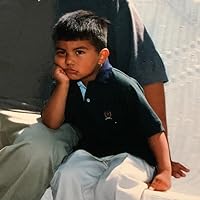
In 1949, photographer Don Normark walked up into the hills of Los Angeles, looking for a good view. Instead, he found Chavez Ravine, a ramshackle Mexican-American neighborhood tucked away in Elysian Park like a poor mans Shangri-la. Enchanted, he stayed for a year amidst the wild roses, tin roofs, and wandering goats of this uniquely intact rural community on the citys outskirts. Accepted by the residents, Normark was able to photo-graph a life that, though bowed down by poverty, was lived fully, openly, and joyfully. That ended in 1950, when the residents of Chavez Ravine received letters from the government directing them to sell their homes and leave. Some sold, some were dragged out of their houses kicking and screaming. The emptied houses were razed to make way for Dodger Stadium. The past fifty years have not erased the memories of Los Desterrados, the uprooted descendents of Chavez Ravine. Now available in paperback, this beautiful, haunting book captures their images, their stories, and their bittersweet memories. A social and cultural history of Los Angeles and Mexican America, Chavez Ravine reclaims and celebrates this lost village from a simpler time.
MUCH MUCH MORE THAN A PHOTO BOOK. Where do I even start. A first hand account of all the wonderful and beautiful stories about the community that existed there. The families and the happiness that was shared. The time stamp of 1949 is so interesting. This is right before news breaks that this land will be something different but after 90+ years of being lived in. Wars the smallpox settling and the city of Los Angeles growing. The pictures that were taken were at the exact right time. Theres an excerpt from a woman who writes the dodgers after the 30 year anniversary broadcast where they referred to the land before as a dump. Her response: "No one wants to acknowledge the fact that people lived there. Maybe it wasn't Beverly Hills, but it was home to a lot of people, my family included. Doesn't anyone want to acknowledge us because we are Mexicans?" Powerful stuff! Every year a group of people meet at elysian park to remember the place that was home. Incredible photos really beautiful
Nestled in the hills between downtown Los Angeles and Pasadena is Chávez Ravine, site of Dodger Stadium and its acres of parking lots. Few baseball fans here could tell you that long before the Dodgers left Brooklyn, Chávez Ravine was the home of three communities of Mexican-American laborers and their families.
Don Normark, a young photographer in 1948, was climbing in the hills looking for postcard-shot views of LA when he discovered La Loma, Palo Verde, and Bishop. Each neighborhood was a rambling cluster of buildings, dirt streets, and footpaths. The wooded slopes of Elysian Park overlooked the ravine, and beyond were the peaks of the San Gabriel Mountains. He felt he had found another world -- a kind of Shangri-La. For many months, he returned to take pictures of what he saw and of the people he met there. He didn't know that he was recording on film the daily life of a place and its people that was about to disappear.
The pictures, of course, are black and white, a rich range of gray tones and contrasts under the cloudless southern California sky. In a casual street scene, two men stand talking on the hard dirt, and a third, his back to them, leans across a low concrete wall. All is in sharp focus from the dusty tire track in the foreground to the pointed tower of City Hall nudging up over a darkly wooded ridge in the distance. The mid-afternoon light reflects brightly off one man's tee shirt and from the front of a small white house farther on. Meanwhile, the shadows cast by eaves, palm fronds, parked cars, and the men themselves are deeply dark.
There are many pictures of people, of all ages. Some look into the camera. Most are busy working, walking, talking, playing. A young girl wears her confirmation dress. A boy watches his father repair a car. Two men spar under branches thick with bougainvillea blossoms. An iceman stands in an open gateway, tongs slung over one shoulder. A young woman arranges flowers on an altar. A workman returns home along a winding footpath at the end of the day (see book jacket above).
Fifty years later, Normark gathered together his pictures and began looking for the people who had once lived in Chávez Ravine. This book is an album of those pictures, with commentary by the people he found, in their own words. Normark writes simply and clearly about himself and his experiences. Like his photographs, his writing style is sharply focused. In the opening pages of the book, he describes the forced relocation of the people of Chávez Ravine during the Fifties, and the various public and private interests contending for control of its development. Normark's book is both handsome and beautifully written, a fine example of text and image illuminating each other.
Do plays count for this? I guess if people count Shakespear….not that any of this matters.
Unsurprisingly, displacing poor people to build sports arenas is not an uncommon occurrence. The message is good, emphasising how even if you fail, it’s important to be proactive with social justice and it can be the beginning of a journey. The humor is a bit hit or miss.
The photography in this book is fantastic - as well as the accompanying stories told by the ex-residents. The book gets a little repetitive - and if you are buying a book to learn the detailed history of this neighborhood, this might not be the book for you. But the author tells a nice story of his experiences in Chavez Ravine - and gives the reader a great sense of the community.
As for the physical construction of the book itself, I was disappointed. By that I mean that by the time I finished the book - and it is quick reading - the pages of the book were coming loose from the binding.
I am greatly attached to this book as I was fortunate to be "related" to it. My uncle Marciano "Murphy" now deceased was one of the interviewees, along with my cousin Sylvia Moyer, and political cousin Carol Jacques. Don Normark does a beautiful job of both giving the people in the photos dignity, and explains the political climate at the time without being preachy. It is a must for anyone curious about Los Angeles' history, Chicano history and the history of urban planning.
Beautiful photos capturing a bygone era, in a place that no longer exists. This book is more of a coffee table book tbh, with photos and captions which are the comments of those who lived at Chavez Ravine, whilst they peruse the photos with Don. I found it wonderful to read about these people, who lived in a city that I found a bit cold and souless when I visited. Shame to think that the only family orientated community part of LA, is now lying under Dodgers Stadium.