At the top of his form, historical novelist Allan Massie revisits Britain in the dark years after the collapse of Rome, when the land is being ravaged by bitter struggles for power among warring kings. Or so it is until the arrival of Wart, a servant boy who has been tutored by a troupe of strolling players as well as by the politically astute magus Merlin.
Reinventing old stories like that of the sword in the stone, Massie replaces the magic in Merlin's wondrous deeds with natural philosophy. In the often-incredible stuff of Arthurian legend and sixth-century history, Massie seeks out more mythic truths as romance confronts unheroic realities in Wart's transformation into the statesman-king Arthur.
In Massie's tale, too, Arthur's marriage to Guinevere is a matter of political convenience. Lancelot is a sickly neurotic with little sense of honor. Mordred hides behind religious piety as he undermines Arthur's kingdom with a military dictatorship. An increasingly troubled and isolated monarch—as unsympathetic to his thuggish knights' lust for battle as he is to their quest for the Holy Grail—Arthur does have one long-loyal friend. His name is Cal—a common man blessed with common sense—and an invention of Massie's brilliant own mind.
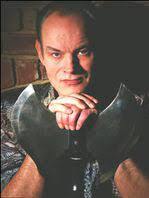
Allan Massie was a Scottish journalist, sports writer and novelist. He was one of Scotland's most prolific and well-known journalists, writing regular columns for The Scotsman, The Sunday Times (Scotland) and the Scottish Daily Mail. He was the author of nearly 30 books, including 20 novels. He is notable for novels set in the distant past and Vichy France.
I'm actually slightly gobsmacked that someone can take all the legends of King Arthur and make them downright boring! I have read so many retellings and reinterpretations, both fiction and 'fact', so maybe I've just seen it all before, but I honestly couldn't see the reasoning behind why the author chose this way to do it. I honestly thought it had been written eons ago, not this century, as the narrator's voice comes across as so old-fashioned, and they're mildly annoying with all his interruptions of the story.
And when did Arthur jump into bed with any good-looking boy he comes across?
I finally gave up at about page 100 - I couldn't find the enthusiasm to return to it, which is a good sign to me to try something different. A shame, as I truly love Arthurian books - read the Bernard Cornwall or Helen Hollick versions instead.
Rating: 3.5-ish stars. Quite enjoyable and easy to read. Follows Arthur's entire life, and as always, the tragedy of his rule's decline hit hard for me. Left me heartbroken in its own unique way.
**What I enjoyed** - Engaging storytelling: history, adventures, side quests, etc. - Heart-warming friendships: loved Cal, Gawain, etc. - Emotional punch: decline of Arthur's rule, exile of Morgan, banishment of Cal, betrayal by Lancelot and Guinevere, Arthur alone. - Nihilistic realism: Many bittersweet moments, such as Morgan being taken away from convent to be given over to Lot. - Psychological intrigue: Mordred's psyche was intriguing, and Merlin was very ambiguous as well.
**What I didn't like (critiques)** - Meandering/unnecessary interjections by the author/narrator addressing the reader ("As you see," "in my opinion," etc). Too many and too frequent of this wordiness. Cut off the flow of the story. - Plot took a leap forward in time. Second half was not as immersive or detailed relative to the setup of Arthur's childhood. - Vilification of women. Besides Morgan le Fay, almost every female is portrayed as petty and despicable. Particularly Guinevere, who after reading this book I virtually wanted to murder. - "Gayness" of the story seemed relatively excessive. Not a problem, but parallel to the iffy slash poor representation of women, almost every relationship between men in this book implied gay undertones, and some were rather disturbing. Merlin raping Peredur, Merlin supposedly having a thing for Arthur, etc. Combine that with the somewhat sexist narratives, I couldn't help feeling this book was somewhat hostile towards females and implying that the existence of women is the problem here. Hmm.
[I read this novel decades ago and recently bought a copy and read it again and enjoyed it just as much as I did before. I heartily recommend this Allan Massie's other novels]
My original review:
An absolutely wonderful re-imagining of the story/legend of king Arthur within a believable and compelling post Roman Britain (sorry using the term Britain or even England is anachrobnistic - but easy). I loved the novel, I love all of Allan Massie's historical novels. I intend to buy and read it again because it is so wonderfully right - and I say that as someone who has never liked any of the normal 'Camelot' fictions.
Please note this is not a 'gay' novel but a novel which, within the historical period, recognises that life is far more complicated, and interesting, then Disney cartoons or Broadway musicals. But that goes for everything in the novel.
A great read and a wonderful introduction to a first rate author.
Although I have read this book in a translated edition, it was really good. In my opinion, the unique problem was the times when Allan started to talk about other stories others than Arthur's (like when he talks about the search of the Graal or the "orc", that made a challenge of courauge, this last one turned to be a good story - if not excelent -, but the book was supposed to be about Arthur...). Ok... there was another problem... sometimes the book became a little bit boring, but it was really short, during ten or, at maximum, twenty pages (this edition has 406 pages) of bad literary effort. Depsite it all, the book is highly recommend. Sorry for my poor "brazilian english".
Era iarnă, marea era cenușie, iarba era cenușie, până și piatra micii capele din deal era cenușie. Spre amiază a început să plouă, însă stâncile tot răsunau de zdrăngănitul armurilor cavalerilor care ieșeau din curtea în care își priponiseră caii, pe bucata netedă din fața capelei. Aceasta fusese ridicată pe un loc mai înalt. De jur împrejurul ei, se întindea o vale puțin adâncă, a cărei coastă se ridica din nou semeață spre fortificațiile exterioare ale castelului. În Sala Mare fusese așezat un car mortuar pe care zăcea trupul regelui, Uther Pendragon; i se vedea fața, ca toți să știe că, într-adevăr, regele era cel întins acolo, așteptându-și înmormântarea care avea să vină imediat ce înghețul mai slăbea chingile cu care ținea pământul. Însă cavalerii nu-i dădeau nicio atenție regelui, pe care erau învățați fie să-l asculte, fie să-l sfideze. Un rege mort e la fel ca un leu mort, nu ai niciun motiv să te mai temi de el; sfințenia care îl înconjurase în timpul vieții se risipise acum. Uther Pendragon nu mai era, iar Britannia întreagă stătea cu sufletul la gură până când urma să apară succesorul lui. În fața capelei, era o piatră, iar din ea ieșea o sabie, cu mânerul încrustat cu pietre prețioase: rubine, ametiste, topaze. Toată lumea știa dorința lui Uther Pendragon: cel care reușea să smulgă sabia din acea piatră avea să fie următorul rege de drept al țării. Așa că toată ziua, cavaler după cavaler a încercat să smulgă sabia. Cavaler după cavaler a transpirat și s-a opintit; însă sabia a rămas la locul ei.
Mais interessante do que o primeiro volume (O Crepúsculo do Mundo), deparamo-nos agora com as lendas do rei Artur mastigadas de uma forma original, mais tortuosa, mais terrena, muito carnal. Tal como no primeiro volume, não aprecio o artifício literário de se tratar da transcrição de um manuscrito escrito por um escocês em benefício do neto de Frederico Barba Ruiva, imperador germânico (ou romano, na tradição dos bárbaros se virem coroar a Roma, pretendendo-se herdeiros do império). Muitas considerações do suposto autor do manuscrito transcrito por Massie são do mais interessante que o livro tem. As lendas do rei Artur e dos seus cavaleiros podem ser interessantes neste volume para quem as não conheça. Doutra forma, o sabor a aventura e virtude cavalheiresca é escasso aqui quando comparado com outras textos. Enfim, arrumei-os na estante e, ao contrário da minha resiliência habitual, não vou atacar o terceiro volume. Acho que já chega...
Sou um fã confesso da obra de Allan Massie e tenho pena de já ter lido "O Crepúsculo do Mundo" há bastante tempo para poder fazer uma comparação... No entanto valorizo um pouco menos "O Rei Artur" do que outros livros do autor, nomeadamente os que respeitam aos imperadores romanos, não só por não ter um especial apreço por este período da História, mas também pelo estilo escolhido por AM para a narrativa da história. A constante referência a fontes que o autor desvaloriza por completo não me parece simpática e por outro lado, não é que seja contra isso, a própria figura do rei Artur é muitas vezes apagada em função das lendas de outros personagens... Talvez que outro título desse uma perspectiva mais de acordo com o decorrer da acção, que embora tenha Artur como figura central é muito mais que ele próprio.
Its written in a pseudo-medieval style of a tutor explaining the "true" history of King Arthur to his princely student. It is an odd mix of highfalutin and exasperation as the narrator meanders through his version of events, making sure to keep telling us how this is the "real" version, and why other tales are incorrect. The narrator's attitude put me off and made it a struggle to really get into the story.
Um romance que conta uma história feita de poesia e mito. Acaba por mostrar a contradição de vários mitos e apresentar um conjunto de possíveis estórias/histórias/mitos... Fiquei com vontade de ler o volume anterior onde alegadamente identifica as fontes para tentar perceber o limiar entre o romance e a história...
An enjoyable enough retelling of the Arthurian story with some twists -hardly deals with the sword in the stone, barely mentions Excalibur, sympathetic treatment of Morgan Le Fays,sees Arthur as king of the Britons and Emperor of Western Europe who is toppled by the Pope and the evil Mordred.Not gripping but a reasonable story.
Decent. The story was great if the author didn’t butt in all the time and remind the reader they were reading. It was just plain annoying. The novel could have been great if Massie didn’t have such a high sense of self and act like he was the superior author/historian. It was off putting. When I was actually reading about the story and King Arthur though, I did enjoy it.
Hated it. All the men were swooning with love over each other. It was disgusting! All the while the author claimed that Arthur was virtuous, he showed by Arthur's supposed actions that he was not. Merlin was portrayed as a medaling, disgusting pervert.
This entire review has been hidden because of spoilers.
I've read a lot of Arthurian literature over the years and this is probably one of the worst depictions. I understand what the author was trying to do, but it was very dull
I like a good Arthurian tale. I took a Middle English literature course in my fourth year of university, and this book recreated and/or mentioned in passing a lot of the tales that I studied in that course. It was an enjoyable read, but a lot of things were brushed over and happened too quickly.
Traveling back in time to the heart of the Celtic myths and legends and those Arthurian Legends that have captivated many for years, one is swept away by the stories of Camelot, the Knights of the Round Table, Merlin and the sword in the stone that is vividly brought to life by Allan Massie. As a huge fan already of this particular genre of authors such as MK Hume and Bernard Cornwell I was naturally curious as to discover an original and different take on a subject matter that is seeped in historical and imaginative adaptations as to bring the legends to life. Plunged into a time of rivalry between Kings seeking power, title and land one experiences the true magical event in which a young boy pulls the sword from the stone thus being a catalyst for change as the legend is born. Acquiring the throne from Uther Pendragon Camelot now under a new ruling experiences the impact of change, strong leadership and how treachery becomes ones ultimate downfall.
Here Allan Massie retells the legends of old in a completely new and captivating way that is realistic, making you feel as if the author is reaching out to you intimately and in which you connect to the story in your own way, as you glimpse Arthur’s life with understanding and interest. A fresh prospective is presented to you as both from a public and private angle, where one can really see both sides of such an iconic mythical figure. This book has left a large hole in my heart, being something that I shall now treasure as an outstanding and origional read that is so distinctive and unique. This is a timeless tale that’s absorbing and beautifully written, and which stands-out against other writers who also have attempted to recreate these tales. A powerful plot that is about love, loss, aceptance and letting go which evokes the time period perfectly, that I garuntee you will find very hard to put down. I had goosbumps and chills running down my spine as I sat tense on the edge of my seat in suspence throughout, reading quicker whilst loosing myself within the pages. I was able to empathize and relate to the characters on such a personal, intimate level thus putting myself in their shoes and understanding those feelings expressed through the writing. Lost within Merlin and Arthur’s world of Kings and Queens, Knights, warriors and chivalry, daily life around me was blocked out as time seemed to stand still. Epic, bloodthirsty battle scenes that leave you breathless alongside many trials and tribulations make this book so thrilling and exciting to read being fast-paced and full of intense action.
I would say that this novel is on a par with not only those other writers, who have written about the Arthurian legends but also authors such as Michael Jecks, Robyn Young, Bernard Cornwell and Conn Iggulden who write in a similar style regarding unforgettable battle scenes connected with memorable and iconic figures within literature. Unable to put this book down I was left wanting to read more and find out more about the life of Merlin too, whose character also intrigued me greatly within this book that is focused more on Arthur. Full of energy where the author has poured his passion and enthusiasm within the pages, you will find yourself enchanted by the romance and spellbinding magic. A highly commended, cracking story that I cannot enthuse about or recommend favorably enough and which I grantee will mesmerize you until its end.
Este epoca de după ocupația romană în Britannia. Regii se-mbrâncesc acum după putere, titluri, domenii și averi. Un băiețandru îi lasă cu gura căscată pe toți cavalerii atunci când reușeste să smulgă o sabie bătută-n diamante dintr-o despicătură în stâncă, putând ridica astfel pretenții asupra tronului rămas vacant după moartea lui Uther Pendragon.
În această noua viziune asupra legendelor arthuriene, cetatea Camelot este plasată pe râul Tweed, Merlin este fiul unui centurion roman, iar Arthur însuși este un rege cu inima ravășită, care deplânge iluzoria căutare a Sfântului Graal.
Pe masură ce povestea evoluează spre un final tragic, el devine o figură singuratică, copleșită de trădări și conspirații.
I was going to take this on a plane, but after reading the first 50 pages I didn't think it would hold my interest for 3000 miles. I don't know why - writing was good, characters interesting, a solid 3 stars. Maybe I'll try it again sometime.
Certainly a more gritty look at the legend of Arthur than I was expecting, but enjoyable nonetheless. We discussed this book some in a Myths and Legends episode of the All the Books Show: https://soundcloud.com/allthebooks/ep...
Boring and pointless. The author seems to have some narrative in mind but he twist the stories we love so much to a point where they are no longer enjoyable. I wouldn't mind the changes if they had been interesting but they were not.
Although this book does attempt to make unique interpretations of the legend while remaining faithful to the overall story, the language is fruitlessly over-blown.
Being a big fan of Allan Massie's Roman (fictional) biography series it is with a heavy heart to say that this book completely lost me by the final third. The book is written in the similar vein as his Roman biographies. The story is told by a third party, sometime, after the events and this is an ingenious way to tell a story, as the reader is taking the information from a second hand source, so embellishes in the story can be forgiven as that is part of the process of it being told.
The problem is that in this book it feels too disjointed. In this book when Massie writes about the links between Arthur and Rome, it shines, and it reminded me why Massie is such a brilliant writer. But having reached two thirds of the way through I lost interest in the story because it just began to meanders and the romanticism of the story telling got in the way.
Characters did not feel real. Events did not have weight. All the things which have made the legend of Arthur, Camelot, Excalibur, The Lady In The Lake, Lancelot, Perceval, the Grail and so on, feel inconsequential. Nothing in the book makes Arthur feel worthy of one of the greatest Kings.
To be honest, for me, it felt like a bit of mess. Recommend watching the film Excalibur as that had oodles of Arthurian legend and felt truer (to the legend) than this book.
Abandoned on page 200 from a 300 page book. Awarded it 3/5 if only because some elements in first two thirds were good to excellent.
Still have not given up on Massie, and every author cannot shine with every book.
This was a disappointment. I've enjoyed other Massie novels, but found this heavy going. The narrative device and the gesture towards other texts was enjoyable though in a couple of places there's a heavy-handed footnote just to make sure the reader gets it. It was, I thought a rather schizophrenic work oscillating between a "dark age" Arthur and a treatment of the stories of medieval romance. The former is handled much better than the latter to my way of thinking and the join between the two is very uneasy. Characterisation is rather weak throughout. There is a bizarre amount of sodomy throughout for no obvious reason at all which also jars. I may read the previous dark age novel, but I confess this one has made that rather less of a priority. A shame.