“Unlimited power in the hands of limited people always leads to cruelty"
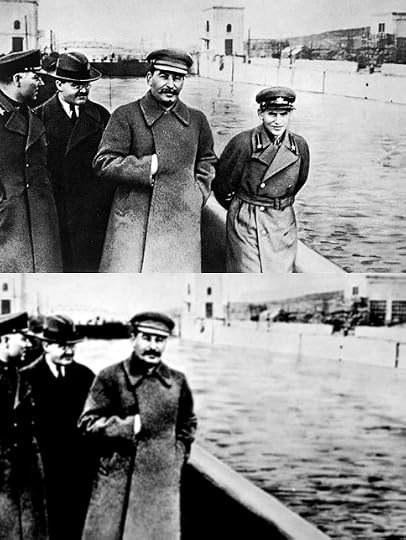
Stop 28 on the world tour, takes me back to Lenin’s / Stalin’s Russia for ‘The Gulag Archipelago’ which for me is the most notable and extraordinary indictment of any ruling system and political regime I’ve ever read.
Disturbing, insufferable, harrowing, despicable and extremely sickening – why?
This was the story about the forced labour camps in Russia, and the inhumane treatment of its citizens who were selected in an attempt to censor and control the population, eliminate political opponents or anyone who was deemed socially dangerous, disruptive, or vocal, and those who were not seen to contribute to the dictatorship agenda. It’s good to see that things have changed though!!!
In Navalny’s words - ‘Don’t give up’ things might change. Sadly not for him though as he died unexpectedly in a penal colony showing signs of torture.
However, the criteria for selecting inmates didn’t stop there because there was a direct correlation between the economic needs of the country and the supply train taking prisoners to Gulag.
And the author? A witness to this soviet horror as a prisoner himself for having criticised Joseph Stalin and his regime in a private letter, and after serving eight years in the Gulag was then exiled.
Gulag Archipelago – the book
“In keeping silent about evil, in burying it so deep within us that no sign of it appears on the surface, we are implanting it, and it will rise up a thousand fold in the future. When we neither punish nor reproach evildoers, we are not simply protecting their trivial old age, we are thereby ripping the foundations of justice from beneath new generations.”
How true is this even in the world today? and how true is the author's reference to the old proverb
“No, the old proverb does not lie: Look for the brave in prison, and the stupid among the political leaders!”
The real statistics of politically induced deaths in these labour camps under the Soviet regime is hard to determine and remains a subject of much debate. It is true though that many were peasants from rural parts of the country whose voices were already silent. Ironically too, was that the people who were guilty of nothing were the ones seemingly unprepared to put up any resistance or defence, while their proofs of guilt were approximate and at the discretion of the interrogators.
Thankfully the author Solzhenitsyn has left us this unabridged account of life under Lenin’s and Stalin’s rule and in one of their forced labour camps. We know of these camps during WWII where the level of brutality was experienced by the country’s enemy, not their own people.
As a prisoner remarked, for not wanting to die by a German bullet the prisoner would be substituting it for a Soviet one for having been taken a prisoner of war. “Some get theirs from the enemy, we get bullets from our own”.
The Books Publication is interesting!!!
The KGB confiscated Solzhenitsyn's materials in Moscow, during 1965–1967, and was forced to develop his preparatory drafts of The Gulag Archipelago in various sections. He accomplished some of this while in hiding at his friends' homes in the Moscow region and elsewhere.
In 1973, the KGB seized one of only three existing copies of the text still on Soviet soil. This was achieved by interrogating Elizaveta Voronyanskaya, one of Solzhenitsyn's trusted typists who knew where the typed copy was hidden. Within days of her release by the KGB she was found hanged in the stairwell of her apartment on the 3rd of August 1973. She had apparently either hanged herself or been murdered.
Although Solzhenitsyn had wanted the manuscript to be first published in Russia, he knew this was impossible under the current political landscape, and so after Solzhenitsyn learned of Voronyanskaya's death he decided to allow its publication in Paris causing a huge stir internationally. Quickly the text was translated into multiple languages and so the camps and the atrocities committed there were revealed to the world.
Review and Comments
There is nothing that will awaken the senses quite like the story of people trying to survive one of Russia's labour camps. There is nothing more soul stirring and emotionally moving than reading about the inhumane treatment of people, who were petty criminals at most. Inmates who were treated like animals and through their incarceration we witness the ‘reduction’ of a human being, the narrowing of the intellectual mind and zest for life dwindling away with every beating, poor diet and every day suffering at the hands of this brutal regime. To read this book was to observe these prisoners die slowly in every way possible. Its heartbreaking.
I learnt a lot more from this story, for example, I thought it was Stalin who established this legal and government framework for a series of such camps, but in fact it was Lenin, and you can feel the utter contempt the author felt towards this barbaric individual, which is completely understandable. Stalin was then to continue with this political and social framework (ie concentration camps) which was considered a way of resourcing economic plans. It didn’t matter that the labour force were unwilling participants.
"Had not the camps arisen out of the crisis of unemployment of the 20s?" the author asks!!!
It seemed, it was not the number of genuine criminals which determined the intensity of the courts activities, but the requisitions of the economic establishment that these camps would continue to function with an abundance of manual resource.
I was sickened reading this book and although it is harrowing from start to finish, I couldn’t put it down. The stories and accounts of prisoner treatment, their general living conditions, the slave labour gangs and the technical prison camp system, camp rebellions and strikes, the continued internal exile following the completion of the original prison sentence, and the ultimate but not guaranteed release of the prisoner, if one survived is there is abundance from the voice of one that did survive. I am glad though that the author did survive to write this, otherwise we would have had to listen to more years of Soviet contradictions, denial and delusional claims that it works in the interests of its own people.
I repeat Look for the brave in prison, and the stupid among the political leaders!”
“What is striking is that the twentieth century has proven, in quantitative terms, the most murderous in human history - “Thanks to ideology, the twentieth century was fated to experience evildoing on a scale calculated in the millions. This cannot be denied, nor passed over, nor suppressed”.
A tyrannical, blood curdling, demoralising, graphic and soul stirring book about the forced labour camps in the Soviet Union.
For all those suffering injustice ‘Don’t Give Up’.