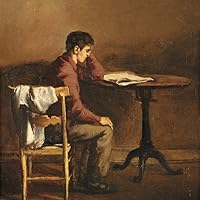
Sara Maitland is a British writer and academic. An accomplished novelist, she is also known for her short stories. Her work has a magic realist tendency. Maitland is regarded as one of those at the vanguard of the 1970s feminist movement, and is often described as a feminist writer. She is a Roman Catholic, and religion is another theme in much of her work.
At first, I found myself totally immersed in this book – the need for silence, the difficulty in finding it, searching for it, gardening, reading, walking… the darker sides etc. A Book of Silence is full of very practical advice and examples of what to expect and how to prepare for extended periods of isolation/silence.
Then, about a third of the way through, I began to feel that it was all becoming a little too obsessive, a little too much self-absorption for my taste, this and the fact that S. Maitland is a practising Roman Catholic. Evidently, she needs to pray for at least three hours a day, therefore her search for silence is intrinsically part of her need for prayer and spiritual enlightenment.
To complicate matters, I started wondering if as social animals we have a right to cut ourselves off totally from family and friends? And anyway, how practical is that? Not many of us have the opportunity and means to disappear and yet maintain contact and guarantee ourselves certain conveniences/necessities.
I found it difficult to accept that S. Maitland can’t be bothered to keep a kitchen garden, too much effort, and besides, it would take too much time away from meditation/prayer. Talk about having your cake and eating it! I think the final straw was when she proudly recounts how she managed to solve the problem of going to the supermarket and of not having to talk; she wears a set of headphones! Well, I mean honestly!
Anyway, I'm going to look out for her short stories.
For most of the time, I was thoroughly immersed in this book and craved the peace SM was finding. I found it a very peaceful book and could relate to much of the way she feels about the modern world. Towards the end, however, there was a hint of losing touch with reality and the religious element began to intrude much more. On the whole though, I found myself feeling much calmer and more mindful for reading the book. I met SM shortly afterwards at Words by the Water in Keswick and she does have an other worldly air about her, as if she's just engaging with the world out of necessity, i.e. promoting her book, but will be leaving as soon as possible. There are contradictions, e.g. seeking silence in the Sinai but now leading groups of people on trips there, but I strongly identify with her irritation with the increasingly noisy social world most of us live in.
A remarkable, intensely interesting and very readable book. Sarah Maitland writes exquisitely.
Her subject is Silence and her quest for it in the 21st century. We follow her journeyings and soak up her vast knowledge of the subject and matters surrounding it. The role of Silence in the lives of others, generally past,occasionally present.
The book has 8 chapters:
1. Growing up in a Noisy World – the context and reasons behind her writing this. 2. Forty Days and Forty Nights – her search for Silence in her life. Her experiences alone on a remote part of Skye. Reference to others and their experiences and uses of Silence. 3. The Dark Side (of Silence) 4. Silence and the Gods – the role of Silence within religions, mythologies… 5. Silent Places – places to encounter Silence now and in the past. The Forest and her fear of it and attempts to come to terms with that fear. The use of forests and silence in the written work of others, especially the brothers Grimm. 6. Desert Hermits. Past experiences of in the lives of others and her time spent in the Desert following in their footsteps. 7. The Bliss of Solitude – Wordsworth's line. The Romantic Movement v Classical M. Nature v Civilisation. The changes in perception of Silence and changed meanings of words in and around it. 8. Coming Home. Her quest to date. The different kinds of silence. Is there such a thing? The silence of death.
My name is Sara Maitland. I went to boarding school. Then I went to Oxford. I went to Oxford with Bill Clinton. And then one day, Bill (The President of The United States) Clinton said to me, "will you go to some pretentious shite with me?", and I totes said yes, and we were like BFFs 4EVA. And then I was totally into feminism and socialism and cool intellectual stuff. And now I'm a published author, living by myself far from the city lights. And I don't need to work, cos I'm totally upper class, so I sit around in silence all day. Let me tell you how awesome silence is.
Sara Maitland's book is an earnest and deep exploration of the nature and cultural significance of silence. By means of a series of real life experiments the author also tries to find out what it takes to put silence at the heart of a creative life. The journey starts with a six-week stay in a remote cottage on the Scottish Isle of Skye. Maitland is very articulate, almost analytical, about the at times unsettling mental and physical sensations that accompanied her silent retreat.
For Maitland this experience proved to be a benchmark and a launch pad for much of her present life. After Skye she continues to experiment: she attends Quaker meetings, develops a routine of meditation and prayer, exposes herself to the artificial silence of the flotation tank, becomes more attentive to the inner silence of reading, spends time alone deep in the forest, retreats to the desert and climbs the high hills of Galloway.
These experiments confront her with a number of existential tensions. Maitland discovers that there are different types of silence. She dwells on the tension between the ‘eremitic silence’ that empties out the self and opens it up to the transcendent, and the ‘romantic silence’ of artists that strengthens the ego and reinforces its impulse to create. “So a new and, I have to say, painful question developed for me, coiled within the pleasure and excitement of my growing silent life. Is it possible to have both - to be the person that prays, who seeks union with the divine and to be the person who writes, and in particular writes prose and narratives.”
The tension between these two impulses remained unresolved for a while and Maitland found herself stuck with a writer’s block. Also she grew disenchanted with her life in Weardale, already an isolated place in the Pennines and started to look for an ever remoter and smaller house to live and work: “Over the following months this imperative but uneasy quest led me to some practical decisions. The first was that I would move house again. If I was not feeling comfortable about what I might write, it seemed important to ‘downsize’ financially. If I wanted more silence, I did not need or even want such immediate neighbors nor so much space (…) What I wanted and needed was a hermitage.”
In the book’s final chapter Maitland narrates the quest for that place and the practical trade-offs associated to her silent life: “I try to think about it - to pay precisely enough attention to eating and house-cleaning and the rest of the administration of my home and life so that it takes up the least possible time. Mostly I do not succeed.”
A reflection on the cultural significance of silence is the thread that binds the whole narrative together. We tend to consider and experience silence as an absence, a negative, a void. But that is not what the author of this book discovered: “Silence does not seem to be a loss or lack of language; it does not even seem to be the opposite of language. I have found it to be a whole world in and of itself, alongside of, woven within language and culture, but independent of it. It comes from a different place altogether.”
The Book of Silence is a serious work. It's Maitland’s very personal and rigorous attempt to ’encode silence, so that out there in all that noise, people can access and love it.”
Sara Maitland’s work has often been infused with a sense of faith, and a fascination with myth and religion. It seems only fitting that with these interests would come a need to explore ways of living – and Maitland has become interested in the eremitical. Silence and a lack of human contact appealed to her, and so, over a decade, she began to explore this state of being – in the desert in Sinai, on the Isle of Skye over a harsh winter, and finally through the building of her home in rural Galloway.
A Book of Silence – which is never silent, buzzing and full of ideas and discussions and digressions – is a memoir in which Maitland is at times absent. She explores the history of men and women drawn to solitary lifestyles, either for religious purpose or personal need, and ponders upon the nature of silence (if there is such a thing) in our increasingly noisy and noise-led world. These discussions often make A Book of Silence one to take slowly – I read it a few pages at a time, for at almost every juncture there is something new to contemplate, to read again. Her writing often reminded me of Annie Dillard, whom is referenced here a few times, particularly her book Pilgrim at Tinker’s Creek, whose infusion of memoir, philosophy, science and history must surely be a Maitland touchstone.
It is a book that, when released, draw many very positive reviews, all of them justified. A Book of Silence is a deep penetrating book, one that lingers on, needling away at the subconscious, forcing one to ask questions of one’s own world and the presence, or lack thereof, of silence in it. As someone very keen to live in a world similar to Maitland’s, it speaks even more clearly. As I have noted in some of my reviews on these pages, I walk long miles, often going a day or so without wanting to speak to others. I treasure silence, the rhythm of nature, the need for a space to breathe and live and work.
I have by no means digested everything in Maitland’s book, and am certain I will be dipping into it again – there are lessons to be learnt here. It is a seriously important book, and in our current culture, one whose lessons should not be ignored.
This is an unusual book: it's style reminds me of the way books used to be, before we in America began to value the personal voice. Sarah Maitland writes a very personal book, but in a way that an academic would write it. The shadow of patriarchy looms all over this enchanting, and well-intentioned book. Most of my women friends here hated it:).
I liked it very much.
Sarah Maitland sets out to research "silence." She is doing so for personal reasons, but it seems as though she is hemmed in within the patriarchal rules of "legitimacy" that haunt so many of us. Her voice breaks through, but only when it is completely, totally, thoroughly, undoubtedly (you get the drift) cushioned within "research." She cannot make a point without "proving" it.
And she has many points to make. Such as: she spent 40 days and nights being completely silent. She studied silence. She broke through to a new way of being, and then went further and redesigned her life to be true to her discoveries. And then, had the courage (when adequately cushioned) to speak about things that cannot be proven...such as spirituality, the peace she feels when watching birds fly in and out of a barn, again, and again, and again: enough to wonder about what a fulfilling life really means.
I get her inner prison. It comes from growing up privileged, which is another word for growing up right under the ever present power of male generated money. The world of privilege, envied and scorned by most of us, is a world where patriarchy rules; right down to how the girls should behave at dinner time, and so what if they have minds (she went to Oxford, or was it Cambridge?). The author struggles to describe her personal journey, but to readers in this country, she is so defining the personal through the political (discourse rules, that is).
I recommend this book to women who have had experience feeling silenced when they try to write or speak about the personal to a male/academic audience. Sarah Maitland writes within a publishing world in Britain that is still very "male" in its sensibility and in the rules about "the right voice": AND, does not have to bow to the power of the consumer who loves the storytelling voice.
But if you have come to expect an author to earn your time by using a voice that speaks from her heart, gets right to your heart, and no nonsense in between baby, you may not like this book. I still recommend you struggle through it. It is one of the most honest (one of my women friends who is a priest said it was so honest it was scary) books about the personal impact of remaining silent: of reducing the chatter; of trying to strip down so that you face yourself. Without meditation:)!!!
Ik pikte het boek op na het zien van de mooie reportage over Sara Maitland in de verzorgde reeks 'Wanderlust' op de Belgische televisie : https://www.canvas.be/wanderlust/sara.... * Al lezend ontdekte ik dat ik de stilte, zoals ze in het boek besproken en beleefd wordt, in mijn dagelijks leven niet ken... * Tijdens het lezen zelf drongen buitengeluiden & de ratrace van het leven zich permanent op. Ik kreeg warempel zin in drie maanden vakantie in-mijn-uppie waarbij ik de eerste drie weken zou moeten besteden aan het volledig afkicken van geluid! :) * Boeiend waren de historisch vergelijkende stukjes, bijvoorbeeld de 'woestijnstilte' van de kluizenaars (die door stilte trachten te komen tot een opheffing van het ik) en de stilte/eenzaamheid van de Romantiek (waarbij kunstenaars voor stilte kiezen om hun ego te versterken, tot zelfexpressie te komen en zich te beschermen tegen sociale druk). Met daarbij de overpeinzingen van Maitland die een leven wil met beide componenten ( een spiritueel leven - een leven als schrijver) * Er bestaan veel meer soorten stiltes dan ik kon vermoeden... : de subtiele stille intimiteit bij nachtvoedingen tussen moeder en baby, de stilte vanuit ontzag bij het zien van natuurverschijnselen (sterrenhemels, bergketens, uitzichten,...), de psychoanalytische stilte die een individu brengt tot heling, de nawerking van bevredigende seks, de stilte van een mystieke ervaring, de stille extatische euforie, een specifieke stilte in bepaalde gevallen van lezen (!), de stilte van het luisteren naar muziek, de stilte van de dood,... * Al deze vormen hebben een aantal dingen gemeen : het gevoel van 'givenness' (de ervaring komt van buiten het normale zelf en kan niet afgedwongen worden); de ervaring is integratief (het hele zelf is op een nieuwe manier betrokken en bewust van zz), ; het ontbreken van een grens; een gevoel van onuitsprekelijkheid (het staat buiten de taal) * Maitland vermoedt dat een aantal pijnpunten in onze samenleving een gevolg zouden kunnen zijn van het feit dat mensen te weinig echt 'stille momenten' in hun leven hebben. *** ---- zondag vandaag; dan toch maar even de natuur in, héhé ----
Винаги, когато чета някакви съвременни неща, посветени на "културната война" или опити на сравнително млади автори да разсъждават над човешката природа, света и всичко останало, оставам удивен от това колко плитки и плоски са тия им опити. Неизменно референциите им са към модерната поп-култура, от която те вадят изводи за историческото състояние на човечеството и жените.
Прекалено са вторачени в ставащото в момента, в реакциите на другите хора към ставащото в момента и в изразяването на своите реакции към реакциите на другите към ставащото в момента... Всичко това създава невъобразимия шум, който представлява съвременния медиен живот, ако не можеш да се откачиш съзнателно от него. Прекарването на живота, потопен в туитър, други социални медии, интернет и гледане на телевизия като че ли не спомага за дълбок поглед върху каквото и да е за повечето хора и думата, която ми идва на ум за тях е "oversocialisation".
Ролята на тишината в живота на човека никога не е била особено голяма, погледнато еволюционно и исторически, защото винаги сме живели на общества и винаги и непрестанно сме общували помежду си. Но тишината винаги е имала значение за определени хора и точно те имат голямо влияние върху религиозното и културно наследство на човечеството.
Съпоставена с гореописаната повърхностна какафония от смислени и безсмислени гласове, Книга за тишината на Сара Мийтланд е като съзнателно изключване от матрицата и пропадането в дълбокия, тих кладенец на историята и човешкото познание и себепознание.
Освен феминистка, Сара е и дълбоко религиозна и търси вдъхновение от древните текстове на различни християнски отшелници и други хора, посветили живота си в търсенето на тишината, за да я намери и тя най-накрая в малката си къщичка на гъза на географията в шотландските полета.
Книга за тишината е едно пътуване в света на сакралното - както в смисъла на търсенето на бога, така и в търсене на сакралното в душата. И двете са дълбоко лични, а не обществени дейности и голяма част от практиката им е свързана с търсене на тишината и самотата (защото Сара накрая открива, че тишината е непостижима без самотата и тя става част от живота й).
Considering I’m not religious or even particularly spiritual, I was prepared to be a little at odds with the author’s approach of seeking silence with a strong emphasis on prayer, but at no point did this feel proselytising.
It’s a very interesting memoir mixed with the history of mysticism and the visions associated with isolation, with a sprinkle of auditory hallucinations. We get to explore silence from all angles and our fear of it with particular depth. I found it a fascinating read.
The idea for this book is excellent. Our world is becoming noisier and noisier, with less and less time for the contemplation and reflection that silence brings. I greatly enjoyed learning bits and pieces about the theological, historical, and cultural aspects of the concept of silence, and these nuggets are the well written gems of the book. Maitland goes to a remote part of Scotland to spend six weeks in silence, and records her time there. If only I actually liked her and if only she had spent less time talking about herself. As other reviewers have noted, I never found a connection to Maitland and was therefore just annoyed with her passages of memoir. Perhaps this is because she spends the first part of the book explaining how noisy and important her life once was, establishing distance with the reader just when we need to be pulled in. Why did she feel the need to tell a self-aggrandizing story about being friends with Bill Clinton at Oxford in the 70s? Irrelevant and self-absorbed, like most of her memoir pieces. This book needs an editor not just for length, but for content. A much tighter and more appealing story might have been told.
Sara Maitland (b. 1950) is a British writer best known for her fantasy and religious works. She lived a vivid, social life in her youth, immersed in the 1960s Oxford scene, friends with Bill Clinton (who of course she name-drops here), and later marrying and raising several children. However, by her fifties, Maitland chose to turn away from the bustle of society to pursue a life of solitude, prayer, meditation, and largely literal silence in remote parts of Scotland, first on the Isle of Skye and later in Galloway.
In A Book of Silence (2008), Maitland chronicles this shift and ruminates at length on the concept of silence itself. She draws extensively and exhaustingly on historical, literary, and religious examples of others who sought quiet and solitude. For some readers, this wide-ranging survey might be enriching. For me, however, it quickly grew repetitive and tiresome. I felt the book over-perseverates on external examples without enough fresh insight of Maitland's own. As much as I resonate with the impulse to collect, collate and compare perspectives, doing this for its own sake is too pedantic for my taste, and at some point one must form a judgment of one's own. Maitland seemed reluctant to move beyond justification by example into clear personal conclusions. The result was a book that felt like hundreds of pages talking in circles without fully landing.
4.5 stars Sara Maitland is in her late forties and after a noisy upbringing and adulthood as a vocal feminist and mother she found herself craving silence and solitude and booked to stay for six weeks in the Isle of Skye in a isolated cottage. This would then lead her to move to a village. Whilst in the cottage Sara documents the changes. She talks of how as a race our silence is limited daily with work, school, commuting, people, pets, nature, household noises and having to deal with peoples demands leaves us with very little silence. However when remotely isolated Sara talks of how with no restraints it was hard to maintain a sense time passing as she didn't need to be 'clock obsessed' as our culture tends to be, even here she refers to the rabbit in Alice in Wonderland who shakes with anxiety looking at the time and rushing around. This part resonated with me as my job has tasks that have to be performed at certain times in the day and I have to continually track the time. This meant that she felt free to slow her pace and found herself enjoying cooking, walking, nature and the weather. She noted how knowing she would not be seeing anybody she soon abandoned daily activities such as brushing hair, washing, clean underwear & personal hygiene. But her senses, tastes and body temperature became acute. Her emotions were all over, she could become anxious then giggling and bursting in to floods of tears, she dreamed and had heightened sexual fantasies which all changed and went back to normal when she rejoined society again. To some silence is terrifying because it's unatural, babies will cry for reassurance for example. And in some extreme cases it has been known to drive people mad. But at the end of the six weeks she felt she could make informed life choices better and decided she would strive to build the experiences in to a daily and sustainable lifestyle. I found it interesting how she talked about feeling more lonely when living in the City due to how other people do/don't interact than when she was alone as she focussed more on the natural elements around her. I really enjoyed this book and it made me think a lot about noise and how we act due to time and people and our personal wants and needs. At times the religious aspect got a bit too much but I could respect the points made. A good summarising line that made me think was the inclusion of a passage by John Cage who stated " There is no such thing as real silence as even our human body makes noises" A very enjoyable and thought provoking read.
“Virginia Woolf famously taught us that every woman needs a room of her own. She didn’t know the half of it, in my opinion. I need a moor of my own. Or, as an exasperated but obviously sensitive friend commented when she came to see my latest lunacy, ‘Only you, Sara – twenty-mile views of nothing.’” p. 1
As I said earlier this year, I consider Maitland to be a role model. I have enjoyed her fiction and been very challenged by her theology. Although it took me months to get through this book, once again Maitland has taught me a great deal.
I read her book, How to be Alone at the beginning of the summer and I did not feel that I learned very much. This book on silence is much more useful. I believe I have figured out how to be alone. I do a lot of things by myself and as a shy person; I often prefer to be alone.
Maintaining silence is a whole different way of being. When I am reading, weaving or cooking, I often have music or news playing in the background. I have a cell phone, a computer, an iPad - all of which make noise and keep the silence at bay. Although I regularly go on retreat, being completely silent scares the heck out of me.
Maitland does not feel this way. She wants the most silence she can get and works hard to achieve it. This book is about her study of silence, the history of others who have wanted silence and her own quest for the most silent dwelling she can find. Her writing is excellent and she gives her readers lots to think about.
I had not even considered that there might be different types of silence that would affect how you live within them. Maitland finds that her pursuit of prayerful silence may have changed the way she writes. Who knew?
If you have religious or artistic reasons to seek quiet and space, this book may be for you. You might also want to read it if you are curious about how others live their lives. Maitland gives her readers a glimpse into her way of life which is fascinating. Lastly, you might want to read this for the in-depth knowledge of how our modern world has come to see silence as a problem not a positive idea.
*EDIT: Two years later, I think about this book quite a lot - about that hermitic lifestyle she was craving, about the history of mystic/spiritual seeking of silence - and so I'm changing my 2 star rating to 3 stars. I did like it - and there are times when I think in this loud and noisy city, a bit of silence would be so restful! So, although it was a tough old slog at the time and it took me far too long to get through it, I've got warm thoughts about it and remember it kindly; maybe that's misremembering it, but I figure it's worth giving it a go if you were debating it.*
This book was a struggle at times and I wish it weren't. She's a brilliant writer, and the topic was compelling. I think she wanted too much from this book. There were moments, like her journeys to explore silence, that were indeed fascinating. And it did feel like *most* chapters had a highlight to it - that's probably why I kept reading. But then it did feel like every chapter dragged on a bit or got repetitive, especially the last 10 pages. She didn't want to finish the book and you could tell. I think I would have liked it to be more about her experiences - some of the works she quoted were interesting, but some felt superfluous. It did also feel like over-justification for her want of a hermit life. So what if you want to live silently? People are either going to accept it or not. To write about one various experience of an explorer or some religious epiphany of a saint and conclude it with the equivalent of, "you see, silence! They're talking about silence!" is just a bit dubious. Me think thou dost protest too much! Some of those links to silence were just a total stretch.
Anyway, I suspect this may have been a bit of an apologia for her move to an eccentric hermit lifestyle - she even opens with the criticism she received from a friend. She's probably sick of trying to justify her actions, which I'm sure many consider as odd. To that I say, dust your shoulders off shorty.
This is a very unusual book. I was worried in the first few chapters, the writer seems to be privileged and intellectual. I found her attitude and tone objectionable but the subject matter fascinating so I stuck with it. I spend large amounts of my time in silence and because of that I could associate with a little of what the author experienced but she took it to extremes. When I spend more than a couple of days alone I get cabin fever and leave and to be honest I think that is healthy. What I really enjoyed was the book references to other hermit's experiences. I followed this read with a revisit to Walden and there are a few others mention I will seek out and read. I also loved the descriptions of the trips she took in search of silence particularly Skye and the desert. The reason I only give this three stars is because there is too much repetition and it does feel a little self indulgent.
A honest woman wrote this book - honest, thoughtful, and not at all sentimental. She identifies a hunger for silence - and I am inspired by her story to seek silence and to structure it into my life. I had never quite noticed how noisy both my interior and exterior life was until these pages opened new vistas.
www.facebook.com/miciausknygos Tai knyga kurioje aprašoma savita meilės istorija. Tai meilė tylai, vienatvei, kuri žmonems gražina tai, kad seniai yra praradę. Pasakoja kaip tyloje atsidūrę įvairūs keliautojai ar tyrinėtojai, įvardina tai, kad ji yra svarbiausia jų palydovė, kuri gydo, bet kartais ir žudo. Pati autorė išvyksta gyventi į mažai apgyvendintą vietovę, kad mėgautusi tyla. Realiai knyga yra apie tylą, pradžioje viskas įdomu, bet vėliau ima kartotis ir susidaro įspūdis, kad taip buvo norima išsukti kuo didesnę knygos apimtį. Knygą klausiau audio formatu, tai susiklausė greitai ir laikas neprailgo, bet jei reikėtų skaityti, tai užtruktų, be to knygos pirkti neapsimoka, nes tai nėra knyga kuri galėtų būti namų bibliotekoje. P.S. Didelis dėkui mano GR padruskėms Ieva Andriuskeviciene, Caro the helmet lady (gaila vardo nezinau :) ) ir SD knygu upe, kurios suviliojo išbandyti audio knygas
Kalba, palyginimais, rašytu žodžiu apie TYLĄ. Apie fenomeną, nuo kurio šiuolaikinė visuomenė bėga, kuria ištisas industrijas, formuoja naujus įpročius, kad tik nepatirtų. Man knyga apie išėjimą į dykumą, kurią turime/norime/galime patirti.
“Kartą sakei, kad man rašant norėtum sėdėti šalia. Klausyk, tada visai negalėčiau rašyti. Nes rašyti- tai visiškai apsinuoginti, parodyti visą save ir pasiduoti… štai kodėl rašantysis niekada nebūna pakankamai vienas, štai kodėl jam niekuomet aplinkui nebūna pakankamai tylu, štai kodėl net naktis būna nepakankamai naktis.”
This is a pretty unique book in that it is a book on silence, written by a novelist who seeks to build the practice of silence more into her life. She is a Christian and states of one her objectives is exploring the practice of silence is to deepen her prayer life. She does say that it does, but she's not very forthright and vulnerable about her prayer life. You don't really get that in this book, though she does include some theological reflection in these pages.
Instead, her book is like an Atlas that names the terrain of a land called Silence. She speaks of her own experience of silence, including her six-weeks in solitude and Silence on the Isle of Skye. She is able to name some of the positive aspects of silence, the negative impacts of silence (often gathered from the journals of travelers, explorers, and extreme sports practitioners). She also explores how the silence that spiritual writers seek differs from the silence of the author (an emptying silence or a creating silence).
I found this book interesting but I don't know how to categorize it. It is a memoir. But it isn't a book on spirituality. And it isn't not a book on spirituality. It was way better than that 'Eat, Pray, Love' book, which is a literary travesty.
If you need convincing that a retreat or long period of silence would be good for you, try this book. She was convincing the already converted in my case, but in this relentlessly noisy civilization, she cogently argues the case for silence as a critical approach for self discovery. Her insights into the different types of silence, into the history of attempts to find silence are woven in with her personal odyssey: 40 days in the wilderness on the isle of Skye in Scotland, time in the Sinai desert, forests, long walks and now living alone on the Scottish lowland moors. She has read widely and interestingly theologians, Thoreau, modern psychologists etc. She is a Catholic feminist socialist and the resulting perspectives on life are really profoundly interesting and challenging to each of her respective traditions. She is also a novelist and I guess I will have to read one of her novels!
I'm about 75% of the way through the book and I'm just not feeling it. Perhaps I don't have enough of a desire for silence yet, but I'm having trouble extracting much that would be meaningful or personally applicable to me here. Silence, solitude, mindfulness - which seem fairly distinct in my mind, though all have their benefits and advantages - all seem to intertwine in Ms. Maitland's definitions. While I appreciate her Christian perspective and her experiences are interesting - I'd relish six weeks alone in a cottage on the Scottish moors - her descriptions are a bit more mystical than I have patience for at the moment. Which is probably much more a failing in me than in the book itself. But there it is.
This was inspiring. The author doesn't just theorize about silence, she experiments with it in a variety of settings--mountain, desert, seaside--beginning with 40 days on an island off the coast of Scotland. She describes her psychological responses to silence and reviews the literature. Is silence the absence of language or the absence of sound? Interestingly, the OED lists the absence of language as the first meaning. Thus, if you are reading, you are not fully silent. In full silence different parts of the brain are active. Time for a silent retreat.
There's a lot of good stuff in here. I especially appreciated the range of sources she uses to trace the contours of silence. The chapters on the physical effects of silence and the desert fathers are both strong. The one on God and silence, including a catalogue of other creation narratives is worthwhile. She give the reader much to think about, and contemplate. Although it will undoubtedly not appeal to everyone. Silence is much richer because of this.
"Ik had geen antwoorden, maar ik voelde een diepe rusteloosheid die gepaard ging met een literaire nieuwsgierigheid. Ik wilde zowel een stilte-mens als een schrijver zijn. Ik wilde schrijven in stilte, op de een of andere manier stilte schrijven. Ik wist niet hoe; ik wist zelfs niet of het mogelijk was. Maar ik wilde het heel graag proberen uit te zoeken." (p.281)
Much like her short essay-like book, How to Be Alone, I liked best the parts where Maitland talks about her own life and experiences with/experience of silence. The historical anecdotes and research into others' experiences were interesting enough (some more than others, for me), but not as compelling as Maitland's personal accounts.
Sara Maitland šioje knygoje tyrinėja ne tik savo tylos patirtį, bet ir pačią tylą apskritai. Apie tai, kokią naudą mums teikia tyla, jei patys ją pasirenkame ir apie tai, kokie pavojai joje tyko, jei esame priversti joje atsidurti. Man, tai viena iš tų knygų, kuri beprotiškai įkvėpia savo mažame pasaulyje ieškoti kuo daugiau tylos akimirkų. Gal įkvėps ir Jus?
Interesting as a memoir, but lacks a broader historical perspective. Sarah Maitland often adopts a theological approach that avoids the connection between women and silence.