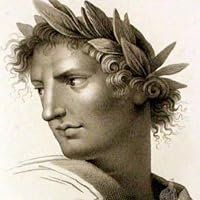
En composant La Guerre du Péloponnèse, l'historien athénien Thucydide n'entendait pas seulement faire le récit du conflit qui, de 431 à 404 avant notre ère, avait opposé les deux plus puissantes cités grecques, Athènes et Sparte, mais aussi procurer à ses lecteurs un enseignement « pour toujours ». Il ne s'agissait pas seulement d'établir les faits de la façon la plus sûre, mais encore d'en éclairer le sens par les discours prêtés aux différents protagonistes. En suivant l'ordre chronologique, et en menant une enquête contradictoire, Thucydide a posé les fondements de la méthode historique : d'abord rechercher la vérité, ensuite dégager la logique des événements.
Livres I et II : exposé de la méthode. Implication de Sparte dans le conflit en réaction au développement de l'impérialisme athénien (cause réelle de la guerre pour Thucydide). Exigences des Lacédémoniens auxquelles Athènes, conduite par Périclès et forte de la supériorité de sa flotte, réplique. Oraison funèbre des morts de la première année prononcée par Périclès. Peste à Athènes et mécontentements croissants après la mort de Périclès auquel Thucydide rend un hommage appuyé.
Thucydides (c. 460 B.C. – c. 400 B.C.) (Greek Θουκυδίδης) was an Athenian historian and general. His History of the Peloponnesian War recounts the fifth-century BC war between Sparta and Athens until the year 411 BC. Thucydides has been dubbed the father of "scientific history" by those who accept his claims to have applied strict standards of impartiality and evidence-gathering and analysis of cause and effect, without reference to intervention by the gods, as outlined in his introduction to his work. He also has been called the father of the school of political realism, which views the political behavior of individuals and the subsequent outcomes of relations between states as ultimately mediated by, and constructed upon, fear and self-interest. His text is still studied at universities and military colleges worldwide. The Melian dialogue is regarded as a seminal text of international relations theory, while his version of Pericles' Funeral Oration is widely studied by political theorists, historians, and students of the classics. More generally, Thucydides developed an understanding of human nature to explain behavior in such crises as plagues, massacres, and wars.
For all those people who believe that modern politics have changed concept since the Ancient years. They will be surprised to see how similar the epochs are..
The clarity of thought, pragmatic idealism and the number of 'meanwhile's in this most astounding narrative of true simultaneity boggle the mind, showing just how catastrophic our submission to being educated by NCERT was.
j'ai juste lu le second livre. la rhétorique employée par thucydide lui permet de narrer précisément les événements historiques, leurs causes et leurs effets, tout en rendant hommage aux grands hommes qui ont fait cette guerre. chaque chapitre conte une année (ce livre en compte trois) et se termine par la même phrase signature. l'historien se concentre sur les faits, sans trop s'aventurer à suggérer des causes lorsqu'il ne les connaît pas. au-delà de l'énumération de batailles et du jeu du chat et de la souris auquel se livrent les athéniens et les lacédémoniens, cet écrit est encore l'occasion pour thucydide de dépeindre les relations diplomatiques entre les cités grecques, les dommages causés par l'hégémonie d'athènes ainsi que, dans le second chapitre, la grande épidémie de peste qui décime la population athénienne. j'imagine que je dois désormais ranger cet avis comme révélant une partie de l'intrigue.
This entire review has been hidden because of spoilers.
I can't wait for his next book. This one ended on a cliffhanger.
For such a book the translator is vitally important so perhaps I am praising the translator but I found it very readable. Thucydides was an excellent historian. I did have significant problems with it. In my Gutenberg Kindle version there were no maps, no extra notes. I seriously recommend getting a different version. One with maps and some sort of extra footnotes explaining who was who. I'm not familiar enough with Greece to know even 25% of the locations mentioned and certainly almost none of the names.
I found the chapters on the war in Sicily superb. It was limited in geography and there were fewer individuals involved. I could follow those chapters much easier and I enjoyed them as a result. I will be buying another copy of the book that contains maps I can reference while reading. I would have probably given this 5 stars if I had read such a version.
If, like me, you are unable to read solely the Greek text, then the next best thing is to use the Loeb edition. The English translation, made by C. F. Smith in 1919, is excellent, and it is useful to be able to refer to the Greek on the facing pages.
I would recommend reading this along with The Landmark Thucydides, which also contains a fine translation, excellent notes and timelines, and, perhaps best of all, detailed maps.
Lastly, it is illuminating to consult Hobbes's translation along the way, as it is perhaps primarily through Hobbes that Thucydides's account of the Peloponnesian War has had the greatest impact on English-speaking culture, as well as on Western political philosophy.
"The Lacedaemonians voted that the treaty had been broken, and that the war must be declared, not so much because they were persuaded by the arguments of the allies, as because they feared the growth of the power of the Athenians, seeing most of Hellas already subject to them."
I LOVED this book. It's a book I think everyone should read. The LandMark Thucydides has great notes (maybe too many) but this is the edition I read and loved.