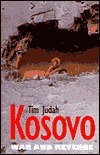
While Judah's presentation of the facts could have used a bit more polishing in terms of style, he was very thorough in detailing the events that escalated the ethnic conflict between Serbians and Albanians, leading to NATO's bombing of Yugoslavia. He paid special attention to the narratives which fueled violence on both sides, as noted in the following passage: “Serbian and Albanian propagandists now went to war armed with statistics, lies and half-truths, which far from helping either side in the long-run, were to embitter communal relations, pave the way for the rise of Milosevic, the destruction of Yugoslavia and the deaths of tens of thousands."
As I'm not an expert on Kosovo, I can't say whether this is the best book to read on the topic, but it did deepen my understanding of the historical context. The final paragraph also left me with an eerie feeling: "While Albanians take their revenge today, the time may yet come when Serbs can take theirs. The way the Serbs have lost Kosovo means that, for the foreseeable future, they will have no chance to get it back. How could they while it is occupied by NATO troops? But what will happen in ten or twenty years? A decade ago, no one could have predicted the shape of the world today. What if, in twenty or thirty years, America is locked in isolationism, Russia rearmed and strong and Europe weak and divided? Aleksa Djilas, (a Serbian historian), says that the spirit of revanchism may grow. 'Of course,' he adds, 'I would not support such a thing, but the Serbs are not exactly a 'forgive and forget' nation. If they have remembered the 1389 defeat for 610 years, why not this one?'"