Jump to ratings and reviews
Rate this book

La Comédie Humaine #85

Les Proscrits: Honoré de Balzac

Rate this book
In his introduction to Études philosophiques, Balzac stated:

The warm and scholarly study of Les Proscrits contains two identical propositions - the suicide of a child disgusted with life who wants to reach for the sky, and the genius which becomes fatal to a great poet.

25 pages, Paperback

First published January 1, 1831

11 people are currently reading
160 people want to read

About the author

Honoré de Balzac

9,540 books4,370 followers
French writer Honoré de Balzac (born Honoré Balzac), a founder of the realist school of fiction, portrayed the panorama of society in a body of works, known collectively as La comédie humaine .

Honoré de Balzac authored 19th-century novels and plays. After the fall of Napoléon in 1815, his magnum opus, a sequence of almost a hundred novels and plays, entitled, presents life in the years.

Due to keen observation of fine detail and unfiltered representation, European literature regards Balzac. He features renowned multifaceted, even complex, morally ambiguous, full lesser characters. Character well imbues inanimate objects; the city of Paris, a backdrop, takes on many qualities. He influenced many famous authors, including the novelists Marcel Proust, Émile Zola, Charles John Huffam Dickens, Gustave Flaubert, Henry James, and Jack Kerouac as well as important philosophers, such as Friedrich Engels. Many works of Balzac, made into films, continue to inspire.

An enthusiastic reader and independent thinker as a child, Balzac adapted with trouble to the teaching style of his grammar. His willful nature caused trouble throughout his life and frustrated his ambitions to succeed in the world of business. Balzac finished, and people then apprenticed him as a legal clerk, but after wearying of banal routine, he turned his back on law. He attempted a publisher, printer, businessman, critic, and politician before and during his career. He failed in these efforts From his own experience, he reflects life difficulties and includes scenes.

Possibly due to his intense schedule and from health problems, Balzac suffered throughout his life. Financial and personal drama often strained his relationship with his family, and he lost more than one friend over critical reviews. In 1850, he married Ewelina Hańska, his longtime paramour; five months later, he passed away.

Ratings & Reviews

What do you think?
Rate this book

Friends & Following

Create a free account to discover what your friends think of this book!

Community Reviews

5 stars
12 (9%)
4 stars
23 (18%)
3 stars
53 (43%)
2 stars
23 (18%)
1 star
12 (9%)
Displaying 1 - 23 of 23 reviews
November 3, 2019
Οι "Επικηρυγμένοι" ή "Προγραμμένοι" (Les Proscrits, στο γαλλικό πρωτότυπο). Στην αγγλική μετάφραση επιλέγεται ο τίτλος "The Exiles" και ακολούθως υπάρχει ελληνική μετάφραση που φέρει ως τίτλο "Οι εκπατρισμένοι", τον οποίο θεωρώ εξίσου δόκιμο, αν και όχι ακριβή, καθώς η πρώτη έκδοση του 1831 φέρει κάτω από τον τίτλο την εξής επιγραφή: "O patria!... (ROSSINI, Tancredi)"

Και είναι όντως ένα διήγημα που διαπραγματεύεται σε ένα βαθύτερο επίπεδο τη νοσταλγία για έναν τόπο, που μπορεί να είναι είτε υπαρκτός είτε επινοημένος (μια ουτοπία, ένας χαμένος παράδεισος).

Δημοσιεύτηκε για πρώτη φορά στο περιοδικό "Revue de Paris" την πρώτη Μαΐου 1831 και λίγο αργότερα (τον Σεπτέμβριο του ίδιου έτους) εκδόθηκε στον τρίτο τόμο της συλλογής "Romans et contes philosophiques".

Ο Charles Rabou, φίλος του Balzac και διευθυντής του περιοδικού, του στέλνει μια επιστολή αγανάκτησης:

"Θέλετε στ' αλήθεια να υποφέρω εξαιτίας του άρθρου σας όλα τα βάσανα που μπορεί να τύχουν σ' ένα διευθυντή; Μεγάλη έκταση, καθυστερημένη παράδοση, ατελείωτες και δίχως όρια μετατροπές. Για τ' όνομα του Θεού στείλτε μου το κείμενό σας συντομεύοντάς το όσο είναι δυνατό" (Βλέπε: Nadine Satiat, Μπαλζάκ. Ή η μανία της γραφής, σελ. 202, μετάφραση Ευγενία Τσελέντη).

Η τελειομανία του Balzac ήταν ικανή να φέρει και τον πιο ψύχραιμο στα όριά του, και αυτός ήταν ένας από τους μόνιμους καβγάδες του με τους εκδότες του. Είχε την τάση να ξαναχτενίζει και να διορθώνει αδιάκοπα τα γραπτά του, ακόμα και την τελευταία στιγμή, λίγο πριν φτάσουν στο πιεστήριο.

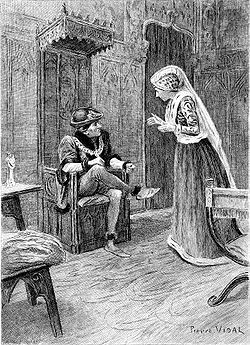
Εδώ έχουμε μια ιστορία που εκτυλίσσεται στο μεσαιωνικό Παρίσι, τον Απρίλιο του 1308. Επάνω στον Σηκουάνα, υπάρχει μια μικρή νησίδα γνωστή ως Île de la Cité, κι εκεί είναι χτισμένος ο καθεδρικός ναός της Notre-Dame (Παναγία των Παρισίων). Ένα από τα ελάχιστα σπίτια επάνω στο μικρό αυτό νησάκι, ανήκει στον φοβερό και τρομερό αστυνόμο (sergent de Paris) Joseph Tirechair και τη σύζυγό του Jacqueline. Στον πάνω όροφο του σπιτιού, κατοικούν δύο μυστηριώδεις νοικάρηδες. Ένας ηλικιωμένος άνδρας και ένας ωραίος νεαρός ονόματι Godefroid, ένα βασανισμένο, ορφανό αγόρι που ήρθε από την Φλάνδρα στο Παρίσι για να σπουδάσει στο Πανεπιστήμιο. Άλλο ένα μυστηριώδες πρόσωπο της ιστορίας είναι η υπηρέτρια της Jacqueline, η οποία φαίνεται πως κρύβει την πραγματική της ταυτότητα.

Ο Tirechair που ανάμεσα στα άλλα καθήκοντά του, συμπεριλαμβάνει και το κυνήγι των μαγισσών, υποψιάζεται πως οι δύο νοικάρηδές του ασχολούνται με τη μαγεία.

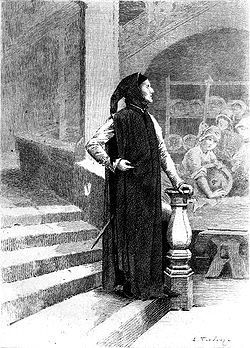
Ο ηλικιωμένος άνδρας μαζί με το νεαρό φοιτητή, παίρνουν το πλοιάριο για να πάνε στο école des Quatre-Nations (Σχολή των Τεσσάρων Εθνών), δηλαδή στο Πανεπιστήμιο του Παρισιού που ονομάζεται έτσι γιατί διαχώριζε τους φοιτητές σε τέσσερις κατηγορίες βάσει γλώσσας ή καταγωγής: France, Normandie, Allemagne, Picardie. Εκεί, σε ένα από τα κτίρια της rue du Fouarre (παλαιότερη ονομασία: rue des Escoliers, Fouarre σημαίνει άχυρο ή ζωοτροφή), παρακολουθούν τη διάλεξη του δόκτορα Sigier, καθηγητή θεολογίας (το αντικείμενό του σύμφωνα με τον Balzac είναι η μυστική θεολογία). Πρόκειται για υπαρκτό, ιστορικό πρόσωπο, τον Siger de Brabant (1240 - 1284), οπότε η χρονολογία που εκτυλίσσεται το διήγημα (1308) συνιστά αναχρονισμό, καίτοι είναι σκόπιμα επιλεγμένη καθώς τότε εικάζεται πως

Αυτή η διάλεξη, η οποία παρατίθεται με λεπτομερή ακρίβεια είναι ιδιαίτερα διαφωτιστική για το σύστημα πεποιθήσεων που ασπαζόταν ο Balzac. Άλλωστε ο ίδιος θεωρούσε πως ανήκει στους écrivains réellement philosophes (στους συγγραφείς οι οποίοι είναι πραγματικοί φιλόσοφοι) και θεωρούσε πως η συγγραφική εμπειρία έχει μυστικιστικό χαρακτήρα):

"Ο δόκτορας Sigier επρόκειτο να ανακεφαλαιώσει σήμερα, στην τελευταία από μια σειρά παραδόσεων, τις απόψεις που είχε διατυπώσει στις προηγούμενες ομιλίες του σχετικά με την Ανάσταση, τον Παράδεισο και την Κόλαση. Το παράδοξο δόγμα του ταίριαζε με με τις τάσεις (sympathies, στο πρωτότυπο, δηλαδή κυρίαρχες επιδράσεις) της εποχής, και ικανοποιούσε την υπέρμετρη αγάπη για τα θαυμαστά φαινόμενα που στοιχειώνουν το μυαλό των ανθρώπων όλων των εποχών. Αυτή η προσπάθεια του ανθρώπου να δρέψει το αιώνιο, το οποίο ξεγλιστρά μέσα από την ανεπαρκή του κατανόηση, αυτός ο ύστατος αγώνας της σκέψης που αντιπαλεύει με τη σκέψη, ήταν ένα έργο αντάξιο για τα πιο λαμπρά πνεύματα της εποχής, εκεί όπου άστραφτε η δυνατότερη ανθρώπινη φαντασία.

Ο δόκτορας ξεκίνησε συνοψίζοντας με τον ήρεμο και σταθερό του τόνο, τις βασικές αρχές που είχε θέσει ως τώρα:

Κανένα πνεύμα δεν αποτελεί το ακριβές ανάλογο ενός άλλου. Ποιος άνθρωπος θα τολμούσε να ζητήσει από τον Δημιουργό Του να απολογηθεί γι' αυτήν την ανισότητα των δυνάμεων που φέρει ο καθένας; Χωρίς να επιχειρήσουμε να υπεισέλθουμε βιαστικά στα Θεία Σχέδια, δεν πρέπει να αποδεχτούμε το γεγονός ότι, εξαιτίας της γενικής ποικιλομορφίας τους, οι διάνοιες (les intelligences) μπορούν να ταξινομηθούν σε σφαίρες; Από τη σφαίρα όπου απαυγάζει ο μικρότερος βαθμός διάνοιας ως στις πιο διαφανείς (καθάριες) ψυχές, ποιος θα μπορούσε να δει τον δρόμο που οδηγεί ως τον Θεό, χωρίς μια πραγματική διαβάθμιση (κλιμάκωση) της πνευματικότητας; Και μήπως τα πνεύματα της ίδιας σφαίρας δεν αλληλοκατανοούνται μεταξύ τους αδελφωμένα στην ψυχή, στη σάρκα, στη σκέψη, στο συναίσθημα;

Από εκεί ο δόκτορας προχώρησε στην παρουσίαση των πιο εξαίσιων θεωριών που σχετίζονται με τις αλληλεπιδράσεις (théories relatives aux sympathies). Εξήγησε με βιβλικούς όρους τα φαινόμενα της αγάπης, της ενστικτώδους απώθησης, των ισχυρών έλξεων που υπερβαίνουν τους νόμους του χώρου, της απροσδόκητης ένωσης των ψυχών που αναγνωρίζουν η μία την άλλη. Οι διαφορετικοί βαθμοί έντασης αυτών των έλξεων εξηγούνται από τη θέση που κατέχουν τα όντα ενός κοινού κύκλου, η οποία μπορεί να είναι πιο μακριά ή πιο κοντά στο κέντρο του.

Απέδειξε μαθηματικά το μεγάλο σχέδιο του θεού, όπου αποκαλύπτεται στον συντονισμό των διαφόρων ανθρώπινων σφαιρών. Μέσω του ανθρώπου, είπε, αυτές οι σφαίρες δημιουργούν έναν διάμεσο κόσμο (monde intermédiaire) ανάμεσα στη διάνοια των κτηνών και τη διάνοια των αγγέλων. Όπως το έθεσε, ο θείος Λόγος τρέφει τον πνευματικό Λόγο, ο πνευματικός Λόγος τρέφει τον έμψυχο Λόγο, ο έμψυχος Λόγος τρέφει το ζωικό Λόγο, ο ζωικός Λόγος τρέφει το φυτικό Λόγο και ο φυτικός Λόγος είναι η έκφραση του της ζωής του άβιου Λόγου [....]

Στη συνέχεια, γινόμενος, ενστικτωδώς, φυσιολόγος (physiologiste) σχολίασε την ομοιότητα που έχουν τα πρόσωπα κάποιων ανθρώπων με ορισμένα ζώα θεωρώντας πως αυτό αποτελεί μια ουσιώδη αναλογία της ανοδικής τάσης που ενυπάρχει σε ολάκερη τη δημιουργία. [...] Με τη Βίβλο ανά χείρας, αφού πνευματικοποίησε τη φύση και υλιστικοποίησε το Πνεύμα, αφού κατέδειξε τη θεία θέληση μέσα σε όλα τα πράγματα, και διατύπωσε τον σεβασμό προς τα μικρότερα δημιουργήματά του, εισήγαγε την δυνατότητα της ανόδου, μέσω της πίστης, από σφαίρα σε σφαίρα"
.

O Balzac παίρνει τη θεωρία της unitas intellectus και χτίζει το δικό σύστημα πεποιθήσεων όπου στηρίζεται ακριβώς επάνω σε μια ενότητα, μια ενοποίηση όλων εκείνων των δυνάμεων που περιορίζονται μέσα στα όρια του χώρου και του χρόνου και που κάπως πρέπει να απελευθερωθούν από τα δεσμά τους. Έχοντας ήδη καταδείξει τις αδυναμίες της επιστήμης της εποχής του, στο "Μαγικό δέρμα", αρχίζει να σχηματίζει μια δική του θεωρία της εξέλιξης. Όπως οι μεσαιωνικοί θεολόγοι έκαναν λόγο για τη scala naturæ, έναν κόσμο όπου κλιμακωτά ανεβαίνει από τα κατώτερα στρώματα ως την κορυφή στην οποία εδράζεται ο Θεός, παρόμοια με την κοσμική απεικόνιση της θείας Κωμωδίας του Dante Alighieri, όπου επιτελείται μια ανάβαση από την Κόλαση ως τον Παράδεισο, έτσι και ο Balzac αναζητεί μια ενότητα στην δική του ανθρώπινη Κωμωδία.

Μια ενότητα της Γνώσης που θα οδηγήσει στην οριστική και ολοκληρωτική κατανόηση των πραγμάτων. Γιατί όλα συνδέονται και όλα αποτελούν κρίκους σε μια αλυσίδα που εμπεριέχει το Παν. Αυτό δηλαδή που πάσχισε να συμπεριλάβει στο σύνολο του έργου του, μια έντυπη μικρογραφία του κόσμου με όλα τα κοινωνικά είδη και περιβάλλοντα καθώς και τις μεταξύ τους αλληλεπιδράσεις. Σε αυτό το πλαίσιο ο μυστικισμός και τα διάφορα ανορθολογικά παράγωγά του, πχ οι ψευδοεπιστημονικές θεωρίες περί των μαγνητικών φαινομένων (μεσμερισμός) δεν είναι τίποτε άλλο από φαινόμενα που ακόμα δεν έχουν καταφέρει να εξηγηθούν επιστημονικά.

Ενότητα. Αυτή θα καταλήξει να είναι η θεμελιώδης ουσία του έργου του Balzac. Εμφορούμενος από την πίστη του στη δύναμη της ανθρώπινης θέλησης (volonté) δεν θα επιτρέψει κανένα εμπόδιο να διακόψει την επίτευξη του σκοπού του.

Εδώ η έννοια του "εξόριστου" και της επιστροφής στην πατρίδα έρχονται να υπογραμμίσουν αυτήν ακριβώς την ενότητα. Όπως ένα ορφανό παιδί επιζητεί την επανένωση με τη χαμένη του μητέρα, τον απολεσθέντα παράδεισό του, όπως ο ποιητής βιώνει την προσωπική του κόλαση, τιμωρημένος και εξοστρακισμένος από τον τόπο του, έτσι ακριβώς αυτός ο κόσμος παραμένει κατακερματισμένος και ατελής για όσο καιρό δεν επιτυγχάνεται η ενοποίησή του.

Και τελικά δεν πρόκειται για την προσδοκία μιας επιστροφής αλλά για την επιθυμία μιας εξέλιξης, μιας πορείας προς μια τελείωση. Από τα χαμηλότερα στα υψηλότερα. Από τα ατελέστερα στα τελειότερα. Και είναι γεγονός πως το αίσθημα της νοσταλγίας και το αίσθημα της προσδοκίας για μια μελλοντική εκπλήρωση γεννούν παρόμοιες αντιδράσεις στους ανθρώπους. Είναι εκφράσεις μιας επιθυμίας για κάτι που λείπει. Μια απουσία που πρέπει αναπληρωθεί ώστε να ολοκληρωθεί ο άνθρωπος ως οντότητα.

Θεωρώ πως από λογοτεχνικής άποψης αυτό το έργο ίσως δεν έχει να πει πολλά στον αναγνώστη. Αλλά για όλους εκείνους που μελετούν το έργο του Balzac είναι θεμελιώδους σημασίας.

Ενδεικτική βιβλιογραφία:

Gretchen R Besser, Balzac's concept of genius, The theme of superiority in the "Comedie humaine", Droz, 1969.

Owen Heathcote, Andrew Watts, The Cambridge Companion to Balzac, εκδ. Cambridge University Press, 2017

Denis Hollier, R Howard Bloch, A new history of French literature, εκδ. Harvard University Press, 1994

Allen Thiher, Fiction Rivals Science, The French Novel from Balzac to Proust, εκδ. University of Missouri, 2001

Michael Pitwood, Dante and the French Romantics, εκδ. Droz, 1985

Christopher Kleinhenz, Medieval Italy τ2, εκδ. Routledge, 2004

Justo L. González, A History of Christian Thought τ2, From Augustine to the Eve of the Reformation, εκδ.Abingdon Press, 1987

Maria Luisa Ardizzone, Dante and Heterodoxy, The Temptations of 13th Century Radical Thought, εκδ. Cambridge Scholars Publishing, 2014
Profile Image for Armin.
1,198 reviews35 followers
May 12, 2024
Zwei Sterne gelten im Verhältnis zu anderen Erzählungen in der CH. Der Anfang mit seiner stimmungsvollen Beschreibung des spätmittelalterlichen Paris und der Einwohnerschaft eines abgelegenen Hauses an der Seine klingt verheißungsvoll (siehe Beschreibungstext).
Der mittlere Teil besteht aus einem mystischen Exkurs, die Auflösung des Rätsels im letzten Drittel wirkt etwas hastig und fällt stark ab. Anyway, fühle mich auf jeden Fall dazu motiviert endlich mit Rabelais anzufangen, denn, laut Balzac haben Gargantua und Pantagruel gewissen theologischen Schauturnieren ebenso gründlich den Garaus gemacht wie Don Quixote der Ritterliteratur à la Amadis und co.
522 reviews24 followers
May 7, 2024
În această povestire inclusă de Balzac în corpul scrierilor grupate sub genericul Studii Filosofice este imaginată sosirea lui Dante în anul 1308 la Paris, un eveniment despre care nu există informații certe. Dar acest lucru contează mai puțin, de altfel Proscrișii conține mai multe inadvertențe istorice: de exemplu, polițistul Joseph Tirechair povestește cât de mult l-a marcat atitudinea Margueritei Porette în momentul când a fost arsă pe rug ("Era o drăcoaică dârză, nici n-a clipit pe rug, ceea ce dovedea cu prisosință cârdășia ei cu necuratul..."), însă Marguerit Porette a murit pe 1 iunie 1310.
Atmosfera mistică a textului este aproape sufocantă, ceea ce nu este deloc un atuu, singurul lucru interesant al acestei reverii apăsătoare fiind descrierea Parisului acelor vremuri. Lectură plăcută!
Profile Image for Christian Molenaar.
131 reviews33 followers
March 19, 2024
The Études philosophiques have so far been my least favorite parts of La Comédie humaine, but this "esquisse historique" is Balzac in my personal favorite mode of his: an elaborate frame story is constructed -- in this case, a Parisian constable hosting two strangers he suspects to be wizards -- apparently setting the stage for some sort of domestic intrigue, only to completely shift focus for the second half, here by introducing none other than Balzac's model Dante Alighieri (!) "to give an account of the attributes of... Mystical Theology," including "the whole of Divine Revelation and the elucidation of the Mysteries." Best of all, Balzac gives a pretty solid reading list of those who have made sure "this branch of ancient theology has been secretly preserved with reverence even to our own day; Jacob Boehm, Swendenborg, Martinez Pasqualis, Saint-Martin, Molinos, Madame Guyon, Madame Bourignon, and Madame Krudener, the extensive sect of the Ecstatics, and that of the Illuminati, have at different periods duly treasured the doctrines of this science, of which the aim is indeed truly startling and portentous." And in classic Balzac fashion, once he starts listing names the initial story just sort of fizzles away into nothing, and we're all the better for it, since then HdB gets to go off about how "in Doctor Sigier’s day, as in our own, man has striven to gain wings to fly into the sanctuary where God hides from our gaze" and giving "mathematical expression to God’s grand idea in the co-ordination of the various human spheres." Now that's what I read these old French guys for!
Profile Image for Maggie.
338 reviews23 followers
November 17, 2021
On a strand under Notre-Dame, a Paris constable owns a house where he lives with his wife, a washerwoman. One day, he accuses his wife of hiring a woman too dainty to do washing, and his wife tells him that the washerwoman is a rich lady who has been providing for one of two lodgers in the house, and giving the wife a piece of gold every time she comes. The constable tells his wife his belief that the two lodgers are wizards. The two lodgers then appear, one a stern elder man dressed in black, and the other a young innocent youth. They go to a school where they listen to a speech by a Doctor Sigier on mystical theology, detailing spheres of heaven and hell and purgatory. The pair return to the house. When Godefroid, the younger, tries to commit suicide to go to heaven, the elder man tells him he would have only gone to hell, and then tells him of a vision he had, which resembles The Divine Comedy. His identity is then revealed to be Dante Alighieri, and the rich lady is Godefroid's mother.

I found it strange that this story is part of the Human Comedy, given that it is set in 1308 whereas most of the other stories are set in the 1700s or 1800s. It's a rather clumsy attempt at historical fiction. Balzac depicts what he imagines to be Dante's inspiration for the Divine Comedy, but the story doesn't add much to the Divine Comedy itself, other than robing it in mysticism. The writing itself is long-winded and over-the-top. As an example:

"God–God is light!"
Just as Doctor Sigier spoke these grand words, his face radiant, his hand uplifted, a sunbeam pierced through an open window, like a magic jet from a fount of splendor, a long triangular shaft of gold that lay like a scarf over the whole assembly. They all clapped their hands, for the audience accepted this effect of the sinking sun as a miracle.


The story is short, but it feels longer than it is.
This entire review has been hidden because of spoilers.
Profile Image for Classic reverie.
1,853 reviews
May 5, 2022
Balzac's "The Exiles" is a short story which has religious and mystical elements as well suicide. Dante and Godefroid are different as night and day but both are poets that believe in God. Not have read Dante's "The Divine Comedy" yet, I was not able to fully understand all but will re-read this after having done so.

Story in short -An older man and a very young man lodge at a constable's home in Paris but their behavior seems strange and also a lady of birth adds to more curiosity.


I didn't read this edition but from a Delphi collection of his works which included the below synopsis.

Highlight (Yellow) | Location 185651
THIS SHORT STORY was initially published with La Peau de chagrin, which also deals with metaphysics, as part of an 1831 collection entitled Romans et contes philosophiques (Philosophical novels and stories). Les Proscrits concerns two poets named Dante and Godefroid
Highlight (Yellow) | Location 185654
de Gand, who attend the Sorbonne at the start of the fourteenth century. The tale explores questions of metaphysics and mysticism, particularly the spiritual quest for illuminism and enlightenment. Balzac had been influenced greatly as a young man by the Swedish philosopher Emanuel Swedenborg, whose theories permeate the short story.


Highlight (Yellow) | Location 185660
In the year 1308 few houses were yet standing on the Island formed by the alluvium and sand deposited by the Seine above the Cite, behind the Church of Notre-Dame. The first man who was so bold as to build on this strand, then liable to frequent floods, was a constable of the watch of the City of Paris, who had been able to do some service to their Reverences the Chapter of the Cathedral; and in return the Bishop leased him twenty-five perches of
Highlight (Yellow) | Location 185663
land, with exemptions from all feudal dues or taxes on the buildings he might erect.

Highlight (Yellow) | Location 185698
“By my halidom,” he said, to open the conversation, “I cannot think,
Highlight (Yellow) | Location 185699
Jacqueline, where you go to catch your apprenticed maids. Now, here is one,” he went on, pointing to a girl who was folding an altar-cloth, clumsily enough, it must be owned, “who looks to me more like a damsel rather free of her person than a sturdy country wench. Her hands are as white as a fine lady’s! By the Mass! and her hair smells of essences, I verily believe, and her hose are as fine as a queen’s. By the two horns of Old Nick, matters please me but ill as I find them here.”
Highlight (Yellow) | Location 185702
The girl colored, and stole a look at Jacqueline, full of alarm not unmixed with pride. The mistress answered her glance with a smile, laid down her work, and turned to her husband. “Come now,” said she, in a sharp tone, “you need not harry me. Are you going to accuse me next of some underhand tricks? Patrol your roads as much as you please, but do not meddle here with anything but what concerns your sleeping in peace, drinking your wine, and eating what I set before you, or else,
Highlight (Yellow) | Location 185706
I warn you, I will have no more to do with keeping you healthy and happy. Let any one find me a happier man in all the town,” she went on, with a scolding grimace. “He has silver in his purse, a gable over the Seine, a stout halbert on one hand, an honest wife on the other, a house as clean and smart as a new pin! And he growls like a pilgrim smarting from Saint Anthony’s fire!” “Hey day!” exclaimed the sergeant of the watch, “do you fancy, Jacqueline, that I have any wish to see my house razed down, my halbert given
Highlight (Yellow) | Location 185710
to another, and my wife standing in the pillory?” Jacqueline and the dainty journeywoman turned pale. “Just tell me what you are driving at,” said the washerwoman sharply, “and make a clean breast of it. For some days, my man, I have observed that you have some maggot twisting in your poor brain. Come up, then, and have it all out. You must be a pretty coward indeed if you fear any harm when you have only to guard the common council and live under the protection of the Chapter!

❌❌❌❌❌❌❌❌❌❌❌❌❌❌❌❌❌❌❌❌❌❌❌❌❌❌❌❌❌❌❌❌❌❌❌❌❌❌❌❌❌❌spoiler alert ❌❌❌❌


Dante is exiled from Florence and when he is told the Bianchi are no longer in power, he could come back. The lady is the mother of Godefroid and has told him that the King of France can protect him. The circumstances of his needing protection is unknown but his mother longs to keep him happy. When Godefroid tried suicide to be in Heaven, Dante tells him that his wife died and he wanted to follow but is not allowed because in taking his own life, he could no longer be with his wife in Heaven. It seems he tells this story to stop the young man from such a terrible action but though this man may have many mystical understandings, he is human and not dead.

Highlight (Yellow) | Location 185714
Their Reverences the Canons would lay the whole bishopric under an interdict if Jacqueline brought a complaint of the smallest damage.” As she spoke, she went straight up to her husband and took him by the arm. “Come with me,” she added, pulling him up and out on to the steps. When they were down by the water in their little garden, Jacqueline looked saucily in her husband’s face. “I would have you to know, you old gaby, that when my lady fair
Highlight (Yellow) | Location 185718
goes out, a piece of gold comes into our savings-box.” “Oh, ho!” said the constable, who stood silent and meditative before his wife. But he presently said, “Any way, we are done for. — What brings the dame to our house?” “She comes to see the well-favored young clerk who lives overhead,” replied Jacqueline, looking up at the window that opened on to the vast landscape of the Seine valley. “The Devil’s in it!” cried the man. “For a few base crowns you have ruined me, Jacqueline. Is that an honest trade for a sergeant’s decent wife to ply? And, be she Countess or Baroness, the lady will not be able to get us out of the trap in which we shall find ourselves caught sooner or later. Shall we not have to square accounts with some puissant and offended husband? for, by the Mass, she is fair to look upon!” “But she is a widow, I tell you, gray gander! How dare you accuse your wife of foul play and folly? And the lady has never spoken a word to yon gentle clerk, she is content to
Highlight (Yellow) | Location 185726
look on him and think of him. Poor lad! he would be dead of starvation by now but for her, for she is as good as a mother to him. And he, the sweet cherub! it is as easy to cheat him as to rock a new-born babe. He believes his pence will last for ever, and he has eaten them through twice over in the past six months.” “Woman,” said the sergeant, solemnly pointing to the Place de Greve, “do you remember seeing, even from this spot, the fire in which they burnt the Danish woman the other day?”

Highlight (Yellow) | Location 185730
“What then?” said Jacqueline, in a fright. “What then?” echoed Tirechair. “Why, the two men who lodge with us smell of scorching. Neither Chapter nor Countess or Protector can serve them. Here is Easter come round; the year is ending; we must turn our company out of doors, and that at once. Do you think you can teach an old constable how to know a gallows-bird? Our two lodgers were on terms with la Porette, that heretic jade from Denmark or Norway, whose last cries you heard
Highlight (Yellow) | Location 185734
from here. She was a brave witch; she never blenched at the stake, which was proof enough of her compact with the Devil. I saw her as plain as I see you; she preached to the throng, and declared she was in heaven and could see God. “And since that, I tell you, I have never slept quietly in my bed. My lord, who lodges over us, is of a surety more of a wizard than a Christian. On my word as an officer, I shiver when that old man passes near me; he never sleeps of nights; if I wake, his voice is ringing like
Highlight (Yellow) | Location 185737
a bourdon of bells, and I hear him muttering incantations in the language of hell. Have you ever seen him eat an honest crust of bread or a hearth-cake made by a good Catholic baker? His brown skin has been scorched and tanned by hell-fires. Marry, and I tell you his eyes hold a spell like that of serpents. Jacqueline, I will have none of those two men under my roof. I see too much of the law not to know that it is well to have nothing to do with it. — You must get rid of our two lodgers; the elder because I suspect him; the
Highlight (Yellow) | Location 185741
youngster, because he is too pretty. They neither of them seem to me to keep Christian company. The boy is ever staring at the moon, the stars, and the clouds, like a wizard watching for the hour when he shall mount his broomstick; the other old rogue certainly makes some use of the poor boy for his black art. My house stands too close to the river as it is, and that risk of ruin is bad enough without bringing down fire from heaven, or the love affairs of a countess. I have spoken. Do not rebel.”
Highlight (Yellow) | Location 185748
At that period, great and small, priests and laymen, all trembled before the idea of any supernatural power. The word “magic” was as powerful as leprosy to root up feelings, break social ties, and freeze piety in the most generous soul. It suddenly struck the constable’s wife that she had never, in fact, seen either of her lodgers exercising any human function. Though the younger man’s voice was as sweet and melodious as the tones of a flute, she so rarely heard it that she was tempted to think his silence the result of a spell. As she recalled the strange beauty of that pink-and-white

Highlight (Yellow) | Location 185752
white face, and saw in memory the fine hair and moist brilliancy of those eyes, she believed that they were indeed the artifices of the Devil. She remembered that for days at a time she had never heard the slightest sound from either room. Where were the strangers during all those hours?
Highlight (Yellow) | Location 185754
She was completely overmastered by fear, and could even discern witchcraft in the rich lady’s interest in the young Godefroid, a poor orphan who had come from Flanders to study at the University of Paris.
Profile Image for Vittorio Ducoli.
580 reviews84 followers
February 22, 2023
L’identificazione con Dante nel peristilio del grande edificio

È noto che La Commedia Umana di Balzac deve molto all’ammirazione che il narratore di Tours nutriva per Dante Alighieri e la sua Comedia. Il sottile legame tra le due opere emerge sin dal titolo dato da Balzac al suo lavoro: se a quella di Dante Boccaccio ha attribuito l’aggettivo Divina sia in quanto sublime esempio di poema sia perché - tra mille altre cose - rappresenta il percorso del Poeta che giunge a vedere Dio, quella di Balzac è una commedia umana, avendo come finalità primaria la descrizione della società moderna attraverso le classi che la compongono, le relazioni sociali che la governano e i tipi umani che la caratterizzano.
Altro elemento comune alle due opere è la struttura tripartita: alle tre cantiche dantesche fanno riscontro le tre diverse Études balzachiane: le Études de moeurs, che descrivono gli effetti delle relazioni sociali, le Études philosophiques, che risalgono alle loro cause, e infine le Études analytiques, in cui Balzac analizza i principi generali a fondamento delle cause e degli effetti.
Alla base dello sguardo di Balzac verso Dante non sta solo la generale riscoperta ad opera del romanticismo dell’autore fiorentino, dopo il sostanziale oblio cui era stato condannato in epoca illuministica, ma soprattutto le corrispondenze (mai termine fu più appropriato!) tra la struttura a gironi e cerchi del mondo delle anime descritto da Dante e le sfere celesti del filosofo e mistico svedese Emmanuel Swedenborg, che tanta influenza ha avuto sulla visione del mondo e dell’umanità di Balzac, come pure di molti altri autori tra secondo settecento e novecento, da William Blake a Carl Gustav Jung.
I proscritti, datato ottobre 1831 ma apparso a stampa già nel maggio di quell’anno, è un racconto di poche decine di pagine che ha tra i suoi protagonisti proprio Dante durante un suo non storicamente certo soggiorno parigino.
Prima di riassumere per sommi capi una trama scarna di avvenimenti ma densissima di suggestioni, è necessario inquadrare il racconto nell’ambito dell’intera Comédie Humanie e della cantica cui appartiene, le Études philosophiques. Questi sono composti da venti tra racconti e romanzi, che come detto analizzano, in senso generale, le cause dei comportamenti umani e delle relazioni sociali. Si tratta quindi di opere nelle quali si osserva un Balzac meno realista, se così si può dire, e più speculativo, anche se spesso per via indiretta. Nella struttura dell’opera generalmente accettata I proscritti occupano la terz’ultima posizione delle Études philosophiques, essendo seguiti da Louis Lambert e da Séraphîta. Nel dicembre del 1835 questo trittico di racconti fu pubblicato presso Werdet in unico volume, dal titolo Le Livre mystique, corredato da una famosa Preface nella quale l’autore sentì il bisogno di contestualizzare le tre opere, giustificando in qualche modo il suo occuparsi di misticismo, che ”è precisamente il cristianesimo al suo puro principio” e sarebbe in grado di riportare la società ad un vero sentimento etico-religioso in un’epoca di scetticismo e dubbio. L’autore attribuisce in particolare a I proscritti il ruolo di peristilio del Libro mistico, quindi di elemento introduttivo, ancorché interno, alla tematica trattata. Riporto integralmente il passaggio con traduzione mia, non essendo la Preface disponibile in italiano: I proscritti sono il peristilio dell'edificio; in tale racconto l'idea [il misticismo, N.d.T.] appare nel suo naturale trionfo Medioevale. Louis Lambert è il misticismo colto sul fatto, il Visionario che marcia verso la sua visione, condotto in Cielo dai fatti, dalle sue idee e dal suo temperamento: è la storia dei Veggenti. Séraphîta è il misticismo inverato, personificato, mostrato in tutte le sue conseguenze. In questo libro, dunque, la dottrina più incomprensibile ha testa, cuore e ossa, ed in esso si è incarnato il Verbo dei mistici, che l'autore ha cercato di rendere accattivante come un romanzo moderno”. Il Livre Mistyque e tutta la Comédie quindi assumono agli occhi del suo autore un ruolo didattico rispetto all’oscurità e alla complessità delle trattazioni dei mistici e di Swedenborg, come emerge in questo altro passaggio, che evidenzia il parallelismo con l’opera di Dante e la fatica dello sforzo creativo: ”Se riuscite a immaginare le migliaia di proposte che nascono in Swedenborg l'una dall'altra, come onde; se potete immaginare le sterminate lande descritte da tutti questi autori; se è possibile paragonare lo spirito che tenta di portare entro limiti logici questo mare di frasi rabbiose all'occhio che cerca di percepire una luce nel buio, allora apprezzerete il lavoro dell'autore, il peso di cui si è caricato per dar corpo a questa dottrina e metterla alla portata della sconsideratezza francese, che vuole indovinare ciò che non sa e sapere ciò che non può indovinare. Sin dall’inizio tuttavia egli aveva intuito che ciò equivaleva a scrivere una nuova divina commedia".
L’importanza della Preface va comunque oltre il suo essere esegetica del Livre Mystique, per divenire uno dei principali luoghi in cui Balzac espone le motivazioni e l’oggetto della sua scrittura: nei primi paragrafi contiene anche una descrizione di ciò che egli intende per realismo: ”L'Ottocento, di cui l’autore tenta di delineare l'immenso quadro, senza dimenticare né l'individuo né le professioni, né gli effetti né i principi sociali, è oggi attanagliato dal Dubbio. Vi prego di notare che l'autore non discute mai per proprio conto: vede una cosa e la descrive, trova un sentimento e lo traduce, accetta i fatti così come sono, li espone e segue il suo piano, senza prestare orecchio ad accuse che si contraddicono. Avanza insensibile ai ragionamenti ottusi di chi gli chiede perché una pietra sia quadrata quando è angolare, perché un’altra sia rotonda quando completa una testa di donna in qualche metope. [...]. In quest'opera ciascuno sarà quello che è: il giudice sarà giudice, il criminale sarà criminale, la donna sarà virtuosa o colpevole; l'usuraio non sarà una pecora, lo stupido non sarà un uomo di genio, e i bambini non saranno alti cinque piedi e sei pollici”.
I proscritti è ambientato a Parigi, e quanto narrato si svolge tra il pomeriggio di un giorno d’aprile del 1308 e la notte che segue. Il sergente della polizia municipale Joseph Tirechair qualche anno prima ha costruito la propria casa sul Terrain, punta orientale dell’île de la Cité, dietro la cattedrale di Notre-Dame, allora luogo poco abitato. Nella casa in cui vive con la moglie Jaqueline le due camere poste al piano superiore vengono affittate. Da qualche tempo vi alloggiano due stranieri: un anziano tenebroso, dallo sguardo magnetico e con la pelle bruciata dal sole ed un ventenne delicato e femmineo, dai lunghi capelli biondi e dalla pelle bianchissima, di nome Godefroid.
Tirechair vorrebbe cacciare i due ospiti, perché sospetta che siano degli stregoni. La moglie però cerca di calmarlo, anche perché una delle signore che la aiutano nel suo lavoro di lavandaia in realtà è una contessa e la paga bene per poter vegliare sul giovane Godefroid, che una lettera rivela essere il conte di Gand.
Nel frattempo i due ospiti, attraversata la Senna su un traghetto, hanno raggiunto la vicina Rue du Fuarre, sulla Rive Gauche, dove in un’aula dell’Università tiene lezione il celebre teologo Sigieri da Brabante. Questi riconosce lo straniero e lo fa accomodare, insieme a Godefroid, sulla predella del suo scranno. Nella sua lezione, Sigieri riassume la sua teologia, secondo cui le diverse intelligenze e forze morali che dio ha dato agli uomini corrispondono a sfere di un diverso grado di spiritualità, intermedie tra quelle della natura e quelle della spiritualità degli angeli. Ogni sfera, da quella dei minerali inanimati a quelle angeliche più prossime a dio, merita rispetto, in quanto porta l’impronta del creatore, che a ciascun essere ha assegnato una missione. Gli uomini, attraverso la fede, possono passare da una sfera all’altra ed avvicinarsi alla condizione angelica, sino a vedere dio, che è luce. Dio è presente in ogni istante in ciascuna cosa creata; come dice San Paolo ”In Deo vivimus, movemus et sumus”.
Terminata la lezione, Sigieri e lo straniero discutono di teologia in una lingua sconosciuta, camminando verso la riva della Senna, dove si salutano. Sul traghetto di ritorno il vecchio piange la sua patria perduta e lamenta la sua condizione di esule. Anche Godefroid piange, rivelando al vecchio di sentirsi come un angelo bandito dal cielo. Nella notte lo straniero sta scrivendo la sua opera, quando sente un tonfo nella camera accanto: si precipita e trova Godefroid a terra svenuto, con al collo il cappio con cui ha cercato di uccidersi, per tornare ad essere un angelo celeste. Il vecchio lo rincuora, rimproverandolo tuttavia per aver cercato di giungere a Dio attraverso la scorciatoia del suicidio, invece di seguire i sentieri che dio gli ha assegnato. Racconta quindi al giovane come egli sia stato costretto a scandagliare tutti i dolori del mondo, narrandogli di quando, giunto con il suo maestro in una regione di confine tra gli inferi e il cielo, avesse visto l’anima di un certo Honorino che, separato in terra dall’amatissima moglie, anelava a raggiungerla, ma il ricongiungimento gli venisse negato di giorno in giorno, in quanto il suo desiderio del Paradiso non scaturiva dal puro anelito verso Dio. In quel mentre giungono dei messaggeri a cavallo, annunciando al vecchio, chiamato finalmente dal narratore Dante Alighieri, che può tornare a Firenze. Mentre Dante invita Godefroid a seguirlo in Italia entra la contessa, madre del giovane i cui diritti nobiliari sono stati alfine riconosciuti. Il racconto termina con Dante che fieramente esclama: ”Partiamo. [...] Morte ai Guelfi!".
Racconto densissimo di livelli interpretativi, rimandi e richiami a dispetto della sua relativa brevità, I proscritti affascina il lettore sin dalla sua struttura, anch’essa tripartita, come sottolineato nella prima edizione del 1831, nella quale il racconto era suddiviso in tre capitoli, chiusi dalle due traversate della Senna, che rimandano immediatamente alla Comedia dantesca. Nella prima parte, dedicata al rozzo Tirechair, il cui nome significa squarciacarne) e ai suoi dubbi sugli ospiti, siamo alla presenza del solito Balzac realista, sia pure in versione storica. Accuratissima è la descrizione dell’angolo dell’île de la Cité dove sorge la casetta del sergente, delle sue stanze e dei suoi dintorni, persino delle opere di sistemazione realizzate dalla municipalità per difendere l’isola dalle piene, come pure dell’aspetto e dell’abbigliamento dei personaggi.
La seconda parte è dedicata alla figura e alla mistica di Sigieri da Brabante, teologo di cui in realtà non si sa molto e la cui notorietà è in gran parte dovuta proprio a Dante, che lo colloca tra i sapienti (Par. X, 133-138), ricordando tra l’altro che insegnava nel Vico de li Strami (Rue du Fuarre si traduce in Via della Paglia). Sigieri fu anch’egli proscritto, bandito dall’insegnamento per le idee averroiste, ed il suo misticismo per Balzac anticipa quello di Swedenborg.
Nella terza parte, di ritorno sull’isola, il fallito suicidio di Godefroid (anche questo nome onomatopeico che rimanda peraltro ad un amico repubblicano dell’autore, esiliato) permette a Balzac di asserire che la vera elevazione alle sfere superiori della spiritualità si raggiunge solo attraverso l’accettazione delle proprie responsabilità civili e morali e la lotta contro i vizi sociali. In essa, oltre all’agnizione finale dei due personaggi, spicca anche la storia nella storia di Honorino, che palesemente gioca un ruolo decisivo nell’interpretazione del racconto.
Le tre parti possono anche essere viste come richiami alle cantiche dantesche: la materialità della città e di Tirechair hanno un ché di infernale, richiamando altre descrizioni balzachiane dell’inferno cittadino, cui fanno da contrappunto le sfere spirituali di Sigieri che rimandano al paradiso dantesco; nella terza parte la via dell’elevazione indicata da Dante a fronte dell’errore di Godefroid richiama l’anelito al cielo delle anime del purgatorio.
Ma dove può essere cercato il significato profondo del racconto, una volta dato per scontato il suo ruolo di prima esposizione del misticismo balzachiano? A mio avviso esso è intimamente legato alla funzione che Balzac si attribuiva in quanto intellettuale che si era dato il compito di descrivere la società in cui viveva, mettendone a nudo i meccanismi reali di funzionamento, ed all’immane sforzo che tale compito comportava.
Balzac si identifica in Dante: come lui deve combattere contro il potere usando l’arma della penna; per far questo, come lui deve descrivere il mondo, nelle sue articolazioni più minute; come lui deve scrivere una Commedia, che sarà però umana, non vivendo egli nel medioevo; come lui la condizione per accendere la lampada ispiratrice è la proscrizione, nel suo caso intellettuale. Qual è lo strumento filosofico e morale che gli permetterà di sopportare l’immenso peso di questa solitudine e delle migliaia di pagine che deve scrivere? Egli lo trova nel misticismo di Swedenborg, nella coscienza che questo carico di responsabilità è il modo per avvicinarsi alla luce della verità, a Dio; analogamente nel racconto avviene a Dante, che dopo aver ascoltato Sigieri può gridare quel ”Morte ai Guelfi!” che potrebbe benissimo essere il grido di battaglia di un Balzac che ha ormai dichiarato guerra alla società in cui vive. Anche lui, del resto, ha in passato sbagliato: invece che cercare la verità, scrivendo ciò che riteneva giusto, come Honorino (palese l’identificazione) ha anelato al particulare, ha scritto per il proprio interesse del momento: ora però è pronto ad affrontare l’ignoto della sua potenza creatrice.
Non a caso Balzac, sempre così attento alla verosimiglianza anche temporale delle sue narrazioni, è costretto in questo caso ad introdurre un palese anacronismo, puntualmente rilevato ma non compreso appieno nell’introduzione di Daniela De Agostini: nel 1308 infatti Sigieri era già morto da oltre vent’anni: è però necessario all’autore che egli incontri Dante e gli esponga le sue idee, perché in quegli anni il Sommo Poeta era all’inizio della composizione della sua opera maggiore, esattamente come nel 1831 Balzac era solo all’inizio della sua, di Commedia.
I proscritti, come gli altri testi del Livre Mystique, ci regalano un Balzac apparentemente diverso dal grande realista che si incontra leggendo i romanzi delle Études de meurs: non a caso il Livre sarà più tardi uno dei testi di riferimento di simbolisti e modernisti francesi. È però forse ancora più affascinante, perché tenta di spiegare le ragioni ultime della faticosa costruzione del suo grandioso edificio letterario, senza il quale avremmo sicuramente meno strumenti per tentare di capire il mondo in cui viviamo ancora oggi. Ed ora, superato il perisitilio, addentriamoci nelle stanze più segrete della casa mistica balzachiana.
Profile Image for Perry Whitford.
1,952 reviews75 followers
January 29, 2016
In the year 1308 a Parisian constable and his wife make extra money by taking in lodgers. They have typical medieval minds susceptible to superstition and the diabolical, leading them to become convinced that two of their boarders, a reclusive old man and his handsome young male companion, may be in league with the devil himself.

A third lodger, a woman exhibiting a clear interest in the young man, informs her hosts that they in fact courtly exiles. So what are they doing in Paris, and where exactly are they in exile from?

The unusual companions attend a lecture by mystical theologian Doctor Sigier. Balzac takes time to give his 19th century readership an insight into the elevated status of this discipline six hundred years previously, for 'not only did Theology include the other sciences, it was science itself, as grammar was science to the Ancient Greeks; and those who distinguished themselves in these duels, in which the orators, like Jacob, wrestled with the Spirit of God, had a promising future before them'.

The old man is known by Sigier and revered by him, so he is clearly a man of consequence. They return to their lodgings and an extreme act by the young man reveals his idea of himself and the place where he feels exiled from.

The old man delivers a divine parable and a vision of a man on the threshold of heaven and hell, which not only provide the climax to this story but also signal the coming of a greater work, one of the towering works of world theology and literature which he is about to write.

A very short story from the ordinarily loquacious Balzac, The Exiles is a pleasing piece of speculative historical fiction.

The old man is vividly portrayed with his eyes holding 'something indescribably domineering and piercing, which took possession of the soul by a grave and thoughtful look, a look as bright and lucid as that of a serpent or a bird, but which held one fascinated and crushed by the swift communication of some tremendous sorrow, or of some super-human power'.

That man is Dante Alighieri.
Profile Image for Cathie.
268 reviews31 followers
July 15, 2024
So I fell into this story because I fell down a Balzac rabbit hole and this is supposedly the first text of the comédie humane. It takes place in the first years of the 14th century. It’s a historical fiction featuring (we find out at the end) Dante Alighieri who is in Paris in exile from Florence. He’s hanging out (so to speak) with a 20 year old man who basically thinks he’s an angel. So yeah it’s pretty wacky and mystical. I think Balzac has his Dante summarize the Divine Comedy, which added to the wacky. At least two other historical religious characters are mentioned. One of them gives a speech laying out the creed of the Illuminati. Did I mention this story was wacky? I liked it and want to reread it to get more out of the mystical stuff. But for now I’ll go back to reading a non historical comedie humane novel. (Père Goriot).
Profile Image for Ned.
286 reviews16 followers
December 14, 2020
Set in 1308 directly behind Notre Dame cathedral in Paris, Balzac gives a fictional homage to Italy. France had long been enamoured of Italian culture. From religion and the Church to art of all kinds, scholasticism and politics, even its sense of honor and individual worth, France acknowledged its debt. Here Balzac extends the debt back to the time of Dante and the Italian war between Guelf an Ghibelline. Self-serving yet charming.
1,165 reviews35 followers
April 27, 2020
This started well, lovely Balzacian detailed description, I quite enjoyed the sermonising in the middle, but the end, well let's just say it went a bit over the top.
Profile Image for Sladjana Kovacevic.
841 reviews21 followers
September 28, 2021
Honoré de Balzac-Les Proscrits
✍"À cette époque, petits et grands, clercs et laïques, tout tremblait à la pensée d’un pouvoir surnaturel. Le mot de magie était aussi puissant que la lèpre pour briser les sentiments, rompre les liens sociaux, et glacer la pitié dans les cœurs les plus généreux."
✍"Il semblait voir un gracieux et faible arbuste né dans le creux d’un vieux saule, dépouillé par le temps, sillonné par la foudre, décrépit, un de ces saules majestueux, l’admiration des peintres ; le timide arbrisseau s’y met à l’abri des orages. L’un était un Dieu, l’autre était un ange ; celui-ci le poète qui sent, celui-là le poète qui traduit ; un prophète souffrant, un lévite en prières. Tous deux passèrent en silence."
🇷🇸
👥Jedna kratka pripovetka,deo Ljudske komedije,scena iz filozofskog života
👥Scena je u Parizu,u kući sa stanovima za izdavanje,prekoputa crkve Notre Dam
👥Lica-policijski komesar i supruga,stanodavci. Misteriozna dama koja posećuje i finansijski pomaže dva mutna tipa,dva čudna podstanara,starca i mladića.
👥Da li su oni magovi,alhemičari, ko su i kakve tajne kriju?
👥Jedan je bio nalik Bogu,drugi nalik anđelu,tako kaže citat koji sam odabrala. Bog je niko drugi do Dante Aligijeri.
👏👏👏Predivan omaž tvorca Ljudske komedije tvorcu Božanstvene komedije
🇺🇸
👥Part of the scenes of phylosophy life from Human Comedy
👥Parisian appartement across from Notre Dame
👥Police commander,his wife and a lady that visits and supports two misterious lodgers. One old,godlike,and one young,angel like.
👥Magicians,alchemists or...what are they and what secrets they hide
👥God is no other than Dante Allighieri.
👏👏👏Beautiful omage from the creator of Human Comedi to the creator of Divine Comedy
#7sensesofabok #bookstagram #knjige #literature #classicliterature #balzac #honoredebalzac #readingaddict #dantealighieri
Profile Image for S. Wilson.
Author 8 books15 followers
February 10, 2022
A theological work by Balzac that involves a French Seargent who fears that the two borders living in his house, an old man and young man, are sorcerers. Mainly a set piece to feature the teachings of Christian theologian and philosopher Emanuel Swedenborg. Heavy on the theology, if you like that sort of thing.
Profile Image for Lloyd Hughes.
595 reviews
July 11, 2022
‘The Exiles’ is an odd little story with a surprise ending. It takes place in Paris in 1308, doesn’t seem to fit in to ‘The Human Comedy’, but it doesn’t take too much of an effort to draw a feasible conclusion. Three stars.
205 reviews1 follower
Read
October 15, 2023
Méditation sur l’exil de Dante à Paris.
La Divine Comédie est à l’origine de l’italien moderne par l’intermédiaire du florentin et du titre de la Comédie Humaine. Ceci étant dit ce court roman m’est passé au-dessus de la tête…:)
This entire review has been hidden because of spoilers.
Profile Image for Αργυρώ.
16 reviews
February 15, 2019
Οτι χειρότερο εχω διαβάσει εδώ και καιρό. Δεν έχει καν θέμα ή καλύτερα το βρίσκεις με δυσκολία... Με τίποτα
Profile Image for Phil.
628 reviews31 followers
February 11, 2021
(The Human Comedy #09/98)
Balzac in a prolix and sentimental mood - unfortunately, neither state ever brings out his best writing. A short story that's one of the "Philosophical Studies" in the Human Comedy collection. It deals with Dante in exile in Paris and a young nobleman (Godefroid) who doesn't know of his noble birth.

Apparently, in his introduction Balzac in “the warm and scholarly study of Les Proscirts contains two identical propositions – the suicide of a child disgusted with life who wants to reach for the sky, and the genius which becomes fatal to a great poet.” Maybe that's what he wanted to tell us, but he really didn't. Felt much longer than its short length gave it any right to.
Profile Image for Yves.
689 reviews7 followers
March 8, 2012
Au XIVe siècle, un sergent nommé Tirechair héberge dans sa maison deux hommes qu'il soupçonne de sorcellerie. Le vieux est un poète qui a été expulsé de son pays. Le second est un jeune fils de noble qui dit être un ange qui a été expulsé du paradis. Ce livre sert don à parler de certaines théorie religieuse du Moyen Âge.

Bien honnêtement, je n'ai pas été très passionné par l'histoire de ce roman. Je l'ai trouvé par moment difficile à suivre. C'est parfois ce qui arrive lorsque je lis des histoire de Balzac que j'aime moins.
Profile Image for Gláucia Renata.
1,306 reviews41 followers
April 29, 2019
Publicado em 1831 faz parte dos Estudos Filosóficos.
A ação se passa no século XIV e pretende ser uma homenagem a Dante Alighieri, fazendo referência a um trecho do Inferno. Temos um jovem que tenta se matar por amor e recebe uma lição de um velho sábio misterioso que lhe conta o que acontece aos suicidas. Tão fraquinho quanto esquecível.


Histórico de leitura
28/04/2019

"Em 1308, havia pouquíssimas casas no terreno formado pelas aluviões e as areias do Sena, no alto da Cidade, por trás da igreja de Notre-Dame."
Displaying 1 - 23 of 23 reviews

Can't find what you're looking for?

Get help and learn more about the design.