

What do you think?
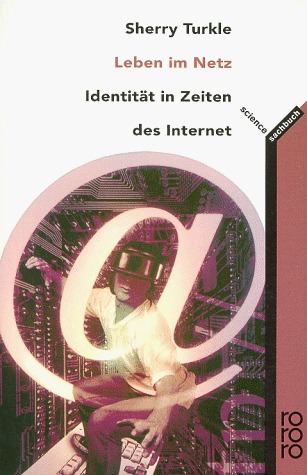
Leben im Netz: Identität in Zeiten des Internet
"Life on the Screen" is a book not about computers, but about people and how computers are causing us to reevaluate our identities in the age of the Internet. We are using life on the screen to engage in new ways of thinking about evolution, relationships, politics, sex, and the self. "Life on the Screen" traces a set of boundary negotiations, telling the story of the changing impact of the computer on our psychological lives and our evolving ideas about minds, bodies, and machines. What is emerging, Turkle says, is a new sense of identity-- as decentered and multiple. She describes trends in computer design, in artificial intelligence, and in people's experiences of virtual environments that confirm a dramatic shift in our notions of self, other, machine, and world. The computer emerges as an object that brings postmodernism down to earth.
543 pages, Paperback
First published November 30, 1995
About the author
Sherry Turkle
25 books557 followersSherry Turkle is Abby Rockefeller Mauzé Professor of the Social Studies of Science and Technology in the Program in Science, Technology, and Society at MIT and the founder (2001) and current director of the MIT Initiative on Technology and Self. Professor Turkle received a joint doctorate in sociology and personality psychology from Harvard University and is a licensed clinical psychologist.
Professor Turkle writes on the "subjective side" of people's relationships with technology, especially computers. She is an expert on mobile technology, social networking, and sociable robotics. Profiles of Professor Turkle have appeared in such publications as The New York Times, Scientific American, and Wired Magazine. She has been named "woman of the year" by Ms. Magazine and among the "forty under forty" who are changing the nation by Esquire Magazine. She is a featured media commentator on the social and psychological effects of technology for CBS, NBC, ABC, CNN, the BBC, and NPR, including appearances on such programs as Nightline, Frontline, 20/20, and The Colbert Report.
Professor Turkle writes on the "subjective side" of people's relationships with technology, especially computers. She is an expert on mobile technology, social networking, and sociable robotics. Profiles of Professor Turkle have appeared in such publications as The New York Times, Scientific American, and Wired Magazine. She has been named "woman of the year" by Ms. Magazine and among the "forty under forty" who are changing the nation by Esquire Magazine. She is a featured media commentator on the social and psychological effects of technology for CBS, NBC, ABC, CNN, the BBC, and NPR, including appearances on such programs as Nightline, Frontline, 20/20, and The Colbert Report.
Ratings & Reviews
Friends & Following
Create a free account to discover what your friends think of this book!
Community Reviews
Displaying 1 - 30 of 41 reviews

January 15, 2010
Oh my goodness, this book is absolutely *amazing.* What a truly insightful cultural study on computers and psychology, Internet culture, and contemporary life. Sherry Turkle writes in an easy-to-read manner, and references a variety of research studies and human experiences to tell the captivating story of "life on the screen."
Some quotable quotes:
1) "But in the daily practice of many computer users, windows have become a powerful metaphor for thinking about the self as a multiple, distributed system." (p. 14)
2) Interesting: "Kitchen mathematics relies on the familiar feel and touch of everyday activities." (p. 57)
3) "Exploring the Web is a process of trying one thing, then another, of making connections, of bringing disparate elements together. It is an exercise in bricolage." (p. 61)
4) "Certain human actions depended on the soul and the spirit, the possibilities of spontaneity over programming." (p. 82)
5) Love this: "Some computers might be considered intelligent and might even become conscious, but they are not born of mothers, raised in families, they do not know the pain of loss, or live with the certainty that they will die." (p. 84)
6) "And of course, a machine could never grasp human meanings that reach beyond language, 'the glance that a mother and father share over the bed of a sleeping child.'" (p. 108)
7) "Although our culture has traditionally presented consistency and coherence as natural, feelings of fragmentation abound, now more than ever. Indeed, it has been argued that these feelings of fragmentation characterize postmodern life." (p. 144)
8) "Meanwhile, social beings that we are, we are trying (as Marshall McLuhan said) to retribalize." (p. 178) -- as a result of lack of a main street, union hall, or town meeting
9) "But is it really sensible to suggest that the way to revitalize community is to site alone in our rooms, typing at our networked computers and filling our lives with virtual friends?" (p. 235)
As a sidebar: I read this book with Allison, one of my very good college friends! It was a great way to stay in touch long-distance.
Some quotable quotes:
1) "But in the daily practice of many computer users, windows have become a powerful metaphor for thinking about the self as a multiple, distributed system." (p. 14)
2) Interesting: "Kitchen mathematics relies on the familiar feel and touch of everyday activities." (p. 57)
3) "Exploring the Web is a process of trying one thing, then another, of making connections, of bringing disparate elements together. It is an exercise in bricolage." (p. 61)
4) "Certain human actions depended on the soul and the spirit, the possibilities of spontaneity over programming." (p. 82)
5) Love this: "Some computers might be considered intelligent and might even become conscious, but they are not born of mothers, raised in families, they do not know the pain of loss, or live with the certainty that they will die." (p. 84)
6) "And of course, a machine could never grasp human meanings that reach beyond language, 'the glance that a mother and father share over the bed of a sleeping child.'" (p. 108)
7) "Although our culture has traditionally presented consistency and coherence as natural, feelings of fragmentation abound, now more than ever. Indeed, it has been argued that these feelings of fragmentation characterize postmodern life." (p. 144)
8) "Meanwhile, social beings that we are, we are trying (as Marshall McLuhan said) to retribalize." (p. 178) -- as a result of lack of a main street, union hall, or town meeting
9) "But is it really sensible to suggest that the way to revitalize community is to site alone in our rooms, typing at our networked computers and filling our lives with virtual friends?" (p. 235)
As a sidebar: I read this book with Allison, one of my very good college friends! It was a great way to stay in touch long-distance.

October 15, 2015
This 20-year-old book was a chore to read. This was not a case of reading an older text and realizing a great mind predicted the future. Turkle completely missed the mark. She expresses no or little concept of how people have come to use computers and the internet. The book is a swamp of outdated and poorly applied Freudian drivel and misguided sociological and psychological thoughts.
Then I thought, huh, maybe she's not analyzing how users approach computers, but how programmers do. This makes more sense, as she (I believe) worked or works at MIT. In this sense, it's possibly that she was so enmeshed with 80s and 90s computer culture (those who designed computers back then), who were largely convinced they were godlike and believed what they were doing bordered on the epic, that she couldn't see the everyday applications and implications of computers. Or maybe I'm just underwhelmed.
Turkle envisions unworkable ideas becoming major issues in the future (that is, today) which are not now major issues. For example, she focuses on us forming personal connections with tech which keep us from real people, as if we'd rather spend all day flirting with Siri. I got bored and may have missed it, but she seems to never grasp the social media phenomenon.
So basically, an unreadable snooze. The academic tone is the least of this book's problems. Read it if you (a) need a cure for insomnia or (b) want to read someone predicting the future who is 95% incorrect.
Then I thought, huh, maybe she's not analyzing how users approach computers, but how programmers do. This makes more sense, as she (I believe) worked or works at MIT. In this sense, it's possibly that she was so enmeshed with 80s and 90s computer culture (those who designed computers back then), who were largely convinced they were godlike and believed what they were doing bordered on the epic, that she couldn't see the everyday applications and implications of computers. Or maybe I'm just underwhelmed.
Turkle envisions unworkable ideas becoming major issues in the future (that is, today) which are not now major issues. For example, she focuses on us forming personal connections with tech which keep us from real people, as if we'd rather spend all day flirting with Siri. I got bored and may have missed it, but she seems to never grasp the social media phenomenon.
So basically, an unreadable snooze. The academic tone is the least of this book's problems. Read it if you (a) need a cure for insomnia or (b) want to read someone predicting the future who is 95% incorrect.

April 19, 2024
Although highly outdated in 2024, the beauty of this books resides in the perspective of the reader. I liked it because for me this was an amazing snapshot of history, of how people developed their relationship to computers years before I was even born.
It was very interesting to dive in the psychological aspects of human computer interaction and although it talked a little bit too much (for my personal taste) about MUDs it still managed to keep me hooked and present topics I also found interesting.
I really liked the comparisons she found between art and computers, how it explained the process of the computers becoming a second self and how just like Pygmalion, users fell in love with their creation of a simulated self.
It was very interesting to dive in the psychological aspects of human computer interaction and although it talked a little bit too much (for my personal taste) about MUDs it still managed to keep me hooked and present topics I also found interesting.
I really liked the comparisons she found between art and computers, how it explained the process of the computers becoming a second self and how just like Pygmalion, users fell in love with their creation of a simulated self.

August 6, 2026
I find Turkle's approach to the multiplicity of identity and identity play incredibly limited in this, even taking into account the era of production. It's a useful text because you can't engage with STS without running into her, but her fixation on simulation and seduction as primary elements driving the use of computers feels oddly shortsighted.

September 22, 2023
Amazone
Postmodernist vagueries and mostly trivial observations
If reading postmodernist types of things turns you on, you'll like this book. The author talks a lot about how computers have moved from "modernist calculation" to "postmodernist simulation."
Why there is a need to attach the modernist-postmodernist modifiers to calculation and simulation is never explained, and I suspect it is just done to give the book a tres chic intellectual veneer.
As with nearly all authors who use the term, the author does not define "postmodernism" or explain what it has to do with anything in her book.
Also a lot of vague talk about how "people didn't used to like to do" such and so a thing with computers but now "people like to do" such and so something other thing with computers a lot more.
No data of course, that would offend the postmodernists reading the book.
An important - VERY important - topic treated in a shabby manner.
Buckeye
---
The continuation of a fallacy
Turkle's book is a good read, but can not be taken as authoritative. She seems to have fallen into the same trap as most of the online researchers do.
Turkle expresses her findings as though they come from a similar group of online people. The Internet is filled with various groups and ideologies.
Cross-cultural comparison is fine, but considering everyone online as the starting point for an argument is just asking for disaster. It is because of this that Sherry and many others like her have written books that are good for a read but useless academically.
dag
----
and one weirdly odd glowing review
[and a lot of identity bullshit]
High Quality - A Suggested Read
This book is a serious look at the concept of identity and how identity is shaped on the Internet and through computer mediation.
Her major topic is how humans contain self on the Internet. She also spends a great deal of time discussing relationships on the Internet.
With splintered selves involved, relationships become more complex. Her research on the way women and men view online sexuality is fascinating. Anyone interested in how the young people of the very near future will discover their sexual selves would do well to read this book.
While Turkle is fairly straightforward in her findings, they may terrify some readers. This is a completely new sexuality, a completely foreign way of doing things.
Her view is, of course, fairly clinical, but, in the end, I think she shows an amazing affinity with the people she has worked with. Turkle is not worried about the splintering of self.
On the contrary, she thinks that some of these tactics: being able to play with and discover parts of yourself that you normally don't interact with is vital to development and mental health.
Another area that Turkle tackles is Artificial Intelligence. She considers AI to be the next frontier. These AI will be interacted with as a matter of course in the coming years, according to the author.
Again, this area enthralls some readers and frightens others.
Turkle is excited about what AI can do in terms of promoting dialog.
Turkle sees the Internet challenging notions of what it means to be alive, notions of true identity, and the idea of community.
Turkle is at her best when she explores the concept of how people view themselves online.
How they splinter off bits of their personality into different entities and play with and shape those identities.
I can heartily suggest this book for anyone that works with K-12 students, for it is these students that are growing up on the screen.
These are the students that are discovering community outside their immediate circle at younger and younger ages.
These are the students that are discovering the meaning of identity online.
---
one more for the weirdo basket
[it's all about morphing man... like a power ranger identification of the self]
[and the Zero of the Signified]
Constructing Identity in the Culture of Simulation
The author presents in her book many thoughtful and provocating ways computers are being used.
Starting out with computer games as places for teenagers to hide out to scientists trying to create artificial life to children "morphing" through a series of virtual personae.
On the Internet, confrontations with technology collides with ones sense of human identity.
Ms. Turkle takes the reader into the text-based games where over ten thousand players can create a character or several characters specifying genders or any other physical and psychological attributes.
This book presents stories of how artificial intelligence (AI) is being re-visited.
Models are being designed to attempt to simulate brain processes.
Furthermore, she presents her idea that AI is borrowed freely from the languages of biology and parenting, with examples such as the high school English teacher and basketball coach who tried using small connected programs to help him figure out what team to field.
But readers may also find interesting is her discussion on the multi-users-domains (MUDs). The information the author has gathered from her research is very informative and yet somewhat disturbing.
She presents insight on how and why individuals seek to take on new or different personas on line. Her findings point out the problems people face in life and then escape to the Internet as a release.
One of the passages from her book readers might find to be very provocative.
She says "Women and men tell me that the rooms and mazes on MUDs are safer than city streets, virtual sex is safer than sex anywhere, MUD friendships are more intense than real ones, and when things don't work out you can always leave!
After reading her book, a reader should have a better understanding on why so many take to the MUDs in order to escape the pressures and the problems that the real world presents.
One can only assume that these individuals would rather indulge in these activities than solve their problems.
In summary, Ms Turkle has described "the computer as a tool, as a mirror and as a gateway to a world through a looking glass of a screen.
In each of these domains we are experiencing a complex interweaving of modern and postmodern, calculation and simulation".
Frank W. Cornell
........
........
Remember!
Because I identify with Montgomery Burns on the Simpsons, I'm looking into the black mirror of the self, and the experience is a wonderfully complex interweaving of modern calculation, postmodern simulation, modern simulation and postmodern calculation. And as i told my nurse Agent 86, "And loving it!"
Max from CONTROL
Postmodernist vagueries and mostly trivial observations
If reading postmodernist types of things turns you on, you'll like this book. The author talks a lot about how computers have moved from "modernist calculation" to "postmodernist simulation."
Why there is a need to attach the modernist-postmodernist modifiers to calculation and simulation is never explained, and I suspect it is just done to give the book a tres chic intellectual veneer.
As with nearly all authors who use the term, the author does not define "postmodernism" or explain what it has to do with anything in her book.
Also a lot of vague talk about how "people didn't used to like to do" such and so a thing with computers but now "people like to do" such and so something other thing with computers a lot more.
No data of course, that would offend the postmodernists reading the book.
An important - VERY important - topic treated in a shabby manner.
Buckeye
---
The continuation of a fallacy
Turkle's book is a good read, but can not be taken as authoritative. She seems to have fallen into the same trap as most of the online researchers do.
Turkle expresses her findings as though they come from a similar group of online people. The Internet is filled with various groups and ideologies.
Cross-cultural comparison is fine, but considering everyone online as the starting point for an argument is just asking for disaster. It is because of this that Sherry and many others like her have written books that are good for a read but useless academically.
dag
----
and one weirdly odd glowing review
[and a lot of identity bullshit]
High Quality - A Suggested Read
This book is a serious look at the concept of identity and how identity is shaped on the Internet and through computer mediation.
Her major topic is how humans contain self on the Internet. She also spends a great deal of time discussing relationships on the Internet.
With splintered selves involved, relationships become more complex. Her research on the way women and men view online sexuality is fascinating. Anyone interested in how the young people of the very near future will discover their sexual selves would do well to read this book.
While Turkle is fairly straightforward in her findings, they may terrify some readers. This is a completely new sexuality, a completely foreign way of doing things.
Her view is, of course, fairly clinical, but, in the end, I think she shows an amazing affinity with the people she has worked with. Turkle is not worried about the splintering of self.
On the contrary, she thinks that some of these tactics: being able to play with and discover parts of yourself that you normally don't interact with is vital to development and mental health.
Another area that Turkle tackles is Artificial Intelligence. She considers AI to be the next frontier. These AI will be interacted with as a matter of course in the coming years, according to the author.
Again, this area enthralls some readers and frightens others.
Turkle is excited about what AI can do in terms of promoting dialog.
Turkle sees the Internet challenging notions of what it means to be alive, notions of true identity, and the idea of community.
Turkle is at her best when she explores the concept of how people view themselves online.
How they splinter off bits of their personality into different entities and play with and shape those identities.
I can heartily suggest this book for anyone that works with K-12 students, for it is these students that are growing up on the screen.
These are the students that are discovering community outside their immediate circle at younger and younger ages.
These are the students that are discovering the meaning of identity online.
---
one more for the weirdo basket
[it's all about morphing man... like a power ranger identification of the self]
[and the Zero of the Signified]
Constructing Identity in the Culture of Simulation
The author presents in her book many thoughtful and provocating ways computers are being used.
Starting out with computer games as places for teenagers to hide out to scientists trying to create artificial life to children "morphing" through a series of virtual personae.
On the Internet, confrontations with technology collides with ones sense of human identity.
Ms. Turkle takes the reader into the text-based games where over ten thousand players can create a character or several characters specifying genders or any other physical and psychological attributes.
This book presents stories of how artificial intelligence (AI) is being re-visited.
Models are being designed to attempt to simulate brain processes.
Furthermore, she presents her idea that AI is borrowed freely from the languages of biology and parenting, with examples such as the high school English teacher and basketball coach who tried using small connected programs to help him figure out what team to field.
But readers may also find interesting is her discussion on the multi-users-domains (MUDs). The information the author has gathered from her research is very informative and yet somewhat disturbing.
She presents insight on how and why individuals seek to take on new or different personas on line. Her findings point out the problems people face in life and then escape to the Internet as a release.
One of the passages from her book readers might find to be very provocative.
She says "Women and men tell me that the rooms and mazes on MUDs are safer than city streets, virtual sex is safer than sex anywhere, MUD friendships are more intense than real ones, and when things don't work out you can always leave!
After reading her book, a reader should have a better understanding on why so many take to the MUDs in order to escape the pressures and the problems that the real world presents.
One can only assume that these individuals would rather indulge in these activities than solve their problems.
In summary, Ms Turkle has described "the computer as a tool, as a mirror and as a gateway to a world through a looking glass of a screen.
In each of these domains we are experiencing a complex interweaving of modern and postmodern, calculation and simulation".
Frank W. Cornell
........
........
Remember!
Because I identify with Montgomery Burns on the Simpsons, I'm looking into the black mirror of the self, and the experience is a wonderfully complex interweaving of modern calculation, postmodern simulation, modern simulation and postmodern calculation. And as i told my nurse Agent 86, "And loving it!"
Max from CONTROL

August 10, 2013
Interesting, if somewhat dryly academic at times. This investigates some of the sociological ramifications of the internet and online socializing. There were some good ideas, but not all were explored well.
It also seemed to be written before some major game changers happened, like Second Life and Warcraft, to name two. It was worth the read, especially as I got it for free, but it wouldn't be for everyone and I can't say I'd recommend buying it.
I do give her points for tackling a field not too many have, to the best of my knowledge.
It also seemed to be written before some major game changers happened, like Second Life and Warcraft, to name two. It was worth the read, especially as I got it for free, but it wouldn't be for everyone and I can't say I'd recommend buying it.
I do give her points for tackling a field not too many have, to the best of my knowledge.

December 3, 2007
This book was groundbreaking at the time, now it's very dated, which can make it difficult at times. Again, I have some reservations about the methodologies that I just can't ignore. If you're interested in identity and the Internet though, you need to read it - it is referenced EVERYWHERE and you just need to be familiar with some of the early work that really got the ball rolling for identity politics and the Internet.

January 22, 2017
I skimmed through most of the book, and read a couple of relevant chapters. It was interesting, but not very revolutionary, too anecdotal, drew strange conclusions, and talked waaaay too much about Freud.

October 26, 2018
Turkle's writing is always so clear and engaging that it's just a fun time to read her work. This book was very interesting as an earlier investigation into the role of technology, culture, and identity, and I was surprised at how much of her later work could be seen creeping in here, even amidst a much clearer positive orientation towards the impact of technology. Some of the discussions and ideas that she explores here are astoundingly strange, but are definitely worth reading not only for their historical value in the story of the internet but also for the way that they provide a foundational sense of where conversations surrounding identity and the internet have come from. Overall a great read that raises a lot of questions, but also provides a ton of useful categories and terms for thinking. I especially appreciated Turkle's consistent return to Jameson's establishing definition of postmodernism, which certainly helped me follow some of the book's logic and to enjoy the critiques that she was making and thinking through.

May 20, 2017
Los artilugios tecnológicos resultan ser una extensión de las personas en la actualidad, del mismo modo como nos mostramos en las redes sociales ha comenzado a modelar el comportamiento, el pensamiento y la forma en que percibimos nuestro cuerpo.
La psicóloga estadounidense Sherry Turkle hace un análisis de cómo han cambiado nuestras percepciones frente a diversos contextos humanos a partir de la manera cómo interactuamos frente a las pantallas y el ciberespacio. Describe en cada capítulo la evolución de las relaciones sociales mediadas por los computadores con una clarividente precisión.
A pesar de que el libro fue escrito el 1995, las percepciones y observaciones de Turkle aún tienen siguen vigentes en tiempos de teléfonos inteligentes y el maremoto informativo.
La psicóloga estadounidense Sherry Turkle hace un análisis de cómo han cambiado nuestras percepciones frente a diversos contextos humanos a partir de la manera cómo interactuamos frente a las pantallas y el ciberespacio. Describe en cada capítulo la evolución de las relaciones sociales mediadas por los computadores con una clarividente precisión.
A pesar de que el libro fue escrito el 1995, las percepciones y observaciones de Turkle aún tienen siguen vigentes en tiempos de teléfonos inteligentes y el maremoto informativo.
January 28, 2019
Täytin kymmenen vuonna 1995 ja meillä oli silloin ensimmäinen (tai toinen) tietokone. Nettiyhteys taisi olla vasta tulossa. Suomi voitti jääkiekon maailmanmestaruuden ensimmäistä kertaa. Tuntuu aikana ja ympäristönä kaukaiselta, ja sitä se oli tässä kirjassakin. Teknologia on edistynyt valtavasti ja ihmiset ovat luoneet uusia tapoja käyttää sitä. Tietokoneet, tabletit ja älypuhelimet ovat (minulla) enemmänkin väliaine, laite, jolla pääsee käsiksi internetiin, ei jokin, johon luodaan suhde tai joka nähdään älykkäänä tai lähes elävänä. Silti kirjan kuvaus, ehkä juuri vierautensa ja kaukaisuutensa vuoksi, antoi tavan peilata omia ajatuksia tietokoneista, tietoyhteiskunnasta ja internetistä.

March 27, 2018
Inevitably a bit dated facts-wise for a 20+ year old book on emerging technology but still an amazing critical look at AI, personhood, identity, and humanity through the lens of MUDs, early internet, and a little D&D. The literary analysis of early operating systems as both media and texts was especially wonderful.

January 7, 2022
Really fun, retro, yet educational dig into the psychology of being online. Sherry Turkle's work deserves to be visited by anyone interested in this very important topic, as clearly something is happening underneath the surface for humans the more immersed we get into the digital world.
June 5, 2026
Very much of its time even if already then it managed to touch issues that wouldn't be seriously talked about in the mainstream until far later. Chapter 8 especially feels both very topical and awfully old hat from a modern point of view.

June 18, 2019
A cultural study on the early days of the internet and identity. A great historical account of a very explorative time.

August 18, 2019
One of the finest novels in the English language, but unputdownable.

February 15, 2023
Bueno, al menos no es tecnófoba

August 6, 2023
Loved this book. It made some really interesting points about identity and technology. If that's your thing, I would recommend, even if the technology mentioned is quite dated now.

May 30, 2024
I can't believe this was written in the 90s. I feel like things have changed so marginally. Also Omg I love her so much.

Read
March 6, 2017Academic style makes it a book you wouldn't read just for fun.
September 15, 2014
Highly insightful, if a bit of a difficult read at times. Be aware, this isn't a light read - this is a book you study, somewhat. It is, however, brilliant and very well worth a read.
Though this book's description almost universally brings up how it discusses how we form identity and work with multiple personalities on the Internet, only about a third of the book is about that in a literal sense. The first third of the book is primarily focused on how our ideas of computing have evolved since the inception of the computer - from modernist calculation to postmodernist simulation, from rigid, rule-based programming styles to tinkering, constructivist programming styles. The second third primarily focuses on how computers and networks have challenged our ideas of what it means to be alive and intelligent, and to question to what extent we are machine and vice versa.
This had initially annoyed me, as I thought these were merely opening acts before the main performance - but what I found instead once I arrived at the final third of the book, was that these previous ideas were very necessary to enhance the discussion. Overall, it is very worthwhile to read this book until the very end, as all the ideas presented build upon each other. It feels criminal how the other portions of the book are barely mentioned in the stock summaries I have seen.
Of course, there is the obvious to mention - this book is old now. It was first published in 1995, and obviously the Internet has come a long way since then - in particular, MUDs are virtually unknown, nowadays. But now a secondary form of study arises from the book - an analysis of what we thought the Internet might bring us versus what it actually has brought us, which leads to a better understanding of our current situation within it. The knowledge here may be old, but it is not antiquated. For someone highly interested in technosociology and the psychology of personality, this is an invaluable read.
I also feel I should add a small disclaimer - the book isn't exactly 355 pages long, as its profile states. It's closer 270 pages; the remaining portion is an annotated bibliography, index of topics, and 3 or 4 pages of how the book was written. Depending on your take, it might be a shorter read than you'd be lead to believe.
I deduct a star only for the books sometimes dodgy use of mechanics and grammar - for the most part it is fine, but some sentences really have to be reread a few times. Granted this is already a heavy, scholarly read, this issue can sometimes really hinder the reading.
Four out of five stars. Highly recommended.
Though this book's description almost universally brings up how it discusses how we form identity and work with multiple personalities on the Internet, only about a third of the book is about that in a literal sense. The first third of the book is primarily focused on how our ideas of computing have evolved since the inception of the computer - from modernist calculation to postmodernist simulation, from rigid, rule-based programming styles to tinkering, constructivist programming styles. The second third primarily focuses on how computers and networks have challenged our ideas of what it means to be alive and intelligent, and to question to what extent we are machine and vice versa.
This had initially annoyed me, as I thought these were merely opening acts before the main performance - but what I found instead once I arrived at the final third of the book, was that these previous ideas were very necessary to enhance the discussion. Overall, it is very worthwhile to read this book until the very end, as all the ideas presented build upon each other. It feels criminal how the other portions of the book are barely mentioned in the stock summaries I have seen.
Of course, there is the obvious to mention - this book is old now. It was first published in 1995, and obviously the Internet has come a long way since then - in particular, MUDs are virtually unknown, nowadays. But now a secondary form of study arises from the book - an analysis of what we thought the Internet might bring us versus what it actually has brought us, which leads to a better understanding of our current situation within it. The knowledge here may be old, but it is not antiquated. For someone highly interested in technosociology and the psychology of personality, this is an invaluable read.
I also feel I should add a small disclaimer - the book isn't exactly 355 pages long, as its profile states. It's closer 270 pages; the remaining portion is an annotated bibliography, index of topics, and 3 or 4 pages of how the book was written. Depending on your take, it might be a shorter read than you'd be lead to believe.
I deduct a star only for the books sometimes dodgy use of mechanics and grammar - for the most part it is fine, but some sentences really have to be reread a few times. Granted this is already a heavy, scholarly read, this issue can sometimes really hinder the reading.
Four out of five stars. Highly recommended.

March 18, 2010
Aleks Krotoski, broadcaster, journalist, and academic specialising in technology and interactivity, has chosen to discuss Sherry Turkle’s Life on the Screen: Identity in the Age of the Internet on FiveBooks as one of the top five on her subject - Virtual Living, saying that:
"... Turkle is a brilliant observer of the online world, and what makes the Net incredibly interesting is that it was never intended to be a social medium. They created this kind of pipeline for trading hard data between scientists and sharing computer resources in the military and for some reason we insane people decide to start pouring other things down that pipeline, like, for example, our social lives...."
The full interview is available here: http://five-books.com/interviews/aleks-krotoski
Writer Lev Grossman has chosen to discuss Sherry Turkle’s Life on the Screen: Identity in the Age of the Internet on FiveBooks as one of the top five on his subject- The World Wide Web, saying that:
"...What is emerging, Turkle argues, is a new sense of identity, one which is de-centred and multiple. She describes the trends in computer design, in artificial intelligence, and in people's experience of virtual environments..."
The full interview is available here: http://five-books.com/interviews/lev-grossman
"... Turkle is a brilliant observer of the online world, and what makes the Net incredibly interesting is that it was never intended to be a social medium. They created this kind of pipeline for trading hard data between scientists and sharing computer resources in the military and for some reason we insane people decide to start pouring other things down that pipeline, like, for example, our social lives...."
The full interview is available here: http://five-books.com/interviews/aleks-krotoski
Writer Lev Grossman has chosen to discuss Sherry Turkle’s Life on the Screen: Identity in the Age of the Internet on FiveBooks as one of the top five on his subject- The World Wide Web, saying that:
"...What is emerging, Turkle argues, is a new sense of identity, one which is de-centred and multiple. She describes the trends in computer design, in artificial intelligence, and in people's experience of virtual environments..."
The full interview is available here: http://five-books.com/interviews/lev-grossman

August 5, 2017
Unnervingly relevant and accurate by today's standards and vertiginous evolution of online culture.

January 27, 2012
Turkle's Alone Together, published last year, is good, but not nearly as engaged with the more fundamental ideas that lie beneath our psychology and technology's effect on it. The first couple sections of Life on the Screen address a continuing dichotomy between top-down design and learn through use. Or, as Turkle puts it, between modernists and postmodernists.
And maybe that's what I appreciate more about Life on the Screen Turkle is more invested in relating the world of technology to the world at large. She uses terms that would be more familiar to culture critics. Alone Together feels more like a series of case studies. They're fun to read. But I feel more compelled by Life on the Screen. I pose more significant questions after reading the chapters in it.
Both books wrestle with the definition of "artificial intelligence," for instance. And both consider whether its human perception of intelligence or objectively fulfilled notions of intelligence that would define A.I. It's just Life on the Screen is more willing to entertain the objective definition of intelligence, and therefore to truly open the issues surrounding our work with the machines.
And maybe that's what I appreciate more about Life on the Screen Turkle is more invested in relating the world of technology to the world at large. She uses terms that would be more familiar to culture critics. Alone Together feels more like a series of case studies. They're fun to read. But I feel more compelled by Life on the Screen. I pose more significant questions after reading the chapters in it.
Both books wrestle with the definition of "artificial intelligence," for instance. And both consider whether its human perception of intelligence or objectively fulfilled notions of intelligence that would define A.I. It's just Life on the Screen is more willing to entertain the objective definition of intelligence, and therefore to truly open the issues surrounding our work with the machines.
July 7, 2010
Interesting to get such a detailed perspective on MUDers and early users of the internet. I think the book has still remained fairly relevant for a relatively small subculture, but I question it's relevance in really understanding internet users of today. Given that there has been such a shift away from anonymous, role-playing types of interactions into more personal types of connections, can these same principles apply?
My favorite part of the book was the part that discussed formal software development vs bricolage. I have always considered both to be very justifiable and worthwhile in different situations and it is nice to read about others that feel the same.
My favorite part of the book was the part that discussed formal software development vs bricolage. I have always considered both to be very justifiable and worthwhile in different situations and it is nice to read about others that feel the same.

June 1, 2014
Some very interesting ideas are explored. But I would have liked it better if it went into more depth on one idea instead of giving only one or a couple of examples for each. The evidence seemed mostly anecdotal instead of exploring whether many people would have the same kinds of experiences. I remember some of the technologies she explored, like MUDs. So especially there I was surprised how shallow and obvious some of her conclusions were.
October 12, 2008
Este libro creo que salió antes de la película "The Matrix". Es un importante estudio que nos ayuda a reflexionar sobre la dependencia de la que podemos ser víctimas con los dispositivos con pantalla. (computadoras, celulares, video juegos, tv, relojes, etc) ideal para releer y no olvidar la advertencia.
November 28, 2009
Presents the challenges to the solitary self with multiple selves in open windows, mirrors of different aspects of self. The power given to us by Internet and other network infrastructure by their carrying diverse applications lets us explore our personal complexities. I don't buy that this is inevitable, nor that such things as gender can change - just that change and evolution is possible.

December 6, 2012
Many interesting points, and a lot of angles covered, the only real flaw with this book is the abundance of separate directions that it takes the reader in, with similar conclusions. There is a tonne of good information here, and this is a perfect grounding book for how real and simulated (through digital media) life interact with one another. Also, loads of interesting case studies and stories.

February 25, 2013
I read chaptes 0, 1, 9 and 10 and skimmed chapters 2,3,4,5,6 and 8 as they aren't relevant to my paper and subject. Turkle brings up some issues that are still point on today, but she also spends way too much of her energy on MUDs. There are other ways to create an identiy online and I was disappointed she didn't explore any of them.
Displaying 1 - 30 of 41 reviews