

What do you think?
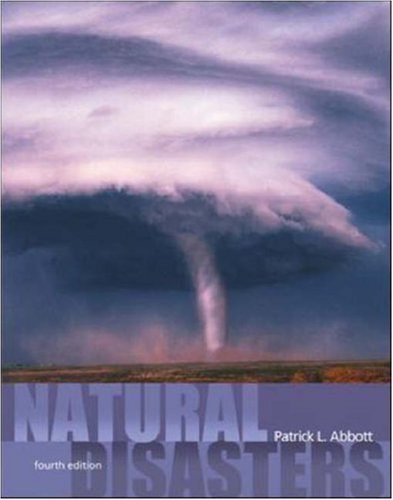
Natural Disasters
This book focuses on natural disasters: how the normal processes of the Earth concentrate their energies and deal heavy blows to humans and their structures. "Natural Disasters" is concerned with how the natural world operates and, in so doing, kills and maims humans and destroys their works.
Throughout the book, certain themes are maintained:
* energy sources underlying disasters
* plate tectonics and climate change
* Earth processes operating in rock, water, and atmosphere
* significance of geologic time
* complexities of multiple variables operating simultaneously
* detailed and readable case histories.
The text aims to explain important principles about the Earth and then develop further understanding through numerous case histories. The book includes recent happenings such as the Western United States wildfires during the summer 2000 and the Los Alamos prescribed burn, also occurring in 2000.
416 pages, Paperback
First published January 1, 1996
About the author
Patrick L. Abbott
23 books5 followersPatrick L. Abbott is professor emeritus of geology at San Diego State University. Over 60 articles in various publications and more than 20 published books have given him a deserved reputation as a prolific author and a recognized authority on the geology of San Diego County.
Ratings & Reviews
Friends & Following
Create a free account to discover what your friends think of this book!
Community Reviews
Displaying 1 - 6 of 6 reviews

May 2, 2021
4.45 stars. (Might raise to 5.)*
Among the better textbooks I’ve had to read. And thank goodness for that.
WIL
1) authors who care about students. Some textbooks read like they’re written by industry professionals who have never spoken to a Real Student in their lives. This is not one of those. Yes, I think the authors did have to defer to the detached tone on occasion (probably to placate publishers who are of the aforementioned industry professional group), but the general tone was approachable and warm. NEED MORE TEXTBOOKS LIKE THIS IN MY LIFE.
2) passionate authors. Beyond just being approachable in tone, the book also reads like it was written with love. The authors’ adoration for the subjects comes through very strongly in this, which makes learning all the more enjoyable.
3) not overburdened with stats. BLESS YOU AUTHORS for keeping the numbers to a minimum and deferring to *qualitative* analysis. This isn’t to say there were no numbers- there certainly were charts abound, but the stats were not the central focus. The focus was on explanation rather than sheer numerical memorization.
4) earth science intros. Just really well written with practical examples. God. Amazing.
5) generally well-organized. The most well-organized book of the semester. Bravo, folks. The competition really wasn’t that steep, but still. The book was pretty easy to follow and was constructed (chapter position/page layout) *logically.* This, bizarrely, seems to be a rarity these days.
6) FANTASTIC mnemonics and memorization tricks. Relates very strongly to WIL1. I was so impressed with the authors’ abilities to connect with the students asynchronously through mnemonics and memorization tools. I mean, wow. Mad impressive.
WIDL
1) some sections were longer than necessary. Occasionally witnessed some repetition, but hey, who doesn’t repeat themselves from time to time in writing?
2) too many examples that overwhelmed me. At some point, after reading about 10 different natural disasters of the same hazard type they all begin to blend together. I think this book could really use some archetypal names. Like calling one disaster “The One with The Broken Dam” or “The One with Offgassing” might help students retain the information more. And yea yea you might argue that “students can do that on their own! They need a chance to show that they’re better at study skills!!!” No. Just no. We’re inundated with information already. We’ve proven our study skills. Help a student out, yea?
NEUTRAL GROUND
2) oof TM. I had similar commentary for Andrew Dessler’s textbook on climate change. Honestly this stuff is just so *heavy.* I had to read this for my geography of natural hazards class, and it could really get me down. Seeing all those lives reduced to numbers, and all those numbers equated to dollar signs, and all those catastrophic events piled into concentrated masses of suffering... it was rough. The authors do a pretty decent job of keeping it generally lighthearted for such inherently depressing material, but it’s not exactly a jolly read. This isn’t WIDL bc it’s not the fault of the authors that natural disasters are deadly.
*the reason it’s not currently 5 stars is The Emotional Turbulence. Yes, this was well-written, and yes I was generally impressed, but this book also sent me into a mini-depression, and I’m having difficulty factoring that into the ratings.
Among the better textbooks I’ve had to read. And thank goodness for that.
WIL
1) authors who care about students. Some textbooks read like they’re written by industry professionals who have never spoken to a Real Student in their lives. This is not one of those. Yes, I think the authors did have to defer to the detached tone on occasion (probably to placate publishers who are of the aforementioned industry professional group), but the general tone was approachable and warm. NEED MORE TEXTBOOKS LIKE THIS IN MY LIFE.
2) passionate authors. Beyond just being approachable in tone, the book also reads like it was written with love. The authors’ adoration for the subjects comes through very strongly in this, which makes learning all the more enjoyable.
3) not overburdened with stats. BLESS YOU AUTHORS for keeping the numbers to a minimum and deferring to *qualitative* analysis. This isn’t to say there were no numbers- there certainly were charts abound, but the stats were not the central focus. The focus was on explanation rather than sheer numerical memorization.
4) earth science intros. Just really well written with practical examples. God. Amazing.
5) generally well-organized. The most well-organized book of the semester. Bravo, folks. The competition really wasn’t that steep, but still. The book was pretty easy to follow and was constructed (chapter position/page layout) *logically.* This, bizarrely, seems to be a rarity these days.
6) FANTASTIC mnemonics and memorization tricks. Relates very strongly to WIL1. I was so impressed with the authors’ abilities to connect with the students asynchronously through mnemonics and memorization tools. I mean, wow. Mad impressive.
WIDL
1) some sections were longer than necessary. Occasionally witnessed some repetition, but hey, who doesn’t repeat themselves from time to time in writing?
2) too many examples that overwhelmed me. At some point, after reading about 10 different natural disasters of the same hazard type they all begin to blend together. I think this book could really use some archetypal names. Like calling one disaster “The One with The Broken Dam” or “The One with Offgassing” might help students retain the information more. And yea yea you might argue that “students can do that on their own! They need a chance to show that they’re better at study skills!!!” No. Just no. We’re inundated with information already. We’ve proven our study skills. Help a student out, yea?
NEUTRAL GROUND
2) oof TM. I had similar commentary for Andrew Dessler’s textbook on climate change. Honestly this stuff is just so *heavy.* I had to read this for my geography of natural hazards class, and it could really get me down. Seeing all those lives reduced to numbers, and all those numbers equated to dollar signs, and all those catastrophic events piled into concentrated masses of suffering... it was rough. The authors do a pretty decent job of keeping it generally lighthearted for such inherently depressing material, but it’s not exactly a jolly read. This isn’t WIDL bc it’s not the fault of the authors that natural disasters are deadly.
*the reason it’s not currently 5 stars is The Emotional Turbulence. Yes, this was well-written, and yes I was generally impressed, but this book also sent me into a mini-depression, and I’m having difficulty factoring that into the ratings.

Read
May 6, 2025I know too much...

May 14, 2019
I can say that by reading Abbott's Natural Disasters I gained broader insight into the natural forces at work on our geologically active planet. There are many humbling real stories in this book and a load of critical data; they serve as warning to how lightly we usually take physical properties of our reality--the greater the magnitude of physical events, the deadlier they can be. A pipe break that floods your kitchen can be annoying, but when raging torrents caused by a surprising high volume of snow-melt cause a dam to rupture, much more than a wrench and a mop will be needed to fix the damage (the stuff that is fixable, that is). A book that allows you to gaze into the future, and think of what can be done now.

January 9, 2008
I read this textbook for my Natural Disasters geography course. The prof did a good job of associating the lecture back to the textbook, which obviously made this textbook a very worth-while read. I especially enjoyed the historical aspect of this text. I've learned of a number of events that I hadn't heard of, before. I also learned how to prevent my house from getting destroyed in a forest fire, which is pretty important to know!

July 25, 2013
Pretty good textbook, though I feel the flow could have been a bit better, especially those trying to take notes from it. I did like reading about the various scenarios and real world disasters, though the book is rather...well...depressing and scary.

October 25, 2015
UBC, Eosc 114 - The Catastrophic Earth: Natural Disasters. A lot of topics covered. Super long narrative text, including case studies. Overall, too much specific details.
Displaying 1 - 6 of 6 reviews