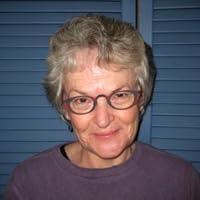
This powerful book gives readers a chance to experience Ethiopia through the personal experience of a writer who is both Ethiopian and American. It takes readers beyond headlines and stereotypes to a deeper understanding of the country. This is an absorbing account of the author’s return trip to Ethiopia as an adult, having left the country in exile with her family at age 11. She profiles relatives and friends who have remained in Ethiopia, and she writes movingly about Ethiopia’s recent past and its ancient history. She offers a clear-eyed analysis of the state of the country today, and her keen observations and personal experience will resonate with readers. This is a unique glimpse into a fascinating African country by a talented writer.
This book is marketed more as a memoir, but it's probably better described as a travelogue with bits of memoir interspersed throughout. In general, the memoir bits are more interesting than the travelogue aspect, though the travelogue has its moments as well. To the author's credit, I felt that she was genuine and frank, which is not always easy when writing a memoir that will be not be published posthumously! In several places, she is openly critical of the Ethiopian Orthodox Church as a sexist organization and states that she feels little connection to it. I have to wonder what kind of backlash she faced from her family and the Ethiopian community for saying so. I respected her honesty.
While I appreciated the memoir more than the travelogue, the travelogue had its great moments as well. Her description of Addis Ababa is right on target: "Addis Ababa... is not a city of public places. The Ethiopian capital does not boast pretty plazas, palaces, or civic buildings designed by architects and urban palnners; it is not a place where residents habitually stroll through public gardens or tree-lined avenues after the evening meal. Addis Ababa is a city of hidden sanctuaries, a chaotic and rather unattractive jumble that does not speak openly of the warm homes and other oases concealed behind tall compound walls." Yes. That's Addis Ababa, exactly.
My biggest complaint about the book is that it really could have been more than it was. It was only about 200 pages long, and certainly more pages could have been using explaining the cultural and political contexts. Haile seems to present historical events solely as she remembers them and is a bit lazy on the research. This leads to some questionable interpretations. For example, when Haile travels to Axum, she writes at some length (for a 200-page book, that is) about her dismay that the people were rude to her, and she is all but certain that this is because she speaks Amharic (the language of Addis Ababa and, more importantly, the aristocracy) rather than the Tigrinya of the region. My Ethiopian fiance, who is a native of Addis Ababa who also worked for years in the Tigray region, was rather scornful of this interpretation. When I asked him about it, he laughed. "These are the kindest, most welcoming people you'll ever meet in your life. I lived among them for years without speaking Tigrinya, and they always welcomed me. She is absolutely wrong." Who knows? But, to be fair, a lot of factors could have contributed to the rudeness. Perhaps they were contemptful of her for leaving her country and going to the US. Perhaps they were jealous. Perhaps she overreacted. But perhaps she should have spent more time in the region (or doing research about the people) before passing judgment on an entire region.
That being said, because of her honesty and at times very insightful observations (another example of which can be seen in the chapter in which she accompanied an aunt to the US Embassy), I would absolutely read a part two of this if she were to write one. She has room to improve, but it's still a solid debut book.
The most fascinating portion of this book for me was Haile's epilogue, a thoughtful chapter where she examines the multiple claims upon her identity by different languages, religions, societies, and continents. Born in Ethiopia, she left the country with her family in 1976, two years after the coup, and grew up in Minnesota, where her father worked at St John's college (which I have been to, and which is beautiful, and which has a working monastery on the grounds, and which is officially a tiny church and college community in the middle of nowhere).
Sadly, Haile didn't hold my interest with much else of the book. I learned a great deal about Ethiopia through her narrative of her return in 2001 - learned about the problems the country faces in trying to build and re-build an infrastructure; learned about its history of resisting colonization while embracing its own, distinct, Christian traditions. Yet the book had the tone of a textbook, even as it was a first-person reaction piece, and in the dissonance between my expectations for those two genres grew my dissatisfaction. I wanted either more history and more analysis, or more personal insight (which is why, I think, that final chapter held my attention so much). It's a good, quick book for learning something about one person's view of Ethiopia, I think, rather than a book about the self.
Rebecca (Ribka) Haile was born in Addas Ababa, Ethiopia, in 1975. She spent her early years there as a part of an educated upper middle class family. Her father was a religious scholar who specialized in the Ethiopian Orthodox Church. His work eventually put him on the wrong side of the coup that overthrew Haile Salassi. He was arrested, shot, and ended up paralyzed and permanently in a wheel chair. When he was released from prison and able to travel, he emigrated with his family to the United States with the help of the World Council of Churches. He got a position at St. John's University in central Minnesota. So, from the age of 10, Rebecca became an American from the upper Midwest.
This book mostly covers a month long visit that she and her husband made back to Ethiopia after her 25-year absence. She points out how some things stay the same while many others change dramatically. It is a fascinating way to look at modern (2007) Ethiopia and its people.
I think the thing that made this book dull for me was that it was very much on the surface. I didn't feel any fire or friction from it. It was a relatively quick read that I felt myself slogging through. On the plus side, I did not know about the rock-hewn churches of Lalibela before I read this book about a woman born in Ethiopia, fled to the US, returning to Ethiopia for a visit as an adult. And now I know about them.
I’m sure this travelogue is meaningful given the right personal history and context. However, I think I’m a bit too far removed from Ethio-America to understand the author’s journey. I appreciate her bittersweet writing on returning to a home that no longer feels like yours, but I can’t help but think that even deeper emotional reflection might have helped to further universalize this book. Or maybe the specificity is the point.
This book is the story of the author's return to her birth country, Ethiopia, after living most of her life in the United States. It offered an interesting, brief overview of the living conditions of different parts of Ethiopia. The book was okay, but nothing revelatory.
Interesting memoir about Ethiopia, family and memories. The writing is told as the author goes back to visit her birth country and recounts memories as she travels. Makes one ponder on what makes nationality. Birth, place, culture, family influence, circumstance. Political influence.
This was a nice introduction to culture and recent/ancient history of Ethiopia, seen through the very personal lens of an Ethiopian emigrant. Haile writes clearly and at all times, this is her story and her relationship with her country of origin. Her journey to Ethiopia as an adult causes her to reassess her self-definition as an Ethiopian (considering how American her viewpoints are) and her relationship to a country that her family fled from in fear of their lives in the 70's. Through that exploration, she also relays her admiration and amazement at the diversity of culture and the role that ancient history still plays (often but not always) in Ethiopian's daily life. Haile expresses great love, respect, and hope for Ethiopia by the end of the book while always acknowledging the country's shortcomings and struggles. My biggest critique is that I was never that captured by this story. It was intellectually interesting but somehow thin, in its style and content.
this book is a memoir, travelogue and historical account all rolled into one. i appreciated all the ethiopian history in this, and haile's account made the revolution real to me. everything is related through haile's personal experience of having to leave the country as a child because her father was a target of the military gov't after emperor selassie was overthrown in 1974. she makes her first trip back as a 36 year old woman and experiences ethiopia as the home that was stolen from her and explains the sense of alienation she feels upon her return. she explores what it means to be ethiopian and gives a clear, level headed picture of the what the country is like through the lens of a woman raised in the united states.
overall a good read if you are looking to learn more about ethiopia and it's more recent history.
I would not have come across this book if I didn't have an interest in Ethiopia , but I'm so glad I did. In some ways the Ethiopia story mirrors other African Countries. But in many ways it is very different, with its own culture, history and mythology. Rebecca Haile shares her own story, having left at 10 years old after the persecution of her father, and returning 25 years later. She gives a thoughtful perspective on what it means to be Ethiopian. She digs into the stories, the people, the religions and the choices of the country's leaders. It paints a wonderful and detailed portrait that reveals the complexity of the country.
I really loved this woman's honest thoughts on what it means to be Ethiopian. As an adoptive Mom of Ethiopian children it gave me some perspective on how to approach keeping my children's culture. It is not a struggle that only adopted children have, but anyone who has left their homeland for any reason. Very well written.
This book resonated with me. Like the author, I spent my childhood in Ethiopia. I appreciated the author's efforts to reconcile her childhood memories with adult knowledge and experience. This is neither a memoir nor a travelogue. It is a personal account of an emotional journey taken to join past and present. I found it fascinating and meaningful.
Having been to Ethiopia the travelogue part of the story was a flashback to a beautiful time and place. The memoire part was, to me, very interesting. I have spent 5 months in Ethiopia in 2009 and many people seemed conflicted by the (recent) past. To gain some insight through such a personal story, is valuable to me, because some of my friends are part of the Ethiopian diaspora.
Part travelogue, part history, part memoir, part autobiography; this book blends all this into an easy and educational read about Ethiopia and identity. Enjoyed it immensely and recommend it for all.
I wanted very much to like this story. The facts are clear, the settings are easy to see, but the heart of her story is missing. If you are looking for a distant, scholarly examination of the return to a homeland, this is it.
I enjoyed his memoir by an Ethiopian woman whose family was forced to flee to the United States during Ethiopia's "Red Terror." The story of her return visit, decades later, breaks down so many Western sterotypes of Africa. A good read!
This was a disappointing book to read ,maybe the tone of the book did that .I found it very dry ,the facts were like reading a history book .I really wanted to discover her Ethiopia but did not happen for me .
story of a woman who was born in Ethiopia and then grew up in the USA returning to Ethiopia for a month long trip. Nice blend of some history/culture in more of a story format