

What do you think?

Madwomen: The "Locas mujeres" Poems of Gabriela Mistral
A schoolteacher whose poetry catapulted her to early fame in her native Chile and an international diplomat whose boundary-defying sexuality still challenges scholars, Gabriela Mistral (1889–1957) is one of the most important and enigmatic figures in Latin American literature of the last century. The Locas mujeres poems collected here are among Mistral’s most complex and compelling, exploring facets of the self in extremis—poems marked by the wound of blazing catastrophe and its aftermath of mourning.
From disquieting humor to balladlike lyricism to folkloric wisdom, these pieces enact a tragic sense of life, depicting “madwomen” who are anything but mad. Strong and intensely human, Mistral’s poetic women confront impossible situations to which no sane response exists. This groundbreaking collection presents poems from Mistral’s final published volume as well as new editions of posthumous work, featuring the first English-language appearance of many essential poems. Madwomen promises to reveal a profound poet to a new generation of Anglophone readers while reacquainting Spanish readers with a stranger, more complicated “madwoman” than most have ever known.
From disquieting humor to balladlike lyricism to folkloric wisdom, these pieces enact a tragic sense of life, depicting “madwomen” who are anything but mad. Strong and intensely human, Mistral’s poetic women confront impossible situations to which no sane response exists. This groundbreaking collection presents poems from Mistral’s final published volume as well as new editions of posthumous work, featuring the first English-language appearance of many essential poems. Madwomen promises to reveal a profound poet to a new generation of Anglophone readers while reacquainting Spanish readers with a stranger, more complicated “madwoman” than most have ever known.
168 pages, Paperback
First published April 1, 2008
About the author
Gabriela Mistral
265 books508 followersLucila de María del Perpetuo Socorro Godoy Alcayaga (pseudonym: Gabriela Mistral), a Chilean poet, educator, diplomat, and feminist, was awarded the Nobel Prize in Literature in 1945 "for her lyric poetry which, inspired by powerful emotions, has made her name a symbol of the idealistic aspirations of the entire Latin American world." Some central themes in her poems are nature, betrayal, love, a mother's love, sorrow and recovery, travel, and Latin American identity as formed from a mixture of Indian and European influences.
Ratings & Reviews
Friends & Following
Create a free account to discover what your friends think of this book!
Community Reviews
Displaying 1 - 30 of 101 reviews

November 10, 2018
An astonishing collection of poems, written with the urgent voices of women who were indeed not barking mad, but just aggrieved, and witnesses to many kinds of war and violence amongst other things. From The Holocaust, to Greek Tragedies, and Buddhist Franciscan spirituality, Mistral deploys modernistic intensities with a dark lyrical beauty that encapsulates a devastating emotional clarity, whilst still being able to subject the reader to a bewilderment of complexities. Not really knowing much about her before, apart from reading the odd poem here and there, this edition comes with a brilliantly detailed introduction to Mistral's life, body of work, and what she stood for as a person in a climate of aggression against women.
Taking into account pages of texts and sources, notes, and other extras, the actual poems included in this book, bearing in mind it's bilingual, didn't feature as many as I'd hoped for, but it's absolutely a case of quality over quantity, with a small handful of them being as stunning as anything else I have ever read by any other poet. As my Spanish isn't particularly great, the English translations were superbly done by Randall Couch who creates the same rhythmic tones as Mistral originally intended. Just on this book alone, I can see why she became the recipient of the Nobel Prize in Literature.
One of my favourite poems below -
The Abandoned Woman
Now I am going to learn
the sour country,
and unlearn your love
which was my only language,
like a river that forgets
its current, bed, and banks.
Why did you bring treasures
if you could pack no way to forget?
It’s all left over and I’m left over
like a party dress for an unthrown party;
my whole life, I swear to God,
is left over from the first day!
Now give me the words
my wetnurse never gave me.
I’ll babble them madly
from syllable to syllable;
the word “dross,” the word “nothing”
and the word “waiting-for-death,”
though they coil in my mouth
like gaunt vipers.
I have sat down in the middle of the Earth,
my love, in the middle of my life,
to open my veins and my chest,
to peel my skin like a pomegranate,
and to break the red mahogany
of these bones that loved you.
I’m burning all that we had:
the wide walls, the high beams—
ripping out one by one
the twelve doors you opened
and closing with ax blows
the cistern of happiness.
I’m going to send it flying,
the crop we gathered yesterday,
empty the skins of wine
and free the captive fowl;
I’ll break like my body
the farmstead’s pieces
and measure with raised arms
the harvest of ashes.
How it hurts, how it costs,
how divine things used to be—
they don’t want to die, they resent dying,
and they open their bright guts!
The timbers reason and speak,
the wine stretches up to look,
and the flock of birds rises
ragged and slow as fog.
Let the wind come, let my house burn
better than a forest of resin;
let the mill and the braced tower
topple slantwise and red.
My night, hurried on by fire,
let my poor night not last till day!
Taking into account pages of texts and sources, notes, and other extras, the actual poems included in this book, bearing in mind it's bilingual, didn't feature as many as I'd hoped for, but it's absolutely a case of quality over quantity, with a small handful of them being as stunning as anything else I have ever read by any other poet. As my Spanish isn't particularly great, the English translations were superbly done by Randall Couch who creates the same rhythmic tones as Mistral originally intended. Just on this book alone, I can see why she became the recipient of the Nobel Prize in Literature.
One of my favourite poems below -
The Abandoned Woman
Now I am going to learn
the sour country,
and unlearn your love
which was my only language,
like a river that forgets
its current, bed, and banks.
Why did you bring treasures
if you could pack no way to forget?
It’s all left over and I’m left over
like a party dress for an unthrown party;
my whole life, I swear to God,
is left over from the first day!
Now give me the words
my wetnurse never gave me.
I’ll babble them madly
from syllable to syllable;
the word “dross,” the word “nothing”
and the word “waiting-for-death,”
though they coil in my mouth
like gaunt vipers.
I have sat down in the middle of the Earth,
my love, in the middle of my life,
to open my veins and my chest,
to peel my skin like a pomegranate,
and to break the red mahogany
of these bones that loved you.
I’m burning all that we had:
the wide walls, the high beams—
ripping out one by one
the twelve doors you opened
and closing with ax blows
the cistern of happiness.
I’m going to send it flying,
the crop we gathered yesterday,
empty the skins of wine
and free the captive fowl;
I’ll break like my body
the farmstead’s pieces
and measure with raised arms
the harvest of ashes.
How it hurts, how it costs,
how divine things used to be—
they don’t want to die, they resent dying,
and they open their bright guts!
The timbers reason and speak,
the wine stretches up to look,
and the flock of birds rises
ragged and slow as fog.
Let the wind come, let my house burn
better than a forest of resin;
let the mill and the braced tower
topple slantwise and red.
My night, hurried on by fire,
let my poor night not last till day!

August 17, 2017
I am still under a spell of madwomen portrayed by Gabriela Mistral (1889-1957), a Chilean poet and Nobel prize laureate.
'Portrayed' doesn't give the author justice, because she actually is every woman she depicts with compassion and empathy. As Czesław Miłosz observed, 'The purpose of poetry is to remind us how difficult it is to remain just one person, for our house is open, there are no keys in the doors, and invisible guests come in and out at will.'
Gabriela Mistral's 'guests' are the madwomen, locas mujeres. They don't seem mentally ill though. They just tend to be more sensitive, more fragile, more passionate than ordinary people. They see, hear and feel more, which is a blessing and a curse at the same time. 'Madness' is not the only thing they have in common. All of them are lonely outcasts:
'I no longer recall how it was
when I lived with the others.
I burned all my memory
like a hungry fireplace.'
'For nobody she plants lilac
or prunes the azaleas
and carries water for nobody
in her looking-glass pails.'

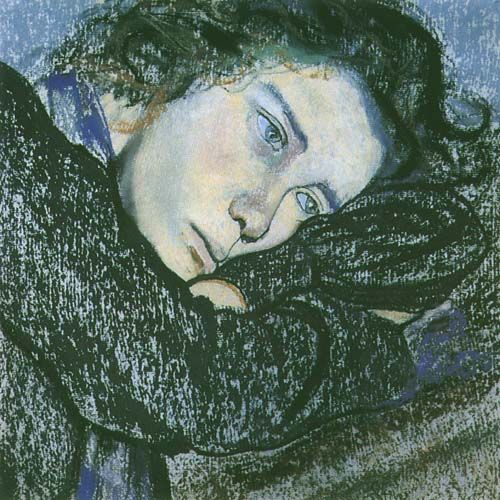
Teodor Axentowicz, 'The Redhead'. [Image source]
In Mistral's collection you will encounter anonymous women whose fate is drawn in the titles of poems with a few brushstrokes only, for instance 'The Abandoned Woman', 'Prisoner's Woman' or 'She Who Waits'. Biblical Mary and Martha will be introduced to you too. You will also meet mythological heroines, known from classical literature: Cassandra, Clytemnestra, Electra and Antigone. Despite their origin, they are not marble statues. Quite contrary. You can almost feel their pulse, hear them weeping, find and lose yourself in their dramatic stories.
Gabriela Mistral's poems are very visual, they resemble paintings made alive:
'Love loved solitudes
like the silent wolf.
He came to dig his house
in the narrowest valley
and we followed his track
without asking to return ...'
'Our happiness is like
the honeycomb that hides its gold;
the honey with its heady weight
weighs on my breast,
and I go giddy, or grave,
I know and I don’t know myself.'
The author uses mainly natural, biblical, and classical imagery but transforms it in an original way. Her poems burst not only with images but also with heartfelt, strong emotions. Albeit they pulsate with raw yearning and intense pain, their form is structured with discipline.
The madwomen are overwhelmed by barely controllable emotions but the author skilfully tames them with tone and rhythm. I guess these poems must be even more musical in Spanish, with all due respect for the translator, Randall Couch, who did an impressive job. By the way, I've recently noticed that one of Mistral's books was translated by Ursula Le Guin. I'm expecting a delightful read.
Stanisław Wyspiański, 'Study of a woman'. [Image source]
Please, be careful and don't fall into the trap of apparent simplicity and naivety of these lyrical ballad-like 'stories'. You may be surprised to find out how powerful and moving they are. If you think that most poets are the epitome of narcissism and self-absorbance, you will be flummoxed by the author's invisibility in this book. Only the madwomen are in the spotlight.
I think no words can describe Gabriela Mistral's poetry better than her own: 'I start from an emotion that little by little is put into words, helped by a rhythm that could be that of my own heart. You will smile, knowing my tachycardia.... But aren’t many of my poems, especially those in 'Lagar', riding a runaway heart?'
Actually, the whole collection is a book of 'runaway hearts', described with tact, delicacy and profound understanding. Gabriela Mistral's words are breathtaking but sometimes lack of them means even more:
'And there’s no voice left when he falls in my arms
because it has all been used up,
and this silence is even stronger than the shout
if it leaves us like this, with our faces white.'
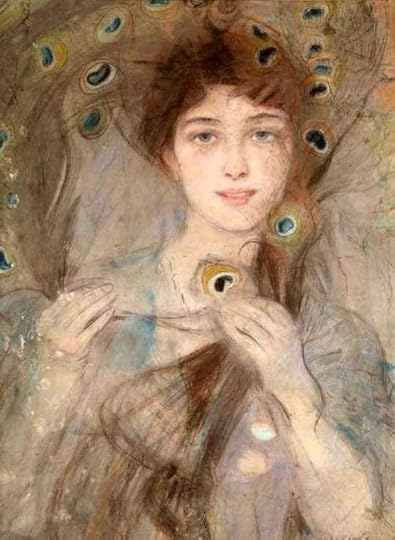
Teodor Axentowicz. [Image source]
'Portrayed' doesn't give the author justice, because she actually is every woman she depicts with compassion and empathy. As Czesław Miłosz observed, 'The purpose of poetry is to remind us how difficult it is to remain just one person, for our house is open, there are no keys in the doors, and invisible guests come in and out at will.'
Gabriela Mistral's 'guests' are the madwomen, locas mujeres. They don't seem mentally ill though. They just tend to be more sensitive, more fragile, more passionate than ordinary people. They see, hear and feel more, which is a blessing and a curse at the same time. 'Madness' is not the only thing they have in common. All of them are lonely outcasts:
'I no longer recall how it was
when I lived with the others.
I burned all my memory
like a hungry fireplace.'
'For nobody she plants lilac
or prunes the azaleas
and carries water for nobody
in her looking-glass pails.'
Teodor Axentowicz, 'The Redhead'. [Image source]
In Mistral's collection you will encounter anonymous women whose fate is drawn in the titles of poems with a few brushstrokes only, for instance 'The Abandoned Woman', 'Prisoner's Woman' or 'She Who Waits'. Biblical Mary and Martha will be introduced to you too. You will also meet mythological heroines, known from classical literature: Cassandra, Clytemnestra, Electra and Antigone. Despite their origin, they are not marble statues. Quite contrary. You can almost feel their pulse, hear them weeping, find and lose yourself in their dramatic stories.
Gabriela Mistral's poems are very visual, they resemble paintings made alive:
'Love loved solitudes
like the silent wolf.
He came to dig his house
in the narrowest valley
and we followed his track
without asking to return ...'
'Our happiness is like
the honeycomb that hides its gold;
the honey with its heady weight
weighs on my breast,
and I go giddy, or grave,
I know and I don’t know myself.'
The author uses mainly natural, biblical, and classical imagery but transforms it in an original way. Her poems burst not only with images but also with heartfelt, strong emotions. Albeit they pulsate with raw yearning and intense pain, their form is structured with discipline.
The madwomen are overwhelmed by barely controllable emotions but the author skilfully tames them with tone and rhythm. I guess these poems must be even more musical in Spanish, with all due respect for the translator, Randall Couch, who did an impressive job. By the way, I've recently noticed that one of Mistral's books was translated by Ursula Le Guin. I'm expecting a delightful read.
Stanisław Wyspiański, 'Study of a woman'. [Image source]
Please, be careful and don't fall into the trap of apparent simplicity and naivety of these lyrical ballad-like 'stories'. You may be surprised to find out how powerful and moving they are. If you think that most poets are the epitome of narcissism and self-absorbance, you will be flummoxed by the author's invisibility in this book. Only the madwomen are in the spotlight.
I think no words can describe Gabriela Mistral's poetry better than her own: 'I start from an emotion that little by little is put into words, helped by a rhythm that could be that of my own heart. You will smile, knowing my tachycardia.... But aren’t many of my poems, especially those in 'Lagar', riding a runaway heart?'
Actually, the whole collection is a book of 'runaway hearts', described with tact, delicacy and profound understanding. Gabriela Mistral's words are breathtaking but sometimes lack of them means even more:
'And there’s no voice left when he falls in my arms
because it has all been used up,
and this silence is even stronger than the shout
if it leaves us like this, with our faces white.'
Teodor Axentowicz. [Image source]

November 3, 2014
4.5/5
From impoverished beginnings, a humble rural schoolteacher rose, not without significant suffering and determination, to become the most respected and prominent woman writer of the Latin American world, the first of the region to win the Nobel Prize for Literature in 1945. Gabriela Mistral's life and story read like a myth spun from her self- addressing as "a daughter of my land", deeply identifying with her country and people; her powerful voice in defense of the under-privileged or socially oppressed; of volcanic emotions from a tragic love affair; from sonnets of love, tenderness and humanism which cast her with the spiritual image of a madonna of the Americas- and yet, such perceptions in contrast were darkened by criticism for her political role and relationship with the state, and her sexuality contained in public dubiousness which she masterfully infused in her writings.
We must give expression to the soul in all its intensity, and boldly utter the message which springs from the heart before it ceases to beat.-Gabriela Mistral
Forged by an unlimited love of humanity, clarity of forward vision and a prophetic sense of the destiny of Latin America, Mistral's prose and poems sought to redefine women's roles, specific to their plight in a patriarchal society that has been traditionally unconcerned for women's suffering. Such discourse became the epicenter of Madwomen The Locas Mujeres Poems.
Prose writers, at some time in their careers and in varying degrees, embed themselves in their work and from perusing Dream of Light and Shadow Portraits of Latin American Women Writers(edited by Marjorie Agosín, 1995), there is clear evidence of such impressions of Mistral planted in Madwomen The Locas Mujeres : a collection of 26 of Mistral's works in bilingual presentation, edited and translated by Randall Couch. Written in the voices of women who are witnesses to war and violence of many kinds, and completed during a period when Mistral herself was at such a frailty, these poems are simultaneously expressions of devastating emotion, the complexities of life and are striking in their internal beauty.
Topics of wandering, exile, confinement and abandonment not only mirror Mistral's family and career history, they also draw similarities to the imprisoned women she visited: political prisoners who greeted her ( admiringly, I presume) by clanking their chains as she walked passed them - the clammers of "ashen chains" that resonate in the vision of "little birds of perdition" from Mujer de prisionero/ Prisoner's Woman.
She is La desvelada/The Sleepless Woman haunted by the wandering ghost of her adopted son, Yin-Yin who committed suicide:
When the night thickens and what is upright reclines,
and what is ruined rises up,
I hear him climb the stairs.
All night he comes and goes—
absurd gift, given and returned,
a medusa lifted on the waves
that you see when you get close.
From my bed I help him
with what breath is left me
so that he won’t hunt groping
and hurt himself in the darkness.
She is the grieving peasant woman in La granjera/The Farm Woman:
She opens the gates though no one calls,
when no one comes in, she shuts them
and she tires herself for the dream
that takes her, frees her, and leaves her.
(Stuck in pointless routines, she is abandoned or forgotten even by death):
Death wanders demented,
walks drunken about the earth,
he tangles roads, twists fates,
plays drumbeats on the globe.
Wind and Archangel, her namesakes,
delivered to her door
the death of all her loved ones
without delivering hers.
Most of the female subjects of Madwomen are lonely, aimless women. In La abandonada/The Abandoned Woman, she is desolate from the absence of love:
Now I am going to learn
the sour country,
and unlearn your love
which was my only language,
like a river that forgets
its current, bed, and banks.
I have sat down in the middle of the Earth,
my love, in the middle of my life,
to open my veins and my chest,
to peel my skin like a pomegranate,
and to break the red mahogany
of these bones that loved you.
(At the same time, she is left an angry and vengeful victim of domestic conflict):
I’m burning all that we had:
the wide walls, the high beams—
ripping out one by one
the twelve doors you opened
and closing with ax blows
the cistern of happiness.
Considered to be the most revealing self-portrait of Mistral is La otra/ The Other ( my personal favorite), in which the poem's narrator destroys a part of herself:
I killed a woman in me:
one I did not love.
I left her to die,
robbing her of my heart’s blood.
She ended like an eagle
starved of its food.
The beating wing grew still;
she bent, spent,
and her dying ember
fell into my hand...
The poet's voice is scorching, harsh, unforgiving, leaving la otra to shrivel in death's eventuality.
Gabriela emphasized that her poetry was never "an end in her life", insisting she was - in heart, first and foremost - a teacher, and described her poetic work as more of a "relief of her spirit, to undo knots."
In Madwomen, glimpses of a complex and controversial writer are illuminated, but more true to Mistral's purpose, I would surmise, they are the reflections of the faces, the flesh and blood experiences of mother, child, wife, sister, daughter; she is as the poems' titles intone: Fugitive, Humbled, Happy, Fervent, Unburdened, Pious, Storyteller, Forgotten, Unchanged; she is Electra, Antigone, Cassandra, Clytemnestra; she may be you or I, but without question, she is everywoman.
(Above poems are not presented here in their entirety, but are intentionally abbreviated).
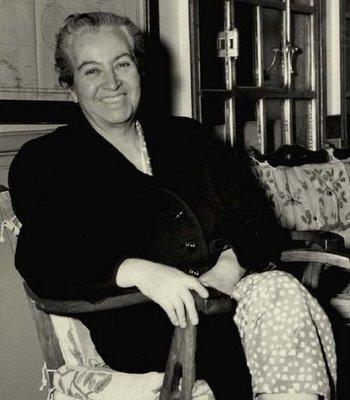
Photo courtesy chileantourismnetwork.net.
Gabriela Mistral née Lucila Godoy (1889–1957), born in Vicuña, Chile. A poet, teacher, diplomat, and feminist, she promoted educational reform in Chile and Mexico and served as Chilean consul in Naples, Madrid, Petrópolis, Nice, Lisbon, Santa Barbara, Veracruz, Rapallo, and New York, where she represented Chile at the United Nations. She received the Nobel Prize in Literature in 1945. (Taken from the frontmatter of Madwomen).
Read Oct 31st, 2014
From impoverished beginnings, a humble rural schoolteacher rose, not without significant suffering and determination, to become the most respected and prominent woman writer of the Latin American world, the first of the region to win the Nobel Prize for Literature in 1945. Gabriela Mistral's life and story read like a myth spun from her self- addressing as "a daughter of my land", deeply identifying with her country and people; her powerful voice in defense of the under-privileged or socially oppressed; of volcanic emotions from a tragic love affair; from sonnets of love, tenderness and humanism which cast her with the spiritual image of a madonna of the Americas- and yet, such perceptions in contrast were darkened by criticism for her political role and relationship with the state, and her sexuality contained in public dubiousness which she masterfully infused in her writings.
We must give expression to the soul in all its intensity, and boldly utter the message which springs from the heart before it ceases to beat.-Gabriela Mistral
Forged by an unlimited love of humanity, clarity of forward vision and a prophetic sense of the destiny of Latin America, Mistral's prose and poems sought to redefine women's roles, specific to their plight in a patriarchal society that has been traditionally unconcerned for women's suffering. Such discourse became the epicenter of Madwomen The Locas Mujeres Poems.
Prose writers, at some time in their careers and in varying degrees, embed themselves in their work and from perusing Dream of Light and Shadow Portraits of Latin American Women Writers(edited by Marjorie Agosín, 1995), there is clear evidence of such impressions of Mistral planted in Madwomen The Locas Mujeres : a collection of 26 of Mistral's works in bilingual presentation, edited and translated by Randall Couch. Written in the voices of women who are witnesses to war and violence of many kinds, and completed during a period when Mistral herself was at such a frailty, these poems are simultaneously expressions of devastating emotion, the complexities of life and are striking in their internal beauty.
Topics of wandering, exile, confinement and abandonment not only mirror Mistral's family and career history, they also draw similarities to the imprisoned women she visited: political prisoners who greeted her ( admiringly, I presume) by clanking their chains as she walked passed them - the clammers of "ashen chains" that resonate in the vision of "little birds of perdition" from Mujer de prisionero/ Prisoner's Woman.
She is La desvelada/The Sleepless Woman haunted by the wandering ghost of her adopted son, Yin-Yin who committed suicide:
When the night thickens and what is upright reclines,
and what is ruined rises up,
I hear him climb the stairs.
All night he comes and goes—
absurd gift, given and returned,
a medusa lifted on the waves
that you see when you get close.
From my bed I help him
with what breath is left me
so that he won’t hunt groping
and hurt himself in the darkness.
She is the grieving peasant woman in La granjera/The Farm Woman:
She opens the gates though no one calls,
when no one comes in, she shuts them
and she tires herself for the dream
that takes her, frees her, and leaves her.
(Stuck in pointless routines, she is abandoned or forgotten even by death):
Death wanders demented,
walks drunken about the earth,
he tangles roads, twists fates,
plays drumbeats on the globe.
Wind and Archangel, her namesakes,
delivered to her door
the death of all her loved ones
without delivering hers.
Most of the female subjects of Madwomen are lonely, aimless women. In La abandonada/The Abandoned Woman, she is desolate from the absence of love:
Now I am going to learn
the sour country,
and unlearn your love
which was my only language,
like a river that forgets
its current, bed, and banks.
I have sat down in the middle of the Earth,
my love, in the middle of my life,
to open my veins and my chest,
to peel my skin like a pomegranate,
and to break the red mahogany
of these bones that loved you.
(At the same time, she is left an angry and vengeful victim of domestic conflict):
I’m burning all that we had:
the wide walls, the high beams—
ripping out one by one
the twelve doors you opened
and closing with ax blows
the cistern of happiness.
Considered to be the most revealing self-portrait of Mistral is La otra/ The Other ( my personal favorite), in which the poem's narrator destroys a part of herself:
I killed a woman in me:
one I did not love.
I left her to die,
robbing her of my heart’s blood.
She ended like an eagle
starved of its food.
The beating wing grew still;
she bent, spent,
and her dying ember
fell into my hand...
The poet's voice is scorching, harsh, unforgiving, leaving la otra to shrivel in death's eventuality.
Gabriela emphasized that her poetry was never "an end in her life", insisting she was - in heart, first and foremost - a teacher, and described her poetic work as more of a "relief of her spirit, to undo knots."
In Madwomen, glimpses of a complex and controversial writer are illuminated, but more true to Mistral's purpose, I would surmise, they are the reflections of the faces, the flesh and blood experiences of mother, child, wife, sister, daughter; she is as the poems' titles intone: Fugitive, Humbled, Happy, Fervent, Unburdened, Pious, Storyteller, Forgotten, Unchanged; she is Electra, Antigone, Cassandra, Clytemnestra; she may be you or I, but without question, she is everywoman.
(Above poems are not presented here in their entirety, but are intentionally abbreviated).
Photo courtesy chileantourismnetwork.net.
Gabriela Mistral née Lucila Godoy (1889–1957), born in Vicuña, Chile. A poet, teacher, diplomat, and feminist, she promoted educational reform in Chile and Mexico and served as Chilean consul in Naples, Madrid, Petrópolis, Nice, Lisbon, Santa Barbara, Veracruz, Rapallo, and New York, where she represented Chile at the United Nations. She received the Nobel Prize in Literature in 1945. (Taken from the frontmatter of Madwomen).
Read Oct 31st, 2014

May 20, 2020
But someday I will go
with no tears and no embraces,
a ship that sails by night
without the others following her,
or the red beacons eying her,
or her own shores hearing her...
Gabriela Mistral is a very interesting historical figure I wish I knew more about before. She was a great advocate for women's and children's rights & the first Latin American author to receive the Nobel Prize in literature. She was also a teacher and a principal and often spoke and wrote about the position of women in education. This collection of poems was immensely interesting and I really, really enjoyed reading it. She Who Waits is probably my favourite one.

February 4, 2009
Yet another random "I have no idea what the hell this is but it looks interesting" selection from my local library's "recent arrivals" section--who would have thought it was the new translation of a Nobel Prize-winning poet? (Not me, obviously). More than anything, I was reminded that at some point I need to spend some focused time with South American literature, because I really have nothing to contextualize this with. But still, this collection of monologues, presented in the wide-ranging voices of assorted "locas mujeras," is beautiful, robust and even at its most achingly vulnerable, radiating with a very palpable sense of strength (one can almost tangibly feel the great power of reclamation). To my surprise I found the poems in the voices of famous females in Greek mythology curiously detached, but the ones involving nameless subjects (one imagines they were inspired by Mistral's own experiences or observations) vividly, almost terrifyingly vital and alive.
"already we mistrust wakefulness;
if we are dreaming, then let us dream
until our dream convinces us"
-"Two Forgotten Ones"
"already we mistrust wakefulness;
if we are dreaming, then let us dream
until our dream convinces us"
-"Two Forgotten Ones"

June 24, 2020

This is book was beautifully put together. Whoever worked on it did a great job. To be more specific:
1) There was an introduction with an interesting and informative biography. It detailed Mistral's childhood, education, early fame as a poet, the many times she moved, her career as an educator, political and diplomatic figure. It was written professionally - citing sources, etc. I also got the feeling I found out something about what Mistral's attitudes, views, and relationships were like. Mistral had a very complex and interesting life.
It was cool to find out Mistral was friends with Pablo Neruda and Stefan Zweig!
2) There was an introduction on Mistral's technique, diction, the and things to keep in mind when reading translations of her work. I loved this part! It shows the editor who put this together really cared! The edition is bilingual - Spanish and English texts are printed in parallel.

3) The translator tried to preserve not only the rhyme scheme and meter, but also all the double meanings behind specific words. When it was impossible, there were notes to the poem explaining other ways to interpret the phrase. Mistral is also notorious for editing her poems a lot after publication. Notes explained which version was used and how other versions differed from it. Again, kudos!
This was my first experience reading Mistral. As for the contents of the collection:
- Each poem is dedicated to marginalized women: The Abandoned Woman, The Anxious Woman, The Sleepless Woman, The Humbled Woman, The Farm Woman etc. These women face grief, shame, loss, longing, impossible hardships.
- There were a lot of references, allusions to biblical stories or Greek tragedies. I'm glad notes pointed them out, otherwise I may have missed them.
- The poems were very metaphorical. Most of them went straight over my head. If I read them in Spanish only, I'd think the problem was that I don't know the language all that well. But there was the translation and I still didn't understand most poems. So can't say I loved the collection, even though I desperately wanted to. I'll try again some time.

September 18, 2024
Marvelous!
I am teaching "The Other" this week, I like it too much and that's why I decided to explore the other women in her volume, a great decision indeed. I love everything about those poems, the different versions of a single woman and how she can be all of them at a time where patriarchy is pushing her to teeter upon the brink of nothingness all the time. Although Mistral did not apply the modernist techniques of poetry writing, which were quite popular at her time, she is one of the best modernists of the last century. The concept of the self as an elusive entity could not be so meticulously and sharply delineated as much as we find it in those poems, and writing this in relation to gender is another asset in her work. I loved everything about this book.
I am teaching "The Other" this week, I like it too much and that's why I decided to explore the other women in her volume, a great decision indeed. I love everything about those poems, the different versions of a single woman and how she can be all of them at a time where patriarchy is pushing her to teeter upon the brink of nothingness all the time. Although Mistral did not apply the modernist techniques of poetry writing, which were quite popular at her time, she is one of the best modernists of the last century. The concept of the self as an elusive entity could not be so meticulously and sharply delineated as much as we find it in those poems, and writing this in relation to gender is another asset in her work. I loved everything about this book.

December 12, 2021
This is a bilingual book, with the original Spanish poems and Randall Couch's English translations presented on facing pages. The poems are mostly sort of persona poems, written in the voices of women in various kinds of extreme circumstances. Some of these women have names and identities drawn from Greek mythology (e.g., Antigone, Electra, Clytemnestra, and Cassandra), but most of the women are nameless inventions of Mistral, each defined solely by her most extreme attribute, with titles like "La abandonada" (The Abandoned Woman), "La ansiosa" (The Anxious Woman), "La desvelada" (The Sleepless Woman), "La dichosa" (The Happy Woman), etc. Each poem is 1-4 pages long, written in image-dense short lines, rich with shapes and substances and colors: red is, by far, the most prevalent color, and fire imagery abounds everywhere.
My two favorite poems were "La fervorosa" (The Fervent Woman) and "La que camina" (She Who Walks), which seemed to me to be allegories describing what it means to be a woman artist, to devote one's life to the artistic calling:
"In every place, with my arm and my breath,
I have kindled the old fire....
"and when it was dying into cinders
I learned to stoke it with my own body....
"I brought the flame from the other shore
where I came from and where I return.
There no one stirs it, yet it grows
and soars like a scarlet albatross.
I must return to my foundry and there
in its lap lay down the sacred loan."
(from "The Fervent Woman")
"She always walks that same sand
until the others have gone to sleep;
and even though she drops in her tracks
she dreams and walks that same sand....
"she lives on it and dies of the same...."
(from "She who Walks")
The poem "La bailarina" (The Ballerina) reminded me of one of my favorite Yeats poems, "Sweet Dancer," also about a doomed "madwoman" who threw herself into "the dance of losing everything." And "La cabelluda" (The Shaggy Woman) hauntingly reminded me of Plath, even presaging the image of the "red comet" that appears in Plath's "Stings":
"In a casket of glass
we put her red comet [su rojo cometa]....
"When we at last lie down
on her left side or her right,
it may be to burn always,
to glow like an open grate,
and be kept by her from cold
even though our planet dies."
I thought it was interesting to see Couch expound on what he views as resonances between Mistral and Yeats in his introduction: "Mistral's search for elemental diction did not lead her...to depart from traditional meter and rhyme. In this too her practice paralleled that of Yeats[, who wrote,] 'All that is personal soon rots; it must be packed in ice or salt.... Ancient salt is the best packing.'"
My two favorite poems were "La fervorosa" (The Fervent Woman) and "La que camina" (She Who Walks), which seemed to me to be allegories describing what it means to be a woman artist, to devote one's life to the artistic calling:
"In every place, with my arm and my breath,
I have kindled the old fire....
"and when it was dying into cinders
I learned to stoke it with my own body....
"I brought the flame from the other shore
where I came from and where I return.
There no one stirs it, yet it grows
and soars like a scarlet albatross.
I must return to my foundry and there
in its lap lay down the sacred loan."
(from "The Fervent Woman")
"She always walks that same sand
until the others have gone to sleep;
and even though she drops in her tracks
she dreams and walks that same sand....
"she lives on it and dies of the same...."
(from "She who Walks")
The poem "La bailarina" (The Ballerina) reminded me of one of my favorite Yeats poems, "Sweet Dancer," also about a doomed "madwoman" who threw herself into "the dance of losing everything." And "La cabelluda" (The Shaggy Woman) hauntingly reminded me of Plath, even presaging the image of the "red comet" that appears in Plath's "Stings":
"In a casket of glass
we put her red comet [su rojo cometa]....
"When we at last lie down
on her left side or her right,
it may be to burn always,
to glow like an open grate,
and be kept by her from cold
even though our planet dies."
I thought it was interesting to see Couch expound on what he views as resonances between Mistral and Yeats in his introduction: "Mistral's search for elemental diction did not lead her...to depart from traditional meter and rhyme. In this too her practice paralleled that of Yeats[, who wrote,] 'All that is personal soon rots; it must be packed in ice or salt.... Ancient salt is the best packing.'"

February 20, 2026
Series: Reading Women Laureates of Nobel
Gabriela Mistral was far more than a poet. She was an educator, a journalist, and a cultural diplomat, and that breadth of life and intellect quietly permeates her work. As the first Latin American writer to receive the Nobel Prize in Literature in 1945, her legacy is surely historic, however, to me, her poems themselves felt timeless rather than monumental.
What I appreciated the most was the translator’s introduction, which offered a thoughtful and illuminating entry point into Mistral’s world and sensibility. While many of the poems stayed with me, La que camina / She Who Walks stood out as my favorite.
Gabriela Mistral was far more than a poet. She was an educator, a journalist, and a cultural diplomat, and that breadth of life and intellect quietly permeates her work. As the first Latin American writer to receive the Nobel Prize in Literature in 1945, her legacy is surely historic, however, to me, her poems themselves felt timeless rather than monumental.
What I appreciated the most was the translator’s introduction, which offered a thoughtful and illuminating entry point into Mistral’s world and sensibility. While many of the poems stayed with me, La que camina / She Who Walks stood out as my favorite.
En el país de la gaviota
del aire suyo voy llevada
y le pregunto al que me lleva
por qué, en bajando, fui trocada,
y me creen sobre las dunas
y en salinas yo he sido salva.
Y camino como la niña,
aprendiendo tierra mudada
///
In the land of the seagull
I'm being carried on his wind
and I ask the one who bears me
why, on landing, I was changed,
and they believe me on the dunes
and in the salt pools I've been saved.
And I wander like a girl
learning a land transformed

October 9, 2013
Before the threshold and before the path,
I wait and wait for one who walks straight
and advances truer than water or fire.
He comes because of me, he comes for me,
not for shelter, nor for bread and wine,
but because of the fact that I’m his food
and I’m the cup that he lifts and drains.
I wait and wait for one who walks straight
and advances truer than water or fire.
He comes because of me, he comes for me,
not for shelter, nor for bread and wine,
but because of the fact that I’m his food
and I’m the cup that he lifts and drains.

March 16, 2009
Found this book on the "new books" shelf in my library in Mexico, and I loved the poems, which I found to be both powerful and lyrical. Having a side-by-side Spanish/English edition was an added pleasure, as I'm slowly picking up a little Spanish, and it was fun to see the poems in the original as well as in translation. I think Mistral fully inhabits the Greek myths she tells from the point of view of Antigone, Clytemnestra, and Cassandra, but she also gives voice to women in love, women who have lost loves, etc. "Mad" women!

October 19, 2008
Available for the first time in English, these poems from the Locas mujeres section of Lagar, one of Gabriela Mistral’s final works, are a pleasure to read, both in the original Spanish and in this inspired English translation by Randall Couch. A beautiful, hard-bound edition by the University of Chicago Press, with poems facing each other and verses numbered in the English translation, this volume makes it easy for the bilingual reader to jump back and forth between the original poem and the translation to elucidate the meaning of a particularly sophisticated word or to tease out the meaning of an unfamiliar phrasing in the Spanish. For the English reader, these poems stand on their own. They are as stunning in English as they are in Spanish. Couch explains his approach to the translation and his attempt to find equivalent techniques for Mistral’s syntactic practice, techniques that include a penchant for compression, parallel grouping and repetition. He also notes that these poems do not follow one particular, uniform meter, but are rather a collage or quilt of metrical fragments. In many instances, Couch has retained these metrical ghosts: “…I am conscious of admitting, in a modest way, an emphasis of the source language perceptibly “foreignizing” to the target language—a practice theorized most cogently by Lawrence Venuti.” An example of this would be: “…and this silence is even stronger than the shout/if it leaves us like this, with our faces white.” Although in my view, such an effect did not get in the way and was in fact enjoyable.
This carefully edited volume includes an introduction, end-notes commenting on the various versions available for each poem and on the care the translator took when picking the latest version authorized by Mistral, herself a notorious and obsessive self-editor, as well as a selected bibliography in English and Spanish.
Gabriela Mistral (1889-1957), pen name of Lucila María del Perpetuo Socorro Godoy Alcayaga, was born in the Elqui valley of Chile’s Norte Chico region. Her childhood was marked by her father’s absence. She later on also suffered two tragic events that would leave a deep imprint on her and, consequently, her work—the suicide of her fiancé when she was just 20 years old; and the suicide of her adopted nephew, who may have been her biological son, when he was 17, after ingesting arsenic. Best known as the 1945 recipient of the Nobel Prize in Literature (the first one received by a Latin American, and the only Latin American woman ever to receive this distinction in Literature), Gabriela Mistral was also an educator and a diplomat. She traveled and lived all over the world, in self-imposed exile, including Mexico, New York, France, Spain, Italy, Portugal, Brazil, etc. She died of pancreatic cancer in Long Island, in January 1957. Her body was repatriated to Chile for three days of national mourning.
The poems comprised in Locas mujeres/Madwomen, are a section of Lagar, which translates as “winepress,” the more complex and least “popular” of her books. She is better known for her carefully observed poems of nature, mothers, and children. These intensely personal and universal poems from her mature period will resonate with a broad audience. Mistral was clearly ahead of her time, publishing this collection in 1954, but even today this reader was pleased with her modernist sensibilities, her sparse, unadorned, yet lyrical language. E.g. “Tal cidra y vino a la vejez fui deseada,/deseada fui como la azul cascada fina/que ataranta los ojos del sediento.” Rendered in English as: “Like cide and aged wine I was desired,/desired like the sheer blue cascade/that dazzles the eyes of the thirsty.” These poems about women, a series of dramatic monologues about both mythical and earthly women, read as contemporary, vital, and necessary poems. Like the winepress, extracting grape juice to produce aromatic wines, these poems are best tasted on the tongue, in two languages, while read out loud.
This carefully edited volume includes an introduction, end-notes commenting on the various versions available for each poem and on the care the translator took when picking the latest version authorized by Mistral, herself a notorious and obsessive self-editor, as well as a selected bibliography in English and Spanish.
Gabriela Mistral (1889-1957), pen name of Lucila María del Perpetuo Socorro Godoy Alcayaga, was born in the Elqui valley of Chile’s Norte Chico region. Her childhood was marked by her father’s absence. She later on also suffered two tragic events that would leave a deep imprint on her and, consequently, her work—the suicide of her fiancé when she was just 20 years old; and the suicide of her adopted nephew, who may have been her biological son, when he was 17, after ingesting arsenic. Best known as the 1945 recipient of the Nobel Prize in Literature (the first one received by a Latin American, and the only Latin American woman ever to receive this distinction in Literature), Gabriela Mistral was also an educator and a diplomat. She traveled and lived all over the world, in self-imposed exile, including Mexico, New York, France, Spain, Italy, Portugal, Brazil, etc. She died of pancreatic cancer in Long Island, in January 1957. Her body was repatriated to Chile for three days of national mourning.
The poems comprised in Locas mujeres/Madwomen, are a section of Lagar, which translates as “winepress,” the more complex and least “popular” of her books. She is better known for her carefully observed poems of nature, mothers, and children. These intensely personal and universal poems from her mature period will resonate with a broad audience. Mistral was clearly ahead of her time, publishing this collection in 1954, but even today this reader was pleased with her modernist sensibilities, her sparse, unadorned, yet lyrical language. E.g. “Tal cidra y vino a la vejez fui deseada,/deseada fui como la azul cascada fina/que ataranta los ojos del sediento.” Rendered in English as: “Like cide and aged wine I was desired,/desired like the sheer blue cascade/that dazzles the eyes of the thirsty.” These poems about women, a series of dramatic monologues about both mythical and earthly women, read as contemporary, vital, and necessary poems. Like the winepress, extracting grape juice to produce aromatic wines, these poems are best tasted on the tongue, in two languages, while read out loud.

January 20, 2020
I have heard of Mistral before but never really gave a thought about reading her work. A few weeks back, I came across Wislawa Szymborska and as I was researching a bit more about her, I came across Mistral again. I started reading about her in the Introductory chapters and was hooked onto her. It must have been quite hard for a woman then to stand her ground and do things she wanted to do despite the financial hurdles she faced. (Did you know she met a very young - teenage Pablo Neruda, introduced his poetry and encouraged him?)
'In my opinion, perfect patriotism in women is perfect motherhood,' she said. I am still trying to understand what she meant. Either way, it feels like I will only know what she meant superficially for now.
Anyway, I was already mesmerized with this woman, the educational reforms she brought about, the way she travelled and her bold moves...everything about her life is an enigma. Some say the poems in the book are the many characters she took upon in her life.
I read the first lines of the first poem - The Other in this book.
'I killed a woman in me:
one I did not love.'
And that's it. I was completely blown away. In the moment I read these lines, I was shocked...completely taken aback. It took me a few minutes to understand the full implications of what she has written. Every woman out there would probably relate to this on some deeper level. My favourite poems from the book are The Other and The Abandoned Woman. My Greek Mythology is pretty weak so I couldn't really get through Lagar II but I really enjoyed Lagar I. I am giving three stars for the poems I really loved and enjoyed.
'In my opinion, perfect patriotism in women is perfect motherhood,' she said. I am still trying to understand what she meant. Either way, it feels like I will only know what she meant superficially for now.
Anyway, I was already mesmerized with this woman, the educational reforms she brought about, the way she travelled and her bold moves...everything about her life is an enigma. Some say the poems in the book are the many characters she took upon in her life.
I read the first lines of the first poem - The Other in this book.
'I killed a woman in me:
one I did not love.'
And that's it. I was completely blown away. In the moment I read these lines, I was shocked...completely taken aback. It took me a few minutes to understand the full implications of what she has written. Every woman out there would probably relate to this on some deeper level. My favourite poems from the book are The Other and The Abandoned Woman. My Greek Mythology is pretty weak so I couldn't really get through Lagar II but I really enjoyed Lagar I. I am giving three stars for the poems I really loved and enjoyed.

December 8, 2011
Encantadores poemas de Gabriela Mistral, rápidos y facíles de leer ! Especie de mapografía de la mujer, en diferentes estados, "locas" porque no corresponden a una imagen común. Mi preferido es "la desasida":
"Mi enemigo podía injuriarme
o negarme Pedro, mi amigo,
que haber ido tan lejos
no me alcanzaban las flechas:
para la mujer dormida
lo mismo daba este mundo
que los no nacidos..."
"Mi enemigo podía injuriarme
o negarme Pedro, mi amigo,
que haber ido tan lejos
no me alcanzaban las flechas:
para la mujer dormida
lo mismo daba este mundo
que los no nacidos..."

February 15, 2023
Three and a half stars, rounding up to four. I freely admit that I picked this up because of the cover - it turned out to be poetry, but I like poetry so that's alright! As the title makes plain, it's a collection of poems about women who, while not actually mad, can be perceived that way by more, shall we say, conventional thinkers. Many of them are about anonymous women, but there are a handful of poems on legendary or mythological figures, primarily Greek or Trojan women such as Cassandra, for instance.
While I enjoyed them all, I still think the cover's the most appealing thing about this collection for me. There were a small number of poems that I liked more than the others - "She Who Waits" pulled this up to three and a half stars by main strength, otherwise the collection as a whole would have got three. It's a fantastic poem, though, and it's worth reading the collection just for that one.
This is a bilingual collection; I feel I should note this because I don't read Spanish, so I had to content myself with what I can only presume is the very competent English translation. I did find the translator's notes at the beginning quite interesting, and it brings home, I think, the particular challenge of translating poetry. So much depends on rhythm and meter, and it makes me wish I were better at languages so that I could read more work in the original.
While I enjoyed them all, I still think the cover's the most appealing thing about this collection for me. There were a small number of poems that I liked more than the others - "She Who Waits" pulled this up to three and a half stars by main strength, otherwise the collection as a whole would have got three. It's a fantastic poem, though, and it's worth reading the collection just for that one.
This is a bilingual collection; I feel I should note this because I don't read Spanish, so I had to content myself with what I can only presume is the very competent English translation. I did find the translator's notes at the beginning quite interesting, and it brings home, I think, the particular challenge of translating poetry. So much depends on rhythm and meter, and it makes me wish I were better at languages so that I could read more work in the original.

April 6, 2021
«Yo soy aquella a quien dejara Apolo,
en prenda de su amor, dos ojos lúcidos.
Sin llanto navegué por mar de llanto,
y bajé de mi carro de cautiva,
sin rehusar, entendiendo y consintiendo.»
Muchas veces no entendía bien a qué se refería en la poesía pero la traducción ayudó bastante. Me gustaba que usara tanto la mitología y el mar como motifs. Algo que es más que claro del estilo de Mistral es que no seguía las métricas o rimas estrictas de la poesía, pero no fue algo que me haya desagradado. El libro contiene una introducción de quién fue la autora y su manera de escribir, por lo que te prepara para qué esperar. No sé cómo llegué a este libro pero fue un lindo descubrimiento. 🤍
en prenda de su amor, dos ojos lúcidos.
Sin llanto navegué por mar de llanto,
y bajé de mi carro de cautiva,
sin rehusar, entendiendo y consintiendo.»
Muchas veces no entendía bien a qué se refería en la poesía pero la traducción ayudó bastante. Me gustaba que usara tanto la mitología y el mar como motifs. Algo que es más que claro del estilo de Mistral es que no seguía las métricas o rimas estrictas de la poesía, pero no fue algo que me haya desagradado. El libro contiene una introducción de quién fue la autora y su manera de escribir, por lo que te prepara para qué esperar. No sé cómo llegué a este libro pero fue un lindo descubrimiento. 🤍

June 1, 2025
Luego de haber visto el documental titulado igual que el poemario, imagino a Gabriela Mistral como una de mis intimas.
“Locas Mujeres” es lo primero que leo de Mistral, esperaba leer su correspondencia más que sus poemarios pero lo encontré en la biblioteca y tenía tiempo para leerlo ahí.
“…Yo soy pequeña para alcanzarme.
Me borro como tu bocanada.
Me pierdo antes de que te pierdas enjugada antes que tu lágrima.
A tus espaldas yo me quedo de fuego mío calcinada.”
Mis poemas favoritos y los que recuerdo fueron La Calcinada (donde pertenece la cita de arriba) y La Enclavada, donde describe su relación con Doris como amante e immigrante.
“Locas Mujeres” es lo primero que leo de Mistral, esperaba leer su correspondencia más que sus poemarios pero lo encontré en la biblioteca y tenía tiempo para leerlo ahí.
“…Yo soy pequeña para alcanzarme.
Me borro como tu bocanada.
Me pierdo antes de que te pierdas enjugada antes que tu lágrima.
A tus espaldas yo me quedo de fuego mío calcinada.”
Mis poemas favoritos y los que recuerdo fueron La Calcinada (donde pertenece la cita de arriba) y La Enclavada, donde describe su relación con Doris como amante e immigrante.

February 5, 2021
Oh, how I love bilingual poetry collections!
I especially enjoyed the poems with characters from Greek mythology.
I especially enjoyed the poems with characters from Greek mythology.

July 6, 2017
I grabbed Madwomen after being told of it for the first time, and thinking it sounded like just my thing. While it is a decent enough poetry collection, I find myself a little disappointed. This wasn't really for me.
The translation appears to be well done and well thought out, but there still seems to be something lost in translation. Regardless, many of the poems do still stand out as being something special. The Farm Woman was perhaps my favourite. I found her Greek mythology inspired poems to be interesting. Mistral's poems are a bit overly flowery for my taste, but the title of "Madwomen" seems completely correct in the best possible way.
I would recommend this for anyone looking for a poetry volume that has been translated to English. I'm not sure I have much interest in reading anything else from Mistral.
The translation appears to be well done and well thought out, but there still seems to be something lost in translation. Regardless, many of the poems do still stand out as being something special. The Farm Woman was perhaps my favourite. I found her Greek mythology inspired poems to be interesting. Mistral's poems are a bit overly flowery for my taste, but the title of "Madwomen" seems completely correct in the best possible way.
I would recommend this for anyone looking for a poetry volume that has been translated to English. I'm not sure I have much interest in reading anything else from Mistral.
July 13, 2015
These poems are absolutely incredible, and if the review was in regards to the Locas Mujeres poems alone, I would give it a million stars. The only reason I only gave it 4 stars is because some of the translations are not necessarily the most accurate, but this only became an issue for me because I was writing a deep analysis paper on the poetry for a class, and the translations were an issue. For casual readings the translations are extremely sufficient for getting the point of all the poetry across.

April 21, 2019
যেই বেলটাই মাথায় পড়ুক, ভালো না। সময় বা স্থানের ফারাক সমস্যা না, আমার এই ধরনের আলুথালু কেশবিশিষ্ট মেটাফোরময় কবিতা ভালো লাগে না। যেই চারটা কবিতার পেছনে গল্প আছে, সেই চারটা শুধু ভালো লাগছে। মানে গ্রীকদের নিয়া যেগুলি।

April 15, 2017
I went into this book knowing nothing about Gabriela Mistral and having read hardly any poetry in translation before, and the things I enjoyed most about it were getting to know the poet through the biographical section at the beginning and the poems themselves and getting an in depth look into the translation process. I loved having the poems side by side and being able to compare the translation to the original (as best I could with my somewhat limited Spanish language skills). I'm a language nerd so I was also really into the translation notes and the discussion of the choices the translator made to preserve the feel of the poems and hard to transfer characteristics like the intentional gendering of words.
The poetry itself I was mixed about. Her style isn't the type I usually read and some of the poems were hard for me to find a way into, though that's probably on me for not having enough knowledge of the particular historical and cultural moment these were written in. Despite that, I still found a lot of them really powerful. Favorites: La Otra (The Other), La Desvelada (The Sleepless Woman), La Cabelluda (The Shaggy Woman), and Clitemnestra (Clytemnestra).
Overall, 3.5 out of 5, makes me want to brush up on my Spanish so I can read the poems the way they were intended to be read.
The poetry itself I was mixed about. Her style isn't the type I usually read and some of the poems were hard for me to find a way into, though that's probably on me for not having enough knowledge of the particular historical and cultural moment these were written in. Despite that, I still found a lot of them really powerful. Favorites: La Otra (The Other), La Desvelada (The Sleepless Woman), La Cabelluda (The Shaggy Woman), and Clitemnestra (Clytemnestra).
Overall, 3.5 out of 5, makes me want to brush up on my Spanish so I can read the poems the way they were intended to be read.

November 10, 2021
Spoiler porque escribiré un trozo de la estrofa del poema “Electra en la niebla”
“El pasó enfermo y el perfil humoso,
Si por ser uno lo mismo quisimos
y cumplimos lo mismo y nos llamamos
Electra-Oreste, yo, tú, Oreste-Electra.
O yo soy niebla que corre sin verse
o tú niebla que corre sin saberse.
-Pare yo porque puedas detenerte
o yo me tumbe, para detenerte con mi cuerpo tu carrera, tal vez todo fue sueño de nosotros
adentro de la niebla amoratada,
befa de la niebla que vuela sin sentido.
Pero marchar me rinde y necesito
romper la niebla o que me rompa ella (…)”
Me encanto esta estrofa pero no la escribiré entera.
El conjunto de poemas logra expresar mil cosas, el cariño, la cercanía, el quemarse en otra persona o en si misma arder, ser mujer en muchos sentidos.
A pesar de lo complicada que me resulta a veces leer a Gabriela Mistral, aquí fue sencillo, ligero y cercano, más en los últimos poemas. Creo que es una lectura que se debe hacer muchas veces, no porque no se pueda entender a la primera, sino porque en cada leída se puede apreciar algo nuevo, algún detalle pequeño que cambie el sentido del poema.
“El pasó enfermo y el perfil humoso,
Si por ser uno lo mismo quisimos
y cumplimos lo mismo y nos llamamos
Electra-Oreste, yo, tú, Oreste-Electra.
O yo soy niebla que corre sin verse
o tú niebla que corre sin saberse.
-Pare yo porque puedas detenerte
o yo me tumbe, para detenerte con mi cuerpo tu carrera, tal vez todo fue sueño de nosotros
adentro de la niebla amoratada,
befa de la niebla que vuela sin sentido.
Pero marchar me rinde y necesito
romper la niebla o que me rompa ella (…)”
Me encanto esta estrofa pero no la escribiré entera.
El conjunto de poemas logra expresar mil cosas, el cariño, la cercanía, el quemarse en otra persona o en si misma arder, ser mujer en muchos sentidos.
A pesar de lo complicada que me resulta a veces leer a Gabriela Mistral, aquí fue sencillo, ligero y cercano, más en los últimos poemas. Creo que es una lectura que se debe hacer muchas veces, no porque no se pueda entender a la primera, sino porque en cada leída se puede apreciar algo nuevo, algún detalle pequeño que cambie el sentido del poema.
This entire review has been hidden because of spoilers.

September 24, 2021
"And there’s no voice left when he falls in my arms because it has all been used up,
and this silence is even stronger than the shout
if it leaves us like this, with our faces white."
"I taste a bliss I never knew:
I suffer from living, I die of watching, and at this tormented moment
my strength departs with his!"
"To be precise and exact
as the sip fits the glass,
and not rob him of the moment, and not waste his breath,
I lost myself in your house
like a sword in its sheath."
მნიამ. started my day right. ❤️
and this silence is even stronger than the shout
if it leaves us like this, with our faces white."
"I taste a bliss I never knew:
I suffer from living, I die of watching, and at this tormented moment
my strength departs with his!"
"To be precise and exact
as the sip fits the glass,
and not rob him of the moment, and not waste his breath,
I lost myself in your house
like a sword in its sheath."
მნიამ. started my day right. ❤️

September 3, 2023
No es este el libro que leí pero es para poder marcarcolo.
Leí Matriarca que es una edición nueva de escritos de Gabriela Mistral.
Una selección hermosa, tan envolver como todo lo de gabi. Por siempre una de mis favoritas
Leí Matriarca que es una edición nueva de escritos de Gabriela Mistral.
Una selección hermosa, tan envolver como todo lo de gabi. Por siempre una de mis favoritas

December 30, 2021
Amo a Mistral. Creo que por ser de otra época, a veces su poesía me cuesta un poco, pero eso no quiere decir que no disfrute su belleza y su sentir 🚀

January 3, 2024
Es maravilloso, creo que la selección de Almácigo me remeció en las profundidades del alma y me llenó de inspiración.
Recomendado 100%
Recomendado 100%
April 6, 2026
It was such a extraordinary experience, I want to cry. No wonder why she got the Nobel Prize, her poems are the most beautiful ones I’ve ever read

Read
July 13, 2023no lloramos viéndonos desnudos
no tiritamos de tanto despojo;
si tanto falta es que nada tuvimos.
no tiritamos de tanto despojo;
si tanto falta es que nada tuvimos.

January 29, 2019
Before Gabriela Mistral's Madwomen, I hadn't read a full collection of poetry in some time. I started this at bedtime, planning on reading a poem here and there, and instead I devoured it in two sittings. From the mask on the cover, to the poems it contains about the women of Greek tragedy—including my fav subjects Clytemnestra, Electra, and Antigone—this is a very ME book. These are some of my favorite poems I've ever read.
Madwomen is vibrant, full of blood and dust and fire. Mistral's language is beautiful. These poems are mysterious. The imagery is vivid. The poems about the heroines from Greek tragedy are truly epic (and it was serendipitous that they were even in here because I didn't know that going in). This is a cohesive collection. I couldn't put it down and I've already reread most of the poems by reading them out loud to my mom. I highly recommend Madwomen; you'll eat it up.
Madwomen is vibrant, full of blood and dust and fire. Mistral's language is beautiful. These poems are mysterious. The imagery is vivid. The poems about the heroines from Greek tragedy are truly epic (and it was serendipitous that they were even in here because I didn't know that going in). This is a cohesive collection. I couldn't put it down and I've already reread most of the poems by reading them out loud to my mom. I highly recommend Madwomen; you'll eat it up.
Displaying 1 - 30 of 101 reviews