Jump to ratings and reviews
Rate this book

Daquin #1

Hartes Pflaster

Rate this book
Rare Book

312 pages, Paperback

Published February 1, 2012

10 people are currently reading
138 people want to read

About the author

Dominique Manotti

36 books33 followers
Dominique Manotti is a professor of 19th-century economic history in Paris. She is the author of several novels, including Rough Trade (French: Sombre Sentier), Dead Horsemeat (French: A nos chevaux!) and Lorraine Connection (2008 Duncan Lawrie International Dagger award).


Née à Paris en 1942, et j'y suis restée pendant tout ce temps.

1) Historienne de formation et de métier (des années d'enseignement de l'histoire économique comtemporaine en fac). L'Histoire comme méthode de pensée et de travail : Lectures, rencontres, réflexions. Puis choix d'un sujet d'étude, formulation d'hypothèses. Puis recherches, accumulation de faits, d'indices, de traces, critique des hypothèses de départ, imagination de ce qu'ont été la vie et la mort des hommes sur les traces desquels on travaille. Puis construction d’une machine rationnelle ramassant tous les éléments de connaissance accumulés et écriture. Une méthode parfaitement transposable à l'écriture de romans policiers ou noirs.

2) Militante, dès l’adolescence, d'abord à la fin de la guerre d'Algérie pour l'indépendance de l'Algérie, puis dans les années 60 et 70, dans différents mouvements et syndicats, dans une tonalité qu'on pourrait dire marxiste et syndicaliste révolutionnaire.

3) Romancière, sur le tard, et pas par vocation, plutôt par désespoir. L'arrivée de Mitterrand au pouvoir sonne, d'une certaine façon, comme le glas des espoirs de transformation radicale de la société. Alors, le roman noir apparaît comme la forme la plus appropriée pour raconter ce que fut l'expérience de ma génération, et ma pratique professionnelle d'historienne m'a semblé l'outil adéquat pour tenter l'expérience de l'écriture romanesque.

http://www.dominiquemanotti.com/2009/...

Ratings & Reviews

What do you think?
Rate this book

Friends & Following

Create a free account to discover what your friends think of this book!

Community Reviews

5 stars
27 (17%)
4 stars
69 (44%)
3 stars
39 (25%)
2 stars
16 (10%)
1 star
3 (1%)
Displaying 1 - 22 of 22 reviews
Profile Image for Paul.
1,191 reviews75 followers
September 8, 2014
Rough Trade – Sublime & Gritty

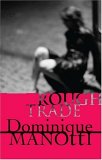
Rough Trade by Dominique Manotti is a fantastic euro crime thriller that hits the mark on all levels. There are no wasted words no paragraphs to pad out the story, like a surgeon with a scalpel she is incisive with her story telling and gets right down to business. Written in 1995 about the seedy underworld immigrant Paris of the early 1980s this has all the grit you would expect.

Superintendent Daquin is head of the Drugs Squad and is based in the 10th arrondissement for the duration of his investigations. This is the area of Le Sentier where there are many clothing workshops owned and worked in by Turks mostly illegal workers. They have their own action committee campaigning to get the legal work papers which also lead to various clashes.

Daquin and his squad have been called out to a murder where a young Thai prostitute has been found along with a quantity of drugs. The work room where the dead body has been found was a clothing workshop but all the workers and machines had been spirited away.

While investigating the murder of the Thai prostitute and the Turkish drugs connections Daquin discovers a world of intrigue police corruption and some of the targets protected at the highest levels. This does not put Daquin off the scent but makes him more determined to find the truth and at the same time root out the corruption.

There is a stark bleakness that pervades throughout Rough Trade, the mixture of illegal workers, where death is cheap and drugs a plenty. Where the Turks are fighting the battles of their homeland on French soil where the extreme right and left face each other off. Where police investigations can be interfered with by a protective establishment and still somehow manage to get the job done in spite of those higher up the food chain.

Through the excellent translation from the French this is writing at its best the prose gives off the imagery of a seedy underworld that is so vivid. You can smell the strong coffee and the raki mixed with the smell of Gauloises, you can hear the sewing machines and the clatter of small workrooms and the sounds on the streets.

This may be a short crime thriller but it hits the mark and is so enjoyable and through the skill of the writing you feel at the heart of the book and the investigation. This is a wonderful example of Euro-Crime at its best.

Profile Image for Gunnar.
387 reviews14 followers
August 8, 2021
Wie immer ein komplexer, politischer Plot bei Manotti: Arbeitskampf türkischer Illegaler in Paris, Prostitution, Drogen, Waffen, Korruption, diplomatische Verwicklungen. Noir, natürlich. Extrem realistisch, fast dokumentarischer Stil. Starker Debütroman aus dem Jahr 1995 der Autorin.
Profile Image for Trish.
1,422 reviews2,711 followers
July 16, 2012
A friend knew of my penchant for grim Scandinavian mysteries and recommended this book by the French author Manotti. A copy was relatively hard to find: I ended up buying one from a used book dealer online. In this first in a series, a set of Paris detectives search for the source of an international drug ring. The blasé tone may be unique, but in my mind, this is more similar to Steig Larsson, the Swedish journalist-turned-bestselling-author, than any of the other authors so touted. Manotti calmly, quickly, journalistically recites the most appalling crimes in commission.

She has created a completely original set of characters about a police precinct in the 10th arrondissement of Paris. The authentic feel leads one to hope it is not too realistic. The policemen are mostly cads, barely better men than those they police, but I guess that is the point. There are certainly some outliers when it comes to depravation, but the behavior of most of us falls pretty close to a mean…given the right circumstances, who among us wouldn’t try their luck even if it were “the wrong thing to do”?

Manotti has also created the sexiest gay man alive, Daquin, and I don’t think she even told us what he actually looks like. We got a catalog of his clothes, once, but mostly we just hear his thinking (which can be pretty scary sometimes, and raw at others). Daquin is cool, distant, and if not intellectual exactly, he is sharp, like a forge-welded stiletto.

The language is flat, but this is intentional. It is also extremely muscular and hard-hitting. There is so much going on that we don’t need histrionics: international drug rings, child porn, murder, production and sale of high-end knock-offs in the fabric trade, influxes of illegal international labor, snuff films, illegal international sale of arms…and it’s all connected. The shite just keeps gets deeper. Daquin spends long weeks trying to link all the crime but is hampered by the daytime on-street slaying of witnesses and the involvement of government ministers and other policemen.

This is real mean stuff and the feel is totally masculine and tough. It is written with such depth of knowledge it almost seems like it could be written by a policeman. The mix of realism and fatalism (as well as mentions of food and clothes) makes it completely French.

The book was originally published in France in 1995 by Editions de Seuil. It was translated from the French by Margaret Crosland and Elfreda Powell and published in London by Arcadia Books under the imprint EuroCrime series in 2001.
Profile Image for KOMET.
1,256 reviews144 followers
June 30, 2012
"ROUGH TRADE" was a thoroughly engrossing thriller rich with the elements of murder, prostitution, drug trafficking, money laundering (for the purposes of sending arms to Iran and bolstering an internal heroin market), Turkish extremist groups, politics, corruption in high places, and the various other aspects of the Parisian underworld in 1980.

Reader, should you decide to take up this book, be advised that you'll be in for quite a ride.
Profile Image for Dave Riley.
Author 2 books12 followers
March 4, 2010
American crime fiction, despite its many addictive attractions, always seems to be caught up in replicating the libertarian laissez faire of the  American Old West.  With writers such as Elmore Leonard there was an easy transition as he stopped writing Westerns, continued to utilize  the same archetypes, and wrote contemporary crime fiction instead.

The man who could write such stand out Western yarns as Hombre and Three-Ten to Yuma, later found a comfortable niche creating Mr. Majestyk and Get Shorty from the same stuff. The ethos was more or less the same.

But elsewhere on the planet that  template has been broken or simply, by passed.  European crime fiction  today is also much richer and more variious than the exploits  John Rebus, Maigret or Kurt Wallander . And within that capacity to remake the crime novel, is  Dominique Manotti.

Rough Trade is the first of her novels to be translated from its original French (originally published in 1995,). This is as far  from a neatly orchestrated  who-dun-it? as you can  get. Most of the time you aren't  sure  who is supposed to be the hero as there is so much activity driven by cynical street politics that  there are no self evident good guys to latch onto. While this is a police procedural  , the gendarmes are not to be trusted. Nothing is what it seems in this tale  set   in the Sentier district of Paris -- just after the 1979 Iranian Revolution,  and prior to a major shift in the  international drug trade that followed.

How these events relate to the brutal murder of very young Thai girl is uncovered by Inspector Daquin who has to watch his back as much as he investigates the murder. But nothing is even that simple as the Sentier is not only the centre of the Parisian rag trade, but those who  mostly work in the district's sweatshops are Turkish, and many members of the workforce  are illegal immigrants. So the take home pay and working conditions  of   illegal  immigrants has a lot to do with the many layers of corruption that infect the industry. While the Turkish workers are trying to organise a trade union to  secure base rates of pay, others are seeking a return from more nefarious pursuits  and among those so engaged are some leading politicians, mandarins ... and coppers.

Manotti's novel has been called neo-realist  and it certainly has a pervasive grubbiness that is very palpabe, even shocking at times.  Because it unfolds consecutatively day by day, even hour by hour, it has a stark  immediacy that meanders through a complex web of inter-relationships and competing self interests. But for all that, Manotti writes as a detached observer leaving events to speak for themselves as even the many incidences of violence and corruption and merge with a much broader, even international political reality.

How she has managed to reference her work on  such an epic scale, make political sense of it  and still create bona fide crime fiction at the level of  a  few neighboring Parisian blocks is a major achievement.
Profile Image for Elli.
433 reviews26 followers
April 25, 2011
I really enjoyed this book. It's based on several events of note particular their effects within a certain area of Paris during the mid-20th century. It is starts with a bang with the shocking discovery of a murdered body, that of a pre-adolescent prostitute in rather apalling circumstances. It starts with bang that just doesn't let up. Hard drugs and illegal arms smuggling are at the base of alot of the profits made by accompanying businesses and money laundering. And all the violence and corruption that can go with the attractive profits objectives are present, so there is also much suspense and intrigue throughout. Characters well done. I had no trouble relating to them, liking some quite well, others just hard to like at all...a good writer can do this, and she has done so very well. You see the young detectives mature in their job situations and performances, and attitudes, and the older to strain limits to make things happen. You see other characters make choices, some not so good, some making rather major steps forward. You also see the bottom drop out for some. A real world of its own.
Profile Image for Jim Coughenour.
Author 4 books227 followers
November 27, 2008
Dominique Manotti is my new favorite crime writer. Rough Trade, her first novel, is good – so damn good that halfway through, I hopped on Amazon and ordered her other two books available in English. This is a grim, dense novel, a clenched-jawed procedural set in the garment district of Paris in 1980, and it features a crunchy cast of originals – including the aristocratic detective Daquin and his Turkish lover, an informer and labor organizer that Daquin's literally got by the balls. Manotti's cool style covers sex, rape, violence and international crime without breaking a sweat. There's no drama; just the facts. Fantastique! A completely different kind of writer from Fred Vargas, but equally satisfying.
Profile Image for Sandi.
1,642 reviews48 followers
September 15, 2015
Paris, France in 1980 is the setting and the police are called in to the garment district when a young girl's body is found. There was a lot going on with this book. Besides the crimes (which there are many and some very graphic), there was a whole subplot about illegal Turkish immigrants who work in the rag trade. I found the book to be very interesting though, at times, struggled a bit with the author's writing style.
Profile Image for Tony.
1,725 reviews99 followers
January 4, 2019
As one might surmise from the title, this French procedural starts with the discovery of a young Thai girl who has been raped and tortured to death. Set in 1980, this murder sets in motion a stunningly complicated investigation by Inspector Dacquin and his team, which winds its way through immigrant worker politics, the international heroin trade, French-Iranian relations, child prostitution, Turkish domestic politics, police and government corruption, a private club, blackmail, the CIA, front companies, and most of all, the grimy Sentier district in Paris.

The somewhat choppy narrative takes place over a month, with lots of cutting between different locations and perspectives. It's a bit off-putting at first, but by the second half of the story, there have been enough new murders and complications so that one isn't so distracted. There book does suffer from a lack of distinction amongst all the cops. Other than the lead inspector Dacquin, the other cops are interchangeable and unmemorable, which is a bit of a problem since there are at least four of them running around at any one point. Manotti treats them more as Dacquin's pawns than real characters, which is a bit of a shame. Similarly, there are a huge number of people interviewed and interrogated, and they too, tend to run together. To keep everything straight, I recommend readers keep a running list of whom everybody is as they read.

It should be said that the book is unrelentingly grim and cynical, which some may not care for. The French cops don't mess around, beating suspects, blackmailing informers, and generally operating by whatever means necessary. It has one of the better climaxes I've come across recently though, very realistic I felt. And there's a fun little epilogue which really ends thing on just the right note. Manotti has written at least two other Dacquin books, but they've not been translated into English.
FYI, this book is also known as "Dark Path", which is the more literal translation of the original French title. Also, Manotti is a pseudonym.
703 reviews19 followers
January 11, 2022
Spare prose shorn of any descriptive detail or unnecessary information, short chapters unfolding like scenes from a crime drama, bleak, brutal, violent, set in 1981 when police methods and attitudes were different. The main character Daquin is a police superintendent, openly gay, good at his job, with a supportive team who do not always behave nicely. They get things done. I was reminded of one of my favourite French crime series, Braquo, similarly rough and ready, often hard to distinguish the good guys from the bad. The plot is complicated, rather hard to follow, but I liked the characters, especially Daquin, and Sol, his...hard to describe what he is, lover, victim, colleague. Not everyone's cup of tea, I'm sure, but I loved the novel, with its dark, very French atmosphere, and can't wait to read the next one.
Profile Image for Alessandra.
244 reviews17 followers
April 23, 2018
Una scrittura asciutta, immediata, diretta: tutta dialoghi e descrizione di gesti e azioni. Un’indagine nel mondo schifoso della pedopornografia condotta da poliziotti stupratori, violenti, bugiardi. E poi il traffico di droga dall’Afghanistan e dall’Iran, la regolarizzazione dei lavoratori turchi a Parigi e il primo tentativo di Alì Agca di uccidere il Papa. Una primavera del 1980 difficile da dimenticare.
Profile Image for BeaPac.
332 reviews4 followers
September 13, 2024
In questo noir c’è un condensato del peggio dell’umanità, corruzione, pedofilia, violenza, abuso di potere… ma c’è anche una storia di riscatto e soprattutto di giustizia. Molto intenso, intrigante e tristemente verosimile.
67 reviews
December 10, 2021
If you are a fan of the French tv series “Engrenages” (Spiral) then you will enjoy this book.
Profile Image for Ubik 2.0.
1,073 reviews295 followers
April 13, 2013
Uno stile piatto ed incolore

E’ il secondo libro che leggo della pluripremiata autrice francese Dominque Manotti e devo concluderne che il suo stile a me proprio non piace.

Si tratta di una scrittura scarna, piatta ed incolore quasi come un autentico rapporto di polizia, dove i capitoletti si succedono in tono monocorde e laconico. Beninteso le vicende tipiche del romanzo poliziesco sono presenti ed anche in quantità abbondante (omicidi, indagini, traffici internazionali di droga, di armi, di materiale pornografico), ambientate in una delle locations solitamente più suggestive (i quartieri di Parigi).

I personaggi e le situazioni tuttavia si susseguono in modo tale da rendere difficile memorizzare nomi e ruoli dei personaggi, talmente sono poco caratterizzati. Gli investigatori ad esempio, fatta eccezione per il commissario protagonista, anche quando hanno un ruolo importante nel corso dell’indagine restano nomi senza volto e senza personalità… niente Danglard e Retancourt dunque, niente Fazio e Augello, per non parlare dei deuteragonisti che affiancano i detectives creati dai vari Deaver, Connelly, ecc. ma solo una serie di anonimi flics cui è impossibile dare un volto. A maggior ragione ciò accade per quanto riguarda i vari componenti della complessa rete di delinquenti che l’inchiesta deve smascherare.

Ne risulta in definitiva una trama che, forse rileggendola 3-4 volte, può risultare ben costruita ma che in corso di lettura si è costretti a subire passivamente, ricavandone una sensazione di tedio ed inutilità e di desiderio di arrivare in fondo, una volta per tutte.
164 reviews7 followers
April 27, 2013
Dominique Manotti's Rough Trade is set in the gritty immigrant district of Le Sentier in Paris of the 1980s, when left-wing anarchists, drug runners, Turkish workers, corrupt policemen and child prostitutes all melded into an explosive cauldron of disaffection and violence. The turbulence of times left scarcely anyone untouched. Even Dacquin, the protagonist of this book, supposedly a refined man of intelligence and culture, doesn't think twice before maltreating witnesses and suspects, or blackmailing and sodomising a Turkish illegal immigrant into becoming an informant. Manotti is a cynic, evidently, but has an ear for dialogue and description. Several strands of the story unfold - heroin smuggling, internal police affairs, governmental corruption - but, as the tale progresses, are seen to converge. Real events of the day, including the struggle of immigrant workers to be legalised, and porn clubs that attracted the high and mighty in the government - are neatly interspersed into the narrative. A gripping, brutal book which won the French Crime Writers Association prize for best thriller of the year.
Profile Image for Aline.
38 reviews
May 27, 2013
Good in many ways though some nasty parts to the book (rather a lot of rapes and other very unpleasant crimes, though thankfully not dwelt on).

If you've heard that French police techniques are (or perhaps were) somewhat rough this novel would illustrate it perfectly. Casual violence (and in one case a rape) being a natural part of a search or interrogation seemingly.

However, the story is interesting and the pace good. Some unusual elements - a main character who happens to be gay, stories of life for illegals in the Paris sweatshops of the late 1970s.

Perhaps unfairly I was surprised the author was female. It's as hard boiled as any American police novel.
Profile Image for Harry.
81 reviews
December 31, 2014
Wenn Ellroy leiwand wäre, oder so. Sehr spannender Plot über Sans-Papiers im Paris des Jahres 1980. Einzig die vielen verschiedenen Namen verwirren von Zeit zu Zeit. Trotzdem sehr beeindruckend, wie Manotti die komplexe Geschichte auf rund 300 Seiten eindampft. Der gesamte Roman liest sich wie ein Artikel in einem linken Nachrichtenmagazin. Große Gefühle sollte man sich also nicht erwarten. Stattdessen gibt es Sätze wie aus einer AK-47.
Profile Image for Maggie.
142 reviews33 followers
July 7, 2008
This is the first French detective novel I have read. The flow of the book is completely different than I am accustomed. This did not make it bad, just different. I actually enjoyed this on a great deal.
1,916 reviews21 followers
April 6, 2016
Tough, gritty, ugly, fascinating book. Fascinating in the politics that it covers - immigration, right wing Turks, industrialisation - and the personal stories - gay detective, women in the sex trade, police. EVen though it's nearly 20 years since the book was written, it feels very contemporary.
Profile Image for William Beauvais.
102 reviews5 followers
December 4, 2011
manotti's passion shines through in this as in her other books. complex and interesting hero who challenges the reader's social mores, but who works the system.
Profile Image for William Beauvais.
102 reviews5 followers
April 18, 2015
learned some great french words like the term for unmarked police car: banalisé. also that there is a regressive catholic wing called the "intégristes who reject vatican 2.
Displaying 1 - 22 of 22 reviews

Can't find what you're looking for?

Get help and learn more about the design.