March 1944: War’s darkest period descends upon Hungary’s Jews. By the time it ends in January 1945, over half a million Jews will have been murdered. Gratitude tells the story of that period, through the eyes of the wealthy Beck family, whose lives and loves are saved and lost. At the center of it all is Paul Beck, a young lawyer whose chance meeting with a visiting Swede, Raoul Wallenberg, may alter the inevitability of the Jews’ fate. Like The Garden of the Finzi-Continis , Gratitude captures forever the pain and passion of one’s family precious moment in time.
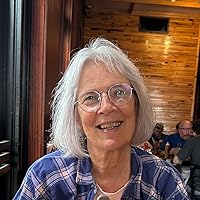
Joseph Kertes was born in Hungary (1951) but escaped with his family to Canada after the revolution of 1956.
He studied English at York University and the University of Toronto, where he was encouraged in his writing by Irving Layton and Marshall McLuhan.
Kertes founded Humber College's distinguished creative writing and comedy programs. He is currently Humber's Dean of Creative and Performing Arts and is a recipient of numerous awards for teaching and innovation.
His first novel, Winter Tulips, won the Stephen Leacock Award for Humour. Boardwalk, his second novel, and two children's books, The Gift and The Red Corduroy Shirt, met with critical acclaim.
His novel, Gratitude, won a Canadian National Jewish Book Award and the U.S. National Jewish Book Award for Fiction. Kertes has also been a finalist for a National Magazine Award and the CBC Literary Award.
His latest novel, The Afterlife of Stars, has been described by Anne Michaels as “unforgettable and deeply moving,” and by Richard Bausch as “brilliant, radiant.”
Promise squandered can get one's back up; your expectations are dashed, so you lash out. Hence the two stars here. Yes, I'm a spiteful codger.
Joseph Kertes' story about Hungarian Jews during World War II certainly has much to recommended it (and I seem to be in the minority in my disappointment), but the author's attempts to enrich this apparently fact-based tale of his family with background and character-building provoked in me irritation that he wouldn't just get on with it.
"Gratitude" opens beautifully with young Lili hiding behind a dresser in her home as the Germans begin clearing out her small Hungarian town. Other family members are scattered outside in an attempt to ensure that somebody gets away. Hungary was allied with Germany but when you're a Jew, with friends like Hitler ...
Lili escapes and finds sanctuary with members of the well-to-do Beck clan, the people at the center of this novel. The patriarch, standing up to German soldiers in a city square, is killed. His sons either lose their job (Paul) or are driven into hiding (Istvan). In the early-going this novel promises much and delivers fairly often, but the story grinds to a halt with tedious back stories and details undoubtedly designed to provide color and meaning, but which ultimately just bored me. Kertes generally writes well but makes us slog when there's nothing active going on with the plot. In addition, his overuse of rhetorical questions begins to grate.
I'm almost disappointed in myself for not liking better this interesting though overlong story, but Kertes' inability to move things along just lost me, and how can I fault my own natural reaction?
Oh, well. Those with more patience or who really, really dig the details and flashbacks and explanations might love this one. Me, I tried.
Romanzone ambientato nell'Ungheria della seconda guerra mondiale, dove il destino di diversi personaggi e diverse famiglie ebree (tra cui i Beck) si intreccia con l'opera di un giovane diplomatico svedese, Raoul Wallenberg, deciso ad aiutarli a fuggire fornendo loro falsi documenti. Mi è piaciuta molto l'atmosfera "corale" del romanzo, quel suo panorama a 360 gradi sulla vita, le vicissitudini e le risoluzioni di tanti personaggi differenti, e quella copertina, con l'immagine commemorativa della fila di scarpe di ebrei uccisi, presente a Budapest lungo il Danubio (e da me vista nella realtà) mi aveva toccato il cuore....purtroppo, però, il romanzo mi ha detto ben poco. Nulla di nuovo rispetto a tante testimonianze e racconti sull'Olocausto, diverse scene evitabili e grottesche (come quella dei ragazzi che sgozzano gli animali nello zoo per sfamarsi) e quel Perlasca svedese, che avrebbe dovuto rappresentare uno dei personaggi chiave della storia, ridotto a un ruolo marginale. Viste le buone premesse mi apettavo un coinvolgimento che però non è arrivato...pazienza. Nel complesso sufficente.
Reading this book was like entering five minutes late into a movie where you know beforehand the basic plot, who the good and bad guys are - and if you don't, they're easily recognized - and where it's all leading, but you're missing some of the details of how they'd gotten to this point. Since the Holocaust is a point of history and the basic details are known to all, the Nazis and Jews need no introduction and since the story has been told so many times on the written page and the screen, we all know where it's going and how it turns out. Nor does this book offer anything new in the way of characters: Jewish families who try to ignore what's happening because they believe they won't be touched, non-Jews taking advantage of the turns in fortune, an historical figure, Raoul Wallenberg, aligned with Jews trying to get others away from Nazi clutches, and not one but three stories of new lovers struggling to survive historical events. None of this is particularly new and the author does a workmanlike, if not particularly imaginative, job of covering familiar ground. What is new here is that this all takes place in Hungary which had a significantly different situation than, for example, Germany, Poland or Czechoslovakia; Hungary was Germany's ally so the action here starts in 1944 about ten weeks before D-Day, and also features other historical elements such as the Arrow Cross who are not explained so if you don't know about Hungary's situation going in, it can be difficult to fit the parts together. (The Arrow Cross were a fascist group who took over the Hungarian government at the time and both supported and competed with the Nazis, as I underfstand.) There's also a very fleeting mention of a sort of Hungarian freedom fighters which I suppose might have been like the French Resistance but not to worry, this only lasts about two pages, its members killed off, never to be heard of again. The story of the Genocide involving Jews, Gypsies and other Hungarians is no less powerful for being well-known in advance but I didn't have much affection for the characters here; I emathized with them but didn't feel much of a personal attachment, no matter how much they suffered.
If you are interested in the story of Swedish diplomat Raoul Wallenberg's efforts to save Hungarian Jews during WWII by issuing them Swedish citizenship papers and putting them in safe houses, you should read this book. By itself, that is a fascinating tale. If you are interested in Hungary, you should also read it. But, while it was definitely readable, I was not impressed with the writing. Kertes puts long philosophical treatises in the mouths of characters at the most unlikely times. And, while horrible, sad things happened to many of the characters, I was skeptical that things would have ended for many of them as well as they did.
This novel takes place in Hungary in the closing years of World War Two from 1944 to 1946. Hungary has entered the war late, up until the spring of 1944 relatively unaffected by the conflict in Europe. Jews lived comfortably in Hungary the way they always had, as successful professionals and businessmen. But Eichmann was waiting in the wings, continuing his cruel and ugly war against the Jews. He began by first offering wealthy Jews safe passage out of the country if they turned over their fortunes and their factories for the war effort. In the months that followed, he targeted both the rich and poor who remained. Jews lost their homes, their businesses, their valuables and their lives in Eichmann’s determination to implement “the final solution”.
This is the story of the Becks, a wealthy Jewish family who had the time and money to escape but could not believe their German allies would bring their hatred of Jews to this place where they had lived comfortably for so many years. Like others who watched Jews being rounded up in the middle of the night and witnessed neighbours turn against one another, they lived in a state of denial and delusion, unable to confront the reality that faced them. They simply stood by, believing everything would turn out well, blinded by their inability to see and deaf to the warnings of friends to get out of the country before it was too late. Many who ignored the warnings paid with their lives. The Becks were one of those families, believing they were protected by their wealth and position. As a result, some members of the family died and some who survived were no longer whole.
The story starts in Tolgy where sixteen year old Lily hides behind a wardrobe as the Germans invade her small village. Terrified, she waits until she no longer hears the shots, the screams or the shouts and when she finally emerges, she discovers everyone is gone. All around her are signs of daily activities quickly abandoned -- a half-eaten meal, laundry waiting to be hung out to dry, a book quickly thrown aside. Terrified and unable to understand what has happened, Lili makes her way to Budapest where she is quickly taken in by the Beck family.
Meanwhile the first member of the Beck family is murdered. Heinrich Beck, the popular Jewish mayor of a small town is hung when he defends a statue of Mendelssohn in the town square. Further south in Szeged, his son Istvan a young dentist, is abruptly replaced by another who simply walks in and takes over his practice. The Germans confiscate Istvan’s belongings and empty out the house he shared with his father. Istvan’s Catholic assistant Marta secretly gives him sanctuary, hiding him in the wine cellar of her cottage where she brings him stashes of food and water. But suspicion falls on her and although she is Catholic, she has no way to prove that she is not Jewish and so she is hauled off to Auschwitz.
Paul Beck is Istvan’s brother, a lawyer who is informed in the middle of pleading a case that his license to practice law has been revoked and he is to leave the building. His friend Zoltan (Zoli) a journalist and photographer, finds his parents brutally murdered. He vows to document and photograph the horrific events that are taking place around him so people will remember how the world went mad. It is the only way he feels he can contribute, but it is a dangerous fixation.
Zolti and Paul’s sister Rozsi fall in love and are determined to marry when the madness around them ends. Rozsi wants to leave the country but Zolti refuses to go, obsessed with his need to document the savagery he witnesses. He is later taken off in a transport never to be seen again. She struggles, unable to live with her loss and turns inward, unwilling to face the future without her loved one.
Lili becomes the chief provider in the hunt for food as her blond looks protect her outside the home and her courage allows her to take the risks necessary to put food on the Beck’s table. She has become enamored with Paul’s cousin Simon, a skilled tool and die maker who is hauled off to a labour camp to assist the German war effort.
Paul, anxious to do something to stop the terror, forms a partnership with Raoul Wallenburg, a Swedish diplomat determined to help his neighbours. The two work tirelessly forging false identity papers that turn Jews into Swedish citizens and protect them from the Germans. The pair boldly stop the transport trains headed to Buchenwald, Auschwitz and Treblinka, demanding those with Swedish papers be released and hiding those they rescue in safe houses and the Swedish embassy. The Germans, sticklers for documents and bureaucratic detail, respect these documents but the Hungarian Arrow Cross thugs ignore them. They are members of a nationalist party that believe in racial purity but hate the Nazis. Any Jews they apprehend including those with Swedish papers are shot. The soldiers in this organization are senseless brutal men who dislike the Germans taking charge of “their Jews”.
There is horror in these pages. Jews, Communists, gypsies and homosexuals are all targets. Innocent people are beaten, tortured and thrown into the Danube. Young children are brutally separated from their parents, people are stripped of their valuables, and homes are left empty or conscripted by the Germans, their owners forced to death camps. Most never survive. There is no time for grief, urgency quickly blows it away.
In the midst of this horror, moments of compassion and cruelty often exist side by side, as some risk their lives to help those who are suffering and others become informants. These are brief coinciding moments of heaven and hell.
As time marches down to the end of the war and the Germans flee, the Soviet Armies take over. Some families are able to reunite but nothing is the same. Even those who survived the carnage are damaged, burdened by the years of terror, the struggle to survive and the memories of what they witnessed. Their homes, furnishings and valuables have been ransacked or taken over by their servants. Families try to find lost relatives. Some are found, some are confirmed dead and others cannot be traced and are simply accepted as lost. And for the Beck family, whose remaining members reunite after the Germans flee, there are two more senseless deaths they must endure.
Much of this novel is difficult to read. Kertes moderates the horror with descriptions of the paintings and beautiful handcrafted furniture found in the homes of wealthy Hungarians. He writes about the beautiful music that in times of savagery provides a brief respite to those who find themselves in the midst of this barbarity, struggling to hold on to their lives, their dignity and their humanity. His characters are well crafted and believable and the reader moves through the narrative anxious to know what happens to them.
But this novel is too long. There are passages devoted to the poet Miklos Radnoti with half written verse left on his body, recollections of Simon’s mother Klari on her relationship with her cousin Sandor and Lili’s trip to the zoo, complete with the sights, sounds and smells as a friend kills one of the animals for its meat. These descriptions prolong the narrative without adding critical elements to the story.
This is a historical novel, based on the reminiscences long held in the memories of the Kertes family that still haunt the author. Kertes has said he tried to create a novel around the people in those memories, making them characters and giving them lives. He has been criticized by some for his focus on the transports getting Jews to their ultimate destination in the camps, when history records that most of them were forced to walk to the Austrian border, beaten and shot if they did not obey. Many of them were older men, women and children as the younger men were sent to labour camps, forced to work for the German war effort. Others criticize Kertes portrayal of Raoul Wallenberg a true hero, as a lesser character than Paul Beck in the work done in forging Swedish documents. However, I was not bothered by these drifts from historical fact and I don’t believe they made the story less remarkable. What did bother me were the length of the novel which I have already noted as unnecessarily long and two unimaginable events towards the end of the book. I could imagine Marta’s escape from the death camp, but not her rescue by a stray, wealthy, Austrian nobleman or her flight in a hot air balloon to reach Hungary. And Simon and Lil’s conjugal visit and incredible escape from the labour camp to arrive in Budapest stretched the limits of believability, undermining what for me had been a very credible story. It almost ruined the entire novel.
All in all, this story of a family devastated by the Holocaust was a good read marred only by those two issues which was enough to drop it from a five star to a four star rating.
It is a moving story of courage compassion, resiliency and an important reminder to be grateful for everything we have.
"Gratitude" explores, through fiction, the perhaps lesser-known tale of Hungary during the Nazi reign of terror through Europe during WWII. Kertes provides a gripping story as well as poignant reflection about Jewish identity and the unanswerable questions of why and how such human to human horror could occur.
Hungary was aligned with Germany during the war. As such, Hungarian Jews did not experience the full evil of the Holocaust until later in the war. I personally did not know much about Hungary in WWII and appreciated the opportunity to get a glimpse into this aspect of what is otherwise pretty well-known history.
Kertes' characters are charming and complex, and their stories compelling. He thoroughly explores the strength of people's will to survive and adapt. While the endings to some of these stories feel somewhat improbable, I think it's a forgivable indulgence given the general misery inflected upon all of them. The story is fiction, but Kertes was inspired by a family story that had always fascinated him. He also references real historical figures, such as Raoul Wallenberg, the Swedish diplomat whose tactic of giving Hungarian Jews Swedish papers saved thousands of lives.
Kertes' writing is sensual, tactile, visual. There is such an incredible juxtaposition of the rich cultural life his characters had built around themselves and the brutality being inflicted upon people at this time. It's a lovely commentary on how art can still connect people to their sense of humanness, even as they are being degraded, broken, vaporized, dumped into rivers. I would love to see a soundtrack to this book that compiles all the music Kertes references throughout.
This was my first Kertes book and I look forward to reading more of his work.
This book was very insightful, and well-described through the various characters how the Holocaust effected both family and the society of Europe. The author wrote exceptional characters that you could easily follow through with, the Beck family was strong, but without the help of Lili they might not have survived as well as they had.
I fell in love with both the characters and story. It was a journey worth taking, and reading this book gave me a whole different perspective for this time. My attention was drawn to how the family continued to sustain the new lives they got dragged into. The many rough roads they traveled did knock them down, but they always stayed strong. It was inspiring.
I will cherish this book and keep it in my mind for years to come. I learned more about myself reading and experiencing what the characters did. This book was and is one of my favourites, will read again and again. Joseph Kertes
This is the story of a wealthy Jewish family in Budapest, Hungary as WW II nears its end in Europe. The story is a familiar yet terrifying one to those with an interest in the Holocaust. Raoul Wallenberg is a major character. The book is long (more that 500 pages) and could be tightened up, but I did find myself wanting to get back to it and thinking about the main characters between reads. The fact that my mother-in-law came from a similar family probably increased my interest.
A story of a man who befriends Swedish Holocaust rescuer Raoul Wallenberg, and how this friendship permits Paul to save the lives of family members and others during the Nazi takeover of Hungary. Although there are moments in which your suspension of disbelief may temporarily fail you, it will return quickly. This is one of my favorite books read in 2018.
As WWII draws to a brutal end, Hitler’s storm cloud of tyranny descends upon Hungary’s Jews. A sad yet soaring tale of a Hungarian Jewish family caught up in the cruel chaos, Joseph Kertes’ third novel, GRATITUDE, is a sweeping literary achievement that serves as a powerful humbling force – taking the reader through the dark night of the soul and into the spangled light.
Sixteen-year-old Lili Bandel emerges from her small Jewish village of Tolgy as the sole survivor in a place turned into a desolate ghost town – evacuated by German soldiers. She evades capture – her blue eyes and blond halo shielding her – managing the long trek to Budapest alone, where the well-to-do Becks take her in as their own.
Like many Hungarian Jewish families deriving false hope of immunity from Hungary’s alliance with Germany, the Becks, too, lived in their own form of denial and delusion, failing to see the proverbial ‘writing on the wall’ in time and heeding warnings from friends and relatives to get out of the country, until too late.
Painfully, tragically, with great skill, humility and respect, author Kertes leads us through the harrowing journey of the Becks to the gates of Hades as they struggle to hold on to their dignity and humanity in the tightening death-grip of Hitler’s hate machine led by Adolph Eichmann.
In the dark soil of despair and deprivation, new roots of hope and heroism spring forth as one of the family members, Paul Beck, a lawyer disbarred from practice because of his Jewish faith, teams up with the noble Swedish diplomat, Raoul Wallenberg, risking their lives to save thousands of Jews by forging Swedish passports.
Some make it, some are not so fortunate – losing their lives to the randomness of war, the privations of gruelling labour camps or the gas chambers of Auschwitz, or succumbing to deep psychic wounds post-war.
What sets this book apart from other Holocaust books is that the heroes and villains are flawed human beings. One side isn’t always right while the other side always wrong. Compassion and cruelty often co-exist – revealing themselves in the unlikeliest of people and places.
While the country is left in ruins – pillaged by Germans and Russians – true restoration begins, restoration of buildings and temples and souls. Restoration of dignity and hope.
The story is a clarion call to us all to be alert and aware of the holocausts occurring all around us – and to act with courage and compassion. It is also a testament to the resiliency of the human spirit and the ability to prevail in times of darkness, as the author himself has prevailed over the dark psychology of his own demons, with a spirit of gratitude.
Gratitude isn’t your typical America comes to save the day kind of book. It takes place in Hungary, mainly in Budapest, and follows a family of Hungarian Jews who, along with the rest of their country have gone relatively unscathed from the war that’s been going on around them throughout Europe. Eventually though, Hitler and his ever expanding empire begins to take over and life as they knew it was turned upside down.
I wanted to keep reading, because the opening chapter was very good. However, the dialogue was awful, and so stilted I almost felt they were speaking in non sequiturs. Even though the descriptive passage and internal monologues were excellent, I could invest time in 512 pages of people speaking like idiots.
I enjoyed this book that is mainly about Hungarian Jews during WWII and the holocaust. It is fiction, but had a lot of history in it too. The characters were believable, but there were some scenes and dialogue that didn't seem necessary for the flow of the book. Still, it was interesting, and I'd recommend it.
Why another Holocaust novel? I've read a few, but this one, set in Hungary, kept me turning the pages and hoping for a mini-series. The storytelling is occasionally perfunctory, but Kertes creates beautifully rounded characters who pull you into their vanished world.
Engaged from the start, a very human story of people surviving and trying to make sense of the unfathomable chaos of violence and war. Well drawn characters, very memorable scenes...ultimately both inspiring and tragic.
I read this in Hungary. The gripping story of Hungary's Jewish community was all the more moving when we could actually visit the landmarks in Budapest, Auschwitz.
not the novel it could have been. a good story but told in a simplistic style that detracts from the narrative. couldn't finish it. i do recommend to those interested to read more on Wallenberg.