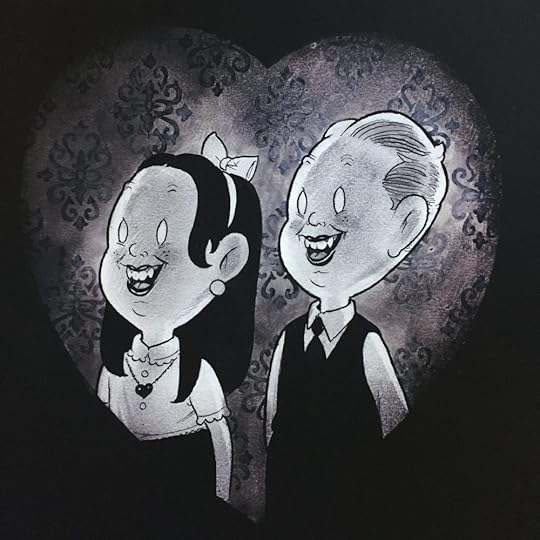
This gorgeous grimoire is part alchemy, part art book, part storybook, part comic book, and part conceptual art from the pen of Al Columbia, a longtime fan favorite contributor to comics anthologies like Zero Zero, Blab , and more recently, MOME. Collecting over a decade s worth of artifacts, excavations, comic strips, animation stills, storybook covers, and much more, this broken jigsaw puzzle of a book tells the story of Pim & Francie, a pair of childlike, male and female imps whose irresponsible antics get them into horrific, fantastic trouble. Their loosely defined relationship only contributes to the existential fear that lingers underneath the various perils they are subjected to. Columbia s brilliant, fairytale-like backdrops hint at further layers of reality lurking under every gingerbread house or behind every sunny afternoon. Never have such colorful, imaginative vistas instilled such an atmosphere of dread, and with such a wicked sense of humor. This is a comprehensive collection of Columbia s Pim & Francie work, including paintings, comics, character designs, and much more, all woven into something greater than the sum of its parts, with Pim & Francie careening from danger to danger, threaded together through text and notes by the artist. This is the first book collection by Columbia, a well-regarded talent amongst longtime fans of the alternative comic book scene, and one who will thrill an entirely new audience with the singular, inspired, fully-realized fantasies within Pim & Francie.
King of Creeps: Al Columbia's 'Pim and Francie: The Golden Bear Days'
Al Columbia is an anomaly in the world of comics. He first emerged in the late 80's, working as an assistant to Bill Sienkiewicz when the older artists' fully-painted work on series like Elektra: Assassin had established him as one of the most influential and successful names in comics. When Alan Moore quit DC and began writing edgier material for independent publishers, who were enjoying a temporary but massive sales increase thanks to a speculative market gone mad, Sienkiewicz was the artist who would collaborate with him on a creator-owned title, 'Big Numbers'.
Bill Sienkiewicz, from the unfinished 'Big Numbers' issue 3: Al Columbia:
It was an astonishingly complex and ambitious work, and the first two issues were a critical and financial success. For reasons never fully understood, Sienkiewicz quit the project after completing most of issue 3. Al Columbia was announced as Sienkiewicz's replacement, beginning with issue 4, and a new publisher was on board. He was a talented artist, and likely the only one capable of replicating his former boss and mentors' style (with the possible exceptions of Dave McKean and Barron Storey, who were busy with their own respective projects at the time).
But as the deadline got closer, Moore and the publisher, Tundra (who agreed to release issues 3 and 4 if they liked Columbia's finished pages; Moore's own company, 'Mad Love', had handled issues 1 and 2, but Moore wanted to focus on writing), had a harder and harder time contacting him. When they did, it was clear he wasn't going to make the date originally solicited. So they pushed it back, and made their excuses and apologies to the distributors, assuming a bit more time would allow young Al Columbia to get it together. But it didn't.
He dropped out of sight completely, and no one could find him. Finally, they searched the studio, hoping to find whatever had been completed in a state close enough to finished work that it could be published, with a little doctoring. But what they found was evidence Columbia suffered a nervous breakdown; the studio had been trashed, and all that was left of Columbia's art for Big Numbers issue 4 was shreds and scraps.
With the deadlines for both 3 and 4 blown and no high-profile artists willing to work with Moore on the cursed project that had sent one artist fleeing across the ocean and driven another one insane, Tundra pulled out. Moore reluctantly let his promising story go and turned to other, equally ambitious tales. Issue #3 was never published in its proper form, but in 1999, 10 pages were printed in a one-and-done magazine called 'Submedia'. In 2009, a photocopy of the complete lettered art for Big Numbers #3 surfaced on eBay. The purchaser contacted Moore, and with his permission published scans of the art on LiveJournal.
In 2001 Eddie Campbell, who was the artist behind Alan Moore's greatest work, 'From Hell', published a sequential art account of the Big Numbers-meltdown in his book 'Alec: How To Be An Artist'. From Wikipedia: 'Columbia declined to address the subject publicly for several years, writing in a 1998 letter to The Comics Journal that "I could easily launch into a tirade about the extensive horror of my Tundra experience, but I much prefer the very entertaining and conflicting accounts already in circulation." In later statements he confirmed that he destroyed his artwork but disputed other claims by the principal figures in the fiasco.'
His career after the Big Numbers meltdown has been suitably strange. In the last 25 years he has produced five or so comics, most notably The Biologic Show #0 and 1 for Fantagraphics, and around 20 short stories for comic anthologies like Zero Zero (which he also founded and curated), Blab! and Mome. Despite his extremely limited output, his work is among the most original and beautifully rendered in modern comics. His style quickly mutated in the early 90's, as he abandoned the Sienkiewicz influence and pioneered a heavily inked chiaroscuro approach that incorporated the painted black-and-white backgrounds and thickly-lined characters and foregrounds of early animators Max Fleischer, Pat Sullivan, Otto Mesmer, and Winsor McCay (whose comic-strip masterpiece, 'Little Nemo in Slumberland', was probably more of an influence than his innovative pre-WWI animation).
It was his short stories that first blew my mind, as it likely was for many people. His 8-page story from Blab! Volume 10, 'The Trumpets They Played', featuring his character Seymour Sunshine, is a hilarious and horrifying vision of the biblical apocalypse. The artwork is ineffable, a gorgeous black-and-white horror-show starring the many beasts described in Revelations, with scriptural excerpts included like the story-boards from silent films... which is exactly what this story looks like, a cartoon from the silent era. For me, 'The Trumpets...' is the best 8 pages in comics history. Together with other classics like 'Amnesia' and 'I Was Killing When Killing Wasn't Cool', this spare oeuvre has fascinated and influenced an entire generation of artists. He remains a mystery, and that works to his advantage. He also does what very few artists are able to do -- he always leaves his audience wanting more.
From 'The Trumpets They Played', Blab!; 'Amnesia', Zero Zero:
That made the news that his long-time publisher Fantagraphics would be releasing a 240 page book of NEW Al Columbia work so fucking shocking; if you took all his comics, stories and illustrations from the previous 20 years it probably wouldn't add up to much more than 240 pages (NOTE TO FANTAGRAPHICS: That is a collection every Columbia fan is still impatiently waiting for).
The material included in 'Pim and Francie' (named for the occasionally murderous siblings who have been Columbia favorites since The Biologic Show #0) is a disjointed compilation of stories, illustrations and sketches, some pages only half-inked, others torn or stained with coffee-rings. A longer story will begin to surface, then abruptly terminate, or change direction entirely. Pim murders Francie, then Francie murders Pim, then both kids are fed into meat-grinders by a demonic stranger, or pursued by the cat-decapitating 'Bloody, Bloody Killer'.
Recurring images indicate a narrative left unexplored. Faint pentimentos from drawings and dialogue erased by the artist provide some fascinating clues, without quite crossing the evidentiary threshold that would allow us to declare Al Columbia a proper fucking genius. In a long article from the first issue of the deluxe Comics Journal Special Editions (with huge, full-color 12" x 12" pages), the writer sums up the frustrating probable-genius of Columbia perfectly, and provides a detailed history of his comics career. Columbia provided quite a few full-color illustrations to accompany the article, including promotional art for the Pim and Francie book that was said to be coming out later that year... in 2002. Needless to say, it never materialized.
Six years later, the painfully self-critical Columbia appeared to have denied his perfectionist impulses, and in an incredible feat of will, burst into Gary Groth's office screaming 'Take it! Just fucking take it, take it, TAKE IT," simultaneously hurling a massive portfolio full of blood-&-cum-stained 'Pim and Francie' pages at the notorious publisher's head. Before Groth could respond or draw his pistol, Columbia disappeared from firing range & fled screeching into the Seattle night. Groth was distraught over squandering the chance to legally shoot a cartoonist in the comfort of his own home, but he got over the loss when he realized he had enough Al Columbia material scattered across his hardwood to publish an art monograph. Then he imagined how much more popular the book could have been if Columbia had suddenly/tragically passed away after a brief-but-courageous battle with 8 gunshot wounds to the face, and the regrets began to eat at him again. 'Maybe I can shoot him when he shows up looking for money,' Groth mused to no one in particular. Eric Reynolds, meanwhile, had begun gathering up the portfolio contents, and was occasionally squealing & grunting in response to the artistic awesomeness he beheld. Kim Thompson, wise man that he was, agreed with Groth that the monograph was a fine idea, but once again advised his friend against murdering the cartoonists they published, and to instead unleash his unfathomable rages on rusted-out automobiles & washing machines.
That's not what really happened, but after 'reading' this glorious testament to the genius of Al Columbia, it's how I like to imagine it. 'Pim and Francie' is not a graphic novel. While it contains short stories and story fragments, it is actually a beautifully produced art monograph. I couldn't believe I finally had an entire book full of Al Columbia art, from sketches to finished illustrations and everything in between. It took a long fuckin' time, but it happened.
In the intervening years since it was first released, his reputation has grown. His influence on sequential art is a given, but lately, it is being acknowledged by more and more gallery artists that he was a defining inspiration -- artists like Aaron Horkey, Camille Rose Garcia, and Marguerite Van Cook. Columbia, like his fellow Zero Zero contributor Dave Cooper, has made the move to galleries, and has been profiled by Juxtapoz and Hi-Fructose. His second appearance in Hi-Fructose magazines' thirty-first issue included one of their awesome 16-page inserts devoted entirely to his art (Hi-Fructose Magazine Volume 15 - His first appearance, 12 pg; Hi-Fructose Magazine Volume 31 - 18 pages, 16 of them in a booklet insert. It includes new art, while much of the material from V.15 is from Pim and Francie and his older stories; but the article/interview is great. Both are a must for Columbia fans, and if you haven't read Hi-Fructose, you should). Good news, for Al Columbia fans.
Top & Center: The first and second Hi-Fructose appearances.
As Aaron Horkey put it in Juxtapoz: "countless successful artists continue to pillage [Columbia's] back catalog, propping up their half-baked careers on the well-worn spines of second hand copies of Biologic Show." It's time Al Columbia stepped into the spotlight.
I've long been a fan of Pop Surrealism, particularly that of the darker variety. Al Columbia is one of my favorite artists of the movement. After "reading" Pim and Francie: The Golden Bear, he remains one of my favorites.
Imagine, if you will, sitting in a decrepit apartment, the kind with sirens down the street, gunshots down the hall, and weeds a'la Little Shop of Horrors growing in the cracks of the sidewalks. It is the mid 1960's, and you are up late watching three black and white televisions at once. One is showing Mickey Mouse's haunted house episode, another, an episode of The Twilight Zone, say . . . Eye of the Beholder and the third, a silent documentary film showing humans and animals being skinned and eviscerated. In the midst of this, you've dropped some mighty powerful bad acid. Really bad acid. We're talking like Monterey Pop Festival brown acid, complete with Wavy Gravy yelling "Don't eat the brown acid!" just as you swallow that Mickey Mouse blotter. Now let it all melt together.
That's our starting point. Or maybe our ending point. Many of the illustrations here are incomplete. Fragments of dialogue, usually running off the page or cut off by misbehaving panels, are interpolated with barely-legible scribbles in the artist's hand. The few that are readable show a semi-obscured dark underbelly to the seemingly innocent dialogue between Pim, Francie, and others.
If you're searching for plot, go back to my description of the ghastly room I've described and ask yourself if anything, anything at all, would be coherent under those circumstances. Now take the darkest interstices of your confused thoughts and mash them onto glossy paper with a printing press. If you're looking for plot, you are never going to come down off that bad acid trip.
Still, there is some sort of coherence to the whole thing. Maybe it's the preponderance of loose-intestines-as-tethers or multi-limbed psychotic killers or Pim and Francie's grandmother and grandfather living, dying, undying and zombifying that provide a tenuous thread that gives about enough to hold onto as David Lynch's Eraserhead or a Kilimanjaro Darkjazz Ensemble album.
Not much to go on, but it will have to do. IT-WILL-HAVE-TO-DO!!!!
How, you ask, can you give five stars to this particular horror comic and one star to Josh Simmons's The Furry Trap, which is also possibly in a similar horror category? Both are disturbing on some levels, and possibly both shock to some extent. Both are done by pretty thoughtful technicians. Well, let me focus on Columbia, whose work seems to draw on a commentary or nostalgic reflection about old-timer comics such as the Katzenjammer kids or early Disney Mickey Mouse and the like. Then he adds transgressive contexts like murder, like pouring a splash of hot sauce into your oatmeal. The drawing and dialogue generally feels like turn of the (twentieth) century comics, with all their innocence, maybe through the first half of the century. Some pages appearas if they were found in thrift stores, or in the bottom of some cardboard box at a yard sale, ripped and taped back together, with barely decipherable pencilled comments written on them. There is the palimpsest of pencil drawings under the still sketchy inked work.
So all this nostalgia, made into horror, what is about? I dunno. Horror, maybe, which is its own answer. I don't know Columbia, who has hardly produced anything over the span of a career. I'd like to know more about him and his purposes. But these are the things I thought about while reading this book:
1. I was reminded of a story by A. M. Homes from her first short story collection, "A Real Doll," which chronicles the tale of a teenage boy's erotic obsession with his sister's Barbie doll, which they (spoiler alert) horribly mutilate. Something about taking simple images from childhood and mutilating them is what Columbia does. A way of putting your youth behind you, and maybe also reflects some deeper angst about consumer culture, and challenging assumptions we make about childhood innocence. Then I think of that Calvinist view of childhood innocence in Lord of the Flies by Golding. Disney made assumptions about childhood innocence, maybe, and Columbia makes fun of them, satirizes them, but very darkly. Both Homes and Columbia make us uncomfortable, and for me I think usefully so.
2. I thought of Hitchcock, who combines horror and humor so well, but especially think of Psycho, which terrifies most people, though he thought of it as a comedy, a satire about psychoanalysis. He thought it was hilarious, in part (I mean, he would have known it would also freak us out, too, right?). Columbia wants you to laugh as he horrifies you, and that is interesting, really interesting.
3. I thought of Crumb who combined social commentary with sexist and racist humor, where we can't always determine whether he truly IS misogynistic in some comics or commenting on misogyny, or both! Columbia is like that here in some respects. Crumb would say I don't know where some of this stuff comes from. I bet Columbia might say the same thing.
4. Many of these short stories are silent, and I thought the silent ones were sometimes more horrifying than the ones with speech. Just images without breaking the plane to read dialogue. Naked images. The worst moments in any horror experience are sometimes the silent ones.
5. He's deliberatively transgressive. An adult character in one of his stories notes to a child that child-killers are particularly hated in society, and then this is exactly what we explore in several stories. Deliberately pushing those buttons. Creating that kind of horror thrill. It's bad to look into that closet, kids. But let's look, anyway, just to see what the sensation will be like. But this doesn't feel just adolescent bad humor, like Simmons does to me a lot, but thoughtful, exploring the cultural and psychological subconscious.
6. Post 9/11 The New Yorker had a black cover, designed, I think, by Art Spiegelman, and there were no funny cartoons in that issue. Funny people everywhere had to feel that out as they maybe always have to do, to explore what is and is not comedy. Is anything off the table? For some edgy comedians, nothing is off the table. The transgression, the looking into that dark closet, is the point. This book feels like that, not just snickering goof ball shock fest work like Johnny Ryan or Josh Simmons, though I am starting to see the purposes behind their work, too.
But Columbia's work feels more thoughtful, and sort of thrilling and rich, in some ways. Great? Maybe. Memorable, definitely, and usefully provocative. Not for everyone, clearly. The overall conception seems possibly drug-induced, and/or a little surreal in places. I thought much if it kinda brilliant.
What a wonderful book of nightmares! Lending the sensibilities of the Grand Guignol to the art styling of early Walt Disney cartoons (mouse-ear caps, exaggerated limbs and lumps, big can-do smiles), this collection of drawings, scribblings, cut-and-pastings and vaguely coherent snippets of sequential art regales the eye with the misadventures of Pim and Francie, two mildly incestuous waifs who occasionally (sometimes accidentally) murder one another when they aren't too busy torturing frogs, decapitating goldfish, mutilating the eyes of plant-bird creatures, mutilating their own eyes, outrunning multi-armed adults wielding knives or getting lost in bucolic country sides and spooky forests. Columbia takes loving care in presenting the work as a collection of artifacts: faded pencilings in the margins, blotches where words or images from subsequent pages seep through, portions of panels left obscure by the edges of the page, stickers of tape holding images to the page. Pim and Francie: The Golden Bear Days feels like the sepia-tinged snapshots and unfurled scraps of the phantasmagoric shadows casted from the inside of a madman's skull. Loved it.
Unlike typical entries into the Macabre/Childlike zone of comics and pop-surrealist art (much of which, it seems likely, has drawn inspiration from Columbia), at no point does this feel like a gimmick or throwaway shock effect. Pim and Francie dwell in an ambiguous but seamlessly realized world of dreams and nightmares where deepest fears drag themselves out from behind the surface mechanisms of old-style cartoons and comics. There's a heavy Fleischer influence here, and Fleischer always had a haunting, ominous undercurrent to begin with -- Jim Woodring, one of the only other artists to get this sort of thing right, pinpoints the formative effect of Bimbo's Initiation. But Al Columbia's clean bright lines trace pure horror in a way that, in anyone else's hands, would be far too on-the-nose. In fact, in his earlier works, it can be. But Pim and Francie's rictus of whimsy finds a disquieting balance all it own. Even the incomplete nature of the work ("Artifacts and Bone Fragments" reads the subtitle, remains of a universe that collapsed and disintegrated in self-terror) works to its advantage. What remain here, scorched and patched, are a collection of perfect moments, maps of the nightmare, slivers of anxiety and disaster that need no further explanation than the tumult of dread that any reader can supply from one's own interior reserves.
I'm a big fan of early 20th-century comic book art and animation.
I haven't been a gamer for several years, but I remember a game called "Cuphead" that struck me with its ridiculously gorgeous art style. If you haven't seen it, you should check it out—it's beautiful.
Now, about this book: it's a compilation of art by Al Columbia, interspersed with a few very short stories. His art is incredible, and the way he blends it with gruesome and wicked vibes makes it completely unique.
I would love to see a full story featuring these characters. Al Columbia is an author I'll definitely be following.
There have been a great many tomes dedicated to the relationship between the sacred and the profane in art, and while it is an engaging and enlightening process to learn of this divide from an academic standpoint, to experience it is altogether different. Few works of commercial art manage to accomplish this.
But to call Al Columbia's work "commercial" is a challenge in and of itself, as he plays with commercial sacred cows and mercilessly leads them out of hallowed halls into macabre slaughter. Columbia, throughout his vast, varied and largely absent career, has been consistent in his assault on the status quo, and Pim and Francie is his masterpiece.
To call the book a dangerous piece of work is hyperbole, but a more accurate and apt moniker would likely be that the book is ferociously provocative, terrifying and unrelenting. Columbia dissects - almost literally - the icons of an era thought to be perfection, and infuses it with the grime, blood, dirt and perversity that has long been sequestered to the recesses of the human mind.
Upon initial glance, Pim and Francie hearkens the golden age of family entertainment, with rounded, toy-like characters that frolic through imaginative slumberlands chock full of surprises and wonderment hiding around every marshmallow corner and candy-striped tree. It is a collection of stories of a brother and sister, close and often tied together by holding hands or by a line as they traverse the treasures and pitfalls of a fantasy world. It is a smattering of innocence that oozes wholesome, pure and sacred entertainment for a principled America, circa 1950; a sanguine and demure vision of childhood as presented by all-knowing elders, thought to be safe and sanitized.
Closer observation reveal that darker demons lay beneath, as Columbia places within billowed, white-gloved cartoon hands a plethora of throat-slasher blades and knives. Beneath the soft, rounded lip of a doe-eyed girl lay rows of razor-sharp reptilian teeth, spilling blood and bile onto a modest dress. Columbia pushes the envelope further by enveloping these Disney-esque characters in a full world of surreal terror, weaving in tales of incest, body horror, and murder. Unsettling for any adult, and absolutely, positively not appropriate for children.
The work of Al Columbia is ruthlessly demented in its portrayal of the horrors of the human mind, and that he chooses to express this darkness using the sacred icons of golden age cartoons further plumbs the depths of human depravity. His point is clear: the visage of normalcy is as artificial as a cartoon character, and even the most virginal souls are subject to what religion or culture have decried as flaws.
It is a territory explored recently by Columbia's famously one-time collaborator, Alan Moore, who in his controversial and highly important graphic novel series Lost Girls explored the sanctity of fairytale icons such as Peter Pan and Alice in Wonderland by subjecting them to hardcore pornographic treatment, and in doing so obliterating the puritanical facade of purity in both reality and mythology. While Moore chose to go over the top in his desecration of virginal children's icons, Columbia chooses to take - if it is even possible - a more subtle approach to his challenging of the sacred.
Columbia's drawings, by nature of his gorgeous art style and impeccable draftsmanship, are genuine works of art that require investment and slow discovery, as opposed to Moore's approach to bludgeoning his readers over the head with heavy-handed literary smut. Columbia's art goes beyond shock; with his beautiful depictions of vivisection, mutilation and mutation he treads in the rarefied company of artists such as Francis Bacon and Francisco Goya as creators of genuinely disturbing works that comment on the forced fragmentation of the human mind.
Credit must also be given to the editors at Fantagraphics for their masterful assembly of Al Columbia's Pim and Francie drawings, as many of them are presented as incomplete sketches without words or any decipherable order or chronology. Many of the frames are awkwardly cropped, at times cutting off the images and word balloons and leaving the reader in a chaotic state of disarray. To experience the book in this manner is to participate in Al Columbia's downward spiral into madness, to physically assault the pages in trying to piece together narratives, symbols and secondary and tertiary meanings. As aforementioned, this is not just studying the sacred and the profane, reading the book is literally experiencing the desecration of all things judged as normal, pristine and well-adjusted.
While I tend to hold the graphic novel in very high esteem (two of my favorite books of 2009 are graphic novels), Pim and Francie goes beyond simply being a graphic novel and extends into the realms of one of the truly great art books, one that engages the eye and holds deep, philosophical and introspective debates about the nature of the human soul, much of it without saying a word. Al Columbia is one of the most underrated and thought-provoking artists working in our modern times, and one can only hope that this book will expose his work to an open-minded audience that is willing to be challenged head on. Terrifying, beautiful and absolutely essential.
A gorgeous nightmare. When I bought this the sales clerk asked if it was some collection of old comics. And you might be forgiven for mistaking it as such by the beautiful cover. But once you open the book you realize that this nightmare landscape of death, mutilation and grotesqueries is not for the kiddies. Or for faint hearted adults.
Pim and Francie existed in a blasted landscape of horror. There is no narrative, per say. The two (are they brother & sister? Husband & Wife? Both?) wander through panels and episdodes that use the cartoons and comics of the 20's and 30's as a backdrop. The real story is the fevered surreality of the world they live in. And make no mistake, Pim and Francie are no innocents. They take part, with relish, in the decapitation, mutilation and murder.
But the art is so beautifu - stunning, really. Partial panels, partially erased or half-finished text, all drawn in exquisite homage to the time period. Recurring themes of knives, umbilical cords, birth, death, deformity keep you queasy but the art is sublime.
What. The Hell. Was that?! This is good, don't get me wrong. Hella good. It's like William S. Burroughs scripted Krazy Kat by cutting-and-pasting the editing room scraps from a Tex Avery Chainsaw Massacre! It's...it's like Little Nemo in Slumberland takes The Midnight Meat Train. It's like that. It's exactly like that.
Someone donated this to the bookstore today but I could not afford to buy it so I just speed-read it on the ol’ lunch break, which was not all that hard because it’s made up of unfinished comic fragments with minimal dialogue or narrative. Probably one of the more haunted books I’ve ever read. Maybe the single most haunted? If someone buys it they will surely be inviting demons and/or poltergeists into their home. Essentially a Disney cartoon from the ‘30s (there are even Mickey Mouse hats and monsters who look like Goofy) but filled with serial killers and many-legged body horror abominations and mutilated cartoon corpses. That would be bad enough if it wasn’t scanned from torn up, partially burnt, yellowing fragments from decades ago, so it truly LOOKS like a book you found buried in the walls of someone’s musty basement. Horrific! Thoughts and prayers to whoever spends $150-$175 on it.
Somewhere on the edge of Comics is a gingerbread house held together by coagulated human blood, and in it lives Al Columbia. I only discovered his work a couple years ago but when I saw it I felt like it had been there all my life. Put simply: Columbia takes 30's cartoons like Scrappy's Ghost and pushes their spooky atmosphere and goofy violence to their furthest extremes. You can't really compare him to anybody except to say that he's part of a tradition of pop art that worships Americana while training a floodlamp on this country's hideous underbelly in ways both revolting and seductive. As far as his subjects go, Columbia much more interested in the revulsion bit. Recurring images in his work include images of cannibalism, incest, and regular old murder, horrific monster-people holding straight razors on the end of spaghetti limbs, grisly car crashes, etc. etc.
And yet!! There is a haunting beauty to Columbia's work that elevates it far beyond what conceptually could pass for 2000s-era Hot Topic-level edgelord bullshit. His technique is immaculate. He plays with composition and scale in ways that evoke true fascination and horror in ways few works in any medium do. This particular book is made to appear full of half finished sketches, but his other comics/drawings/whatever often feature rich colors and sometimes dozens of precisely detailed figures. Anybody who wades through this will pause on the book's centerpiece: a context-free double splash page of the titular Pim and Francie in a decrepit Disney Land full of giant, broken statues of Mickey and his friends. The Mouse is an obvious target for this sort of thing, but there is an oppressive sense of sadness and loss to the drawing that I could never properly convey here. Columbia is occasionally directly political/critical, but his choice of subject matter and method of execution, a perversion of the original American mass-kid cultures, comics and cartoons, speaks to the violence and nihilism at the heart of this country as well as anything else has.
There's no overarching narrative to this book--little stories come and go but it's mostly just gorgeous drawings of empty suburban houses, cutesy comic-strip characters mutilating each other, and upsetting things of that nature. It's bizarre, but it's still one of the best pieces of "sequential art" I "consumed" "recently."
Disturbing and beautiful, and one of the few books that manages to capture perfectly the look, feel and depth of the original drawings. Less a book to read, than one to absorb with your eyeballs.
Man oh man, do I love Al Columbia! I've been watching him since the publication of Doghead, so have seen him ditch on Big Numbers, work with The Action Suits, create an odd couple of Biologic Shows, and finally we end up here. If the rumours about Columbia's erratic behaviour prove to be true, this book is certainly evidence of it. Much of the book appears to be abandoned, severely revised, or even destroyed and pieced back together. It's believable there was a plan to make a coherent, continuing narrative, but it's largely been lost in favour of a bit of a deluxe sketchbook approach. Images are often out of frame or off-centre, suggesting that it was actually photographed by the unhinged creator of these nightmarish images. Or perhaps it's all just a put-on. Whatever the case, I still seriously dig Columbia, and am glad to have this occasionally frightening piece of work. However, I wouldn't recommend it to anyone as the first sampling of his ouvre...or to easily scared small children.
Gives new life to old nightmares! Cures the rhumatiz! Adds a little spice to the bedroom! Builds a dungeon in your basement! Battens down your occasional craving for human flesh! Shrinks swollen organs! Keeps kittens out of the bathroom trash! Encourages zombies to give your house a pass! Gives great tips on door-to-door salesmanship! Makes your mother cry!
Junji Ito looks like Bill Watterson when Columbia picks up the brush.
Funneling Gottfredson-style, seminal black-and-white Disney illustration into an uncanny deconstructionist woodchipper, Pim & Francie's nonlinear glimpses into a grotesque cartoon infraverse is the reading equivalent of stumbling onto a pile of grimy film negatives in a darkened alleyway, holding up a few unspliced pieces to the dim light, and finding scenes of an unfinished silent-era cartoon about two psychotic cherubim and their misadventures in a darksome, upside-down comix nightmare.
With each lurch of the film reel, the world(s) are remade; Pim and Francie's behavior & relationship inverts; events are undone and rewritten with fresh atrocities. I found I could not read its sporadic dialogue without my imagination superimposing the hissing and popping of an old film reel over its characters' distorted voices.
The meta-narrative techniques of severed panels; incomplete pages; scrawled margin notes; snatches of "capsule" stories written in crabbed & barely-visible handwriting; the skeletal pencil palimpsest underlying partially-inked pages; interludes of beautiful, realistically-rendered paintings depicting a desolate counter-reality; abrupt shifts in time & locale; monstrous one-off characters and scenarios alluding to still darker possibilities -- all conspire to imbue one's reading with the vertiginous sense of gazing over the brink and into some backward twilight world one was never meant to see.
In this Ub-Iwerks-cum-David-Lynch fever dream broods an atmosphere wholly unique in my experience of the medium. Pim & Francie is bar none one of the most fiercely original comics I've ever read.
Such an amazing assemblage of art. This book escapes an exact label as it is comic art, but there is little resemblance to how comics are presented. There are stories, but most details are inferred by the viewer who sees fragments that have it made it onto paper. It seems the stories are concocted to varying degrees in Columbia's mind, who then draws and writes bits and pieces. The real "story writing" aspect of the book is in how the pictures are arranged in the book.
One of the most refreshing aspects of Columbia's work is its lack of polish, which today means that it almost never employs use of photoshop. There are pieces here and there that are digitally colored or corrected, but they are few and far between. Most are unfinished drafts with notes and sketches surrounding the "finished" inked portions.
Part of the pleasure in reading this book comes from a sense of voyeurism you get when paging through unfinished works. It's like if you've found a trunk of art and started paging through it.
Those who've only seen Columbia's violent works are missing a lot of what he has to offer, so I'd recommend this to anyone who finds his art interesting. It offers comedy, horror, slapstick and is also a nice exploration of process. It's as if someone set out to create the most disturbing how to draw book of all time.
There is a weird guilty pleasure in reading this book which takes the seemingly innocent charm of early animation and crams it into a meat grinder. Pages in their various levels of completeness make the book read like concept art from a shelved animation project from Hell.
The hints of narrative make the book seem all the more disturbing. Most of the time Pim and Francie are haunted by one homicidal maniac after another. Other times, they are victims of their own horror. The most disturbing images stick with you the way that only the most original horror stories can linger in your mind. Only someone with Columbia's impeccable craftsmanship could have pulled this off. His obvious love of the 1920s and 1930s "rubber-hose" animation and the comics style of Windsor McCay makes this book an homage in the most twisted, horrific way imaginable.
Gave up on ever getting to read this on paper, so I looked it up online. It's difficult to describe: floating somewhere between a sketchbook and an anthology of unfinished comics. It teases a very faint promise of narrative, never really goes anywhere and yet, perhaps accidentally, perfectly captures the feeling of being trapped in a nightmare.
Al Columbia must be an artist with the highest reputation-to-actual-published-work ratio out there. After reading this book, I hate to admit it is justified. He should really make a new one in next 20 years or so.
(He should also stop being an asshat on internet, but I guess throwing tantrums on social media is much more fun than being a reclusive artist.)
Pim & Francie is kind of like the Katzenjammer Kids as reimagined by Tool.
This was not a graphic novel but a sort of madman’s sketchbook—a point that caused a certain amount of frustration. I wanted to find out how Pim and Francie dealt with the zombie invasion or whether they caught the escaped murderer—instead all I got were snippets and half stories.
I’m giving the artwork four stars—the artist renders the stuff of nightmares with maniacal glee. However, he keeps you laughing even while shocking you. A hideous, grinning zombie in a prim housewife’s dress washing the dishes illustrates this perfectly. I just wish there was a story.
The darkest heap of corrupted childhood cartoon memories I've ever come across, Pim and Francie is a tragedy on so many levels. Simply "reading" the story gives you nothing but a sense of loss, but even worse, the artist's incredible talent and creativity shines through much of the time but falls back into scribbled-out, barely-penciled, partially-erased jibberish on almost every page. Not always, mind you; some pages he's able to put down what he wants to show in incredibly graphic, unsettling detail. Just most.
I was expecting something dark and creepy but, while this definitely has that in plenty, I was also expecting something more coherent with some sort of plot or storyline. As it is, it didn't do much for me at all. The artwork is fairly interesting and some of the concepts seem to have merit if they were giving more substance but overall this was just lacking anything to pique my interest.
I've enjoyed everything Al Columbia that I've read so far. He is definitely a very talented guy. I didn't get into this long work of his as much as some of my friends here have. I enjoyed the trip, but it didn't come together as anything more than a bunch of really fantastic pieces of comic art.
Pim & Francie isn't a read per say, but an experience. A lot of disjointed barely verbal storytelling, which some will view has an overall plot but others (maybe most) will not. I feel it's a great example of cartooning and I love the presentation method of a mixture of pages between sketches through final inks.
It's definitely the type of book that after finishing you flip back through a few times in attempt to understand what just happened!
This took some readjusting as far as expectations, as some of the advance material I read suggested there was some kind of narrative, when in reality, it's an art book. A carefully constructed art book with fits and starts and half-finished, half-remembered nightmares Max Fleischer had after reading too many fairy tales. Loses a little steam in the end, but still, I dare you to look through it and have its creepiness keep repeating on you.
Do you want to feel like you’re having a terrible nightmare and also going insane? Do you want to find out how an image of a character serving a slice of cake could terrify you? Do you want to think “nononono” at each page turn? Check this out. It really is in a class by itself.