Anne Bradstreet, the first true poet in the American colonies, wrote at a time and in a place where any literary creation was rare and difficult and that of a woman more unusual still. Born in England and brought up in the household of the Earl of Lincoln where her father, Thomas Dudley, was steward, Anne Bradstreet sailed to Massachusetts Bay in 1630, shortly after her marriage at sixteen to Simon Bradstreet. For the next forty years she lived in the New England wilderness, raising a family of eight, combating sickness and hardship, and writing the verse that made her, as the poet Adrienne Rich says in her Foreword to this edition, "the first non-didactic American poet, the first to give an embodiment to American nature, the first in whom personal intention appears to precede Puritan dogma as an impulse to verse." All Anne Bradstreet's extant poetry and prose is published here with modernized spelling and punctuation. This volume reproduces the second edition of Several Poems , brought out in Boston in 1678, as well as the contents of a manuscript first printed in 1857. Adrienne Rich's Foreword offers a sensitive and illuminating critique of Anne Bradstreet both as a person and as a writer, and the Introduction, scholarly notes, and appendices by Jeannine Hensley make this an authoritative edition. Adrienne Rich observes, "Intellectual intensity among women gave cause for uneasiness" at this period--a fact borne out by the lines in the Prologue to the early "I am obnoxious to each carping tongue/ Who says my hand a needle better fits." The broad scope of Anne Bradstreet's own learning and reading is most evident in the literary and historical allusions of The Tenth Muse , the first edition of her poems, published in London in 1650. Her later verse and her prose meditations strike a more personal note, however, and reveal both a passionate religious sense and a depth of feeling for her husband, her children, the fears and disappointments she constantly faced, and the consoling power of nature. Imbued with a Puritan striving to turn all events to the glory of God, these writings bear the mark of a woman of strong spirit, charm, delicacy, and in their intimate and meditative quality Anne Bradstreet is established as a poet of sensibility and permanent stature.
Review 4 of 5 stars to The Works of Anne Bradstreet by poet, Anne Bradstreet. Perhaps my favorite poet, I want to focus on one poem specifically, which she wrote in the 1670s... though it has the usual classical feel, the message is beautiful.
The use of language in the poem “The Flesh and the Spirit”, by Anne Bradstreet, a devout Puritan, is what gives the work meaning. Through imagery and symbolism, two sisters, named Flesh and Spirit, defend their beliefs on what really is the beauty and greatness of life. The most inspiring meaning that a reader can obtain from the work is whether or not man is occasionally allowed to have temptations of something that isn’t exactly following in the footsteps of God.
In “The Flesh and the Spirit”, Flesh represents “life on Earth of a mortal man”, which is sinful by nature, greedy at times, and materialistic. Her sister, Spirit, represents the “soul of a mortal man”, which is pious in nature, holy at all times, and moralistic. They both are beautiful, but Flesh is flawed in that she is depraved and is only mortal. They have the same mother, but Flesh was begotten by Adam, who created sin. Yet, Spirit, is the true daughter of God. She follows in his footsteps both in word and beauty. Flesh, as all mere men are made of, concentrates on the reaps that one can sow from life. When she says “Earth hath more silver, pearls and gold than eyes can see or hands can hold” (lines 31-32) she is trying to convince her sister, Spirit, that life on Earth is better than the spiritual and moral life she is already leading. Later, Flesh asks her sister “what liv’st thou on-nothing but meditation?” (lines 9-10). Anne Bradstreet uses specific language to convey the thoughts of Flesh and Spirit. The way that Flesh keeps asking questions to Spirit can be taken satirically. Throughout her words to her sister, Flesh criticizes and ridicules Spirit and the way she leads her life. Spirit absorbs Flesh’s words and fights back with her own feelings. “How do I live thou need’st not scoff, for I have meat thou know’st not of; The hidden manna I do eat, the word of life it is my meat” (lines 65-69). Spirit also says, “My crown not diamonds, pearls, and gold, but such as angels’ heads infold.” (Lines 83-84). Spirit is a part of God, differently than mere man is, and she has already been chosen. She tells Flesh, “This City pure is not for thee, for things unclean there shall not be. If I of heaven may have my fill, take thou the world, and all that will.” (Lines 105-109). The language in the poem flows very smoothly because Anne Bradstreet makes the poem rhythmic. By including rhymes at the end of all the lines, the poem is more beautiful and symbolic.
Bradstreet uses symbolism and imagery so brilliantly that it makes the sisters both jump off the page at you. The words within the lines of the poem create various images of angels, glory, God, the pearly gates of Heaven, beauty, etc. Even though imagery is fairly important, symbolism plays the key role in uncovering the meaning of the poem. Flesh is a symbol for men who are materialistic and Spirit is a symbol for those people who are always pious. The perfect example of Spirit would be the author of the poem herself, Anne Bradstreet. Anne Bradstreet was a devout Puritan follower who embarked on the passage of life with great piety and the traditional beliefs of Puritans in predestination, depravity, and the Protestant work-ethic. In Puritan life, there is no room or time for fun and pleasure. Therefore, Anne Bradstreet is directly related to Spirit and all the men around her can be seen as Flesh. Anne Bradstreet creates tension between the two sisters by picking a common rivalry. One is the good sister and the other is the bad sister. Bradstreet includes several phrases in her poem to make the sisters have “parents” that decide who is right and wrong. Examples are shown in the early parts of the poem when Flesh says to Spirit, “Doth Contemplation feed thee, so regardlessly to let earth go? Can speculation satisfy notion (knowledge) without reality?... Come, come, I’ll show unto thy sense, Industry hath its recompense.” (lines 11-14... lines 21-22). Tension plays a key role when Flesh is trying to tempt her sister, Spirit, by showing that no mere mortal man is omniscient enough to say what the best kind of life is. Spirit answers her by saying, “Be still thy unregenerate part; Disturb no more my settled heart, for I have vowed (and so will do) thee as a foe, still to pursue, and combat with thee will and must until I see thee laid in th’ dust.” (Lines 37-42). Spirit obviously has doubts about her beliefs, but quickly dismisses them although they will lay in the back of her head for the time being. The “parents” here could be God himself, the reader, or even Spirit herself; Since Spirit represents Anne Bradstreet herself, she must have doubts about her holy Puritan ways. By having doubts, Spirit judges for herself which one of the two is correct. Anne Bradstreet also had to decide which was correct. As we all know, Anne Bradstreet remained the pious woman she was and ignored the temptations just as Spirit did. Even though Anne Bradstreet and Spirit decided not to succumb to temptations, does that mean it is the right thing? Should all men reach the same conclusion?
According the Anne Bradstreet’s poem, even the most reverent of people can have temptations of all kinds. However, what they do with them is another story. Anne Bradstreet lets the reader feel comfortable with their beliefs and questions through her extraordinary talent and use for language. She is a marvel of wisdom and intelligence in her use of symbolism and imagery when she shows people the light. All (wo)men have temptations, but only the greatest like Anne Bradstreet can show you the way to reject them... {yeah, right!}
FYI - Read this years ago either as a kid or in college, but wrote up a review recently...
About Me For those new to me or my reviews... here's the scoop: I read A LOT. I write A LOT. And now I blog A LOT. First the book review goes on Goodreads, and then I send it on over to my WordPress blog at https://thisismytruthnow.com, where you'll also find TV & Film reviews, the revealing and introspective 365 Daily Challenge and lots of blogging about places I've visited all over the world. And you can find all my social media profiles to get the details on the who/what/when/where and my pictures. Leave a comment and let me know what you think. Vote in the poll and ratings. Thanks for stopping by.
Many of the poems in here were not to my personal taste. I didn’t dislike them, but I found the puritanism to be a little overbearing. I have no problems with religious allusions in poetry, though if the religious message begins to define the poem then it becomes a little preachy and a little pushy. The poet was too accepting of the situations; her house burnt down, but she didn’t mind because it was god’s will. It felt like there was no real fight in her, and that she’d roll over a die if someone attacked her because, again, it was gods will.
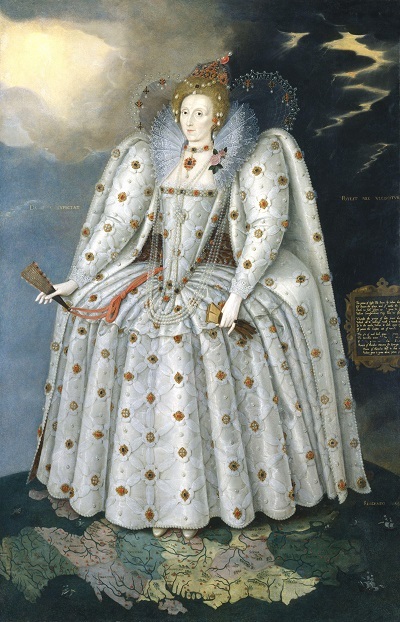
That being said though, there was one poem in here that I truly admired. Bradstreet was the first published female poet, and the first ever published American poet. This is a remarkable achievement, and I found, through one of her poems, that she had a big role model. She seriously looked up to Elizabeth I. She revered her and considered her to be a truly strong woman. I found her poem In Honour of Queen Elizabeth to be a very convincing ode to the Tudor monarch. This poem was as powerful as the phoenix queen herself.
She hath wip’d off th’ aspersion of her Sex, That women wisdom lack to play the Rex. Spain’s Monarch sa’s not so, not yet his Host: She taught them better manners to their cost.
Anne Bradstreet clearly was inspired by her; she saw a woman who in a world of men stood as tall as any of them; she saw a woman who had a brain equal to that of any man; she saw a woman who defied the sexist assumptions and showed her worth to her country: she saw a true queen. Perhaps, this is what convinced Bradstreet that she could, in fact, write and publish poetry; she saw a woman who was bold and strong, and she wanted to be one too. Indeed, she most certainly was. To be the first recognised female poet is a wonderful achievement.
Since time was time, and man unmanly man, Come shew me such a Phoenix if you can. Was ever people better rul’d than hers? Was ever Land more happy, freed from stirs?
It’s a great poem, but sadly the only one of hers I actually liked. I appreciate the others in the collection, though the continuous religious message, for me, was a little flat. Others may like this aspect of her writing. Poetry is very individual after all. I, however, won’t be reading any of her wok again. Well, accept for the obvious In Honour of Queen Elizabeth.
One of my favorite volumes of poetry I’ve read thus far. Bradstreet writes in traditional forms and meter and on traditional themes such as family, illness, or historical events. While she was published during her lifetime, her poetry has a consistency of someone who wrote for pleasure and not for pay, meaning her poems feel refined, heart-felt, and unhurried. I particularly enjoyed the more personal poems about her life and family at the end of this volume.
love bradstreet’s work. most of her poetry is pretty conventional but the ones regarding gender norms and faith (more specifically, doubting faith) are extremely captivating. she leans into ironies and double meanings/ambiguities, appearing as though she both upholds the gender norm and yet disrupts it depending on the lens of her reader. her piety is framed in a desire to understand the world and to see evidence for miracles; something rather looked down upon in Puritan society. she openly talks about, and enjoys, sex with her husband and gives insight into the personal lives of women in colonial America, including more tragic descriptions of miscarriages. despite her prologue entirely demeaning her writing and its capability, she shows a profound intentionality with her writing as she uses captivating metaphors, elusive allusions and ambiguous wordplay that all make her messaging about women in society submerged within her poems.
i’m not a big poetry person, but anne’s work really highlights the difficulties and hardships of her time, especially having grown up in a very religious colony. it really stops and makes you think about how people used to struggle and deal with their own traumas
(read for class) charlie said it best, this is trad wife propaganda. and we read it alongside trans theory ABOUT this book which is crazy. AB is a girls girlie girl for the husbands. there actually couldn’t be less gender contemplation but pop off i guess
Anne Bradstreet is generally considered to be the first serious poet of the American colonies and one of its first female writers. Born in England in 1612, Bradstreet was raised and educated in a comfortable English home before traveling to the New World when she was 16 for reasons of religious freedom: she and her family were Puritans. Her poems, written in New England and distributed among family members, were taken to England in 1650 for publication without Bradstreet’s knowledge. A second edition, with additional poems (and Bradstreet’s blessing) was published during her lifetime and then a third, with still additional poems, was published posthumously. Finally, a fourth edition was published in 1867 which included previously unpublished Bradstreet writings known as the Andover Collection.
The new John Harvard Library edition, a reprint of its definitive 1967 collection, includes all previously published material as well as an updated bibliography and a Bradstreet chronology.
Understanding the initial poems in this collection is greatly enhanced by the foreword and introduction (by Adrienne Rich and Jeanine Hensley, respectively) which explain that Bradstreet was trying to keep her English education alive in the colonial wilderness by writing extremely long, erudite poems having little to do with her surroundings: “The Four Elements,” “Of the Four Humours,” “Of the Four Ages,” “Of the Four Seasons,” and “The Four Monarchies.”
The first edition also included a fairly lengthy poem praising, in great detail, the reign of Queen Elizabeth while it simultaneously questions the unfairness of gender issues:
. . . Now say, have women worth? Or have they none? Or had they some, but with our Queen is gone? Nay masculines, you have thus taxed us long, But she, though dead, will vindicate our wrong. Let such as say our sex if void of reason, Know ‘tis a slander now but once was treason.
Apart from several fascinating poems such as this one, many of the works in the first edition, appreciated at the time of their publication, suffer a bit of a disconnect from 21st century readers, especially the lengthy ones previously mentioned. But these writings were apparently essential preparations for the more strikingly personal poems that followed, those that are most often anthologized and known in this century by students of early American literature, such as “To My Dear and Loving Husband,” a poem originally published in the third collection:
If ever two were one, then surely we. If ever man were loved by wife, then thee; If ever wife was happy in a man, Compare with me, ye women, if you can. I prize thy love more than whole mines of gold Or all the riches that the East doth hold . . .
Another poem called “Before the Birth of One of Her Children” reveals Bradstreet’s fear of death only because it means parting from her loved ones:
. . . If any worth of virtue were in me, Let that live freshly in they memory And when thou feel’st no grief, as I no harms, Yet love thy dead, who long lay in thine arms. And when thy loss shall be repaid with gains Look to my little babes, my dear remains. And if thou love thyself, or loved’st me, These O protect from step-dame’s injury . . .
“In Memory of My Dear Grandchild Anne Bradstreet” shows the tension Bradstreet often felt between her love for life and her Christian beliefs:
. . . More fool then I to look on that was lent As if mine own, when thus impermanent. Farewell dear child, thou ne’er shall come to me, But yet a while, and I shall go to thee; Mean time my throbbling heart’s cheered up with this: Thou with thy Saviour art in endless bliss.
Bradstreet’s theological beliefs are further documented in the Andover Collection (the last section of the current edition) and contains various poems and prose, the first of which, “To My Dear Children,” documents Bradstreet’s spiritual odyssey, meant to be read after she had died: “The method I will observe shall be this: I will begin with God’s dealing with me from my childhood to this day.”
“The Words of Anne Bradstreet” places all of Bradstreet’s writings clearly within her biographical framework and as such is the definitive tool for understanding this important colonial poet.
(This review also appears at CurledUpWithAGoodBook.com).
Read for ENG 311: American Lit to 1865. Bradstreet was a Puritain and that heavily is reflected in her work, as well as her pristegoeus education. So far, my favorite was her poem "Prologue".
The image of the refined wife was not taken lightly in England during the 1600s. She was to be modest and delicate to family and guests, and compliant and respectful of her husband. Questioning regulation was out of the question. Seeking work outside of the home was unheard of. When Anne Bradstreet put her quill to paper and composed her thoughts—some, personal feelings of her family; others, insecurities of the greatest authority known to a Puritan—she introduced a completely new face to the mind of a New England woman. She gave woman the courage to tell the world, “I feel. I think. I have doubts.” Anne Bradstreet’s father exerted extra effort to see that his daughter earned an education. Anne wrote of trails and sickness—not as a servant, or the poor—but as a gentlewoman; the wife of an educated governor. She writes in The Prologue about the expectations of such a title: “Let poets and historians set these forth/ My obscure lines shall not so dim their worth”—using sarcasm, or satyr, to portray her oppression in a Puritan society. This may be modesty, but appears more so to be a metaphor for the expectation of women’s inferiority to men. She further stresses her position by writing: “If what I do prove well, it won’t advance/ They’ll say it’s stole’n, or else it was by chance.” Only here, Bradstreet is emphasizing a different point. She believes that what she has written may have merit, however cannot and will not be taken seriously by society. This is a bold move, though a move Bradstreet feels is important enough to document. This truth is cleverly weaved into The Author to Her Book, a poem that metaphorically connects raising a child to be alike publishing a novel. She writes: “Thy blemishes amend, if so I could:/ I washed thy face, but more defects I saw,/ And rubbing off a spot still made a flaw.” This directly correlates with the editing and critiquing process of a work. Each change brings a new problem. Without further knowledge of this poem (I’ve never taken a poetry course) I would assume that the lines: “And for thy mother, she alas is poor,/ Which caused her thus to send thee out of door” perhaps suggests that the author is poor, and in need to selling the piece to make a profit. This is satyr in its finest, because selling a child would be a terrifying, and sometimes heartbreaking effect, though would create a handsome profit. Through poetry in which she never intended to be read, Bradstreet explains the general gender roles of the time by masking truth in humor. The Prologue and The Author to Her Book were both written to make a solid point, but do so in a subtle manner. In such a society where women are discouraged from voicing this kind of judgment, satyr appears to be the best method of venting the resulting frustration.
This entire review has been hidden because of spoilers.
Doth Contemplation feed thee so Regardlessly to let earth go? Can Speculation satisfy Notion without Reality?
I think there are two sides to this coin/poem. One is the logical, something we should of course see immediately - that flesh tries to lure the spirit away from her meditations and prayer, offering her everything she could possibly desire (just that she does not, does she?), promising her the world just as the Devil once promised Jesus everything - if only he bow down and worship him.
But there is the other side of the coin which very much caught my mind as well, especially since it comes off before the heavily luring chords chime in: Flesh is worried and accuses the Spirit that she has no eye for anything real, wasting away in meditations, speculations etc. But who would fill her belly? Because whether one likes it or not, a man IS made of flesh and that flesh needs some feeding, too, otherwise there won't be anything left for the spirit to inhabit. Work, hard, earthly work also needs to be done, there's a lot of toil and trouble, and when one discards flesh as frivolous...
I think the author finds it wrong, and that the puritans struggled with this concept as well, a lot - hard fleshy work and spirituality, and they tried to find means to have them both, dreams and cake, and mold them into a same cup. I also think they rather succeeded, because they made their faith out of the earthly troubles, actually managing to stir Flesh and Spirit into a single stew. But they were also constantly vigilant, so that neither side would get too much attention, because they saw harm in it (constant praying and abandoning your family and neighbours, and their needs is quite as much a sin as liking the prosperity one has achieved through their earthly means.)
Anne Bradstreet originally intended to share her verses only with her family and close friends. Without her prior permission, her brother-in-law John Woodbridge took them to England and published them in 1650 under the title The Tenth Muse Lately Sprung Up In America. Apparently, Mrs. Bradstreet anticipated the skepticism with which her poetry might be received. In her Prologue (above), she apologizes for her lowly attempts and begs the reader to forgive her for her simple verses. While she admits her poems cannot compare with those of the Greeks or other great poets, she humbly asks to receive due credit for her efforts. I imagine Mrs. Bradstreet would be amazed to know that her humble expressions of devotion for her family and her God are still read and admired today, since she didn’t initially intend to publish them at all.
Anne Bradstreet (1612-1672) was America’s first female poet and is considered one of the two greatest New England poets of the 17th century. Written in the frontier wilderness setting of colonial America, her poetry shows a balance of Puritan thought and feminine feeling. In spite of challenges of raising eight children, suffering economic hardship, fighting recurring illness, and having a frequently absent husband, Bradstreet managed to find time and energy to produce a collection of poems that have endured over three centuries.
For more on Anne Bradstreet and her poetry, including a selection of her poems, visit my blog at www.ImAllBooked.com
I went into this book wanting to like it. I was already familiar with a few of poems from anthologies—“The Author to Her Book" and "Verses upon the Burning of House, July 10th, 1666"—which I greatly enjoyed. However, I found many of the poems in this book a trudge. My reaction, in part, is due to my modern tastes. I just don't like the long encyclopedic histories, like Bradstreet's "Four Monarchies," that seemed to be in fashion in the seventeenth century.
I was also frustrated by her Puritan values. In one poem she reassures her son that the death of his wife and children are all a part of God's plan, and in few other poems she discusses her own illnesses as punishments from God to get her back on the right path. While these poems are tender and filled with her grief and suffering, I could not leave behind my less religious views to enjoy them.
However, at her best, Bradstreet is master of form, wit, and sympathy. Her best work can seem surprisingly modern. At times, she can even feel subversive. "The Author to her Book" seems to capture the feeling every writer has submitting her or his work. "In Honour of Queen Elizabeth" has some sly criticism about how the patriarchy views women.
Ultimately Bradstreet was a poet of her time, and it is the philosophies and prejudices of that time that I found distasteful in much of her work.
I love Bradstreet’s religious themes, but also I loved her personal accounts of life. Although her writing was from a comparatively primitive pioneer era, her poems on motherhood and womanhood, on struggling to find balance in life, on developing and sustaining her Christian faith, and on writing still resonate with me in this very different age.
Ironically, the volume of her own poetry that was published in her lifetime (without her permission) was full of poems that I just could not get into for boredom (a poem on the four elements, one on the four humors of man, etc.). The poems that most resonated with me, those that I would call “the Best,” were the personal, womanhood-inspired poems, ones that she never intended for publication but that reflect her struggles and worries: poems of the heart. I loved those ones.
The poem "The Author to Her Book" was relatable to me as a writer. It is a very frustrating process that the speaker (as well as writers) go through to complete a work, and when someone else snatches it up it is often embarrassing as well as repulsive to the author. I thought it was interesting to not the two names the speaker called her book: "ill-formed offspring" and "rambling brat." As well as phrases such as "unfit for light," "hobbling," and "made... in rags," which describe the frustration that is felt by the speaker for the early publication (or possibly any publication at all) of this book. A possible lesson from this poem would be not to jump the gun on people's desires and let them perfect what they have worked on.
The first time I read her poems it was so hard to understand. I had to sit with a translator and a dictionary to understand her poems. I felt like the most idiot person in the world. LOL but my teacher sat with me and we reviewed the poems together and after taking some practice I really liked her books. Especially "The Author to her Book" I laughed through the entire poem cause I totally connected with her. Her poems got published without her consent and she wrote this poem about her feelings towards her other poems that she found they were garbage and I feel the same way with the books Ive wrote and I'm ashamed of putting them on Wattpad. Overall, Anne is one of my favorites literature women(not that I know many).
I read the works of Anne Bradstreet while completing an essay for my degree, comparing her poetic explorations of death and grief with those of Emily Dickinson. Bradstreet was the first female poet of the New World, and her book ‘The Tenth Muse’ was the first to be published by a woman in America. I think she’s a hugely underrated poet and deserves more recognition as an influential writer in the history of American literature. Though a devout Puritan, there is a recurring presence of a voice of doubt in her poetry, particularly in her elegies for her grandchildren who died young. She was a poet well ahead of her time, with a distinctive and boldly original voice.
Poetry is a hit-or-miss sort of thing; no two people react the same way to any given poem. That said, I liked some of Anne Bradstreet's poems, and did not like some others. Her shorter poems appealed to me more than the longer ones, possibly because she got to the point quickly. Some of her poems to her husband, and the 3 successive verses she wrote on the untimely deaths of 3 grandchildren, were quite moving. I do recommend her work; 17th century poetry has its own rewards, and women poets were rare in those times, American women even rarer. Give it a try.
To think of when and where Bradstreet wrote her inclusion in the American canon underlies her text with a great sense poignancy. Especially when she doesn't overreach. A gentle tone imbues the dialogue but never belies the strength of character behind the author. In fact, it reminds us of the hardy spirit which broke American ground and serves as a foundation for aspects of American ideology.
I think Bradstreet is far too good having been a women poet in her time it wasn't really common place and furthermore an American poet when American lit wasn't really noteworthy or accepted in the rest of the world. Her poetry is richly rewarding.
Bradstreet is known as the first American Poet. She has taught me how to write about my every day life and make it realistic, beautiful, and inspiring, even when tragedy and hardship, love and accomplishment get in the way...
Skimmed through her longer muses, but so enjoyed her shorter ones and especially her poems to her children, and reading the advice she felt important to leave them with. A small glimpse into the mind of a woman from the mid 1600's.
This is the first work of poetry I've read as an adult and I really enjoyed it! Anne wrote about a wide array of topics and I liked seeing where her thoughts still resonated with a contemporary reader like me.
My goodness this woman had an extensive education considering it was the 1600's! Her familiarity with ancient history and writings was daunting. I was impressed with her strong knowledge of the Bible and she was evidently a very serious Christian.
Cut out the ridiculous projection of feminism in the foreword by Adrienne Rich, and what you have is a treasure trove of beautiful verses that are surprisingly personal and vulnerable. I think every mother could relate to her poem "Before the Birth of One of Her Children".