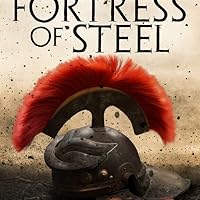
1033, the Norman/French border. Six brothers, the sons of Tancred de Hauteville, prepare to experience their first taste of battle. They have been trained since birth to become great warriors, following in their father’s footsteps. As knights, they have but one true to fight. Nothing matters more to a Norman of noble birth than the ability to engage in battle; nothing has greater importance than skilful swordsmanship and winning a fight – and the de Hautevilles are used to winning. Victory and defeat, betrayal and revenge combine as the desperation to rule becomes an intense battle, testing even the strongest of ties. But through it all shines the loyalty of blood that binds families – and warriors – together.
JACK LUDLOW is the pen name of writer David Donachie, who was born in Edinburgh in 1944. He has had a variety of jobs, including selling everything from business machines to soap. He has always had an abiding interest in the naval history of the eighteenth and nineteenth centuries, which he drew upon for the many novels he has set in that period. The author of a number of bestselling books, he now lives in Deal with his wife, fellow A&B author Sarah Grazebrook.
Like every tiny Sicilian town, Bàusu was a maze of narrow alleys into which he did not want to go, for in such constrained areas a mailed knight lost the value of his sword and became at the mercy of the knife.
For this reader, I learned only of the Norman Conquest of England as part of the school curriculum, with no concept of conflicts and land grabs taking place across the channel and throughout the Mediterranean during the eleventh century. In Mercenaries, first in the Conquest trilogy, author and historian, Jack Ludlow brings to life those times, the sounds and smells of horses and men camped in close proximity, the logistics of laying siege, naval blockages and engaging in battle, many characters drawn from history, some imaginary.
Opening in 1033 in Southern Italy, the Lombard Guaimar, just sixteen, and his sister Berengara, two years his junior are burying their father, the Duke of Salerno, his lands and title seized by a feudal lord, the self-claimed Prince Pandulf, and young Guaimar is intent on regaining his birthright. Meanwhile in Normandy, seasoned soldier Tancred de Hauteville is blooding his eldest sons, William and Drogo, in a battle to overthrow the king’s brother, hold up at -
- the great fortress of La Roche-Guyon, which for two hundred years had defended the Frankish border. The castle was invisible from the approach, being, as it was, built into the chalk cliffs. La Roche-Guyon also guarded a spot at which the Seine could be crossed and there were few of those between Rouen and Paris.
The de Hautevilles have troubles of their own: a powerful overlord, claiming vassalage over their lands: richer than all of his neighbours, with larger lands and holdings amassed not through military service, but by the slippery route of marriage.
Even without external pressures, the simple stone demesne and its lands cannot support Tancred’s sons and their future families, and the story follows the fortunes of the eldest two, William and Drogo, who travel to southern Italy to offer their services as mercenaries to another Norman, Rainulf, who has extensive holdings for training fighting men and their destriers - a medieval warhorse powerful enough to bear an armoured rider and the temperament to charge into battle against shields and lances.
Thus the story follows the two themes: the two sons arriving in the south, to find their place in a world of shifting loyalties. As a gifted horseman and natural leader, William soon rises in the ranks, defeating adversaries by guile as much as strength. And Guaimar and Berengara’s secret journey north, seeking the support from the Holy Roman Emperor, until the two overlap.
Rome was a place into which flowed money from all over the Christian world. It was the home of the Papacy, that fount of enormous wealth provided by tithes, as well as splendid offerings so that masses could be said for the rich of Christendom. It was also a place rife with simony, where ecclesiastical offices were bought and sold. Inconvenient marriages could be dissolved if the payment was high enough, the holder of the office of pontiff and thus the key to the coffers was a matter of great import, the easiest way to profit – in commissions, offices and downright theft – being to have a member of your own tribe on the throne of St Peter.
I thoroughly enjoyed the landscapes, defences, intrigues, battle tactics which, while grim at times, fell short of being gruesome. But the main thing was the horsemanship, the Normans putting the needs of their mounts before their own.
Later in the book, William and Drogo travel to Sicily to take on the Saracens, Messina under siege and a naval blockade stopping supplies. Here they join forces with the Byzantium emperor’s men.
Constantinople deployed not only a good general with a substantial army, but a weapon equally as potent in battle as the Normans: the Eastern Emperor’s Varangian Guard, men from the land of Kiev Rus, of the same Norse stock as themselves who, unlike the opponents they normally faced, did not break or flee, but stood their ground and used the great axes.. (Which explains a lot about contemporary Ukraine).
I particularly liked the quirky details: in medieval times, salt was a prized commodity, placed in the centre of the high table. Those of high rank sat “above the salt”, the rest seated below.
Recommended to anyone with an interest in medieval warfare.
I find that when it comes to historical fiction not enough is written of this era or these people. The Normans. What little is out there encompasses the events surrounding and including the Norman Conquest of England more than anything else. There is also some scattering of historical fiction that is set with the Saxons pre Conquest, and then the Normans post Conquest. But unless you are willing to skip over into the historical romance and Chick lit historical fiction (which I am not), then even these are few and far between. When I found Mercenaries I had little expectation and if I did expect anything, I did not expect much. I had heard nothing about the book or the two following books that make up this trilogy. I have never read a Jack Ludlow either so that was breaking new ground for me as well. Despite all my reserves going into the book I found that I actually enjoyed it and for me it was a 4 out of 5 stars book.
Mercenaries is set in Italy mostly. Pre Conquest, pre everything that the majority of people associate the Normans with. And in my experience, the majority of people seem to think they came from nowhere a few years before they set sail for England and then assimilated and vanished soon after, which technically, in regards to the vanishing, they did. Being Northmen and Vikings by blood, that's what the Normans did best. Conquer, mix with the populace, assimilate and dilute their blood. They wiped themselves out by doing this, which isn't exactly a bad thing mayhaps as I have heard some speak of the Normans in the same breath as the word Nazis. I will give that debate a wide berth however.
Kicking off on the Norman and French border in 1033, we are introduced to our main characters as children, William and Drogo de Hauteville. Sons of Tancred de Hauteville. Real characters from history brought to fictional life. In fact most of Ludlow's characters are based on real men. Some I was familiar with, and some I was not.
The book does not stay with William and Drogo as children for long and within a hundred pages they are young talented warriors setting out to become mercenaries in Italy. They are successful in their new careers and soon cross paths with Guaimar, the heir to Salerno. Another real life character who was responsible for persuading the Emperor, Conrad Augustus, to clash with Pandulf of Capua. Following this, William and Drogo find themselves moving on to new battle grounds against the Saracens, where they cement their reputations as formidable leaders and warriors.
The flaws of the book were not too aggravating. There is no flowery or poetic prose and I missed it. While the writing is technically okay, it lacked in historical description and the characters were rather one dimensional. I also have a grievance with the edition I had. It was over 400 pages, but the font was more like a large print copy. Printed for those with poor eyesight. The spacing between lines was broad, and the font too big. I saw another edition had about 288 pages and I suspect that is the edition I would have preferred to read as the large font edition messed with my concentration. Took away some of my ability to absorb the story. This factor does not reflect in my rating though.
There is promise of a great trilogy here with the Conquest Series by Ludlow. And since this is an era that I have much interest in, which as mentioned earlier is oft neglected by historical fiction authors, I will definitely be going on to read the next two books in the trilogy.
I was not expecting to like this book as much as I did. I was expecting another half-assed, poorly written, overly macho book similar to the rest of the boys own adventure historical fiction stories already out there. I was surprised when I ended up liking the characters and finding the story quite compelling. It has it's issues with character development and the flow of the storyline but all in all I thought it good and worth finding the rest of the trilogy.
This book begins as six brothers, trained since birth to be Norman knights get ready for their first real battle in 1033 on the Norman/French border. As well as their first real battle it is an exposure to their first political encounter with the duke of the area.
As result of that encounter the two oldest sons of Tancred de Hauteville decide to take the road to Italy where they find employment as mercenaries since the battle skills of Normans are much in demand there.
This is an Italy divided into states, the politics are different but even more intense; the Eastern empire of Byzantium claims some states, the Western Christians claim others, the Saracens have taken Sicily. There is historical intrigue, battles and a few very interesting characters to follow the story through.
I enjoyed this book thoroughly and the icing on the cake was a mention of the Varangians at the end when the brothers go to Sicily. I finished this book and hopped straight online to buy the next two. I can't wait for more!
The writing is not bad, but after reading about 14% of this book I am bored and skimming. There is a lot of riding to and fro, arriving at camp, making camp, leaving, more riding, descriptions, descriptions and more descriptions and explanations and generally very little happening. Not keeping my attention, sorry...
I've read this series previously and enjoyed it, so it's difficult to properly judge this book standalone but it sets the scene for what is to come very nicely,
Exploring a part of history not often written about, it balances action and strategy nicely albeit there are some sentences which I stumble over in reading, the grammar is correct it's just used in a slightly unusual fashion so can feel stilted, but this is in transitions rather than whole passages.
I’m kind of clueless when it comes to the Normans, therefore early on in my reading everything seemed out of place. Moreover, the author's style of writing is a bit frigid which made me feel morose and dull, and on several occasions I began questioning my decision to start this book. Fortunately, curiosity kept me going and patience paid off in the end since the more I read, the more used I got to his style and I have actually enjoyed it.
“Mercenaries” is the first installment of a trilogy. This book is broken into two storylines, one that follows the fortunes of the remarkable de Hautville family, while the other is closely zooming in on Guaimar’s struggle to take back his titles and land. Eventually both paths find the common ground, William&Drogo as captains for Rainulf’s normans , while Guaimar in an alliance with Conrad Augustus in their way to defeat prince Pandulf of Capua. Deflecting from “the Wolf” a mutual win-win alliance is agreed between the mercenaries and the emperor. After, a no fight victory against Pandulf, the theater moves to Sicily where the “mercenaries” join the Byzantinne force to drive the Saracens out. The book ends with the defeat of Syracuse, the return to Salerno and sudden departure to Melfi into Apulia.
The characters are so flat and one-dimensional that I have felt no care for any of them – money and land being their only goal. Each Norman leader seemed to show a particular inclination towards shrewdness, being in a continuous “outwitting the rivals” competition. The Battle of Wits! The actual battles weren’t bloody at all, not extraordinarily depicted either, but enough to make them interesting. I particularly enjoyed the stand-off between William and the emir of Syracuse Rashid al Farza, being the only true fight in the entire book with enough detail to satisfy my deep hunger. I could hear myself shouting “Bras de Fer!!”.
What bugged me the most was the fact that I lost track of the timeline too often, duly to the author’s rare mention of months, years and so forth. It might not have been a problem if I had a clue on the real historical events, but my unfamiliarity made me feel like a “sucker” since years were passing by and I was actually many months into the past.
As the author stated “at the kernel is historical truth and the actual deeds of the brothers de Hauterville”, therefore this book is worth it if you want to learn a bit historical facts on a period unfamiliar to many people. I recommend it to persons fascinated with history.
As I already own the two subsequent books in the series I decided to make an effort with this book but it's just so bland, relatively aloof and filled with semi-pretentious dialogue that you neither empathise with any of the characters, particularly care what happens in the plot or anything you read.
If I were to describe it as one of those bland MOR sword and sandals epics that Hollywood churned out in the 50s & 60s without any star appeal and little in the way of memorable content, that would sum up what I thought of this book.
It says it all when the strongest sentiment you have about a book is regretting buying it in the first place, even when you only paid a couple of £ for it.
I found this book very interesting and above all easy to read. what worked for me was the type while I know others felt differently. It is basically the stories of two families, Guaimar and Berengara, brother and sister who have had their inheritance stolen by the evil Panulf. The others are the brothers of the family deHauteville, Norman mercenaries. This book centers mostly on the first two brothers, William and Drogo. I enjoyed the intertwining of the two stories, especially those of Guaimar and Berengara. I will probably continue the series.
This is my assessments of this book Mercenaries by Jack Ludlow according to 6 criteria: 1. Too long and Strenuous action - exciting - 4 stars 2. Boring - fun - 4 stars 3. not difficult to read (as for non English native speaker] - 3 stars 4. predictable (common) - good story (unusual) - 4 stars 5. Shalow story - has a deeper meaning - 3 stars 6. The story is mass and Unfinished - The story is clear, understandable and well rounded story - 3 stars
Set in 1033 this book is the first in a trilogy about 6 Norman brothers who seek fame and fortune working as mercenaries. I've read many books about 1066 and its immediate aftermath but nothing about the Normans prior to that, so this was an eye opener for me.
The book is nicely paced with a good deal of action and I thoroughly enjoyed it and will be moving on to book 2 soon.
Jack Ludlow’s Mercenaries is an engaging historical novel set against the turbulent world of Norman southern Italy. While I found it an enjoyable read overall, I sometimes struggled to keep track of the large cast of characters and their constantly shifting allegiances. The frequent changes in loyalty and political relationships add to the sense of uncertainty and intrigue, but they can also make the story rather difficult to follow at times.
One of the book’s greatest strengths is its setting. The Norman period in southern Italy is a fascinating but relatively under-explored subject in historical fiction, and Ludlow makes good use of the region’s political complexity and cultural diversity. The mixture of Normans, Italians and other competing groups provides an interesting backdrop and gives the novel a distinctive character compared with more familiar Norman-era stories set in England.
Overall, Mercenaries is not a bad book and is worth considering for readers interested in the Norman world beyond England. Although the complicated cast and shifting allegiances occasionally made the plot hard to follow, the unusual setting and subject matter make it an interesting addition to the genre.
This entire review has been hidden because of spoilers.
`Great book! I was pleasantly surprised. There are so many books written about the Norman “conquest. But a little about the normans Who made such an impact on the rest of Europe. This is a tale of the conquest of Italy. He didn’t seem very many other books about this. The de-hautville family is an Amazing story of a band of Brothers in with a huge impact they made on the world. Frankly I think this was more impressive than even the norman conquest
This is a cracking read. It`s the first in a trilogy about a band of Norman mercenaries seeking adventure and service in Italy in the C11th. It`s based on the de Hautevilles and their leader William "iron arm", how accurate it is historically is somewhat moot, there is enough to serve as background to what is, when you boil it down, a bit of boys own fun. Not great literature but recommended.
Ludlow has molded the historical events of the 11th century and some cleverly crafted fiction into a very interesting story. The descriptions, characters, and scenes are all well-written.
After the death of William the story seemed to rush various battles and stages of what was happening in the norman take over of southern Italy, still an interesting read/listen made all the better by having Mr Jonathan Keeble and his many voices recount the story .
c2015: FWFTB: Normans, Italy, battle, betrayal, 1033. Its a funny thing but if the synopsis 'promises' something then I expect to read of the events described fairly shortly after the story's opening. If this doesn't happen, then I always seem to be just waiting for the key event to happen rather than enjoying reading the build of characterisation and plot. It must be a highly skilled part of the whole publishing packaging - something I know very little of. But I do know that the events mentioned in the synopsis of this book only started to happen on P106 of the edition I read. Total number of pages - 412 - which strangely includes some blank pages between the various chapters - so roughly a third of the book was the build up to an event that you know is going to happen. Perhaps as a consequence I found the characters to be rather clunky and the dialogue a mixture of olde english and manly brevity. Although the cover mentions Conn Iggulden (and the author's previous series - The Pillars of Rome - which I have not read)) - I am not sure whether that is actually a compliment or an insult - and to which specific party in the comparison would be the more insulted. Sadly, unable to recommend to the normal crew at this time. "Our Lord of Montesarchio must anticipate that his impertence will not go unpunished, and he is a bold fellow who claims to command fifty fighting retainers. Make sure it is we who surprise him and not the other way around." *sigh*
My mother bought this for me at a book sale, thinking it might be something I'd be interested in. It's about a time period that I don't normally read much about, but I thought I'd give it a shot, even though if I'd seen it, I probably wouldn't have given it a second glance. In the end, though, I'm glad I gave it a chance. It was well worth it.
Set in the decades when the (in)famous William of Normandy, the Conqueror, was still a child struggling to hold onto his inheritance, I found the story of the de Hauteville brothers to be the most interesting plot thread. Steady, clever William and impulsive, hot-tempered Drogo were very intriguing as they left their family home to make their own way in the world as Norman mercenaries. The events they became embroiled in were ones I knew little about, but actually got me interested to know more.
Guaimar and his sister, Berengaria, were a little less interesting for most of the book, but when their part in the story began to join that of William and Drogo's, I became a bit more interested in them. Berengaria's growth from a naive girl into a fierce, opinionated woman was actually fascinating. It makes me wonder if her hatred of the Normans will come into play in later books, maybe get her into trouble.
I definitely enjoyed the book, enough that I'll certainly look into getting the next books in the series.
This was a nicely written book covering a neglected corner of history. A couple of issues that I had with it were:
1 - Dating. There were no dates about when certain events occurred. I know a bit about history from this period and sometimes events didn't quite match up with my recollection. When I checked, it appeared that the book covered events over about 10 years, when the book makes it seem like it happened over maybe 5 years at most. Also, he discusses the schism between eastern and western Christianity, which did not happen for a few years after this book ends. In the author's note at the end he does admit to condensing certain events for dramatic effect, so at least he knew what he was doing.
2 - POV characters. William and Guaimar were appealing characters but not given enough emotional depth. They could have been more carefully drawn - they weren't just about land and money.
As Phillipa Gregory has said, the best historical fiction fills in the gaps that history books leave. This book did that for me.
I love to read historical fiction. Especially if it is a great story that follows real history as close as possible. This does both. I know little about the Normans or the Lombards but apparently they both existed in some troubled times. In fact, the first time I heard about Normans it was Monty Python doing rasberries and caltipulting a cow at King Arthur.
This story follows the large family of a Norman lord. But because it is a large family he can't support them all so they go do what Normans did back then, become soldiers of fortune. The two oldest sons head to what is now Italy to join other Norman mercenaries already there. Their ambition is kindled while there and we will follow their quest for power and fortune in the next two novels.
This is the first of a trilogy concerning Norman mercenaries in Italy. The story is interesting and the area of history is not one often explored. The first book focuses on the two eldest sons of a Norman soldier. There not being sufficient land to sustain the large family, the oldest brothers travel to Italy to join a group of mercenaries. William, the oldest son, is a military genius and establishes himself as the right hand man/son of the leader. However, when he returns from taking the troops on a Sicilian campaign, he finds the leader less enamoured with him. Three more brothers have arrived and the next book promises more political wrangling as well as military campaigns.
The book was like a very watered down version of game of thrones. I thought it was a fairly boring book with little to no character development. It felt like a string of unrelated events and fights.
I was going to give it two stars but the epilogue revealed that much of the book is based off of real people and history. This elevated the book to three stars, but only just. I think I'll stick to game of thrones.
Just finished this and I have to say, i'm indifferent on whether I enjoyed it or not. I liked it, don't get me wrong despite this being outside the norm of what I usually read.
The Yay: - William was a character that really engaged me and could not get enough of his segments
The Nay: - The battle scenes came and went without much depth but there was some sparks of Norman battle formations
An interesting story about a family of twelve brothers, all brought up to be Norman knights in the 11th century. With no prospect of land or advancement in Normandy, the eldest two brothers travel to Italy to make their fortunes as mercenaries in the endless squabbling between the regional rulers. There's a wealth of historical detail and a fascinating insight into the life of a knight in those troubled times.