Set in Afghanistan, British-born Miriam finds her marriage to her Afghan doctor husband heading towards crisis. She has to journey into her past to understand how unresolved issues are damaging her relationship. It is a story of commitment and divided loyalties, of love and loss, set against a country struggling through transition.
No More Mulberries is an international contemporary drama written by Mary Smith and published in 2009. The story focuses on Miriam, a Scottish midwife, who has married two men from Afghanistan during her lifetime. The tale unfolds by jumping time frames across different chapters to share the reasons why Miriam's life has become what it is today. At times, her days have been heartbreaking, and at others, they have been an admirable source of strength. I chose this book because I'd seen many positive reviews and it fit the parameters for my month of international and/or autobiographical reads. Let's chat more about this complex and wonderful story...
Miriam had a wonderful husband and life, but he passed away. She had a young son to raise in Afghanistan during a difficult period in the country's history, especially for a red-haired Scottish woman with strong beliefs about how things should be. Knowledgeable in medicine, she won over some of the village, yet she always knew she was viewed differently. Then, she remarried and had another child with the second husband. At first, they had a strong love. Although she'd converted to Muslim, her husband, Iqbal was careful to find a balance between his beliefs and her beliefs. While he could be strict, he was by no means radical or excessively controlling of his wife. As tension rises between them, Miriam revisits her past to understand why her first husband died. Through the process, her eyes are opened about her own blame in the new marriage as well as as what truly happened to her first beloved.
The story is rich with a supporting cast who provide laughter, love, fear, and pain. Smith eloquently shares a culture and a lifestyle with her audience, some who may know little about the Muslim faith or Afghani culture. While I've read a few other books focusing on this part of the world, they tended to stick to the religious aspects of the Middle East rather than the social aspects. I was glad to experience a different side of the life through this story and the author's wonderful ability to showcase both the good and the bad.
Questions of parenting, forgiveness, pain, tolerance, and curiosity quickly enter a reader's mind. What will become of someone who defies her husband? Who will stand by you when you have no one else to trust? How do you ensure the village listens to your advice on bearing a child when the culture dictates the complete opposite solution? This novel helped me understand a different mindset, and while it wasn't necessarily one I agree with or support, I found a balance of alternative ideas and options to push me to think more critically. It's a great experience, and one we should all have when reading a book about something different than our own knowledge.
A great find, and something that would be a benefit for all readers with an open mind, a curiosity about life outside their own culture, and a small glimpse into the world that many know from the outside but little know from the inside.
Scottish born Margaret, now Miriam, can't milk a goat but she can birth a baby and educate not only patients, but young students too. When her Afghan husband tells her she is no longer to teach as it may damage not only her, but his reputation also, she realizes this is it... This is her life now. She is no longer a teacher and she needs to adapt, and learn the village mentality.
Married for five years, with a son from her previous marriage and a young daughter together, Miriam feels her and Iqbal are growing apart. They work together at a clinic, and when foreigner Dr. Jeanine visits with an assignment for Miriam alone, Dr. Iqbal is furious, as Afghan women do not travel without their husbands.
But Miriam travels anyways, despite her husband's wishes, and on this journey she not only completes her assignment, but she helps patients, puts the past to rest, and discovers something about herself that paves the way to heal her marriage with Iqbal.
This book is excellent. Mary Smith is an excellent storyteller. She blends history with fiction, and accurately portrays life for modern families living in Pakistan and Afghanistan.
No More Mulberries by Mary Smith is a story about customs, reputation, love, and marriage. I highly recommend this compelling story to anyone who enjoys women's fiction, fiction about living in a foreign country, and multicultural marriage stories!
5 Stars!
I received an E-copy of No More Mulberries by the Author in exchange for a fair and honest review.
No More Mulberries is a book that intrigued me right from the start. I wanted to see for myself how much of the praise for this story set in Afghanistan written by a non-Afghani writer was true and justified.
Well, after reading this book all I can say is that this is one of the best books of this year and even my reading life! All the 5 stars given to this book are truly justified.
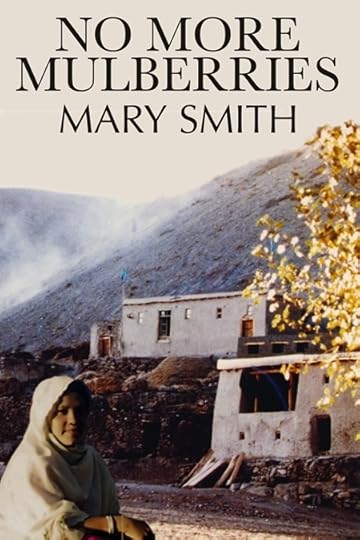
The cover is muted and simple. Definitely not one of those sparkly covers that instantly catch our eye. However, it goes well with the intense saga that it showcases. A woman in an Afghani attire sitting in a commonplace brack drop of Afghanistan is ordinary but wait till you read the book.
The blurb is good but nowhere comes near the brilliance of the story and the impact that it leaves on the reader.
The story is about a Scottish Doctor who is determined to help people in the rural parts of countries like Afghanistan and Pakistan and who is married to an Afghani Doctor. Despite being a foreigner, she has jelled and tried her best to comply and make herself one with the customs and lifestyle in Afghanistan. But still her marriage is facing crisis. The unresolved issues involving the murder of her first husband at the hands of the mujahideens, the secrets, insecurities and dilemmas faced by the heroine and her husband and the rapidly changing situations in the country facing a transition are taking a toll on her marriage.
Will Miriam be able to prove to everyone including her husband that even if she is not an Afghani by birth but still she is an Afghani by choice? Can she resolve these issues and save her marriage or is it already too late?
I just loved this book! Brilliantly written with a lasting impression, this a story unlike any other that I have read so far. Mary brings the feel, scenes and smells from Afghanistan right here to us! The story ran like a motion picture in my mind and had me totally engrossed right till the end.
Despite being the debut story by Mary, she never let me feel like this was her first book. She wrote like an expert. She mixed history, facts and fiction beautifully to give to us a story that makes us feel a myriad of emotions and then stays with us long after we have finished reading it!
Absolutely compelling, I give No More Mulberries 5 super shiny stars. This is a story of love, loyalty, commitments, societal pressures and customs and the challenges faced by people trying to live their lives on their own terms in such conditions while also trying to bring about a positive chance. Go read it. It is not to be missed. I loved Mary Smith's style and will be looking out for her other books!
I received the book from the author and I am very thankful to her. The above review is my honest and unbiased opinion and in no way influenced.
This was one of those books that stayed with me when I wasn't reading it; the emotions of the main characters, Miriam and Iqbal, were so well painted.
Jawad was the love of Miriam's life; they met in her hometown in Scotland and struggled against initial family opposition to marry, after which they had a son and set up home and a medical practice in his native Afghanistan. At the beginning of the novel Jawad is dead, and Miriam's second marriage to Iqbal, a doctor, is causing them both problems ~ for Iqbal, the shadow of Miriam's first husband, his need to conform to the culture of the village in which he grew up, the stigma attached to his childhood leprosy. Miriam struggles with the restrictions placed on her by Iqbal's place in society, and her rose tinted memories of her ex-husband.
This book gave me great insight into the culture of rural Afghanistan, not a country I knew much about at all. I was surprised by how normal life went on despite all the conflict of the time (it's set in 1995). What struck me most was how stifling village life appeared to be, with everyone knowing everyone else's business and having plenty to say about it! My sympathies lay more with Iqbal than with Miriam, I must say; her initial reason for marrying him (ie, to get back to Afghanistan, rather than love) and the fact that she was still in love with a dead man must have been apparent to him, yet she expected him to behave in a way that would make her happy, never thinking about what it might cost him. I did find her pain over the loss of Jawad heartbreaking, though.
The novel is very well paced, with detail about the culture woven subtly into the main story. I found it hard at first to keep up with all the different characters, but this was partly because the names were not familiar to me. I felt sad when I finished it, and it made me want to read more about the people. Recommended!
I am always puzzled when bright, assertive, intelligent independent northern europeans decide to marry a Muslim and go and live in outer woop woop with no running water – let alone hot water – and everything else we take for granted.
Scottish Margaret even decides to adopt Islam and becomes Miriam. And when her first Afghan husband is killed, she meets Iqbal in Pakistan and marries him so the two can go back to his home village in Afghanistan and run the local clinic.
But the Iqbal she met in Pakistan is not the same one in his home village. He is obsessed with loss of face, honour, correct behaviour and the couple find problems developing in their marriage.
Meanwhile, Miriam is also running the women and children’s clinic, looking after her own two children, entertaining neighbours with tea in the afternoon, keeping house and generally learning to be a good Afghan wife.
The story provides interesting insight into the Afghan culture and the influences that dominate village life. The scenic descriptions of the countryside add richness to the overall imagery.
But the characters are, for the most part, flat and without emotion. Rather than sympathising with Miriam, she comes across as selfish, while Iqbal’s point of view isn’t given until the end. The story does have an interesting open ending though.
Interesting story, but it was almost like a reportage than a novel.
ETA: I found the flashback sections disjointed and didn't form a fluid part of the overall story.
At first, what struck me most about this highly descriptive, lyrically written, “No More Mulberries,” was the author’s ability to completely transport me back to the faraway country of 1990s Afghanistan, not only geographically, but also culturally, and ideologically. It’s a country where ‘saving face’ is the order of the day, where its population is rapidly falling victim to the Taliban, and where primitive beliefs are so pervasive, that a child with leprosy is almost drowned by his father, in order to ‘kill’ the disease. In addition, Smith shows us––through the eyes of the ‘outsider’ widow Miriam from Scotland, her second Afghani husband, and their children––that there’s another side to this land; how the people are so gracious and hospitable that offering one’s home and food to strangers is a given, and not accepting a dinner invitation is tantamount to receiving a slap in the face.
But ultimately, what held me captive was the slow, unwinding mystery being played out of how Miriam’s first husband died, and what brought her to her second husband. Although the clash of cultures is often painful, confusing, and palpable, Smith confirms that in the end, no matter where we’re from, no matter the hardships in where we’ve landed, if we are truly willing to be honest with ourselves, the rest will undoubtedly fall into place. Definitely recommend!
*The author provided me with a copy of the book in exchange for an honest review which follows*
It all begins in Scotland –
While in college studying midwifery in her native Scotland, Margaret meets the dashing and mysterious Jawad, an Afghan engineering student. There is an immediate connection between the two and Margaret follows her heart falling head over heels in love with Jawad. They visit Afghanistan together and Margaret fearing she will lose Jawad to his homeland, proposes to him knowing the cultural roadblocks that lay ahead for the two of them. Jawad’s parents do not approve of the marriage. They finally agree that if the two can be separated for one year and still feel the same about each other they will give their permission for the couple to marry.
Meanwhile, back in Scotland, Margaret changes her name to Miriam and converts to Islam. For Miriam, this is a decision that immerses her into the Muslim culture of her future husband. After a year, Miriam and Jawad are reunited and married. Eventually, Jawad and Miriam have a son together named, Farid. Life is challenging for Miriam as she struggles to learn the language and customs of her new homeland but her love for Jawad is unwavering.
And ends far from home…
When Miriam’s father becomes ill, she takes Farid and heads back to Scotland so her father can meet his grandson. Upon her return, traveling through Pakistan on her way back to Afghanistan, Jawad’s brother informs her that Jawad has been killed. Miriam knows none of the details of Jawad’s death. All she knows is that the love of her life and her son’s father is gone. Broken by the news, Miriam knows she can’t go back to the home that Jawad and she shared as a single woman with a child. Cultural norms won’t allow it.
It is during this time in Pakistan that Miriam meets Iqbal, a doctor who is in need of a wife in order to go back to his home in Afghanistan. Culturally, it is imperative that men of Iqbal’s age be married, especially since he is a doctor/paramedic. The two enter into an arranged marriage of sorts, although they share a deep love for Afghanistan and its people. Miriam longs to stay in Afghanistan to raise Farid in his native land and marrying Iqbal seems to be the logical way to stay in the county.
What transpires is a love story steeped in the cultural differences of strict Islamic traditions, customs, and beliefs which lead Miriam and Iqbal on a mission of self-discovery to find themselves and their own true love and happiness.
Recommendation:
I was excited to read this book because I have a close friend serving overseas in Afghanistan. Culturally, I knew nothing of the country or the traditions. I only had a fundamental knowledge of Islam so I knew this was going to be a book like no other I had ever read. My assumptions were correct and I was immediately immersed into Miriam’s world. I cried with her, laughed with her, and at times tasted the grit of blowing sand feeling as if I was walking in her footsteps.
As I began reading this novel, I realized that I had to set aside my own belief system and embrace those of the people of Afghanistan. Many of the characters struggled with this same dilemma. When Miriam attended a school to brush up on medical training she met a female German doctor who was amazed at the way the Afghani women were treated by their husbands and even their own families. It was a hard lesson to learn that some things are so deeply rooted in tradition they cannot be changed. After traveling the world a bit myself; I realized that we all have cultural differences so it was not a stretch for me to embrace the people of Afghanistan.
This novel is written from the unique perspective of the author, Mary Smith, using her own observations and experiences while living and working in Afghanistan in the 1990’s. The sights and sounds of the bazaars came alive for me through powerful descriptions that made me feel like I was right there bartering for goods beside Miriam. I longed to try some of the foods and would have loved to have experienced the rich tea that was served several times a day.
The book is written from the perspective of Miriam and then of Iqbal in alternating chapters. I believe this gives the reader a chance to delve into the personalities of the pair as separate people who are also a couple. It is a deep character study of the choices people make in life and the consequences of their choices. I found that I could relate to Miriam’s and Iqbal’s experiences in many ways in my own life.
For those of you who follow my reviews, you know how emotionally vested I get in characters who come across as real individuals. These characters leaped from the pages of the book into my heart. Remember, deep down this is the story of renewal and of finding true love, which just goes to show you that true love has no cultural boundaries.
Character Believability: 5 Flow and Pace: 4.5 Reader Engagement: 5 Reader Enrichment: 5 Reader Enjoyment: 5 Overall Rate: 4.5 out of 5 stars
First let me say that this book should be made into a film as it has all the ingredients of a action packed love story.
It is visually stunning and I found myself completely involved in the people and locations such as the village of Sang-i- Sia that Mary Smith uses as the backdrop to the unfolding story. Combined with the increasing conflict between the various factions in the region it has an element of danger that brings even more tension to the central theme.
All the characters had wonderful depth and some of the minor personalities stood out for me as well. Including Ismail an old and trusted friend from her previous life in Zardgul and his gentle and wise wife Usma.
There is a love triangle between midwife Miriam, Iqbal her second husband and Jawad her charasmatic first husband who died tragically, and whose death she has not fully come to terms with. Through flashbacks, Mary Smith masterfully takes us through each of their lives, revealing the secrets and events that have brought them to a crisis point in Miriam and Iqbal’s marriage.
I came to admire Miriam who felt out of place in her native Scotland and embraced the cultural differences of living in a small Afghan village with enthusiasm and humour. She does everything she can to be accepted by learning the language and adopting the role of a traditional wife and mother. Relationships can be daunting at the best of time, but add in the inability to communicate,no running water, basic cooking facilities and harsh extremes of weather in an isolated enviroment, and fortitude is required.
I did sympathise with Iqbal who clearly loves Miriam but finds it very difficult to deal with the ghosts of his past, and the ghost of Jawad who he feels is the third person in their marriage. He wants to be a good father to Farid who was just a toddler when his father died, but Miriam has also been trying to keep the memory of Jawad alive for her son, who is now confused. The light in their marriage however is provided by the delightful little girl, Ruckshana who is unaware of the tension and shines her love on all of them.
This is a complex relationship but the story is written in such a way that you come to understand and empathise with all the players in the drama. Mary Smith brings her extensive experience of living and working in Afghanistan and Pakistan into this story, creating a wonderful tapistry of life, love, danger and redemption.
"No More Mulberries" by Mary Smith has been round the blogging world for a while and last week I finally got a chance to read it. I am pleased to say that it deserves all the praise it got. A Scottish woman married to a man from Afghanistan is confronted with 'his' and his country's culture, customes and loyalties in a story that touches upon the outer experience of the country as well as the inner and personal. He disapproves of her English teaching of boys because of the implications this has for their reputation. Miriam finds herself challenged in many ways in her marriage, not just coming from her husband but also from her own past. Love and commitment issues are brilliantly placed into a remote rural location that imposes additional complications. From a cultural perspective, this is sensitively written and provides excellent insights. As literary experience this is equally strong. Well chosen characters and plot lines make this a read very worthy of your time. Highly recommended.
Miriam is a midwife and left her native Scotland to marry an Afghan after waiting a year to seek approval from his parents. Their love prevailed and they had a son, Farid, together. When Miriam goes back to Scotland to visit her father she receives the devastating news her husband, Jawad, has died. She can't go back as a single woman but Afghanistan is the home of her heart and she wants to help its people. When she meets an Afghan doctor, Iqbal, who needs a wife she finds herself thinking that the ways of an arranged marriage with common interests and goals at its core isn't such a bad way to start a marriage. She also wants her son to know his homeland and so she marries her doctor and they set off on a new life where she looks forward to helping him run his clinic in his poor village. However, customs, traditions and culture can not be so easily ignored. Even though they have a daughter, Ruckshana, together, and he seemed to be less inclined to follow strict Islamic traditions when they met, once he is surrounded by rural life again saving face becomes his priority. Or so she thinks. Iqbal's own past and fears catch up with him and, in the shadow of Jawad's ghost, he falters.
This novel is chock full of Afghanistan culture and is an absolutely brilliant read. It really is hard to believe this is a debut novel. Educational as well as entertaining from a fictional point of view, Mary Smith shares her unique perspective on the politics, culture and people of Afghanistan brought about by her years working in the area. The sights and sounds of the country come alive in this tale and I was engrossed from the start. This is a book which makes you think and also, if you look deeper, gives you answers to questions we ask when faced with a culture which is so different to our own. Mary Smith brought the country of Afghanistan alive for me in a way no news article could ever do.
I know I can go on with my reviews, and although I’ll try not to test your patience, I thought I’d offer you a capsule summary of my opinion. Do yourself a favour and read it. This is one of those novels one can’t help thinking about and talking about to anybody they meet. To begin with, I loved the clinical cases and the little stories embedded in it (all those events and lives that touch the protagonist’s life) although I wasn’t so convinced about the main characters. As the novel evolved, I came to appreciate and gain a better insight into the characters as well and came to accept them and like them too. I was familiar with the author’s blog and had read some of her posts about her life in Afghanistan, so I knew she had plenty of local first-hand knowledge, a wealth of anecdotes, and could tell a story. She does have a sense of humour as well, although that isn’t too evident in the novel (the circumstances the characters are living through are very difficult, so it’s not surprising). I had had her books on my list for a while, and I decided it was time to read her first novel. Having read it, I’m eager to explore her writing further. The description offers readers a good idea of what to expect. Miriam (born Margaret. She became a Muslim and adopted a new name when she married her first husband, Jawad), a Scottish midwife, and a widow who lost her first husband in tragic circumstances (although she doesn’t know the full details of her first husband’s death at the time we meet her) is back in Afghanistan with her second husband, Iqbal, a doctor who has set up a clinic in the little village where he was born. They have been married for five years, have a daughter together, and also live with Miriam’s son from her first husband, a quiet child who works hard but isn’t too close to his stepfather. Miriam can’t help but compare her two husbands and has put her dead husband on a pedestal nobody can reach. Iqbal resents this, and finds it difficult to cope with being back in his village, where he can’t escape expectations, tradition, and prejudice, regardless of how much he has achieved since his childhood. They are both unhappy and unable to talk about it, trying to do what they think the other expects of them. When Miriam ends up spending a few weeks away at a training medical camp, she gets confronted with her unhappiness and has to face some hard truths about the past and about herself. It’s make or break for her relationship and her life in Afghanistan. There are elements of romance in the story (a romance where cultural differences take centre stage); grief and how different people deal with it is an important theme, as are also: the role of family; tradition and expectations; life in rural Afghanistan; international organisations providing education and health aid; and how far and deep you need to go sometimes to find your true self. I have mentioned before that I didn’t connect with the characters straightaway. Although the story is narrated in the third person, it is mostly told from Miriam’s point of view, and she has a keen eye for observing and zooming on little details, gestures, and things, that makes the book quite cinematic in many ways. She can observe a movement, a dirty finger, she can marvel at an oven, or a night sky, but she is also at times quite blind to her own behaviour and the way she might be making matters worse for herself and others, and I was quite impatient with her attitude at times. That is not to say that her husband’s actions help matters, although there is a point in the novel when we get to read about his traumatic childhood from his own point of view (also in the third person) and that makes him more sympathetic. The author cleverly shares the main characters’ flashbacks/memories (Miriam’s most of all) that slowly, layer by layer, help unfold the events that got her to Afghanistan. We read about her love story with her first husband, we hear about their life together, and this is contrasted with her experiences with Iqbal. Events that take place later on, and the advice offered by some of Miriam’s friends help us understand that her memories are not always accurate, and there is more to the story and the characters than meets the eye. Miriam is an unreliable narrator, not only for the readers, but also for her own self. Apart from the protagonist couple, we have many other characters, like their children, both lovely, Western characters (with their own prejudices and good points), neighbours and friends (wise, peculiar, amicable, gossiping, warm-hearted, mean…), all distinct and familiar, no matter how different their circumstances and way of life might be. They all feel like real people and are recognisable as such, even in the cases where we might not fully understand the motivations behind their actions and/or might dislike what they do, and there are many I’d love to have as friends. Despite the changes in time-frame brought in by the flashbacks and memories, I felt the book flowed reasonably well, and I didn’t find it confusing. The author uses unfamiliar words to describe objects, clothing, places, characters, and actions, and although the meaning of most can be worked out from the context, I’ve noticed that some reviewers asked about a possible glossary. In some cases I felt an image would be better, for instance when describing clothing. The descriptions don’t overwhelm the book or slow its pace, and the author manages to give us a real sense of life in rural Afghanistan, and makes us not only see, but also feel, taste, and smell all aspects of it. She also makes us pay attention to the unspoken gestures and to the silences of the characters, to the importance of the things that go unsaid, and that is a difficult thing to achieve using only the written form. I leave you a couple of examples of the writing, so you can judge by yourself. On moonless nights the Milky Way was a magical white path through stars that didn’t twinkle —they blazed. Constellations her father had taught her to recognise when she was a child —Orion, the Plough, the Seven Sisters —demonstrated proudly that here, they possessed far more jewel-bright stars than she had ever seen in Scotland. Although they had no decent sized pockets, waistcoats took the place of handbags. Safety pins and sewing needles were embedded in the fabric, matches stowed away in a small side pocket while, pinned to the inside were the keys to unlock the tin trunks in which were stored sugar and sweets and other household valuables. I won’t talk too much about the ending, but yes, I liked it. I found it perfectly fitting. So, as I started this review by recommending everybody to read this book, I can only repeat it. If you’re interested in stories about Afghanistan, in stories with protagonists that make difficult choices and are not always wise or likeable, in stories where people try to find themselves and to find a place to fit in, appreciate good writing and have always wondered how it would be like to share your life with somebody from a totally different culture, you should try this book. Oh, and check the author’s blog. I must go and catch up on more of the author’s books.
Where do I even start with all the things I loved about this book? The story is about Miriam, a Scottish midwife who, first, fell deeply in love with an Afghan and then with his country. It’s a story about love and loss, fear and courage, and the strength of family and the human spirit.
In many ways, this story could be told anywhere in the world as individuals, couples, and families aren’t that different from each other no matter where we find them. Miriam’s story and her emotional struggles are deeply relatable. Her search for self, her struggle to balance her various roles, to fill expectations and have her expectations filled, and her commitment to her family and community could be anyone’s story.
But Miriam’s tale doesn’t take place anywhere in the world. It unfolds in 1995 Afghanistan. The book portrays a multi-dimensional country with remote villages that haven’t changed in hundreds of years to more modern communities with goals for the future. And though it’s clear in the story that love is love, family is family, and people are people, the narrative reveals the stark differences in the lives of those people marked by isolation and all it entails, and those who have high hopes for education, healthcare, and their country. Miriam’s story is deftly intertwined with the story of a country and its people, and I loved it all.
Smith doles out the backstory details in small doses. They’re little gems that slowly illuminate the present story and build understanding while increasing tension and a desire for resolution. Settings are well described, the pace is steady, and characterization is flawless. I stayed up late and lost some sleep over this one.
No More Mulberries is more than just a love story but a tale of hardship, loss, survival against all odds, and the importance of family. It is a story about two people who are different as any two can be. Miriam, from Scotland meets Jawad, an Afghan, and fall in love. She moves to his country and begins a love affair with Afghanistan.
When Jawad suffers an untimely death Miriam must decide whether to go back to her own homeland of Scotland with her son or stay. She meets another Afghan man, Iqbal, and sees a way to stay in this country with her son.
The cultural differences are numerous and difficult for the couple to overcome. They must come to terms with complicated problems in her new husband’s past in order to continue with their life together. All couples, no matter what culture they come from, have similar setbacks to deal through.
The author takes the reader on a journey through this backward country and all its antiquated beliefs about medicine and education for girls. The reader is drawn to all the beauty that the author is detailing which shows the love she has for this country.
Although I have never traveled to this part of the world I felt an empathy for the people and their remarkable ability to survive. With the Taliban at their back door they are forced to escape or stand against evil.
This is an unforgettable story about the resilience of one woman to conquer what many could not fathom. An enjoyable book and a must read for all! Kudos to the author for an outstanding novel!
Set in rural Afghanistan, Miriam is married to an Afghan Doctor. She takes a job as a translator at a medical teaching camp. Her husband is not happy about her decision. British Born Miriam is trying to adapt to her new home, is haunted by her past, and still holding onto fond memories of her late husband. With troubles in her current marriage Miriam is at a cross-roads in her life. She must do some soul searching and make some tough decisions if she wants to save her marriage.
A well written story of love, loss, devotion, divided loyalties, redemption and hope. Miriam is a nice woman, but her feeling for her late husband interfere with her current life. She is flawed and torn, which makes her human and real. I like that in the story. Miriam and her husband both have secrets, secrets that neither want to face, but must to keep their marriage together.
The Afghanistan setting makes for an interesting read, seeing how a different culture/country (from my own) live. Set in the 1990's also adds to the intense drama as the approaching conflict with the Taliban reaches Afghanistan. Overall I found No More Mulberries to be heart-felt, dramatic, and very memorable. I strongly recommend to those who like (emotional) dramatic/love-story. Fantastic.
This novel gave me a lot to think about. It was outside my comfort zone and I wasn't sure if I would like it, however it had me engrossed from page one. It is the story of a mixed marriage, Afghan husband, Scottish wife, and their two children, who live and work as medics in Afghanistan. The mix of cultures fascinated me, as the story drew a picture of a very different lifestyle to that we are accustomed to in the west. It was like taking a step backwards in time to a more simple, basic life without all of the amenities we take for granted. The main character Margaret, who has embraced the muslim faith and changed her name to Miriam, is not fazed by the conditions in which she lives. The stresses come from her relationship with her husband Iqbal, and her inability to resolve her grief due to the death of her first husband Zawad. But it was the descriptive narrative and the culture that fascinated me the most. However, I did notice that a lot of the minor characters had the same first name, there were several Dauds and Anwar's for example, but this did not lead to confusion, and I had no trouble identifying each character as they appeared, the characterisation was so good. This book was an excellent story and, although there is conflict within the pages and most of the men seemed to have Kalashnikovs, this not a war story. I would highly recommend it for your reading list.
This is a love story with so many layers and different types of love. Against the backdrop of a culturally rich Afghanistan, Mary Smith, tells the tale of a western woman, Miriam, married to an Afghan man. She tells it in such a way that the reader is drawn in, making it hard to put the book down. At the same time, Smith digs deep into the human psyche, subtly portraying human nature: "people thought she was aloof, stuck up. . . If only they understood the agonies of the socially inept." Brilliant! There are funny moments when the cultures clash but she leads the reader to the understanding that it's not so much culture as the small village life, where "losing face," might just be called "humiliation" in any small village/town around the world where such a life opens up its inhabitants to the scrutiny of their neighbors. I loved one particular part where Miriam speaks of how the village women find it acceptable to ask her such a question as whether or not her husband finds her small breast size acceptable. Yes! This is a keeper. A must-read for those of us who love to read about other cultures but more so because the story always keeps the reader guessing, until the very last moment.
No More Mulberries is a beautifully written book centred around Margaret, a Scottish midwife who marries Afghani Jawad despite initial reservations by his family. Margaret embraces Islam and changes her name to Miriam, moves to rural Afghanistan and becomes a mother to son Farid. Sadly, Jawad is murdered and Miriam is left to bring her son up alone. Miriam's story unfolds with new husband Iqbal, father to her daughter Ruckshana. Miriam and Iqbal work for a health organisation in a rural clinic, where poverty and cultural differences create a host of issues. Awaiting an inspection of the clinic, Miriam and Iqbal seem to be drifting apart. Their boss Jeanine suggests Miriam act as a translator for a month long teaching clinic in Charkoh, near to the village of Zardgul where Jawad died. Despite Iqbal's objections Miriam accepts the post and sets out on a journey to heal her past. The reader finally learns of Iqbal's sad childhood and the stigma of leprosy. Can he and Miriam save their marriage? The past and the present weave their threads in beautiful fashion to create a stunning story that I thoroughly enjoyed.
No More Mulberries by Mary Smith is a marathon read offering insight into the every day world of ordinary people, primarily women, living in rural Afghanistan.
It would be impossible to read this book and not feel effected by the experience. I enjoyed the non-judgmental enlightenment, and found something worth hating on just about every page.
I’ll explain; I have very little tolerance for any form of oppression and none at all for gender based oppression of females. So I found the poverty, ignorance and lack of opportunity described in this book rather taxing and the behaviour of the men, in their male dominated society, damn right infuriating.
The author did a great job presenting a difficult topic and I was enlightened by the experience, but by god I was pleased to read the last page.
I can assure you I am not temped to live in Afghanistan.
I’d recommend this book to anyone who lives as I do, while believing they’re entitled to more.
Miriam is a Scottish midwife who marries an Afghan and moves to live with him in Afghanistan. They are deeply in love and they have a son together, but on a trip back to Scotland to visit her father Miriam is told the devastating news that her husband has been killed. Afghanistan has become Miriam's home and it is the homeland of her son. She accepts an offer of marriage from Iqbal, an Afghani doctor, believing that an arranged marriage can work. Miriam helps Iqbal in his clinic in rural Afghanistan, but she begins to fear that the differences in their two cultures are insurmountable. I found the descriptions of life in Afghanistan absorbing, realistic and beautifully told, and I learned a great deal about the country. Iqbal and Miriam's struggles to find harmony were moving and believable, and their characters were excellently portrayed. If you're looking for an unusual and absorbing read, I highly recommend this book.
I bought this book because I love reading stories that take place in the middle east. I was not disappointed. Mary Smith has written a wonderful story about cross-cultures, family, relationships and Afghanistan. The detailed descriptions of the land, people and culture are fascinating. The story is told through the point of view of Miriam, the main character, who is a wife, mother and medical practitioner. It is easy to identify with her as she struggles to maintain a home for her family in a culture so different from her life in Scotland. Miriam also has to deal with ghosts from the past and feelings she has suppressed for too long which are having a negative effect on her marriage. This well-written book takes place in a troubled time just before the Taliban take control. Since the reader knows what will eventually happen, but the characters don't, it keeps you on your toes and turning the pages. I highly recommend this book.
A captivating story of Miriam, Scottish by birth but widowed and remarried, working and living in Afghanistan, Miriam helps run a clinic in a village. Her second husband is a doctor but when an opportunity arises for her to go and help a as a translator in a different village, despite his opposition she takes the opportunity to reflect and take advantage of the distance to think about her life and marriage.
Steeped in the deep cultural background of Afghanistan and overshadowed by the complex politics, this book is quite a beacon in understanding the complexities of life in rural areas of Afghanistan. I found the characters reasonably well developed and could understand the frustration, sadness and choices they faced.
Although not as full of prose like Hosseini, this is still an interesting read.
What can I say. This is a beautiful book. Wonderfully written and a real pleasure to read. It is a gentle love story, of feelings and emotions, slights and anxieties. The descriptions are so vivid, it transports you so effortlessly to a world that you can never know or seek to understand but that all the same somehow becomes a part of your own environment and shared experiences. I loved this book.
No More Mulberries is the second book that I’ve read by this author. The first one was Drunk Chickens and Burnt Macaroni which is a memoir of her time in Afghanistan training women from local villages to deliver health support and advice to their communities. It’s a fascinating read and I bought this book on the back of it. No More Mulberries is set in the same area of Afghanistan and is a novel about a midwife who has left Scotland to live there with her Afghan husband. This was every bit as fascinating as the memoir and allowed scope for the things I love in a novel – great characterisation, enthralling plot and an understanding of what makes people ‘tick’. Mary Smith achieves all of these. At the centre of the novel is Margaret, now called Miriam, who lost her first husband, Jawad, in circumstances we only discover later in the story. She has a young son and, partly for his sake, she marries Iqbal, a doctor with whom she has a daughter. Miriam feels stifled by the restrictions placed upon her by Afghan conventions and is deeply unhappy that the man she married expects her to abide by them now despite the freedom the two of them had enjoyed earlier in their relationship. When she agrees to travel temporarily to a medical camp without him in order to act as a translator, the relationship is put to the test. As the story unfolds there’s a very real sense of the cultural differences and expectations Miriam finds in this remote and impoverished country still in the grip of conflict. A lack of education combined with a trust in old remedies sometimes leads to behaviour that is deeply disturbing. Despite the unfamiliar customs and seeming ignorance, there are characters whose kindness, understanding and honesty shine through. The description of a very different world to my own was an engrossing part of the book for me but at its heart the story concerns relationships that are familiar to all of us. Whatever our situation, it’s our interactions with others that drive our thoughts, behaviours and emotions. You could say that this is a love story, and you’d be right, but it’s much, much more than that. I’m now going to buy Before the Taliban by the same author.
When Miriam literally runs into the man of her dreams, Jarad, she doesn’t realize what a profound impact he will have on her future.
Convincing his family doesn’t come easily, but in the end their love triumphs and the young couple marry. Miriam takes to the cultural differences of her new country and thrives- until the sudden death of her husband.
Lost, desolate, but determined to raise their son in his father’s homeland, Miriam agrees to wed Iqbal and travel with him to his village to act as midwife in his clinic. Iqbal is kind and generous, but rigid in his belief of a woman’s place in his home.
Over time, resentment builds and when Miriam is offered a chance to get away to a teaching school for a couple of months she decides to accept.
What follows is a journey into the past for both Miriam and Iqbal, who carries burdens of his own.
This story is written with an obvious affection for the Afghan people and their culture. I enjoyed learning about a way of life so far removed from mine. Though Afghanistan has its problems, it’s a beautiful country with kind and caring people.
I give No More Mulberries 5 stars- this is a must-read!
The name alone of the country Afghanistan conjures up images of war, strife, death, despair and deprivation. Intellectually we know there is a life beyond the headlines, an everyday existence which is rarely written about. A few books in recent years have emerged to fill the gap of our lack of knowledge and one of the best of these is Mary Smith’s excellent ‘No More Mulberries’.
Although a fiction novel, it is evident that the author draws on her personal experience as a health worker for ten years in Afghanistan and Pakistan.
‘No More Mulberries’ follows the life of Scottish-born midwife Miriam, who has wholeheartedly embraced Afghanistan and relishes her work with the local people in the rural community of her second husband. Here she makes friends, finds fulfilment with her work however cracks quickly appear in her life.
Her husband Iqbal is struggling to cope with the return to his home village and to balance the rigid expectations of his family, friends and colleagues with his previously more independent life in Pakistan, where he could equally celebrate and be proud of Miriam’s success. As Iqbal escapes into a world of work and silence, Miriam, against her husband’s wishes, joins another health clinic as a translator for Afghan paramedics and foreign doctors. Here the past and present collide as a friend of her first husband, her first and true love, rides into the clinic to bring her for a visit to the village she first lived in when newly married and in Afghanistan years earlier.
The book follows the intense journey of Miriam and partly Iqbal’s journey in the present-day as well as brilliantly bringing their past vivdly alive for us in flashbacks. Through these the characters deep introspection develops into an inner soul-searching journey. For both past traumas has marred their present lives and that of their children. Is it too late for them, they both wonder as their relationship seems to flounder? How can they live in a village that threatens to engulf them by history and tradition?
The book is set in the stunning natural landscape of the countryside as well as to the increasingly unstable political backdrop where tribal tensions are growing in severity. The, at times, precarious situation surrounding Miriam and her family ensures this is a tense, compulsive read which never flags. I was riveted by both the epic sweeping story as well as the wonderful descriptive writing and the beautifully drawn and varied characters in ‘No More Mulberries’.
Mary Smith is an assured writer who unravels the multifaceted lives of her characters with creative skill, whilst retaining a tight control of the overall novel. I was hooked from the very beginning and felt a sense of loss upon finishing the book … one of those times I just didn’t want to say farewell to my new friends! This is one of my favourite books this year and I look forward to reading more by this author.
I enjoyed this book with its multi-layer time frames, character development and cloth, and rich setting. I do feel that it ended too abruptly, but that didn't detract from the story much.
I just finished reading the Book by Mary Smith, No more Mulberries. It's about life for women and men in Afghanistan.
Though Afghanistan was in the news often several years ago, mostly as the home of terrorists and the Taliban as written about in 2001 https://www.socialistalternative.org/... .
But the news or the general information didn't delve into the way of life like this book does.
What an interesting read.
The story evolves around a Scottish midwife who falls head over heel in love with an Afghan man Jawad during her stay as a health consultant to the female population of Afghanistan. To marry the love of her life and get the approval from her future father-in-law she had to leave Afghanistan for one year. During that year she embraces Islam. The love between Miriam and Jawad prevails, they marry and she gives birth to their son Farid. Adjusting to the hard way of life is bridged through the secure love she feels for and from her husband. While visiting her dying father in Scotland, her husband is killed under strange circumstances. In order for her to stay in Afghanistan, the country she gave her heart to, she needs to find a second Afghan husband and a stepfather for her son.
Mary Smith starts the story with Miriam's second marriage to Iqbad.
Her marriage is in trouble for various reasons.
Miriam feels more and more confined in her compound in the mountain village. Her freedom is hampered by customs and laws seemingly unreasonable and sometimes deadly to the woman and children she assists. Idealizing her first husband estranges her husband and her son, who have no chance to compete or measure up to a charismatic, dead man . Both become withdrawn. Miriam's only highlight is her young daughter Rockshana, who isn't old enough to realize the underlying tension between her parents.
Called away as a translator during a humanitarian effort by the organisation Miriam and her doctor husband work for provides a break to reconsider her options for the future of her family.
Smith brings the story alive with interesting major and minor characters. She writes about daily life in the rural Afghan mountains without running water, toilets, or modern stoves to cook on. Short descriptions of bitter cold winters and beautiful landscape mix with humans struggling with life, lost and new loves and insights into the characters conflicts with relationships.
To me this book provided awareness into the Afghan culture and the difficulties of women in this male dominated society. But Smith also shows how educated Afghan men wrestle similarly with the cultural and religious demands of old and the complexity of bridging these believes into a new more medical advanced, kinder Afghanistan.
I recommend No more Mulberries to anyone who is curious and interested in foreign cultures and to readers who like a complex, intricate love story.
In my opinion, the cover of the book doesn't do justice to the inside pages. I'm glad I read a recommendation about this book in a blog, otherwise, I doubt I would have picked it up. It would have been my loss.
No More Mulberries by Mary Smith presents a gentle and positive perspective of life, which women have to bear in extremely conservative parochial Afghan society where women don’t have any rights, are married even before they attain puberty, can’t travel without their husbands and have to follow repressive age-old traditions.
Margaret willingly walks into this society for the man she loves despite the initial disapproval of Jawad’s father. She even changes her religion to blend into the Muslim culture and changes her name to Miriam. Most of such marriages have a bleak future but destiny has something else in store! Jawad is killed and Miriam finds herself at crossroads with her little son Farid. She could have gone back to Scotland and start life afresh but she chooses to remarry an Afghan doctor who promises to take her to Zardgul, where all her loving memories and her former husband was buried. A long wait and she visits Jawad's grave eventually but alone!
The plot oscillates between reality and fiction and Miriam emerges to be a strong woman who refuses to give up her values and freedom to work. Most of the story is told through her and Iqbal, (the man she married, she is not sure for what reasons) is torn between cultural compulsions and the love for his wife and has a lot of shadows of the past to deal with.
This novel must be read by all the young women who wear rosy glasses through which love seems to be an eternal bliss. Marriage is a serious commitment and when a woman chooses to marry into a closed culture society, she has to bear the brunt alone. The theme has been handled brilliantly by the author who seems to have observed the culture and people of Afghanistan from close quarters.