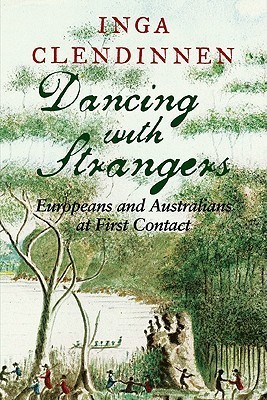
In January 1788, the First Fleet arrived in New South Wales, Australia and a thousand British men and women encountered the people who would be their new neighbors. Dancing with Strangers tells the story of what happened between the first British settlers of Australia and these Aborigines. Inga Clendinnen interprets the earliest written sources, and the reports, letters and journals of the first British settlers in Australia. She reconstructs the difficult path to friendship and conciliation pursued by Arthur Phillip and the local leader 'Bennelong' (Baneelon) that was ultimately destroyed by the assertion of profound cultural differences. A Prize-winning archaeologist, anthropologist and historian of ancient Mexican cultures, Inga Clendinnen has spent most of her teaching career at La Trobe University in Bundoora, Australia. Ambivalent Conquests: Maya and Spaniard in Yucatan (Cambridge, 1989) and Aztecs: An Interpretation (Cambridge, 1995) are two of her best-known scholarly works; Tiger's Eye: A Memoir, (Scribner, 2001) describes her battle against liver cancer. Reading the Holocaust (Cambridge, 2002) explores World War II genocide from various perspectives.
Author Inga Clendinnen has written an interpretive history of the meeting of Australians, in what is now the Sydney Harbour area, with the British First Fleet of 1788. The title meaning is that the Australians and the British began their relationship by dancing together via song and dance. That relationship fell apart not long after, and basically fell off the proverbial cliff when Governor Arthur Phillip returned to Britain in late 1872 1792.
There is an interesting comment that the author makes in relation to what we in more modern times would call domestic violence. Based on Inga Clendinnen deep research on all available publications and documents of that time, the treatment of women by the Australians was not something that makes comfortable reading and is made comment on by various surviving writings from those times. Throughout the reading of Dancing with Strangers, the author goes to great lengths to discuss cultural differences and an understanding of them. This is an area that was of extreme difference between the strangers. “It seems that what can be judged reprehensible violence is a cultural matter. We are disconnected that (British observers) could watch those hangings and floggings unmoved.” The author writes about punishment that the convicts received as a matter of course. That the Australians were horrified by these forms of punishment and that was noted by various accounts. On the other hand we can be sure “…that after such sanctioned displays whether of floggings or wife bashing, both sides were left goggling at each other across a cultural chasm. Every society is adept at looking past its own forms of violence, and reserving its outrage for the violence of others.”
Inga Clendinnen makes various comment on cultural chasm. There were things that the British did not see in their various writings with the fact that these settlers may have never grasped the respect shown to age, ritual experience, their freedom and their material equality to name just some. Their own fledgling society was “...sustained by the whip..." and the “…sanctify of property…” and that some of the British be that convict or free were hanged to protect that sanctity of property rights. The Australians hardly gave a thought to property rights and such was Phillip’s attempts to dance with these stranger in what for the times seems a very enlightened attitude, there was great outrage among both the convict and the free that they were being punished whereas the Australians were treated lightly.
But with the coming of the British, there was irreversible change. Over a short period of time, three years in the lifetime of Baneelon (or Bennelong as he is known today) the world changed for the worse for the Australians. Baneelon was one of the first to dance with these strangers. He was eventually taken to Britain by Phillip at the end of his governorship. Baneelon came back to a Sydney that had grown and no longer cared for him, and his own people no longer held him in high regard. His is a sad story of an alcoholic demise and death.
Inga Clendinnen covers and gives opinions on topics such racism, language and cultural barriers and plenty more. The epilogue covers her thoughts about the historical issues that have reared their, at times, ugly head and talks in hope of “…the possibility of a decent co-existence between unlike groups…” with “...scrutiny of our assumptions and values as they come under challenge…” Inga passed away in 2016. As I write, the Australian peoples of all colours and creeds are facing a referendum on a constitutional change. I wonder what she would have thought of this attempt to no longer talk as strangers. https://en.wikipedia.org/wiki/2023_Au...
I read this book back in 2008, and below is the review I wrote then. In the sixteen years since I read this book, we've made less progress than I'd hoped for, then. ~~~~~~~~~~~~~~~~
`People always look most alike when we know them least'
This is a thoughtful, insightful look at the initial contacts between Australia's indigenous people and members of the First Fleet in 1788. There is an intense curiosity, both within this book and in the snippets of evidence from the primary documents Ms Clendinnen refers to, about the meanings of the human interactions observed. Reading through the snippets from Watkin Tench, David Collins, William Bradley and others offers insights into the impacts of foreign cultures on each other.
`Our first shared Australian story is a tragedy of animated imagination, determined friendship and painfully dying hopes.'
One of the tragedies is in the way we view history. Written records, with their framework of events and theories of causation speak for themselves in ways that oral traditions, especially by those dispossessed, often cannot.
At the end of her book, Ms Clendinnen writes: `Here in this place, I think, we are all Australians now.' I am not sure that we are there yet, but there is renewed hope that we can be.
This book is well worth reading for its insights into those initial contacts.
I love studying history. I love it so much that I devote most of my weekdays to it; so much that I spend a good chunk of my spare time and weekends trying to learn languages to help me with it; so much that I can maybe, just maybe, see myself doing it for the rest of my life. But in the nine years since I began studying it with a serious interest (in Year 11 at high school), I have never found a book on history that I couldn't put down - until now.
To be fair, Inga Clendinnen's Dancing with Strangers (2003) is much more than just "a book on history". Part narrative reconstruction, part anthropological analysis, part personal essay, it takes the surviving textual records penned by the first British settlers in New South Wales and attempts to interpret the interactions between those settlers and the native inhabitants of Port Jackson, Botany Bay, Broken Bay and the surrounding areas from 1788 through to the early years of the nineteenth century. In elegant, vivid prose that glides effortlessly across the main incidents under examination, Clendinnen paints a rich picture of the hardships of life for both native Australians and colonising British in this frontier society perched on what was then, to European minds at least, the very edge of the known world.
Thanks both to the author's style and the intrinsic interest of the subject itself, the story is riveting from the first page. One of the real pleasures of this book comes from navigating the various perspectives that Clendinnen weaves throughout her version of the tale. One moment the historian speaks, collating her numerous sources, citing colourful extracts from the private journals, public annals, letters and other documents of men like Governor Arthur Phillip, whom I realise now has been nothing but a semi-legendary name to me since I was a child; the next, the anthropologist takes charge, dissecting what these extracts tell us about British perspectives on Australian society and culture and what they might (perhaps) tell us about the Australians' own views. The historian has a practised eye for selecting passages that can prove most revealing and imaginatively provocative for non-experts and general readers; the anthropologist has a wonderful way with words and a rare ability to render her thought processes lucid and her conclusions intelligible.
I can quite honestly say that I have never enjoyed a historian's writing so much. The only "history books" that have had anything near the same effect on me to date are the highly readable three volumes on the crusades by Steven Runciman (a decent enough historian for his time, though his moralising approach and materialistic conclusions are outdated now), Peter Brown's beautifully written and scholarly (though very dense) reflections on the late antique/early medieval world in The Rise of Western Christendom: Triumph and Diversity (2013 [3rd ed.]) and the first part of Richard Evans' trilogy on the rise and fall of the Nazi Party, The Coming of the Third Reich (2003). Despite the fact that Dancing with Strangers is so compelling, however, I did find myself struggling at times to accept all of Clendinnen's conclusions about the behaviour of the Australians and the intention behind this (and even of the British themselves). As a historian by training I am unfamiliar with (and probably a little uneasy about) the anthropological method of inferring meaning from human actions, rituals and interactions - even more so when those actions have been recorded by, and therefore refracted through the interpretive outlooks of, strangers whose ability to grasp their significance is severely hampered, even non-existent. That said, Clendinnen does not attempt, at least as far as I can see, to suggest that her interpretation is absolutely correct, or that there is no room for others. She always makes it clear (usually by inserting the reassuring phrases "in my view", "I think", "my opinion is…") when she is moving from the content of the texts themselves into her own efforts to decode them. There is no programmatic agenda seeking to argue that her version of the story is iron-clad and representative of how things actually were - wie es eigentlich gewesen, von Ranke is supposed to have said. In that sense I feel as if the subtitle in the edition I read is misrepresentative, and can only have been forced upon the book by the British publisher: "The True History of the Meeting of the British First Fleet and the Aboriginal Australians, 1788." I would be interested to know what Clendinnen herself thought (or still thinks?) of that.
Together with a brilliant piece Clendinnen wrote for the Quarterly Essay in 2006 ('The History Question: Who Owns the Past?'), which I read a few days ago, Dancing with Strangers has reaffirmed my belief that studying history, reading about history, thinking about history, and most importantly, talking and writing about history, has a place in this world. Even if their conclusions are (thankfully!) susceptible to debate and refinement, as I believe many of Clendinnen's are and probably have been (I know nothing about this field, so I have no idea), historians' ultimate goal is - or should be - to expand and deepen human understanding. As Clendinnen demonstrates in this book with great perception and skill, "Every society is adept at looking past its own forms of violence, and reserving its outrage for the violence of others" (p. 190). (A statement that resonates particularly with the events of the past few weeks.) A few years after its publication, however, she wrote in her long essay: "My faith is that humans will injure each other less when they understand themselves and each other better … It might be true that humans are impervious to reason and compassion, and are therefore unredeemable. If they are, history is indeed 'bunk', because its intrinsic purpose is to increase the role of reason and compassion in this world."
I'm still too young, inexperienced and (probably) idealistic to pay much attention to the arguments against this view. But I will keep doing history until I'm convinced that it is worthless. All I can say for now is that books like Dancing with Strangers which remind us of the cultural chasms in the world (past and present) as well as the riches to be gained by crossing them prove that history has a whole lot to offer before it becomes truly "bunk".
Very interesting to read this in 2026, and then to read review of the book. There is approximately 0% chance that a non-indigenous academic would try to write this book now, after a generation of (forgive the term) 'identity politics.' There are good reasons for that. It's also a serious loss, because Clendinnen's perspective (broadly: historically informed anthropology, an attempt to understand all people and peoples on their own terms, but also objectively, and sympathetically, but not uncritically, so you can be against both gender violence and colonialism at the same time) is pretty close to being ideal. Unfortunately, 'objectively' looks like 'imperiously' to a lot of people, and 'on their own terms' looks like relativism, and 'not uncritically' looks like bigotry, and there are good reasons they look like that. So, what would be intellectually satisfying would be morally repulsive, and what is morally acceptable is intellectually unsatisfying.
Maybe if the rich and privileged shared more of their wealth and privilege, we could get back to writing that is both morally and intellectually worthwhile.
Rather dry text on the first years of the First Fleet's arrival and their relationship with Aboriginal Australia. Relying heavily on European documentation and then making educated guesses as to the Aboriginal perspective, I couldn't help but wonder whether having the input of one of our first people would've improved the text. Still, an interesting read in cultural differences. Particularly the horror felt by Aboriginals on behalf of the mistreatment of any human being re the British punishment of the lash.
Engrossing and often dramatic narrative of the first few years of contact between white settler-invaders and the fish-dependent Eora people of the harbour. Competition for survival became almost as fraught as the continuing struggle for linguistic and cultural comprehension. This collision of world-views formed the basis of early colonial Sydney where the violent repression of convicts shocked and disgusted the Eora.
There are quite a few books on the First Fleet. Inga Clendinnen's focus on the interactions between the interloping British with the Australian inhabitants and tries to deduce the possible reasons for the behaviours, actions and reactions of the two totally different races. She also provides an analysis of the five main men who documented their stays in Sydney and why they possibly wrote what they did. It is an important book, easily read.
‘I cannot imagine that a more vivid or beguiling account of the origins of British Australia will ever be written…an extraordinary achievement.’ Robert Manne
‘Because we know the outcome, the story has a deep poignancy. But Clendinnen does not just plod through the familiar sad story of oppression. Hers is a lyrical account that draws us into its passionate heart.’ New Zealand Herald
‘Wonderfully brave and stylishly written…sometimes provocative, but startling in the way it entertainingly refreshes our history.’ Courier-Mail
‘A masterful book, elegantly conceived and written with narrative brilliance. Clendinnen is witty, incisively poetic and flawed with humanity.’ Age
‘Enthralling, and masterful in its prose…Clendinnen’s characters come vividly to life in her poetically written and compelling story.’ Toowoomba Chronicle
In Dancing with Strangers Inga Clendinnen, tells of the meeting between the British First Fleet and the Aboriginal Australians in 1788. It is a story of confusion, lack of understanding and ignorance on both sides. However an air of tolerance seems to have prevailed and good will on both sides meant that for the first few years both the native Autralians and the convict colony managed to exist side by side. Much of the early success is due to Commander /Governor Phillip's determination to reach out and help his reluctant hosts. Unfortunately following Governor Phillip's departure, greed took over and tragedy was inevitable. This was an interesting and informative book, about two groups of people ignorant of each others culture, language, aspirations, traditions and law who nevertherless managed to survive and enjoy a degree of friendship together.
I found this account of early 'contact' history to be quite enjoyable; easy to read, interestingly written and balanced. Although I didn't agree with all of the authors conclusions I found it refereshing to find an author on Australian history that at least has a go at trying to deduce some of the motives of the Aboriginal people rather than just parrot the assumptions made by earlier writers. Above all else it encourages the reader to have a think for themselves and even provides good notes as to source information so that they may look up the original materials and draw their own conclusions.
An excellent ,well written book about the settlement of Australia based on original letters and journals. I found this book very interesting and easy to read. Each chapter is based on a person,event or some type of issue very logically presented. It did help that I had read several other books about the same era but this is by far the best. Her descriptions and attention to detail were major strengths. I will now seek out some of her other works re Mayan and Aztec civilizations.
The periodic re-examination of a nation’s foundation stories, the process of unpicking and re-weaving history and myth, is generally considered a good indication of a society’s intellectual health. In recent times we were entertained and, somewhat incidentally, enlightened by the fallout of Keith Windschuttle’s fractious re-appraisal of Australian frontier history. But while the fulminations of the tabloid historians certainly engage public attention, there are other, quieter ways of scrutinising our past and of retuning our sense of national identity. Inga Clendinnen’s Dancing with Strangers is such a work. It offers “a telling of the story of what happened when a thousand British men and women … made a settlement on the east coast of Australia … and how they fared with the people they found there”. To breathe some life into the standard account, Ms Clendinnen re-examined the historical record in the light of anthropological knowledge unavailable to those who originally witnessed and reported the events in question. This approach has elsewhere – Polynesian studies comes to mind – proven to be fertile ground for gleaning new insights into the dynamics of first contact episodes. The methodology’s potential to invest fresh meanings into the Australian cultural interface must be taken seriously, but we should also be attentive to its inherently speculative nature. The book’s title derives from a phenomenon which occurred several times during Port Jackson’s first contact period. On 29 January 1788, to take the first example, a British party encountered a group of Aborigines and, as Lieutenant William Bradley reported, “these people mixed with ours and all hands danced together”. Soon after the British were teaching their songs to Aborigines eager and quick to learn them. The apparent harmony of this singing and dancing phase soured soon enough, but Inga Clendinnen is undoubtedly right to see it as a manifestation of genuine goodwill on both sides of the cultural divide. To discover to what degree that friendliness was in fact sincere, Clendinnen takes the time to delineate the personalities of those involved. It is one of the pleasures and merits of her book that the reader is given the chance to know something of not just of Governor Arthur Phillip, Surgeon-General John White, Judge-Advocate David Collins and Watkin Tench, Captain-Lieutenant of Marines, but also, through them, Baneelon (Bennelong), Colbee, Barangaroo and Boorong. Two of the principal events with which Dancing with Strangers deals are the spearing of Governor Phillip and, a few weeks later, the “coming in”, to camp with the British at Sydney Cove, of Baneelon and his people. Clendinnen believes these two events were connected and determined by the imperatives of Aboriginal politics. To arrive at this conclusion it is necessary to read into the contemporary accounts of Phillip and his fellow observers that which they did not see at the time. Collins, for instance, thought the man who speared Phillip at Manly on 7 September 1790 did so because he was apprehensive the Governor, hand extended in friendship, intended “to seize him as a prisoner”. Clendinnen, however, sees a punitive ritual spearing, set up by Baneelon, “to settle grievances accumulated against the British”. Phillip’s refusal to retaliate, so the theory goes, was taken by the Aborigines as the British acceptance of their retributive protocols, which then allowed Baleelon’s people’s “peaceable entry into their new allies’ settlement”. Clendinnen’s interpretation requires what she frankly terms the “trick” of cultivating “deliberate double vision: to retrieve from British descriptions clues as to autonomous Australian action” – in other words, the British had the experience but they missed the meaning. Hindsight is, of course, the very essence of historical inquiry and speculation, but “deliberate double vision” is a somewhat riskier proposition. It can lead to such dubious statements as: “Phillip did not and could not fathom the Australians’ more subtle and comprehensive understanding of reciprocity”, which sounds uncomfortably close to what E.P. Thompson’s called “the enormous condescension of posterity.” It is surely safer to take the neutral position that the Aborigines’ “understanding of reciprocity” was simply DIFFERENT to that of the British. Although her prognostications are always intriguing and often feasible, Clendinnen does occasionally stray into rather swampy territory. To suggest that the use of the exclamation “Ay” by modern North Queenslanders is somehow derived from an Aboriginal usage recorded in southern NSW 160 years ago overlooks the fact that the word, in at least some of the senses cited, was used by Shakespeare and was present in the English of Chaucer. Such lapses aside, Clendinnen is an experienced historian whose arguments are all the more persuasive for being written with a stylistic finesse and grace rare in historians. She proceeds with shrewd caution in her analysis of the testimonies of her principal primary sources – whom she refers to (in anthropological mode) as “informants”. Phillip and Tench left Sydney for England at the end of 1792 and Collins, in 1796, was the last of the group to leave. But it was during those first few years of contact, Clendinnen says, that “the tone and temper of white-black relations in this country” were mostly shaped. There are a few chapters covering the following years, including one outlining Baneelon’s life after his return from England in 1795, when he began a decline into drunken ostracism until his death in 1813. This is a necessary acknowledgement of what happened, yet Clendinnen would rather we focus on the image of Baneelon as he was when he first encountered the British – an intelligent, self-assured man who approached the strangers in his land as their equal.
A history of the very first few years after Arthur Phillip arrived with the first fleet in Port Jackson, later Sydney. Inga Clendinnen specialised in these first contacts between the indigenous residents and colonists, using primary documents, eg government reports, diaries, journals, letters. She had a forensic approach in detailing these early years. It’s a bit heartbreaking to follow the Indigenous people’s growing grasp of what was happening, against Phillip’s original determination to maintain good relations, bringing the benefits of British law and way of life.
I first came across Inga Clendinnen while watching the SBS documentary series, First Australians. At the time I was struck by the sensitivity she displayed in her historical analysis, maintaining an ability to be empathetic and compassionate while remaining dispassionate and objective.
This quality shines through in Dancing with Strangers , Clendinnen's attempt to reach an understanding of the nature of the relationship between the British colonisers of the First Fleet and the indigenous people inhabiting the Sydney region. Central to her exploration of these early days in Australia's colonial history is the question as to why the early positive interactions between the British and Aboriginal people quickly soured.
In seeking to answer this question, Clendinnen brings to life a number of the key protagonists from both sides of the relationship. In doing so, she is able to humanise people who all too often have been presented as little more than cardboard cutouts in Australia's historical story. Governor Phillip, Bennelong, Watkin Tench, Barangaroo, Colby, David Collins and a host of others are carefully explored, not just as actors in an historical event, but as individuals with their own motives, prejudices, flaws and qualities. Her exploration of these historical figures was exceptional; she did not shy away from highlighting the very real, but very human, failings of people she obviously felt quite some affection for.
Likewise, her discussion of the cultures and social systems of both the British and Aborigines was filled with empathy and absent of judgement, yet was not sentimental, nor did it gloss over or seek to explain away cultural traditions that readers today would find abhorrent (such as the serious sexual and domestic violence, and infanticide that seemed to be endemic cultural practices of the Sydney Aborigines). In seeking to understand the 'why' of these practices she did not slip into the common practice of utilising the idea of moral relativism to justify them or explain them away, nor did she take the opposite tack of appealing to the moral authority of one social system over the other. Indeed, she makes the astute point that "we are always more snsitive to 'disreputable' conduct between others than the taken-for-granted interactions in our own social world." In her conclusion she states that "history is not about the imposition of belated moral judgements... To understand history we have to get inside episodes, which means setting ourselves to understand our subjects' changing motivations and moods in their changing contexts." This attitude to the historical process permeates her work.
Clendinnen has approached the writing of this book from both anthropological and historical perspectives, and she switches these two hats throughout. In seeking to understand what happened, she also seeks to understand the cultural structures that explain why events played out like they did and why individuals acted and reacted in the ways that they did. A strength of this book is that she takes her reader on this journey with her, explaining the processes she used to reach the conclusions she did. Many of these conclusions are contestable, as Clendinnen herself would likely quickly admit. Nonetheless, it is a strength of this book that its author has sought to step away from the usual interpretation of events in order to reach more nuanced conclusions that take into account the hidden cultural dynamics on both sides.
When Clendinnen published this in 2002, it presented a startingly new take on the story of Sydney Town and the first fleet. By revisiting the diaries and journals of First Fleet officers, and applying modern anthropological insight to them, Clendinnen posits a new view of 'first contact', the incursion of the British onto the land of the Eora nations. Clendinnen makes some major insightful leaps here, one it now seems incredible it took so long to get to, especially the understanding of the spearing of Governor Philip as a ritual punishment. However, in the 15 years after publication, this work has advanced even further. Assumptions Clendinnen makes about the primacy of male food provision, minimising the traditional role of women in fishing, have been challenged. Clendinnen also relies mainly on published accounts, and wasn't able to use Dawes' diaries to full effect. While significant in its time, and such an accessible and heartfelt read, I'd recommend Grace Karsken's the Colony these days as a more insightful history. But as an achievement, particularly from a historian never focused on Australian history, it is quite something.
Why do cultures clash? How did the racism that eventually characterized the British views of the Native Australians emerge? How did the Aborigines interpret (and misinterpret) British behavior and visa versa? And what can be generalized from the early colonization of Australia by the British to understand the world today?
Dancing with Strangers examines these questions using the the written records of the British leaders of the Sydney colony. What makes this book particularly interesting is that Clendinnen attempts to interpret the Aboriginal perspective absent any written records of their own point of view. She relies on the behaviors the British describe.
She acknowledges that the perspectives she offers cannot be fully proven, but it still makes for an interesting analysis.
Note: The writing style is a bit stiff and sometimes the story drags, but the idea is worth considering and worth the read.
This book made me feel deeply uncomfortable. This book uses historical sources to try and piece together the first contacts between colonists and aboriginal people. She describes aboriginal men's excessive violence toward aboriginal women. She sees a dysfunctional society. I don't think she has questioned her sources well enough. I don't think she has considered the disruption to society caused by the smallpox epidemic which killed up to 70% of the aboriginal population within two years of the colonists' arrival. I think she affirms stereotypes about aboriginal people. I don't think she saw past her own assumptions. It might have been the bee's knees in its day but I think we have moved on.
A wonderful insight to the events of Australia’s first settlers with the local indigenous population, through the eyes of the white ruling class. I found many of her the author’s observations intelligent and thought-provoking, usually focusing on how different the cultures were - and still are. Despite this, modern research points to a different biew of the indigenous lifestyle, and I think the book would have benefitted from a more worldly opinion of the (pretty much) debunked theory that they were a nomadic population without permenat structures.
I quite enjoyed this book. Having read a fair amount previously on the same subject I found it added additional information. A bit repetitive at times and almost becomes a work of fiction. A lot of bias towards the "Australians" that I had never read about before. The author makes it clear from the start that the Aborigines must be called Australians but writes often about the British being called "Sydney whites". A bit to PC for me but worth the time to read.
I'm reviewing this several years after I read it. The one thing that I remember that really stuck out to me was the fact that, during the multi-year period discussed, the British and Australians never really managed to learn each others' languages, and continued to do everything by miming...this is quite different from my understanding of how things worked with colonization in the Americas, and I'm not sure why.
They danced, they speared, they loved and they warred. They misunderstood each other in most aspects, yet some tried hard to overcome their differences.
"Man proceeds in a fog. But when he looks back to judge people of the past, he sees no fog on their path. From his present, which was their faraway future, their path looks perfectly clear to him, good visibility all the way. Looking back he sees the path, he sees the people proceeding, he sees their mistakes, but not the fog.”
This a history of the first few years of British settlement in Australia, focusing on the interactions between the British and the indigenous people. It is a highly interesting book - easy to read but authoritative, detailed but not dense. Of particular interest to me were the aspects of indigenous culture now absorbed into mainstream Australia. Inga Clendinnen is an excellent author and this is an excellent book. Highly recommended.
Inga Clendinnen was an amazing historian and I am so grateful I was taught by her at Uni. This book should be on everyone's list. She offers a rare glimpse into Australia's first settlement. I love her insight, thoughtfulness, intelligence and compassion. Brava Inga - a masterpiece. Thank you.
Clear, easy to read and with many interesting insights. However, I didn't feel it offered a lot more than the fictional 'The Timeless Land', which was based on the same historic material.
This is a great book for people who want to learn about early Australian and British relations and how they have influenced race relations in modern Australia.
This a well written, informative and insightful book. Clendinnen is an Australian anthropologist who worked mostly outside of the country and I believe in Mexico or Central America, however, in this book the author turns her eye to the experience of first nations peoples of Australia during the first and early years of British settlement. Drawing from a range of diaries and writings from the time Clendinnen attempts to interpret understandings of the local indigenous people during these years of early contact. The title is drawn from an occasion when the British and aboriginal people weren't able to communicate through language and so they engaged through dance and song - both mediums proved successful for finding some common ground. I was surprised by continuing attempts by the first governor of Australia Arthur Phillip to engage with Aboriginal people without resorting to violence, however, the strategy was necessarily short sighted as it didn't take long for conflict to break out, particularly when it came to land and resources such as food and water. Certainly worth a read.
After a recent visit to Uluru (Central Australia) I was inspired to re-read this classic book on first contact between Europeans and Aboriginals. Winner of multiple awards, including the NSW Premier’s award in 2004, this is in my view the best history of 1788-1792. Neither a triumphalist history in the European sense, nor a contemporary ideological history, it does what all good history does….closely examines the sources. What unfolds is a painful story of shared human frailties…Real people with understandable, but tragic cultural blindness. Governor Phillip, Bennelong and Barangaroo come alive in this book. If this subject interests you…this is the premier text. I loved it when I first read it 15 years ago. I appreciate it even more now.