

What do you think?

SPQR #2
Die Catilina-Verschwörung
It was a summer of glorious triumph for the mighty Roman Republic.Her invincible legions had brought all foreign enemies to their knees.But in Rome, there was no peace. The streets were flooded with the blood of murdered citizens and there were rumors of more atrocities to come.Decius Caecilius Metellus the Younger was convinced a conspiracy existed to overthrow the government -- a sinister cabal that could only be destroyed from within. But admission into the traitorous society of evil carried a grim the life of Decius's closet friend....and maybe his own. John Maddox Roberts is the author of numerous works of science fiction and fantasy, in addition to his successful historical SPQR mystery series. His latest addition to this series, SPQR Nobody Loves a Centurion will be published later this year. He lives in New Mexico with his wife.
250 pages, Paperback
First published January 1, 1991
About the author
John Maddox Roberts
98 books255 followersaka Mark Ramsay
John Maddox Roberts is the author of numerous works of science fiction and fantasy, in addition to his successful historical SPQR mystery series. The first two books in the series have recently been re-released in trade paperback.
John Maddox Roberts is the author of numerous works of science fiction and fantasy, in addition to his successful historical SPQR mystery series. The first two books in the series have recently been re-released in trade paperback.
Ratings & Reviews
Friends & Following
Create a free account to discover what your friends think of this book!
Community Reviews
Displaying 1 - 30 of 102 reviews

March 23, 2022
Again, incredible period details but not really much of a mystery, more about the Conspiracy. Also, please stop with the sexy time scenes.

April 6, 2012
I enjoyed this second installment of J.M. Roberts' SPQR series. Though I was familiar with Catilina's character (the bearded suspects were no suspense for me anymore), there were a lot of very good parts in the novel; I had a good fill of history, witticisms, useful Latin adages, and plain clever humor (that made me laugh out loud a number of times).
The Catiline Conspiracy makes me look forward to the third book in this series, which is a great thing. It only means more of Ancient Rome for me.
The Catiline Conspiracy makes me look forward to the third book in this series, which is a great thing. It only means more of Ancient Rome for me.

March 20, 2008
Whoever wrote the blurb for this book didn't read the same story I did. "The streets were flooded with the blood of murdered citizens," it says. I counted five murders, each carried out in a fairly circumspect fashion. A city who could still remember the proscriptions of Sulla hardly blinked an eye at five mundane murders. The blurb is actually the most dramatic part of this book.
I learned a fair amount, not only about the Catiline conspiracy but also about various customs of the time such as the October Horse race and the manner of a truly decadent Roman feast. But the fact that I learned so much is the weakness of the book: it reads more like a dramatized history lesson than a novel. There is a lot of exposition, and the important terminology is italicized, as if to remind you that there will be a vocabulary quiz at the end of the book.
Still, while the prose doesn't have much heart, it's not really bad, and I do value the information I picked up, so I will probably continue with the series.
I learned a fair amount, not only about the Catiline conspiracy but also about various customs of the time such as the October Horse race and the manner of a truly decadent Roman feast. But the fact that I learned so much is the weakness of the book: it reads more like a dramatized history lesson than a novel. There is a lot of exposition, and the important terminology is italicized, as if to remind you that there will be a vocabulary quiz at the end of the book.
Still, while the prose doesn't have much heart, it's not really bad, and I do value the information I picked up, so I will probably continue with the series.

April 11, 2017
3.5 stars
A nice read... It reminded me my days as a History student!
A nice read... It reminded me my days as a History student!

June 5, 2017
This is the second of the SPQR series by Roberts. He's hit his stride here, with humor and intrigue building and the character of young Decius better defined. The book is packed with historical tidbits and fascinating cultural information, but presented in an entertaining way.
Decius is engaged in the tedious duty of Quaestor, overseeing taxes and disbursement of funds, which mostly consists of him sitting around while accountants and slaves do all the work. He stumbles upon a conspiracy that is trying to overthrow the Roman government and runs into an astoundingly beautiful girl. Is she merely bait to distract him or something more lasting and important?
The mystery is not all that mysterious to any Roman historian, and the title gives away the story in a sense, but there's still plenty to learn and enjoy.
Decius is engaged in the tedious duty of Quaestor, overseeing taxes and disbursement of funds, which mostly consists of him sitting around while accountants and slaves do all the work. He stumbles upon a conspiracy that is trying to overthrow the Roman government and runs into an astoundingly beautiful girl. Is she merely bait to distract him or something more lasting and important?
The mystery is not all that mysterious to any Roman historian, and the title gives away the story in a sense, but there's still plenty to learn and enjoy.

February 3, 2012
Well, it is more of the same from John. I did enjoy the book, even though it was on the back of other books that have dealt with the Catiline plot to over throw the government. This, for me, took away the suspense of the novel. In fact, it was not much of a mystery, more of explanation of the historical event from the perspective of government questor, being recruited into the group of conspirators.
I think have 'done the dash' with this conspiracy.
I think have 'done the dash' with this conspiracy.
April 26, 2022
Läsning 3: just scenen med hästoffret till mars är oerhört intressant
Läsning 2: Det som gör denna bok så bra, är att den arbetar med flera parallella intriger, och gifter dem samman. Det gör att man kan läsa boken som en intrig, en mordhistoria, en olycklig kärlekshistoria eller en vänskaps-riddarromans samtidigt, eller välja vilken blick man anlägger.
Läsning 1: Denna var alldeles strålande, fram till det sista kapitlet. Då tappade den tyvärr i styrfart.
Läsning 2: Det som gör denna bok så bra, är att den arbetar med flera parallella intriger, och gifter dem samman. Det gör att man kan läsa boken som en intrig, en mordhistoria, en olycklig kärlekshistoria eller en vänskaps-riddarromans samtidigt, eller välja vilken blick man anlägger.
Läsning 1: Denna var alldeles strålande, fram till det sista kapitlet. Då tappade den tyvärr i styrfart.

October 15, 2021
Na sériu ma nahovorila kamoška, veľmi dobrý nápad to bol, ďakujem. Prvou časťou som sa dlho prehryzávala, trvalo mi to pár mesiacov, kým som ju dočítala, ale to v samostatnom príspevku. Dvojka už bola svižnejšia, autor sa už toľko nepozastavoval nad vecami, ktoré opísal v predchádzajúcej časti. Aby ste boli v obraze, je to detektívka zo starovekého Ríma, táto konkrétne opisuje udalosti z roku 70 pr. Kr., skvelá vec je mapka, slovník pojmov a výslovnosť mien. Hlavným hrdinom je stále Decius Caecelius Metellus mladší, tento rok zamestnaný ako kvestor, najnižší volený úradník, ktorý má na starosti pokladnicu v Saturnovom chráme, a aj keď samozrejme všetku prácu odvedú otroci, zodpovednosť a kľúč vlastní on. V Ríme sa oslavuje Lukullov triumf (triumfálny sprievod, hostina, atď.). Baví ma, že časť dejín je podávaná takýmto pútavým populárno-náučným štýlom. Autor sprostredkúva dejiny staroveku tak plynulo, že nejaké vraždy sú len bonbónikom, vďaka ktorým ukazuje dôležité medzníky Rímskej ríše. Opisuje bežných Rimanov, politikov i občanov, ale aj postavenie cudzincov, žien a otrokov. Súperenie politikov je však jednou z hlavných línií, rozprávač opisuje boj jednotlivých vrstiev, plynutie financí, profit z provincií, skrátka každodenný život a zábavu, škandály i boj o moc - je tu zo všetkého trochu. Tentoraz vďaka vraždám bohatých obchodníkov dostávame možnosť nazrieť aj do prostredia športu a závodov. Hlavný hrdina musí bežať a bojovať, no dostane sa aj k milostnému dobrodružstvu, čo mu, podobne ako minule, zahmlí úsudok.
Za všetky drobné však stojí opis bradáčov. 😉
Za všetky drobné však stojí opis bradáčov. 😉

July 15, 2023
It's not a bad read, but plodding in parts. I would have given it a higher score, but I found myself repeatedly putting it aside and having little desire to pick it up. The scene with the October Horse was good, but a lot if it meanders until it hastily concludes.

January 13, 2012
I haven't finished this because I kept losing the thread of the plot, so I decided to move onto something else. I didn't dislike it, though, and will pick it up another time when I'm in the mood for it. I think I'd prefer reading this one to listening to it.

February 26, 2021
(Full review to follow)
February 20, 2017
Love this mystery series set in ancient Rome. Recurring characters make the history and politics a bit easier to follow this time.

August 7, 2017
This second book in the SPQR series was not bad. I some ways it is almost a Forrest Gump like story in the sense that the main character seems to end up embroiled in the biggest events of the late Roman Republic. Fairly typical detective story aside from the setting.

March 9, 2017
I enjoyed very much the historical aspect of this novel. The Catiline conspiracy of the title was a real event, and I the depictions of Roman life, thinking, and belief seem to be accurately portrayed. I can't personally say this for certain because I am not an expert, but it feels well researched, and corresponds with the few things that I do know about Roman history.
The one major blot on the story was the overly descriptive sex scene about three quarters of the way through the book. It felt approximately on the upper end of what would be shown in a PG-13 rated movie. That scene makes it so that I will not recommend this book to my children and will have to seriously think about whether I will continue reading more books in the series . . . a thought that I find disappointing because I did enjoy the rest of the book.
The one major blot on the story was the overly descriptive sex scene about three quarters of the way through the book. It felt approximately on the upper end of what would be shown in a PG-13 rated movie. That scene makes it so that I will not recommend this book to my children and will have to seriously think about whether I will continue reading more books in the series . . . a thought that I find disappointing because I did enjoy the rest of the book.

November 3, 2009
Decius Caecilius Metellus the Younger is now a quaestor, working in the Temple of Saturn, where the treasury is kept. He finds an odd assortment of weapons in one of the little-used rooms in the temple. At the same time, there is a series of seemingly unconnected murders in Rome. There is suspicion that they may be connected to a possible conspiracy to overthrow the government, led by Lucius Sergius Catilina. Decius is encouraged to look into all this by one of his relatives in the government, so he insinuates himself into Catilina's group, mostly made up of reckless and indebted young men. As we all know, Catilina was foiled (thanks to Decius?).

December 8, 2016
Эта книга заставляет меня задуматься зачем вообще я учился читать если трачу время на такое?
Пойду третью часть прочту
Пойду третью часть прочту

January 12, 2021
I'm re-reading this old series which I've owned for 25 years. I've also re-read it many times which means I like it. But I feel differently after reading it this time with fresh eyes.
Spoilers/Summary: Our protagonist Decius Caecilius Metellus the Younger is an amateur sleuth in ancient Republican Rome. He solves mysteries, murders and political conspiracies. He's a nobleman which means we see ancient Rome from an aristocratic point of view. In a sense, he's a time travel guide giving us a contemporary lowdown to Republican Rome's politics, culture and historical figures from his point of view. I mean that's basically why I like the series, because he's guiding us through Rome as if I time traveled back a few thousand years with a chatty guide.
In this book he infiltrates the Catiline conspiracy which is the historical attempt of Catilina to overthrow the government. I've always enjoyed this book but in the latest reading I find the plot a bit simplistic. Decius infiltrates the conspiracy and acts as an undercover conspirator but the way that he does it is a bit simplistic and overly easy. But this book is only 288 pages and I expect a more realistic rendition would run 3-4 times as long. As it is, it's a light hearted and at times irreverent piece of historical fiction dealing with an actual event.
To use another reviewer's words, I learned a lot about ancient Rome and its culture, events and festivals and enjoyed it!
Spoilers/Summary: Our protagonist Decius Caecilius Metellus the Younger is an amateur sleuth in ancient Republican Rome. He solves mysteries, murders and political conspiracies. He's a nobleman which means we see ancient Rome from an aristocratic point of view. In a sense, he's a time travel guide giving us a contemporary lowdown to Republican Rome's politics, culture and historical figures from his point of view. I mean that's basically why I like the series, because he's guiding us through Rome as if I time traveled back a few thousand years with a chatty guide.
In this book he infiltrates the Catiline conspiracy which is the historical attempt of Catilina to overthrow the government. I've always enjoyed this book but in the latest reading I find the plot a bit simplistic. Decius infiltrates the conspiracy and acts as an undercover conspirator but the way that he does it is a bit simplistic and overly easy. But this book is only 288 pages and I expect a more realistic rendition would run 3-4 times as long. As it is, it's a light hearted and at times irreverent piece of historical fiction dealing with an actual event.
To use another reviewer's words, I learned a lot about ancient Rome and its culture, events and festivals and enjoyed it!

February 4, 2019
Not much of a mystery in this one, especially for those who know the history surrounding the latter days of the Roman Republic. In fact, Decius Ceacilius Metellus the Younger discovers the culprits rather quickly, and spent most of the book inserting himself within their ranks to unravel their conspiracy in service to the State, quite on his own initiative. Decius's character improved from he previous book, I think, but he still has a weakness for beautiful women (which I don't blame him for), and remarkably seems to stumble into important historical events and famous/infamous historical figures quite often. I'd read another book a while back on this same subject, Steven Saylor's Catilina's Riddle. I enjoyed it far more, and found Saylor's take on it and mystery he developed around the Catiline Conspiracy superior, though Roberts's take with Decius was still entertaining, especially the incorporation of Decius's responsibilities as quaestor, and along with other rituals he must perform. Clodius is still a nasty little thorn, and I rather enjoy Roberts's fictional take on this historical figure.

September 26, 2023
Second book of the SPQR series. This series deals with a young lower-level Roman guy trying to solve mysteries or conspiracies in ancient Rome. I just can't seem to really get into it. It did not help that I read the first book a long time ago so I didn't remember much. In this book as the title suggests the protagonist is up against a mysterious conspiracy that threatens the Roman empire. It was not much of a mystery though and ended up being more focused on politics. There is not really a satisfying conclusion. I have a very hard time keeping track of all the names of people especially since so many of the names are duplicated. Each book seems to have one sex scene which feels out of place and more gratuitous.
I have book 3 so I will try that at some point but I doubt I will continue reading more of this series after that.
I have book 3 so I will try that at some point but I doubt I will continue reading more of this series after that.
September 17, 2017
This is the first book I have read of the SPQR series, so I didn't know the characters and had problems sorting them all out. The Greek doctor Asklepiodes seemed the most interesting. The protagonist, Decius Caecilius Metellus, comes across a series of apparently unconnected murders and tries to figure out their connections; this leads him into unraveling a conspiracy to overthrow the government. There are lots of loose ends at the end of the book, which are probably resolved later in the series. This is a nice introduction to Roman history and details of life in Rome. There is a handy glossary in the back for all of us who keep having problems with the idea of a doorman being called a janitor.

June 4, 2018
The book is pretty much what the title implies - a story regarding the Catiline Conspiracy - wherein some Roman senators/officials/aristocracy try to overthrow the Roman government.
This particular historical fiction involves Decius Caecilius Metellus the Younger, a fictional questor, who decides to investigate some odd murders and gets himself entangled with the conspiracy.
I wanted it to be more of a mystery, but it really wasn't. I still enjoyed it, though maybe not the casual misogyny (which I have sadly come to expect out of a white author dude, particularly an older white dude's writing from the early 90s). I eye rolled a bit, but I do love me some Roman historical fiction.
This particular historical fiction involves Decius Caecilius Metellus the Younger, a fictional questor, who decides to investigate some odd murders and gets himself entangled with the conspiracy.
I wanted it to be more of a mystery, but it really wasn't. I still enjoyed it, though maybe not the casual misogyny (which I have sadly come to expect out of a white author dude, particularly an older white dude's writing from the early 90s). I eye rolled a bit, but I do love me some Roman historical fiction.

November 11, 2020
This story is about Decius Metellus, the protagonist’s, part in the attempted uprising by Catilina in the time of Cicero in the Roman republic. I have read a few books covering this historical event, most recently Robert Harris’ Cicero novel. This book does a good job setting the scene and Decius is a likable character. I found that the first half of this book was too much of an illustrated history lesson/description, and the story didn’t get moving until the second half. This was an enjoyable read, but I think that Roberts’ fellow Roman republic mystery writer, Steven Saylor, writes in a more compelling style.

August 5, 2022
4 2001 The hero of the story (Decius Caecilius Metellus the Younger)is starting to grown on me and the one liners are really quite funny. Good plot and great sense of time and place. Always a favourite-consider this recommendation ""Roberts again proves that he's perfectly at home in the urban sprawl of ancient Rome." --Publishers Weekly"
- Definitely recommended to the normal crew.
It is one of the most annoying aspects of conspiracy that it compels one to blunder about the streets at night. I got lost several times trying to find the house of Laeca, and it is always embarrassing to have to pound on doors and ask directions.
- Definitely recommended to the normal crew.
It is one of the most annoying aspects of conspiracy that it compels one to blunder about the streets at night. I got lost several times trying to find the house of Laeca, and it is always embarrassing to have to pound on doors and ask directions.

July 22, 2019
Young Decius Caecilius Metellus, a junior official of the Roman Republic, can't resist a mystery. Where once investigating them was his job, now he has to get special authorizations - and just as well, because if no one senior to him knew what he was doing, he might have been mistaken for a member of Catilina's conspiracy. Catilina's group certainly made that mistake. Catilina planned for Decius to contribute to arson and bloodbath within Rome's walls. If only Catilina's step-daughter didn't make it so difficult for Decius to think straight...
Read 3 times
Read 3 times

August 30, 2019
I listened to this as audiobook and, unlike with nr 1 in the series, took care to follow more carefully. The story itself was once again good and nice to follow. This time I also could remember a bit better who was who, maybe because I've gotten familiar with the names. What I'd have wished for would be a bit more explanation towards the positions (who outranks who, what duties does everyone have) but it doesn't hurt the understanding of the story to not know these things.
I can recommend this one and will go on with the next book.
I can recommend this one and will go on with the next book.

September 27, 2023
I really liked this, a thoroughly enjoyable read.
Decius Caecilius Metellus is involved in the Catiline Conspiracy; as quaestor for the year (roughly 70BCE), he is lowly on the scale of elected officials but with family connections. Pompey, Cicero, Crassus, a young Caesar, Lucullus, Cato and others are all to a greater or lesser extent involved in events which start with several murders which Decius investigates.
Roman life and rituals feature seamlessly, and, even if the ending is a little abrupt, it is an easy but compelling and entertaining narrative.
Decius Caecilius Metellus is involved in the Catiline Conspiracy; as quaestor for the year (roughly 70BCE), he is lowly on the scale of elected officials but with family connections. Pompey, Cicero, Crassus, a young Caesar, Lucullus, Cato and others are all to a greater or lesser extent involved in events which start with several murders which Decius investigates.
Roman life and rituals feature seamlessly, and, even if the ending is a little abrupt, it is an easy but compelling and entertaining narrative.
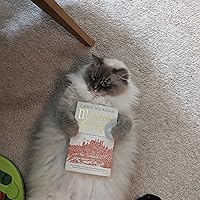
November 13, 2025
The book integrates a string of murders investigated by our main man Decius, linked with the Catilinarian conspiracy which is subsequently masterfully connected with numerous important persons of the era. These connections fuel the mystery arc very well, as the reader tries to identify who's pulling the strings in each chapter.
On the historical side, it provides a detailed description of places, events, and people of the era as background to the mystery. Also, Decius and his entourage are colorful and interesting. The outcome is greatly enjoyable historical fiction.
On the historical side, it provides a detailed description of places, events, and people of the era as background to the mystery. Also, Decius and his entourage are colorful and interesting. The outcome is greatly enjoyable historical fiction.
February 28, 2026
SPQR#1 ends with DCM leaving Rome, and so I expected this book to tackle stuff in the provinces, alas.. it starts with a timeskip, and what he did outside the city isn't touched upon. Also, this one is much less of a murder mystery - but that's in the title, it's more of a spy story. Since this book ends with DCM leaving Rome *again*... I wonder if SPQR#3 skips over that and is back in Rome again...

October 15, 2017
This is a stereotypical drawing room mystery, except that it is set in ancient Rome. That in itself could have made it interesting, but though Roberts gives the reader a lot of facts about life in ancient Rome, it's in the form of telling rather than showing. As a result, there was no sense of place in the novel. It wasn't much more than exposition.

February 28, 2019
Decius Caecilius Metellus is a young Roman working his way up the political ladder of the Roman Republic when he happens on a corpse, a mystery and a conspiracy which threatens that world. This novel was easy and entertaining bedtime reading, but for a more satisfying journey to ancient Rome, I recommend Colleen McCullough.
Displaying 1 - 30 of 102 reviews