Con la intención de ofrecer una visión comprensiva del mundo que vivieron Cervantes y sus contemporáneos, los historiadores Antonio Feros y Juan Gelabert han coordinado una obra en la que los principales especialistas de cada campo presentan los aspectos históricos, políticos, económicos, sociológicos, culturales y literarios más importantes de un siglo fundamental en la historia de España. Así, autores como John H. Elliott, Roger Chartier, Fernando Bouza, Georgina Dopico, Jean-Frédéric Schaub, I.A.A. Thompson, José Ignacio Fortea y Bernard Vicent nos acercan a la época y nos proporcionan el contexto necesario para facilitarnos la lectura del Quijote.
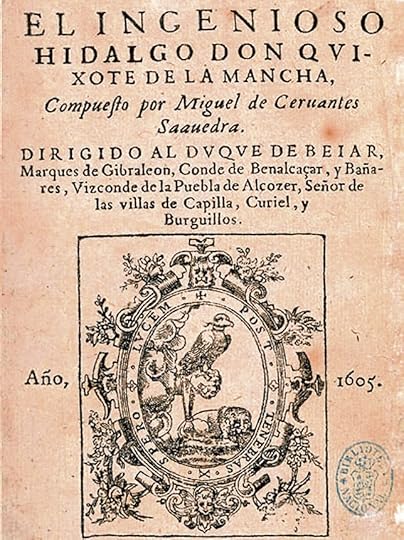
This book was published in the celebration of the previous four hundred years anniversary of Don Quijote and Cervantes. This year we remember his death on 22nd of April 1616 but in 2005 we celebrated the first printing of the first part of Don Quijote.
This is a collection of eleven essays by different writers of different nationalities dwelling on various contextual aspects surrounding Cervantes’s times. Most of them deal with the historical setting using the writer’s literary output as illustrations, or clues, or proofs of the events during which Cervantes lived. A few, towards the end of the collection, get closer to the literature.
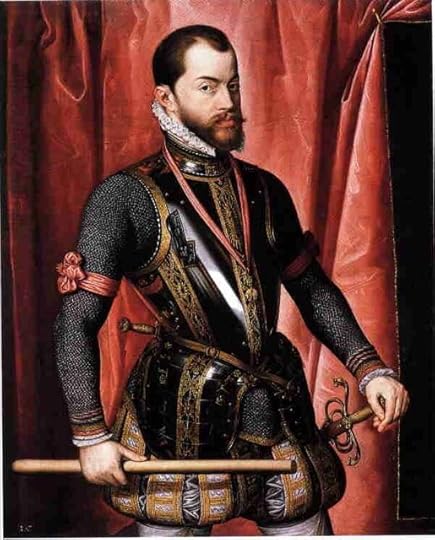
Felipe II
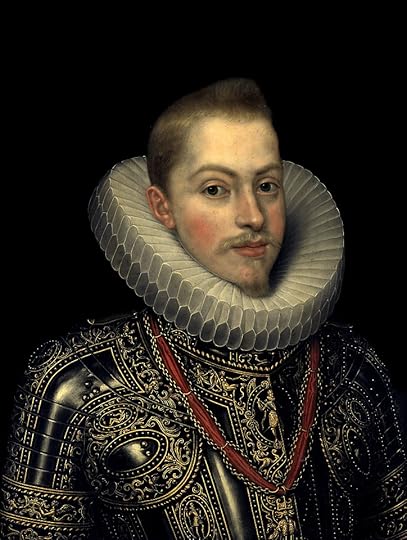
After a brief biographical note by Georgina Dopico Black, the following essays then open up various cultural vistas. Several of them address the changes brought about with the succession in the monarchy. When the king Felipe III succeeded his father Felipe II in 1598 very many things changed. Most of Cervantes life unfolded during the expansive and bellicose period of Felipe II while his major literary output dates from the peace times of the much younger son. Cervantes had been a successful and proud soldier and therefore a participant in the warring years. So had his brother, who died in the field in Nieuwpoort in 1600. But Cervantes also grew disenchanted with the very many troubles that the unsolved wars brought to his society. Financial dire straits and a general malaise that Spain’s role as defender of Catholicism – against the Eastern infidel and against other religious dissidence – offered little gratification to the Spaniards.
Felipe III
I have enjoyed the essay by Jean-Fréderick Staub placing Spain in the wider European context, with views of how Spain was perceived by its neighbours, and in particular with his examination of the role Spanish literature and language enjoyed in other countries, in particular in France. I.A.A. Thompson provides an enriching chapter on the role and position of the soldier in late 16C, relevant to a 21C reader who feels very far away from such a world. Bernard Vincent offers a review of the different social types in what he considers was a society in flux, with the peasants, the civil servants, the prisoners, the ‘galeotes’ or galley slaves, the prelates, the local moors, all part of a wide spectrum that parade through the pages of Don Quijote.
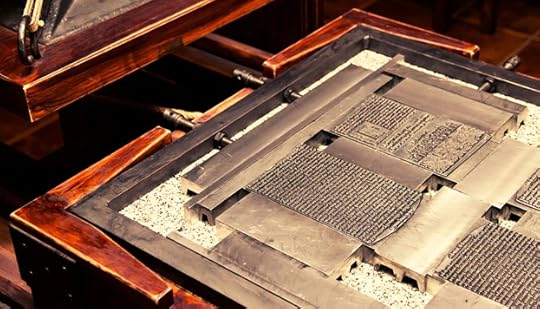
Fernando Bouza’s essay gets closer to the literary concerns evaluating the world of publishing – with the functioning of presses, the finances, the censorship, the kinds of paper used, the distributors, the need for patronage, the publishing permits, which becomes particularly relevant given that Cervantes included in his second part a visit to a publisher and his printing press.
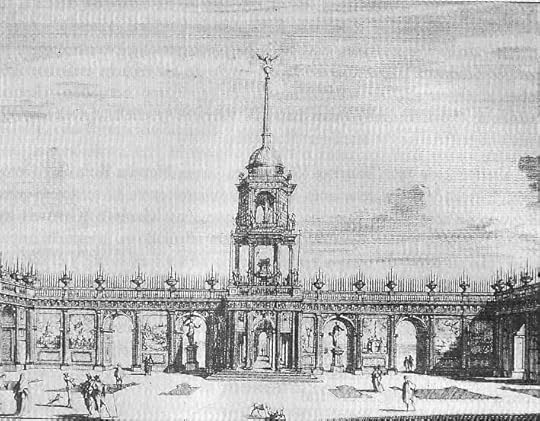
But my favourite essays were those by John H. Elliott, who is one of my favourite historians, on the Monument to Felipe II built in the Cathedral of Seville. Cervantes wrote a magnificent sonnet dedicated to this huge structure. The poem is magnificent for its irony and regularly I have to hear my brother reciting the last two stanzas… and laughing.
And second and as the final seal, I greatly enjoyed the fascinating essay, again by Georgina Dopico Black, on the the ‘Open Spain’ of Cervantes. This is the most literary of the whole collection. Dopico Black proposes to map Don Quijote along four axis, the four literary genres with which Cervantes has played: the chivalry literature, the pastoral, the picaresque, and the theatre. It is her contention that Cervantes invented a genre recycling and reformulating previous discourse traditions. From the Chivalry tradition he practiced the Renaissance art notion of ‘imitatio’; from the Pastoral he explored the element of desire; from the Picaresque he intermingles the Renaissance belief in the individual subject to a scheme of law to the more baroque proposition of the different and changeable self; and from the theatre the ambiguities and illusions in representation. With these four axis the novel takes on open dimensions with fluctuating borders and ever widening interpretations.
And as I close the book after my reading of this literary opening essay, I feel as if I had time travelled and got a passport that has opened my entry into Cervantes’s world. I am ready to navigate freely through its pages and characters and literary ploys again.
Un libro que contiene once capítulos escritos por diferentes investigadores sobre la época de Cervantes. Si bien tiene capítulos amenos y con datos relevantes que ayudan a contextualizar el mundo en el que se movió Don Quijote y ayuda a entender un poco mejor la configuración política y social de los S. XVI y XVII, al menos un par de ellos se me volvieron un poco pesados, aunque no por eso fueron interesantes.
Hay apartados, como el capítulo 5, en el que se explora la influencia española y de su literatura en el resto de Europa, sobre todo en Francia; indaga sobre la traducción y cómo La picaresca influyó en otros lugares.
El capítulo 10 indaga sobre la escritura en esta época, sobre el avance de la imprenta y los costes que implicaba publicar en una época difícil en la que el autor prácticamente no era dueño de su obra.
El último capítulo, el 11 explora un poco en los diferentes géneros en los que incursionó Cervantes y cómo todos estos desembocaron en El ingenioso Don Quijote de la Mancha.
Un libro que vale la pena leer para conocer un poco más el contexto social, político y cultural de la época en la que apareció El Caballero de la Triste Figura.