

What do you think?

Alfred Hitchcock Presents: 12 Stories For Late At Night
ALFRED HITCHCOCK
223 pages, Paperback
First published January 1, 1961
About the author
Alfred Hitchcock
1,162 books787 followersSir Alfred Joseph Hitchcock KBE (13 August 1899 - 29 April 1980) was an iconic and highly influential film director and producer, who pioneered many techniques in the suspense and thriller genres.
Following a very substantial career in his native Britain in both silent films and talkies, Hitchcock moved to Hollywood and became an American citizen with dual nationality in 1956, thus he also remained a British subject.
Hitchcock directed more than fifty feature films in a career which spanned six decades, from the silent film era, through the invention of sound films, and far into the era of colour films. For a complete list of his films, see Alfred Hitchcock filmography.
Hitchcock was among the most consistently recognizable directors to the general public, and was one of the most successful film directors during his lifetime. He continues to be one of the best known and most popular filmmakers of all time.
Following a very substantial career in his native Britain in both silent films and talkies, Hitchcock moved to Hollywood and became an American citizen with dual nationality in 1956, thus he also remained a British subject.
Hitchcock directed more than fifty feature films in a career which spanned six decades, from the silent film era, through the invention of sound films, and far into the era of colour films. For a complete list of his films, see Alfred Hitchcock filmography.
Hitchcock was among the most consistently recognizable directors to the general public, and was one of the most successful film directors during his lifetime. He continues to be one of the best known and most popular filmmakers of all time.
Ratings & Reviews
Friends & Following
Create a free account to discover what your friends think of this book!
Community Reviews
Displaying 1 - 18 of 18 reviews
January 20, 2025
Some really interesting stories in this one. Ray Bradbury’s “The Whole Town’s Sleeping”; “Evening Primrose”, by John Collier (this reminded me of a favorite book from childhood called The Secrets of the Shopping Mall, by Richard Peck); “The Cocoon”, by John B.L. Goodwin (horror); C. L Moore’s “Vintage Season” (science fiction); “The Ash Tree”, by M.R. James; and a very creepy Lovecraftian horror story by Frank Belknap Long called “Second Night Out” were favorites. There were a few unremarkable ones, but overall a great selection.

Read
November 13, 2025PLACEHOLDER REVIEW
A young couple, out for a drive in the countryside, get more than they bargained for from the local bird life in Philip MacDonald's "Our Feathered Friends." A solid little thing, this is all about generating suspense - initially through setting and some light character sketching/well-handled voice, then through a slow but inescapable ratcheting up of tension through use of sound and the eeriness of nature.
A young couple, out for a drive in the countryside, get more than they bargained for from the local bird life in Philip MacDonald's "Our Feathered Friends." A solid little thing, this is all about generating suspense - initially through setting and some light character sketching/well-handled voice, then through a slow but inescapable ratcheting up of tension through use of sound and the eeriness of nature.
October 5, 2009
The stand-out stories in this collection were:
"Vintage Season" by C.L. Moore
"Side Bet" by Will F. Jenkins
"D-Day" by Robert Trout
"Back There in the Grass" by Gouveneur Morris
"The Man Who Liked Dickens" by Evelyn Waugh
The rest of the collection was pretty... meh, so I'll just review those.
"Vintage Season" was, by far, the best of the book and the only novella. I stopped reading the book when I got to it because I feel strangely about novellas, but once I started reading it, I was totally into it. Apparently it was the basis for a 1992 movie, but they really messed it up, from the looks of it. A man suddenly has extreme interest possessed in one of old houses, and decides to rent it to three strange individuals before a fourth individual comes to him and wishes to buy the house for far more than it's worth. This all correlates to the last week in May, and as he lives in the house with the three strangers from a country they will not name, he starts noticing some really strange things...
"Side Bet" was an interesting story about a shipwrecked man and the only other survivor: a rat. It read more as a fable than a horror story, really.
"D-Day" is a story written in the style of a live press release. As it turns out, Robert Trout was, indeed, a news anchor and was involved with the broadcast of D-Day, but this D-Day occurs in the then-future, 196--. The city of Pittsburgh has just been seen to explode in bright lights, and they're having a hard time getting information from that city and other American cities. What makes this story stand out is the true language and the possibility of it having actually been written by Robert Trout. I can't find this information anywhere, but it tickles me to death to think he would have penned such a short story after his own involvement in the news industry.
Someone please explain "Back There in the Grass" to me. I swore up and down that my book was missing a page when I finally finished it, but lo and behold, this seems to be the entire story. It reads as really, incredibly racist and sexist, and I generally don't understand it.
"The Man Who Liked Dickens" is a delightfully delicious tale about an illiterate half-British, half-Brazilian man who will do anything to keep his rescued British lad reading Dickens to him.
All throughout this, I kept thinking, "Man, the short story really has changed since then..." The book reeks of sexism and racism, which shouldn't be too surprising considering its publication date. Still, this was a really poor collection, one I will probably be sending back to bookmooch in favor of my grandmother's hardcover collections.
"Vintage Season" by C.L. Moore
"Side Bet" by Will F. Jenkins
"D-Day" by Robert Trout
"Back There in the Grass" by Gouveneur Morris
"The Man Who Liked Dickens" by Evelyn Waugh
The rest of the collection was pretty... meh, so I'll just review those.
"Vintage Season" was, by far, the best of the book and the only novella. I stopped reading the book when I got to it because I feel strangely about novellas, but once I started reading it, I was totally into it. Apparently it was the basis for a 1992 movie, but they really messed it up, from the looks of it. A man suddenly has extreme interest possessed in one of old houses, and decides to rent it to three strange individuals before a fourth individual comes to him and wishes to buy the house for far more than it's worth. This all correlates to the last week in May, and as he lives in the house with the three strangers from a country they will not name, he starts noticing some really strange things...
"Side Bet" was an interesting story about a shipwrecked man and the only other survivor: a rat. It read more as a fable than a horror story, really.
"D-Day" is a story written in the style of a live press release. As it turns out, Robert Trout was, indeed, a news anchor and was involved with the broadcast of D-Day, but this D-Day occurs in the then-future, 196--. The city of Pittsburgh has just been seen to explode in bright lights, and they're having a hard time getting information from that city and other American cities. What makes this story stand out is the true language and the possibility of it having actually been written by Robert Trout. I can't find this information anywhere, but it tickles me to death to think he would have penned such a short story after his own involvement in the news industry.
Someone please explain "Back There in the Grass" to me. I swore up and down that my book was missing a page when I finally finished it, but lo and behold, this seems to be the entire story. It reads as really, incredibly racist and sexist, and I generally don't understand it.
"The Man Who Liked Dickens" is a delightfully delicious tale about an illiterate half-British, half-Brazilian man who will do anything to keep his rescued British lad reading Dickens to him.
All throughout this, I kept thinking, "Man, the short story really has changed since then..." The book reeks of sexism and racism, which shouldn't be too surprising considering its publication date. Still, this was a really poor collection, one I will probably be sending back to bookmooch in favor of my grandmother's hardcover collections.

October 14, 2015
This book was an interesting read but it took me forever to finish it for a couple of reasons.
The first true question I have is can language be antiquated? I think of the extreme such as William Shakespeare or Homer but here is a set of authors that have written short stories that I found somewhat hard to relate to because the phrasing they used in them was from the 60s. I found it difficult to relate. I had to go back and re-read those passages to decipher what they actually meant in that time. On the positive side of this, this antiquated language and trying to decipher their meanings is one of the reasons I stayed invested in this book.
The second reason I found this book somewhat difficult was not the Book's fault, but my own. I found that through the years I have been desensitized. I found that what was suspenseful back then, was sort of ho-hum today. And this, to me is a shame. I liked Alfred Hitchcock. His name was synonymous with suspense. I guess I don't find it as suspenseful anymore. Instead of being intrigued for the "What happens next?" type of feel I should be getting, I found that the suspenseful passages where sort of ho-hum boring.
What I did like about the book is that it read like episodes of the Twilight Zone or the Outer Limits. I used to be glued to the TV to watch these shows in my youth and this book brought me back to those days of my youth. Very nostalgic for me.
Some stories were better than others but that is to be expected. I will tell you, that if someone in today's TV world got a hold of these stories and brought them up to this decade, they would have some really good meaty material to work off of.
The first true question I have is can language be antiquated? I think of the extreme such as William Shakespeare or Homer but here is a set of authors that have written short stories that I found somewhat hard to relate to because the phrasing they used in them was from the 60s. I found it difficult to relate. I had to go back and re-read those passages to decipher what they actually meant in that time. On the positive side of this, this antiquated language and trying to decipher their meanings is one of the reasons I stayed invested in this book.
The second reason I found this book somewhat difficult was not the Book's fault, but my own. I found that through the years I have been desensitized. I found that what was suspenseful back then, was sort of ho-hum today. And this, to me is a shame. I liked Alfred Hitchcock. His name was synonymous with suspense. I guess I don't find it as suspenseful anymore. Instead of being intrigued for the "What happens next?" type of feel I should be getting, I found that the suspenseful passages where sort of ho-hum boring.
What I did like about the book is that it read like episodes of the Twilight Zone or the Outer Limits. I used to be glued to the TV to watch these shows in my youth and this book brought me back to those days of my youth. Very nostalgic for me.
Some stories were better than others but that is to be expected. I will tell you, that if someone in today's TV world got a hold of these stories and brought them up to this decade, they would have some really good meaty material to work off of.

February 14, 2018
The Alfred Hitchcock Presents short story collections were always reliably creepy, and this one's no exception. But since the stories' publication dates range from 1912 ("Back There in the Grass") to 1957 ("Death Is a Dream"), the collection also acts as a snapshot of the anxieties of that age. Mostly male, mostly Empire-driven anxieties, so occasionally quite offensive.
Standouts that I was surprised to remember include C.L. Moore's excellent "Vintage Season," in which the narrator's new tenants are worryingly ultra-chic and also sing Chaucerian ballads, and "Evening Primrose," in which a struggling writer packs it in to go live at Macy's.
Standouts that I was surprised to remember include C.L. Moore's excellent "Vintage Season," in which the narrator's new tenants are worryingly ultra-chic and also sing Chaucerian ballads, and "Evening Primrose," in which a struggling writer packs it in to go live at Macy's.

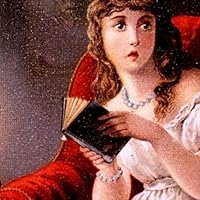
The heroine of "Evening Primrose" would have looked a lot like this.

December 11, 2025
This is a review of the 1966 Dell paperback edition. Like many other of the Alfred Hitchcock Presents anthology series, most of the work was done by Robert Arthur, not Hitchcock. The stories range from the years 1912 to 1957, but the vast majority of the stories are from the 1930s and 1940s. This means there are a lot of smoking, misogyny, social customs that have gone extinct, and racism.
Unlike some other books in this anthology series, there is no witty introduction by Alfred Hitchcock. However, this is still a quality creepy read, unafraid to include science fiction stories.
Selections:
* "Death is a Dream" by Robert Arthur (most likely the real editor of this book.) For a story about split personalities and murder, it was really quite funny.
* "The Whole Town's Sleeping" by Ray Bradbury. Creepy but predictable story of a woman stalked by a serial killer in a small country town, told in Bradbury's lush, poetic prose.
* "Evening Primrose" by John Collier. Very imaginative urban fantasy set in New York City about 1930, when department stores were the ultimate in shopping. Here, you find out where manikins come from.
* "The Cocoon" by John B. L. Goodwin. Gripping tale of a 12 year old boy who abuses insects, son of a big game hunter, getting his comeuppance by Nature ... or something not quite supernatural. And yes, kids -- at one time, cyanide was easily available at your local pharmacy. And having a servant was considered normal.
* "Vintage Season" by C. L. Moore. Sci-fi fans will wonder how he wound up in this book. The story here is a great blend of horror and science fiction. Set in the 1940s, it has a unique look not only at people of the future, but of horror fans in general.
* "The Ash Tree" by M. R. James. Pretty decent supernatural horror story set in England during the late 1600s to mid 1700s. The narration reminded me of The Storyteller. WARNING: A cat dies.
* "Side Bet" by Will F. Jenkins. Two survivors of a shipwreck find a desert island -- a man and a rat. The fight for survival is on between the two.
* "Second Night Out" by Frank Belknap Long. Whoever asked Our Protagonist how his holiday cruise went is now sincerely regretting it.
* "Our Feathered Friends" by Philip MacDonald. The BIRDS! The BIRDS!
* "Back There In the Grass" by G. Morris. Very creepy tale from 1912, and has a wonderful pointer dog, but racist as fuck.
* "D-Day" by Robert Trout. Transcript of a future CBS news broadcast (although set in the late 1960s). Apparently, Pittsburgh is the most important military target in America.
* "The Man Who Liked Dickens" by Evelyn Waugh. Yet another reason to hate Dickens. A bumbling rich Englishman goes on an expedition to Brazil, and is saved by an old man who has a small collection of Charles Dickens books. However, he can't read and needs someone to read to him. A very wicked tale.
Unlike some other books in this anthology series, there is no witty introduction by Alfred Hitchcock. However, this is still a quality creepy read, unafraid to include science fiction stories.
Selections:
* "Death is a Dream" by Robert Arthur (most likely the real editor of this book.) For a story about split personalities and murder, it was really quite funny.
* "The Whole Town's Sleeping" by Ray Bradbury. Creepy but predictable story of a woman stalked by a serial killer in a small country town, told in Bradbury's lush, poetic prose.
* "Evening Primrose" by John Collier. Very imaginative urban fantasy set in New York City about 1930, when department stores were the ultimate in shopping. Here, you find out where manikins come from.
* "The Cocoon" by John B. L. Goodwin. Gripping tale of a 12 year old boy who abuses insects, son of a big game hunter, getting his comeuppance by Nature ... or something not quite supernatural. And yes, kids -- at one time, cyanide was easily available at your local pharmacy. And having a servant was considered normal.
* "Vintage Season" by C. L. Moore. Sci-fi fans will wonder how he wound up in this book. The story here is a great blend of horror and science fiction. Set in the 1940s, it has a unique look not only at people of the future, but of horror fans in general.
* "The Ash Tree" by M. R. James. Pretty decent supernatural horror story set in England during the late 1600s to mid 1700s. The narration reminded me of The Storyteller. WARNING: A cat dies.
* "Side Bet" by Will F. Jenkins. Two survivors of a shipwreck find a desert island -- a man and a rat. The fight for survival is on between the two.
* "Second Night Out" by Frank Belknap Long. Whoever asked Our Protagonist how his holiday cruise went is now sincerely regretting it.
* "Our Feathered Friends" by Philip MacDonald. The BIRDS! The BIRDS!
* "Back There In the Grass" by G. Morris. Very creepy tale from 1912, and has a wonderful pointer dog, but racist as fuck.
* "D-Day" by Robert Trout. Transcript of a future CBS news broadcast (although set in the late 1960s). Apparently, Pittsburgh is the most important military target in America.
* "The Man Who Liked Dickens" by Evelyn Waugh. Yet another reason to hate Dickens. A bumbling rich Englishman goes on an expedition to Brazil, and is saved by an old man who has a small collection of Charles Dickens books. However, he can't read and needs someone to read to him. A very wicked tale.

March 2, 2024
An interesting collection, kind of a eclectic one. No real duds but a couple lesser tales to me. The main tale is a novella called Vintage Season by C.L. Moore that was pretty interesting, a sci-fi tale that reads like just an odd encounter at first in a typical British neighborhood but turns into much more. Also has interesting tales from Ray Bradbury, M.R. James, Frank Belknap Long, and a fun one called The Man Who Liked Dickens by Evelyn Waugh.
Highly recommended, great reads where even the couple lesser tales are still enjoyable.
Highly recommended, great reads where even the couple lesser tales are still enjoyable.

June 16, 2026
Pretty solid collection but it hasn't aged well since 1967 when it was published. The standout story is Vintage Season, which was recommended to me by a friend.
There's a good Ray Bradbury story and an MR James story, which I had already read before. But always great to see them again.
If you're interested in old school sci fi and horror/thriller, this is a fun collection to peruse. But overall I wouldn't recommend it for the casual reader to seek out. The good stories can be found elsewhere and the rest were kinda meh.
There's a good Ray Bradbury story and an MR James story, which I had already read before. But always great to see them again.
If you're interested in old school sci fi and horror/thriller, this is a fun collection to peruse. But overall I wouldn't recommend it for the casual reader to seek out. The good stories can be found elsewhere and the rest were kinda meh.

September 7, 2025
12 stories extracted from the big 1961 hardcover STORIES FOR LATE AT NIGHT. That hardcover is in the running as one of the greatest anthologies of horror and edgy science fiction and mystery stories ever. The 12 stories here are some of the best from the bigger book. All drive home the point that the world and many of the things in it, especially people, can be very, very nasty to the weak, the ignorant, the unprepared. Highly recommended, if you've a taste for darkness.

June 2, 2021
A bit uneven, but enough vintage weirdness to make it enjoyable overall. After seeing the effectively creepy Ray Bradbury Theater episode 'The Lonely One', it was great to finally read the original story 'The Whole Town's Sleeping' - loads of atmosphere.

October 28, 2020
in hetr nederlands gelezen, verhalen die Hitchcock koos no 3, prismaboek, spannende verhalen vol suspense

January 12, 2023
Disappointing. More like The Twilight Zone than Alfred Hitchcock Presents.

October 16, 2025
Found an old book of spooky stories but was disappointed in a lot of them. Some were interesting to read and I always enjoy old mystery stories but they were just so so for me. 2.5 stars.

April 12, 2026
Nice short stories that'll keep an fan of Hitchcock entertained. The only one I didn't care for was CL Moore's novella.

July 20, 2015
2.5 - 3.
This is a decent collection of creepy crawly stories with the Hitchcock stamp. Many of the best ones are from established authors, such as Frank Belknap Long's Lovecraftian "Second Night Out", C. L. Moore's elegiac "Vintage Season", and Evelyn Waugh's sinister "The Man Who Liked Dickens". Unfortunately, many of the stories are written in very old-fashioned, archaic styles, somewhat dampening their effects, and the worst are not only archaic, but sometimes downright offensive. Not a terrible collection, but I think nowadays there's better stuff out there.
This is a decent collection of creepy crawly stories with the Hitchcock stamp. Many of the best ones are from established authors, such as Frank Belknap Long's Lovecraftian "Second Night Out", C. L. Moore's elegiac "Vintage Season", and Evelyn Waugh's sinister "The Man Who Liked Dickens". Unfortunately, many of the stories are written in very old-fashioned, archaic styles, somewhat dampening their effects, and the worst are not only archaic, but sometimes downright offensive. Not a terrible collection, but I think nowadays there's better stuff out there.

September 1, 2011
Reading this as a gap filler until my library book becomes available!

February 28, 2015
There were some very good stories in this little anthology. Some were very dated, but overall I enjoyed reading them. Some held great suspense, others were kind of plain, but good nonetheless.

July 1, 2015
Some good, some not so good. My favorites were 'Vintage Season' and 'Man who Loved Dickens.' The one about the people living in the shopping mall was also entertaining.
Displaying 1 - 18 of 18 reviews