Bi-lingual Edition Modern Korean Literature Sun-i Samch'on by Hyun Ki-young. ASIA Publishers present some of the very best modern Korean literature to readers worldwide through its new Korean literature series . We are proud and happy to offer it in the most authoritative translation by renowned translators of Korea literature. We hope that this series helps to build solid bridges between citizens of the world and Koreans through rich in-depth understanding of Korea.
Yi Chong-jun (This is the preferred Romanization per LTI Korea) was a prominent South Korean novelist. Throughout his four decade-long career, Lee wrote more than 100 short stories, 13 novels. He died from lung cancer at the age of 68 on July 31, 2008.
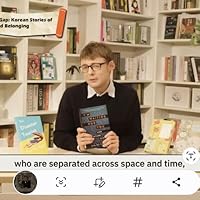
Today, we have @barrywelsh joining us for Book Club Wednesday! 📚 For this week’s #KoreaBookClub we are reviewing a short story called "The Wounded" by Yi Cheong-jun and translated by Jennifer M. Lee. In the short story, Yi touches on the existential problems faced by those living in the aftermath of the Korean War through the lives of 2 brothers. To learn more, check out today's show on Youtube (KBS World Radio) or listen to our podcast via the KBS Kong app or the Naver audio clip.🎧 #KBSWORLDRadio #KBS월드라디오 #KBS국제방송 #Korea24 #코리아24 #영어라디오 #영어공부 #영어책 #책스타그램 #북스타그램 #병신과머저리 #이청준 #책 #도서 http://world.kbs.co.kr/service/progra...
A clear and genuine depiction of that invisible wounds people often got from war in less than 100 pages long. I personally like The Assailant's Face better than The Wounded (Yes, the book consists of two short stories revolve around The Korean Civil War), but overall the two complete each other to deliver the pain of those 'ordinary' people got from the war.
Yi Chong-jun’s The Wounded and An Assailant’s Face are poignant explorations of trauma, identity, and the moral ambiguities of postwar Korean society. In both narratives, Yi’s prose is spare yet emotionally resonant, marked by a quiet intensity that mirrors the internal struggles of his characters. His writing avoids overt sentimentality, instead relying on subtle shifts in tone and restrained dialogue to evoke psychological complexity.
Yi’s characters are introspective and haunted, often caught between personal suffering and broader social disillusionment. His psychological portraits are nuanced, revealing how historical wounds manifest in private lives. Through minimalist style and ethical ambiguity, Yi Chong-jun crafts narratives that are as unsettling as they are deeply human.
The final debate in "An Assailant's Face" highlights how war trauma reverberates across generations, unveiling its psychological intricacies and offering a glimpse into the broader social complexity of South Korean society.
2 short stories. The second one (The Assailant) was excellent, detailing a professor's survival guilt after the Korean war, his relationship with his brother in law, who disappeared during this time, and with his daughter.
The first one (The Wounded) was very good as well, although a bit too odd for me. Two brothers, one of whom is a writer, the other a painter. One went through the Korean war, the other didn't. In many ways they are opposites, but they are also intertwined.
A great discussion about the guilt, the victimhood and agressordom of war. At times this was more like an essay than a story but a beautiful one indeed.