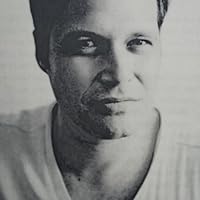
Amantine Lucile Aurore Dupin de Francueil, best known by her pen name George Sand, was a French novelist, memoirist and journalist. One of the most popular writers in Europe in her lifetime, being more renowned than either Victor Hugo or Honoré de Balzac in England in the 1830s and 1840s, Sand is recognised as one of the most notable writers of the European Romantic era. She wrote more than 50 volumes of various works to her credit, including tales, plays and political texts, alongside her 70 novels. Like her great-grandmother, Louise Dupin, whom she admired, George Sand advocated for women's rights and passion, criticized the institution of marriage, and fought against the prejudices of a conservative society. She was considered scandalous because of her turbulent love life, her adoption of masculine clothing, and her masculine pseudonym.
I was expecting a travel book, but soon found that, although there are some accounts of travel in there, including beautiful descriptions of Venice, the heart of the book is Sand's agony over her broken relationships. At times this is harrowing reading, but it's never boring for a minute, and she always has a lightness of touch as a writer, even when she is discussing her despair. The lyrical translation by S Rabinovitch is so poetic that I feel it must be close to the original, though my French isn't up to checking!
You can see why nobody reads GS much nowadays here - there's a lot of rhetoric and puffed-up prose and melodrama - but an interesting and quite experimental way of writing a book, with several passages of real interest amidst the guff.
I have long been a fan of Sand's novels. She is a wonderful writer and her gift with language is beautifully evident throughout this collection of fictional letters. I must admit, though, that I did not find the same ease and enjoyment reading these letters as I have experienced with her other books.
This collection of 12 fictional letters ostensibly sent by different individuals to friends such as Alfred de Musset, Franz Liszt, and other writers, composers, editors, etc., were originally published separately in the journal La Revue des Deux Mondes between 1834 and 1836, which was early in Sand's novel-writing career. The letters were once called "exquisite" by Anthony Andrews as host and narrator of the 1980s documentary series The Romantic Spirit, which features a segment on Sand, and which I highly recommend in its entirety. (All the episodes are now available on YouTube). The author's language is indeed superb and certainly testifies to her intimate knowledge of and love of Venice and all of northern Italy, the lovely nature scenes, and venerable works of art, as seen in the first three letters, which were supposedly written by a male friend to de Musset.
One might expect some intimate insights in these letters from Venice about Sand's recent tumultuous affair with the poet that ended badly in that city. But these missives are less revealing about Sand's personal life than they are laudatory of the area, its art treasures, its people, and its natural beauties. From the first letter:
"Il faudra que tu épuises Michel-Ange et Raphaël de nouveau avant de t'arrêter de sur le bord du chemin . . . . la vallée de Bassano sera toujours aussi belle, la neige des Alpes aussi pure . . . .un demi-cercle de collines fertiles, couverts de ce long rameau de vignes noueuses qui se suspendent de tous les arbres de la Vénétie, faisait un premier cadre au tableau, et les monts neigeux étincelant aux premiers rayons du soleil, formaient, au-delà, un second bordeur immense, qui se détachait comme une découpure d'argent sur l'eau bleue solide de l'air."
Other letters discuss Sand's other various projects, concerns, and bêtes noires of the day. For example, in the twelfth letter, fictitiously addressed to literary critic Desiré Nisard, she takes issue with his views on her early novels Indiana, Valentine, Lélia, Jacques and a few others.
Again, these letters are not akin to Sand's better-known works. They lack the imagination and poignancy of her novels, are not plot driven, but more philosophical and polemic, and generally less compelling and harder to get through. But for Sand afficionados, the letters do offer a nice little slice of her ideas and passions in a different backdrop and style. And her descriptions and fervency showcase Romanticism at its best.
« Quand on ne sent plus, le raisonnement devient spécieux, et l'appréciation un travail de plus en plus ingrat, pénible, dirai-je impossible. À la fin d'un repas où l'on a fait excèes de tout, les meilleurs mets perdent leur saveur, et le palais blasé ne distingue plus la fraîcheur des fruits du feu des épices. Celui qui veut goûter et appronfondir toutes les jouissances de la vie en vient un jour à ne plus dormir sur l'édredon et à s'imaginer que son premier lit de fougère fut plus chaud et plus moelleux. » p. 307
Rapport curieux avec son identité de genre (non seulement elle prend l'identité d'un homme [ce qui pourrait s'expliquer par le désir d'être prise au sérieux] mais elle parle aussi de sa virilité), elle considère l'autrice Mme de Staël comme « un homme-femme »
J'ai eu du plaisir à le lire, particulièrement ses descriptions de paysages, peut-être parce que le voyage me manque cruellement, et je compatis avec la déprime du retour au quotidien, à la routine.
Les lettres IV à VI, en France, était d'un ennui mortel. Elles ne parlaient pas de voyage (sinon peut-être de voyage spirituel?), elle parlait de choses très abstraites ou personnelles.