Root-wise, soulful poems reinvent the domestic and spiritual spheres.
Winner of the Harper Lee Award (2018)
Fierce and sensual, the poems in Outlandish Blues merge everyday speech with a shimmering lyricism and burst from the page into song. Honor�e Fanonne Jeffers sees the blues, what she terms the "shared 'blue notes, ''' as an important intersection between the secular and the divine, and between the various African American vernacular traditions, from spirituals to jazz. Part Nina Simone, part Bessie Smith, her poems are filled with a sweaty honesty, moving from the personal to the collective experience. This movement is often accomplished through the use of personae, concentrated here in a stunning series of poems on the Biblical figures of Hagar and Sarah. Whether about a contemporary domestic scene, a slave ship, or Aretha Franklin, these are poems that speak to the soul of experience.
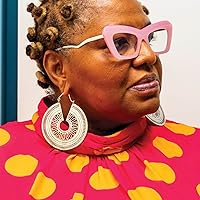
Honorée Fanonne Jeffers was born in 1967 and grew up in Durham, North Carolina, and Atlanta, Georgia. Her work examines culture, religion, race, and family. Her first book, The Gospel of Barbecue (2000), won the Stan and Tom Wick poetry prize and was a 2001 Paterson Poetry prize finalist.
Jeffers’s poetry has appeared in the American Poetry Review, Callaloo, the Iowa Review, Ploughshares, and Prairie Schooner. Her work has been anthologized in numerous volumes, including Roll Call: A Generational Anthology of Social and Political Black Literature and Art (2002) and These Hands I Know: Writing About the African American Family (2002). Jeffers has also published fiction in the Indiana Review, the Kenyon Review, the New England Review, and Story Quarterly.
The recipient of honors from the Rona Jaffe Foundation, the MacDowell Colony, and the Barbara Deming Memorial Fund for Women, Jeffers teaches creative writing at the University of Oklahoma where she is an associate professor of English.
Very good poetry collection, many of them centered around women's blues especially their relationship with bad men. Jeffers biblical poems are amazing, she puts the blues in the mouths of women characters from the Bible such as Lot's wife, Sarah, Hagar. The title poem "Outlandish Blues" challenges how American slavery is portrayed in film, for example not showing children on slave ships, money changing hands between white enslavers and African traders, and the original religious traditions of enslaved Africans before they were introduced to Christianity.
Favorite poems: "The Battered Blues"; "The Wife of Lot Has a Premonition of Her Death"; "Sarah Confronts Abraham Over Hagar"; "Hagar in the Wilderness"; "Outlandish Blues"; "Aretha at Fame Studios".