MPD-Psycho, the most-requested manga series in recently memory, has found a fitting home at Dark Horse Manga, where it will be presented uncut and uncensored in all of its controversial and unflinchingly grotesque glory! If Takashi Miike's MPD-Psycho television series still has you confused and reeling, the original manga series that inspired the show is sure to take you on a longer, darker journey into madness. Enjoy the 11-volume MPD-Psycho series for all of its absurd twists, sci-fi touches and inventive torture scenes, but you'll also be mesmerized by the plethora of odd conspiracies and case files found in Otsuka and Tajima's uncontrollable, urban horrorshow. In MPD-Psycho Volume 1, police detective Kobayashi Yousuke's life is changed forever after a serial killer notices something "special" about him. That same killer mutilates Kobayashi's wife and kick-starts a "multiple personality battle" within Kobayashi that pushes him into a complex tempest of interconnected deviants and evil forces. Earning praise for its consistently shocking plotlines and Tajima's clean, arresting art style, MPD-Psycho is the manga event of the decade!
Social anthropologist and novelist. Graduated from college with degree in anthropology, women's folklore, human sacrifice and post-war manga. In addition to his work with manga he is a critic, essayist, and author of several successful non-fiction books on Japanese popular and “otaku” sub-cultures. One of his first animation script works was Maho no Rouge Lipstick, an adult lolicon OVA. Otsuka was the editor for the bishojo lolicon manga series Petit Apple Pie.
In the 80s, Otsuka was editor-in-chief of Manga Burikko, a leading women's manga magazine where he pioneered research on the “otaku” sub-culture in modern Japan. In 1988 he published "Manga no Koro" (The Structure of Comics), a serious study of Japanese comics and their social significance. Also as critic, Otsuka Eiji, summarized the case of the Japanese red army's 1972 murders as a conflict between the masculine and the feminine principles as they were both embodied by women and against women (Otsuka,1994).
MPD-Psycho is a terrible manga that unoriginally takes the Hannibal Lector approach of having a serial killer help the police catch other serial killers and butchers it.
Writer Eiji Otsuka does a poor job of setting up the Multiple Personality Detective (MPD) and his background, shunting the reader from one confusing scene to another before telling us that the police want to release him to help them solve some new murders.
I also didn’t pick up on his name or the names of his multiple personalities so it didn’t mean anything when he turned around and said things like “I’m not this unmemorable Japanese name, I’m this unmemorable Japanese name now!” - whatever you say buddy, let’s just get this over with!
The supporting characters are just as poorly written and there’s no real plot to speak of (some drivel about barcodes on eyes?), just one gratuitously grisly case after another.
The murders themselves are all young women who were tortured/mutilated/raped before being killed. All of the victims are found naked with big boobs exposed to the reader which just gives the book this sleazy exploitative feel to it. I get that serial killer stories are gonna feature graphic violence but that all of the corpses look like some BDSM fantasy shit is just gross.
Even without the torture porn, MPD-Psycho is a bland and boring police procedural with nothing characters, generic art and a go-nowhere plot. Unpleasant garbage - don’t bother.
If you're a horror fan, Manga currently does a better job of disturbing people than any other culture or medium. I'm just going to leave that generalization sitting there like a suspicious suitcase in an airport, and pretend I never said it. For a little while. Evidence is tedious, while making a grand declaration of that sort is rather fun.
This review looks at 'MPD Psycho', focusing on Volumes 1 & 2 of Eiji Otsuka & Sho-U Tajima's popular and critically acclaimed manga. It was also adapted as a live-action series for Japanese TV, directed by Takashi Miike (one of my favorite film-makers, incidentally, from 'Audition' to his remake of 'Hara-Kiri: Death of a Samurai'). Miike was the logical choice; his proclivity for grotesque ultra-violence meshed perfectly with the themes explored in MPD Psycho, and its consistently shocking imagery. But there's no shortage of manga titles that find creative ways to plant a horrifying little seed in your brain, so I'll return to my generalization and take it down a notch by claiming that Japanese comics do horror much, MUCH better than Western comics --
This was a point David Schaafsma once brought up about the lack of truly horrifying US horror comics, relative to Japan. After digging hard to unearth some unsettling Western horror titles that might disprove the observation, I found he was right; there was little in the way of North American competition for Manga Horror. There's some good US survival horror, like The Walking Dead and Crossed, but they're exceptions. Most of the books labelled as 'horror' are supernatural fantasies mining Lovecraft and Crowley. But Demons, monsters and ghosts aren't scary. People are scary. Especially people convinced they're doing the right thing. Save us all from 14-27 year-old boys who believe that killing apostates and infidels is the holiest of endeavors. Here's a few of the weird bastards who belong to the masters of Japanese Horror club, channeling their inventively disturbing concepts: Suehiro Maruo: Junji Ito (after bringing up Lovecraft, Ito is one of the rare horror artists who find new ways to reinvigorate supernatural horror, crashing the mundane and beautifully ordered structure of Japanese society into the logic-devouring chaos of the unknown; the 1st image below is Ito's portrait of Lovecraft): Shintaro Kago
-- in particular the sort of grisly, terrifying shit that triggers autonomic physical reactions. Otsuka and Tajima are on a level very close to the one Suehiro Maruo, Shintaro Kago and Junji Ito occupy, dreaming up the kind of imagery that goes well beyond 'haunting'; it's like it's been tattooed inside your eyelids, or onto the eye itself; once whatever parasitic species of nightmare-flora's been planted, there's no chance of pulling the weeds once they've rooted themselves in your subconscious. It's like the fictional equivalent of an ISIS execution video: you can't un-see that shit.
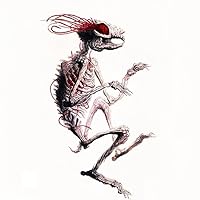
First: I can't say enough about the brilliantly grotesque painted covers, which are a tough act to follow. But Tajima's line-work is sharp as a zero-ground wakizashi; these first 15 covers borrow the ero-guro artistry of Takato Yamamoto (if you dig the rotting grandeur of Tajima's painted covers, you should definitely check out Yamamoto):
Weeds. You'd need a Phd. in Guesswork (a.k.a. the social sciences) to figure out how weeds could factor into one of the many unthinkably cruel and disturbing acts of torture that these talented architects of atrocity conceive of, even after isolating the story facets 'incorporated' within the inventive cover compositions, and the scattered clues throughout the awkward sentences of the preceding paragraph. Writer Eiji Otsuka has proven himself to be a master of death-mining; his imagination, memory and research are a near-bottomless reservoir of atrocities.
Examples of Tajima's interior art from throughout the series, without the inventive carnage these architects of atrocity are known for, due to spoiler-related reasons:
The story is a complicated one (but I'll try to refrain from straight-up spoil-attacks); it involves a Tokyo cop who suffers from Multiple Personality Disorder, one of whom may be a serial-killer. Like the latest M. Night Shamylan to hopefully not suck, 'Split'. Or 'Identity'. Or 'Primal Fear'. MPD only takes a backseat to Amnesia when it comes to incredibly rare psychological conditions that are used-overused constantly in fiction, but MPD Psycho puts the trope to work in original ways. It also features a Homicide Department familiar with their peer's 'condition', who work with him to solve a series of murders that are unspeakably brutal and very creative. It quickly becomes apparent that they are dealing with what can only be called a serial-killer 'epidemic', and that the killers share little in common beyond their distinctive murder 'aesthetic'... and a barcode. I won't say anything more about the barcodes.
More Sho-U Tajima pages from MPD Psycho:
Otsuka pairs up with excellent artists -- Housui Yamazaki on Kurosagi Corpse Delivery Service, and Sho-U Tajima on MPD Psycho. Tajima is incredible. His painted covers are perhaps the best I've seen on any manga series, and were intriguing enough that I bought the first two volumes knowing nothing else about them. I would love to see a fully-painted comic by Tajima, but that's not something that happens much in manga.
This was so bizarre and uniquely its own, and graphic, but I honestly loved it a lot. I can safely say I've never read anything quite like MPD Psycho and I can't wait to continue the series. Fair warning, when I say this manga is graphic, I mean it is graphic; there's a ton of nudity, violence, and body horror that even made me shudder once or twice (which is pretty hard to do!). The storyline is super intriguing, though if you're a reader who isn't fond of stories revolving around DID/"multiple personality disorder", you'll want to steer clear as that's the bulk of the story's theme here.
The artwork is also beautifully done, and truly, I can't say anything else besides that this is easily my new favorite horror manga and I highly encourage picking it up!
Crazy protagonist with multiple personalities - check. Creative serial killers that put Se7en and Silence of the Lambs to shame - check. Offbeat sense of humor - check. Weird science fictiony mystery - check. What's not to love. This book is brutal though. It doesn't shy away from graphic depictions of horrific imagery, so be warned.
Nutty and outrageous. The hero is a police detective with multiple personality disorder who is convicted of a string a killings while he was not himself, or rather while he was one of his more violent selves. After what seemed like a surprisingly short prison term, he is hired by a policewoman friend to set up a detective agency specializing in profiling killers. In this first installment the bad guy is a world-renowned architect with a passion for kidnapping beautiful women and planting flowers in their brains while they are still alive. Given the roller coaster pacing of the series it would be rude to question exactly how this is done.
Takishi Miike, that Japanese movie-making machine, did at least two TV episodes based loosely on this series. Reviews of the DVD's complain that the gore sequences have been pixilated out of the prints, I suppose in deference to the TV censors. But since one of the episodes involves a killer who cuts the fetuses from pregnant women, I surprised that is was on TV to begin with. I like to imagine a Japanese mom calling out, "Hurry kids. Dinner is ready and MPD Psycho is about to start!"
Well, this was beyond confusing. I got lost in all the names being constantly thrown around even though we haven’t met those people yet. I like the idea of a MC with multiple personality disorder working as a detective but the whole case they’re investigating in this volume...I’ve already seen before in Hannibal only that culprit was using human bodies to cultivate mushrooms instead of flowers. Furthermore, our MC (his Amamiya persona at least) is basically a Hannibal Lecter with Will Graham’s personality. Idk where it goes from now but so far I’m not very impressed. The art style is pretty plain as well, reminds me of the early days of Tokyo Ghoul if only a bit cleaner. The conspiracy tying all the psychos together is pretty interesting though.
This manga series is very violent, gory and not for the faint of heart. If you like mature manga comics such as oldboy, Jack Frost then this is a MUST read. This is a series intended for adults, since it is quite graphically gory. You have been warned... Fans of horror/crime series like Death Note will enjoy this series. Also if you like this series then check out the manga GOTH, Kurosagi Corpse Delivery...Enjoy :D
Don't know what to make of the manga, to be honest. It was very brutal, at the expense of women. More crime than horror, very gory. Also very confusing. The protagonist has a multiple personality disorder, but I couldn't tell his japanese names apart if my life depended on it. There are also time jumps, the combination made it hard to follow the plot and to get lost in the story.
I had read a lot of descriptions of this book as the most disturbing comic you'll ever read, and I thought it was hyperbole. After reading this first volume, I think they may be right on the money.
This manga is the story of a keen detective/criminal profiler who, upon the murder of his girlfriend, starts suffering from multipler personality disorder (the MPD of the title). Some of his personalities still possess the keen intellect of his earlier days, while others are out for vengeance. It seems like a pretty straightforward story, but the gory lengths the story goes to are what sets it apart. The lead character's girlfriend isn't just killed: she's shipped to the police station in a large cooler, her arms and limbs hacked off and a small pump keeping her just barely on this side of heart/brain death. A later murder mystery involves an architect who beautifies his projects be kidnapping women, cutting open their heads, growing plants in their brains, and then planting the bodies outside of the buildings he designs. And this isn't just described, it's illustrated in full, gory detail. Simply put, THIS SHIT IS FUCKED UP.
Given how taken aback I was by the in-your-face gore, it took me a while to get into the book, but I was surprisingly engrossed (sideways pun intended) by the end of it. This really is unlike anything else I've read before, and its strengths as a murder mystery combined with the shear fucked-up-ed-ness of the crimes themselves make for some visceral reading. If it gets much grosser, though, this shit is totally going to give me nightmares.
Overall Rating: B+ Summary: MPD Psycho is a psychological horror series written by Eiji Otsuka and illustrated by Shou Tajima, which follows Yousuke Kobayashi a former police detective. The series opens with Kobayashi tracking down a serial killer who severs the limbs off his victims. Meanwhile, Kobayashi is suffering from strange dreams where he sees himself killing people. After seeing Kobayashi on tv, the serial killer kidnaps his girlfriend, and severs her limbs, but keeps her alive.
After Kobayashi tracks him down, the killer tells him that he sees something familiar in Kobayashi and that they are on the same side. At that point, another personality emerges, and Kobayashi becomes Shinji Nishizono. Shinji kills the serial killer and is sent to prison. It is implied that the dreams Kobayashi had been having were actually Shinji killing people.
Most of the above is revealed in flashbacks, and the bulk of the first volume is set after Kobayashi is released from prison. His primary personality is now Kazuhiko Amamiya, a brilliant criminologist, and he has been hired to work with a private consulting agency. The agency is headed up by Machi Isono, a criminologist that asked Kobayashi to consult on some cases while he was in prison. They work to track down and bring to justice serial killers, and tend to deal with the really weird and difficult cases the police have trouble solving themselves.
Eiji Otsuka also writes Kurosaki Corpse Delivery Service, which I love, so I was excited to read MPD Psycho. The two titles are very different, and MPD has little of the dark humor that makes Kurosaki great. However, it makes up for that with a great concept, some really intriguing plot, and interesting characters. The only slight negative is that sometimes it feels like they're trying too hard to shock the reader. MPD comes shrink-wrapped and with an 18+ warning for good reason, and I would definitely caution against reading it if you're squeamish. Otherwise, I'm looking forward to checking out volume 2.
For more manga and anime reviews, please check out Hobotaku.
This is some seriously edgy stuff right here. The drawing style is clean and no-nonsense, so you're not distracted by a lot of motion lines and garbage. The story itself is pretty twisty and at the end you're left with this vague feeling that you've been run over, but that in all it was a fairly awesome experience. If you're into serial killer stories, mind control, and group psychosis anyway. Not a whole lot of lovey-lovey here AT ALL, though the female lead is pretty sexy (so go ahead and include her in your fanfic!)
Starts off with a police detective following a serial killer. Then it goes all Se7en when a body is delivered in a cooler. From there you have our protagonist experiencing a complete mental breakdown and being institutionalized for awhile. Then he pops up years later and gets sucked back into the catching serials again.
And that's when the story really starts. Because at the base of it all is some subversive organization pulling for the resurrection of their cult leader. How? Through the powers of genetics. MPD Psycho--Metro Police, or Multiple Personality Disorder Psycho. And that's what everyone is in this story. Psycho.
I've always wanted to read this one. And also know that it's going to scare-da-bejesus-outta-me, creeping me out big time just like what Battle Royale, Vol. 1 is now doing to me.
Anyhow, I am determine to take this hurdle just to find out what the hype is all about.
Flower planting in a corpse brain and all that *takes a deep breath*.... I hope I come out in one piece reading this crazy stuff.
I have no idea why this is such a hit. The art is terrible. The protagonist is a Hannibal Lector rip-off with a misrepresented Multiple Personality disorder. Terrible, easily forgotten side-characters. Gore for the sake of gore and shock value. A loose suspense in which I have no interest what so ever. What a meh.
I will binge a couple more volumes to make sure that this isn't getting any better. Just a precaution.
Policía con múltiples personalidades que es capaz de hacer perfiles excelentes de asesinos en serie. Perturbador pero no me ha dejado con ganas de seguir con la serie.
I actually read this book long ago when it first was published in the US, but what a gorgeous cover, and what a completely disturbing series. Never finished it, and may never get to with how difficult it is to track down the physical copies (and for a series 20 volumes deep!!) And yet, I found it in a BST place! Ah memories... forever shuddering at flowerpots.
Highly recommended for people that like their horror fix. Great opening issue but I don't remember much from the others I read and have no idea if it's worth it to finish up.
3.8 very confusing, I’m lost and I don’t understand anything but the art was nice and it was good until around chapter 40 and I got totally utterly lost in whatever the heck was happening. That aside this hasn’t been updated since 2016 so the story’s not even done and I feel sort of robbed because I got no payoff for whatever the heckles I just sat through.
Abbiamo un detective intelligente superintuitivo che soffre di MPD e un cannibale omicida schizzinoso. Il nostro genio, senza altri elementi, conclude che il simpatico divoratore di organi … (che suspense!) … soffre di anoressia/bulimia/affini.
Super confusing and difficult to follow. I’m fine with disturbing and weird, but I still need logic and some way to make sense of whatever is going on.
From the happy and cheerful writer behind the Kurosagi Corpse Delivery Service, here comes the first volume of another manga that delves into depictions of the dead, of the corpse, in an attempt to redefine what it has come to stand for. At least, that is what the volume itself claims to be aiming for, or at least the writer in the afterward. In a rather thoughtful little section, the writer expresses worry over the current state of corpses in popular culture, and especially in science fiction. It is too easy to overlook the corpse, to take the corpse as a symbol for death and not for death itself. Especially when denied access to the dead body, the full impact of death is lost. And I can say, this volume does not spare the reader the most grisly of views at corpses and near corpses. But the same could be said of Kurosagi Corpse Delivery Service, so it does come up that this manga has to do something different in order to maintain any sort of impact. Yes, there are corpses and torture and all that, but this volume does manage to avoid being just pandering to perverse people wanting to see dead bodies.
It starts out a bit sexist, though, as in this first volume we are presented with just the corpses of women. The psychos of this series, at least to this point, target women foremost, and only the titular character, the multiple personality detective, manages to kill any males, those being the killers of the other women. So I have a little bit of a difficult time contextualizes the violence of the manga, as much of it seems erotically charged. And that, frankly, is rather disturbing, but I think that it is disturbing in a way that challenges the audience, that forces them to see the perversion of the corpse, the fetishistic role that it takes in popular culture. It is so blatant that it avoids being actually offensive. Instead of merely being repulsed at the volume, it forces the audience to think about the way we think about corpses, and the living. How much is popular culture like the psychos of the volume, trying to redefine the corpse to make them into something they can control, striping the power the corpse has over us.
But I suppose I should also talk about the story itself, which is quite a departure from KCDS, as this is not about a group trying to help the dead for profit, but about a detective who has lost his mind. During a particularly gruesome case, his mind fractured and is now made up of at least three personalities. The main one is a bit like the previous personality, and acts as the detective for a freelance firm that is put together to solve cases involving serial murders. However, there is another personality that seems to be in league with the killers, and a final personality (so far) that is a psycho himself and kills the killers. It is an interesting concept, as the detective has fractured at least in part because of his own feelings that he failed his girlfriend and got her killed. And, indeed, it was he that technically killed her. But there is a subplot here that delves into something with an eye bank, where these killers all have barcodes on their eyes. I’m sure that will become the main story at some point, as the detective himself has one of these eyes.
The mystery of this volume surrounds the killings of women who are made into flower pots when they are still alive, where the plants grow out of their brains. It is disturbing and insane and I think capture the author’s purpose very well. The plot itself isn’t too unpredictable, but does throw a few twists along the way, keeping it interesting. Really this seems like it is like the show Dexter that a lot of people have told me to watch, which is about a serial killer who kills serial killers. This acts in rather the same way. Which isn’t a bad thing. At the very least it brings up some interesting things to think about. The characters aren’t bad but they suffered a bit from this being the origin story, as did the overall plot, as the volume was a little cramped. Even so, it did a fine job of introducing the concept and challenging the place corpses occupy in our culture. With all of that, I give this first volume an 8/10.
This entire review has been hidden because of spoilers.
I got all 10 volumes a while back and have just read the first so far. First off, yes, I have seen the miniseries before. Only once and that a few years ago (it is directed by one of my favorite directors), and I did like them, even if they left me confused. The comic goes far beyond what is shown in that series (there's no fuzzing out the "icky violence" here ... on purpose, actually, if what is in the afterward is true) and is still quite confusing in its special way.
Part of it is my status as a neophyte to the manga world. Reading it in the opposite direction is a bit of a challenge, even with my app that takes me through it panel by panel. Part of it is the nature of the story, where one of the protagonists has dissociative identity disorder and thus goes about with many different personalities and names. I also think that I came into this manga with a different expectation of what the story would be; I thought it was focused on a string of crimes (which has only just been noticed at the end of this manga) instead of the mystery of what happened to our protagonist.
In the end, I left this volume a bit confused, but also slightly intrigued as to how the story would develop. I plan on reading the other 9 volumes within the year, just to see if they work together to create a cohesive story that makes sense.
For those of you willing to put in the time on a strange series (and not afraid of extreme violence and nudity), I have the feeling this series will be rather rewarding.
I liked the approach of a detective having multiple personalities, but it has been poorly implemented. This has been written by someone who very likely did not bother to do their research, because suffering from multiple identity disorder is, first off, a rare thing to occur, and, second off, simply does not manifest itself as it is being portrayed in this manga. Which is, to simplify things, as follows: "Hey, this is personality C now! Do not call me B anymore, or I am going to wring your neck!" ... As the crux of the condition is that the different split personalities can, in fact, not be incorporated consciously by the person afflicted.
Then, I don't like the art style. ...Okay, bear with me, I'll note something more objective next.
After having watched Hannibal multiple time -- yes, it is still yucky -- I would call myself quite detached from feeling an exorbitant amount of disgust, even when the kind of violence is being portrayed as in this novel. Though, seeing as the measures taken here reach another level (read: pointless), they still leave their marks on the reader.
The forcefulness of the violence is simply too much! For instance, there is no point in sexualising the mutilated female body numerous times (, other than displaying the utter depravity of characters who are then quickly killed off themselves). But it is done just for its own sake, it appears.
I have never found this to be applicable before, though for this work, the term 'torture porn' has found its calling.