

What do you think?
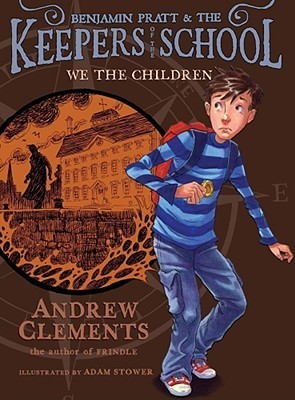
Benjamin Pratt & the Keepers of the School #1
We the Children
Benjamin Pratt’s school is about to become the site of a new amusement park. It sounds like a dream come true! But lately, Ben has been wonder if he’s going to like an amusement park in the middle of his town—with all the buses and traffic and eight dollar slices of pizza. It’s going to change everything. And, Ben is not so big on all the new changes in his life, like how his dad has moved out and started living in the marina on what used to be the "family” sailboat. Maybe it would be nice if the school just stayed as it is. He likes the school. Loves it, actually. It’s over 200 years old and sits right on the harbor. The playground has ocean breezes and the classrooms have million dollar views…MILLION DOLLAR views. And after a chance—and final—run-in with the school janitor, Ben starts to discover that these MILLION DOLLAR views have a lot to do with the deal to sell the school property. But, as much as the town wants to believe it, the school does not belong to the local government. It belongs to the CHILDREN and these children have the right to defend it! Don’t think Ben, his friend Jill (and the tag-along Robert) can ruin a multimillion dollar real estate deal? Then you don’t know the history and the power of the Keepers of the School. A suspenseful six book series, book one, We the Children, starts the battle on land and on sea. It’s a race to keep the school from turning into a ticket booth and these kids are about to discover just how threatening a little knowledge can be.
160 pages, Hardcover
First published January 1, 2010
About the author
Andrew Clements
148 books2,297 followersI was born in Camden, New Jersey in 1949 and lived in Oaklyn and Cherry Hill until the middle of sixth grade. Then we moved to Springfield, Illinois. My parents were avid readers and they gave that love of books and reading to me and to all my brothers and sisters. I didn’t think about being a writer at all back then, but I did love to read. I'm certain there's a link between reading good books and becoming a writer. I don't know a single writer who wasn’t a reader first.
Before moving to Illinois, and even afterwards, our family spent summers at a cabin on a lake in Maine. There was no TV there, no phone, no doorbell—and email wasn’t even invented. All day there was time to swim and fish and mess around outside, and every night, there was time to read. I know those quiet summers helped me begin to think like a writer.
During my senior year at Springfield High School my English teacher handed back a poem I’d written. Two things were amazing about that paper. First, I’d gotten an A—a rare event in this teacher’s class. And she’d also written in large, scrawly red writing, “Andrew—this poem is so funny. This should be published!”
That praise sent me off to Northwestern University feeling like I was a pretty good writer, and occasionally professors there also encouraged me and complimented the essays I was required to write as a literature major. But I didn’t write much on my own—just some poetry now and then. I learned to play guitar and began writing songs, but again, only when I felt like it. Writing felt like hard work—something that’s still true today.
After the songwriting came my first job in publishing. I worked for a small publisher who specialized in how-to books, the kind of books that have photos with informative captions below each one. The book in which my name first appeared in print is called A Country Christmas Treasury. I’d built a number of the projects featured in the book, and I was listed as one of the “craftspeople”on the acknowlegements page, in tiny, tiny type.
In 1990 I began trying to write a story about a boy who makes up a new word. That book eventually became my first novel, Frindle, published in 1996, and you can read the whole story of how it developed on another web site, frindle.com. Frindle became popular, more popular than any of my books before or since—at least so far. And it had the eventual effect of turning me into a full-time writer.
I’ve learned that I need time and a quiet place to think and write. These days, I spend a lot of my time sitting in a small shed about seventy feet from my back door at our home in Massachusetts. There’s a woodstove in there for the cold winters, and an air conditioner for the hot summers. There’s a desk and chair, and I carry a laptop computer back and forth. But there’s no TV, no phone, no doorbell, no email. And the woodstove and the pine board walls make the place smell just like that cabin in Maine where I spent my earliest summers.
Sometimes kids ask how I've been able to write so many books. The answer is simple: one word at a time. Which is a good lesson, I think. You don't have to do everything at once. You don't have to know how every story is going to end. You just have to take that next step, look for that next idea, write that next word. And growing up, it's the same way. We just have to go to that next class, read that next chapter, help that next person. You simply have to do that next good thing, and before you know it, you're living a good life.
Before moving to Illinois, and even afterwards, our family spent summers at a cabin on a lake in Maine. There was no TV there, no phone, no doorbell—and email wasn’t even invented. All day there was time to swim and fish and mess around outside, and every night, there was time to read. I know those quiet summers helped me begin to think like a writer.
During my senior year at Springfield High School my English teacher handed back a poem I’d written. Two things were amazing about that paper. First, I’d gotten an A—a rare event in this teacher’s class. And she’d also written in large, scrawly red writing, “Andrew—this poem is so funny. This should be published!”
That praise sent me off to Northwestern University feeling like I was a pretty good writer, and occasionally professors there also encouraged me and complimented the essays I was required to write as a literature major. But I didn’t write much on my own—just some poetry now and then. I learned to play guitar and began writing songs, but again, only when I felt like it. Writing felt like hard work—something that’s still true today.
After the songwriting came my first job in publishing. I worked for a small publisher who specialized in how-to books, the kind of books that have photos with informative captions below each one. The book in which my name first appeared in print is called A Country Christmas Treasury. I’d built a number of the projects featured in the book, and I was listed as one of the “craftspeople”on the acknowlegements page, in tiny, tiny type.
In 1990 I began trying to write a story about a boy who makes up a new word. That book eventually became my first novel, Frindle, published in 1996, and you can read the whole story of how it developed on another web site, frindle.com. Frindle became popular, more popular than any of my books before or since—at least so far. And it had the eventual effect of turning me into a full-time writer.
I’ve learned that I need time and a quiet place to think and write. These days, I spend a lot of my time sitting in a small shed about seventy feet from my back door at our home in Massachusetts. There’s a woodstove in there for the cold winters, and an air conditioner for the hot summers. There’s a desk and chair, and I carry a laptop computer back and forth. But there’s no TV, no phone, no doorbell, no email. And the woodstove and the pine board walls make the place smell just like that cabin in Maine where I spent my earliest summers.
Sometimes kids ask how I've been able to write so many books. The answer is simple: one word at a time. Which is a good lesson, I think. You don't have to do everything at once. You don't have to know how every story is going to end. You just have to take that next step, look for that next idea, write that next word. And growing up, it's the same way. We just have to go to that next class, read that next chapter, help that next person. You simply have to do that next good thing, and before you know it, you're living a good life.
Ratings & Reviews
Friends & Following
Create a free account to discover what your friends think of this book!
Community Reviews
Displaying 1 - 30 of 397 reviews

April 9, 2010
As I requested this advanced reading copy for my son, who at age nine fits the key age group for the book, I thought it would be fun to review the book together. He is as voracious a reader as I am and just loves the fact that I blog, and he has been eyeballing the book from the moment it entered my library. He jumped at the chance to read it and review it for me. Having read it first, I know I had my own opinions of the book, so I was curious to see what he had to say. His thoughts:
M: What did you think?
C: Do I have to finish it? It's boring.
M: What do you mean boring? Just finish it for me, okay?
C: I'm finished. It was still boring.
M: What do you mean? Are you going to recommend it to your friends?
C: At this point, I am not going to recommend it because there is not much conflict going on in the story.
M: Not much conflict? You do realize that this is going to be a series of six books.
C: Yes, and I want to continue with the rest of the series.
M: Wait. You are not going to recommend it to your friends, but you want to finish the series? Isn't that a bit contradictory?
C: Yes, but I want to see what happens. Will Benjamin fail or succeed? Will Robert befriend Ben? What will they learn about the school's past?
M: So, it couldn't have been THAT bad if you want to continue reading.
C: I guess so.
M: So, what else did you like or dislike? What about the boat race?
C: Aren't we done yet? This review thing is hard!
M: Honey, you promised. Just humor me with this one.
C: Okay. I thought the race part went off-topic but it is still a good part of the story.
M: Well, you were complaining about the lack of action. That scene should have satisfied you.
C: It did, but it still had nothing to do with the mystery.
M: I thought the same thing. Anything else?
C: Yes. I think there should be some close calls, so to speak.
M: What do you mean?
C: Ben could almost get caught in the girls' bathroom.
M: Like Harry Potter?
C: Sure.
M: So you are saying it needs some sort of suspense.
C: Yes. Also, I saw a lot of the term, "by a long shot". Personally, I think the author should use something else.
M: You are criticizing the author's repetitive phrasing?
C: I said it was boring!
M: But you still want to read the rest of the series.
C: Mo-om!
In the end, without any prompting by me, my son came to the same conclusions I did. We the Children is a cute story, and I am slightly curious to see how the series continues, but I thought this would have been better served as a prologue (with some major editing) to the rest of the series than as a stand-alone book. There was little in the way of suspense and action, as my son kept reminding me while I was helping entice him to finish the book. I kept thinking of Harry Potter - the smart female friend/helper, the kid who doesn't ask to be part of the action but finds himself involved. Unfortunately, it pales in comparison to that series, but I do think it has potential. Apparently, even with all of its faults, my son is still interested, which is always a good sign.
M: What did you think?
C: Do I have to finish it? It's boring.
M: What do you mean boring? Just finish it for me, okay?
C: I'm finished. It was still boring.
M: What do you mean? Are you going to recommend it to your friends?
C: At this point, I am not going to recommend it because there is not much conflict going on in the story.
M: Not much conflict? You do realize that this is going to be a series of six books.
C: Yes, and I want to continue with the rest of the series.
M: Wait. You are not going to recommend it to your friends, but you want to finish the series? Isn't that a bit contradictory?
C: Yes, but I want to see what happens. Will Benjamin fail or succeed? Will Robert befriend Ben? What will they learn about the school's past?
M: So, it couldn't have been THAT bad if you want to continue reading.
C: I guess so.
M: So, what else did you like or dislike? What about the boat race?
C: Aren't we done yet? This review thing is hard!
M: Honey, you promised. Just humor me with this one.
C: Okay. I thought the race part went off-topic but it is still a good part of the story.
M: Well, you were complaining about the lack of action. That scene should have satisfied you.
C: It did, but it still had nothing to do with the mystery.
M: I thought the same thing. Anything else?
C: Yes. I think there should be some close calls, so to speak.
M: What do you mean?
C: Ben could almost get caught in the girls' bathroom.
M: Like Harry Potter?
C: Sure.
M: So you are saying it needs some sort of suspense.
C: Yes. Also, I saw a lot of the term, "by a long shot". Personally, I think the author should use something else.
M: You are criticizing the author's repetitive phrasing?
C: I said it was boring!
M: But you still want to read the rest of the series.
C: Mo-om!
In the end, without any prompting by me, my son came to the same conclusions I did. We the Children is a cute story, and I am slightly curious to see how the series continues, but I thought this would have been better served as a prologue (with some major editing) to the rest of the series than as a stand-alone book. There was little in the way of suspense and action, as my son kept reminding me while I was helping entice him to finish the book. I kept thinking of Harry Potter - the smart female friend/helper, the kid who doesn't ask to be part of the action but finds himself involved. Unfortunately, it pales in comparison to that series, but I do think it has potential. Apparently, even with all of its faults, my son is still interested, which is always a good sign.

August 8, 2010
Many of us come equipped with a purist strain, a don't-change gene. I certainly do. So my first reaction upon seeing that Andrew Clements was writing a series? Without support from Brian Selznick? You can guess.
I like to think I can get past the rigid-thinking part of me, and in this case I did. The first in the 'Keepers of the School' series is great. Clements has aimed for an audience somewhere in between 'Jake Drake' and 'Frindle' and scored a bull's-eye.
Coming in at under 150 rapidly-paced pages, 'We the Children' will grab hold of hesitant literary types and leave them anxious for more. The fourth-grader with whom I read this has ordered an advance copy of the next book in the series (due in January).
The illustrations that break up those pages truly complement the novel. Adam Stower's three-toned drawings are reminiscent of Selznick with a retro feel not unlike the work of Marla Frazee in the 'Clementine' books. A Brit, he is quite accomplished both across the Atlantic and here. I'll have to investigate further.
Just because 'We the Children's' volume is slight and relatively easy to read does not mean it is superficial. Its hero Ben Pratt--and he is a hero--is a complex sixth-grader, savvy but not always sure, measured but sometimes mercurial. His friend Jill Acton is the perfect foil, down-to-earth, practical, and a serious scholar, yet ready for adventure.
Even minor characters are three-dimensional and include an especially menacing villain, the counterfeit custodian Lyman (how's that for a name?). The book kicks off with a bang--a mysterious death--and doesn't stop moving until it ends with a life saved. It also manages to confront such weighty issues as the separation of Ben's parents, as well as invasive corporate cultural appropriation (!).
Weaving through it all is a theme of appreciation for old things--balustrades and newels, brass hinges, and, critically, a beautiful compass rose inlaid into the hardwood floors of Oakes School. On the flyleaf, Clements comments on the 'satisfying and sort of comforting' connection he has to these 'little chunks of history.' It's a marvelous way to unobtrusively ground a story that fairly rushes along.
Highly recommended.
I like to think I can get past the rigid-thinking part of me, and in this case I did. The first in the 'Keepers of the School' series is great. Clements has aimed for an audience somewhere in between 'Jake Drake' and 'Frindle' and scored a bull's-eye.
Coming in at under 150 rapidly-paced pages, 'We the Children' will grab hold of hesitant literary types and leave them anxious for more. The fourth-grader with whom I read this has ordered an advance copy of the next book in the series (due in January).
The illustrations that break up those pages truly complement the novel. Adam Stower's three-toned drawings are reminiscent of Selznick with a retro feel not unlike the work of Marla Frazee in the 'Clementine' books. A Brit, he is quite accomplished both across the Atlantic and here. I'll have to investigate further.
Just because 'We the Children's' volume is slight and relatively easy to read does not mean it is superficial. Its hero Ben Pratt--and he is a hero--is a complex sixth-grader, savvy but not always sure, measured but sometimes mercurial. His friend Jill Acton is the perfect foil, down-to-earth, practical, and a serious scholar, yet ready for adventure.
Even minor characters are three-dimensional and include an especially menacing villain, the counterfeit custodian Lyman (how's that for a name?). The book kicks off with a bang--a mysterious death--and doesn't stop moving until it ends with a life saved. It also manages to confront such weighty issues as the separation of Ben's parents, as well as invasive corporate cultural appropriation (!).
Weaving through it all is a theme of appreciation for old things--balustrades and newels, brass hinges, and, critically, a beautiful compass rose inlaid into the hardwood floors of Oakes School. On the flyleaf, Clements comments on the 'satisfying and sort of comforting' connection he has to these 'little chunks of history.' It's a marvelous way to unobtrusively ground a story that fairly rushes along.
Highly recommended.

April 28, 2011
The story begins with Ben rushing to get to class so he wont receive detention. Along the way, he finds the school janitor has injured his leg. As Ben is helping him, the janitor explains that the school is in danger and has Ben promise to help protect it. The janitor gives a mysterious coin to him which marks Ben as the “keeper of the school.” Ben enlists the help of the school's smartest girl and together they hope to unravel the clues that will keep their school from becoming an amusement park. The plot is a little reminiscent of The Hardy Boys with the duo replaced here by Ben and Jill. The story has a very classic good versus evil feel to it. There are also some nice touches of history thrown in about compasses and even some talk about sailing and architecture. Overall, I would say that is why I enjoyed the story. Guess my downfall to it was that it felt incomplete. Where in some series you build and build to a climax that is to be continued with the next book this one just ended on a totally unrelated climax from the plot. However, I will point out that I still want to see what will happen in the second book of the series. So I guess the ending worked for the author after all. A very easy read that children who like mysteries would most likely enjoy.

February 24, 2022
I am a big Andrew Clements fan and love most of his books. This series, however, takes it all up another level. The plot is 100% original; the characters amazing; the idea ingenious.
Aside from the excitement, “We the Children” also conveys great morals, has intense conflict, and is just all-around a fantastic read.
Great for middle-grade, but just as great for teens/adults.
Star rating: 5 stars from 5
Aside from the excitement, “We the Children” also conveys great morals, has intense conflict, and is just all-around a fantastic read.
Great for middle-grade, but just as great for teens/adults.
Star rating: 5 stars from 5

December 13, 2017
I read this because Frindle was one of my absolute favorite books growing up. Wasn’t disappointed, even though I was an adult reading a book meant for 10 year olds 🤷🏻♀️

July 18, 2025
Friends I literally cannot stop rereading nostalgic kids books. What does this say about my frame of mind right now?
December 16, 2020
I read this with my 4th graders at school. Although, it is a mystery, it can get dry and confusing in parts. I'm not super familiar with sailing lingo so that may have been where some of the confusion came from since there was a lot of sailing terminology used throughout the book.
No spoilers, but the book ends very abruptly. At that point you just have to read the 2nd one to find out what happens.
No spoilers, but the book ends very abruptly. At that point you just have to read the 2nd one to find out what happens.
May 11, 2011
I think I'd give this one 3.5 stars if I could. It was an entertaining read for the upper elementary set who love a solid mystery/adventure book. For me, though I was never fully engaged by the characters or story, We the Children is still a good start to what promises to be a popular and fun series. Benjamin Pratt, an 11-year-old at Captain Oakes School, is just an average kid; that is, until the school's elderly janitor shares a secret with him by giving Ben a gold coin with a message from Capt. Oakes himself: "My school belongs to the children. DEFEND IT." Ben, along with his classmate Jill, become students on a mission: they must save their school from being torn down and find out what Captain Oakes meant by this cryptic coin.
This was a fast-paced story, with enough elements of realistic fiction, mystery, and adventure to satisfy most young readers. Ben is not quite believable as an 11-year-old protagonist, as he seems a little too introspective for such a young man! Also, I don't think the storyline lends itself to the proposed 6 book series; the plot seems to lend itself more to a trilogy. I think We the Children is an exciting start to the series, but it just didn't have enough 'meat' in it for me...the story barely got started before the book ended!
This was a fast-paced story, with enough elements of realistic fiction, mystery, and adventure to satisfy most young readers. Ben is not quite believable as an 11-year-old protagonist, as he seems a little too introspective for such a young man! Also, I don't think the storyline lends itself to the proposed 6 book series; the plot seems to lend itself more to a trilogy. I think We the Children is an exciting start to the series, but it just didn't have enough 'meat' in it for me...the story barely got started before the book ended!
May 6, 2010
Keepers of the School-We the Children by Andrew Clements
This is a middle school focused book. It sets the stage at a converted factory that serves as a school. Left to the community, the eccentric ship captain that founded the school leaves an interesting legacy. Ben and Jill delve into the mystery of how to save the school from developers.
The character Ben is dealing with personal issues that are going to be quite common to the current generation of kids. His feelings and frustrations are clearly expressed and should make it easy for kids in similar situations to find common ground. The tentative relationship between he and Jill also seem quite realistic. This is an age where dawning awareness begins to show itself.
I recommend the book. I think it will be a good series.
This is a middle school focused book. It sets the stage at a converted factory that serves as a school. Left to the community, the eccentric ship captain that founded the school leaves an interesting legacy. Ben and Jill delve into the mystery of how to save the school from developers.
The character Ben is dealing with personal issues that are going to be quite common to the current generation of kids. His feelings and frustrations are clearly expressed and should make it easy for kids in similar situations to find common ground. The tentative relationship between he and Jill also seem quite realistic. This is an age where dawning awareness begins to show itself.
I recommend the book. I think it will be a good series.

January 21, 2019
This is the first book in the Benjamin Pratt & the Keepers of the School series by Andrew Clements. Filled with mystery and intrigue, I was hooked from the very beginning.
We've read several books by Mr. Clements and I was excited to discover a mystery series written by him for children. I really enjoyed listening to Keith Nobbs narrate the audiobook and I found the story to be very engaging.
I am really looking forward to reading the rest of this series and I think I will try to add this one as one of the reading selections for our local library's children's book club.
We've read several books by Mr. Clements and I was excited to discover a mystery series written by him for children. I really enjoyed listening to Keith Nobbs narrate the audiobook and I found the story to be very engaging.
I am really looking forward to reading the rest of this series and I think I will try to add this one as one of the reading selections for our local library's children's book club.
December 7, 2014
I thought this book was a very interesting book. This book is not for you if you like lots of action. Although it's a great book for someone who loves mystery. I would recommend this book for anyone who doesn't love a ton of action or adventure but more mystery and likes to take the information about the mystery and plot of the story to try and put it together in different ways to solve it. This book has two main characters so if you are a person who likes different kinds of jobs and characters in the book who play different rolls in the story than this book isn't exactly like that. Now the way I am explaining this might sound boring, but this book is filled with juicy thoughts and hopes for the characters that keep you interested!

February 27, 2011
This is not the usual type of Clements novel. It started out less flashy, and slower, dialogue-wise, than most of his books. The drama he builds over the hidden secrets in the school grabs you by the end, and in the last half of the book he begins to build convincing friendships and rivalries which should prove to be the gel that makes this series even more compelling. When I came to the last page, I WAS disappointed that this was a series, and I had to wait for the next installment. Great editing...leave'em wanting more.
Recommended for readers aged 8-12.
Benjamin Pratt and Jill Acton are 6th graders.
Recommended for readers aged 8-12.
Benjamin Pratt and Jill Acton are 6th graders.
September 26, 2014
I wasn't sure what to think of this book it was surprisingly decent it had some mystery some action and a few other things that made it somewhat enjoyable. I would have liked it if there was more character development or more about the mystery that they are trying to solve ect a few things here and there. I guess that's why there is a sequel.I would say overall a pretty good book for young readers a nice pace personally I wish it could have been longer because 160 pages isn't quite cutting it for me but that's just me. I am interested in what you think about this book or this series if you have read it.

October 3, 2014
Benjamin's school is going to be knocked down at the end of the school year to build a amusement park. Normally this would be great news to a kid, but not him. You see, his school is not quite normal. It was built in the 17th century by Captain Oakes, a sea captain. Afraid of an attack, he installed safeguards inside the school. Will Ben and Jill be able to find all the safeguards and save their school?
This entire review has been hidden because of spoilers.

April 29, 2021
There are 6 books in this series. But are there really? Or are the 6 really just one book?
This was clearly just the beginning of the story and not a mini-story within the bigger story. There is nothing to review here because nothing has happened. My kids really enjoyed this book and are excited to keep going. I am meh ...
So we'll see what's happening after book 2.
So far giving me Mysterious Benedict Society vibes.
This was clearly just the beginning of the story and not a mini-story within the bigger story. There is nothing to review here because nothing has happened. My kids really enjoyed this book and are excited to keep going. I am meh ...
So we'll see what's happening after book 2.
So far giving me Mysterious Benedict Society vibes.

October 10, 2016
Cute and very short start to an exciting series.
Benjamin Pratt gets sucked into helping save his school all because he was in the right place at the wrong time. Or was he? He is perfect for this mission, and he has recruited his friend Jill to help. Book one is left on a bit of a cliffhanger so have the second book handy!
Benjamin Pratt gets sucked into helping save his school all because he was in the right place at the wrong time. Or was he? He is perfect for this mission, and he has recruited his friend Jill to help. Book one is left on a bit of a cliffhanger so have the second book handy!
January 19, 2021
It is a book about 2 children who gets a very important job of saving the school from getting torn down. They face many challenges including their mysterious Janitor that seems to be against them. the one thing I don't like about this book is how slow moving it is and in some spots how boring it can be.

October 14, 2011
Awesome!
I love being reminded how much I love middle grade reads!
fast paced, a lot of adventure and fun!
-R.D.
I love being reminded how much I love middle grade reads!
fast paced, a lot of adventure and fun!
-R.D.
March 27, 2018
Great story of mystery & adventure! Looking forward to reading the next book in the series. Lexile 860 - Reading Counts 7 points
June 12, 2020
I’m a 9 year old on my Moms name.
I thought this book wasn’t the best in the series but it was necessary to set the foundation for the other books. It was slow to reveal the story.
I thought this book wasn’t the best in the series but it was necessary to set the foundation for the other books. It was slow to reveal the story.
June 16, 2020
A fun mystery that I think my students would really enjoy.

March 15, 2021
The final chapter of this book was a slow, torturous experience. It was like I was being waterboarded but instead of my lungs it was my brain being attacked and instead of water it was a detailed description of a sailing race. The rest of the book was fine and the kids seemed to like it. I did not love the gender representation. I feel like Jill plays the role of sidekick and romantic interest, a step back for women everywhere. I liked the illustrations and the emotional pain Ben was in as a result of his parents divorce.
*read with children*
*read with children*

August 31, 2011
Here's a multi-part story that shows some definite promise. Planned as the first installment of a six-book cycle called Benjamin Pratt & the Keepers of the School, We the Children hits the ground running hard and only gets better from there, with some early glimpses of an adventure that could prove to be quite intriguing.
It all begins one day as Ben Pratt, an above-average student of "today" (2010) at a school built in the 1700s by a Revolutionary War notable named Captain Oakes, is unknowingly grafted into a counterintelligence movement to take action against a wealthy amusement park company that has finagled to obtain the legal rights to demolish Oakes School and build one of their giant amusement parks in its place. The ultimate responsibility of guarding the school from such affronts has been secretly passed down and entrusted through the years not to the hierarchy of chairmen and principals, but to the successive line of janitors stretching perhaps as far back as the captain himself, and it is old Mr. Keane, the current janitor at Oakes School, who draws Ben into the situation by handing him an engraved gold token that is of extreme importance, entrusting it to him for safe keeping. As soon as Ben accepts the token, he has become a part of the battle to preserve his school.
A struggle like this can't be taken on without a trustworthy and able partner though, right? So Ben, an intelligent student in his own right, takes a smart girl named Jill into his confidences and explains to her all of the strange events that have happened to him so far that day. But when the janitor's situation takes a sinister turn and Ben and Jill find themselves on their own in going head-to-head with the merciless forces of big business, they wil have to decide whether or not it's really worth it to try to preserve their school. No one but Mr. Keane knows about the token they possess; couldn't they toss it away and pretend they were never involved, and not take the risk that corporate marauders without consciences could be on their tails at any moment? Wouldn't it be safer just to bow to the bigger power and back away from obvious danger before the stove gets too hot?
Yet Ben, and Jill, too, aren't wired to give up on something they know to be right, and Ben has a deeper need to be part of something significant. He desires to leave his mark on the world around him in a positive and permanent way that will be his legacy long after he's gone, which was probably the way Captain Oakes felt when he made the decision centuries earlier to convert his military warehouse into a place that would help build people up instead of destroying them, a school that would aid in the development of the minds of children far into the future. I think it's really that search for personal significance that keeps Ben determined to fight for his school in spite of the overwhelming odds against him.
After only some cursory digging around, it becomes crystal clear to Ben and Jill that the amusement park company obtained the rights to the captain's school in an underhanded, if technically legal, way. It's also clear that Captain Oakes went to a lot of trouble back in his day to make sure that his school wouldn't eventually fall into the wrong hands, but now it looks as if Ben and Jill are the only two left who might have the power to turn this all around and score one for the dead captain and the preservation of his legacy. Even if the road ahead is going to be a difficult or dangerous one, Ben and Jill just can't turn their backs on the captain's last wishes, nor on those of the janitor Mr. Keane. Once they have that decision more or less settled, the rest of the book has Ben and Jill finding a few early clues that should put them on the path to a fail-safe that was set aside by the original Keepers of the School long ago to help preserve the place in anticipation of a situation like the one being faced now; and while they investigate, Ben and Jill have to constantly evade the observation of the undercover spy that they suspect was sent by the amusement park corporation to find out if Ben and Jill know anything that could potentially jeopardize their major land grab.
The action in this first Keepers of the School book is nicely paced and held my attention completely, and the writing of Andrew Clements takes every plot turn with great skill and sure knowledge of what keeps a story from going stale. As a main character, Ben Pratt has an interesting, realistic life, and I enjoyed reading about him; Jill is a good counter to his personality, and the two play off of each other with entertaining and frequently witty candor. I believe that I'm going to like going along on this adventure with these two. To quote Ben himself in the final pages of the book, "I think it's going to be pretty interesting."
I would definitely give this book two and a half stars, and I gave a lot of thought to rounding that mark up instead of down. As we get into the middle books in the series and gain more of a perspective on what's really happening, I wouldn't be surprised to see my ratings of the books climb higher. All told, I wouldn't hesitate to recommend this first book, and I'm looking forward to the next one.
It all begins one day as Ben Pratt, an above-average student of "today" (2010) at a school built in the 1700s by a Revolutionary War notable named Captain Oakes, is unknowingly grafted into a counterintelligence movement to take action against a wealthy amusement park company that has finagled to obtain the legal rights to demolish Oakes School and build one of their giant amusement parks in its place. The ultimate responsibility of guarding the school from such affronts has been secretly passed down and entrusted through the years not to the hierarchy of chairmen and principals, but to the successive line of janitors stretching perhaps as far back as the captain himself, and it is old Mr. Keane, the current janitor at Oakes School, who draws Ben into the situation by handing him an engraved gold token that is of extreme importance, entrusting it to him for safe keeping. As soon as Ben accepts the token, he has become a part of the battle to preserve his school.
A struggle like this can't be taken on without a trustworthy and able partner though, right? So Ben, an intelligent student in his own right, takes a smart girl named Jill into his confidences and explains to her all of the strange events that have happened to him so far that day. But when the janitor's situation takes a sinister turn and Ben and Jill find themselves on their own in going head-to-head with the merciless forces of big business, they wil have to decide whether or not it's really worth it to try to preserve their school. No one but Mr. Keane knows about the token they possess; couldn't they toss it away and pretend they were never involved, and not take the risk that corporate marauders without consciences could be on their tails at any moment? Wouldn't it be safer just to bow to the bigger power and back away from obvious danger before the stove gets too hot?
Yet Ben, and Jill, too, aren't wired to give up on something they know to be right, and Ben has a deeper need to be part of something significant. He desires to leave his mark on the world around him in a positive and permanent way that will be his legacy long after he's gone, which was probably the way Captain Oakes felt when he made the decision centuries earlier to convert his military warehouse into a place that would help build people up instead of destroying them, a school that would aid in the development of the minds of children far into the future. I think it's really that search for personal significance that keeps Ben determined to fight for his school in spite of the overwhelming odds against him.
After only some cursory digging around, it becomes crystal clear to Ben and Jill that the amusement park company obtained the rights to the captain's school in an underhanded, if technically legal, way. It's also clear that Captain Oakes went to a lot of trouble back in his day to make sure that his school wouldn't eventually fall into the wrong hands, but now it looks as if Ben and Jill are the only two left who might have the power to turn this all around and score one for the dead captain and the preservation of his legacy. Even if the road ahead is going to be a difficult or dangerous one, Ben and Jill just can't turn their backs on the captain's last wishes, nor on those of the janitor Mr. Keane. Once they have that decision more or less settled, the rest of the book has Ben and Jill finding a few early clues that should put them on the path to a fail-safe that was set aside by the original Keepers of the School long ago to help preserve the place in anticipation of a situation like the one being faced now; and while they investigate, Ben and Jill have to constantly evade the observation of the undercover spy that they suspect was sent by the amusement park corporation to find out if Ben and Jill know anything that could potentially jeopardize their major land grab.
The action in this first Keepers of the School book is nicely paced and held my attention completely, and the writing of Andrew Clements takes every plot turn with great skill and sure knowledge of what keeps a story from going stale. As a main character, Ben Pratt has an interesting, realistic life, and I enjoyed reading about him; Jill is a good counter to his personality, and the two play off of each other with entertaining and frequently witty candor. I believe that I'm going to like going along on this adventure with these two. To quote Ben himself in the final pages of the book, "I think it's going to be pretty interesting."
I would definitely give this book two and a half stars, and I gave a lot of thought to rounding that mark up instead of down. As we get into the middle books in the series and gain more of a perspective on what's really happening, I wouldn't be surprised to see my ratings of the books climb higher. All told, I wouldn't hesitate to recommend this first book, and I'm looking forward to the next one.

February 11, 2021
It was quite slow going, the last few chapters is where it felt like the story really picked up.

July 27, 2019
Reading Rush Book #4
Im just straying completely from my TBR at this point.
Im just straying completely from my TBR at this point.
August 27, 2017
We the Children is a book about Benjamin Pratt and his school near the coast of the Atlantic in a town called Edgeport. Benjamin Pratt is a sixth grader in a school that is on the brink of change. There is a company in town that wants the school to convert it into a theme park. Near the beginning of the book, there was a man who was a janitor that gave very important and secret information to Benjamin and since then, Benjamin has become a keeper of the school. He and a friend, Jill, are working to figure out a set of clues to save the school from the changes that a theme park would impart on the town that they have lived in their whole lives. Another part of this book was where Benjamin was participating in his sailing club activities. This part was a little random for me, but I enjoyed it.
I enjoyed this book because it was a mystery. There were many pictures included that aided the story. There were specific instances where there was a specific listing of different objects, and pictures were included of those objects. I have always really enjoyed the writing style of Andrew Clements. My third grade teacher read me my first book of his.
This book would make a great read-aloud for a mid-level elementary classroom. The chapters are short, but keeps the interest of students.
I enjoyed this book because it was a mystery. There were many pictures included that aided the story. There were specific instances where there was a specific listing of different objects, and pictures were included of those objects. I have always really enjoyed the writing style of Andrew Clements. My third grade teacher read me my first book of his.
This book would make a great read-aloud for a mid-level elementary classroom. The chapters are short, but keeps the interest of students.

May 9, 2018
Benjamin Pratt finds a struggling Mr. Keane, the school janitor, injured. The old man hastily entrusts Ben with a gold coin and makes him promise to defend the school. Because it's been sold out from under the children who attend it (against the express wishes of its founder) and will shortly be turned into a historical theme park.
Town councils and assistant janitors. Separated parents and staying on a sailboat. Local history and architectural clues. A man of the sea and a school for the ages. Nice, tight storytelling, but unhurried. We're given time to get to know Ben, who's struggling more than he lets on with his parents' separation. And lots of fascinating details about sailing.
In many ways (format, length, illustrations), this series reminds me of The Spiderwick Chronicles, because the first book is simply the first part of the story. We the Children is an introduction to the cast and story, which will be told in installments. As a fan of serial storytelling, I don't mind a bit. And the books are beautiful (that's metallic copper detailing on the cover!) and the two-color illustrations throughout are top-notch. I'll be on the lookout for the rest of the series!
Town councils and assistant janitors. Separated parents and staying on a sailboat. Local history and architectural clues. A man of the sea and a school for the ages. Nice, tight storytelling, but unhurried. We're given time to get to know Ben, who's struggling more than he lets on with his parents' separation. And lots of fascinating details about sailing.
In many ways (format, length, illustrations), this series reminds me of The Spiderwick Chronicles, because the first book is simply the first part of the story. We the Children is an introduction to the cast and story, which will be told in installments. As a fan of serial storytelling, I don't mind a bit. And the books are beautiful (that's metallic copper detailing on the cover!) and the two-color illustrations throughout are top-notch. I'll be on the lookout for the rest of the series!

May 24, 2021
When our public library finally reopened for browsing, this title caught my eye as something my 9-year old son would enjoy. However, it was the premise of three kids working to save their historical school building from demolition and the glimpse of four more books (a series!) that endeared itself to me.
NON-SPOILER ALERT - This is just an introduction/beginning to the whole adventure. The story takes place across all - five - books. So, now I'm feeling a little "bait-switched" kind of like when your favorite tv show leaves you with those three little words - ...to be continued... I wish this book had been start -middle - ending as one book. I thought it was a full story, with other historical adventures by the same trio of kids.
Because it's split across FIVE books, it's a little on the slower side from some of the lastest action-packed adventures I've read. However, the historical mystery of the story is still nagging at my interest. Did I already guess the ending or didn't I? It's a quick and easy ready, but if you're getting these at the library or HPB or purchasing new, be sure to get all five of them at the same time.
NON-SPOILER ALERT - This is just an introduction/beginning to the whole adventure. The story takes place across all - five - books. So, now I'm feeling a little "bait-switched" kind of like when your favorite tv show leaves you with those three little words - ...to be continued... I wish this book had been start -middle - ending as one book. I thought it was a full story, with other historical adventures by the same trio of kids.
Because it's split across FIVE books, it's a little on the slower side from some of the lastest action-packed adventures I've read. However, the historical mystery of the story is still nagging at my interest. Did I already guess the ending or didn't I? It's a quick and easy ready, but if you're getting these at the library or HPB or purchasing new, be sure to get all five of them at the same time.
June 11, 2010
Ben is rushing to class one day at school, when he stops to help the janitor, Mr Keane, who hurt his ankle. The janitor suddenly gives him a mysterious coin and tells him he must fight to protect the school, which is going to be knocked down and replaced by a theme park. Ben becomes even more confused and anxious when Mr. Keanne dies in the hospital. What do the words on the coin mean? Why does the new janitor seem so suspicious of Ben? How can one boy stop a multimiillion dollar real-estate project?
A straight forward mystery with the usual elements: children trying to outwit adults, mysterious mesages, hidden objects and an enemy who is constantly keeping an eye on the main character's sleuthing attempts. I think I was a little disappointed that nothing truly exciting happened... and some parts of the story don't seem relevant to the plot. Illustrations in the book are done in an older style (reminds me of hardy boys and Nancy Drew), which appeal to me personally, but may not be as eye-catching to young readers... This is the first book in the series.
A straight forward mystery with the usual elements: children trying to outwit adults, mysterious mesages, hidden objects and an enemy who is constantly keeping an eye on the main character's sleuthing attempts. I think I was a little disappointed that nothing truly exciting happened... and some parts of the story don't seem relevant to the plot. Illustrations in the book are done in an older style (reminds me of hardy boys and Nancy Drew), which appeal to me personally, but may not be as eye-catching to young readers... This is the first book in the series.

November 6, 2017
Ah, man. I was SO disappointed. To be fair, I'm not a fan of "series" books. If you want to tell a bunch of different stories with the same characters that can stand on their own - fine. But to cut one story into many different books? No. Don't make me pay for a few chapters at a time.
I'm sure the story in its entirety would be entertaining for mid-elementary grades. Andrew Clements tells a good tale and I do like the characters so far. I read this because it's an Oregon Battle of the Books title and I'll need to give a book talk to my students. Now I need to tell them that the end of the book is NOT the end of the story. Sigh.
I'm sure the story in its entirety would be entertaining for mid-elementary grades. Andrew Clements tells a good tale and I do like the characters so far. I read this because it's an Oregon Battle of the Books title and I'll need to give a book talk to my students. Now I need to tell them that the end of the book is NOT the end of the story. Sigh.
Displaying 1 - 30 of 397 reviews