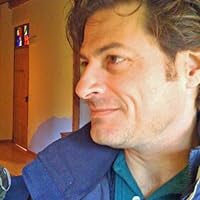
Vicente Blasco Ibáñez (January 29, 1867 – January 28, 1928) was a Spanish realist novelist writing in Spanish, a screenwriter and occasional film director.
Born in Valencia, today he is best known in the English-speaking world for his World War I novel The Four Horsemen of the Apocalypse. He is also known for his political activities.
He finished studying law, but hardly practised. He divided his time between politics, literature. He was a fan of Miguel de Cervantes Saavedra.
His life, it can be said, tells a more interesting story than his novels. He was a militant Republican partisan in his youth and founded a newspaper, El Pueblo (translated as either The Town or The People) in his hometown. The newspaper aroused so much controversy that it was brought to court many times and censored. He made many enemies and was shot and almost killed in one dispute. The bullet was caught in the clasp of his belt. He had several stormy love affairs.
He volunteered as the proofreader for the novel Noli Me Tangere, in which the Filipino patriot José Rizal expressed his contempt of the Spanish colonization of the Philippines. He traveled to Argentina in 1909 where two new cities, Nueva Valencia and Cervantes, were created. He gave conferences on historical events and Spanish literature. Tired and disgusted with government failures and inaction, Vicente Blasco Ibáñez moved to Paris, France at the beginning of World War I.
‘Mare Nostrum’ - Blasco Ibáñez´s homage to the Mediterranean Sea. This is the tale of Ulises Ferragut, plying his seaborne trade around the Mediterranean, as knowledgeable about its winds and its reefs as about the streets of his home town of Valencia.
He has a wife and son at home, but as ever with Blasco there is an exotic foreign woman in the wings, primed and ready to upset the applecart. Blasco wrote this novel in Paris between August and December 1917 at the height of the First World War, and the war provides the dramatic backdrop to the narrative. Who is this mysterious Freya? Whose side is she on - if any? Ferragut falls for Freya and pursues her around various towns in Italy, continually rebuffed and ever more determined to get what he wants.
In war, it turns out there’s plenty of money to be made from transporting materiel around the Mediterranean and, as a master of the Sea, Ferragut finds himself in great demand. Tempting though it is to unravel the story in its fullness, suffice to say that Ferragut and his family, Freya, the war, and submarines are a literally explosive mixture. There is a convulsive event that proves pivotal in the lives of all the main characters, setting off a chain of events that hurtle towards a watery conclusion.
In truth, the only ‘hurtling’ there's is takes place at the end of the novel; this has to be one of the slowest-paced narratives I’ve ever read. By the time he wrote ‘Mare Nostrum’ Blanco was at the height of his fame and it seems there was no-one around - or willing - to suggest a little culling of the word-count. Blasco was a tireless researcher and his novels are peppered with references to the latest findings - particularly scientific ones - and they take up a lot of space.
In ‘Mare Nostrum’ Blasco’s focus is the sea and he displays an impressive knowledge of the world’s oceans and their currents, the role of plankton in the ocean’s food chain, and the formation of the Mediterranean Sea itself (though I’ve no idea if it’s true that without water from the Atlantic the Mediterranean would dry out in 460 years, leaving behind a layer of salt 52 metres deep).
All this has absolutely nothing to do with the plot of course, so if you pick up ‘Mare Nostrum’ be prepared for some lengthy - though informative - digressions.
Be prepared, too, for intimations of the Age of Innocence when nature’s bounty seemed inexhaustible, and invulnerable to the depredations of human beings. ‘Father Ocean was unaware of the existence of the humans who dared to glide along his surface in their tiny vessels,’ writes Blasco. ‘He had no idea what was happening on the roof of his dwelling. His life wound on, balanced, calm, infinite, giving birth to millions upon millions of beings every millisecond’.
How we’ve turned the tables in a little over a hundred years! Blasco could write: ‘In spite of continuous attacks from fisherman, the stock of marine animals remained unscathed due its infinite procreation’. Now overfishing threatens stocks around the world, and we’ve put an end to what Blasco believed to be nature’s invulnerability.
Farewell the to the Holocene! Welcome to the Anthropocene!
Este libro es una obra de arte. Altamente recomendable para los amantes de la novela bien escrita. Su autor manifiesta una sensibilidad y erudición muy importante. El libro mantiene un interesante paralelismo entre la odisea, el guión de la novela y la experiencia vital del autor.
I guess? It's tough to even get descriptions of a lot of this dude's books in English. His best known work, Four Horsemen of the Apocalypse, isn't Beatriz's favorite - too much WWI evil German shit.
Nada malo le puedo yo objetar a Blasco, por más que se le pudiesen hacer muchas salvedades; su estilo me cautiva y su prosa es mi debilidad. Partiendo de planteamientos eminentemente naturalistas (una estirpe de marinos que nacen, crecen y mueren en el mar, donde el mar es fuente de alegrías y penurias), con un estilo claramente modernista (decripciones y planteamientos simbólicos, efectistas, impresionistas a veces), funde un motivo bélico (la primera guerra mundial) con la tradición clásica (los personajes de la «Odisea») para conseguir una novela histórica (con reivindicación política incluida) sustentada en el «fatum» y la catarsis. Drama novelado, la transgresión moral por la ayuda prestada a los alemanes desencadena una serie de fatalidades catastróficas inevitables, lentas, pero inexorables. Aun así, nada en él es previsible y todo resulta sorprendente. La mujer que lo lleva a la perdición, «femme fatale» y «matahari», trae los ecos de su destino y del de todos los que, como él, osan desafiar el orden de la naturaleza del «Mare nostrum»:
«Necesitaba verte —siguió diciendo ella—. Se trata de tu existencia. Te has colocado enfrente de un poder inmenso que puede aplastarte: tu pérdida está decidida. Eres un hombre solo, y desafías, sin saberlo, a una organización grande como el mundo. El golpe aún no ha caído sobre ti, pero caerá de un momento a otro; tal vez hoy mismo: yo no puedo saberlo todo. Por eso necesitaba verte; para que te pongas a la defensiva, para que huyas si es preciso».
Al hablar de éste se lleva valorar las obras de ambiente valenciano y desdeñar las de ámbito internacional, que son las que le hicieron famoso. Además de que el principio no puede tener más impronta local (sobre todo para la Marina antes del turismo), creo que Mare Nostrum es un libro impresionante –va de un marino, neutral como todos los españoles en la Primera Guerra Mundial hasta que una Mata Hari germana le hace dejar de serlo-, por el que el autor merecería una avenida todavía más grande que la que le han dedicado sus paisanos.
Ulises Ferragut, el protagonista de esta novela, se embarca como capitán en una nave llamada. Mare Nostrum, en su viaje por el Mediterráneo le sorprende la I Guerra Mundial, Ulises decide unirse a Francia y no le queda mas remedio que enfrentar a Alemania, en dicho enfrentamiento; conocerá los submarinos.
Freya Talberg is a German secret agent during WWI. Though outwardly cold and seemingly untouchable, Freya loses her heart to a Spanish sea captain, and as a result of her infatuation she is captured and sentenced to execution by firing squad. [Summary acquired from manybooks.net]