

What do you think?

The Very Slow Time Machine
Contents:
The Very Slow Time Machine (1978)
Thy Blood Like Milk (1973)
Sitting on a Starwood Stool (1974)
Agoraphobia, A.D. 2000 (1977)
Programmed Love Story (1974)
The Girl Who Was Art (1976)
Our Loves So Truly Meridional (1974)
Immune Dreams (1978)
My Soul Swims in a Goldfish Bowl (1978)
The Roentgen Refugees (1977)
A Time-Span to Conjure With (1978)
On Cooking the First Hero in Spring (1975)
The Event Horizon (1976)
The Very Slow Time Machine (1978)
Thy Blood Like Milk (1973)
Sitting on a Starwood Stool (1974)
Agoraphobia, A.D. 2000 (1977)
Programmed Love Story (1974)
The Girl Who Was Art (1976)
Our Loves So Truly Meridional (1974)
Immune Dreams (1978)
My Soul Swims in a Goldfish Bowl (1978)
The Roentgen Refugees (1977)
A Time-Span to Conjure With (1978)
On Cooking the First Hero in Spring (1975)
The Event Horizon (1976)
244 pages, Mass Market Paperback
First published January 1, 1979
About the author
Ian Watson
300 books130 followersLibrarian Note: There is more than one author by this name in the Goodreads database.
Ratings & Reviews
Friends & Following
Create a free account to discover what your friends think of this book!
Community Reviews
Displaying 1 - 30 of 30 reviews

May 30, 2025
Even though it's clear that Ian Watson is writing from a different universe, he still makes it nearly impossible to rate this collection with traditional stars. Brilliant, agitating, violent, masturbatory in both prose and delivery, and brimming over the cosmic rim with megatons of SF hedonism.
The Very Slow Time Machine • (1978)
-Time in reverse in this spatial oddity that tweaks notions of both time machines and martyrdom. Nearly thought this was a David Masson short with all its New World's idiosyncrasies. Solid but not as worthy of what's to come.
Thy Blood Like Milk • (1973)
-a road novelette that burns with a more ecological delirium associated outright with Horror. It's got Aztec Gods, highway blood rituals, and an intriguing premise where hunting down those vagrant rays of sunshine in the desert may bring enlightenment, or something far, far worse.
Sitting on a Starwood Stool • (1974)
-this was madness of the funhouse kind. Starwood is a rare wood from a planet Toscanini. Not only does the magical wood show beautiful undulations of time-grown orbits around a nuclear sun, it is also a powerful healing element, and this Starwood can only be found on a simple stool in the lair of the powerful Grand Monk of the Yakuza. Toss in some Vegas pyrotechnics and a steel lazer-eyed guard dog, you have a brilliant exercise in colorful disregard - a Technicolor canvas in the same vein as Delany's 'Nova'.
Agoraphobia, A.D. 2000 • (1977)
Another stunner showcases our forlorn hero, Yamaguchi, who was once a cherished astronaut but is now relegated to a one-way experiment where he must walk a 'sealed' park outside Tokyo. The long walk is not only to test his pulses under agoraphobic angst...oh, but also...he must commit suicide as well. A real twist on the Samurai code, and one of the more unique harakiri farewells ever put to the page. Near brilliant.
Programmed Love Story • (1974)
-there is more implicit brilliance here than most daring SF spanning the New Wave midlists, however this disjointed tale of two lovers with multiple personas and professional guises devolves into a blur of discombobulation and nauseating color. Prostitutes with 101 faces, lands lost in A.I. Nothing is real, nor will it ever be.
The Girl Who Was Art • (1976)
-just like 'Programmed Love Story' actually - instead of the sex industry, Ian tosses in the art industry and its inherent disdain for longevity & tradition. Women models are confined to the trends as they become the 1-dimensional muse, but only momentarily as the trend unravels into The Grid, a movement that revolutionizes the art scene yet again with total reality - aka videos of real life transmissions randomly displayed in different parts of the world. Strange and unfulfilling because you can never grasp what Watson is trying to achieve. Perhaps Ian has too many toys to play with in this one, no doubt.
Our Loves So Truly Meridional • (1975)
-two Japanese lovers are separated by an invisible fourth-dimension wall. Precious in an incongruous way, a tale whose language keeps it alive, but in the end, it's simply a perfumed fog where nothing ever quite takes shape within.
Immune Dreams • (1978)
-a scientist dreams of cancer as the harmful trigger to fourth-body evolution only to end up cerebrally wired to feral cats. Perhaps the weakest entry.
My Soul Swims in a Goldfish Bowl • (1978)
-like a piece of Russian absurdism, this short piece shows the illuminating terror felt by a man who vomits out his soul, and keeps this tadpole effigy in a fishbowl to remind himself what he has lost. An awkward dinner with friends highlights the tale with a scene that director Todd Solondz ('Happiness') would surely have had his fun with. Domestic Entropy.
The Roentgen Refugees • (1977)
-fine tale of the last scientists traveling a barren and bone-riddled harshland (Africa?), encountering members of The Church of Abandonment as they pilgrimage towards the finite realization that the Universe holds a God no longer. Exploring racial genocide and eventual extinction, Watson regains his momentum to the fullest.
A Time-Span to Conjure With • (1978)
-properly f**ked-up examination of a new race of humans....yes, our colonized humans have terraformed a new planet to become deviant Tinkerbells who fly through the grid network of time and visibility. High-tier weird fiction.
On Cooking the First Hero in Spring • (1975)
-another trek into horror territory, Watson has us encounter a race of black slug creatures who ceremoniously bind and burn their sacrificial peers to become something between harbinger-of-doom and city-park sculpture. Brilliantly pulpy with the diseased patina of golden-aged grue.
The Event Horizon • (1976)
-not the big bang to close out this stellar and wholly unique collection. Black Hole shows a sign of a sentient being living inside. On the star cruiser, Subrahmanyan Chadrasekhar, a psi engineer may be the culprit, baiting and hooking his shipmates into believing that the Starmaker is recruiting them into a new stage of blissful evolution. Cordwainer Smith definitely provided inspiration.
A diverse and important collection for those ready to slip further into demented territories of SF. Despite him relishing in messes of ideas, Watson is an underrated master, the Jackson Pollock of the New Wave. ****
The Very Slow Time Machine • (1978)
-Time in reverse in this spatial oddity that tweaks notions of both time machines and martyrdom. Nearly thought this was a David Masson short with all its New World's idiosyncrasies. Solid but not as worthy of what's to come.
Thy Blood Like Milk • (1973)
-a road novelette that burns with a more ecological delirium associated outright with Horror. It's got Aztec Gods, highway blood rituals, and an intriguing premise where hunting down those vagrant rays of sunshine in the desert may bring enlightenment, or something far, far worse.
Sitting on a Starwood Stool • (1974)
-this was madness of the funhouse kind. Starwood is a rare wood from a planet Toscanini. Not only does the magical wood show beautiful undulations of time-grown orbits around a nuclear sun, it is also a powerful healing element, and this Starwood can only be found on a simple stool in the lair of the powerful Grand Monk of the Yakuza. Toss in some Vegas pyrotechnics and a steel lazer-eyed guard dog, you have a brilliant exercise in colorful disregard - a Technicolor canvas in the same vein as Delany's 'Nova'.
Agoraphobia, A.D. 2000 • (1977)
Another stunner showcases our forlorn hero, Yamaguchi, who was once a cherished astronaut but is now relegated to a one-way experiment where he must walk a 'sealed' park outside Tokyo. The long walk is not only to test his pulses under agoraphobic angst...oh, but also...he must commit suicide as well. A real twist on the Samurai code, and one of the more unique harakiri farewells ever put to the page. Near brilliant.
Programmed Love Story • (1974)
-there is more implicit brilliance here than most daring SF spanning the New Wave midlists, however this disjointed tale of two lovers with multiple personas and professional guises devolves into a blur of discombobulation and nauseating color. Prostitutes with 101 faces, lands lost in A.I. Nothing is real, nor will it ever be.
The Girl Who Was Art • (1976)
-just like 'Programmed Love Story' actually - instead of the sex industry, Ian tosses in the art industry and its inherent disdain for longevity & tradition. Women models are confined to the trends as they become the 1-dimensional muse, but only momentarily as the trend unravels into The Grid, a movement that revolutionizes the art scene yet again with total reality - aka videos of real life transmissions randomly displayed in different parts of the world. Strange and unfulfilling because you can never grasp what Watson is trying to achieve. Perhaps Ian has too many toys to play with in this one, no doubt.
Our Loves So Truly Meridional • (1975)
-two Japanese lovers are separated by an invisible fourth-dimension wall. Precious in an incongruous way, a tale whose language keeps it alive, but in the end, it's simply a perfumed fog where nothing ever quite takes shape within.
Immune Dreams • (1978)
-a scientist dreams of cancer as the harmful trigger to fourth-body evolution only to end up cerebrally wired to feral cats. Perhaps the weakest entry.
My Soul Swims in a Goldfish Bowl • (1978)
-like a piece of Russian absurdism, this short piece shows the illuminating terror felt by a man who vomits out his soul, and keeps this tadpole effigy in a fishbowl to remind himself what he has lost. An awkward dinner with friends highlights the tale with a scene that director Todd Solondz ('Happiness') would surely have had his fun with. Domestic Entropy.
The Roentgen Refugees • (1977)
-fine tale of the last scientists traveling a barren and bone-riddled harshland (Africa?), encountering members of The Church of Abandonment as they pilgrimage towards the finite realization that the Universe holds a God no longer. Exploring racial genocide and eventual extinction, Watson regains his momentum to the fullest.
A Time-Span to Conjure With • (1978)
-properly f**ked-up examination of a new race of humans....yes, our colonized humans have terraformed a new planet to become deviant Tinkerbells who fly through the grid network of time and visibility. High-tier weird fiction.
On Cooking the First Hero in Spring • (1975)
-another trek into horror territory, Watson has us encounter a race of black slug creatures who ceremoniously bind and burn their sacrificial peers to become something between harbinger-of-doom and city-park sculpture. Brilliantly pulpy with the diseased patina of golden-aged grue.
The Event Horizon • (1976)
-not the big bang to close out this stellar and wholly unique collection. Black Hole shows a sign of a sentient being living inside. On the star cruiser, Subrahmanyan Chadrasekhar, a psi engineer may be the culprit, baiting and hooking his shipmates into believing that the Starmaker is recruiting them into a new stage of blissful evolution. Cordwainer Smith definitely provided inspiration.
A diverse and important collection for those ready to slip further into demented territories of SF. Despite him relishing in messes of ideas, Watson is an underrated master, the Jackson Pollock of the New Wave. ****

September 4, 2026

British author Ian Watson (1943-2026) provides readers with a string of fantastic explosions of imagination in this collection of thirteen short stories published between 1973 and 1978. For the purposes of my review, I will focus on my absolute favorite.
THE GIRL WHO WAS ART
We're in Japan in the near future, where young women like our narrator attend what she calls an “Image School.” There, her mind and especially her body are trained—molded, sculpted, and transformed—in order to recreate the works of a superstar artist like Tadanori Yokoo. “For I am an intelligent flower that has the privilege of arranging itself—according to T's immortal graphic designs, prescient patterns of our new Japan to which the whole world turns.”
However, a few scenes further along, she relates a conversation she overhears while posing on tiptoe with legs wide apart as “The Gratitude of Aeschylus”. The conversation is between an art connoisseur and a big, burly corporate tycoon, and it amounts to a nightmare: the form of art she has sacrificed her life for will quickly be discarded and replaced by the latest fad—sprayed plastic on the street that's peeled off in squares and then exhibited. Thus comes the inevitable, the ultimate insult in this finicky futuristic art world: “My Master had put me out with the trash.”
Ian Watson has crafted a deeply unsettling story that raises a number of critical questions relating to aesthetics and the philosophy of art. Chief among their number:
Being and Art
Can a human being become a work of art without losing their humanity? The Image School appears to erase the boundary between artistic material and living subject. What happens if a young lady's body is weakened, damaged, or even crippled by such performance art? What dangers lurk when someone is used and viewed as an art object rather than a person?
Ownership and Autonomy
Who possesses the artwork when the artwork is a person? While Tadanori Yokoo supplies the designs, and the Image School shapes her, it is the patrons and the general public who consume the resulting spectacle. Yet, she is the one who supplies her body, intelligence, discipline, pain, and ultimately her life. So, who can claim ownership—and to what extent? Watson turns the old question of artistic ownership into a full-blown nightmare.
The Value of a Work of Art
Does artistic value reside in the artwork itself, or is it manufactured by fashion, institutions, critics, collectors, and markets? This question is central to Watson's tale. Nothing intrinsic to the narrator has changed. Yesterday, she represented the pinnacle of sophisticated art; tomorrow, sprayed plastic becomes fashionable, and she will be considered nothing more than trash. Watson asks us to ponder to what extent aesthetic value can endure when novelty, newness, and the current fad become the supreme criteria.
Commercial Value Rules
What happens when the distinction between aesthetic value and commercial value collapses? The corporate tycoon in the tale takes on a special significance here. Ideally, art belongs to a realm of beauty, imagination, transformation, and perhaps even transcendence. But in the future Watson imagines, artistic movements behave like ordinary consumer products with increasingly short life cycles. The young narrator discovers the horrifying consequence of being both a masterpiece and merchandise: obsolete art becomes obsolete merchandise. She is relegated to the trash heap.
The Self in Self-Transformation
Does self-transformation become worthless if the ideal goal has been supplied by someone else? The narrator proudly calls herself an “intelligent flower” capable of arranging herself. She isn't simply passive material; she participates willingly and intelligently in her own aesthetic transformation. But her chosen forms are not her own; they are the forms created by her designers. This raises the critical question: Is she realizing herself—or bringing about her own self-erasure?
On the Standard of Taste
If our tastes in art have been created, manipulated, and engineered by society, are they really ours? The narrator doesn't merely submit to the Image School; she has internalized the school's values so completely that she experiences her transformation as a privilege and a source of fulfillment. Watson therefore pushes beyond mere coercion into something more philosophically troubling: What if power works most effectively not by forcing us to do what we dislike, but by teaching us to desire what it wants from us?
Art and Ethics
We usually grant artists enormous latitude when they pursue their artistic vision. But how much latitude should we give designers like Tadanori Yokoo and institutions like the Image School? Such entities are not dealing with oil, charcoal, or marble, but with human bodies. It cannot be stressed enough: What if their practices require the permanent disfigurement of the bodies of young girls? Even if those young girls are entirely willing to go along, where do we draw the line?
The Girl Who Was Art is an extraordinary tale that forces us to explore what it means to participate, on any and all levels, in the world of art and aesthetic experience.
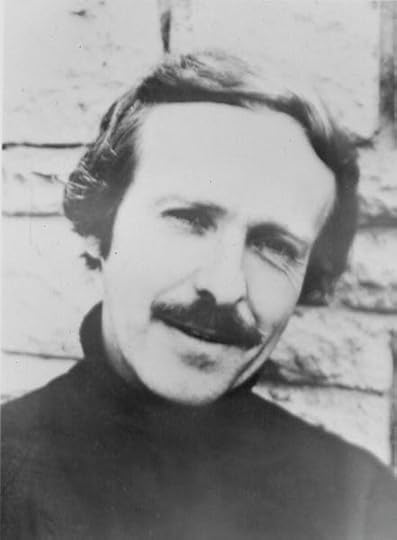
British author Ian Watson, 1943-2026

June 7, 2011
This book is full of the sort of mind-bending ideas and narrative experiments that I like best in my science fiction - Watson is very much writing in a British SF tradition, that of Brian Aldiss and JG Ballard I'd say, but his vision is his own. Much as I loved the caliber of Watson's conceits (a mind-meld with an entity within a black hole whose idea of reality is an inversion of our own, a visit to an Earth where impermeable barriers divide various regions along meridional lines, a sojourn among aliens who extend further in time than we do - and what exactly that could mean - and more) and his formal freedom (several of these stories do not deliver conventional narratives but almost fragmentary vignettes), I disliked aspects of his treatment of gender and race. Most female characters are sexualised and people are often characterised a little too strongly according to race or ethnicity.

January 31, 2013
‘The Very Slow Time Machine arrives on Earth in 1985. Its sole inhabitant is old and mad. Soon it becomes apparent that for him, time is going slowly backward. With every day, he is getting younger and saner. The world, and its whole concept of time, science and philosophy, must wait for him to speak. But while the world waits, it changes…’
Blurb from the 1981 Granada paperback edition
There aren’t many authors who master the art of short story writing, but Watson is definitely in there with the greats. I remember reading a couple of these stories in their original publications and it is to Watson’s credit that the memory of the essence of the tales still remains. Watson is also one of the most inventive and creative writers around and a more diverse collection of ideas and subject matter from one author will be a tough order.
He is also particularly prolific, and has several collections of short stories available. They are all highly recommended.
Ian Watson exhibits a prolificacy and breadth and depth in theme, subject and setting in his short stories, something unusual in SF writers since their short forms on the whole tend to fall within certain parameters.
Furthermore, each story is exquisitely constructed, its brevity belying the wealth of concepts employed.
The title piece for instance examines not only issues of causality and paradox, but also looks at religion’s relationship with the media.
The stories here are a selection from the Nineteen Seventies, covering a period of about five years.
The Very Slow Time Machine (Anticipations – Christopher Priest (Ed) 1978)
Thy Blood Like Milk (New Worlds Quarterly 1973)
Sitting on a Starwood Stool (Science Fiction Monthly 1974)
Agoraphobia AD 2000 (Andromeda 2 – Peter Weston (Ed) 1977)
Programmed Love Story (Transatlantic Review 1974)
The Girl Who Was Art (Ambit 1976)
Our Loves So Truly Meridional (Science Fiction Monthly 1974)
Immune Dreams (Pulsar 1 – George Hay (Ed) 1978)
My Soul Swims in a Goldfish Bowl (Magazine of F&SF 1978)
The Roentgen Refugees (New Writings in SF #30 – Bulmer (Ed) 1978)
A Time Span to Conjure With (Andromeda 3 – Peter Weston (Ed) 1978)
On Cooking The First Hero in Spring (Science Fiction Monthly 1975)
Event Horizon (Faster Than Light; an original anthology about interstellar travel – Jack Dann and George Zebrowski (Eds) 1976)
The Very Slow Time Machine
A beautifully crafted piece where the themes are paradox and causality. A capsule appears from nowhere in 1985 containing a mad and incoherent old man whose life appears to be running backwards. The capsule appears to have been sent back in time from the near future and is impregnable, but the highly efficient recycling system inside the allows its occupant to sustain himself. As he grows younger and saner he begins to deliver a message.
Over the years the time-traveller begins to assume a Messianic status with the general public.
Ironically it would appear that the media storm around the capsule and its passenger has ensured that we build such a ship and send it back in time and has also ensured that that the occupant – who has grown up somewhere outside the capsule knowing of his destiny – will be compelled to come to the launch site, believing that he is destined to be God.
Thy Blood Like Milk
An ecological tale in which gangs roam the highways searching for sunspots; moments when the sun breaks through a permanent cloud layer caused by pollution and global warming. One of the leaders of the gang, who has revived the Aztec cult of the sun god, is being punished for a death he caused on the road . Having his blood milked for hospital use is paying his penance. The story however focuses on his relationship with his nurse who happens to be the girlfriend of the man he killed.
Sitting on a Starwood Stool
Watson is adept in packing several extraordinary concepts into a deceptively short story. Every 1.23 years aliens appear at a certain point in space to trade a few small cuts of the rare Starwood for valuable products from Earth; a Botticelli or even a group of humans.
Starwood is the product of trees grown on an asteroid with an eccentric orbit about its sun, and absorbs the energies of trees. When turned into something such as a stool, it will leak its stored star energy into whomever it comes into contact with, rejuvenating or curing the subject.
A cancer victim hatches a plot to steal the stool form a Yakuza boss, but things do not go according to plan.
Agoraphobia AD 2000
Watson again demonstrates his fascination with Japanese culture in this surreal tale in which an astronaut is required to enter a virtual environment in order to commit hari kiri.
Programmed Love Story
A highly stylised Japanese tale of a businessman who is requested to abandon his bride as she is rather too complaint to be a corporate wife. When she becomes a hostess at the Queen Bee they meet again, but in her work she has been endowed with the persona of an aggressive and ruthless Imperial Consort, and it is this with which he falls in love,
Beautifully written and beautifully structured.
The Girl Who Was Art
A story which examines Art and Japanese culture in which a young girl undergoes muscle training in order to reproduce three-dimensionally the work of a twentieth century photographer in tableaux forms. But Art, it appears, is fickle and transient.
Our Loves So Truly Meridional
The world becomes divided into segments along the meridians by immense glass-like forcefield walls. Two people in separate segments attempt to reach the poles to find out what happens at the nexus of the barriers. It’s in the detail where Watson excels, envisioning societies where a globe of the world has been reduced to a single bowlike segment with a steel string connecting the poles.
Immune Dreams
A man who may or may not be suffering from cancer believes that dreams are the body’s way of correcting errant DNA, He elects to become part of an experiment in which the part of the brain which suppresses volitional control during sleep is turned off.
My Soul Swims in a Goldfish Bowl
A rather weak tale in which a man is convinced by his wife that the amoebic creature he has coughed up is his soul, and keeps it alive in a goldfish bowl
The Roentgen Refugees
Following the unexpected supernova of Sirius, the world is blasted by the resultant flux of Gamma radiation and only a fraction of the world’s population are saved, mainly in the Western World. Set in South Africa (and written during the time of apartheid) it’s a philosophical piece about third world issues, faith and racism on various levels. Like most of Watson’s short fiction it is brief, yet complex.
A Time Span to Conjure With
A scheduled inspection of a young colony world finds the colonists childless and oddly philosophical. It appears that an indigenous species (spoken of as ‘fairies’ due to their apparent transparency and elusiveness) exist in Time in a different sense to ourselves.
The aliens appear to be very alien, made more so by the fact that Watson keeps them at arm’s length. We see them briefly on the page, but realise through the narrative that they are always around.
On Cooking The First Hero in Spring
Three human anthropologists examine an alien tribe who show little signs of intelligence and seemingly have only one word in their vocabulary, although a Buddhist member of the team looks at them from a different perspective.
Initially it is thought that the creatures had built an aisle of statuary, depicting themselves or their ancestors, but it transpires that every ‘dawn’ one of their number is chosen to be baked alive in a shell of clay, and then put in position among the statues forming a strange highway to nowhere.
Event Horizon
Maybe the least accessible of the stories, this features a black hole which may or may not have a mind trapped with it, and some investigators, who achieve telepathic union by the use of drugs and tantric sex. It’s very much a tale of its time and seems – unlike the other pieces – oddly dated.
Blurb from the 1981 Granada paperback edition
There aren’t many authors who master the art of short story writing, but Watson is definitely in there with the greats. I remember reading a couple of these stories in their original publications and it is to Watson’s credit that the memory of the essence of the tales still remains. Watson is also one of the most inventive and creative writers around and a more diverse collection of ideas and subject matter from one author will be a tough order.
He is also particularly prolific, and has several collections of short stories available. They are all highly recommended.
Ian Watson exhibits a prolificacy and breadth and depth in theme, subject and setting in his short stories, something unusual in SF writers since their short forms on the whole tend to fall within certain parameters.
Furthermore, each story is exquisitely constructed, its brevity belying the wealth of concepts employed.
The title piece for instance examines not only issues of causality and paradox, but also looks at religion’s relationship with the media.
The stories here are a selection from the Nineteen Seventies, covering a period of about five years.
The Very Slow Time Machine (Anticipations – Christopher Priest (Ed) 1978)
Thy Blood Like Milk (New Worlds Quarterly 1973)
Sitting on a Starwood Stool (Science Fiction Monthly 1974)
Agoraphobia AD 2000 (Andromeda 2 – Peter Weston (Ed) 1977)
Programmed Love Story (Transatlantic Review 1974)
The Girl Who Was Art (Ambit 1976)
Our Loves So Truly Meridional (Science Fiction Monthly 1974)
Immune Dreams (Pulsar 1 – George Hay (Ed) 1978)
My Soul Swims in a Goldfish Bowl (Magazine of F&SF 1978)
The Roentgen Refugees (New Writings in SF #30 – Bulmer (Ed) 1978)
A Time Span to Conjure With (Andromeda 3 – Peter Weston (Ed) 1978)
On Cooking The First Hero in Spring (Science Fiction Monthly 1975)
Event Horizon (Faster Than Light; an original anthology about interstellar travel – Jack Dann and George Zebrowski (Eds) 1976)
The Very Slow Time Machine
A beautifully crafted piece where the themes are paradox and causality. A capsule appears from nowhere in 1985 containing a mad and incoherent old man whose life appears to be running backwards. The capsule appears to have been sent back in time from the near future and is impregnable, but the highly efficient recycling system inside the allows its occupant to sustain himself. As he grows younger and saner he begins to deliver a message.
Over the years the time-traveller begins to assume a Messianic status with the general public.
Ironically it would appear that the media storm around the capsule and its passenger has ensured that we build such a ship and send it back in time and has also ensured that that the occupant – who has grown up somewhere outside the capsule knowing of his destiny – will be compelled to come to the launch site, believing that he is destined to be God.
Thy Blood Like Milk
An ecological tale in which gangs roam the highways searching for sunspots; moments when the sun breaks through a permanent cloud layer caused by pollution and global warming. One of the leaders of the gang, who has revived the Aztec cult of the sun god, is being punished for a death he caused on the road . Having his blood milked for hospital use is paying his penance. The story however focuses on his relationship with his nurse who happens to be the girlfriend of the man he killed.
Sitting on a Starwood Stool
Watson is adept in packing several extraordinary concepts into a deceptively short story. Every 1.23 years aliens appear at a certain point in space to trade a few small cuts of the rare Starwood for valuable products from Earth; a Botticelli or even a group of humans.
Starwood is the product of trees grown on an asteroid with an eccentric orbit about its sun, and absorbs the energies of trees. When turned into something such as a stool, it will leak its stored star energy into whomever it comes into contact with, rejuvenating or curing the subject.
A cancer victim hatches a plot to steal the stool form a Yakuza boss, but things do not go according to plan.
Agoraphobia AD 2000
Watson again demonstrates his fascination with Japanese culture in this surreal tale in which an astronaut is required to enter a virtual environment in order to commit hari kiri.
Programmed Love Story
A highly stylised Japanese tale of a businessman who is requested to abandon his bride as she is rather too complaint to be a corporate wife. When she becomes a hostess at the Queen Bee they meet again, but in her work she has been endowed with the persona of an aggressive and ruthless Imperial Consort, and it is this with which he falls in love,
Beautifully written and beautifully structured.
The Girl Who Was Art
A story which examines Art and Japanese culture in which a young girl undergoes muscle training in order to reproduce three-dimensionally the work of a twentieth century photographer in tableaux forms. But Art, it appears, is fickle and transient.
Our Loves So Truly Meridional
The world becomes divided into segments along the meridians by immense glass-like forcefield walls. Two people in separate segments attempt to reach the poles to find out what happens at the nexus of the barriers. It’s in the detail where Watson excels, envisioning societies where a globe of the world has been reduced to a single bowlike segment with a steel string connecting the poles.
Immune Dreams
A man who may or may not be suffering from cancer believes that dreams are the body’s way of correcting errant DNA, He elects to become part of an experiment in which the part of the brain which suppresses volitional control during sleep is turned off.
My Soul Swims in a Goldfish Bowl
A rather weak tale in which a man is convinced by his wife that the amoebic creature he has coughed up is his soul, and keeps it alive in a goldfish bowl
The Roentgen Refugees
Following the unexpected supernova of Sirius, the world is blasted by the resultant flux of Gamma radiation and only a fraction of the world’s population are saved, mainly in the Western World. Set in South Africa (and written during the time of apartheid) it’s a philosophical piece about third world issues, faith and racism on various levels. Like most of Watson’s short fiction it is brief, yet complex.
A Time Span to Conjure With
A scheduled inspection of a young colony world finds the colonists childless and oddly philosophical. It appears that an indigenous species (spoken of as ‘fairies’ due to their apparent transparency and elusiveness) exist in Time in a different sense to ourselves.
The aliens appear to be very alien, made more so by the fact that Watson keeps them at arm’s length. We see them briefly on the page, but realise through the narrative that they are always around.
On Cooking The First Hero in Spring
Three human anthropologists examine an alien tribe who show little signs of intelligence and seemingly have only one word in their vocabulary, although a Buddhist member of the team looks at them from a different perspective.
Initially it is thought that the creatures had built an aisle of statuary, depicting themselves or their ancestors, but it transpires that every ‘dawn’ one of their number is chosen to be baked alive in a shell of clay, and then put in position among the statues forming a strange highway to nowhere.
Event Horizon
Maybe the least accessible of the stories, this features a black hole which may or may not have a mind trapped with it, and some investigators, who achieve telepathic union by the use of drugs and tantric sex. It’s very much a tale of its time and seems – unlike the other pieces – oddly dated.

April 17, 2021
The title track was the best, with The Roentgen Refugees being next only because of the bleh ending. There were quite a few of the stories that had good ideas at the core, but my taste seems at odds with Watson's aesthetic and I generally disliked his endings which mostly just seemed to fizzle out or have some kind of pseudo-profound endcap. He leans towards an artsy-fartsy style, and a lot of his speculation is non-science mysticism, which tends to be my least favorite kind of SF. I'm on the fence between a 2 and 3 stars, but since I round up, and he is a competent writer I'll go with the latter. This one is going straight to the give-away pile.

June 18, 2011
As usual with Ian Watson, a very uneven mixture. Some of the stories are instantly forgettable, but every now and then he gets it right and produces a truly great line:
Marina, whose beating heart I held within my hand. Thy blood like milk for me has flowed, hot as iron from a furnace!

July 26, 2026
Watson clearly has a talent for ideas, and each story here is centred on a stunning novum that he worries at. The writing is often experimental, trying out different forms, so there’s considerable variation in style across the collection. He starts with three hard-hitting longer-form stories that really demonstrate his skill, but as we segue into shorter form work, this combination of radical ideas and narrative experimentation often misses the mark – trying to cram too much into the word count to make a philosophical point rather than tell a story. His endings can seem particularly abrupt, leaving the intricate architecture of his mind-bending ideas hanging rather than resolved.
There’s also an easy mixing of science and mysticism across the stories which some might find undernourishing – more episodic Twilight Zone than robust science fiction. His themes sometimes veer into race and female sexualisation, which some may find uncomfortable and dated, and others may consider the vanguard of New Wave’s expansion of boundaries.
It’s a collection I mostly enjoyed, particularly for his creativity, but my advice would be to stick to his longer form.
The Very Slow Time Machine ⭐⭐⭐⭐⭐
A time machine appears inside which time is reversed. What will happen as we catch up with the point of its creation? Along the way, society bends around its presence; a religion is fomented. It's a very clever idea, executed well. A little mystical at the end, but leaves you wanting to know more.
Thy Blood Like Milk ⭐⭐⭐⭐⭐
Rich Flowery prose for a dead world. Road warriors chase glimpses of the sun in a permanently overcast world. Reminiscent of modern twister chasers. Where sunlight touches, nature blooms in a panicked frenzy. The rest of society moves between domes linked by opaque self driving cars, never going outside.
Sitting On a Starwood Stool ⭐⭐⭐⭐⭐
A miraculous but rare wood that can cure all ills, is the target of a cancerous thief. But the theft goes wrong and he comes to regret his mendacity.
Agoraphobia AD 2000 ⭐⭐⭐
A man enters the last natural enclave in a sprawling metropolis to commit ritual Hari Kari. Not sure what this one was doing.
Programmed Love Story ⭐⭐⭐
A divorced man rediscovers his ex-wife in a gentleman's club that specialises in programmed personalities.
The Girl Who Was Art⭐⭐
I wasn’t sure what Watson was aiming for here. Is it a meditation on art? The treatment of women in Japan? The commodification of the body as performance?
Our Loves So Truly Meridional ⭐⭐⭐⭐
The world is segmented by impassable barriers – a very clever setting for a tale of love. An allegorical take on the arbitrary lines of culture, politics, and ideology that divide us in conflict. Alliances are reformed; individual relationships are broken. Metaphorical communication breaks down across the barriers.
Immune Dreams ⭐⭐⭐
A scientist believes that the secret to cancer is revealed in his dreams and goes to extreme lengths to prove it.
My Soul Swims in a Goldfish Bowl ⭐
A guy coughs up his protoplasmic soul, keeps it in a fish bowl.
The Roentgen Refugees ⭐
Sirius goes nova, killing everyone who didn’t have a bunker, leaving only the white rich to inherit a decimated earth. A religious crisis ensues – why were the worst of humanity saved?
A Time-Span to Conjure With ⭐⭐⭐⭐
Colonisation efforts run up against quantum mechanical natives that exist in a superposition of time.
On Cooking the First Hero in Spring ⭐⭐
Explorers discover a world where the natives only have one word, and exhibit the performative appearance of civilisation and culture seemingly without intelligence.
The Event Horizon ⭐
Starship mediums use tantric sex to communicate across distance. Circling a black hole, contact is made. But with what?
There’s also an easy mixing of science and mysticism across the stories which some might find undernourishing – more episodic Twilight Zone than robust science fiction. His themes sometimes veer into race and female sexualisation, which some may find uncomfortable and dated, and others may consider the vanguard of New Wave’s expansion of boundaries.
It’s a collection I mostly enjoyed, particularly for his creativity, but my advice would be to stick to his longer form.
The Very Slow Time Machine ⭐⭐⭐⭐⭐
A time machine appears inside which time is reversed. What will happen as we catch up with the point of its creation? Along the way, society bends around its presence; a religion is fomented. It's a very clever idea, executed well. A little mystical at the end, but leaves you wanting to know more.
Thy Blood Like Milk ⭐⭐⭐⭐⭐
Rich Flowery prose for a dead world. Road warriors chase glimpses of the sun in a permanently overcast world. Reminiscent of modern twister chasers. Where sunlight touches, nature blooms in a panicked frenzy. The rest of society moves between domes linked by opaque self driving cars, never going outside.
Sitting On a Starwood Stool ⭐⭐⭐⭐⭐
A miraculous but rare wood that can cure all ills, is the target of a cancerous thief. But the theft goes wrong and he comes to regret his mendacity.
Agoraphobia AD 2000 ⭐⭐⭐
A man enters the last natural enclave in a sprawling metropolis to commit ritual Hari Kari. Not sure what this one was doing.
Programmed Love Story ⭐⭐⭐
A divorced man rediscovers his ex-wife in a gentleman's club that specialises in programmed personalities.
The Girl Who Was Art⭐⭐
I wasn’t sure what Watson was aiming for here. Is it a meditation on art? The treatment of women in Japan? The commodification of the body as performance?
Our Loves So Truly Meridional ⭐⭐⭐⭐
The world is segmented by impassable barriers – a very clever setting for a tale of love. An allegorical take on the arbitrary lines of culture, politics, and ideology that divide us in conflict. Alliances are reformed; individual relationships are broken. Metaphorical communication breaks down across the barriers.
Immune Dreams ⭐⭐⭐
A scientist believes that the secret to cancer is revealed in his dreams and goes to extreme lengths to prove it.
My Soul Swims in a Goldfish Bowl ⭐
A guy coughs up his protoplasmic soul, keeps it in a fish bowl.
The Roentgen Refugees ⭐
Sirius goes nova, killing everyone who didn’t have a bunker, leaving only the white rich to inherit a decimated earth. A religious crisis ensues – why were the worst of humanity saved?
A Time-Span to Conjure With ⭐⭐⭐⭐
Colonisation efforts run up against quantum mechanical natives that exist in a superposition of time.
On Cooking the First Hero in Spring ⭐⭐
Explorers discover a world where the natives only have one word, and exhibit the performative appearance of civilisation and culture seemingly without intelligence.
The Event Horizon ⭐
Starship mediums use tantric sex to communicate across distance. Circling a black hole, contact is made. But with what?

January 9, 2014
Above-average collection by an above-average writer. The title story is a brilliantly simple creation: What If a time machine traveled to the past in real time? i.e. For every one second that we go forward a time machine from the future moves backward one-second-at-a-time. If someone from 10 years in the future starts moving backwards, we will meet 5 years from now; it will be 5 years in the past for that time traveler, yet he will be 5 years older than when he began his journey.
Simple, eh?
Simple, eh?

December 27, 2011
Almost every tale in this collection has a great science fiction premise but sadly more than half them peter out into pointless piffle. There are one or two real gems of stories here though, particularly ‘A Time-Span to Conjure With’.

January 10, 2021
Antologia di uno scrittore di cui ricordavo poco o nulla, ma decisamente interessante per le idee che porta.
Il racconto che dà il titolo all'antologia è una visione un poco diversa di una macchina del tempo, interessante ma non il migliore.
Secondo me i racconti migliori sono il distopico "Il Dio Sole", un horror SF niente male, e "Lo Sgabello di Legnon di Stella" che è molto incisivo. Discreti anche gli altri racconti, ma nulla di memorabile.
3 stelle.
Il racconto che dà il titolo all'antologia è una visione un poco diversa di una macchina del tempo, interessante ma non il migliore.
Secondo me i racconti migliori sono il distopico "Il Dio Sole", un horror SF niente male, e "Lo Sgabello di Legnon di Stella" che è molto incisivo. Discreti anche gli altri racconti, ma nulla di memorabile.
3 stelle.

May 8, 2021
segnalo che mancano due racconti della raccolta originale
July 14, 2020
Full review: https://sciencefictionruminations.com...
"My first exposure to Ian Watson’s extensive SF catalog could not have been more impressive. The Very Slow Time Machine (1979) is up there with Robert Sheckley’s Store of Infinity (1960) and J. G. Ballard’s Billenium (1962) as the best overall collection of stories that I have encountered in the history of this site.
The collection is filled with narrative experimentation (“Programmed Loved Story,” “Agoraphobia
[...]"
"My first exposure to Ian Watson’s extensive SF catalog could not have been more impressive. The Very Slow Time Machine (1979) is up there with Robert Sheckley’s Store of Infinity (1960) and J. G. Ballard’s Billenium (1962) as the best overall collection of stories that I have encountered in the history of this site.
The collection is filled with narrative experimentation (“Programmed Loved Story,” “Agoraphobia
[...]"

October 31, 2016
More prose poems than stories with narrative drive. China Mielville does it better.

August 23, 2021
I enjoyed The Very Slow Time Machine the most. The method of time travel is ludicrous and I totally dig it.
June 23, 2019
I picked this up in a used bookshop due to the cool title alone, with no idea who Ian Watson is. Turns out he's a British author who did most of his work in the 1970s and 80s, whence these stories come from.
I'd say he's a bit of a throwback, the stories feel a little more like classic 1950s than this later date, at least to me.
The title story itself is a clever idea and well told -- and by coincidence, the year 2019 figures prominently. Of the others, I liked about half. A couple of them feature Japanese characters or are set in Japan itself, and are pretty accurate renditions, a pleasant surprise. Turns out Watson lived in Japan for some years, beginning in the late 1960s, as I learned from Google's preview of the The Book of Ian Watson. One of the other stories features Native Americans, and I found it such a muddle that I gave up and went on to the next story.
So, a worthy pastime, but not life-changing.
(read dates are approximate)
I'd say he's a bit of a throwback, the stories feel a little more like classic 1950s than this later date, at least to me.
The title story itself is a clever idea and well told -- and by coincidence, the year 2019 figures prominently. Of the others, I liked about half. A couple of them feature Japanese characters or are set in Japan itself, and are pretty accurate renditions, a pleasant surprise. Turns out Watson lived in Japan for some years, beginning in the late 1960s, as I learned from Google's preview of the The Book of Ian Watson. One of the other stories features Native Americans, and I found it such a muddle that I gave up and went on to the next story.
So, a worthy pastime, but not life-changing.
(read dates are approximate)

October 30, 2020
Devo ammettere di non conoscere bene Ian Watson e di aver preso il libro affascinato dalla solita copertina surreale di karel thole e dal curioso titolo, perfettamente in linea con altri dell' "urania" dell'era fruttero & lucentini.
Però devo anche ammettere che questa "cronomacchina molto lenta" non mi ha colpito allieno: talvolta mi arriva il ricordo dei racconti di James Ballard, con il quale Watson condivide un certo tono angosciante, ma altre volte neppure quello, e i racconti scorrono veloci senza però soddisfarmi.
Non intendo dire che siano brutti (anzi "l'occhio della rana" è ottimo), ma mi han lasciato poco.
Comunque un esempio della fantascienza della seconda metà dei 70s, utile per capire meglio l'evoluzione del genere.
Però devo anche ammettere che questa "cronomacchina molto lenta" non mi ha colpito allieno: talvolta mi arriva il ricordo dei racconti di James Ballard, con il quale Watson condivide un certo tono angosciante, ma altre volte neppure quello, e i racconti scorrono veloci senza però soddisfarmi.
Non intendo dire che siano brutti (anzi "l'occhio della rana" è ottimo), ma mi han lasciato poco.
Comunque un esempio della fantascienza della seconda metà dei 70s, utile per capire meglio l'evoluzione del genere.
May 7, 2025
The title choice of The Very Slow Time Machine is really interesting. You might call it anti-marketing: it looks so strikingly boring and understated on the shelf that you have to know more.
These stories are dark, weird, sci-fi suffused with "DUDE, WEED!" spirituality/philosophy. The last story in particular (The Event Horizon) goes extra hard on this and adds weird sex stuff to the mix. I was surprised to find multiple stories from the mid-70s here with strong cyberpunk elements (Sitting on a Starwood Stool, Programmed Love Story, The Girl Who Was Art). These and the hyper-grimdark Thy Blood Like Milk (don't read if you're a fainter) were the highlights for me.
These stories are dark, weird, sci-fi suffused with "DUDE, WEED!" spirituality/philosophy. The last story in particular (The Event Horizon) goes extra hard on this and adds weird sex stuff to the mix. I was surprised to find multiple stories from the mid-70s here with strong cyberpunk elements (Sitting on a Starwood Stool, Programmed Love Story, The Girl Who Was Art). These and the hyper-grimdark Thy Blood Like Milk (don't read if you're a fainter) were the highlights for me.

July 3, 2021
I was so excited when I found this at a bargain bin sale! It had a great cover, had "Time Machine" in the title, and it said on the back that Ian Watson was the British SF Association's Best Writer of the Year!
While I found the book's titular first story to have a great set up, the lack of a real ending was even more disappointing due to its early promise. It was all downhill from there for me, unfortunately. For me, these short stories contained a few interesting ideas, barely fleshed out, never seeming finished, and played out by one-dimensional characters.
Not recommended.
While I found the book's titular first story to have a great set up, the lack of a real ending was even more disappointing due to its early promise. It was all downhill from there for me, unfortunately. For me, these short stories contained a few interesting ideas, barely fleshed out, never seeming finished, and played out by one-dimensional characters.
Not recommended.

Read
January 1, 2020Reading my "W"s short fiction list, I only read one story here (not in a copy, but in file form off the internet).
In "My Soul Swims In A Goldfish Bowl," a man coughs up a little blob of moving jelly that his wife convinces him is actually his soul - so he puts it in a goldfish bowl and keeps watch over it. A bit of magical realism, perhaps intended as critical of modern, reductive, materialistic approaches to the spiritual?
In "My Soul Swims In A Goldfish Bowl," a man coughs up a little blob of moving jelly that his wife convinces him is actually his soul - so he puts it in a goldfish bowl and keeps watch over it. A bit of magical realism, perhaps intended as critical of modern, reductive, materialistic approaches to the spiritual?

September 17, 2018
Decidedly unreadable.

December 24, 2021
-Gregory Kerkman
June 28, 2025
I read half of this. The initial story was good but the ones that followed not so much.

March 6, 2026
A nice mix of short stories with 1 or 2 great ones but I found the last story dragged quite a lot.

March 25, 2017
This was a very interesting and thought-provoking set of sci-fi short stories! I gave it a 4 though I'd probably normally give it a 3.5 (if that were an option). The writing throughout was very good, a collection of creative prose more often than straight-forward narrative. Each story was unique as well, at least unique within the book, but very often also unique from any other sci-fi idea or story I've ever heard of. Some of this uniqueness was excellent (such as the title story - "The Very Slow Time Machine") and some of it was just plain bizarre and might put off some readers. Still, I love exploring new ideas and this definitely satisfied my desire for that.
This was my principle enjoyment of the book - the unique ideas and areas explored rather than the quality of plot or narrative. A few of the stories had interesting enough plots that it kept me excited (though for some people the style of prose in some of the stories might make it hard for you to enjoy the plot), but most stories were intriguing just to see how the principle idea would be fleshed out. Only a few of these stories didn't really seem to amount to anything much at all, and even then just to see how the idea would be explored kept me interested.
If you're someone who likes exploring unique ideas and who enjoys creative takes on prose, than this would be a great book for you. If you like more straight-forward narrative, good plot, and relatable characters and subject matter, then you would definitely prefer to avoid this book.
This was my principle enjoyment of the book - the unique ideas and areas explored rather than the quality of plot or narrative. A few of the stories had interesting enough plots that it kept me excited (though for some people the style of prose in some of the stories might make it hard for you to enjoy the plot), but most stories were intriguing just to see how the principle idea would be fleshed out. Only a few of these stories didn't really seem to amount to anything much at all, and even then just to see how the idea would be explored kept me interested.
If you're someone who likes exploring unique ideas and who enjoys creative takes on prose, than this would be a great book for you. If you like more straight-forward narrative, good plot, and relatable characters and subject matter, then you would definitely prefer to avoid this book.

April 29, 2015
The ideas in the collection are tremendous and even though written in the late 70s still are relevant. Watson is not telling great stories though but that maybe due to the short story format. I have never been a lover of the short story, particularly as I find it hard not to scan. Many have enjoyed this collection but it would have been nice to have seen a few of the ideas developed over longer arcs. Oh well some ideas to ponder.

April 2, 2014
This is some great science fiction, if you can put it in context (published in 1979). There's something for everyone here, whether you like tantric psychics exploring black holes, post-apocalyptic sun chasers, a world divided by an alien glass dome (sound familiar), human pieces of art, or, of course, a time traveller who is definitely moving slower than you might expect.

September 7, 2008
Collection of short stories from 1973-1978: sci-fi with sex, race and ideas as strong themes.
It's been a while since I've found a new-to-me sci-fi author that genuinely excited me; this is it.
It's been a while since I've found a new-to-me sci-fi author that genuinely excited me; this is it.
July 18, 2016
Worth it just for the title story , which I read and re read 3 times to get my mind round the concept, brilliant .

November 9, 2013
Anthology of stories.
June 27, 2018
Tante idee. Peccato che non abbiano tradotto in italiano le altre raccolte di racconti.
Displaying 1 - 30 of 30 reviews