Jump to ratings and reviews
Rate this book

Methodology in the Social Sciences

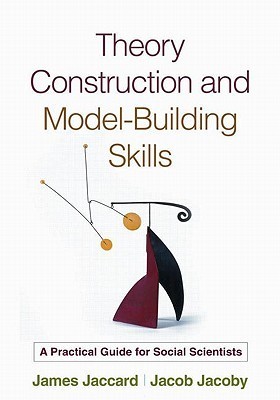
Theory Construction and Model-Building Skills: A Practical Guide for Social Scientists

Rate this book

Meeting a crucial need for graduate students and newly minted researchers, this innovative text provides hands-on tools for generating ideas and translating them into formal theories. It is illustrated with numerous practical examples drawn from multiple social science disciplines and research settings. The authors offer clear guidance for defining constructs, thinking through relationships and processes that link constructs, and deriving new theoretical models (or building on existing ones) based on those relationships. Step by step, they show readers how to use causal analysis, mathematical modeling, simulations, and grounded and emergent approaches to theory construction. A chapter on writing about theories contains invaluable advice on crafting effective papers and grant applications.


Useful pedagogical features in every chapter include:

*Application exercises and concept exercises.

*Lists of key terms and engaging topical boxes.

*Annotated suggestions for further reading.

391 pages, Paperback

First published December 30, 2009

23 people are currently reading
84 people want to read

About the author

James Jaccard

18 books

Ratings & Reviews

What do you think?
Rate this book

Friends & Following

Create a free account to discover what your friends think of this book!

Community Reviews

5 stars
23 (45%)
4 stars
13 (25%)
3 stars
13 (25%)
2 stars
1 (1%)
1 star
1 (1%)
Displaying 1 - 6 of 6 reviews
Profile Image for Eren Buğlalılar.
350 reviews166 followers
October 8, 2019
Teorisiz sosyal bilimci kalmasın diye düşünülerek yazılmış bir kitap. Neden ve sonuç ilişkilerinin türleri nelerdir, bu ilişkiler nasıl farklı biçimlerde kurulabilir? Nasıl hipotez oluşturulur, bir önerme nasıl ispatlanır? Henüz bir önermeniz yok ise, 'grounded theory' kullanarak çalışacağınız alanı nasıl tanıyabilir, pilot çalışmalar yoluyla nasıl hipoteze ve ispata ilerlersiniz? Bir önermeyi ispatlıyorum sanırken aslında safsata tuzağına düşmek üzere olduğunuzu nasıl anlarsınız?

Kitap güzel amma, Wayne Booth'un "Craft of Research" kitabı kadar güzel yazılmamış. Booth sizi çalışmanın başından alıyor, soru sordura sordura adım adım ilerletiyor. Orada zanaat öğreniyoruz, burada biraz "teori inşa süreçlerine dair teoriler" okuyor gibiyiz. O açıdan çok da pratik bir kılavuz değil.
Profile Image for Emre Ergin.
Author 10 books83 followers
January 14, 2020
Read this thanks to my then-supervisor's advice. While the authors are really sincere, and the book includes many examples, their approach was a bit too general for what they were set out for. Talking about anthropology, psychology, neuroscience and statistics this hand-wavy can confuse some rather than help.

As an Introductory book is still useful, if one even only considers suggested readings. I can see myself using some selected texts from it.
Profile Image for Kasper.
96 reviews2 followers
December 30, 2023
In my view, this is a good introduction to theory building. However, I personally found much of the book quite basic and, somewhat surprising, to be about measuring and empirically testing propositions. Thus, I would recommend Reynolds or Dubin as introductions over this book.
2 reviews
July 21, 2010
This was a very well written book with alot of good, practical advice for how to think "outside the box." The book is deceptive in that it has a tremendous amount of useful information crammed into a small nummber of pages. If you read it from cover to cover, you will be amazed at the number of rich ideas in it. The book covers ways of thinking about and organizing one's world and is respectful of non-scientific approaches to understanding. It discusses heuristics for getting ideas, describes interesting strategies for defining constructs, and has a detailed chapter on thought experiments. It has an exceptionally clear chapter on causal modeling and one of the best introductions to math modeling I have seen. The chapter on grounded theory is practical and useful, in contrast to the abstract way grounded theory usually is presented. I especially liked the chapter on historically influential systems of thought, where the authors encourage you to "try on different hats" and think about the world from different theoretical perspectives. Finally, the chapter on writing about theories offers numerous words of wisdom. This is a scholarly book chock full of information. Unlike most books on this topic, it has a lot of good practical advice. The book is not of the "I can't put this down type," but it is really, really useful.
2 reviews
October 22, 2020
This is the second edition of this book. The first edition was good but this edition is much improved. It has added a wealth of material that is very helpful to getting ideas, designing research, and making a theoretical contribution with one's research. There is a very useful website of supplementary materials. I particularly like the new additions on what is a theoretical contribution, how to evaluate a theoretical contribution, exploratory data analysis for emergent theory and theory revision. The new sections on theory and measurement are also helpful. This is definitely worth looking at relative to the first edition as it covers so much more.
Profile Image for Stephen.
Author 4 books57 followers
March 6, 2012
READ MAR 2012

Excellent resource for anyone interested in social science research. The authors leverage a seven-stage creative process that includes: orientation, preparation, analysis, ideation, incubation, synthesis, and evaluation.

Best quotes "no single orientation [for understanding] has an exclusive franchise on arriving at exhaustive and comprehensive understanding" (p. 23); and "empirical systems make little sense without a corresponding conceptual system to organize them" (p. 27).
Displaying 1 - 6 of 6 reviews

Can't find what you're looking for?

Get help and learn more about the design.