In the late 1990’s I read my first Dave Robicheaux novel; I can’t remember which one. I was reading lots of American thrillers and mysteries at the time—seldom able to acquire any published outside the North American hemisphere in those days—and I had read somewhere that the Robicheaux books by James Lee Burke were among the best American thrillers being published. I finished the book, but was disappointed. To me, it contained too many descriptive sections and the plot meandered; it lacked a straightforward logical story structure. A few years later, I read another from the series, and over a period of 25 years have read several. Burke became an acquired taste, because with each one I read, I appreciated his style a bit more; I began to understand how his mind worked.
THE TIN ROOF BLOWDOWN is one of his best. It contains all of his positives, and even has a good story, even though it does meander a bit before the reader begins to put all of the pieces together. There are many great descriptive phases scattered throughout the narrative. Here is an example:
The power in their bodies makes you think of a tightly wound steel spring, aching for release, waiting for the slightest of external triggers.
A Brief Synopsis
It is 2005 and the hurricane Katrina has just hit New Orleans. Dave Robicheaux is working with the sheriff’s office in Iberia Parish, which was called to assist in the clean up operation after the flooding that destroyed much of the inner city. Clete Purcell was working for a bail bondsman just before Katrina hit, trying to round up a couple of bail runners. The story follows several main threads: Otis Baylor, whose daughter is recovering from a violent rape by four black men; Bertrand Melancon, a black man who, along with three colleagues, is looting the flooded houses that have been deserted; and Sidney Kovick,a gangster whose house was torn apart by by the looters. All have run ins with Ronald Bledsoe, a man with an odd face, supposedly working as a PI.
Like all Robicheaux novels, all of the characters have flaws, even Dave and Clete (“the Bobbsey Twins from homicide”), but almost from the beginning, it is obvious that true darkness exists in the form of Bledsoe—the truly evil characters in Burke’s novels often have abnormal faces. The storyline follows the interactions of the five main characters with each other and with Bledsoe. Interspersed are short deviations into the fates of other characters whose lives briefly connect with these five—short, but excellent, depictions.
Summary
As with all Robicheaux novels, this is really a morality tale, comparing various levels of sinful behaviour. Is Melancon, a rapist, killer and petty thief, as bad as Bledsoe or can Melancon achieve redemption? (Bledsoe can never be redeemed.) Burke’s writing follows a neurodivergent pattern—he concentrates on the trees (the characters) and it is often difficult to find the forest (the story plotline). Sure, I could find a few errors in logic if I took the overall structure apart, although, in the end, all the major themes converge. But Burke shouldn’t be read in terms of conventional neurotypical thinking. He should be read as a poet and a moralist. If one can release oneself from thinking in terms of a logical straight-line structure, as I finally learned to do, it is possible to appreciate the breadth of this novel.


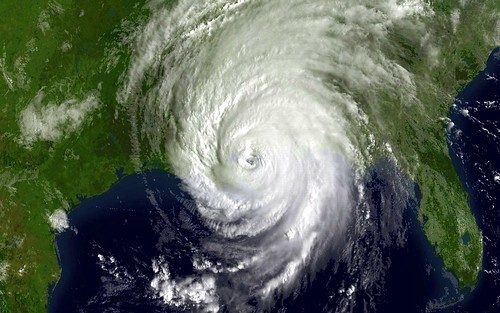
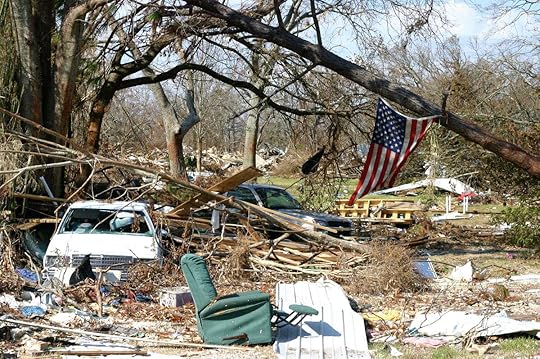
 Nova Orleães - depois do furacão Katrina


