

What do you think?
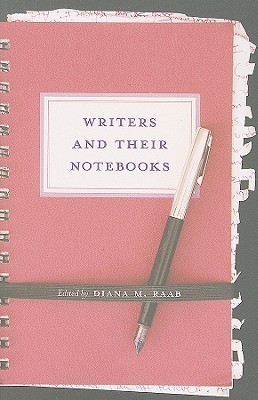
Writers and Their Notebooks
This collection of essays by well-established professional writers explores how their notebooks serve as their studios and workshops' places to collect, to play, and to make new discoveries with language, passions, and curiosities. For these diverse writers, the journal also serves as an ideal forum to develop their writing voice, whether crafting fiction, nonfiction, or poetry. Some entries include sample journal entries that have since developed into published pieces. Through their individual approaches to keeping a notebook, the contributors offer valuable advice, personal recollections, and a hardy endorsement of the value of using notebooks to document, develop, and nurture a writer's creative spark. Designed for writers of all genres and all levels of experience, Writers and Their Notebooks celebrates the notebook as a vital tool in a writer's personal and literary life.
218 pages, Paperback
First published January 1, 2010
About the author
Diana Raab
14 books247 followersDiana Raab, PhD is a memoirist, poet, essayist, thought-leader, and speaker. She presents workshops in writing for healing and transformation. She has a PhD in Psychology with a concentration in Transpersonal Psychology with a research focus on the healing and transformative powers of memoir writing. Her educational background also includes health administration, nursing, and creative writing.
She teaches two courses on “DailyOM: Write. Heal. Transform: A Magical Memoir Writing Course“ and “Therapeutic Writing.”
She’s an award-winning author of 13 books, and her articles and poems have been published and anthologized worldwide. She’s also the editor of two anthologies, "Writers on the Edge: 22 Writers Speak About Addiction and Dependency," and "Writers and Their Notebooks."
Raab’s memoirs include "Regina’s Closet: Finding My Grandmother’s Secret Journal" and "Healing With Words: A Writer’s Cancer Journey". She has 5 poetry collections, including her latest, "An Imaginary Affair: Poems Whispered to Neruda".
Her writing workshops and inspirational speaking engagements are based on her books "Writing for Bliss: A Seven-Step Plan for Telling Your Story and Transforming Your Life" and "Writing for Bliss: A Companion Journal".
Raab’s latest memoir, "Hummingbird: Messages from My Ancestors, a memoir with reflection and writing prompts" was released in January 2024.
She writes for Psychology Today, Thrive Global, Medium, The Wisdom Daily, Sixty And Me, The Good Men Project, and many others.
For more information, check out her website, www.dianaraab.com
She teaches two courses on “DailyOM: Write. Heal. Transform: A Magical Memoir Writing Course“ and “Therapeutic Writing.”
She’s an award-winning author of 13 books, and her articles and poems have been published and anthologized worldwide. She’s also the editor of two anthologies, "Writers on the Edge: 22 Writers Speak About Addiction and Dependency," and "Writers and Their Notebooks."
Raab’s memoirs include "Regina’s Closet: Finding My Grandmother’s Secret Journal" and "Healing With Words: A Writer’s Cancer Journey". She has 5 poetry collections, including her latest, "An Imaginary Affair: Poems Whispered to Neruda".
Her writing workshops and inspirational speaking engagements are based on her books "Writing for Bliss: A Seven-Step Plan for Telling Your Story and Transforming Your Life" and "Writing for Bliss: A Companion Journal".
Raab’s latest memoir, "Hummingbird: Messages from My Ancestors, a memoir with reflection and writing prompts" was released in January 2024.
She writes for Psychology Today, Thrive Global, Medium, The Wisdom Daily, Sixty And Me, The Good Men Project, and many others.
For more information, check out her website, www.dianaraab.com
Ratings & Reviews
Friends & Following
Create a free account to discover what your friends think of this book!
Community Reviews
Displaying 1 - 30 of 49 reviews

February 28, 2018
Very enjoyable! A wide variety of essays on keeping a journal, although I was disappointed for a 2010 book there weren't any on online journaling e.g. with Day One, although there was a very snarky one about blogging as a form of journal (the guy ironically blogged movie reviews from his cat's pov and came across as pretty scathing about the internet in general).
I definitely recommend to anyone interested in journaling, not just writers.
I definitely recommend to anyone interested in journaling, not just writers.

November 27, 2018
“Scribbled Secret Notebooks, and Wild Typewritten Pages, for Yr Own Joy”
by Mark Chmiel
Inspired by Diana Raab, Writers and Their Notebooks
I read Raab’s book right about the end of my time at SLU. Moving on to Maryville University, I found a way to assign Natalie Goldberg’s Bones book in my Humanities classes—mandatory composition 9wide-ruled) notebooks. I also started teaching my own classes off-campus, typically with a writing (hence, notebook) theme.
1.
How can we imagine a notebook?
Some possibilities—
Warehouse (not a museum)
Treasure chest of thoughts and anecdotes
Place to collect ideas
Place to practice writing
Place to overcome writer’s block
Laboratory
Mirror
Icebreaker
Wailing wall
Junk drawer
Confessional
Postcard to oneself
Playground for mind
Jump-start cable
Memory aid
Archive
Anthology
Snooping device
Role-playing arena
Observation-sharpener
Survival kit
Meditation practice
Witness Stand
Therapist
Spiritual Advisor
Sound-board
Friend
2.
What kinds of stuff can we include in our notebooks?
Remarks overheard
Fragments
Observations about others
Dreams
Anecdotes
Patterns of feeling
Wonderings
Newspaper clippings
Quotations
Song lyrics
Jokes
Weather reports
Mundane details
Secrets
Minutiae of daily life
3.
What’s are ways of working in/with notebooks?
Always carry a journal with me
Diary = recording external events of day, what I did during the day’s 16 hours
Journal: journey of the day
Give my notebooks a title and a visual on the cover and back, like Hannah Urban
Review old journals and mark them up to find and use material for publication; find material to shape into an essay
Write without restrictions
Glue or tape photographs into the pages
Write wherever and whenever—write anyplace
Write for five minutes
Read what I’ve written
Write about what I’ve just read
Catch myself thinking
My job is to jot
Describe what I see wherever I am
Tell me more
Morning pages: anything goes
Reread morning pages weeks later, and notice patterns
Show, don’t tell
Write in notebooks at night when I am exhausted and my defenses are down
Add photographs like WG Sebald
Multiply 15 minute bursts
Musement = early morning automatic writing in prose poem form, try this for Palestine book
4.
What are some themes for notebooks?
Palestine Notebook
Dream Journal
Journal for working out my ideas on Ophir
Lexicon Notebook (favorite words, vivid words, two rows, 40 words a page, 200 pages = 8000 words)
Notebook on Favorite Books
Samskara Journal
Crisis Journal
Gratitude Notebook
Notice What I Notice Notebook
Novel notebook: collect scenes, characters, plot twists, clever lines of dialogue, outlines
5.
What Else?
The point of an essay: to “awaken the shiver of recognition” 74
Forget the question: What will readers think? Like Pat Geier said in 1985, “You can’t make chicken salad out of chicken shit”
Resurrect hand-written letters to friends
Meditate off of a quotation from someone
Add SR’s emails to Daily Log
Pose questions as an assignment
Story, or plot, is an outgrowth of character
Collect and use my favorite emails and Facebook exchanges
Print out a year’s daily log, and be ready to pay for printer cartridge
Read Sei Shōnagon, Pillow Book
Become cheerfully addicted to hypergraphia
–Title is a line from Jack Kerouac.
by Mark Chmiel
Inspired by Diana Raab, Writers and Their Notebooks
I read Raab’s book right about the end of my time at SLU. Moving on to Maryville University, I found a way to assign Natalie Goldberg’s Bones book in my Humanities classes—mandatory composition 9wide-ruled) notebooks. I also started teaching my own classes off-campus, typically with a writing (hence, notebook) theme.
1.
How can we imagine a notebook?
Some possibilities—
Warehouse (not a museum)
Treasure chest of thoughts and anecdotes
Place to collect ideas
Place to practice writing
Place to overcome writer’s block
Laboratory
Mirror
Icebreaker
Wailing wall
Junk drawer
Confessional
Postcard to oneself
Playground for mind
Jump-start cable
Memory aid
Archive
Anthology
Snooping device
Role-playing arena
Observation-sharpener
Survival kit
Meditation practice
Witness Stand
Therapist
Spiritual Advisor
Sound-board
Friend
2.
What kinds of stuff can we include in our notebooks?
Remarks overheard
Fragments
Observations about others
Dreams
Anecdotes
Patterns of feeling
Wonderings
Newspaper clippings
Quotations
Song lyrics
Jokes
Weather reports
Mundane details
Secrets
Minutiae of daily life
3.
What’s are ways of working in/with notebooks?
Always carry a journal with me
Diary = recording external events of day, what I did during the day’s 16 hours
Journal: journey of the day
Give my notebooks a title and a visual on the cover and back, like Hannah Urban
Review old journals and mark them up to find and use material for publication; find material to shape into an essay
Write without restrictions
Glue or tape photographs into the pages
Write wherever and whenever—write anyplace
Write for five minutes
Read what I’ve written
Write about what I’ve just read
Catch myself thinking
My job is to jot
Describe what I see wherever I am
Tell me more
Morning pages: anything goes
Reread morning pages weeks later, and notice patterns
Show, don’t tell
Write in notebooks at night when I am exhausted and my defenses are down
Add photographs like WG Sebald
Multiply 15 minute bursts
Musement = early morning automatic writing in prose poem form, try this for Palestine book
4.
What are some themes for notebooks?
Palestine Notebook
Dream Journal
Journal for working out my ideas on Ophir
Lexicon Notebook (favorite words, vivid words, two rows, 40 words a page, 200 pages = 8000 words)
Notebook on Favorite Books
Samskara Journal
Crisis Journal
Gratitude Notebook
Notice What I Notice Notebook
Novel notebook: collect scenes, characters, plot twists, clever lines of dialogue, outlines
5.
What Else?
The point of an essay: to “awaken the shiver of recognition” 74
Forget the question: What will readers think? Like Pat Geier said in 1985, “You can’t make chicken salad out of chicken shit”
Resurrect hand-written letters to friends
Meditate off of a quotation from someone
Add SR’s emails to Daily Log
Pose questions as an assignment
Story, or plot, is an outgrowth of character
Collect and use my favorite emails and Facebook exchanges
Print out a year’s daily log, and be ready to pay for printer cartridge
Read Sei Shōnagon, Pillow Book
Become cheerfully addicted to hypergraphia
–Title is a line from Jack Kerouac.

August 25, 2024
Writers share the reasons they use personal notebooks, and they offer up selections from their notebooks.
The most compelling reason I heard for keeping a notebook is to have a place to write where you can feel free to say anything you want and to wander.
The most compelling reason I heard for keeping a notebook is to have a place to write where you can feel free to say anything you want and to wander.

December 1, 2022
I was looking for a book that would give me a lot of different perspectives about journaling. It was personal. It was fun!! I definitely will be rereading it. And it got my writing mojo on!! Thank you to all who contributed to it!!

May 3, 2025
Perfect for Writers!
As an indie author, I found this book very interesting to explore different ways to use notebooks. I use some and it was good to compare and get new ideas. Thank you for this amazing resource.
As an indie author, I found this book very interesting to explore different ways to use notebooks. I use some and it was good to compare and get new ideas. Thank you for this amazing resource.

October 15, 2015
Finally finished this book! Woo! I liked it a lot. Very inspiring set of essays for the chronic journal keeper like myself. Time to apply all I've learned.
September 28, 2026
I loved this book so much!!! Writers and Their Notebooks is a collection of essays, of sorts, from many different writers, all about their journals/notebooks and how they use them in their life and in their writing. I truly loved learning more about different people's writing process, and this book has helped me a great deal with my own journaling! (I love Sue Grafton's idea of a writer's notebook specifically for the book you're working on now, where you can brainstorm and freewrite and ask yourself questions about the scene you're working on! I've started one myself!) As it always is whenever you get a group of writers to discuss their writing, some of the essays contradict each other! (Which I didn't mind, because, of course, every writer has their own writing process and you really need to find what works for you. I thought it quite interesting to read all of these different thoughts and perspectives on journaling.)
All in all, this is a wonderful book that I'd highly recommend to any writer!!! (Though I'd probably recommend it more for older teens and adults, just due to some content and language.)
All in all, this is a wonderful book that I'd highly recommend to any writer!!! (Though I'd probably recommend it more for older teens and adults, just due to some content and language.)

March 17, 2024
Like most collections of essays, it's a mixed bag. Overall a very enjoyable read.
March 31, 2019
This book has been sitting in my shelves for quite a while and would dip in from time to time. Finally read it from cover to cover, highlighting and annotating. Will be copying highlighted portions in my notebook at some point. So many writers, so many different ways to use a journal. I have discovered that one journal, a catchall for all my thoughts, ramblings, and stories works for me. Many thanks to Diana Raab and the many others for sharing their thoughts. Will be working on all the questions at the end of the book.

June 30, 2026
I’m not a writer, so this book is of limited practical use to me, but I still found it interesting to read about how writers use their journals. Asking a group of writers to describe anything is like herding cats. Practically none of the contributors agrees with any of the others about whether, why, or how to keep a journal. This is hardly surprising, since writers can’t really agree about anything (see the Paris Review interviews). On the bright side, this book certainly gives one permission to do whatever one feels like with a journal.
There’s a long list of published journals in the back of the book, from which I’ve culled a few to peruse:
* Che Guevara, The Motorcycle Diaries
* Journals: Captain Scott's Last Expedition
* The Diary of Virginia Woolf, Volume One: 1915–1919
* Journals of Ralph Waldo Emerson, Volume II: 1824–1832
* The Diary of Anaïs Nin, Volume I: 1931–1934
* Susan Sontag, Reborn: Journals and Notebooks, 1947–1963
I am tempted to carry a copy of Charles Bukowski’s Notes of a Dirty Old Man on public transit just to watch the other commuters' reactions.
Raab also gives a list of different kinds of journals, including personal growth, crisis and transformation, gratitude, smiles, travel, and dreams, among others. There’s also a list of journalling prompts. Even though I probably won’t make much use of all this, I wouldn’t be surprised if one or two of those ideas eventually found an application in my own diary.
There’s a long list of published journals in the back of the book, from which I’ve culled a few to peruse:
* Che Guevara, The Motorcycle Diaries
* Journals: Captain Scott's Last Expedition
* The Diary of Virginia Woolf, Volume One: 1915–1919
* Journals of Ralph Waldo Emerson, Volume II: 1824–1832
* The Diary of Anaïs Nin, Volume I: 1931–1934
* Susan Sontag, Reborn: Journals and Notebooks, 1947–1963
I am tempted to carry a copy of Charles Bukowski’s Notes of a Dirty Old Man on public transit just to watch the other commuters' reactions.
Raab also gives a list of different kinds of journals, including personal growth, crisis and transformation, gratitude, smiles, travel, and dreams, among others. There’s also a list of journalling prompts. Even though I probably won’t make much use of all this, I wouldn’t be surprised if one or two of those ideas eventually found an application in my own diary.

December 11, 2019
As someone who has always kept a journal in one form or another, and as a reader and writer, I am forever fascinated with other writers' use and process of journaling. What goes into a journal? Character sketches, overheard dialogues, ideas for stories, quotes, descriptions of thunderstorms, doodles, words you like the sound of? This book is a collection of essays by writers, each one tacking the subject of journaling from a different perspective. Because there really is no one way of keeping a journal, and no one single reason for keeping one. Whether you're an aspiring writer, a published author, a memoirist, a person who keeps a journal, an avid reader, you'll find these essays delightful.

February 6, 2023
Various writers talking about their notebooks and the importance of keeping them. Personal insights and anecdotes, and some good advice, but I am in two minds about this. I read Roadl Dahl's Innocence recently, where his own reflections on notebooks can be found (republished). That was interesting, but set off against various other short stories in the book, so it had a context and was not overwhelming. This book probably just says too much at once about the importance of notebooks.
All the same, there was plenty of interesting content. Interesting mostly to writers, I expect - although perhaps interesting to anyone who loves any of the featured writers too. If that's not you, your mileage may vary!
All the same, there was plenty of interesting content. Interesting mostly to writers, I expect - although perhaps interesting to anyone who loves any of the featured writers too. If that's not you, your mileage may vary!
April 1, 2025
When I picked up this book, I didn't realize how dated it was until well after I started (the clue being the discussion around blogs and how ultramodern using one's computer for journaling could be). Still, I love reading about journaling and despite all the books I've read on the subject, I remain eager to read more.
I loved reading about the role journals and notebooks play in a writer's life - that they can be a place to express their emotions and mine for ideas for future works. While I didn't particularly enjoy the essay from the writer who journals in her mind or the writers that seem to no longer see the value in keeping a notebook and see it as an exercise in narcissism and self-indulgence, it was interesting to see so many perspectives in one place.
I loved reading about the role journals and notebooks play in a writer's life - that they can be a place to express their emotions and mine for ideas for future works. While I didn't particularly enjoy the essay from the writer who journals in her mind or the writers that seem to no longer see the value in keeping a notebook and see it as an exercise in narcissism and self-indulgence, it was interesting to see so many perspectives in one place.

November 27, 2019
I used to read books by writers on writing by the armload. After a while, it began to feel like I was walking over the same road again and again. This collection is no different but still interesting to get a glimpse into someone's creative process.
I also used to keep a journal but that's mostly stopped now. What I liked most about this book is that it made me realize others have the same questions about journal writing that I have. Is it narcistic? Is it just a place to feel sorry for myself? How can it best be used? Is it a waste of time?
I also used to keep a journal but that's mostly stopped now. What I liked most about this book is that it made me realize others have the same questions about journal writing that I have. Is it narcistic? Is it just a place to feel sorry for myself? How can it best be used? Is it a waste of time?
April 21, 2024
Not helpful for me, but might be for you.
A collection of descriptions of journal styles from various writers, and poets (if they are not the same thing). Very few actionable suggestions in what was not a long book. I can see that one of the included journaling styles might inspire, but I was left uninspired.
I had an impression that the contributors had written in a type of journal mode without editing. Editing would have helped but made the book still shorter.
Not for me, but maybe for you?
A collection of descriptions of journal styles from various writers, and poets (if they are not the same thing). Very few actionable suggestions in what was not a long book. I can see that one of the included journaling styles might inspire, but I was left uninspired.
I had an impression that the contributors had written in a type of journal mode without editing. Editing would have helped but made the book still shorter.
Not for me, but maybe for you?

July 22, 2026
I regret not keeping a journal of sorts. This is especially true of my time in the Air Force and places I have been. Vague memories of the things I did and the people I met. However, would they have survived the many moves I have done when I purged so many books out of my library due to shortage of space in the various UHauls? Example, I did toss a couple of "scrapbooks" when I was clearing out before my journey to South Carolina. Perhaps through the fog of time and old age I can recall some events and record them long after the fact.
October 2, 2018
I have two main genres of literary junk food; books about books and books about writing. More often than not, books in these genres are subpar and self-congratulatory. These essays surprised me. A few are subpar, but I found a lot of insight. As an avid notebook-keeper and writer, the essays gave me an interesting framework to approach my own notes with, but there was plenty of over-romanticizing of pen and paper to give me the MSG kick I wanted.
June 4, 2023
Interesting to read how the writers utilised their notebooks to benefit their own particular purposes. A lot of what I read here made perfect sense, some I would not follow, but at the end of the day the important message is in having something [notebook/journal/memo pad] handy to keep those special moments intact - the ones that sometimes lose their authenticity and relevance when we trust them to memory.

January 24, 2024
Like anthologies, the essays were mixed in their value. Each author talked about how they used journals as workshops, meditation, and travel logs.
Grafton's essay was the most practical for fiction writers, while the others were more conceptual. It seems that poets were the most likely to draft later work in their notebooks. Essayists and memoirists talked about farming their own journals and the journals of others to write later work.
Grafton's essay was the most practical for fiction writers, while the others were more conceptual. It seems that poets were the most likely to draft later work in their notebooks. Essayists and memoirists talked about farming their own journals and the journals of others to write later work.
November 3, 2025
What a lovely book! I am the perfect target audience, I am, for some reason, obsessed with notebooks and journal keeping. Whenever a writer is talking about their notebook, I wish they would post pictures of it.
I loved reading all the ways those writers use their notebooks, I would be curious to see what they’re using now (the book came out in 2010), are they still analog or did they jump on the notes app bandwagon
I loved reading all the ways those writers use their notebooks, I would be curious to see what they’re using now (the book came out in 2010), are they still analog or did they jump on the notes app bandwagon

August 16, 2022
This collection of essays had some pieces that resonated with me more than others, which is normal for any anthology-type work. I truly appreciated it, though. The authors explore their favorite types of journals, pens, and reasons for writing while sharing experiences that range from the personal to the professional.
April 7, 2025
It's hard to rate an anthology like this. Some of the essays I would give 5 stars, while others I just didn't enjoy. Overall, it was really interesting to read of different authors' writing processes. This book helped me to develop confidence and organization in finding my own writing voice, and I'm glad that I read it.

July 29, 2022
This was a pleasant and inspirational compilation of essays reflecting upon writers and their relationship with notebooks, journaling, and keeping diaries. It's a very casual read, but a breath of fresh air in writing craft books.

July 17, 2023
Good Information on Journaling
These essays by different writers open a doorway to the many faucets of journaling. The essays don't need to be read in any order. Those who will find something worthwhile in this book.
These essays by different writers open a doorway to the many faucets of journaling. The essays don't need to be read in any order. Those who will find something worthwhile in this book.

January 22, 2024
Some chapters are more interesting than others. It really depends on the type of writing you want to do and how many contributors you connect with. I found the suggestions in the two appendixes to be helpful.

October 3, 2022
Very inspirational.

January 4, 2023
I enjoyed the vast array of journal writers assembled here. Most tellingly, it inspired me to journal myself, to write more creatively. That said, like most essay collections, I found this to be uneven. And it felt a tiny bit dated, both in its selection of contributors and the attitudes and references in the essays themselves.

November 30, 2024
Sommige essays interessant, sommige saai. Veel van hetzelfde.

December 8, 2024
Writers and some of their journals. I think Sue Grafton and that was probably the come-on. Never heard of any of the other people. It seemed to drag at times. Only vaguely interesting to me.
March 10, 2025
Fascinating and informative
This is a treasury of insights on the usefulness and value of journaling, which I found fascinating. I highly recommend it.
This is a treasury of insights on the usefulness and value of journaling, which I found fascinating. I highly recommend it.
Displaying 1 - 30 of 49 reviews