Daughters of the Witching Hill was one of the best books I read all year. I don't know how I didn't read it before now, considering that Mary Sharratt is one of my favorite authors, but I'm glad I corrected the oversight.
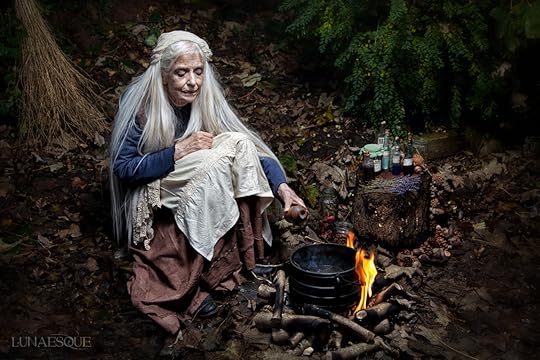
This novel deals with the Pendle witch trials of 1613, near Lancashire, England. It is a beautifully written portrayal of the two women at the heart of the trials, Bess Southerns (AKA Mother Demdike, or Gran to Alizon) and her granddaughter Alizon Device. Told through their points of view, we learn about their lives, the village where they grew up, and how they became cunning women and healers.
The secondary characters, the other "witches" and their accusers, and villagers alike are all nearly as well fleshed out as Gran and Alizon themselves. Alice Nutter, Nancy Holden, Roger Nowell, even the gaolers at the end all had distinct personalities and were there for a reason, not just to fill pages.
I really liked Sharratt's handling of the supernatural elements. While Gran and her family all had familiars, healing powers, etc, it all fit within the scope of what was widely believed at the time and can easily be seen as something readily explainable by logic. *I* don't think they had familiars, but *they* believed it, and those around them believed it, and so it was. Other things, such as Alizon's cursing of John Law, is easily explained as a stroke, which the fellow would have had whether he encountered her on the road or not. I thought it was brilliantly written and highlights the author's intimate knowledge of the place and time, as well as her detailed research.
Highly recommended.
Some of my favorite scenes:
I love the scene when Gran advises Alice Nutter about being barren and how to fix it. Getting the girl to laugh, giving her practical advice, and giving her insight into motherhood are all things my own mother, aunts, and grannies have done for me (p 50-52).
The charme in the beginning was lovely. I kind of want to embroider it on a linen with pretty flowers or something.
I loved all the scenes with the Queen of Elfhame, and how she ended up looking just like Gran did as a young woman. That was some wonderful juxtaposing and symbolism there, Gran and the Queen of Elfhame and the Virgin Mary.
Of course, the final scenes made me all weepy, and I blubbered at the very last chapter, told again from Bess/Gran's perspective.