Jump to ratings and reviews
Rate this book

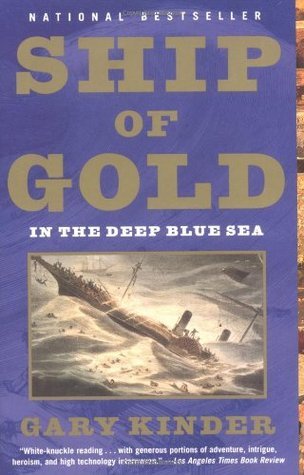
Ship of Gold in the Deep Blue Sea

Rate this book
"White knuckle reading...with generous portions of adventure, intrigue, heroism, and high technology interwoven."
-- Los Angeles Times Book Review

This enthralling true story of maritime tragedy and visionary science begins with a disaster to rival the sinking of the Titanic.

In September 1857, the S.S. Central America, a side-wheel steamer carrying passengers returning from the gold fields of California, went down during a hurricane off the Carolina coast. More than 400 men--and 21 tons of gold--were lost. In the 1980s, a maverick engineer named Tommy Thompson set out to find the wreck and salvage its treasure from the ocean floor.

With knuckle-biting suspense, Gary Kinder reconstructs the terror of the Central America 's last days, when passengers bailed freezing water from the hold, then chopped the ship's timbers to use as impromptu liferafts. He goes on to chronicle Thompson's epic quest for the lost vessel, an endeavor that drew on the latest strides in oceanography, information theory, and underwater robotics, and that pitted Thompson against hair-raising weather, bloodthirsty sharks, and unscrupulous rivals.

Ship of Gold is a magnificent adventure, filled with heroism, ingenuity, and perseverance.

552 pages, Paperback

First published January 1, 1998

467 people are currently reading
5054 people want to read

About the author

Gary Kinder

13 books33 followers

Ratings & Reviews

What do you think?
Rate this book

Friends & Following

Create a free account to discover what your friends think of this book!

Community Reviews

5 stars
2,884 (50%)
4 stars
1,881 (33%)
3 stars
719 (12%)
2 stars
157 (2%)
1 star
44 (<1%)
Displaying 1 - 30 of 515 reviews
Profile Image for Matt.
1,052 reviews31.1k followers
August 12, 2023
“The stern sank below the waves, and the graceful arc of her bow aimed into the dark heavens, as she struggled, almost desperate to keep her proud head above water, and then as the hoarse screams of five hundred men rose, she began a slow watery spin, the water turning faster and faster and faster and faster, until the swirling vortex sucked the men into a suffocating darkness, deeper and deeper, cracking their ears, ripping the life vests from their bodies, tearing from their hands the planks and spars, sucking them deeper and deeper into the darkness, the pressure squeezing the air out of their lungs, salt water filling their noses and mouths and seeping into their eyes, their bodies twisting, the ship exploding all around them in the blackness, the pieces whirling, slamming into them, deeper and deeper and deeper, trapped in the vortex, entangled in the rigging, swallowing the salty water, their lungs filling, the last thoughts racing across their minds before the final darkness set in, descending with the once majestic steamer through the long column of black water, now possessed by her, and dead long before she crashed into the floor of the sea thousands of feet below.”
- Gary Kinder, Ship of Gold in the Deep Blue Sea


If I ever had any notions of being a treasure hunter, Gary Kinder’s Ship of Gold in the Deep Blue Sea disabused me of them.

There is something fun and romantic in the lure of lost gold. The promise of great financial rewards upon the solving of a riddle. But as Kinder shows in his epic book, it seems mostly awful. Instead of setting sail with an old, brown-stained map, X clearly marking the spot, the modern search for treasure involves Bayesian theory, and begging investors to buy stock in your limited partnership, and finding a good lawyer to file injunctions in admiralty court. It also helps to have a strong engineering background to create machines capable of working at the bottom of the sea.

All of this sounds like a bummer, and nothing at all like The Goonies. In point of fact, it seems like a lot more trouble than it’s worth. Even if you find something, you still have to protect it: from other salvagers; the insurance companies; the IRS.

It’s enough to turn you into Smaug.

***

Ship of Gold in the Deep Blue Sea is about one of the greatest treasure hunts in history: the quest for the SS Central America and her approximately $150 million in gold bars and coins.

On September 9, 1857, two days out of Havana and bound for New York City, the Central America ran into a hurricane. The side-wheel steamship was filled with passengers and gold from California. For several days, she battled wind and waves. Water filled the hull and knocked out the boilers, meaning she had no steam power. Captain William Herndon, a brave and skilled seaman, tried to raise sail, but they were ripped to shreds. The men formed bucket brigades to try to keep the ship afloat.

The sea’s relentless fury stymied their efforts. A passing ship took off the women and children in lifeboats. On September 12, the Central America foundered, taking over 400 men and a lot of wealth to the bottom.

Kinder begins Ship of Gold with a quick prologue about the California gold rush, before segueing to a powerful and vivid retelling of the Central America’s final struggle. He does a marvelous job weaving together survivor accounts to form a coherent, gripping picture. These opening chapters alone make the book worthwhile; a fine entry into the literary canon of men and women against the sea.

***

Once the Central America has come to rest some eight-thousand feet below the waves, Kinder moves the spotlight of his tale to Thomas G. Thompson.

As protagonists go, you could do a lot worse. A brilliant and idiosyncratic engineer, he was the type of person that grew up taking things apart and putting them back together; an expert tinkerer with an inquisitive mind. As a young man, he drove an amphibious car. He is the student in college who is smarter than the professor yet gets bad grades.

Kinder does a wonderful job evoking Thompson, with one glaring exception: he never explains why he settled on finding the Central America as his life’s challenge. This unexplored gap ultimately looms large, given Kinder’s miscalculation – discussed at the bottom – about what kind of man Tommy actually turned out to be.

***

Whatever his reasons, once Thompson decided to find the Central America, he went at the project with tirelessness, thoroughness, and ingenuity. Kinder follows Thompson as he painstakingly gathers investors, plots the possible locations of the Central America, and sets out to sea with untested deep-water ROVs (remotely operated vehicles) to find a speck on the ocean floor.

***

Kinder is a fantastic writer, combing a masterful narrative with comprehensiveness of coverage. There are scenes in the book – such as when Tommy’s research ship attempts to block an interloper from doing a sonar scan on their dive-site – that read like a thriller. But he also does a very good job of explaining all the different disciplines that go into a treasure hunt. He discourses on the plotting, the robotics, the mechanics of a sonar grid, and the arcane procedures of maritime law.

There is a palpable obsessiveness to men on the trail of gold. If you don’t believe me, crack open a beer, turn on the TV, and flip over to Turner Classic Movies for a showing of The Treasure of the Sierra Madre. Part of the magic of Ship of Gold is that Kinder translates that obsession into his telling, so that my fervor while reading matched Tommy’s while searching. This is a book, in other words, that kept me up past my bedtime on several nights.

***

My quibbles are relatively minor. First and foremost, there is a lack of endnotes or sources. This feels incredibly researched. The level of detail is astounding. But it would’ve been nice to have some idea of what that research entailed. In a brief acknowledgment, Kinder explains that he imbedded himself with Tommy and his group, but that is all the explanation that is given. There’s not even an index. The 507 pages of this book are all devoted to the text.

Second, there aren’t any pictures. Seriously, I like to know what people look like, especially when they aren’t famous. I spent a lot of time Googling when I should’ve been looking at a photo inset.

***

The greatest flaw is how Kinder wraps things up.

The Central America was discovered by Thompson's Columbus-America Group in 1989. Ship of Gold was published in 1998. Despite a lot of things happening in the interim, Kinder jarringly ends his story almost immediately after Tommy hits paydirt. Forsaking his earlier attention to detail, Kinder covers almost a decade’s worth of events in a brief epilogue. The epilogue greatly compresses the actual recovery of the gold, Thompson's fight with the insurance companies that tried to wet their beaks, and the ultimate disposal of the Central America’s treasure.

There is also an issue over which Kinder had no control: the continuation of the tale beyond the book.

A book is finite. At a certain point, arbitrary or not, it must end. Life, however, keeps on moving. Unfortunately, while Googling images that should’ve been included with the book, I came across Thompson’s sad postscript.

Kinder is very much attached to Thompson in Ship of Gold. His portrayal is uniformly positive. There were dozens of times when Thompson did something and I said to myself, What an asshole! But Kinder always gave an indulgent shoulder shrug, as if to say, Geniuses, am I right?

At the end of the epilogue, with the gold not yet distributed, Kinder is sanguine about the effects of enormous wealth on his hero. “Ultimately,” Kinder writes, “[Thompson] will receive a huge sum, but his friends, partners, and people at Columbus-America see him changing little.”

Well, he did change a little.

By which I mean he became Bogart from Sierra Madre. The latest news stories I can find have him in jail for contempt, refusing to divulge the location of the gold that is meant to pay off his original investors. This is after he was on the lam for several years, avoiding the civil lawsuits filed against him.

So maybe there is one thing that Ship of Gold in the Deep Blue Sea fails to do entirely. And that is to measure the power of greed on the human soul. “If more of us valued food and cheer and song above hoarded gold,” Thorin says at the end of The Hobbit, “It would be a merrier world.”

It’s a lesson Tommy Thompson might have done well to heed.

[Postscript: Just checked today, August 9, 2023, and Thomas G. Thompson is still in FCI Milan, where he’s been for eight years, refusing to divulge the contents of his own hidden treasure. He’s now seventy-one.]
Profile Image for Dem.
1,263 reviews1,431 followers
November 6, 2019
This was an absolutely fascinating and extremely well researched story of The sinking of the S.S. Central America, which had been carrying five hundred passengers, many of them returning from the Gold Rush in California in 1857. The ship ran into trouble when a hurricane hit and the S.S Central America sank 200 miles of the Carolina coast.

The Ship was sailing from Panama to New York, It had been carrying 500 passengers and 20 tons of gold from the goldfields of California worth (at the time) 2 million dollars. (Over 50 million Dollars currents valuation). After 150 years of lying at the bottom of the sea, an engineer from Ohio by the name of tommy Thompson set out Along with the Columbus-America Discovery Group to find the Central America in eight thousand feet of water and try and make claim on the millions of Gold sitting at the bottom of the sea.

This book was written in 1998 and I obtained a used hard copy on Amazon as I had been fascinated when first leaning of this story. This is an extremely well written and researched Account firstly of the tragic sinking of the S.S Central America and her passengers and the first 150 pages of the book sets the scene and you become acquainted with Captain, crew and passengers of this ship. The story of the sinking is very well documented and you feel as if you are right there on the ship and feel the fear and the cold of the passengers. This was a heartbreaking story of the sinking and the Captain of the ship was hailed a hero by the surviving passengers which is well documented in this story.

When the story moves to the 1980s and Tommy Thompson’s quest to find the site of the S.S Central America the book becomes a lot more technical but is still fascinating to learn how deep-sea-robots were developed to perform heavy and complex work.

The third part of the story once again picks up pace and I read with baited breath to the end of this engrossing and captivating story. The author Gary Kindler has written a remarkable historical account of the sinking of S.S. Central as well as an entertaining adventure story.

When I finished this account I realized there had to be more to this story from when the book ended and after a little research online I was shocked and amazed at the happenings since. I wonder was Gary Kindler as amazed as me at what has taken place since he wrote this book and perhaps there is another book yet to be written

A fascinating tale of history, science and adventure, heavy on detail and quite complex but engrossing and unputdownable and a book I will certainly remember many years from now.
Profile Image for Clif Hostetler.
1,280 reviews1,033 followers
April 14, 2018
This book provides a historical account of two parallel stories; (1) The sinking of the SS Central America in 1857, and (2) the locating and salvage of the sunken ship by the Columbus-America Discovery Group of Ohio in 1988-1989. Both stories are interesting on their own accounts, and they have one element in common—gold.

The SS Central American was carrying 30,000 pounds of gold from the California gold rush fields. It was gold that had been purchased by the US Federal government, sent by ship from California to Panama, transported across the Central American peninsula, and loaded onto the SS Central America. The ship was in route to New York City with its valuable cargo when it was caught in a hurricane off the U.S. east coast and sank.

The story of the sinking is quite dramatic because the crew and passengers were aware for over a day prior to the sinking that water was leaking into the ship faster than the bilge pump could removed it. The sinking was delayed for about a day by setting up two bucket brigades in an effort to keep the water level below the boiler fire—it was a two side-wheel steamer. Eventually the water level reached the boilers, the fires extinguished, power to the bilge pumps lost, and the ship floundered in the rough seas and sank. Because of the delay of the sinking they were able to save 153 women and children in life boats over rough seas to a nearby rescue ship. After the sinking an additional 53 people were rescued by other ships, but a total of 425 perished.

The twentieth century story is covered in considerable detail by beginning with biographic accounts of the individuals involved in the collecting and assembly of the technology and equipment needed for deep water reconnaissance and recovery of shipwrecks. An overview of past salvage operations is provided—mostly in shallow waters where movement of water during storms disturbs the seabed. These operations are technologically primitive in that they search in random fashion and often use the technique of vacuuming large volumes of sand through screens to strain out objects of interest. The problem with this technique is that it's often difficult to determine the source of the found objects in shallow water near ports because they often have the remains of multiple wrecks.

A large part of the detail involved in this book is an account of the steps involved in collecting the latest knowledge of Bayesian search theory and the development of remotely operated deep sea technology. The SS Central America sank in water that was nearly 1,000 feet deep. The extremely high pressures at this depth makes all efforts at both locating and recovery very difficult. And then once the location of interest is established, suddenly it seems like the whole world wants to barge in and claim a piece of the action. A part of the story is the precedent setting judicial proceedings which placed restraining orders on the competitors.

This book describes the organizers of Columbus-America Discovery Group of Ohio as heros, and at the end of the book the shareholders are happy. Apparently the story has continued and the situation has changed since the end of this book (this book was first published in 1999). According to this Wikipedia article some investors and crew members have sued trying to recover additional compensation. It's difficult for people to remain friends when gold is involved.

The following is a link to a more detailed discussion of the sinking of the SS Central America and the determination of its location.
http://www.columbia.edu/~dj114/SS_Cen...
Profile Image for Scott Rhee.
2,310 reviews161 followers
November 7, 2025
"Ship of Gold in the Deep Blue Sea" by Gary Kinder reads like a Clive Cussler novel but is actually nonfiction.

Kinder tells an exciting well-researched story about the 1857 sinking of the Central America, an American passenger ship, off the coast of North Carolina. Roughly 400 people perished, and several millions of dollars worth (adjusted) of California gold was lost in treacherously deep waters. It was apparently the worst maritime disaster until the Titanic, and until the 1980s, no one knew exactly where it was.


Not that it mattered, because the technology didn't exist to retreive anything from that depth. That is, not until an intrepid and ingenuous engineer named Tommy Thompson (an OSU grad, no less) was struck by the "treasure-hunting" bug and set out on a well-funded expedition with state-of-the-art underwater submersible and artifact retrieval technology.


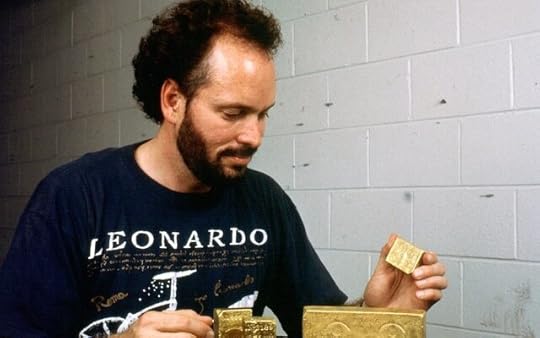
Treasure hunter Tommy Thompson, whose exploits (and alleged criminal actions) continued long after the events of this book

This is a great sea-faring adventure told extremely well. The first part literally grabs the reader and doesn't let up, as Kinder describes the events of the hurricane that leads up to the sinking of the Central America. Kinder uses first-hand narratives to capture the emotionally draining stories of the survivors.

The second part, equally fascinating (although admittedly not as exciting) tells the story of Thompson's attempt to get his expedition underway. Rounding up legal teams and scrounging up fund-raisers may be exciting to some, but at times these parts do drag.

Thankfully, Kinder knows how to keep the reader engaged and never dwells too long on the boring bits. There are a few scenes of suspense, when rival treasure-hunters (some not as legal-minded as Thompson) attempt to horn in on their scene. The climactic "discovery" and recovery scene is well worth the wait.

This book is probably what James Cameron's "Titanic" could have been if it wasn't bogged down by the stupid love story. "Ship of Gold" is just pure manly adventure story.
Profile Image for Julie.
140 reviews
December 4, 2013
This is one of the best non-fiction books I have ever read. It's about a ship that sank in the mid-1800s off the coast of the Carolinas on its way back to New York from the California Gold Rush and the search to find it and retrieve the treasure. It sat there--almost 2 miles under water and about 200 miles off the coast--until the late 1980s. The author does a great job of interweaving the stories of the lives of the people on the ship and the sinking of the ship with the story of the scientist who plans the recovery and builds a machine that can go to that depth and still work. I'm really not doing it justice with this review. It was a fascinating read.
Profile Image for Joy D.
3,128 reviews329 followers
April 3, 2019
Non-fiction account of the wreck of the Central America in 1857 and the search, spearheaded by inventor and creative thinker Tommy Thompson, for her wreckage in the deep water of the Atlantic Ocean 130 years later. The book is divided into sections, with the first focusing on the experience of the passengers and crew aboard the Central America, the second on the early life of Tommy Thompson, and the third on the development of the technology to search for, locate, and recover artifacts. Did I mention the ship was laden with gold acquired during the California Gold Rush?

This book is so much more than a description of a “treasure hunt.” It is one of the most harrowing accounts of a ship’s sinking I have ever read. The author has done an excellent job of reconstructing the events from source material of the time. Even though I knew the eventual outcome, I felt invested in the tale and was rooting for them to overcome the elements and stay afloat. This section was outstanding!

When we get to Tommy Thompson’s early life, it slows down a bit. It laid the groundwork, though, and I think was necessary to tell the entire story of the recovery. Thompson is a creative thinker, inventor, and scientist. At the time (1980’s) the technology to work in deep water was in its infancy and this book shows how Thompson developed a team, pushed boundaries, designed equipment, and raised funds to do what was then considered impossible.

The section on the search and recovery takes the reader into the wide-ranging disciplines required to succeed in this high-risk high-reward endeavor, including engineering, probability theories, risk management, maritime law, fund-raising, teamwork, communications, and fending off the competition. It also covers the history of salvage operations as of the date of publication (1998). This section of the book is for people that like details. Kinder sometimes inserts a bit too much technical jargon and extensive descriptions for my taste, taking away from his main points. The author also seems a bit taken with Thompson to the point of excusing some rather questionable behavior. Overall, though, if you are looking for “non-fiction that reads like fiction,” this story fits the bill.
37 reviews1 follower
February 1, 2015
Riveting re-telling of the doomed ships' final days and the crew's desperate attempt to save it. This event would have been a fine book in itself.

But the book is far too reverential towards Tommy Thompson. He's a clever fellow and it truly is amazing what his team accomplished in the late 80's, recovering the SS Central America. But I really didn't need a full background biography through his early professional life, all the while flying around in his "Stupendous-Man" cape solving problems that bewilder mere mortals, or so it's told by Gary Kinder. Kinder is better when he sticks to the extreme engineering challenges inherent in deep sea salvage as exemplified by the Thresher disaster and nuclear weapon deep sea salvage. I would have liked a lot more background on those events so as to better set up the SS Central America recovery operation. But again, Kinder's a little over the top with Super Tommy always doing his Tony Stark thing. We're left thinking that had Tommy worked for NASA, there would now be a Pizza Hut on the moon.
Profile Image for awesomatik.de.
359 reviews17 followers
November 9, 2017


Ich liebe Non-Fiction und Abenteuer Bücher. "Ship of Gold" hätte also genau meine Tasse Tee sein sollen.
War es leider nicht. Es fängt noch recht stark an mit der packenden Rekonstruktion des Untergangs der SS Central America, einem Raddampfer, der neben seinen 580 Passagieren auch tonnenweise Gold transportierte und vor der Küste Floridas im Sturm sank.
Der größte Teil des 510 seitigen Buchs behandelt allerdings die Suche nach dem versunkenen Goldschiff in den 1980er Jahren, sowie die anschließende Bergung des Schatzes mit allen technischen Herausforderungen, die die Arbeit in der Tiefsee so mit sich bringt.

Ist ja auch alles ganz interessant aber 300 Seiten hätten locker ausgereicht.
Gary Kinder beschreibt enthusiastisch auch noch die unwichtigsten Details und spart nicht an Superlativen. Immer wieder versucht er künstlich Spannung zu erzeugen aber . Vor allem sein Hauptakteur Thommy Thompson hat es ihm angetan. Er wird hier als eine Mischung aus Einstein und Steve Jobs dargestellt, der die Geschichte der Ozeanforschung historisch voran getrieben hat. Ein genialer Tüftler, der sein Leben der Wissenschaft opfert.
Ironischerweise hat sein Wikipedia Eintrag gerade mal eine halbe Seite. Und dort steht auch zu lesen, dass dieser tolle Hecht aktuell wegen Veruntreuung des geborgenen Goldes in Haft sitzt. Das setzt der ganzen verherrlichenden Beschreibung die goldene Krone auf! Also im Prinzip ist es eigentlich erst da wirklich interessant geworden, wo das Buch endet.

"Ship of Gold" ist tatsächlich eine spannende Geschichte, die aber bei weitem nicht die Dramatik anderer Non-Fiction Klassiker liefert wie z.B. "In eisigen Höhen" von Krakauer "Shadow Divers" von Robert Kurson oder "In the heart of the Sea" von Nathaniel Philbrick, in denen es um Leben und Tod geht.

Hier geht es um Fundraising, um Forschung und Technik. Auch nicht ohne aber etwas zu detailverliebt und unnötig aufgebauscht.

200 Seiten weniger und ich hätte 3 bis 4 Sterne gegeben. So gebe ich mal 2,5. Gut lesbar aber es zieht sich....


Profile Image for Rose.
Author 15 books20 followers
July 26, 2008
On September 9, 1857, the sidewheel steamer "Central America", which was carrying passengers from the Panamanian port of Colón to New York, encountered hurricane winds and savage seas off the coast of the Carolinas. Although a sturdy ship, her sails were quickly shredded and a leak in one of the seals around the paddle wheels prevented her boiler from functioning. Captain William Herndon exhausted every means to save the stricken ship and its passengers, many of whom were on their way home from the California gold fields: when the pumps failed, the crew and male passengers formed a bucket brigade to combat the rising water in the hold. They lost the battle on the evening of September 11, when the "Central America" sank beneath the waves, taking her captain and 425 of her passengers and crew with her.

Over the years, the ship became a Holy Grail for treasure hunters, because 21 tons of gold went to the bottom with her. But because she was over two miles below the ocean's surface, recovery seemed impossible- until renegade marine scientist and explorer Tommy Thompson, leader of the Columbus-America Discovery Group, developed the technology to enable deep water exploration and artefact gathering. In 1989, he obtained access to the wreck of the "Central America" and collected gold coins and bars with an estimated value of one billion dollars.

Author Gary Kinder has done a great job weaving together two struggles that occurred centuries apart: that of the "Central America" passengers and crew to survive, and Thompson's battle against the scientific and technological odds to salvage the wreck. I was especially fascinated by the legal process via which American discoverers obtain salvage rights to sunken vessels: after collecting an artefact from the "Central America", Thompson's team took it to the Norfolk, VA courthouse so that the U.S. marshal could "arrest" it and a judge could award the site to them. Thirty-nine insurance companies traced their lineage back to those 1857 insurers that had covered the valuable contents and paid for the loss, and they now claimed, 132 years later, that the treasure belonged to them. A third struggle then commences, this one in the courts.

My only complaint is that there were so few pictures accompanying the text. But I still award "Ship of Gold" a five star review because Gary Kinder's prose has made a word worth a thousand pictures.
Profile Image for Thom.
1,818 reviews74 followers
March 11, 2024
Dual story of the sinking of the SS Central America and efforts to find that shipwreck. While these two make for an exciting book, a third story could be published by this Seattle based author - the aftermath.

The story of the ship also fills the reader in on the origin of the treasure in question - the California gold rush. Many individuals are detailed, including the captain of the Central America William Herndon, who has since had two ships and a town named for him. Much of the descriptions and dialog came from interviews after rescue, as this story was very popular in the newspapers of the time.

The story of the rescue starts with a biography of inventor Tommy "Harvey" Thompson, who did what many others said couldn't be done for any reasonable amount of money. The author emphasizes the future use of this technology for science. Whether Thompson would have gone that direction is unknown however, and that's the missing third story from this book.

Despite 550 pages, this book reads fairly fast. There are hints of Thompson's science, but mostly the modern dialog is around quick fixes for the inevitable problems of the deep ocean. A summary of maritime salvage law would have also been welcome - and some of that leads directly to the post publication problems for the protagonist. An enjoyable read - 4 of 5 stars.
Profile Image for Barb.
322 reviews1 follower
October 18, 2022
Two riveting books in one: the meticulously researched history of the sinking of the SS Central America in 1857 and the, also meticulously researched, account of eccentric genius Tommy Thompson, as he puts together a team to salvage the tons of gold the ship was carrying. The book published in 1998, cries out for a sequel about the aftermath: lawsuits, prison time and media coverage, that continue to this day.
Profile Image for Bettie.
9,978 reviews5 followers
April 2, 2014
rosado mp3


Description: Bestselling author Gary Kinder tells, for the first time, an extraordinary tale of history, maritime drama, heroic rescue, scientific ingenuity, and individual courage. This is the riveting true account of death, danger, and discovery on the high seas in the dramatic search for America's greatest lost treasure, the S.S. Central America.


Gripping history, and who doesn't like stories of treasure. Fully recommended


There is a significant other wreck to consider in this story:
The Concepción was found again in 1978 by Burt Webber, Jr., whose divers recovered some 60,000 silver cobs, mostly Mexican 8 and 4 reales but also some Potosí and rare Colombian cobs (including more from the Cartagena mint than had been found on any other shipwreck). Unlike the Maravillas of just 15 years later, however, the Concepción did not give up any gold cobs in our time, and any significant artifacts found were retained by the government of the Dominican Republic, who oversaw the salvage. The bulk of the silver cobs found on the Concepción were heavily promoted, even in department stores! The site is still being worked from time to time with limited success. SOURCE


SS Central America Chief Scientist Talks about the Ship of Gold Treasure. VIDEO: 3:35.

Profile Image for Jane.
1,680 reviews239 followers
November 22, 2019
Buried under a morass of details, which others may appreciate more than I, was the saga of the S.S. Central America, a paddle steamer bringing folks from the California Gold Rush in 1857 from Panama with final destination New York. A devastating hurricane sunk the ship and only 159 of the 600+ people on board were rescued. Captain Herndon went down with his ship and there is today a memorial to him at Annapolis. Also was the story of Tommy Thompson of Ohio, an eccentric scientist and inventor, who was in charge of its deep sea salvage of all the personal object and gold that had been on board. We follow how Tommy and his team obtain funding, find the coordinates where the ship had gone down, find a suitable boat to use and from it to do their recovery in 1988. Fascinating look at deep sea exploration, not only of old ships and their contents but the discovery of previously unknown species of sea life. It was much too detailed for my taste. There was a drawing of the ship but no index and no map of the route taken. I regret the lack of both; to me an index greatly enhances a nonfiction book. With a map of the journey I could have followed the text much more easily.
6 reviews1 follower
May 8, 2023
This book portrays Tommy Thompson as an American hero for every page - an infallible, indefatigable, iron-willed savant marred by no greedy motives, only a pure desire to advance scientific knowledge. Turns out Tommy is a common criminal that defrauded those who invested in him and is rotting in jail due to his refusal to help authorities recover the gold he fled with. Maybe a post script or new edition is due? Either way, Kinder’s unbalanced portrayal of Tommy calls into question the rest of his work on this book.
Profile Image for Alex.
870 reviews17 followers
December 7, 2020
I devoured this book. Coming in at 507 pages, hardback, 'Ship of Gold in the Deep Blue Sea' consumed my weekend. I couldn't put it down.

The book begins in California, with the Gold Rush of 1849. It follows a group of passengers who travel from San Francisco first to Panama, then across the Peninsula. They board SS CENTRAL AMERICA, an American sidewheel steamer, for New York. SS CENTRAL AMERICA, captained by William Herndon (for whom USNA's Herndon Monument and the city of Herndon, VA are named), carried more than people: it carried 9.1 tons of their gold in coins, bars, and bags of dust. SS CENTRAL AMERICA went down on September 3, 1857, in a hurricane off the coast of North Carolina. Of the 578 souls aboard, only 153 - mostly women and children - survived.

We fast-forward to the late 1970s, when a brilliant young engineer named Tommy Thompson comes up with a plan to find and salvage CENTRAL AMERICA in 7200 feet of water. The plan would require technologies not yet invented, investments from the kinds of hard-nosed businessmen who don't invest in treasure hunts, hard work, brains, skill and luck.

And we're off.

Don't care about shipwrecks? Don't care about engineers solving engineering-type problems? Neither do I - not really. However, author Gary Kindler brings this story to vivid, exciting life. This is a book about a salvage operation, but it reads like an adventure novel. The reader feels like s/he is in the conference rooms where investors are pitched, in the pilot houses where decisions are made, in the workshops where equipment is built, on the bottom of the ocean floor where Thompson's home-built undersea vehicle shines its light in the eternal darkness of the deep. Even though, intellectually, the reader knows this book doesn't get written if Thompson doesn't succeed, the author still creates the tension to keep that reader glued to the page, wondering what will happen next.

Simply put, this book is a joy to read and ranks as one of the most pleasant surprises of my reading year. What a delight.

Recommended for: sailors, engineers, and people who love a good real-life adventure.
Profile Image for Missy LeBlanc Ivey.
609 reviews52 followers
February 16, 2022
Nearly a 5-star read. I subtracted a star because the last couple of chapters seemed to drag on a little too long for me, although still very necessary to the story. This is the true story of the sinking of the SS Central America in 1857, but really more about its discovery on the bottom of the ocean floor. You will get behind the scenes of all the troubles that went into this discovery. It's just incredible! The ship was loaded with gold and 474 passengers (plus the crew...around 600 people total) headed home from the years of panning and mining for gold in California. The first half of the book was 5-star. The Prologue, The California Goldrush, really sets the climate in America from 1849 to 1857 before the SS Central America set sail, bound for New York from Aspinwall, Panama. When they headed north to catch the Gulf Stream up the East Coast, they were caught in a raging hurricane for four days. The author did great in telling their story from the early 1857 newspaper interviews from the survivors. You really got to know a lot of the characters, especially Tommy Thompson, who was the key player and motivator in this discovery. I loved getting to know Tommy from his childhood to his college days. The back cover of the 1998 hardback shows a photo of Captain William Lewis Herndon, who went down honorably with the ship; the newly married Easton couple, who survived with the other 149 other people saved; the gold at the bottom of the sea; “Nemo”, the exploration vehicle; and crazy, brilliant Tommy Thomas. I'm sure Google would provide the same photos or more.

Although, I would really LOVE to see the sinking of the SS Central America as a movie, the History Channel has a 41-minute documentary on YouTube called, History's Mysteries - The S.S. Central America "Ship of Gold":
https://www.youtube.com/watch?v=wzyHO...
What you don't see in the documentary is everything that went wrong with the exploration

On page 498, it says there was a book called, "Lady Lee's Widowhood", found in the luggage of John Dement. Goodreads has it and shows there are two volumes and was written by Edward Bruce Hamely. Maybe I will look into reading those later to see what they are about and why someone, a male at that, would carry this in their luggage.
----------

Personal connections to the story:

1. My 4th great-grandfather, William W. West (b. Feb. 17, 1802 – d. in 1856 in California) most likely headed west to California during the goldrush. The Lawrence family of Alabama shows he died there. Where they got that information?...I have no idea. But, their son, Silas Lawrence, my 3rd great-grandfather, left Maine when he was about 13 years old, ditched his father’s surname and took up his mother’s maiden name, Lawrence, and began a whole new family down south in Alabama. I did find in a book where there was a Wm. W. West who boarded the schooner “W.O. Alden”, and sailed for California from Bangor on Dec. 9, 1849. More research is needed to determine if this was my great-grandfather or not.

2. In 1986, Tommy first leased, for a few months, an old 165 foot flat-bottomed Louisiana mudboat, the Pine River, that he found right here in Orange, Texas, and had renovated for their particular use to carry the SeaMARC out to the sight of the shipwreck 200 miles off the Carolina coast, and where a crew of 22 men would reside.

3. While Ben and I were living in Charleston, South Carolina, and hunkering down for Hurricane Hugo to hit us, September 10-25, in 1989, Tommy and his crew were pulling up gold from the SS Central America. They pulled into Wilmington to wait out the storm, me and the kids hunkered down in a shelter closet in Navy housing, and Ben rode it out just up the river in a Coast Guard boat.
Profile Image for Dlora.
1,996 reviews
January 5, 2010
Sarah lent me this book along with the companion pictorial coffee table book America's Lost Treasure and said I'd like it as much as Shadow Divers. That was almost true. Ship of Gold tells two stories--one of the dramatic sinking of the steamship Central America carrying passengers and gold from the goldfields of California the other story of Tommy Thompson and his amazing search to find and recover it in deep ocean water off the east coast. Gary Kindle talked about "shaping the story," which I thought was odd since it appeared to be chronologically presented -- first the story in the 1800's including wonderful snapshots of the people involved and the drama of being shipwrecked in a hurricane, and second, the story of Tommy Thompson's amazing mind and tenacity to dream up ways to find and recover the shipwreck. However, as I read along I ran into flashbacks which hightened suspense and heldback important information, which strengthened the straight-forward storyline. Whereas Shadow Divers is a story about deep-sea divers, Ship of Gold is a story about deep ocean robotic recovery. Both are stories about people going beyond the limits to make discoveries on the bottom of the ocean. Tommy Thompson is especially amazing. People magazine said he was "the kind of guy who could fix a rocket shikp with two paper clips and a piece of twine." He was continually asking questions and exploring different avenues, relooking at the givens. How can we make it less expensive? What if we tried a different approach? Can we make it more simple? Why can't we try this idea? They did a lot of "what iffing" and came up with amazingly innovative abilities. I especially liked Tommy's attitude that this search wasn't about treasure seeking but about gaining new knowlege and exploring new frontiers. The gold represented "a bonding of two centuries, two pioneering spirits, the opening of two frontiers."
Profile Image for Molly.
194 reviews53 followers
September 28, 2018
SHIP OF GOLD

This was a terrific book about the 1857 sinking by hurricane of the side-wheel steamer SS Central America, and the attempt to find and recover it's treasures.

The Central America was traveling to the East Coast from Panama, with passengers returning with immense amounts of gold from their mining efforts during the California Gold Rush.

The descriptions of the actual sinking of the boat during the hurricane are fantastic and devastating. The development and implementation of the planned search and retrieval of the gold by Tommy Thompson and the Columbus-America Discovery Group during the 1980s is extremely detailed and quite technical, but explained clearly for a patient reader with an interest. And the excitement makes it well worth it!

An extremely fascinating true story.
Profile Image for Pamela.
23 reviews
January 24, 2009
The historical background story was fascinating, and the tenacity and genius of Tommy Thompson was amazing. However as a history major and trained archivist, I thought the research and findings made by Bob Evans were astounding. It's amazing all the little stories that were tied together with this tale (such as Mark Twain) and how small historical clues gave Evans the knowledge he needed to guide the search. By the end I couldn't put the book down so that I could find out what happened. Now I really want to find photographs of the gold so that I can see what they found.
Profile Image for Jason Blythe.
195 reviews1 follower
February 13, 2012
Fascinating story about the recovery of gold off the East coast of the United States, the author provided great background of the ship carrying the gold and its passengers. The present day recovery process was also neatly detailed and overall satisfying book.
42 reviews
August 22, 2018
The book actually was quite good. If he removed all the pages that just say "Tommy was amazing " or "So and so thought Tommy was the smartest person ever " then he could have shortened the book by 200 pages and I'd have given it 4 stars.
Profile Image for North Landesman.
552 reviews9 followers
December 29, 2016
Enjoyed this book. Well written, fascinating characters. Kinder needs to write a second edition with the main character cheating everyone else and all.
Profile Image for Kiel Bryant.
70 reviews1 follower
January 2, 2020
Astonishingly cinematic. Your only disappointment will come when you search for an update to the 1998-circa epilogue and the fate of the heroes. Neatly tied bows may unravel. Wish I hadn't looked.
Profile Image for Rachel.
560 reviews
July 1, 2022
So I signed up for the adult summer reading program at my library on a whim. The theme this year is oceans and the program lists several books with “ocean” or “sea” in the title that I’m supposed to read. Luckily for me, this book was already on my to-read list so it seemed a good time to pick this one up.

This is the true story of the SS Central America which sank off North Carolina in 1857, carrying millions in gold from the California Gold Rush. The book covers the start of the Gold Rush, the sinking of the ship, and how it was discovered by Tommy Thompson in 1988. The parts about the sinking of the ship were riveting and gave you a human connection to the story. And I enjoyed learning about the start of the Gold Rush and the changes it brought about.

The bulk of the book is about Tommy Thompson and how he thought outside the box to discover the remains of the ship. It was no easy feat and took a lot of hard work, money, and ingenuity to discover it. The book does a great job showing how difficult it is to find sunken, lost ships, even with all the technology we have now.

However, there is just Too. Much. Detail. in this book. Some of it is really a slog to get through. It felt like the author detailed every single thing that happened in this journey to find the sunken ship. Like how Tommy secured financing from all these different investors. Was that vital to complete this project? Yes, but it’s just not that interesting to read that Tommy talked to this guy who brought in that guy who brought in yet another guy. And on and on. Just soooooo much detail.

I also thought it was weird that this book has only a few pictures—a diagram of the SS Central America and a drawing of its sinking. It would have been so helpful to have some maps or drawings or photographs like most history books. I ended up googling a lot of these things, which led to my discovery that Tommy Thompson is actually in prison for not paying his crew and investors. Which is so jarring because the author absolutely fawns over Thompson’s genius.

I’m glad I finally got around to reading it because I did learn a lot, but I doubt I’d read it again.
Profile Image for Christian.
308 reviews8 followers
December 8, 2019
There are two parts to this tale: one in the 1850s, when the SS Central America sank in the middle of the Atlantic with several tons of gold aboard, and one in the 1980s, when a scientist named Tommy Thompson decided he was going to recover it. The story flicks back and forth between the two, and boy, does it grip. Real life is just unbelievable.

(One sample: the captain of the Central America was Captain Herndon, who was famous at the time for his popular account of traveling in the Amazon. A young man in the midwest named Samuel Clemens read Herndon's story and was so captivated by it he decided to visit the Amazon himself. He traveled down the Mississippi, but never made it past New Orleans. Instead, he began writing down adventures of his own, some based on his river journey, which eventually earned him fame as a novelist. Today, we know him by his penname: Mark Twain.)

Hats off to Gary Kinder for deftly handling all of the characters, settings, and plot twists. I can't imagine the research hours he must have logged.
Profile Image for Tenaya.
160 reviews2 followers
July 3, 2024
More historical than normal fiction, but way more fun than your average historical book. The author did such a good job bringing you into this (true!) story and in weaving together past and present. The story of the ship wreck was insanely intense, and the treasure hunt was just as crazy. There were a lot of people to keep track of and it was rather dense, but I couldn’t put it down and would very much recommend!

One issue: Tommy is very heroized, which bothered me after a bit. While he is a really impressive person, there was no mention of the privileged position he was in as a straight white middle class man from Ohio. If a woman rejected the status quo in the same way in 1980 it would not have been ok. That doesn’t negate from his success but I do wish it had been acknowledged at some point.
Profile Image for Tom Place.
71 reviews1 follower
June 11, 2020
Wow. What a story. From the incredibly researched sinking of the Central America to the search for it on the ocean floor, this book never fails to keep the pages turning. It's fantastic. Googling Tommy Thompson after you finish reading gives you even more of the bizarre story from 1998 thru today. Fascinating stuff. I'm literally going to go jump in the harbor right now and go search for stuff.
Profile Image for Mike.
9 reviews
April 9, 2021
Wow! What a story.

The story line reads like a page-turning novel. I had to keep reminding myself that I was reading actual history. The detail of step-by-step description is amazing. As I read, I felt like I was right there, on either ship and sharing in the adventures.
Profile Image for Diane.
614 reviews
August 14, 2022
I would never have picked up this book on my own! Thank goodness Elizabeth gave this to me with a "you must read this book" note. Yes, it is non-fiction. And yes, it is a page turner. From the California Gold Rush to the Atlantic Ocean, through the Panama Canal. Through triumph of securing gold to the anguish of a disaster at sea that saw the sinking of the ship, lives lost, lives saved and fortunes lost. Couple this with extraordinary people from the late 20th century who make it their mission to explore the ocean depths, discover, claim and retrieve not only the riches from this vessel but also the antiquities and stories.

I learned so much about maritime law, funding for research, collaboration of experts in their fields, problem solvers, researchers, investors, logistics, material engineers, computer engineers, sonar, creativity, ingenuity, intuition, and hyper focus. Hey Hollywood, if some one hasn't already done it, this script should be snatched up. It would make a great movie! Move over Titanic, it is time for the Ship of Gold, the South American. Heroes abound!
Profile Image for Ben.
26 reviews1 follower
March 25, 2025
This book was genuinely super cool and interesting. It managed to tell an intriguing story about a time in history while also delving deep into the science and technology of the modern day. Definitely worth a read!
Displaying 1 - 30 of 515 reviews

Join the discussion

Can't find what you're looking for?

Get help and learn more about the design.