

What do you think?

God Incarnate: Explorations in Christology
The doctrine of the incarnation is one of the central and defining dogmas of the Christian faith. In this text, Oliver Crisp builds upon his previous work, Divinity and The Incarnation Reconsidered (Cambridge, 2007). In God Incarnate, he explores the Incarnation further and covers issues he did not deal with in his previous book. This work attempts to further the project of setting out a coherent account of the Incarnation by considering key facets of this doctrine, as parts of a larger, integrated, doctrinal whole.
Throughout, he is concerned to develop a position in line with historic Christianity that is catholic and ecumenical in tone, in line with the contours of the Reformed theological tradition within which his own work falls. And, like its predecessor, this book will draw upon philosophical and theological resources to make sense of the problems the doctrine faces.
Throughout, he is concerned to develop a position in line with historic Christianity that is catholic and ecumenical in tone, in line with the contours of the Reformed theological tradition within which his own work falls. And, like its predecessor, this book will draw upon philosophical and theological resources to make sense of the problems the doctrine faces.
200 pages, Paperback
First published January 1, 2009
About the author
Oliver D. Crisp
53 books37 followersOliver D. Crisp (PhD, University of London, DLitt, University of Aberdeen) is professor of analytic theology at the University of St. Andrews. He is the author of several books, including Analyzing Doctrine: Toward a Systematic Theology, Saving Calvinism: Expanding the Reformed Tradition, Jonathan Edwards Among The Theologians, and The Word Enfleshed: Exploring the Person and Work of Christ. He is a founding editor of the Journal of Analytic Theology, and co-organizes the annual Los Angeles Theology Conference with Fred Sanders.
Ratings & Reviews
Friends & Following
Create a free account to discover what your friends think of this book!
Community Reviews
Displaying 1 - 8 of 8 reviews

March 8, 2014
Super fun book on Christology. I know, you probably think the words 'fun' and 'Christology' are mutually exclusive. But spend five minutes thinking about Christ and monozygotic twins, or Christ's capacity to sin that was impossible to use because of the hypostatic union, or whether it's possible to have an orthodox Christology without the virgin conception, or whether there's a metaphysical possibility for multiple incarnations. See what I mean: Fun!
Oliver Crisp is an analytic philosopher and theologian. This book will expose you to some contemporary, rigorous, philosophical thinking about the person of Jesus. It's not for the faint of heart. Crisp is a clear and lucid writer, but each chapter (though not lengthy) packs a punch. I was mentally exhausted after each reading. But the book is rewarding. Intellectually, it was stimulating and made me think outside some of the traditional arguments for an orthodox theology. Pastorally, this bolstered my faith in the sustainability of the Canons of Chalcedon in our modern world. Crisp by no means holds back from talking about contemporary philosophical debates, nor does he shy away from current biology. Crisp writes from a creedal, and Reformed perspective, but is also conversant with the broader Christian tradition which makes this book relevant and helpful to all theologians.
Oliver Crisp is an analytic philosopher and theologian. This book will expose you to some contemporary, rigorous, philosophical thinking about the person of Jesus. It's not for the faint of heart. Crisp is a clear and lucid writer, but each chapter (though not lengthy) packs a punch. I was mentally exhausted after each reading. But the book is rewarding. Intellectually, it was stimulating and made me think outside some of the traditional arguments for an orthodox theology. Pastorally, this bolstered my faith in the sustainability of the Canons of Chalcedon in our modern world. Crisp by no means holds back from talking about contemporary philosophical debates, nor does he shy away from current biology. Crisp writes from a creedal, and Reformed perspective, but is also conversant with the broader Christian tradition which makes this book relevant and helpful to all theologians.

January 14, 2018
I’ve gotten to the point that if someone asks me for a basic book on Christology, I point them to Oliver Crisp. Any of his works. I learned more Christology from this book than in my week long Christology course in seminary. Crisp’s stated goal is to use to the tools of analytic theology to focus on key areas in Christology. Show problems and point to solution. He succeeds magnificently.
The Election of Jesus Christ
Standard received Reformed view: the sole cause of election is the good pleasure and will of God (Crisp 36). Turretin and others want to deny the claim that Christ’s foreseen merit is the ground of predestination.
Moderate Reformed view: Christ is the ground of election in just one important sense. God decrees election, and he decrees that Christ be one of the ends. Here is where the MRP view points out a tension in the standard treatment: if all of the ad extra works of the Trinity are one, Logos must also be a cause of election, and not just a means.
This section could have done more. I think he pointed out a key insight of the Moderate Reformed group, but he didn’t deal with Bruce McCormack’s reading of Karl Barth (he acknowledged it, though).
Christ and the Embryo
This is where the money is. Chalcedonian Christology demands a pro-life position. If you aren’t willing to use your theology to fight a war to the death against Moloch, then go sit down. This honor isn’t for you. And it gives sometimes strange (yet welcome) implications. For example, human personhood and human nature aren’t the same thing. Christ is fully human, but not a human person.
We need to be clear on this, otherwise we fall prey to Apollinarianism. All humans are created with something like a built-in God-shaped port that the Word can upload himself at the moment of conception. Where this divine upload takes place, the Word prevents the human nature from becoming a human person (107). In other words, if God the Son doesn’t “upload/download” himself into human nature’s hard drive, then personhood begins at conception.
While the demons at Planned Parenthood probably don't care about Apollinarianism, that line can work well against those who claim a high church conciliar Christology, yet are scared to fight this war. I have in mind the Rachel Held Evans and Calvin College faculty.
Materialist Christology
The upshot: not all alternatives to substance dualism are physicalist. Global materialism: the idea that all existing things are essentially material things; there are no immaterial entities. Christian materialists do not necessarily hold this view, as they would acknowledge at least two existing immaterial entities: God and angels.
Global substance dualism: all existing things are composed of matter or spirit (mind), or both matter and spirit. This position can include Christian materialists-about-the-human-person.
The problem in question: can a Christian materialist about the human person hold to Chalcedonian Christology? It initially appears not, as Christ’s has a rational soul? If Christ’s divine mind/soul were to substitute, then Apollinarianism would follow.
Reductive materialists: a human’s mental life can be reduced to some corporeal function.
Non-reductive materialism: the human’s mental life cannot be reduced to some corporeal function.
Property Dualism: a substance that has some properties that are mental and some that are physical.
Substance: a thing of a certain sort that can exist independently of other things of the same sort, has certain causal relations with other substances, and is the bearer of properties (145). A property is an abstract object that either is a universal or functions like one.
Crisp probably should have said why property dualism is false while he was at it.
The Election of Jesus Christ
Standard received Reformed view: the sole cause of election is the good pleasure and will of God (Crisp 36). Turretin and others want to deny the claim that Christ’s foreseen merit is the ground of predestination.
Moderate Reformed view: Christ is the ground of election in just one important sense. God decrees election, and he decrees that Christ be one of the ends. Here is where the MRP view points out a tension in the standard treatment: if all of the ad extra works of the Trinity are one, Logos must also be a cause of election, and not just a means.
This section could have done more. I think he pointed out a key insight of the Moderate Reformed group, but he didn’t deal with Bruce McCormack’s reading of Karl Barth (he acknowledged it, though).
Christ and the Embryo
This is where the money is. Chalcedonian Christology demands a pro-life position. If you aren’t willing to use your theology to fight a war to the death against Moloch, then go sit down. This honor isn’t for you. And it gives sometimes strange (yet welcome) implications. For example, human personhood and human nature aren’t the same thing. Christ is fully human, but not a human person.
We need to be clear on this, otherwise we fall prey to Apollinarianism. All humans are created with something like a built-in God-shaped port that the Word can upload himself at the moment of conception. Where this divine upload takes place, the Word prevents the human nature from becoming a human person (107). In other words, if God the Son doesn’t “upload/download” himself into human nature’s hard drive, then personhood begins at conception.
While the demons at Planned Parenthood probably don't care about Apollinarianism, that line can work well against those who claim a high church conciliar Christology, yet are scared to fight this war. I have in mind the Rachel Held Evans and Calvin College faculty.
Materialist Christology
The upshot: not all alternatives to substance dualism are physicalist. Global materialism: the idea that all existing things are essentially material things; there are no immaterial entities. Christian materialists do not necessarily hold this view, as they would acknowledge at least two existing immaterial entities: God and angels.
Global substance dualism: all existing things are composed of matter or spirit (mind), or both matter and spirit. This position can include Christian materialists-about-the-human-person.
The problem in question: can a Christian materialist about the human person hold to Chalcedonian Christology? It initially appears not, as Christ’s has a rational soul? If Christ’s divine mind/soul were to substitute, then Apollinarianism would follow.
Reductive materialists: a human’s mental life can be reduced to some corporeal function.
Non-reductive materialism: the human’s mental life cannot be reduced to some corporeal function.
Property Dualism: a substance that has some properties that are mental and some that are physical.
Substance: a thing of a certain sort that can exist independently of other things of the same sort, has certain causal relations with other substances, and is the bearer of properties (145). A property is an abstract object that either is a universal or functions like one.
Crisp probably should have said why property dualism is false while he was at it.

May 12, 2016
Crisp's incorporation of analytic philosophy into theology makes for some of the best material I've read on the subject.
'God Incarnate' follows the same pattern as 'Divinity and Humanity' where Crisp introduces a number of christological deviations (from classical christology) and then offers analysis of strengths and weaknesses. This is a helpful manner to extract general principles that shed light on the subject.
'God Incarnate' builds upon material introduced in 'Divinity and Humanity'. I recommend both books, but the latter should be read first.
'God Incarnate' follows the same pattern as 'Divinity and Humanity' where Crisp introduces a number of christological deviations (from classical christology) and then offers analysis of strengths and weaknesses. This is a helpful manner to extract general principles that shed light on the subject.
'God Incarnate' builds upon material introduced in 'Divinity and Humanity'. I recommend both books, but the latter should be read first.

June 12, 2018
**true rating 4.5
I've grown to appreciate analytic theology, especially in the hands of someone like Oliver D. Crisp. Or, perhaps, I like God Incarnate just because it is a volume of Christological topics -- and I very much like Christology. Either way, Crisp sharpens his analytic clarity (and charity) to explore, refute, and defend various Christological positions. Crisp's Christological standard, so to speak, is classical orthodoxy -- as defined in the great symbol of Chalcedon (451 AD). In addition, Crisp is very Reformed (though, at times, a little "Deviant"), and he knows that.
Few chapters stood out more than others: "The 'Fittingness' of the Virgin Birth," "Christ and the Embryo," and "Materialist Christology." A couple reasons why I liked these in particular: (1) Despite being pegged as "logical positivists," some analytic theologians, like Crisp, would use 'fittingness' language to push one position as better than another. For example, in the case of "The 'Fittingness' of the Virgin Birth," Crisp affirms that the virgin birth is not a theological necessity (i.e., Christ did not have to be born this way), but that it was more fitting of the Christ to born of a virgin (cf. Anselm of Canterbury). (2) Any kind of theology can be esoteric, and that's what I first thought of "Christ and Embryo," but I quickly found this chapter to be one of the most fascinating Christological contributions to bio-ethics. (3) Sometimes, analytic theology exposes certain positions as half-baked thoughts -- which can become problems. "Materialist Christology" takes various human constitutions to task: how one thinks about souls in humans affects how one thinks about Christ's person, and vice versa. Finally, (4) Crisp is conscientious about not saying things like "this is the only way of seeing things." Indeed, all he offers is just one way -- of a Reformed bend -- to defend traditional Christological positions. There is room in analytic theology, it seems, for various kinds arguments for various kinds of positions.
cf. www.sooholee.com/book-reviews
I've grown to appreciate analytic theology, especially in the hands of someone like Oliver D. Crisp. Or, perhaps, I like God Incarnate just because it is a volume of Christological topics -- and I very much like Christology. Either way, Crisp sharpens his analytic clarity (and charity) to explore, refute, and defend various Christological positions. Crisp's Christological standard, so to speak, is classical orthodoxy -- as defined in the great symbol of Chalcedon (451 AD). In addition, Crisp is very Reformed (though, at times, a little "Deviant"), and he knows that.
Few chapters stood out more than others: "The 'Fittingness' of the Virgin Birth," "Christ and the Embryo," and "Materialist Christology." A couple reasons why I liked these in particular: (1) Despite being pegged as "logical positivists," some analytic theologians, like Crisp, would use 'fittingness' language to push one position as better than another. For example, in the case of "The 'Fittingness' of the Virgin Birth," Crisp affirms that the virgin birth is not a theological necessity (i.e., Christ did not have to be born this way), but that it was more fitting of the Christ to born of a virgin (cf. Anselm of Canterbury). (2) Any kind of theology can be esoteric, and that's what I first thought of "Christ and Embryo," but I quickly found this chapter to be one of the most fascinating Christological contributions to bio-ethics. (3) Sometimes, analytic theology exposes certain positions as half-baked thoughts -- which can become problems. "Materialist Christology" takes various human constitutions to task: how one thinks about souls in humans affects how one thinks about Christ's person, and vice versa. Finally, (4) Crisp is conscientious about not saying things like "this is the only way of seeing things." Indeed, all he offers is just one way -- of a Reformed bend -- to defend traditional Christological positions. There is room in analytic theology, it seems, for various kinds arguments for various kinds of positions.
cf. www.sooholee.com/book-reviews

February 15, 2014
Много добра, макар и доста трудна за четене книга, която изисква постоянна концентрация - леко да се разсееш и си изгубил мисълта. Така че в този смисъл книгата не се чете леко и с удоволствие, а по-скоро с доста труд. Лично аз не бях в състояние пълноценно да чета повече от една глава на ден.
Есетата без изключение са изключително оригинални и интересни при това написани с голяма ерудиция и познаване на свързаната литература. Едно от най-интересните за мен неща е как един богослов може да бъде изключително консервативен в своето виждане за християнската традиция и авторитет и в същото време безкрайно оригинален.
Накрая, на тези, на които книгата допада препоръчвам задължително да прегледат и Divinity and humanity на същия автор, която по нищо не отстъпва на тази.
Есетата без изключение са изключително оригинални и интересни при това написани с голяма ерудиция и познаване на свързаната литература. Едно от най-интересните за мен неща е как един богослов може да бъде изключително консервативен в своето виждане за християнската традиция и авторитет и в същото време безкрайно оригинален.
Накрая, на тези, на които книгата допада препоръчвам задължително да прегледат и Divinity and humanity на същия автор, която по нищо не отстъпва на тази.
February 28, 2011
This book is great--a series of exercises in 'analytical Christology.' Crisp's aim seems to be to demonstrate how such an approach might look. I especially admire how he draws from analytical theology--which many (including many theologians) might find overly abstruse and theoretical to the point of irrelevance--observations/conclusions of very valuable practical import. The best example of this was his treatment of the conception of the God-Man and the implications for our understanding of the personhood of the human embryo.

July 16, 2013
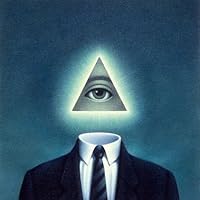
Although I don't like the cover image, it's a decent book. Crisp explores the incarnation using an analytic framework and generally sticks to a straight up orthodox interpretation. He even includes an interesting chapter touching on bioethics. Gets tedious at some points, hence the 3 rating.

February 12, 2013
Excellent
Displaying 1 - 8 of 8 reviews