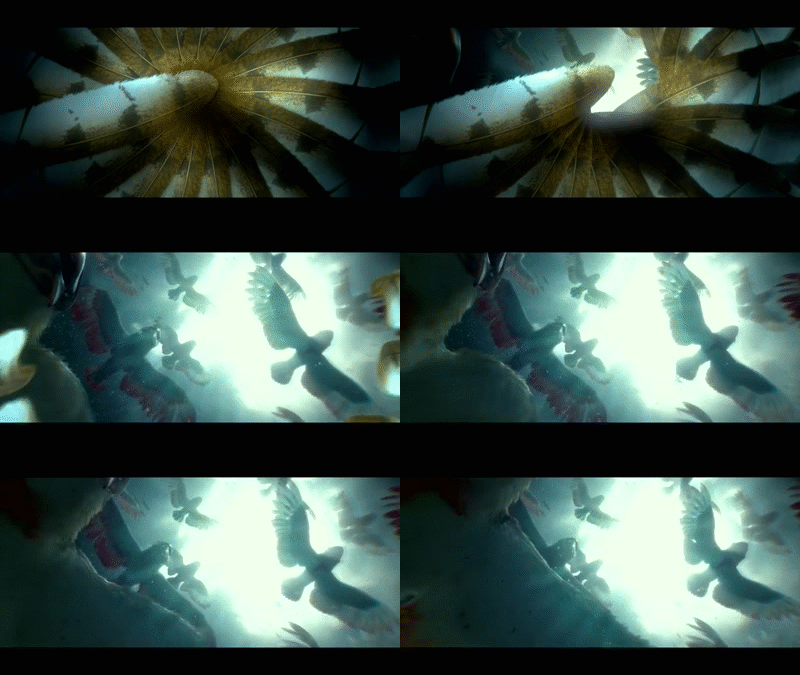
A great battle is on the horizon and drawing near. In preparation, Soren and his band must fly to the mysterious Northern Kingdoms to find allies and study the grim art of war.
Meanwhile, St. Aggie's has fallen to the Pure Ones. If they are not stopped, they will launch another, more deadly attack against the great tree. And without allies from the north, Ga'Hoole will surely fall. Soren's mission must succeed. And the final battle must be won. The coming conflagration will demand wisdom, bravery, and sacrifice from all the owls of the great tree, and from Soren and the band, nothing less the heroism.
Kathryn Lasky, also known as Kathryn Lasky Knight and E. L. Swann, is an award-winning American author of over one hundred books for children and adults. Best known for the Guardians of Ga’Hoole series, her work has been translated into 19 languages and includes historical fiction, fantasy, and nonfiction.
Pardon my excessive exclamation points, but I really hated Kludd. It's really hard to like a character who's been given a wonderful home to grow up in, only to attempt fratricide and teach that certain owls are OBVIOUSLY superior to others. Kludd's mate, Nyra, is no better.
Anyway, good job to Twilight. He ended a great evil in this book. (I also loved how he bullied the vultures. That was hilarious!)
Onward, to glory! (And more books!)
:D :D :D
This entire review has been hidden because of spoilers.
With The Burning comes the end of the series' focus on Soren, the Band, and the Chaw of Chaws. (At least so far as I've read at this time of writing, which is up to To Be a King. The focus changes again after that, but from where we seem to be going, it looks like it's going to be Coryn's story from The Golden Tree to the end.) It's a massive disappointment, of course, as the Chaw of Chaws was the single best aspect of the story. As a matter of fact, they're just about the only aspect that make any sense.
Exhibit A: The Guardians of Ga'Hoole, an ancient order of owl-knights, act like they don't have any more experienced or trusted warriors than the adolescent protagonists. The King and Queen, the teachers, all the other Guardians--they all leave every important aspect of the story up to the main characters with zero in-universe justification.
Exhibit B: Kludd's initiation into the Pure Ones inexplicably demands the murder of a family member, ignoring the fact that there couldn't be a more counterproductive method of proving one's worth; if the Pure Ones want to build a pure race/society of Tyto Albas, why would they purposefully kill off the potential breeders?
Exhibit C: There's no sense of time flow to the series. The narrative skips over massive periods, giving off the impression that only a few weeks are passing. And then a single line will suddenly clarify that years have gone by without so much as a nod.
Exhibit D: The protagonists are just as prejudiced and ruthless as the antagonists, and yet the narrative never once hints at the possibility that maybe the war isn't as morally black-and-white as the protagonists think. When the protagonists do something, it's good. When the antagonists do something, it's bad. No one questions this. Not the snakes that the protagonists have enslaved. Not the other birds that they spend so much time insulting. Not even the vultures that Twilight threatens to maim (in order to get them to join the Guardians in fighting the Pure Ones).
So I'm hoping that with the shift of focus that's coming in the next book, things will start to improve again. Unfortunately I'm starting to suspect it's not the Ga'Hoole series that doesn't work for me so much as it is Lasky's writing in general. I'm honestly wondering if what this series needed was just a brutally honest editor. There's enough here that it could have been great: an awesome team of characters at the core of the story, a secret society of owls who can use their specialized training and intellect for both war and humanitarianism (well, the owl equivalent of the term) depending on which needs doing, two opposing Big Bads to give the story some hints of moral ambiguity and opportunities for awesome team-ups and war tactics, a Cain and Abel aspect to explore psychologically, etcetera, etcetera. Instead, everything was handled in a rather clumsy fashion, and what could have been a great plot has thus far been lost on me.
The Burning is the sixth book of the Guardians of Ga'Hoole series. It was a good story with a plotline continuing from the previous books, and a great resolution when Soren's brother and archenemy is killed. There are a few references to burning throughout the book, but not nearly as strong a theme threaded through as there was in The Shattering. We are introduced to the Northern Kingdoms for the first time in the series. We find that they speak different languages, have different weather, and practice different customs. The author makes the point that different kinds of people must come together in times of need to resist spreading evil. In chapter five, we see Soren begin to doubt his worthiness for the mission that Ezylryb has assigned to him. As the story goes on, he is continually disappointed in what he is able to accomplish, though he is quick to take full responsibility for any failures. As you would expect, this great leader is truly his own worst critic. I think even in the end he fails to see how much the Guardians were able to accomplish because of his leadership. Although I must point out that a constant theme of this series is the lesser characters stepping up and doing great things. We see that in this book with Gylfie and Twilla in huge ways, and other characters to a lesser extent. There is a discussion in the book about vanity. This hearkens back to the mirror lakes when the band was mesmerized by their own reflections and deceived. Gylfie mentioned that “she knew that vanity deceived, and was not a strength, but a weakness.” Having that previous experience helped her to succeed in her mission. I think of how often in our society people are mesmerized by their own looks, and fixated on how they are viewed. Later Gylfie refers to vanity as a “thief of flight.” The loss of flight, perhaps the most precious ability of an owl, makes the point of how destructive vanity can be. There is a brief discussion of forgiveness between Gylfie and Twilla. Twilla had come to the point of forgiving her greatest enemy, Ifghar, and treating him extremely kindly. Only then could her soul heal. Even when she saw no change in Ifghar's heart, she valued the change in her own heart brought about by forgiveness. This is in sync with Soren and our great old war hero, Ezylryb, and a far cry from the hatred and revenge that consumes the heart of Ifghar, Nyra, and Kludd. It is also notable that Soren is extremely affected by the death of his brother, Kludd, even as evil as he was. In the end there is some closure when his parents absolve Soren of any wrongdoing. The Burning was a good book. It did not have the elements of a great novel that its predecessor had, but it did resolve the war with Metal Beak and the Pure Ones. It also set up the expectation of the next great villain. There's also an intriguing loose end with Ifghar. Lasky does a nice job of setting up the next book.
Bringing closure to the Cain and Abel dance between Soren and Kludd, this book is what I like to think of as the 'final' in the Guardians of Ga'Hoole series. Indeed, when I was younger, as the first six books were the only ones the library carried, I thought it was the final. It mostly centres around Otulissa's plot to invade the St Aegolius Canyons, which have by now fallen to the Pure Ones, and, were there no more books in the series, would do a credible job of wrapping it all up.
For a Ga'Hoole book, it was excellent. All the owls are dropped into a new land, facing the perils of the Northern Kingdoms, which gives Lasky scope to reveal new aspects of their characters.
I especially enjoyed reading the sections with Otulissa and Gylfie--they are great foils for one another and I've grown to love Otulissa for her intelligence, cunning, ideals, upset outbursts, and of course, her unintentional moments of humour. Probably the best example of character development in the entire series with her sudden but understandable turn to a colder, less charitable version of herself. And yet she is by this point my favourite.
Twilight, on the other hand, has a scene of shocking cruelty, one of which I do not understand and which Lasky makes no judgement on, though the situation richly deserves it. Apparently it's all right to harass a group of vultures who just helped you out even though you shore their tailfeathers off, simply because they aren't owls. Twilight is a character I like, but at this point I like him in spite of himself.
Digger, as always, never gets enough screentime.
And Soren is one of the most likeable, thoughtful characters I've ever read. As far as I can tell (I've read up to about book 10), this is the last book that focuses much on him. I'm sorry to see him lose the limelight.
The richness of the owl culture and history as always sucks me in, with all its cheery poems, songs, and Twilight's chants (raps, really). Meanwhile Lasky retains a subtle but firm touch of the mystical, with ice weapons that never dull from an ice spear that never melts, and Soren's starsight dreams, which are excellent foreshadowing, and are rarely if ever used in a heavy-handed way. The epic tone of the story is still there, bolstered by the aspiration of the owls to be better versions of themselves, and Lasky's use of telling rather than showing at times, which hearkens back to the songs that bards would sing. They are the Chaw of Chaws, the best of the best, and they will fight for their freedom.
However, the elitism of the story also proves its undoing. The Burning loses a star, as any Ga'Hoole book always will, for Lasky's blindness in creating a band of noble owls fighting against a supremacist and rather racist cult, when they themselves behave in exactly the same way towards other birds (seagulls, puffins and vultures come to mind as especial victims). Not to mention the nestmaid snakes, who are practically enslaved by the owls, and who seem to revel in their servitude. Lasky makes no attempt to comment on this beyond actually praising this order of things, which I find quite despicable.
I also dislike that Octavia seemed to naturally take on such a role in becoming Ezylryb's nestmaid snake after she had such a different life before she was blinded. As though that were all she were good for, and all she aspired to!
The scale of the book was again off, and I, a long-time fan of the series, don't actually know how much time has passed since the series began. I thought it was a year, two at most. Apparently it was "summers and summers ago". And yet Soren and the rest of the band, whilst they have grown and changed over the previous books, are still very much adolescent and do not seem to rank any higher in the Tree than a fairly talented group of teenagers would in the real world. Meanwhile, the number of owls in the Tree is still unexplained, and when you're talking war and invasion, it gets confusing.
This book would have gotten five stars had it not been for the severe moral flaws within--however, the rest of the writing and worldbuilding is good enough to overcome it--and it has to be good. The Guardians of Ga'Hoole is a series that somehow, against all odds, rises above its unsightly flaws to live up to the nostalgia it evokes in me. The nostalgia of a different and more naive time, in which I was a different and more naive young girl.
It happpeeeeened! It came to a head, war broke out but the fight is not over. The bonds of brotherhood are tested but can they ever be truly broken? The pain of this book killed me, and I have a feeling it's only going to get worse.
This series just keeps getting better and better, and the depth of it is astounding. Don't knock this one just because it is geared to a much younger audience. This series is good.
" This book was one of the greatest of a series I have ever read. It was definitely reading. One thing I loved about the series is that it tells the plot through animals, owls one of my favorite animals. To put them into a society like this is amazing. A life lesson the book teaches is to never give up on things that seem beyond lost. I have already completed the series, it has been the first series of books Iv'e read. If you were to read this series I do think you will love. Shows lots of adventure, mystery and suspense. A negative opinion I have on this is that the ending a part of the ending was sad but had a good one in the process. After reading these books I have found that books about animals in society are quite interesting books to read."
This book was a bit longer than the prior ones and enjoyed a extended story where quite a bit happened. It's pacing felt much better than some of the prior books. However, it was marred by a large helping of characters and locations that were briefly mentioned, insubstantial to the plot, and very difficult to remember. Worse, when I went to look up some of those strange characters in the back of the book, none of them were mentioned there. In addition, there were some strange elements that felt unrealistic and poorly described - especially the ice weapons that were apparently as strong as metal weapons because they were forged with "cold fire", and claws that held tiny embers that would light other owls on fire with their scratches. It's didn't feel logical, and it didn't seem like magic of some sort was being used. Lastly, there were several word choices throughout the book that I thought were strange given the audience these were supposedly written for. Are young readers really going to understand words like despotism, and do words like that really have a place when you're replacing typical words with things like Frink of Fronk?
I was planning to put these chronicles away for a bit after 6th book (there's 15 in total!) as I was getting a bit tired of it and my mental health needs some self-help books right now (I thought I was doing well so far in the lockdown but it's affecting me quite a bit right now). At 80% I started debating whether I should give this book 4 stars instead of my usual 5. But it's like the author sensed the need for a break and she delivered. It was a beautiful closure with a nice cliff hanger. I'd say books 1-6 is Part 1 of the series and I might go back to it eventually. But for now - 5 stars, as always. Love the Guardians of Ga'Hoole.
My son loved these! He read them in about 3rd grade. I didn't share his love, but then I'm an adult and I experienced the story from a totally different point of view (I mean, fighting owls??! It was hard for me to get into.) I was willing to let him read whatever it took to get him to reading fluently and I was just happy to see him immersed in a book.
The character growth is starting to show, and I love it. Gylfie and Soren are, in the first book, inexperienced owlets who can't even fly. They don't even known each other. But fate makes them meet.. *sigh* I ship it. Now they're so powerful, but still close! *sigh again*
Also, Eglantine deserves more! I want to learn more about her! I've been disappointed by the lack of information about Mark and Ruby already, so at least give Eglantine some more time in the spotlight!
The plot is good. I'm still missing my aspect of tragedy, but thee's slightly more dramatic wording, which is good.
This seems like such a concluding ending, but there's ten more books! I wonder what could happen to enlarge and carry on the story!
Kids and animal lovers are more likely to enjoy this book than teens, adults, those who prefer human stories, and those who don't care to learn when they read.
This is the sixth book in the Guardians of Ga'Hoole series, which I'm reading aloud to my younger daughter.
Things are gearing up for the big showdown between the Pure Ones and the Guardians. The Chaw of the Chaws are on a mission: Otulissa and Gylfie are to find the Glauxian Brothers' hideaway to learn more about war strategies and locate a second copy of the book on flecks that was destroyed by Dewlap, Martin and Ruby are to find a certain Kielian snake called Hoke of Hock, and the rest of them are to go to the Firth of Fangs to find Moss and implore his aid in joining forces with the Guardians to fight the Pure Ones.
I enjoyed the action in this one! We have already watched the 2010 film adaptation Legend of the Guardians: The Owls of Ga'Hoole, which combines the first six books of the series. We did enjoy the movie, but it is different from the books.
We are continuing on with the seventh book in the series, The Hatchling.
The Burning is the last of the six-book fleck/Pure Ones/St. Aggie’s arc before Lasky takes the series into a different direction. As a last book, it wraps everything up as it’s supposed to: there’s tension and uncertainty to ramp the tension up before the final battle, the villains are defeated, and great acts of bravery are performed by multiple characters.
Yet there is still much left to be desired with this “closing” of the first Soren arc (for he comes back later on in the series). The time jumps are bothersome, leaving great swathes of character’s actions to be explained in commentary or as an afterthought later on. This includes Gylfie and Otulissa leaving the Glauxian Brother’s Retreat, Soren’s insistence on not teaching the St. Aggie’s owls to fight, and Gylfie’s appeal to the Northern owls parliament. In fact, Gylfie’s entire courageous arc, where she escapes from pirates and brings an army to help out the Guardians at just the right moment, is entirely overshadowed by a brand-new viewpoint character, and her most amazing moment is never even seen, though we get some of its effect later on when she meets back up with Soren at the battle.
In addition to those odd jumps, Lasky decides to have the battle between Kludd and Soren end in a rather strange way, though at least that decision makes more sense than the random jumps in time. We get a fight between Soren and his brother, but the end result is strangely anticlimactic and unsatisfying. In fact, it seems to have been done purposefully to preserve Soren’s purity than for any other reason. Or perhaps it was to show how different Soren is from his brother—though that, of course, isn’t a necessary distinction to make since we already know that Soren is far and away the better owl.
Anyway, despite my grumblings, I still thought The Burning was a good end. It wraps up the Pure Ones arc very neatly, and it leaves room for some more growth to the series with the very brief reveal at the end with Nyra. The missteps and the strange choices are probably due to the fact that the last couple of books were published in the same year, so Lasky likely didn’t have a lot of time to really think about the choices she was making.
I did enjoy this book series a lot when I was younger so I decided to reread it and while I still liked the first two books the sixth, which I remember to be one of my favourites now felt absolutely boring and ridiculous. The plot was boring and predictable and reminded me a lot of Warrior Cats, the characters were flat and had no development over the book whatsoever and the dramatic final battle which the whole five books before had been leading up to was literally a joke and way to quick and easily won. I'm kinda dissapointed by this book now.
Absolutely love more exploration of the owl world! Once again Otulissa proves to be one of my favorite characters of this series.
Previously I complained about the lack of action from the original band and was pleased that they all seemed to be doing something at least in this one. Digger, again, faded into the background, but I remember the other three. I did like that the gang split up during their mission, as it was a great opportunity for their characters to shine away from Soren, however they still suffer from not being very strong characters.
For a moment Soren did have a moment where I thought he would have bigger consequences for his actions (). I thought his refusal would stir up conflict between him and parliament or his friends, even if Soren, to the reader, is correct. But then nothing actually happened because Soren is always right in lore too for some reason and no one can be mad at him. Alright.
SPOILER RANT:
Continuing to give this 3 stars like the rest of this series because it is entertaining and I like talking owls. I was captivated in the first half with the exploration of the Northern Kingdoms, but with the amount of telling rather than showing I started to lose interest towards the end, especially with the pattern of ending every book with a predictable victorious battle in where none of the Guardians we care about die or suffer permanent injuries.
Okay, I'm not reading any more of this series. Sentences like "they were one of the greatest threats to owlkind" just don't hit the same when you're reading it yourself compared to when it's being read seriously to you.
I like the premise, and the first book was great, but the more books you read the more flaws you see in the universe. It's really weird reading fiction aimed at children from an adult perspective because with plots like owls kidnapping children, or course that is horrifying but what is more horrifying to me is that their is no workable justice system in this world to stop these adults. Yes, the Guardians exist to rescue the children, but they do nothing to stop the abuse in the first place? This is one of the reasons why His Dark Materials is so good, because it takes the horrors kidnapping very seriously and addresses the root of the problem. Fantasy which attracts adults as well as children has thought-through consequences.
This series also has a strange mix of a systematic class system of implied racism, with the owls the unquestioned rulers of the owl universe and nest-maid snakes only want to serve them, and yet the 'evil' bad guys are those who've taken racial purity too far? Kind of like in Harry Potter how the 'good' wizards fight racial purity but also systemically oppress house elves? Kind of like how historically men fight men and their good wives demurely keep house for them?
Systems of power are so interesting, and it's so interesting how the stories we read hold so much unconscious bias in their implied values which we, especially as children, do not question.
I love how much this author applied her research though. Whilst I'll forever be a Warriors girl, the owl and weather research in this series was amazing, and the post-human world-building was intriguing, and the impact of religion and pedagogy. Respect!
Once again, the Chaw of Chaws must accomplish an impossible mission to save the owl kingdom. From recruiting the warriors of the Kielian League to create a plan to defeat the Pure Ones, these brave owls demonstrate once more why this series is so awesome.
I can't wait to discover whether Kludd's son will be an evil master as his parents or a bird fated for glory and peace.
Mini summary: Soren and the Chaw of Chaws travel to the Northern Kingdom to recruit the owls that fight with Ezylryb in the War of the Ice Talons; Gylfie and Otulissa study fleckasia; Martin and Ruby talk with the old commander and trainer of the Kielian snakes; Soren and the rest try to get Moss, a friend of Lyze of Kiel, to help them; Gylfie get kidnapped by pirates but escapes thanks to Twilla, the owl that takes care of Ifghar, turnfeather and brother of Ezylryb; Ifghar and his snake pretend to betray the guardians; the owls of the Great Ga'Hoole Tree fight against the Pure Ones with the help of the northern birds and Soren's brother is murdered.
This entire review has been hidden because of spoilers.
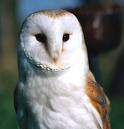
What were the odds of finding an owl on my lawn the moment I finished this book?
This installment was a little longer than the previous ones. The guardians seek support against the Pure Ones in other owl kingdoms and more side-characters, some leaving a mark while others quite forgettable, are added along with our first glimpse of owls interacting with species beyond snakes.
Gylfie has her moment to shine and I absolutely adore how Soren's emotions towards Gylfie's absence are allowed to breathe. The dynamic of the Chaw of Chaws and their relationships with one another makes the reader just as invested into the characters.
Emotional stakes are higher and I love how it introduces to kids the concept of being torn over eliminating evil through killing. Exposing children to moral dilemmas is incredibly important in the current global socio-political atmosphere so that they'd grow up immune to emotionally charged propaganda that has done irreparable damage in the world.