Librarian Note: There is more than one author by this name in the Goodreads database.
Thomas Louis Berger was an American novelist, probably best known for his picaresque novel Little Big Man, which was adapted into a film by Arthur Penn. Berger explored and manipulated many genres of fiction throughout his career, including the crime novel, the hard-boiled detective story, science fiction, the utopian novel, plus re-workings of classical mythology, Arthurian legend, and the survival adventure.
Berger's use of humor and his often biting wit led many reviewers to refer to him as a satirist or "comic" novelist, though he rejected that classification.
I sort of wrote about my fairly recent discovery and feelings about Thomas Berger in my review for Suspects, so I'll try to repeat myself too much, except maybe to say that I'm liking him even more after reading a third book of his.
I've never read Candide but from what I gather Voltaire said, or had a character say, that this was the best of all possible worlds. Smarter folks than me will know if I'm correct there, and if I'm not please just substitute whomever actually famously issued that sentiment for any possible Voltaire references in this review.
An ordinary, run of the mill middle aged copy-editor, a schlub, gets caught in a freak rainstorm without an umbrella and with a coat that is failing in it's job of protecting the wearer from the elements. It's one of those unlucky little moments in life, he's already running late to work, and now his day is being made even worse by the weather and he takes refuge under an awning to wait out the torrential downpour. There he meets a man who offers to change his past for him, the humdrum and fairly uneventful life he's been leading can be changed. After some initial disbelief in the fantastical offer he accepts and has his name changed and after he sees that this little man was able to literally change his name (everyone knows him now by his new name, without any memory that he had just an hour earlier had a different monkier) he allows the little man to change his past.
If you could be anything, or to be more percise if you could have done anything in the past what would you have done, or been?
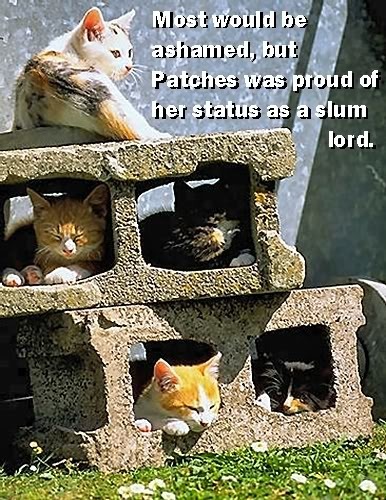
Kellog's (that would be the man with his new name) chooses first to be wealthy, like wealthy to the point where there are skyscrapers in New York City bearing your surname wealthy. And like that, the man's past is replaced with all he events that someone who is richer than Trump would have lived through (the man still retains a certain level of memory about his 'real' self throughout all of this). He now drives around New York City drinking champange in the back of a Rolls Royce. He beds beautiful women who his ex-professional Football playing bodyguard / driver procures for him. He can decide to go on extravegant vacations on a whim, oh and he's also an unethical slum lord who has a tendency to hire goons to beat up tenants that won't move out of prime real estate that he wants to develop and keeps his buildings in sub-third world conditions. No one is perfect.
(I'm writing a book report, wow! This calls for a LOLcat type picture!
)
Anyway, Kellog is disgusted with this 'other' version of himself and he has his life changed back to the unremarkable life he'd been living. Passing up the fabulous wealth and fucking super-model caliber women for his middle class life and faithful but passionless marriage. But when a disaster strikes in the family he opts to save his family anymore pain by causing them to cease to exist by having his own past once radically changed again.
The bulk of the book is made up of what Kellog's other two possible lives would have been. The first when he chooses to be funny (because he didn't really like the person he was when he was rich, and how can being funny be awful, right?) and leads the life of a Sinatra Rat-Pack era stand-up comedienne. And when that life turns out to be not as fun filled as he would have thought, he opts to help other people and leads a third-alternate life as one of those call-in radio shrinks (this scene (actually this whole book but this scene in particular) is really reminiscent of Stanley Elkin (Dick Gibson Show).
Each of his three alternate lives is filled with it's own problems, which may or may not be worse than the problems that exist in Kellog's 'real' life, but I think most people would agree that none of the alternate lives are perfect any standard.
I thought that finishing up a review that has been pretty much only a book report deserved one more lolcat, so I googled Stanley Elkin and lolcat, and surprisingly none of the results on the first couple of pages had anything to do with Stanley Elkin (Note to self, this is an abscene on the internets that needs to be filled! I see myself publishing a book version of my lolcats making references to underserevedly underappreciated novelists by next Christmas), but I think this picture that was on the first page of image results sums up my feelings towards my recent discovery of Thomas Berger....
And now maybe do yourself a favor and read some Thomas Berger (and Stanley Elkin) so you can look like this happy puppy too!
Changing the Past is not as funny nor as twist-filled as Berger's other works. It's story, despite its fantasy element, is more dramatic, following the character through long portions of his life in each succeeding version. There are laughs along the way, most of them having to do with awkward sexual developments, and his lives as a stand-up comic, a book writer, and a radio psychiatrist are well-informed and very interesting, but the book doesn't have the spark or dexterity, the twist a minute fun, that his other works have.
I’ve never read a Thomas Berger novel before reading and appreciating CHANGING THE PAST. Judging from the 87 ratings and 12 reviews this book has received on Goodreads, I’d guess that I’ve now entered a fairly exclusive cohort. Goodreads lists another 15 or so novels by Berger, enough to imagine that he was a serious writer who worked at his craft. I hope he felt satisfied with his craft and his reception.
Such musing is not entirely beside the point. CHANGING THE PAST features a main character, Walter Hunsicker, who is not entirely satisfied with his profession as the chief copy editor for a minor publishing house. Nor is he entirely satisfied with his personal life as the husband of a fairly ordinary wife with whom he has one child, a boy who proves to be gay but is nonetheless cherished by his parents. (That “nonetheless” is something Berger would say - and is a hint to why time has passed this novel by. The characters are people of conventional beliefs whose grappling with cultural phenomena of the early 1990s are of no interest to 21st Century publishers of fiction, as engaging as they might be to the right readers.)
Hunsicker meets a gnome-like fellow who offers him the opportunity to change the past, in an effort to address the unsatisfactorily ordinary nature of his life. He chooses to become a comedian. When that life, 80 pages later, also proves unsatisfactory, Hunsicker returns to the nondescript shop of the gnome to complain. He’s offered another chance. He chooses to be a fiction writer. 80 pages later, this also brings no lasting joy. Again he returns, and again gets to change. This time, he becomes a Dear Abby of the radio, dispensing life advice to callers despite his lack of qualifications. 80 pages later, he visits the gnome once more to revert to his initial life.
Mentioning the ending should not count as a spoiler. How else could this novel end? The point is pretty simple. We can’t change the past, and we don’t get do-overs. We simply cope as best we can with whatever life hands us.
The experience of reading CHANGING THE PAST is itself a form of time travel. With the (dare I say rigid?) expectations we have for serious fiction in 2025, it’s pretty safe to say that this book will not enjoy any sort of resurgence. 21st Century readers will bridle at some usages they’ll deem racist or sexist, mild as those offenses might be. The lack of a political or cultural stance will make reading this story seem in inconsequential. Still, despite Berger’s style which seems to hold any emotional engagement at arm’s length, the novel is still worth reading. The three life stories are well developed and interestingly explored. Berger’s understated humor is enjoyable. The novel does what novels should do - it engages the reader in the moment, and provokes questions worth asking and revisiting. CHANGING THE PAST may speak more immediately to a bygone time, but still speaks to our own.
I consider Thomas Berger, many of whose books I have torn through w/ gusto over the years, as the American Poet Laureate of Foible. He writes w/ a kind of benevolent understanding about moral failings small and not so small. His characters are fallible, they do resoundingly questionable things, and are all the same granted their humanity. Berger's books are written in clean, sober prose, but are extremely vibrant and always funny. They contain insights into the human condition, often served w/ masterful panache, but are never showy or pedantic. He is a master of a certain kind of fun populist literary fiction that I cherish, and I have in the past often grouped him w/ Charles Portis in this respect. They may be the two American writers who have at their best given me the most straight-up goodtimes pleasure, and their mastery of plotting is similarly effortless (in fact, the bulk of what both writers do seems effortless). Many of Berger's books could be said to be built around gimmicks, CHANGING THE PAST being a fine exemplar of this. I do not in this context use "gimmick" as a pejorative. Oh, far from it. The way Berger deploys them is fundamentally born of a kind or rakish playfulness. The gimmick that anchors CHANGING THE PAST is this whole gambit of a character presented w/ the fanciful opportunity not to live different lives so much as to try on the experience of having had already lived them. The logic of all this is payed scant attention; there are many questions raised relating to fundamental paradoxes inherent in this gambit that are blithely ignored, while technical complications are set aside in order for fun to be had and a couple pretty simple (but totally goddamn salient) life-lessons deliver'd. The best running joke revolves around a certain tone of comically exulted despond that caps-off each windingly-delineated alternative past. Outsized lives in this world (which is more or less our world) tend to involve outsized complications for outsized egos. CHANGING THE PAST is a panegyric for the rich complexities of the ostensibly simple life and a call to be attentive to the many considerable pleasures we may occasionally fail to notice immediately at hand. It is also, at the end of the day, or at least the end of the book, an encouragement to do at least some of our living for the Other.
My word. Every iteration of this dirtbag was more odious than the last. He was an unbearable wanker starring in his very own unbearable wank-fest. The Secret Life of Walter Mitty plus the Dickensian ghosts of Christmas past. Hunsicker is an Icarus who plays god and learns “there’s no place like home”. It is a well-written book in that I thoroughly despised the protagonist but forgave him all when he humbly returned to, and accepted, life as an ordinary shmuck.
A chance meeting with a stranger gives Walter Hunsicker a chance to become Jack Kellog in several different alternate realities. Basically there are only 5 chapters. Each of the first 4 chapters are about a new alternate reality. He is not happy so asks for a new reality. Think of it as 4 novellas, each introduction by the stranger. Chapter 5 the stranger wraps it up.
It’s a shame that Berger is pretty much known only for Little Big Man, there is so very, very much more to him.
Before the Seven Lives of Evelyn Hugo and all those of that ilk, there was Berger‘s Changing the Past. CtP is not only earlier than those books, it is better—hugely better.
Reread this after many years. While the writing is a little dated ( justifiably so...the book is decades old!) his stories are always quirky and his prose is always on target. I'll have to find some more of this excellent writers work.
By the author of Little Big Man. The usual what if you could change your life and live it over again book. It is a classic be careful what you wish for book. Berger is a good writer, but I don't think this is his best work. I did enjoy it.
Walter Hunsicker is given the opportunity to change his past by a shabby stranger in a dusty medical supply store. He does so four times and of course, like George Bailey, ends up embracing his original life.
The portrayal of his first reincarnation is the only one that meets the title description - the past has been changed and Hunsicker walks out of the shop as John Kellog (the name used in all his reincarnations) real estate tycoon. The three subsequent reincarnations get more elaborate treatment. The first, a Don Rickles-like insult comic, gets a full-blown Bildungsroman (or Bildungsnovelle); the second, a novelist, starts out with Kellog in college; the third, a radio call-in psychologist, is the sketchiest, told much more than shown, in which Berger concentrates mainly on the voices of the callers and their sometimes elaborate problems.
I had the feeling that much of this material might have been drawn from ideas for novels which Berger was unable to work into satisfactory shape. The comedian and novelist sections are rather cliched versions of their individual milieus, while the radio host story is barely realized, though the callers partake of the anonymous cases who appear in Miss Lonelyhearts and The Dick Gibson Show.
The disparate material isn't integrated: there are no overlaps of characters or situations between the various incarnations and, despite the framing Hunsicker story and its transitional episodes, do they form any sort of logical or emotional progression.
Berger's writing on a sentence and scene level is, as usual, engaging, well-constructed, and precise.
It was a peculiar experience for me to reread this novel, the first I had ever read by Berger (this book came out in my first year of college). I was impressed enough with it to desire to read everything Berger wrote (which I have now almost succeeded in doing). However, upon rereading I found this novel to be among Berger's weakest. The conceit, that because of a personal trauma the protagonist takes advantage of a happenstance opportunity (not explained--we are in the realm of the fantastic) to change the circumstances of his life multiple times in search of a happier outcome, is good and _should_ have led to an interesting story at the hands of a conceptual and artistic writer like Berger so often was. Instead, the work feels like a collection of incidents left over from other works (in particular, the life in which the protagonist becomes a semi-successful novelist, reads like an excised chapter from _Reinhart in Love_, Berger's second novel). Too often Berger is unable to find the proper balance between excessive exposition and meaningless detail of incidents. The prose itself is often shoddy and shows signs of having been rushed through rather than carefully polished and edited. The one thing about the book that could sustain some critical scrutiny is the relationship between the crisis faced by the main character (the impending death of his gay son from AIDS) and the negative attitude expressed toward "sexual deviants" by his several alter egos. Clearly, Berger meant to make a satirical statement about prejudice (he dedicated the novel to Ralph Ellison), but it ultimately fails to come off coherently.
First, to prevent disappointment, this is not a time travel book. Something I read must have given me that impression, perhaps the idea of "being able to go back and relive your life until you get it right" along the lines of Time Lottery. But this has nothing whatsoever to do with a time travel premise. Second, I could not wait to finish this book (I almost stopped reading it, which should tell you something right there). It is supposed to be humorous, but most of the humor must have escaped me. Instead, the author used the ability to change the protagonist's life to set up three different scenarios of how things might have turned out. These were not very interesting (in my opinion) and were generally glum. In the end, the only thing I could take away was a message like the one out of the Wizard of Oz, "There's no place like home" merged with "The grass is always greener".
Overall, I give this a 1.5 as a time travel novel (which is generous because as I say it is not a time travel novel and it does not compare well to Replay or Life After Life), perhaps 2-3 overall.
Re-read and re-evaluated. I had 4 stars before. I don't know what I was thinking. Most of my re-evaluations of Berger have not been good. It's not that he isn't a competent writer. It's just that there's an underlying nastiness that I probably liked before, but now, not so much. In the book it's not so much that he's changing the past as he just becomes totally different people without that much reflection on who he was originally. Now I'm this, now I'm this. Did you learn anything other than life sucks?