

What do you think?
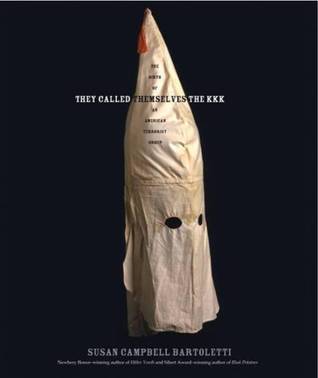
They Called Themselves the K.K.K.: The Birth of an American Terrorist Group
"Boys, let us get up a club."
With those words, six restless young men raided the linens at a friend’s mansion in 1866. They pulled white sheets over their heads, hopped on horses, and cavorted through the streets of Pulaski, Tennessee. Soon, the six friends named their club the Ku Klux Klan and began patterning their initiations after fraternity rites, with passwords and mysterious handshakes. All too quickly, this club would grow into the self-proclaimed “Invisible Empire,” with secret dens spread across the South. On their brutal raids, the nightriders would claim to be ghosts of Confederate soldiers and would use psychological and physical terror against former slaves who dared to vote, own land, attend school, or worship as they pleased.
This is the story of how a secret terrorist group took root in America’s democracy. Filled with chilling and vivid personal accounts unearthed from oral histories, congressional documents, and other primary sources, this is a book to read and remember.
172 pages, Hardcover
First published August 1, 2010
About the author
Susan Campbell Bartoletti
32 books243 followersSusan Campbell Bartoletti is an American writer of children's literature. She was born in Harrisburg, Pennsylvania, but eventually the family ended up in a small town in northeastern Pennsylvania. Susan started as an English teacher and inspired many students before deciding to pursue writing in earnest. She sold her first short story in 1989. Three years later in 1992 she published her first picture book, Silver at Night. She held a rigid routine, awaking early in the morning in order to write before she left to teach. In 1997 she turned to writing full time. Susan has since returned to inspiring future writers. She teaches writing classes at a number of MA and MFA programs, among them Spalding University in Louisville, Kentucky, and Hollins University in Roanoke, Virginia. Additionally she leads workshops offered through the Highlights Foundation.
Ratings & Reviews
Friends & Following
Create a free account to discover what your friends think of this book!
Community Reviews
Displaying 1 - 30 of 567 reviews

September 10, 2010
Let us be very clear: the KKK was a horrible group who committed terrible attrocities against other human beings.
That is exatly the point the author makes in this really important, but definately uncomfortable to read, book. Bartoletti is unflinching in her assesment of the Klan & what they did. She writes, as she states in notes at the end of the book, to memorialize the victims of the Klan violence.
As awful as it is to read about the acts of the KKK, I personally think that understanding this aspect of American history is just as important as understanding the Holocaust in world history. We can never allow ourselves to go there again.
Pair up this book with Marc Aronson's Race: a History Beyond Black and White for a deeper understanding of how racisism has shaped our country. Powerful reading for adults and middle-high school students.
That is exatly the point the author makes in this really important, but definately uncomfortable to read, book. Bartoletti is unflinching in her assesment of the Klan & what they did. She writes, as she states in notes at the end of the book, to memorialize the victims of the Klan violence.
As awful as it is to read about the acts of the KKK, I personally think that understanding this aspect of American history is just as important as understanding the Holocaust in world history. We can never allow ourselves to go there again.
Pair up this book with Marc Aronson's Race: a History Beyond Black and White for a deeper understanding of how racisism has shaped our country. Powerful reading for adults and middle-high school students.

January 4, 2011
The Klan was first formed after the American Civil War, during Reconstruction. The South was decimated and now the North was struggling to rebuild a united nation, one that would not be based on slavery. Some in the American South came to view Klan as the last defenders of the "lost cause," a resistance against the tyrannic social and economic regulations of the North. Can it be argued that some or most of these hooded villains were actually heroes resisting big government? No. Bartoletti demonstrates that whatever these hooded white men thought they were defending themselves against, it was the freed people that had the most difficult life after the Civil War. White landowners lost loved ones during the war and much of their property was destroyed. However, Bartoletti explains, if the Klansmen's were defenders of the "lost cause," the lost cause seemed to be about little other than harassing and ruthlessly abusing blacks, unless it was preventing whites from helping blacks to attain equality.
The story of Hannah Tutson suggests that the Klan understood the "lost cause" to be synonymous with the oppression of blacks. Tutson and her husband Samuel managed to acquire three acres of land, which unfortunately struck the Klan as "uppity." As punishment for their ambition, Samuel was beaten, their child was injured, and Hannah was beaten, whipped, and raped. Her complaints to the authorities led to acquittals, followed by a fine for making false allegations against whites. The Klan also attacked whites who supported the Republican party, the education of blacks, or other policies that promoted racial equality. Clearly, this was not the Birth of a Nation, but rather The Birth of an American Terrorist Group.
History is a tricky thing, and it is often more plastic than we should prefer. This history is very ugly, painfully ugly, and it might seem reasonable to soften it for students, Bartoletti's primary audience here. It seems that the parts of history that are most shameful are the ones that are most likely to be softened. Bartoletti's account is not softened, and she even takes the time to admit her regret if readers are offended by any material that has not been edited from any primary document, no matter how offensive the language may sound to our contemporary ears. There is a great deal of hate in They Called Themselves the K.K.K., but there is also reason to hope.
Throughout the history, Bartoletti includes numerous political cartoons lambasting the Northern politicians for their hypocrisy and the South for its acceptance of the Klan. There are many stories of people that made significant sacrifice to help others, particularly teachers and missionaries that moved South, even if they were harassed and in some cases hanged by the Klan. Bartoletti leaves the final chapters of the books to detail the often amazing efforts that Southern blacks made to engage in public education and to save their money even while white Southerners tried to reconstruct racial stratification that mirrored slavery. It's quite impressive to read about what they endured and accomplished, often with little more than a resilient spirit.
Sadly, these freed people would need that resilience for many years to come.
Perhaps the most plastic aspect of history is the concept that there are beginnings, middles, and ends. Bartoletti's history focuses on the first organization of the Klan, but although it officially disbanded after President Ulysses S. Grant's federal intervention, racial discrimination was hardly over. The Jim Crow laws would soon begin eroding the rights of the blacks in the South and hooded terrorists would return at other periods of American history to promote racial inequality, hatred, and abuse against others.
The story of Hannah Tutson suggests that the Klan understood the "lost cause" to be synonymous with the oppression of blacks. Tutson and her husband Samuel managed to acquire three acres of land, which unfortunately struck the Klan as "uppity." As punishment for their ambition, Samuel was beaten, their child was injured, and Hannah was beaten, whipped, and raped. Her complaints to the authorities led to acquittals, followed by a fine for making false allegations against whites. The Klan also attacked whites who supported the Republican party, the education of blacks, or other policies that promoted racial equality. Clearly, this was not the Birth of a Nation, but rather The Birth of an American Terrorist Group.
History is a tricky thing, and it is often more plastic than we should prefer. This history is very ugly, painfully ugly, and it might seem reasonable to soften it for students, Bartoletti's primary audience here. It seems that the parts of history that are most shameful are the ones that are most likely to be softened. Bartoletti's account is not softened, and she even takes the time to admit her regret if readers are offended by any material that has not been edited from any primary document, no matter how offensive the language may sound to our contemporary ears. There is a great deal of hate in They Called Themselves the K.K.K., but there is also reason to hope.
Throughout the history, Bartoletti includes numerous political cartoons lambasting the Northern politicians for their hypocrisy and the South for its acceptance of the Klan. There are many stories of people that made significant sacrifice to help others, particularly teachers and missionaries that moved South, even if they were harassed and in some cases hanged by the Klan. Bartoletti leaves the final chapters of the books to detail the often amazing efforts that Southern blacks made to engage in public education and to save their money even while white Southerners tried to reconstruct racial stratification that mirrored slavery. It's quite impressive to read about what they endured and accomplished, often with little more than a resilient spirit.
Sadly, these freed people would need that resilience for many years to come.
Perhaps the most plastic aspect of history is the concept that there are beginnings, middles, and ends. Bartoletti's history focuses on the first organization of the Klan, but although it officially disbanded after President Ulysses S. Grant's federal intervention, racial discrimination was hardly over. The Jim Crow laws would soon begin eroding the rights of the blacks in the South and hooded terrorists would return at other periods of American history to promote racial inequality, hatred, and abuse against others.

November 2, 2022
This is an excellent history of the domestic terrorist group known as the Ku Klux Klan (KKK). It is written for Young Adults but I enjoyed it greatly (and I am no longer a young adult--I can remember the moon landing, thus making me as ancient as the hills). The author uses a lot of primary sources, such as interviews, journals, and newspapers. The book is well-illustrated, using many photos and images from such newspapers as "Harper's Weekly." Some of the images are caricatures and are racially offensive. Hurtful, yes, but showing the kind of thinking of the time...Unfortunately, although the time period of the Reconstruction (1865-1877) is over, we are still struggling with racism and terrorism within our society.

June 17, 2020
I didn't realize until I started reading this book that it's a YA history, not a bad thing. It gets straight to the gist of who and what the KKK is. Filled with extreme hatred and violence, they're not good folks. This book gives lots of gut-wrenching examples of why. It's not light reading, but it told me all what I wanted to know, and plenty more.

June 11, 2013
I recommend this book on the basis of it's history. The author does a very good job of remaining unbiased and uses a lot of direct quotes from people living in that time. It's very well put together and easy to follow. It also comes with a timeline in the back that lists all civil rights incidents from the civil war until current time which I thought was really interesting.
I cannot and will not recommend the audio version. The narrator is awful. He does voices for the people who are 'quoted' which makes them sound like cartoon characters and pulls you out of the story making it feel like a fiction book. At one point he did an Irish accent for an Irish immigrant that was so bad I almost stopped listening all together. Definitely pick up the book on this one.
I cannot and will not recommend the audio version. The narrator is awful. He does voices for the people who are 'quoted' which makes them sound like cartoon characters and pulls you out of the story making it feel like a fiction book. At one point he did an Irish accent for an Irish immigrant that was so bad I almost stopped listening all together. Definitely pick up the book on this one.

November 16, 2016
Absolutely fascinating but way too short. There was a real opportunity here to delve deeper, to make important connections about the history of the KKK to the practices in our current justice system. This is more like an essay than a book, but its subject matter makes it well worth reading.
The KKK was formed to protect the right that Whites had always enjoyed over Blacks. When black people were granted freedom, groups of those in the South, did their level best to keep the power where they thought it belonged. Many of the complaints, quoted just as they were said 100 years ago or so, sound a lot like the complaints about black people today. For this reason alone, this book is a must read.
The author should have done more to discuss at length the change in party from Southern Democrats to the new Republicans. People, like Ben Carson, seem very confused about who democrats are now and who they were back in the time of Jim Crow. Carson (and anyone who has ever suggested that democrats are the reason slavery existed in the first place or suggested that MLK was a Republican and stood in opposition to the Democrats) obviously never took an intro to political science class. Perhaps this book would help them better understand what a Southern Democrat was and how they are not the Democrats of today and in fact the Republicans of today.
I would follow reading this book with reading Give Us the Ballot by Ari Berman. It will help fill in many gaps left by Bartoletti.
The KKK was formed to protect the right that Whites had always enjoyed over Blacks. When black people were granted freedom, groups of those in the South, did their level best to keep the power where they thought it belonged. Many of the complaints, quoted just as they were said 100 years ago or so, sound a lot like the complaints about black people today. For this reason alone, this book is a must read.
The author should have done more to discuss at length the change in party from Southern Democrats to the new Republicans. People, like Ben Carson, seem very confused about who democrats are now and who they were back in the time of Jim Crow. Carson (and anyone who has ever suggested that democrats are the reason slavery existed in the first place or suggested that MLK was a Republican and stood in opposition to the Democrats) obviously never took an intro to political science class. Perhaps this book would help them better understand what a Southern Democrat was and how they are not the Democrats of today and in fact the Republicans of today.
I would follow reading this book with reading Give Us the Ballot by Ari Berman. It will help fill in many gaps left by Bartoletti.

November 4, 2025
They Called Themselves the KKK: The birth of an American terrace group by Susan Campbell Bartoletti is an eye opening NF account of hate and racism in America. Sadly, it continues today. It is strong in the white house. A man who calls himself the leader of the USA is destroying America on state at a time. Most eye opening was the authors note at the end. Very sad America has not moved beyond.

January 30, 2016
I had the pleasure of hearing Susan Campbell Bartoletti speak a couple of years ago. She called doing research "an extreme sport." Bartoletti writes this very succinct and comprehensible book about the history of the KKK where she includes the voices of those victimized and contextualizes America's terrorist group birth after the end of the Civil War. I was shocked by how pervasive this group became so quickly and how the state government did so little to interfere. I also was shocked by the results of the Klan trials and the little to lax punishment, let alone rehabilitation, for murderers and terrorists. Oh how the government failed us all from the beginning.
In the midst of the Black Lives Matter movement and this new Islamaphobia, this book is a must read.
What I appreciated most of all was the narrative source notes and bibliography at the end where Bartoletti takes us through her "extreme sport" journey in researching this text from all the secondary sources she used, primary sources, travel and lastly her own visit to a Klan congress in 2006. For any middle schooler, this section shows Bartoletti's passion, curiosity, determination and courage in bringing to light this dark and literally white-washed over part of America's history. Also, I like that she ends with the voice of a Black woman who was a little girl when the Civil War ended and she got to experience being with her family for the first time.
In the midst of the Black Lives Matter movement and this new Islamaphobia, this book is a must read.
What I appreciated most of all was the narrative source notes and bibliography at the end where Bartoletti takes us through her "extreme sport" journey in researching this text from all the secondary sources she used, primary sources, travel and lastly her own visit to a Klan congress in 2006. For any middle schooler, this section shows Bartoletti's passion, curiosity, determination and courage in bringing to light this dark and literally white-washed over part of America's history. Also, I like that she ends with the voice of a Black woman who was a little girl when the Civil War ended and she got to experience being with her family for the first time.
October 18, 2016
They Called Themselves the K.K.K. by Susan Campbell Bartoletti is a non-fiction historical book, published in 2013, telling of how an American terrorist group became and went. In my own opinion, I found the book to be really quite informative and it tells everything in a step-by-step way and even has a civil rights timeline telling of slavery and the Ku Klux Klan. The timeline is the REAL step-by-step guide as it as it tells by the year. In the timeline, one of them tells that in 1925, the Ku Klux Klan marches on Washington with 50,000-60,000 Klansmen and women. Some said about 200,000. The book is mostly based around the conflicts of slavery and the terrorist group. Generally, it takes place around presidential houses and states/specific places in those states where the K.K.K. had settled and or terrorized. The main plot line is that Lincoln frees southern states of slavery and the civil war ends two years later than the freeing. The K.K.K. arises and begins riots, murders, burning crosses, and many other terrorizing acts. It's an up and down roller coaster of slavery and terror and you'll just have to read to find out all the details! I'd recommend this to all ages 8+ depending on the maturity level.
This entire review has been hidden because of spoilers.

February 13, 2023
In 2023, I am working my way through lists of books that have been removed from libraries. My end goal is to understand why. Some books are easier than others to understand why the ideas contained in the book may have been offensive. This one ☝️ not so much. The history is solid and uses primary source material as it tells the terrifying story of the black experience under the rule of the KKK.
“Some white Southerners didn’t oppose education for the freed people, but they did object to the school’s curriculum, saying undermined the notion of white supremacy. They complained that Northern teachers and missionaries taught subjects such as geography and history from a Yankee point of view and that they filled their lessons with radical equality.”
Radical equality 🤔 May we all be known for radically believing in the worth of all humans and fighting for radical equality.
“Some white Southerners didn’t oppose education for the freed people, but they did object to the school’s curriculum, saying undermined the notion of white supremacy. They complained that Northern teachers and missionaries taught subjects such as geography and history from a Yankee point of view and that they filled their lessons with radical equality.”
Radical equality 🤔 May we all be known for radically believing in the worth of all humans and fighting for radical equality.
March 16, 2012
I learned a lot while listening to this book. The author does a great job in laying out how the K.K.K. was started and the start of their reign of terror in the south. As you listen to the narrator you can sense the feelings from the individuals who were talking in the book and how the emotions affected them and their families. They picked the perfect person to narrate this book. Through his voice he puts you in the South throughout the book as he tells the story. Campbell doesn't hold anything back in this book and describes actions, in-actions, lynchings, and other events as they happened.

September 2, 2026
A really informative and harrowing book. Another one I wish we'd had to read in school, felt like it was brutally honest in a way my history books weren't.

September 14, 2011
I was pleasantly surprised by this book. Bartoletti excellently blends facts, documents, and emotional stories in this true account of life for African Americans after the Civil War. What I enjoyed most was that this book was more about the struggle and plight of African Americans then the rise of the KKK. I loved the human interest stories, even those with gruesome details, because I feel they bring a personal side to this story. This is such an emotional and encompassing time period that a lot of the details are usually summarized in history books and text books. With this book, students are brought into that period of time on a personal level. A book of this nature could have easily been biased or one sided. Bartoletti gives us the “good” and the bad for every perspective and side. I liked when she discussed a specific family or situation early on and then we found out what happened to that family as the book progressed. I am amazed at the courage of the African Americans and those whites who were willing to help. I am sickened by the amount of lives lost due to the intolerance and ignorance of those involved. This is an excellent book to accompany a Civil war unit especially when focused on Reconstruction. This would be especially beneficial in the Middle School setting for the “Video Game” generation who has grown up disconnected from the human side of violence.
September 27, 2011
They Called Themselves the KKK: The Birth of an American Terrorist group is a vivid account of the rise of the KKK at the end of the Civil War. Susan Campbell Bartoletti clearly did her research in this thorough account of the Klan. The book details a fascinating and horrifying time period in American History, from the birth of the Klan in Pulaski, Tennessee in 1866, through the end of the Reconstruction period. Barotletti makes her story come alive by including several primary source documents, quotes, photographs, and political cartoons from the time period. In this way, she lets real people tell their story. Her focus is not so much on the Klan itself, but on the Klan's many victims, and the heroic ways they stood up to Klan violence. The various primary sources included in the book could easily be used in a lesson on the KKK. At the end of the book, Bartoletti includes a Civil Rights timeline to help readers keep track of the events, as well as meticulous source notes. This book is most appropriate for 7th - 12th grade. Not surpisingly, this book has won several awards, including the ALA Notable Children's Books - Older Readers Category:(2011), Booklist Editors' Choice - Books for Youth - Older Readers Category(2010), and the School Library Journal Best Books(2010).

January 29, 2012
An excellent resource for both young adults and adults,
They called Themselves the K.K.K.
presents a distillation of considerable scholarly material and witness testimony. In Bartoletti's work, we are given a concise and understandable treatment of the topic. The many brief narratives that are included add human interest. (These pay homage to the many Klan victims, including "uppity" sharecroppers who industriously worked the land and teachers who traveled from the North to aid in the education of freed slaves hungering for literacy and independence. Even those who housed such teachers were in danger).
The author's note at the end of the text—in which Bartoletti discusses her research process, including her visit to Pulaski, Tennessee and her attendance at a contemporary Klan gathering—is well worth reading. Until I read this book, I had no idea about the huge early membership in this "home-grown" terrorist group and its resurgence in the 1920s. Bartoletti helps the reader understand how the KKK, like present day terrorist organizations, sprouted in the fertile ground of the resentment, poverty, humiliated pride, and post-war devastation of the reconstructionist South.
This would be an excellent title for students to use. Recommended for grades 7 and up.
The author's note at the end of the text—in which Bartoletti discusses her research process, including her visit to Pulaski, Tennessee and her attendance at a contemporary Klan gathering—is well worth reading. Until I read this book, I had no idea about the huge early membership in this "home-grown" terrorist group and its resurgence in the 1920s. Bartoletti helps the reader understand how the KKK, like present day terrorist organizations, sprouted in the fertile ground of the resentment, poverty, humiliated pride, and post-war devastation of the reconstructionist South.
This would be an excellent title for students to use. Recommended for grades 7 and up.

June 18, 2017
When first starting reading "They Called Themselves the K.K.K.: The Birth of an American Terrorist Group" I was a mix between intrigued about knwoing more about the mysterious group as well as a little hesitant on the genre of informational. I have previously not enjoyed reading informational books because they are so heavy with information and harder to read. I was pushed through this thought by the interest I have for the Ku Klux Klan.
I love how the book progressed with the flow of time. The author, Susan Bartoletti, did very well in the aspect of following the events in the time that they took place in history. I loved being able to see how exactly the Klansmen formed the secret society. It was very interesting to hear how they started as none violent and progressed to such harsh acts of violence.
With hving all of the specific dates of the activities of the Klansmen, it was also intriguing to read about some of the specifics. Being able to read actual quotes from people involved in the time period was wonderful. I never doubted that I was getting a real telling of history with so many smal details included and everything so well explained. I would recommend this book to anyone who would like to know more about the Ku Klux Klan and its founding.
I love how the book progressed with the flow of time. The author, Susan Bartoletti, did very well in the aspect of following the events in the time that they took place in history. I loved being able to see how exactly the Klansmen formed the secret society. It was very interesting to hear how they started as none violent and progressed to such harsh acts of violence.
With hving all of the specific dates of the activities of the Klansmen, it was also intriguing to read about some of the specifics. Being able to read actual quotes from people involved in the time period was wonderful. I never doubted that I was getting a real telling of history with so many smal details included and everything so well explained. I would recommend this book to anyone who would like to know more about the Ku Klux Klan and its founding.

January 18, 2011
I was immediately impressed by this book when I saw the title: They Called Themselves the K.K.K.: the birth of an American terrorist group. Just the sub-title provides a context that is not often explored (certainly not in public schools)--the fact that the K.K. K. WAS a terrorist group. It is important for teens to be able to associate that word with ALL terrorist organizations, not just the ones currently dominating the headlines.
Bartoletti does a wonderful job of combining extensive historical research with compelling historical images to create an impeccably researched and illuminating look at her subject. So many non-fiction books for teens offer lots of great images, but only a cursory look at the topic. This book, by contrast, does not skimp on the information, but does it in a highly readable way AND offers fascinating images that keep the reader engaged.
I was amazed at everything I learned about the KKK reading this book. I am not a historian by any means, but the information presented did appear to be as authoritative as you can get without the book being a scholarly text.
Bartoletti does a wonderful job of combining extensive historical research with compelling historical images to create an impeccably researched and illuminating look at her subject. So many non-fiction books for teens offer lots of great images, but only a cursory look at the topic. This book, by contrast, does not skimp on the information, but does it in a highly readable way AND offers fascinating images that keep the reader engaged.
I was amazed at everything I learned about the KKK reading this book. I am not a historian by any means, but the information presented did appear to be as authoritative as you can get without the book being a scholarly text.

January 30, 2011
I read this because it was part of School Library Journal's Battle of the Books. It covers the K.K.K. from its birth around the end of the Civil War until the end of Reconstruction, when (at least outwardly) Klan activities diminished, only to return in the early 20th century.
Bartoletti does an excellent job of showing the horrors of the early Klan and explaining how both the whites and the blacks felt intimidated by each other. Complete social change is difficult, and Reconstruction's effort to create equality for all ultimately fails.
I found this book to be fascinating. It is difficult to read in some spots, because Bartoletti doesn't pull any punches when it comes to relating the horrors of the acts committed by the Klan. I really appreciated her use of primary source accounts of both African-Americans and Klansmen.
Is this a book for everyone? Probably not. It is definitely of interest to those of us who live in the South, but I"m not sure how much relevance it would have to people from other regions of the United States (I'd love to know other's opinions about that).
Bartoletti does an excellent job of showing the horrors of the early Klan and explaining how both the whites and the blacks felt intimidated by each other. Complete social change is difficult, and Reconstruction's effort to create equality for all ultimately fails.
I found this book to be fascinating. It is difficult to read in some spots, because Bartoletti doesn't pull any punches when it comes to relating the horrors of the acts committed by the Klan. I really appreciated her use of primary source accounts of both African-Americans and Klansmen.
Is this a book for everyone? Probably not. It is definitely of interest to those of us who live in the South, but I"m not sure how much relevance it would have to people from other regions of the United States (I'd love to know other's opinions about that).

February 6, 2014
I recently learned that the Ku Klux Klan was founded in Tennessee, and since I just moved to Tennessee, I thought it a good idea to learn some history. "They Called themselves the KKK" starts by describing the Civil War and the implications on the social, political, and economical aspects of life in the South. It goes on to talk about the founding and evolution of the group over the last 150 years.
This is a hard history to swallow and it is even still harder to swallow, that some of it is not history. It was interesting and devastating, the pictures added an extra amount of emotion. I really appreciated that at the end of each chapter, there was a personal account of someone who witnessed these horrors. I also appreciated the lack of editing in the primary documents littered throughout the book. Some things may be more difficult to read because of this, but its authenticity is apparent. The saddest part to me about this book is knowing that these behaviors still exist today, so no matter how far we have come, it is not enough. By making ourselves more aware of the history, we can be better equipped to avoid it, hopefully.
This is a hard history to swallow and it is even still harder to swallow, that some of it is not history. It was interesting and devastating, the pictures added an extra amount of emotion. I really appreciated that at the end of each chapter, there was a personal account of someone who witnessed these horrors. I also appreciated the lack of editing in the primary documents littered throughout the book. Some things may be more difficult to read because of this, but its authenticity is apparent. The saddest part to me about this book is knowing that these behaviors still exist today, so no matter how far we have come, it is not enough. By making ourselves more aware of the history, we can be better equipped to avoid it, hopefully.

August 20, 2010
History of how the KKK formed and the violence and terror that they carried out in the first years of Reconstruction. Filled with eye witness accounts, historical documents and photographs this is a well researched history for a high school student.
Why I picked it up: Interesting title, wonderful reviews in the library literature and a topic that I wasn't that familiar with.
Why I finished it: I had to read this book a chapter at a time. Not because it was hard to read, but because I had to stop my plans for building a time machine and bring frontier justice to the South. I am so prejudiced against prejudiced people!
Why I picked it up: Interesting title, wonderful reviews in the library literature and a topic that I wasn't that familiar with.
Why I finished it: I had to read this book a chapter at a time. Not because it was hard to read, but because I had to stop my plans for building a time machine and bring frontier justice to the South. I am so prejudiced against prejudiced people!

January 4, 2015
A very well-written comprehensive overview of the creation and transformation of the first terrorist organization in America - the Klu Klux Klan. What started almost as a social club, a fraternity of sorts morphed into a violent group that unleashed atrocities against blacks and later Jews, Catholics, immigrants liberals and others. For someone like me who did not grow up with US history, this was a horrifying aspect of the country's past which should be read so we can make that important promise of 'never again.'

June 2, 2011
Susan Campbell Bartoletti was probably one of the best two or three writers of nonfiction for young adults of her day. The scope of her historical perspective is immediate and compelling, and she doesn't fool around when it comes to getting to the bottom of a serious issue like the history of the Ku Klux Klan. Before starting this book I knew that it was going to be an experience, and Susan Campbell Bartoletti didn't disappoint.
The roots of the Klan reach back into the decade of southern reconstruction that the government tried to make work after the official end of the American Civil War. The Confederates were bloodied, beaten and angry, and with the assassination of President Abraham Lincoln in 1965, there no longer was a man in the Oval Office who seemed to truly want to uphold the rights of the newly freed slaves while at the same time letting the injured and insulted South get back on their collective feet. Andrew Johnson was sworn in to take Lincoln's place following the assassination, as a southerner himself who might be able to push for a meaningful reconciliation between the sides that had so recently been at war; however, as one might guess, Andrew Johnson was not quite Abraham Lincoln. His administration would eventually bring the office of the presidency into disgrace, and he could not soothe the resentment that burned like hot coals between the North and the South.
One of the really big problems that existed in the attempted reconstruction of the ruined South was the huge financial losses inflicted upon former slave owners by the enactment of the Emancipation Proclamation. Suddenly, all of these plantation owners were having to get along without all of the free slave labor that they had taken for granted in the past. The greater the number of slaves that a household had owned the worse it was for them now, since every slave freed simply multiplied the labor that had been taken away by order of President Lincoln. If a southern gentleman wanted a black man to supply work on his place now, then he was going to have to offer him wages just as he would to any white man in want of a job. This suggested equality between the races rankled many southerners, and began to set the stage for the origin of the first real, organized American hate group, which would grow to become the most menacing force in all of the South, stretching from state to state in its reign of terror and plunging freed blacks back into their memories of fear from when they were still slaves.
In 1866, six southern men, all highly educated and of fine standing in their community, began meeting in a house in Pulaski, Tennessee, presumably to discuss the ostensible failures of reconstruction and other important issues of the day. The disaster that was the Civil War had destroyed the South and left many of its white citizens without a number of their basic rights (including the right to vote and hold political office), but it had also created a world in which there was very little to keep them occupied, or entertained. It couldn't have been terribly surprising, then, when one of the six men meeting in Pulaski tendered the suggestion that they should get up some kind of a club in their area. His five friends readily agreed to the plan, and they began to draw up ideas for a code language and pretentious, authoritative Klan nicknames to give to their various officers of both high and low rank. It's hard to say whether or not this new organization, named the Ku Klux Klan, was initially designated to deal with southern racial frustrations by the use of violence or if it was at first intended to be more of a social club, but there's no getting around the fact that the fledgling group soon morphed into the latter. Many southern white men had been holding on to their anger over the results of the Civil War with clenched fists and white-knuckle grips, and here was their chance to finally relieve some of that tension in a way that would prove darkly satisfying to the frightening fantasies that had so far been cooking up mostly in the shadowy caverns of their own minds.
After reaching this point, most of the rest of They Called Themselves the KKK is a series of chilling stories of the abuses perpetrated by the Klan upon blacks, as well as upon whites who disagreed with the Klan's intransigent stand on ultimate white supremacy. Many of these harrowing tales come from the mouths of the affected blacks themselves, speaking directly to official government archivists in a set of interviews conducted during the 1930s. The people who had lived through the days of reconstruction South were all at least in their late seventies by that point, and many were in their eighties, nineties or even one hundred years of age, but their recollections of what went down at the hands of the Ku Klux Klan in the ten years following the conclusion of the Civil War were etched with seemingly perfect detail in their minds. I guess that such violence isn't something that one forgets easily or quickly.
As the Klan reached the height of its powers in the late 1860s and into the early 1870s, the federal government under new president Ulysses S. Grant realized at last that something had to be done. The gains of the bloody Civil War were in all practicality going for nought, as the Klan strengthened its hold on the South and commonly used its power to deprive black Americans of their basic rights. A series of hearings were held to determine the fate of the Klan, and after all of the testimony was given it was decided that the federal government should have the authority to suspend the writ of habeas corpus in regard to the illegal acts of this particular supremacist group, as it would be unrealistic to try to bust any Klan factions with a set of specific charges against each member already written up ahead of time. This change in rule allowed the federal government to swoop in and arrest Klan members in hordes, doing the work that state and local government had up to that point been either unwilling or too afraid to do. The northern ideas of reconstruction for the South had still turned out to be flops, but the core power of the Ku Klux Klan had been dealt its death blow, and the organization no longer would have the central cohesiveness or resolve to conduct the terrifying raids that had been all too normal in the South just a short while before.
As Susan Campbell Bartoletti describes it, the Ku Klux Klan was anything but permanently finished after the rash of arrests that occurred following President Grant's issue of the decree that habeas corpus could be suspended in some instances. In 1915 the Klan rose from the ashes with the release of the controversial movie The Birth of a Nation, which offered a less harsh view of the history of white supremacy in the United States. The Klan would see surges in popularity at various times after that, but never came close to matching the power that it wielded in its prime years during the reconstruction of the South after the Civil War. Today the Ku Klux Klan still continues to operate, existing as a warning to everybody of what the ominous hooded masks have represented in the past, and what they mean today for those of us of any race or creed who value the freedom of all groups of people to be themselves and express their beliefs openly and without fear in the United States of America.
Much of They Called Themselves the KKK is actually more a portrait of the battle for civil rights in the last quarter of the nineteenth century than just a profile of the Ku Klux Klan. Despite the basic downfall of the Klan in 1871, blacks who had never stopped struggling for true freedom after being emancipated would face very dark days in the future. Conventional slavery may have no longer been a big issue, but by 1896 it appears that the majority of Americans had bought into the government enforced state of white supremacy expressed by the Jim Crow laws, and for more than half a century that was the law of the land in our very own United States of America. The Ku Klux Klan had been more or less eradicated, but there was still a long way to go in the fight for freedom in which blacks still engaged as fervently as ever.
Susan Campbell Bartoletti has taken the idea of a book about the Ku Klux Klan and turned it into more, describing in terrific detail some crucial moments in American history and what the presence of the Klan in the past and present had to do with those moments. They Called Themselves the KKK focuses mostly on the era directly after the Civil War even though the Klan has done significant things since that time, but I think that the emphasis makes sense. The book's subtitle is The Birth of an American Terrorist Group, so I think that it's appropriate to center primarily on the events surrounding the genesis of the group. They Called Themselves the KKK is a work of insightful, deep research and remarkable historical value for readers of all age, and I would recommend it as probably the definitive book on the subject for young adult readers. I would give at least two and a half stars to this book.
The roots of the Klan reach back into the decade of southern reconstruction that the government tried to make work after the official end of the American Civil War. The Confederates were bloodied, beaten and angry, and with the assassination of President Abraham Lincoln in 1965, there no longer was a man in the Oval Office who seemed to truly want to uphold the rights of the newly freed slaves while at the same time letting the injured and insulted South get back on their collective feet. Andrew Johnson was sworn in to take Lincoln's place following the assassination, as a southerner himself who might be able to push for a meaningful reconciliation between the sides that had so recently been at war; however, as one might guess, Andrew Johnson was not quite Abraham Lincoln. His administration would eventually bring the office of the presidency into disgrace, and he could not soothe the resentment that burned like hot coals between the North and the South.
One of the really big problems that existed in the attempted reconstruction of the ruined South was the huge financial losses inflicted upon former slave owners by the enactment of the Emancipation Proclamation. Suddenly, all of these plantation owners were having to get along without all of the free slave labor that they had taken for granted in the past. The greater the number of slaves that a household had owned the worse it was for them now, since every slave freed simply multiplied the labor that had been taken away by order of President Lincoln. If a southern gentleman wanted a black man to supply work on his place now, then he was going to have to offer him wages just as he would to any white man in want of a job. This suggested equality between the races rankled many southerners, and began to set the stage for the origin of the first real, organized American hate group, which would grow to become the most menacing force in all of the South, stretching from state to state in its reign of terror and plunging freed blacks back into their memories of fear from when they were still slaves.
In 1866, six southern men, all highly educated and of fine standing in their community, began meeting in a house in Pulaski, Tennessee, presumably to discuss the ostensible failures of reconstruction and other important issues of the day. The disaster that was the Civil War had destroyed the South and left many of its white citizens without a number of their basic rights (including the right to vote and hold political office), but it had also created a world in which there was very little to keep them occupied, or entertained. It couldn't have been terribly surprising, then, when one of the six men meeting in Pulaski tendered the suggestion that they should get up some kind of a club in their area. His five friends readily agreed to the plan, and they began to draw up ideas for a code language and pretentious, authoritative Klan nicknames to give to their various officers of both high and low rank. It's hard to say whether or not this new organization, named the Ku Klux Klan, was initially designated to deal with southern racial frustrations by the use of violence or if it was at first intended to be more of a social club, but there's no getting around the fact that the fledgling group soon morphed into the latter. Many southern white men had been holding on to their anger over the results of the Civil War with clenched fists and white-knuckle grips, and here was their chance to finally relieve some of that tension in a way that would prove darkly satisfying to the frightening fantasies that had so far been cooking up mostly in the shadowy caverns of their own minds.
After reaching this point, most of the rest of They Called Themselves the KKK is a series of chilling stories of the abuses perpetrated by the Klan upon blacks, as well as upon whites who disagreed with the Klan's intransigent stand on ultimate white supremacy. Many of these harrowing tales come from the mouths of the affected blacks themselves, speaking directly to official government archivists in a set of interviews conducted during the 1930s. The people who had lived through the days of reconstruction South were all at least in their late seventies by that point, and many were in their eighties, nineties or even one hundred years of age, but their recollections of what went down at the hands of the Ku Klux Klan in the ten years following the conclusion of the Civil War were etched with seemingly perfect detail in their minds. I guess that such violence isn't something that one forgets easily or quickly.
As the Klan reached the height of its powers in the late 1860s and into the early 1870s, the federal government under new president Ulysses S. Grant realized at last that something had to be done. The gains of the bloody Civil War were in all practicality going for nought, as the Klan strengthened its hold on the South and commonly used its power to deprive black Americans of their basic rights. A series of hearings were held to determine the fate of the Klan, and after all of the testimony was given it was decided that the federal government should have the authority to suspend the writ of habeas corpus in regard to the illegal acts of this particular supremacist group, as it would be unrealistic to try to bust any Klan factions with a set of specific charges against each member already written up ahead of time. This change in rule allowed the federal government to swoop in and arrest Klan members in hordes, doing the work that state and local government had up to that point been either unwilling or too afraid to do. The northern ideas of reconstruction for the South had still turned out to be flops, but the core power of the Ku Klux Klan had been dealt its death blow, and the organization no longer would have the central cohesiveness or resolve to conduct the terrifying raids that had been all too normal in the South just a short while before.
As Susan Campbell Bartoletti describes it, the Ku Klux Klan was anything but permanently finished after the rash of arrests that occurred following President Grant's issue of the decree that habeas corpus could be suspended in some instances. In 1915 the Klan rose from the ashes with the release of the controversial movie The Birth of a Nation, which offered a less harsh view of the history of white supremacy in the United States. The Klan would see surges in popularity at various times after that, but never came close to matching the power that it wielded in its prime years during the reconstruction of the South after the Civil War. Today the Ku Klux Klan still continues to operate, existing as a warning to everybody of what the ominous hooded masks have represented in the past, and what they mean today for those of us of any race or creed who value the freedom of all groups of people to be themselves and express their beliefs openly and without fear in the United States of America.
Much of They Called Themselves the KKK is actually more a portrait of the battle for civil rights in the last quarter of the nineteenth century than just a profile of the Ku Klux Klan. Despite the basic downfall of the Klan in 1871, blacks who had never stopped struggling for true freedom after being emancipated would face very dark days in the future. Conventional slavery may have no longer been a big issue, but by 1896 it appears that the majority of Americans had bought into the government enforced state of white supremacy expressed by the Jim Crow laws, and for more than half a century that was the law of the land in our very own United States of America. The Ku Klux Klan had been more or less eradicated, but there was still a long way to go in the fight for freedom in which blacks still engaged as fervently as ever.
Susan Campbell Bartoletti has taken the idea of a book about the Ku Klux Klan and turned it into more, describing in terrific detail some crucial moments in American history and what the presence of the Klan in the past and present had to do with those moments. They Called Themselves the KKK focuses mostly on the era directly after the Civil War even though the Klan has done significant things since that time, but I think that the emphasis makes sense. The book's subtitle is The Birth of an American Terrorist Group, so I think that it's appropriate to center primarily on the events surrounding the genesis of the group. They Called Themselves the KKK is a work of insightful, deep research and remarkable historical value for readers of all age, and I would recommend it as probably the definitive book on the subject for young adult readers. I would give at least two and a half stars to this book.

April 7, 2017
They Called Themselves the K.K.K: The Birth of an American Terrorist Group written by Susan Campbell Bartoletti, is a fascinating and eye opening non-fiction text about the horrors of the creation and doings of the K.K.K group. I chose to read this book because I have always been interested in civil right acts and how other people react to these movements. Additionally, I chose to read this book due to its timely nature with the rise of the Black Lives Matter group and Islamphobia. I believe these certain texts are so important to read because they remind us of the horrible actions that can come from discrimination and how it is our duty to not let discrimination of others take place.
One of the many aspects of this book I enjoyed was the fact that it started with the Civil War and the beginning of the Reconstruction era and how the klan came about from this time period. When I think of the K.K.K, I always think of mid 1900's and the role they played during that time period, I never really gave much though to how the K.K.K came about. Thus, I appreciated Bartoletti's research on their evolution throughout the years. Additionally, Bartoletti encompasses personal accounts, photographs, political cartoons, and illustrations so beautifully to create a really effective non-fiction text. All these elements presented in the book really amplify the authenticity of the K.K.K and their victims experiences. With that being said, the most powerful part of the book for me was Bartoletti's personal account with the Klan congress in 2006. This was such a vivid and powerful part in the book that really revealed how horrid this group is. The quote that truly stuck in my head was when Bartoletti came home from a meeting with the Klan congress and stated, "That night I couldn't get the shower hot enough to scrub away the words". This quote really spoke to me because it showed how deeply disgusted the author was by this group of people. Furthermore, I think her personal account really elevated the book and made it more of an impactful read.
The only critique I have for this book is it was too short. It was almost like an essay rather than a novel, and I was a little disappointed by that because I felt like Bartoletti could have brought more to the table and written more. I only say this because I truly enjoyed everything in this book, so when it came to the end I was wanting more, which means the book was effective because it got my interest sparked.
Overall, this was a great informational read with a tremendous amount of non-fiction text features and research that was compiled into an interesting and intriguing book that everyone should read.
One of the many aspects of this book I enjoyed was the fact that it started with the Civil War and the beginning of the Reconstruction era and how the klan came about from this time period. When I think of the K.K.K, I always think of mid 1900's and the role they played during that time period, I never really gave much though to how the K.K.K came about. Thus, I appreciated Bartoletti's research on their evolution throughout the years. Additionally, Bartoletti encompasses personal accounts, photographs, political cartoons, and illustrations so beautifully to create a really effective non-fiction text. All these elements presented in the book really amplify the authenticity of the K.K.K and their victims experiences. With that being said, the most powerful part of the book for me was Bartoletti's personal account with the Klan congress in 2006. This was such a vivid and powerful part in the book that really revealed how horrid this group is. The quote that truly stuck in my head was when Bartoletti came home from a meeting with the Klan congress and stated, "That night I couldn't get the shower hot enough to scrub away the words". This quote really spoke to me because it showed how deeply disgusted the author was by this group of people. Furthermore, I think her personal account really elevated the book and made it more of an impactful read.
The only critique I have for this book is it was too short. It was almost like an essay rather than a novel, and I was a little disappointed by that because I felt like Bartoletti could have brought more to the table and written more. I only say this because I truly enjoyed everything in this book, so when it came to the end I was wanting more, which means the book was effective because it got my interest sparked.
Overall, this was a great informational read with a tremendous amount of non-fiction text features and research that was compiled into an interesting and intriguing book that everyone should read.
April 16, 2019
“They Called Themselves the KKK” is a non-fiction account of the making of the Ku Klux Klan. It talks about the formation of their name, the group members, and the popularity of their movement. Also known as the “Invisible Empire,” the clan spread over the entire south. Unfortunately for African Americans, this meant a lot of deaths and lynches that the law fails to incriminate the offenders because they are hard to identify. There are a lot of important terms explained throughout the book and it makes such a heart-breaking time period understandable for middle schoolers. It could paid well in a high school setting as a lower-level text that provides background information on such an important period of time. I personally find this topic a hard pill for middle schoolers to swallow, but this book manages to make it more understandable. It’s fascinating to see how such a huge part of history can be traced to a small group of people. This book can help show young adults how impactful their decisions are in the real world.
Everything you read about the KKK is negative information about who was lost and what the impacts were. I had never read anything about how it began without the constant sadness surrounding the group. Although it’s important to acknowledge the devastating consequences of the KKK, this book portrays them in a more ‘factual’ manner. It offers a brand new perspective that readers don’t typically see. This could be a great mentor text for talking about informative writing (compared to persuasive and entertainment). It shows students an example of non-fiction that isn’t trying to persuade you to do something, by simply providing the facts. There are several writing strategies/assignments that would pair well with this text:
(taken from Kelly Gallagher’s Book “Write Like This)
-What Would Have Happened If…
-Ranking Problems
-My ______ History
-A Leads to B
And so on. This text would pair well with testimonials from both KKK members and African Americans of the time period. It’s a wonderful book that introduces a really difficult topic to young adults.
Everything you read about the KKK is negative information about who was lost and what the impacts were. I had never read anything about how it began without the constant sadness surrounding the group. Although it’s important to acknowledge the devastating consequences of the KKK, this book portrays them in a more ‘factual’ manner. It offers a brand new perspective that readers don’t typically see. This could be a great mentor text for talking about informative writing (compared to persuasive and entertainment). It shows students an example of non-fiction that isn’t trying to persuade you to do something, by simply providing the facts. There are several writing strategies/assignments that would pair well with this text:
(taken from Kelly Gallagher’s Book “Write Like This)
-What Would Have Happened If…
-Ranking Problems
-My ______ History
-A Leads to B
And so on. This text would pair well with testimonials from both KKK members and African Americans of the time period. It’s a wonderful book that introduces a really difficult topic to young adults.
September 15, 2011
This nonfiction history of the KKK is portrays a time in American history, that is not often talked about. In the reconstruction south, a group of six southern white men commiserate about how the freed men and the Union Republican party are ruining the South. For fun, they form a secret society called the Ku Klux Klan and begin playing practical jokes on their neighbors. Through the personal stories of the victims, both black and white, Susan Campbell Bartoletti proceeds to tell the reader how this group expands to become an organization synonymous with racial hatred. They become so threatening that the US military is required to intercede. The focus of the book is the Klan during the reconstruction, but mention is made of the KKK through today.
This book is a very authentic portrayal of the time period. As the author notes, quotes from freed slaves and southern residents are included using the vernacular of the time period, that are considered politically incorrect today. She included actual photographs, cartoons, and artwork that were published during this time period. Some of these are shocking, but historically accurate. Also included is a detailed civil rights timeline and a thorough list of quotations and their sources.
The author titles her book They Called Themselves The K.K.K.: The Birth Of An American Terrorist Group. We tend to associate the term terrorist with others, people from foreign countries, people we don’t know. However, this book brings us back to the reality that any group that threatens another, because of ignorance, intolerance, or hatred, is a terrorist group and it can happen in our backyard.
While the reading level would be for middle school students, the subject matter, language, and images might not be appropriate for younger students without teacher or parental guidance. This would be appropriate for high school students. In addition to its connections to lessons on civil rights, reconstruction, and terrorism, this would be an excellent source for studies of peer pressure and human behavior
This book is a very authentic portrayal of the time period. As the author notes, quotes from freed slaves and southern residents are included using the vernacular of the time period, that are considered politically incorrect today. She included actual photographs, cartoons, and artwork that were published during this time period. Some of these are shocking, but historically accurate. Also included is a detailed civil rights timeline and a thorough list of quotations and their sources.
The author titles her book They Called Themselves The K.K.K.: The Birth Of An American Terrorist Group. We tend to associate the term terrorist with others, people from foreign countries, people we don’t know. However, this book brings us back to the reality that any group that threatens another, because of ignorance, intolerance, or hatred, is a terrorist group and it can happen in our backyard.
While the reading level would be for middle school students, the subject matter, language, and images might not be appropriate for younger students without teacher or parental guidance. This would be appropriate for high school students. In addition to its connections to lessons on civil rights, reconstruction, and terrorism, this would be an excellent source for studies of peer pressure and human behavior

March 25, 2012
Although an epilogue mentions the resurgence of the KKK in the 1920s and again in the 1960s, the body of the book focuses on the Klans rise during Reconstruction following the American Civil War. The main source of information seems to be the Klan trials in the 1870s in which federal prosecutors took statements from former slaves and Klansmen about events. This is gritty, in-their-own-words stuff that tries to represent what people of both sides said about their own actions and motives. I listened to the audio version, but parts of the print version may be difficult to read because of the dialect in which the original recorders took down testimony. The author warns readers that she has not attempted to clean up rough and potentially offensive language or to soften violent events. The N word is here and a lot of other things that turn my stomach, but reveal the callus disregard of white supremacists for their fellow human beings.
I was impressed with the Freedmans Bureau that started schools to teach black children who went home at night and taught their parents who had been denied education under slavery. Many of these teachers were sent by Northern missionary societies. They were persecuted by white Southerners and often ended up living with their black students because they were denied any other housing. At least one was lynched by the KKK.
The same author wrote a book on Hitler Youth. This struck me as a similar deception. To young Southern whites, taught from the cradle that they were superior, the Klans goals to uphold law and order and protect the weak sound noble. Of course, the laws they want to uphold are laws that keep the black man in subjection; their idea of order is whites on top; and the weak they want to protect do not include African Americans trying to better the lives of their community as teachers or pastors or even just successful sharecroppers.
This is a shameful period in American history. Young people of all races need to be familiar with the facts and choose to never let it happen again.
I was impressed with the Freedmans Bureau that started schools to teach black children who went home at night and taught their parents who had been denied education under slavery. Many of these teachers were sent by Northern missionary societies. They were persecuted by white Southerners and often ended up living with their black students because they were denied any other housing. At least one was lynched by the KKK.
The same author wrote a book on Hitler Youth. This struck me as a similar deception. To young Southern whites, taught from the cradle that they were superior, the Klans goals to uphold law and order and protect the weak sound noble. Of course, the laws they want to uphold are laws that keep the black man in subjection; their idea of order is whites on top; and the weak they want to protect do not include African Americans trying to better the lives of their community as teachers or pastors or even just successful sharecroppers.
This is a shameful period in American history. Young people of all races need to be familiar with the facts and choose to never let it happen again.

August 31, 2013
I picked They Called Themselves the K.K.K. as one of my summer reading books this year because I find that I have always enjoyed non-fiction/U.S. History novels. I had a basic knowledge of the K.K.K. through my history classes before I read this novel, but I was eager to learn more. My favorite part of the book was not just a specific portion of the novel, but more of how the author started the book with the beginning of slavery in America and the need for cheap labor in the south, up until the klans fall in the turn of the twenty first century. I was pleasantly surprised with how the author gave so much background information on the slave trade and the Reconstruction before the klan was even introduced in the book. My least favorite part of the book was the ending because I would have liked to hear more slaves narratives. Of the few narratives that were in the book they really helped me paint a picture of what life was like for African Americans during the time when the K.K.K. terrorized America. I would recommend this book to readers who like non-fiction, slave narratives, and U.S. History. They Called Themselves the K.K.K. is rich in american history and gives the reader perspective of what life was like as an African American at that time. According to the post by Ryan, "History is a tricky thing, and it is often more plastic than we should prefer. It seems that the parts of history that are most shameful are the ones that are most likely to be white washed." I agree with this statement because I learned so much information about the K.K.K. that I was not aware about. I also feel that this is a "White Washed" portion of history that many people are ignorant about and should learn the truth about american terrorism and the reconstruction of the south.

September 8, 2010
Bartoletti begins her narrative with the end of the Civil War and the beginning of Reconstruction, and quickly moves to the story of six former Confederate soldiers who hated and feared Union rule and the threat of racial equality. What they began as a sort of fraternity in 1866 quickly morphed into a group that existed to bully freedpeople. In later chapters, the focus shifts to horrible crimes perpetrated by Klansmen, and the experiences of their victims. The final chapter and epilogue tell of the federal government's crackdown on Klan activities, made possible by the Civil Rights Act of 1871, and the undoing of that act just a few years later.
Bartoletti makes great use of oral accounts, both from former Klan members and their victims. Newspaper illustrations and a few photographs are presented throughout the book, and these are all accompanied by excellent captions that provide context and source credits. I especially enjoyed seeing the political cartoons by Thomas Nast.
The bibliography and source notes are presented in narrative form, complete with photographs from Bartoletti's travels to the South. I found this section to be just as fascinating as the main text. She recommends scholarly texts as well as trial testimonies, white supremacist perspectives and titles on racism in general. She also recounts her attendance of a Klan Congress, "That night I couldn't get the shower hot enough to scrub away the words," she said.
It's clear that Bartoletti threw herself passionately into researching and writing this book, and her excitement for historical research transmitted to me as I read.
Bartoletti makes great use of oral accounts, both from former Klan members and their victims. Newspaper illustrations and a few photographs are presented throughout the book, and these are all accompanied by excellent captions that provide context and source credits. I especially enjoyed seeing the political cartoons by Thomas Nast.
The bibliography and source notes are presented in narrative form, complete with photographs from Bartoletti's travels to the South. I found this section to be just as fascinating as the main text. She recommends scholarly texts as well as trial testimonies, white supremacist perspectives and titles on racism in general. She also recounts her attendance of a Klan Congress, "That night I couldn't get the shower hot enough to scrub away the words," she said.
It's clear that Bartoletti threw herself passionately into researching and writing this book, and her excitement for historical research transmitted to me as I read.

April 5, 2017
While I am not a huge fan of informational or non-fiction books, They Called Themselves the KKK was not too bad. I did like story, and it was fascinating to learn more about some of the details that had to do with the formation of the KKK and its influence in those years right after the American Civil War. I feel like many teachers do not want to talk about the KKK, so I had never really learned much about them, and it was interesting to learn more. While I in no way agree with anything the KKK stood for, I do think the group is interesting to learn about and could lead to some good discussions.
The reason I only gave this book three stars was because I feel like the title is misleading. At first glance, I would assume the book would focus mostly on the KKK, and the influence they had on history. However, I feel like the book focused more on the history of the slaves and their freedom, than it did not the KKK. While I understand these two historical groups go hand in hand, I would assume the book would focus more on the KKK, and I do not feel like it did. I would have liked more information on the proceedings of the KKK and less information about the history of African Americans that we already learn from school textbooks.
Overall the book was good. I really liked all of the pictures that were incorporated, as well as the eye-witness stories of those that had encountered the KKK. I think this would be a good book to keep in the classroom for students to learn more history from. The reading is not too hard, and the pictures really help the reader become more invested in what is going on.
The reason I only gave this book three stars was because I feel like the title is misleading. At first glance, I would assume the book would focus mostly on the KKK, and the influence they had on history. However, I feel like the book focused more on the history of the slaves and their freedom, than it did not the KKK. While I understand these two historical groups go hand in hand, I would assume the book would focus more on the KKK, and I do not feel like it did. I would have liked more information on the proceedings of the KKK and less information about the history of African Americans that we already learn from school textbooks.
Overall the book was good. I really liked all of the pictures that were incorporated, as well as the eye-witness stories of those that had encountered the KKK. I think this would be a good book to keep in the classroom for students to learn more history from. The reading is not too hard, and the pictures really help the reader become more invested in what is going on.

August 28, 2016
I am glad I chose this sobering and illuminating audiobook. There's a lot of info here you likely won't hear in history class, both shameful behavior by racist individuals and institutions, and the harrowing tales of those who found themselves in the crosshairs of hate.
Displaying 1 - 30 of 567 reviews