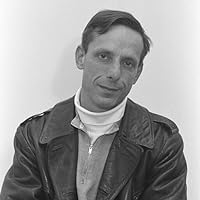
The complete diaries of Aleister Crowley cover his entire career in magick, from his initiation into the Hermetic Order of the Golden Dawn in 1898, to his death in 1947. These diaries record the development of Crowley's synthesis of traditional Western ritual magick with Eastern yoga, tantra and sexual magick—culminating in the creation of Crowley's "Thelemic Magick." The Magical Diaries of Aleister Crowley: Tunisia, 1923 show one year in Crowley's life. This particular year was a major turning point—he and his follwers had just been banished by Mussolini from their beloved Abbey of Thelema in Cefalú, Sicily. It marks a time of introspection for Crowley. In it he fully records his magical acts, the internal and external influences surrounding these acts, and their results. Also included are references to the commentaries on the Book of the Law, passages detailing drug use, the practice of sexual magick, descriptions of how he derived Qabalistic meaning from his works and life, interpretations of "Yi King" (I Ching) divination, and other thoughts of a philosophic, religious, and magical nature. In these candid glimpses into Crowley's mind, the reader can see both the egocentric, self-aggrandizing "Beast 666" and the doubts and misgivings of a man dedicated to the spiritual path. Includes:
• Appendices listing Qabalistic tables of Greek and Hebrew Gematria, Crowley's "magical mottos"—pseudonyms for people and places referred to in Diaries and other writings, abbreviation and symbols used in Crowley's works, and a chronical of his withdrawal from heroin during the period encompassed by the Diaries. • A short bibliography of Crowleyana. • A condensed chronological timetable of Crowley's life.
Aleister Crowley was an English occultist, ceremonial magician, poet, novelist, mountaineer, and painter. He founded the religion of Thelema, proclaiming himself as the prophet destined to guide humanity into the Æon of Horus in the early 20th century. A prolific writer, Crowley published extensively throughout his life. Born Edward Alexander Crowley in Royal Leamington Spa, Warwickshire, he was raised in a wealthy family adhering to the fundamentalist Christian Plymouth Brethren faith. Crowley rejected his religious upbringing, developing an interest in Western esotericism. He attended Trinity College, Cambridge, focusing on mountaineering and poetry, and published several works during this period. In 1898, he joined the Hermetic Order of the Golden Dawn, receiving training in ceremonial magic from Samuel Liddell MacGregor Mathers and Allan Bennett. His travels took him to Mexico for mountaineering with Oscar Eckenstein and to India, where he studied Hindu and Buddhist practices. In 1904, during a honeymoon in Cairo with his wife Rose Edith Kelly, Crowley claimed to have received "The Book of the Law" from a supernatural entity named Aiwass. This text became the foundation of Thelema, announcing the onset of the Æon of Horus and introducing the central tenet: "Do what thou wilt." Crowley emphasized that individuals should align with their True Will through ceremonial magic. After an unsuccessful expedition to Kanchenjunga in 1905 and further travels in India and China, Crowley returned to Britain. There, he co-founded the esoteric order A∴A∴ with George Cecil Jones in 1907 to promote Thelema. In 1912, he joined the Ordo Templi Orientis (O.T.O.), eventually leading its British branch and reformulating it according to Thelemic principles. Crowley spent World War I in the United States, engaging in painting and writing pro-German propaganda, which biographers later suggested was a cover for British intelligence activities. In 1920, Crowley established the Abbey of Thelema, a religious commune in Cefalù, Sicily. His libertine lifestyle attracted negative attention from the British press, leading to his expulsion by the Italian government in 1923. He spent subsequent years in France, Germany, and England, continuing to promote Thelema until his death in 1947. Crowley's notoriety stemmed from his recreational drug use, bisexuality, and criticism of societal norms. Despite controversy, he significantly influenced Western esotericism and the 1960s counterculture, and remains a central figure in Thelema.
Interesting only to hardcore fan-boys, which includes me. Reveals the unedited realities and drug-addled delusions of one of humanity’s more interesting characters.
Excellent look into the workings of Crowley's mind. I think it makes it very clear that whether or not he was delusional, he truly believed in the Truth of the Book of the Law and did not identify himself with it's authorship. Every once in a while I pick this up and read a few paragraphs from it.
This is one of my new favorite treasured books. Without all the external drama and stories we have the reasons for some of those dramas, what Crowley thinks is the reasons=, and more. Here is someone who cared deeply for his students, the work, man, and the gods. He throws I Ching to figure out how to approach a situation, with what mentality, and etc. He gives his theories and ideas about things such as why people go mad around him (ie: Force). It's one of those things you really should read if you want to understand the man's actions rather than approaching it from headlines.