Born into wealth in New Orleans in 1795 and married into misery fifteen years later, the Baroness Micaela Almonester de Pontalba led a life ripe for novelization. Intimate Enemies, however, is the spellbinding true account of this resilient woman's lifeand the three men who most affected its course.
Immediately upon marrying Célestin de Pontalba, Micaela was removed to his family's estate in France. For twenty years her father-in-law attempted to drive her to abandon Célestin; by law he could then seize control of her fortune. He tried dozens of strategies, including at one point instructing the entire Pontalba household to pretend she was invisible. Finally, in 1834, the despairing elder Pontalba trapped Micaela in a bedroom and shot her four times before turning his gun on himself.
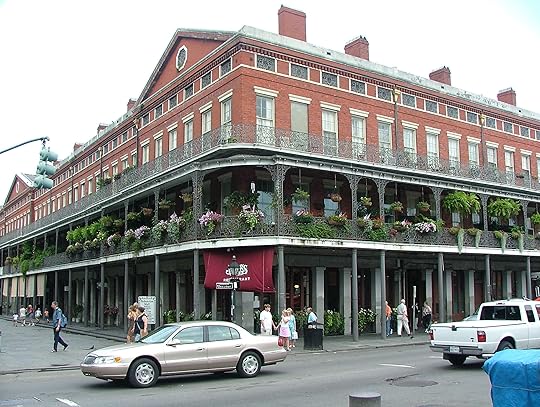
Miraculously, she survived. Five years later, after securing both a separation from Célestin and legal power over her wealth, Micaela focused her attention on building, following in the footsteps of her late, illustrious father, Andrés Almonester. Her Parisian mansion, the Hôtel Pontalba, is today the official residence of the American embassy in France; and her Pontalba Buildings, which flank Jackson's Square in New Orleans, form together with her father's St. Louis Cathedral, Presbytere, and Cabildo one of the loveliest architectural complexes in America.
As for Célestin, he eventually suffered a total physical and mental breakdown and begged Micaela to return. She did so, caring for him for the next twenty-three years until her death in 1874.
In Intimate Enemies, Christina Vella embroiders the compelling story of the Almonester-Pontalba alliance against a richly woven background of the events and cultures of two centuries and two vivid societies. She provides a window into the yellow fever epidemics that raged in New Orleans; the rebuilding of Paris, the Paris Commune uprising, and the Second Empire of Napoleon III; European ideas of power, class, money, marriage, and love during the baroness' lifetime and their inflection in the New World setting of New Orleans; medical treatments, legal procedures, imperial court life, banking practices, and much more.
Combining the historian's meticulous research with the biographer's exacting knowledge of her subject and the novelist's gift for narrative, Vella has crafted a rare cross-genre work that will capture the imagination and admiration of every reader.
Christina Vella was a writer, historian of modern Europe, and adjunct professor at Tulane University in New Orleans.
Her first book, Intimate Enemies: The Two Worlds of the Baroness de Pontalba, was entered for the Pulitzer Prize and the National Book Award. It was published by Louisiana State University Press in 1997 and was chosen as one of the best books of the year by the New York Times Book Review, Publishers Weekly, and The Times-Picayune. It chronicles the life and career of Micaela Almonester, the woman responsible for building the Embassy of the United States in Paris and the Pontalba Buildings in New Orleans. In 2003, Intimate Enemies was adapted by Thea Musgrave as the opera Pontalba, which premiered in New Orleans in October of that year.
Vella's later books include The Hitler Kiss: A Memoir of the Czech Resistance (2002), co-authored with Radomir Luza, and Indecent Secrets - The Infamous Murri Murder Affair (2006), a history of the Murri murder trial which took place in Bologna, Italy in 1905.
Vella received her Ph.D. in European and U.S. history from Tulane University in New Orleans. A professor of history for over twenty years, she now devotes most of her time to writing and lecturing. She frequently serves as a consultant and writer for the U.S. Department of State.
She is the recipient of the 2010 Preservation Award from the Foundation for Historical Louisiana.
I have had a long love affair with New Orleans. I think it is the most interesting city in the United States, such a tragic, romantic, chaotic history. And I didn't know the half of it! The history of this family is all bound up in the history of the city, which is one of the reasons I was so looking forward to reading this book. Well, it turns out that most of Michael's (the Baroness, pronounced "Mee-Kye-Ell") astounding story takes place in France, but she left her finest legacy, an architectural treasure (the designer of which is still unknown!), in the Pontalba buildings in New Orleans:
I won't try to summarize Michael's biography because it is much too complex, but her life was as tragic and romantic and chaotic as the city she was born in. Throughout the book I was in awe not only of Michael's strength and determination but also of Christina Vella's impeccable research. I am one of those nerds who actually reads footnotes and endnotes, and this author pored through thousands and thousands of letters and legal documents (Michael was involved in some kind of litigation for most of her adult life, often against her father-in-law, who would eventually try to kill her, and her husband.) in both the United States and France. In addition to the meticulous narrative of the Almonester/Pontalba drama, this biographer (like the best of them) deftly (and with delightful wit!) describes the historical context in which the lives of her subjects unfold. This is possibly one of the best (in terms of subject matter and structure) biographies I've ever read. I am in awe of Vella's skills as a writer and historian, and I am more in love with New Orleans than ever!
Growing up in New Orleans, as I did, one becomes aware of the Pontalba Buildings at a young age. These 19th-century buildings flank Jackson Square (called the Place d'Armes at the time this book is concerned with) -- the iconic St. Louis Cathedral is in the center.
It seems I've always known the name of the Baroness Pontalba as the woman behind the buildings, but that was all I knew about her. But once this book came out, her life between the marriage and the building of the Pontalba apartments was revealed; and the full story is a doozy.
Once again, history continues to show me that the politics behind governments has not changed and that families with lots of money always seem to have at least one problem child, as was the Baroness's oldest son.
This book is written in an engaging style, with the author's wit poking through in several places.
Normally I don't finish non-fiction but this one is such a captivating portrait of Louisiana life in the 1700's and 1800's that I keep going back to it.
Micael Almonaster Pontalba is a fascinating woman who endured more pain and hardship than seems possible, but she endured. Everything that is beautiful and enchanting about New Orleans is because of her. This is a must read for anyone who loves the city.....
When I was in New Orleans recently, I heard about Micaela de Pontalba and her buildings around Jackson Square. I also that she was shot by her husband (wrong, it was her father-in-law). I had to learn more of this lady. This book is very detailed; the biographer must have read every letter that was written by her or to her as they were evidence in several court cases. She was always in court for something.
Micaela Almonester grew up in New Orleans and married Celestin Pontalba who was French. Her mother never trusted the Pontalbas so the dowry was written in a very specific way so that the Pontalbas didn't end up with all her assets. This led to the court cases in New Orleans and in France. At one point Micaela couldn't enter their country estate with any servants, except one, and no carriages. She was kept in a smaller mansion on the estate and everyone, including guests, were instructed not to speak to her. She persevered though. Because of the hatred of her father-in-law, who was also named Celestin shot her three times and later killed himself. Two of the bullets were never removed from Micaela and she had health problems throughout her life. In later years her husband Celestin had dementia and she took care of him even though they lived separate lives. Her eldest son was a gambler who she had to bale out several times.
Micaela was also an astute business woman who designed the two Pontalba buildings in New Orleans which still stand today.
I would give this book a 3,5. This is an outstanding, super detailed history of New Orleans. I learned so many interesting facts about the city that I call home. It is based on the life of Baroness Pontalba whose apartments flank Jackson Square. But I would say only about 20% of the book is about her life. In fact, I think that the title is rather deceptive. The book would make a great history of New Orleans textbook and since the author is a professor of history at Tulane, perhaps it is. The minute details and descriptions wear out the reader. The readability/Lexile level of the book must be very high. It’s a hard read and you often get bogged down with all the details. But I’m so glad that I read it and learned about this great city of ours.
Unless you are infatuated with the history of NOLA, you might drown in the minutiae of this book. Obviously exhaustively researched, which is appreciated, but perhaps some of the detail could have been left to the reader to read in a citation or note. But one of the funniest sentences I’ve ever read is in this book, and I’ll leave it here without any context. ‘’He was genuinely outraged at the sight of furniture.’’
Excellent historical book on the life of Baroness de Pontalba, the lady behind the building of the apartments on Jackson Square in New Orleans. Well researched and entertaining reading as she chronicles her life. Wonderful descriptions of life in New Orleans in the early 1800's and in France for the middle of the century.
BOOK REVIEW ⭐️⭐️⭐️ Isn’t it said that truth is stranger than fiction! Well buckle up! Jeez what a story. #bibliophile #book #bookish #booklover #books #books2022 #booksofinstagram #bookstagram #bookstagrammer #bookstagrammers #bookworm #homelibrary #instabook #instabooks #reader #readers #reading #readingroom #readersofinstagram #bookreview 2022 Reviewed 📚 58
I forced my way through the first chapter - minutia of life in early New Orleans - telling myself the book would pick up. The 2nd chapter was no better. ~75 pages in and still struggling through background, I gave up. Vella did not lead me to care enough about the baroness to slog thru this tome.
This book relates the fascinating life of Micaela Almonester, Baroness of Pontalba, born in New Orleans and a woman who display a great character through the hardships of her life.
An interesting read about a fascinating woman who contributed much to the vision of New Orleans as we know it and also built the US Ambassadors residence in Paris. She was a force to reckon with at a time when it was very difficult to be a woman, even one with wealth and means, and she is definitely worth learning about. The book itself is excruciatingly detailed in its research and account, which made it worthwhile but also painful to get through at times. There were several sections that went on far too distant of tangents to keep me engaged, and for that I am only giving it three stars.
This book was *magnificent*. The author's site does a pretty good job of summarizing it, as well as giving you a guide to her authorial style. Up-front disclaimers: the events depicted in the book are horrible in parts -- attempted murder, children that died in infancy (they don't get a lot of coverage, but pretty much any factual book about that time period that focuses on family life and law is going to have some... the titular Baroness has five children in her marriage, three of whom make it), widespread societal sexism and denial of a woman's right to self-determination, theft of fortunes. But the book's treatment of some of those difficult topics is one of its great strengths -- the author brings to life the contrasts between the assumptions of most nineteenth-century mindsets versus our own modern assumptions, and that allows the reader to broaden their experience of the book. She's also helpful in pointing out how things that horrify us would have been "meh" to most people of the time and vice versa (privacy! it worked differently!), due to those worldview deltas. I particularly liked her explanation of the family-centric asset managements vs. individual control of money in the French courts. (Like, law court, not waiting-on-the-king Empire court, though it was often the nobility of the Emperor's court who went to the law court to argue about money and property.)
Dr. Vella provides a thorough background of New Orleans further back than I had read in detail, which finally made clear to me the intersections and cultural tensions between the French New Orleans government to the Spanish-Creole government back to France and then finally Louisiana Purchased into America. Aha! One side of the heroine's family (her family by blood) were Spanish nobility, the other (her family by marriage) French nobility, and she goes back and forth in the book between New Orleans and France, investing heavily in real estate and inheriting property in both. It's the best book I've read on the changing economics of the aristocracies of the time, and how that shaped the city. Literally -- the heroine's New Orleans holdings included the buildings around what is now Jackson Square. She was the architect. It's a deep look at property rights, the rights of women, the differences in marital law between France and Louisiana, urban planning, charitable giving, and a complicated love-hate relationship that defied both families in turn and inspired an opera. I'm loving it. I'm seeking out everything else the author has written -- apparently she's got a book on George Washington Carver coming out this year that I'm totally going to read. I love her authorial voice -- she gives you what's known of the facts, and describes how she got this data, but she doesn't hesitate to pass judgment when that's appropriate, and her sly wit is *hilarious*
Any biography of Micaela Almonester is bound to be incomplete. She was a person of note in her time, but not on par with Andrew Jackson, and therefore much of her life is a mystery. Vella succeeds by paying close attention to the worlds she lived in, the social milieu, and the personalities around her. The book is as much a biography of Micaela as it is of her father, her husband, and husband in law. The result is a thoroughly well written, at times witty book; Vella's observations are often comedic. Her descriptions of New Orleans in the colonial period is particularly good. In the end though, the book does not quite become great. Much of this is the subject matter. Micaela was a tough businesswoman with an interesting life, but she herself was rather shallow. She owned no books outside of accounting papers. She was very much a product of her mother, who comes across as financially ruthless, and arguably the origin of Micaela's marriage woes. The book is not about something deeper, beyond the perils of marriage. Micaela Almonester is most noted for her attempted murder and her building projects in New Orleans and Paris. Without the Pontalba Buildings, hardly anyone would care.
Read for my book club. We visited the Historic New Orleans Collection to see the recently discovered sketches of Madame de Pontabla’s son Gaston during their two year visit here. The story is so so interesting and so amazing, but the book was hard to read. Vella felt compelled to share all her in depth research. And I got bogged down in the details. Great scholarly work but not super accessible. I love my city and am glad I added to my knowledge.
Micaela's story is remarkable. I picked it up after I read a Catholic short story that discussed how she was legally divorced to control her own money but remained loyal to Celestin and their marriage due to her faith. Interesting read. Hope I get to travel to NOLA one day and see the Pontalba buildings.
For book Club. I like reading books about New Orleans history but this was a snooze fest. BORING. There's something wrong when the author tells you in the intro to skip the first 3 chapters if you are not interested in the history of NOLA. Not a story teller's bone in this writing. I found out everything I needed to know from the book jacket. Wikipedia read better.
Very interesting history details. The family story and the helplessness of the central character is disturbing. If it was a novel, you might say impossible plot. But apparently it actually happened. Not an easy read. Very dense and a little too much detail about auxiliary people. Wish it had even trimmed to follow Micaela more closely.
I only give it two stars because it was actually so dense I just simply couldn't get through it. The subject matter was extremely interesting, but so many details and the lack of a strong plot line had me lost about 100 pages in. :-/
Excellent history. This is not for those who want fast paced history. It is for those who want to understand how New Orleans got to 1900 with some interesting wacky family dealings. No, crazy family dealings.
Being from New Orleans, I found this very interesting. I have always seen the Pontalba buildings in the French Quarter, but never knew the "back story" of the lady behind them.