

What do you think?

The Late Work of Margaret Kroftis
A phenomenal debut novella to further establish the literary excellence of Dennis Cooper's Little House on the Bowery series.
“ In The Late Work of Margaret Kroftis , Mark Gluth does something I've never seen another author he captures perfectly the feel of daydreams. Though everybody in the book daydreams, Gluth doesn't simply describe their thoughts; instead, he does something better and more brilliant—he infuses his words with the deceptive simplicity and surrealism of the fantasies we dream up for ourselves. Like daydreams, his book is brief but powerful; like daydreams, it is both heartbreakingly hopeful and heart-stoppingly honest. It's a reverie that's a revelation. It is great.”— Derek McCormack , author of The Show that Smells
The Late Work of Margaret Kroftis begins during the later days of Margaret Kroftis's life. She is a writer, living alone. As she experiences a personal tragedy the narrative moves forward in an emotionally coherent manner that exists separately from linear time. Themes of loss and grief cycle and repeat and build upon each other. They affect the text and create a complex structure of crosshatched narratives within narratives. These mirror each other while also telling unique stories of loss that are both separate from Margaret's as well as deeply intertwined.
This groundbreaking debut demonstrates an affinity with the work of such contemporary European writers as Agota Kristof and Marie Redonnet, while existing in a place and time that is uniquely American. Composed in brief paragraphs and structured as a series of vignettes, pieces of fiction, and autobiography, The Late Work of Margaret Kroftis creates a world in which a woman's life is refracted through dreamlike logic. Coupled with the spare language in which it is written, this logic distorts and heightens the emotional truths the characters come to terms with, while elevating them beyond the simply literal.
Mark Gluth 's writing has previously appeared in the anthology Userlands (Akashic, 2007) and Ellipsis magazine. He was born in Cleveland, Ohio and now lives in Bellingham, Washington with his wife and their two dogs.
Dennis Cooper 's (series editor) novels have been translated into eighteen foreign languages. He has guest-edited sections of fiction and nonfiction for BookForum , Nerve , the L.A. Weekly Literary Supplement , and the Village Voice Literary Supplement . He is a contributing editor of ArtForum magazine and lives in Los Angeles.
“ In The Late Work of Margaret Kroftis , Mark Gluth does something I've never seen another author he captures perfectly the feel of daydreams. Though everybody in the book daydreams, Gluth doesn't simply describe their thoughts; instead, he does something better and more brilliant—he infuses his words with the deceptive simplicity and surrealism of the fantasies we dream up for ourselves. Like daydreams, his book is brief but powerful; like daydreams, it is both heartbreakingly hopeful and heart-stoppingly honest. It's a reverie that's a revelation. It is great.”— Derek McCormack , author of The Show that Smells
The Late Work of Margaret Kroftis begins during the later days of Margaret Kroftis's life. She is a writer, living alone. As she experiences a personal tragedy the narrative moves forward in an emotionally coherent manner that exists separately from linear time. Themes of loss and grief cycle and repeat and build upon each other. They affect the text and create a complex structure of crosshatched narratives within narratives. These mirror each other while also telling unique stories of loss that are both separate from Margaret's as well as deeply intertwined.
This groundbreaking debut demonstrates an affinity with the work of such contemporary European writers as Agota Kristof and Marie Redonnet, while existing in a place and time that is uniquely American. Composed in brief paragraphs and structured as a series of vignettes, pieces of fiction, and autobiography, The Late Work of Margaret Kroftis creates a world in which a woman's life is refracted through dreamlike logic. Coupled with the spare language in which it is written, this logic distorts and heightens the emotional truths the characters come to terms with, while elevating them beyond the simply literal.
Mark Gluth 's writing has previously appeared in the anthology Userlands (Akashic, 2007) and Ellipsis magazine. He was born in Cleveland, Ohio and now lives in Bellingham, Washington with his wife and their two dogs.
Dennis Cooper 's (series editor) novels have been translated into eighteen foreign languages. He has guest-edited sections of fiction and nonfiction for BookForum , Nerve , the L.A. Weekly Literary Supplement , and the Village Voice Literary Supplement . He is a contributing editor of ArtForum magazine and lives in Los Angeles.
- GenresFiction
102 pages, Paperback
First published December 11, 2009
Ratings & Reviews
Friends & Following
Create a free account to discover what your friends think of this book!
Community Reviews
Displaying 1 - 20 of 20 reviews

January 7, 2019
Though the writing is tedious, it is a very good book. It moves quickly and if you tend to focus more (for better or worse) on technique than story like I do, there is much to see.
It has a frenetic melancholy. Tragedy lights on the story like dust, and the tragedy of being unremembered wends its way though it. The characters, artists all—highschool rock band, author, photographer, budding writer—cringe at their work while still creating it. They know it's bad but also know it is a monument. The characters seem to exist where being meets nothingness, where the feeling of fraudulence is actually the presence of truth.
It is told in the present tense, which always gives a disorienting feeling, a subliminally disorienting feeling, like a humming just below aural range. The metrical feet of the sentences are around six syllables, about the length of a startled breath. They are short but complete. That is the rhythm. Like the rocking of choppy tide below a rowboat. Then broken up by something short, one or two words. Few words are more than one syllable.
There is a braiding of three elements in the story: dreams, reality, and fiction. The shape they take looks like the sine waveform in a three-phase motor.
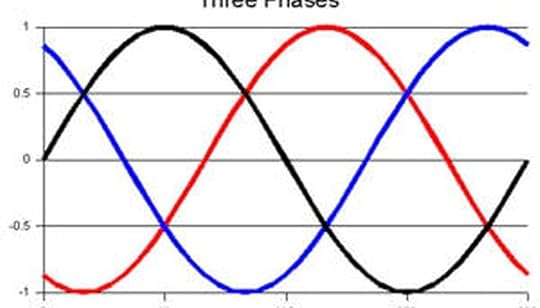
When the dreams (black) rises, the reality (blue) falls, and fiction (red) rises, only to come up as the dreams fall, and reality rises, and fictions falls--one supporting the other.
The ending is both summary and reveal. It fills in more of the painful gaps. The memory has been gouged by loss, it suffers lacunae. More and more it is all a creation, a work. It is all a memorial.
It has a frenetic melancholy. Tragedy lights on the story like dust, and the tragedy of being unremembered wends its way though it. The characters, artists all—highschool rock band, author, photographer, budding writer—cringe at their work while still creating it. They know it's bad but also know it is a monument. The characters seem to exist where being meets nothingness, where the feeling of fraudulence is actually the presence of truth.
It is told in the present tense, which always gives a disorienting feeling, a subliminally disorienting feeling, like a humming just below aural range. The metrical feet of the sentences are around six syllables, about the length of a startled breath. They are short but complete. That is the rhythm. Like the rocking of choppy tide below a rowboat. Then broken up by something short, one or two words. Few words are more than one syllable.
There is a braiding of three elements in the story: dreams, reality, and fiction. The shape they take looks like the sine waveform in a three-phase motor.
When the dreams (black) rises, the reality (blue) falls, and fiction (red) rises, only to come up as the dreams fall, and reality rises, and fictions falls--one supporting the other.
The ending is both summary and reveal. It fills in more of the painful gaps. The memory has been gouged by loss, it suffers lacunae. More and more it is all a creation, a work. It is all a memorial.

January 6, 2010
One of the most affecting books I've read in ages. The pages practically pulse with longing and grief, but the prose is so electric that it never wallows in depression. It's so exquisitely written, emotionally charged, and precisely observed that reading it becomes immersive and addictive. It's short but the inventive Chinese puzzle structure folds in more action and complexity than novels three times as long. Highly recommended.

March 25, 2020
(2.5) The back of the book proclaims that this ‘groundbreaking debut demonstrates an affinity with the work of such contemporary European writers as Ágota Kristóf and Marie Redonnet'. I don’t know why I bother getting too excited anymore about such bold back cover claims. Certainly the clipped nature of Gluth’s prose holds a superficial similarity to the style of these two very fine writers, both of which I hold in high regard. But the story lacks the crucial pervasive sense of menace seeping out through the spaces around the words penned by these two writers. It is this steady creeping menace or low-grade horror that propels their narratives forward in an engaging way, whereas in Gluth’s book the propulsion stems mainly from the brevity of the sentences and not so much from what they either reveal or obfuscate. The most interesting aspect of this book is its structure, and I did spend some time meditating on its elegance. But in the end, it was not enough to fully win me over.

June 19, 2015
I absolutely live for stuff like this. The prose was so stark and detached. It's somehow completely void of any emotion but still dripping with melancholy. The sentences are short and declarative. There's actually very little information given, as far as things like background and setting are concerned. For instance, the reader is given no physical descriptions of the characters and the book only vaguely takes place in the Pacific Northwest. There's almost a Tao Lin quality to it, but without out the pretensions of hip 21st-century irony. Thats not to say it's not a modern book. It's like an incredibly heartbreaking but vague dream is being recounted. The narrative structure remains experimental enough to keep things interesting but not to a degree in which it could become too conceptual, losing the perfectly balanced, and not at all embarrassing, sentimentality to be found here, possibly painted like an ethereal reflection of the flowers found on the cover. All grey washed blotches of desaturated quiet hues bringing to mind The Malady of Death in its subdued washes of loneliness, the various narrators always seeming to be on the verge of a meltdown from the grief of a lost daydream. To further the Duras reference, as I read the pages, I couldn't help but to pictures in my mind the celestial opening images of Resnais' adaptation of Hiroshima Mon Amor. Within in Gluth's work, the same pensive quality can be found. Sad, yet hopeful, yet, at times, utterly unbearable.
Having been published by Dennis Cooper flagged my interest, but this novella went above and beyond all my expectations - possibly even surpassing the majority of Cooper's bibliography. Of the four volumes I've read from the Little House on the Bowery series (Cows and High Life by Matthew Stokoe, The Mechanics of Homosexual Intercourse by Lonely Christopher and this), Mark Gluth's entry is by far the best. Again, a good book for fans of Lin and Duras. Hell, let's say Zurn too.
Having been published by Dennis Cooper flagged my interest, but this novella went above and beyond all my expectations - possibly even surpassing the majority of Cooper's bibliography. Of the four volumes I've read from the Little House on the Bowery series (Cows and High Life by Matthew Stokoe, The Mechanics of Homosexual Intercourse by Lonely Christopher and this), Mark Gluth's entry is by far the best. Again, a good book for fans of Lin and Duras. Hell, let's say Zurn too.

March 18, 2010
A very haunted but quiet book that is about grief, the sense of loss with respect to death, and the links and observations on the relationship between the life-force and the memory of it. Very elegant in its writing style. Totally unique and the book is difficult to put down.

July 10, 2020
As lean as Alan Garner, though in an entirely different way, a journey through approaches/responses to death in which the narration is almost completely devoid of interpretive apparatus. It reminds me of—or has a sympathy with—the writing of the barely published Deron Bauman.

December 15, 2024
It was really confusing but came together eloquently and to great effect in the end. Very curt style but enjoyable… a sort of writing about writing about writing about… kinda vibe, done well. very PM

November 25, 2009
(Reprinted from the Chicago Center for Literature and Photography [cclapcenter.com:]. I am the original author of this essay, as well as the owner of CCLaP; it is not being reprinted here illegally.)
For those who don't know, one of the ongoing projects over at small press Akashic Books is a series called "Little House on the Bowery," experimental short books hand-picked and edited by infamous edgeplay author Dennis Cooper; the latest for example is a novella called The Late Work of Margaret Kroftis, by the Seattle-area Mark Gluth, which I read this last weekend and ended up enjoying quite a bit. It's what I consider an experiment not in style but in narrative structure, or in other words a book that reads rather easily but with a storyline itself that confounds expectations; although ironically it starts as a straightforward tale, a look at the titular writer in the winter of her life, dealing simultaneously in chapter one with her growing dementia and the accidental death of her pet dog from a self-caused house fire. Here though is where the storyline starts getting challenging and interesting, in that Gluth quickly abandons a three-act structure in favor of a dreamlike series of causal connections instead, each based loosely on the circumstances of the chapter before it -- how Margaret befriends a young beginning horror writer, for example, which leads to the discovery of a self-referential short story/suicide note after Margaret's death which incorporates this mentor/student relationship they had, which then leads to a look at a group of contemporary hipsters trying to adapt this story into an indie film. Although I'm not going to detail the entire thing, it's these sinuous connections that fuel the entire length of the story, creating by the end a sort of deliciously non-linear stream-of-consciousness plotline; and like I said, the reason the whole thing doesn't devolve into an artsy mess is precisely because Gluth doesn't take any chances with the writing style itself, crafting instead an easy-to-digest project that effortlessly slips from one subject to the next, like a six-year-old during playtime or a stoner in the middle of the night. It comes solidly recommended today, a great choice for those who consume very little experimental literature otherwise, a tidy but complex little book that can easily be started and finished in a single afternoon.
Out of 10: 8.8
For those who don't know, one of the ongoing projects over at small press Akashic Books is a series called "Little House on the Bowery," experimental short books hand-picked and edited by infamous edgeplay author Dennis Cooper; the latest for example is a novella called The Late Work of Margaret Kroftis, by the Seattle-area Mark Gluth, which I read this last weekend and ended up enjoying quite a bit. It's what I consider an experiment not in style but in narrative structure, or in other words a book that reads rather easily but with a storyline itself that confounds expectations; although ironically it starts as a straightforward tale, a look at the titular writer in the winter of her life, dealing simultaneously in chapter one with her growing dementia and the accidental death of her pet dog from a self-caused house fire. Here though is where the storyline starts getting challenging and interesting, in that Gluth quickly abandons a three-act structure in favor of a dreamlike series of causal connections instead, each based loosely on the circumstances of the chapter before it -- how Margaret befriends a young beginning horror writer, for example, which leads to the discovery of a self-referential short story/suicide note after Margaret's death which incorporates this mentor/student relationship they had, which then leads to a look at a group of contemporary hipsters trying to adapt this story into an indie film. Although I'm not going to detail the entire thing, it's these sinuous connections that fuel the entire length of the story, creating by the end a sort of deliciously non-linear stream-of-consciousness plotline; and like I said, the reason the whole thing doesn't devolve into an artsy mess is precisely because Gluth doesn't take any chances with the writing style itself, crafting instead an easy-to-digest project that effortlessly slips from one subject to the next, like a six-year-old during playtime or a stoner in the middle of the night. It comes solidly recommended today, a great choice for those who consume very little experimental literature otherwise, a tidy but complex little book that can easily be started and finished in a single afternoon.
Out of 10: 8.8

March 31, 2013
Beautifully written. definitely tears shed.

December 13, 2022
This book is short. That is its saving grace. The sentences are mostly short, like this one. There aren't a lot of commas, and hardly a semicolon or colon to be found. There are a number of characters. There are a number of scenes. I found it hard to keep straight who was who. That's not good in such a short book. The book turns very dark and depressing about halfway through. The cadence of the prose is relentless. You can read it fast though. That is good. If you enjoyed reading this review, you might enjoy this book. It has a lot of sentences just like this one. Did you like that sentence? Oops, I asked a question. There aren't many questions in this book. If you liked it, you might like this book. If not, read something else.

January 20, 2025
This was a truly fantastic read, thank you to Dennis Cooper for being the reason I discovered this.
Absolutely perfect, flowery prose, utilising a more experimental writing style.
The cyclical way that the stories herein are told was a very pleasant surprise, and absolutely fantastically done.
If you enjoy an artsy, somewhat experimental read I highly recommend this!
Absolutely perfect, flowery prose, utilising a more experimental writing style.
The cyclical way that the stories herein are told was a very pleasant surprise, and absolutely fantastically done.
If you enjoy an artsy, somewhat experimental read I highly recommend this!
July 14, 2022
In only 102 pages, Mark Gluth has affected me deeply.
I literally cannot convey my feelings about this book in words. Such little descriptions and yet I felt like I knew everything. I didn't need all the extra words...
Hands down this is one of the best things I've ever read.
It is art.
I literally cannot convey my feelings about this book in words. Such little descriptions and yet I felt like I knew everything. I didn't need all the extra words...
Hands down this is one of the best things I've ever read.
It is art.

January 3, 2010
A beautiful book, suffused with deep melancholy. The writing is extremely spare, indeed, some of the most minimalistic I've encountered (the comparison with Agota Kristoff on the back cover--especially the first part of her trilogy, The Notebook-- is apt). There is an accumulating of emotional intensity conveyed by the chains of very short, simple delarative sentences which is quite dreamily incantory, even magical.
Mark Gluth is another tremendously talented young writer on the scene belying the pessimism expressed in so many quarters about the future of American book culture.
P.S.
I respectfully disagree with the other reviewer here who suggests this book can easily be read in an afternoon. I found the emotional buildup frequently to be too much all at once and needed to take beaks to relieve the tension and reflect on what I was reading. I think a couple of days reading time is more realistic.
Mark Gluth is another tremendously talented young writer on the scene belying the pessimism expressed in so many quarters about the future of American book culture.
P.S.
I respectfully disagree with the other reviewer here who suggests this book can easily be read in an afternoon. I found the emotional buildup frequently to be too much all at once and needed to take beaks to relieve the tension and reflect on what I was reading. I think a couple of days reading time is more realistic.
May 30, 2010
Maybe a 1.5. 90% of the sentences contained 6 words or less. It was like reading a children's book and that stilted style quickly got old. For several reasons that I'm too lazy to outline, it was hard to connect to the stories and the characters. I can appreciate the overall concept and the author has talent, I just couldn't warm up to this book.

May 2, 2016
This was a strange one. It compelled me to write in the margins and keep reading through my lunch break at work. The end made everything just so beautiful and wonderful and was the main reason I gave this a 4/5. Before the last 15 pages I had thought I would be rating it somewhere in the 2.5/5 range. However the ending got to me.

March 24, 2010
The Late Work of Margaret Kroftis is a composition of daydreams and short stories. The novella was so disturbing, beautiful, and painful to read, I just couldn't stop reading. I highly recommend this book.

July 19, 2012
This just wasn't my cup of tea. I didn't like how the author changed point of views. And it was just too abiguous at times for me. And ultimately, when I read the last page, "Pretentious" was the first word that came to mind.

June 29, 2012
Not sure if this is a poem or a novel. You should read it.

January 8, 2017
I never knew something so sparse could make me feel so much.

February 14, 2010
A powerhouse of a novella ~~ doing in 100 pages what most can't do with 3x that much.
Displaying 1 - 20 of 20 reviews