Traumatised by what he witnessed in the streets of Sarajevo during the 1990s siege, newsman James Lambert flees back to England, seeking peace and recovery in the beauty and apparent tranquillity of the countryside. He'd narrowly escaped death from a Serbian shell and watched his Bosnian lover die Haunted by memories and the reverberating clamour of guns he takes on a small farm in the Welsh Marches, with a commission to write about the conflict. Though entranced by the unspoiled beauty of the landscape he settles slowly into a community which seems to him a time warp of ideas and behaviour. His seclusion is disrupted by a vulnerable girl's appeal to find a home for her young horse and his kindness to her drags him into the mesh of her family's secret guilt. A letter draws him back to Bosnia and he becomes involved in covering the ongoing search for the bodies of the missing. His relationship with the girl is threatened by the enmity of her ex-boyfriend but it develops into a love which brings with it dreadful consequences.
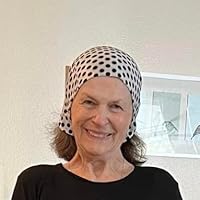
I used to be full-time journalist and still meddle in the media.
The world we have created has become increasingly hostile for those brave souls who try to bring the truth to the community. Media correspondents are often killed — sometimes murdered — in trying to photograph or report what is actually happening in the world’s many trouble spots. We don’t give them credit for the risks they take.
My character James wasn’t killed in Sarajevo but he was badly injured and came back scarred in body and soul. In a peaceful English valley he expects to recover and find a new life but the evil he’d seen in Bosnia appears in a different but equally ugly form.
The events in the English setting are pure fiction but based on attitudes and motives that sadly trigger tragedies in any human society and especially the hunger for land which can dominate in rural society.
My last job was editing a farming newspaper, working closely with farmers and others involved in agriculture which evealed the problems and vicissitudes of 21st-century farming — not an easy life. I watched at close quarters the trauma inflicted on the rural community during the UK foot and mouth disaster of 2001.
These days I run a bed and breakfast in the west of England among the glorious countryside of the Marches where a crow or raven can fly quickly over the border into Wales. We tend to have a comparatively old-fashioned way of life, in real touch with the natural world which so many have left behind. A bit of a time warp perhaps but what a joy it can be!
People don't expect a guest house owner to be a writer — or the other way round but it often gives great insight into human behaviour and can touch off many trains of thought. There are some guests who spark immediate empathy and it's great to meet them. Others sometimes just don’t get the place at all.
James Lambert is a journalist, but more importantly, a soul-torn survivor of a trip through the Hell of Bosnia during the 1990s, where he watched Katya, the woman he loved, die. Returning to England, mentally crippled, he buys a small sheep farm in a Shropshire village and tucks himself away. The irony of this decision is that he fought his father for most of his youth to avoid becoming a part of their family farm. His main companions are of course the sheep, a couple of dogs and occasionally the bartender at the local pub feeds him a meal and a bit of local gossip. He had a contract for a book on the Bosnian crisis over the last several years, with a nice hefty advance, and he would be getting to work on that - soon.
Personable and even-tempered, James by his mid-thirties has had a number of relationships with women who were for the most part still friends, but Katya, a Sarajevo widow, was the only woman he truly felt that he had loved, that he could face waking up to every day for the rest of his life. Every other woman he had been attracted to had his respect and tenderness, but marriage wasn't something he envisioned with them. And he was fairly sure that included young Kate Patterson, from neighboring Sedge Farm.
The love of Kate's life is a grey gelding named Harry that she has raised from birth and is training for dressage competition. The man her family is pressuring her to marry, Steve Sterling, heir to the county's largest holding which abuts her family's land, is a psycho. Both her father and the Sterling family are holding Harry hostage - she is not allowed to stable her horse at either of their properties until she agrees to marry Steve. She had found a place to stable him but someone got to the owner and she will have to move him again. Probably the only family in the county that knows and speaks to James, Jack Wilson and his daughter Pat, tell her of James' empty barn. When he finds out the pressure Kate in under he offers her a place for Harry - and a spare room for herself, no strings attached, if she so wishes.
What begins as a business deal quickly becomes personal, but just as they are becoming comfortable with one another James receives a letter from Katya's former in-laws and only remaining family - they have, at last, located her grave. They would like him to come back and accompany them to pay their respects. He can't refuse. Kate can't understand.
His book publisher is beginning to get strident about the long-promised manuscript. When they find out James is returning to Bosnia, they agree to grant him a little more time on the book if he will send them articles and information from the country now under United Nations protection. He can't refuse. Again, Kate can't understand.
Can this relationship result in anything but pain? And who will stop Steve Sterling, a very dangerous man who is carrying a big grudge against both James and Kate...
I received a free electronic copy of this novel from Netgalley, Frances Brand, and publisher BooksGoSocial. Thank you all for sharing your hard work with me. I read this book of my own volition, and this review reflects my honest opinion of this work. Love the cover work~! pub date June 22, 2019 BooksGoSocial Reviewed June 28 at Goodreads, Netgalley, Amazon. Not available at B&N, BookBub, Kobo.
This story is well told, and the author has a writing style that keeps one reading, but it is definitely not your fairy tale romance.. The story itself is quite a dark one, as the main character James Lambert carries around a lot of sorrow, from his time as a reporter during the Bosnian conflict and the loss of a loved one, Katya, during the Sarajevo siege. After James loses the love of his life in the former Yugoslavia, he decides to more back to England to a small sheep farm in the county of Shropshire in the welsh marshes, between England and Wales, a beautiful place where he can get away, write a book he's been commission to write about his time in the war, and just reflect on his life. While here he finds his stride and loves the solitude and beauty of the area, until he meets a young woman, Kate, from a neighboring farm. Kate needs a place to board her horse and brings along with her the possibilities of a new love but also a family dispute between her parents and another wealthy land owner, who thinks he should get what he wants, which is also Kate for his sadistic son Steve, who Kate want nothing to do with, but a secret keeps the families together. The story reads with a lot of tension, where one is always waiting for something to happen. James is a character who is very conflicted about what he wants in his life, afraid of commitment and not able to express himself to others. Feeling the pressure from others is something he did not want to take on. The story also has some explicit, love scenes, which I am sure some may like, but to me if takes away from a story. I would rather leave things to the imagination, as It did not endear me to the character in the way it was used. The story goes back and forth from Bosnia to his home in England and shows use the conflicting feelings and thoughts James is going through. I will be interested to see what this author writes next, as I do like her writing style. I would like to thank NetGalley and BooksGoSocial for the ARC of this book.
In June 1914 a Bosian Serb nationalist by the name of Gavrillo Princip assassinated the heir to the Austro-Hungarian throne, Archduke Franz Ferdinand and his wife Sophie.
A month later, because of the triple alliance Austria had signed with Germany, Kaizer Wilhelm was left with no choice but to back Austria and declared war on France and Russia (Serbia's Allies).
In 1945, (after Hiroshima and Nagasaki) President Harry Truman became the man with a button he did not want to push, since that button would unleash the destruction of the world.
In 1953 Americans were deployed in Korea with Russia and China breathing down their necks. A newspaper man asked Truman if America was at war.
"No!" He said sharply. "We are not at war, don't use that word. Say 'there is a conflict in Korea'. Because Harry knew, if he used the word war, the button that could not be unpushed, would be pushed.
Which brings us to Bosnia in the 1990's, the same country that started World War One, were splitting at the sides again. No wonder the world didn't want to get involved - once bitten, twice shy.
No wonder Presidents and Prime Ministers were not inclined to intervene, if they did, the button on Armageddon would be pushed.
To complicate matters further, behind the scenes, diplomats were ensuring that neither Russia or the US would get involved.
If that doesn't explain it, then most people were not concerned about a place some of them had never heard of, in a country most people had never seen.
And when good people do nothing, the devil claims what is his. The tragedy of the Seige of Sarajevo was the world turning it's back on it.
Almost as tragic is that very little has been added to the historical record by way of books and memoirs because most of those who were in the Seige - are dead.
FRANCES BRAND'S offering of THORNS is a telling of that story, as told by a war correspondent who got himself stuck in Sarajevo.
It is a riveting account that resonates with much of the trench warfare of World War One with the Serbs shelling the city continuously with large guns, bringing on shell shock for those on the ground. However, that's only the beginning of their problems.
There was no food or water going in or out. People barricaded themselves in their houses. Trading cigarettes, gas, tins of food for whatever they needed during the day.
Men with guns, stood at the windows and doors at night. The very brave and the very reckless, went on raiding parties at night, hoping to find something to trade in dead men's houses, and while they were at it, hunting cats, dogs, rats, pigeons anything they could make a meal of.
Hell on earth, in other words. Hell had one more curveball, there was an ethnic cleansing - which is a sanitised word for genocide - going on. Yet, genocide is being polite - premeditated murder by virtue of religion is a closer description.
This is not about retribution, this is about justice.
I enjoyed the story, it flows well, and BRAND did a diligent job in the writing thereof. I hesitate to rate it 3 stars because with a polish this could rate a high 4 stars. My thanks to the author and Net galley for the copy.
This very difficult novel begins with a hard look at James Lambert, a war correspondent recently based in Sarajevo. He's surrounded by death, by ethnic wars, by unimaginable cruelty, by inhumanity. He yearns for a peaceful, easier life, and believes that he has found it in a small holding in the hills and valleys of Shropshire near the Welsh border. He has two dogs, he tends a few sheep. He is under contract to work on his manuscript about Bosnia, but just can't seem to find a way to get started.
One day, a young woman named Kate from a neighboring farm comes to ask if she can board her horse at his farm. He's curious. "Where have you been boarding him? Why do you have to move him?" Questions with only vague and evasive answers. She will do all the feeding and exercising and mucking out necessary for the horse. So he agrees. And with this agreement, becomes embroiled and entangled in a long-standing feud.
The writing in this novel keeps the tension and apprehension and misery and animosity and paranoia at the forefront -- the reader is constantly fearful, not knowing what might happen next. For, in this peaceful village, dwell hatred and horror, violence and cruelty and jealousy and anger, just under the surface.
We are subjected to inside information and gruesome details about the aftermath of the Bosnian skirmishes: the mass graves, the unspeakable detritus of war, the wholesale slaughter of human beings. The Shropshire events are not as overt as the murders in Sarajevo, but every bit as terrifying.
Page after page leads us to the explosive conclusion, a bombshell you won't soon forget.
I read this EARC courtesy of Net Galley and Books Go Social pub date 06/22/19
James has returned from Bosnia a broken man. His experiences as a journalist in the war-torn country and leaving his love, Katya, lying in a pool of blood on a Bosnian street, has left him bereft. On his return to England he chooses to farm in a rural part of Shropshire, where he begins to take an interest in young Kate, who stables her horse in his yard. Kate likes him too and while the friendship blossoms into something more, James struggles with his feelings for the dead Katja. In the small rural community where earlier dramatic events have taken place, Kate is expected to marry Steve, despite the fact that he is a known sadist and bully. (I struggled with this aspect of the storyline.) Kate moves into the farmhouse to avoid a threatening situation and James returns to Bosnia to find Katya’s grave and put her ghost to rest. At times, I questioned whether I was enjoying the story, as I didn’t care much for James’s lovelorn character, and because of the age difference and his attitude towards Kate, I felt uncomfortable with the sexually explicit scenes of which there were quite few. After the terrible cruelty inflicted on James’s dog Tess, I read on in dread of what was going to happen to the horse. The Bosnia part of the story is well written and brought to light the terrible suffering in the former Yugoslavia, in the 90’s, which should never be forgotten. All in all this is not a joyous read and as I suspected came to an awful climax. Unfortunately this book was not for me.
“Thorns” is a gripping read from start to finish. Frances Brand counterpoints rural conflicts in the heart of the Shropshire farming community with the bitter conflicts of the Bosnian War – revealing that the vicious thorns of human nature are as prevalent beneath the white blossoms of the civilised English as they are in those far off conflicts in Eastern Europe. In this novel, these parallel narratives are linked seamlessly by the romantic involvement of the hero with two women – past and present, Bosnian and British. The portrayal of the brutality of the Bosnian conflict and the political/UN failures that exacerbated it is unflinching but never gratuitous.
Brand writes with the unmistakeable authority of one whose life blood is attuned to the seasonal beauties and challenges of the land. She has a robust style which confronts reality with a sinewy, clear-eyed vision, as unsentimental as it is sensitive both to nature’s majesty and the suffering endured by victims-human and animal- of cruelty. Thorns may symbolise this cruelty but perhaps they also symbolise something nobler- the resilience and toughness of survivors who bend but are never broken. She does justice to both.
As the story gathered pace, it kept me on the edge of my seat and Brand’s control of suspense, as well as her appreciation of the complexities of relationships-with the land, between the sexes, within family and community, makes this book an absorbing, informative read that kept me “hooked” to the last page.
A good read. Kept my attention, turning the pages anticipating the next incident. The story moved along at a good pace, ramping up the developing tension, and leaving the reader in no doubt of the increasing drama to come.
James (the main character), was a little hard to 'like' at times. But I think that added to the realism of the whole story - I don't think we are meant to 'like him, so much as to 'understand' him. The level of detail is impressive, and the breadth of subjects that are illustrated is equally so - I learnt quite a lot about farming along the way!! I liked the Bosnia story line. Much like the author, I recall being fascinated, and appalled in equal measure watching the news reports at the time.
Overall I thoroughly enjoyed this read, and I recommend it to others. Am looking forward to the next book this author publishes.
An excellent novel about a single man who has a small farm and is persuaded to help a young woman by allowing her to stable her horse in his barn. Please do not interpret that description as being the usual ‘boy meets girl, they fall in love, etc. etc.’ It is not that type of novel. ‘Thorns’, combines love, jealousy, hate and vengeance. It makes you feel that you are part of the plot and you empathise with the characters. As the story unwinds the tension builds with surprising conclusion. Beautifully written it frequently becomes almost impossible to put down. This is the first published novel by a talented writer and was so good that I immediately read her second novel, ‘Adam’s Ark’, which is also extremely good.
I enjoyed this book very much, especially hearing about James time in Bosnia, I knew it was bad but didn’t realise just how many men and young boys were murdered like that. The only thing I couldn’t understand was how much James gave way to Kate, when she didn’t try to understand what he had gone through, and he was helping her so much, and she kept giving him the cold shoulder. What an ending tough didn’t expect that.
The book was good. There is something it needs but I can't put my finger on it. I think it was the story about James' without giving much background of his childhood than it did. Would recommend it.
this is a story of what really happens- The parts of our lives that everyone likes to ignore and pretend doesn’t exist, but is actually playing out next door. WAKE UP! DO SOMETHING- PLEASE!!!
This is a truly unique book and hence it may divide opinions. I found that it did both sustain and entertain. It has a particular psychological trajectory and hence may not provide sufficient allure depending on the reader’s taste in emotional journals, but it supplies a unique truth in its perspective that hooked me.
The blurb stresses the Bosnian conflict of the 1990s as a key focus, and while that war casts a reoccurring shadow over the story, the vast majority of the narrative is located in the atmospherically described Shropshire, some years after the Balkan war.
The particular hook of this work is the perspective of the protagonist as he tussles with a fickle friendship whilst also being tethered by bitter memories. At first aspects of this relationship felt incongruous, but there is a recognisably truthful stalk behind the emotional ambivalence, and that proved binding.
The writing is good, and supplies an easy read that lays the inner psychology of the central character against a well-displayed rural perspective. It doesn’t quite hit all the heights that the style initially promises, but there is a sufficiently strong narrative tendril to pull the empathetic reader through. Sometimes the dramatic punches appear pulled, but they provide the increasingly stout boughs of the growing threat, and both love and war are graphically - though not gratuitously – described.
The viewpoint is predominantly that of the protagonist, but it does fleetingly flit from him from time to time in order to accelerate the plot. The key sympathetic characters generally have more complexities than the malevolent ones, but the overall mix provides a sufficiently nutritious mulch to sustain the central conflict.
The story is emotionally particular and may be too narrowly planted for those who prefer more variegated narrative shrubbery, but it has an earthy vigour and emotional tapestry that has a distinct aroma of natural veracity about it. This is a rare species of literary thorn bush. Bookish psychological botanists may value its uncommon spikes.