This was a definite improvement over the previous volumes It starts with a fun Magneto-centred crossover with Avengers (though to fully appreciate it you really need to read Avengers #47-49, which aren't included in this collection), after which the X-Men are dissolved and the characters go their separate ways, resulting in an issue focused on Beast and Iceman, one focused on Jean and Cyclops, and three mini-issues about Angel. Most of these in-between issues are pretty weak but the Angel issues, written by Jerry Siegel, the creator of Superman, are excellent. They're a bit nastier than any other X-Men issues so far, with a focus on loss and vengeance that makes for a refreshing break from Roy Thomas. I'd never read anything written by Siegel before but now I kind of want to track down the early Superman issues.
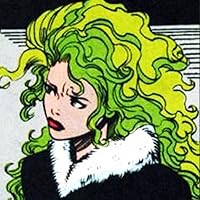
Finally, the volume wraps up with a multi-part story about Lorna Dane, the daughter of Magneto. These issues, written by Doom Patrol-creator Arnold Drake, aren't perfect but they're still more interesting than most of the stories we've received in the series so far. At this point, X-Men still leaves a lot to be desired but it's finally coming into its own.
finally these are GOOD!!!!!!! the art the writing we are getting SOMEWHERE. arnold drake is definitely my fave writer of these so far..... the lorna storyline was so so so so good marvel why do you disrespect her so much she is my everything
Collecting X-Men nos. 43 to 53, and throwing in Avengers 53 and a weird inventory solo Angel story which ran serialized in some reprint books, we encounter perhaps the lowest quality in X-men history. I found myself enjoying these stories despite their less-than-stellar plots and changes of direction. There was the multi-part battle with Magneto which began with an out-of-nowhere defeat that took two panels, then included a chapter in which the Angel met a strangely inconsistent menace named Red Raven who couldn't make up his mind which side he was on, then filled in an issue with Cyclops battling Quicksilver before the Avengers showed up and crazy mix-ups led to the two teams fighting. After this, the powers that were decided to break up the X-Men and see what sales could be with only one or two of them per issue. I don't know about other kids, but 9-year-old me hated numbers 47 (with the Beast and Ice Man fighting the Maha Yogi aka the Warlock) and 48 (with Marvel Girl and Cyclops fighting some weird computer and a host of strangely powered robots which turned out to be a scheme of Quasimodo, thus ruining the pathos of his previous appearance with the Silver Surfer (this issue was one of the worst Marvel Comics I can remember plunking down 12 cents to buy). Things got better as Steranko drew the return of the team on the cover of number 49, and the stories in 50 and 51 which introduced Lorna Dane (the future Polaris) and Mesmero (a green-skinned mutant) and purported to return Magneto again. If you've never read a Steranko-drawn comic book, you've missed out on some of the most astonishing artwork and storytelling in the medium's history. It was quite the let-down when he abandoned the title for the less than thrilling conclusion. (Arnold Drake, who was writing most of these stories, had been brilliant at DC, but I'm not sure he ever got the hang of Marvel, even if Doom Patrol had been the most Marvelesque DC comic ever.) Number 53 was the first professional art job by Barry (soon to be Windsor-) Smith. It was amateurish, but filled with excitement and lots of Kirby imitations. Within a year, he would be among the top comic book artists of all time. Part of the fun of reading this book was knowing that the next and last volume of the original X-Men run was coming up, and it would be the best batch of stories they ever had. And part of it was the sheer what-the-hellism of some of the crazy ideas and energy in these stories.
The title of the Masterworks series can be misleading sometimes - I doubt you'll find many people who would use that word to describe any of the stories in this volume. In 1968, contrary to its status today as a perennial blockbuster hit, X-MEN was one of the red-headed step-children of the Marvel line. Always a poor seller, editor Stan Lee passed the Merry Mutants around to out-of-work comics veterans who were scrounging at Marvel for any gig they could get (Doom Patrol and Deadman creator Arnold Drake, who wrote most of these issues) or green-as-grass newcomers needing an audition platform (the first very shaky comics work of future legend Barry Windsor-Smith is seen here in issue 53).
Although I always make allowances for the era, these stories aren't a good read even by Silver Age standards, especially when you consider some of the enduring Marvel classics that were being published contemporaneously. Longtime DC writer Drake shows little familiarity with the characters (oddball never-before-seen super-powers frequently pop up) and the series jarringly changes direction more than once, ignoring or not resolving some of its own major plot points.
Longtime X-Men penciller Werner Roth, always solid though workmanlike and unspectacular, contributes most of the art in this volume. The artistic highlights, however, are the few issues drawn by the legendary Jim Steranko - his issues are notable for introducing Lorna Dane/Polaris and the Steranko-designed "classic" X-Men logo which would endure for decades - and even then, it's far less than Steranko's best work.
For completists and comics history buffs only; Not recommended for casual reading.
I needed to read a book with a title that started with "x" for my alphabet book challenge. I just saw the latest X-Men movie and the idea came to me to read one of the masterwork volumes of X-Men. It was ok, a bit campy for sure. I especially liked reading the backstory of the Beast and Angel. I have to admit that I like the movies better than the comic books. I know, heresy to the true fan, lol.
This fourth collection of the original Xmen follows a prior lack lustre third volume. Searching now for a post-Xavier identity (both for the characters and the comic at times) we get a mixed bag of stories from Roy Thomas, Gary Friedrich, and Arnold Drake. This unsurprisingly leads to a variation in tone, erratic character development, and some real duffers balanced by some good stories. Of the latter, the first story against Magneto and some of the Brotherhood hits the spot, with an Avengers cross-over tossed in (and another daft hero vs. Hero scrap). The second multi-parter is also enjoyable with the introduction of Mesmero and one of my favourites, Polaris. Steranko draws two issues, which is never a bad thing. Less solid are the one offs, with a bizarre Red Raven story, a contrived appearance by the exiled Juggernaut, IceMan and Beast against The Warlock posing oddly as a stage musician, and some none sense story with robots and Quasimodo. Last but not least we get Blastaar, drawn by Barry Windsor Smith imitating Kirby. It felt far more FF than Xmen. The identity crisis is perpetuated by tte writers who abandon most of what’s gone before, tweak around powers rather like early 60s hero comics, and relocate half the team to California, because of, FBI or something, and drop Jean out of college for pretty much no reason. Beast and Iceman dump their GFs to head off to west coast (presumably after the rubbish date watching an ancient wizard) and Jean models bikinis… Seriously. The dropped page count to 15-16 is to allow the origin stories which were okay, if daft at times. Anyhow, the good outweighs the bad on the basis of the multiparters and accordingly this pulls in 3 stars, just. Final collection to come next
There are little beats of good in the midst of the floundering for identity. They don’t get Steranko at full must, but it is still a breath of life.
Barry Windsor Smith has his first showing. It is rough Kirbylite that he was apparently drawing in park benches in New York. While it has some pizzazz it is hard to see the artist he would become in this era. A fun moment of history.
There’s also irony in Arnold Drake’s presence here given he accused Lee of stealing the X-Men idea from his Doom Patrol. I guess if you can’t beat them, join them.
This is a very strange period in X-Men history. The Gary Friedrich's brief run brings very little to the X-Men mythos, but gives us a cool Cyclops alone against insurmountable odds story. Arnold Drake's short run brings in Polaris and Mesmero (and Alex Summers in the next volume), but serves up the incomprehensible Erik the Red story and completely off-the-mark characterizations. Though it was very cool to see Jim Steranko drawing the X-Men, and the debut of the enduring X-Men logo we all know and love.
Entertaining fun silver age stories, nothing too groundbreaking here, the avengers crossover is a fun highlight, as were the beast origin stories, and the solo angel stories were solid enough. Plots were largely forgettable for the main run, some of the writing is dense even by silver age standards, but it remains engagingly and has it's charm throughout. Better than volume 4, not as good as the first 3 volumes, but worth a read through as the series remains entertaining and underrated as I've read far worse comic runs from the silver age and other eras. 7/10 or 3.5 stars.
The issues here are much more interesting than some of those previous. I really enjoy the Magneto Brotherhood storyline and these start to picks things back up again after the lull that seemed to follow.
This volume is close to the end of the original run of "The X-Men", and it's not hard to see why it was originally cancelled. Both stories and artwork in this volume are sub-par, far below the quality we'd been used to. There's nothing much to recommend this.
Great collection of books, especially the Magneto set. Classic X-Men, just before they fell apart and got the reboot that changed all our lives. Obviously not perfect, but given the ground that was broken and the history that was made…
Marching my way through the terrible writing of the various authors is torture. The additional story line for Angel was awful. Just terrible. I must make it to Giant Sized X-Men #1. I must make it…….
3.6 stars. Slowly the issues are getting a bit better. #50 has drastically better art work but the plots are a bit convoluted. Still, they have been good fun to read with my 5-year old.
This was better but still bad. There were a few issues that didn’t feel like a chore to read. Panelling got better, action sequences got better. No more of Stan’s annoying interjections and edits. Some of these were actually interesting and engaging. I would actually say more than half. The origin stories were also good. But the inconsistency of artists from issue to issue was actually jarring and affected the experience.
(I only read the X-Men issues separately, not the other issues included in this oop collection.) This really shows why the series was cancelled after another year or so - the quality just was not there. Certainly some exceptions exist in this group, thanks solely to the art of Jim Steranko for a couple of issues, and the introduction of Lorna Dane is a great idea, but it's an idea that doesn't go anywhere here. Instead, this run is full of ideas that seemed good at the time but ultimately failed: it picks up with the funeral of Xavier, and the letters pages at the time are adamant in the complete, irreversible nature of Xavier's death (obviously we know how that turned out); this is followed up with the break-up of the team, by the FBI of all people, as if they have some sort of jurisdiction over the team. This is typical of the issues here: potentially fine ideas hampered by illogicalities, inanities, and failed execution. Had the X-Men volunteered to split up, giving the creative team a chance to highlight different characters in a short series, that could have been great - instead, it contradicts decisions already made, goes nowhere, and provides some of the worst stories in the history of the X-Men. Magneto is brought back, supposedly killed off, and brought back again a couple issues later, with a henchman, Mesmero, we've never seen before but is apparently Magneto's life-long acolyte. Juggernaut is brought back for what almost was a confrontation of Marko's human side and the loss of his step-brother, but this, too, goes nowhere, and the issue devolves into a meaningless battle and an inane deus ex machina ending. This run suffers from a lack of continuity, coming most likely from the great turnover in writers, artists, and decision makers. We see again a fight with the Avengers begun for no reason and ending simply because the issue has run out of panels. It does have some nice moments, oddly enough from Toad, but they are overshadowed by the general shoddy work. Jim Steranko's work does a good deal to stave off ennui with the series, though once his contributions end, the series immediately plummets to slipshod work again, as if no one was paying attention to the possibilities of quality work. The last X-Men issue features a humdrum battle with Blastaar (who spends most of the issue facing away from the audience) and some of the worst treatment of Jean in the entire series (with Bobby even joking they never should have allowed women to start voting). The series is sadly and definitely on its last legs here in its initial run.
I just wanted to keep reading this as much as I did volume 4, even though it's not the greatest X-Men material ever (neither is early 1990s Lobdell). The Blastaar story is a filler. Even so, I thought the Lorna Dane stories were good, as was the forced beak-up of the X-Men. My review of vol. 4 never got saved because of a technical glitch, but I thought Professor X being the Changeling was pretty obvious from the way the story was told. They're really dragging it out here, which almost makes me want to withdraw my question as to why Thomas thought he had intended Professor X to be dead for real, which made me wonder if he had re-read the stories the way Stan Lee says he does whenever he writes an introduction. He's still apparently dead by the end of the volume.
The colors in Marvel Masterworks have been kind of shaky. I had Captain America vol. 1 out of the library, but a page was torn out. I compared it with an unsealed copy of the hardcover that Midtown Comics happened to have, and saw that the colors were quite different. I actually have the first of the three Angel stories from Ka-Zar #2 and was able to compare it (I also have issue #49, but that's at my mom's house and couldn't do so, since I have this on interlibrary loan as it is). The colors were identical apart from a few flaws in the original that may be printing issues with my copy, although they look brighter in the paperback because the paper stock is different.
The Angel backups do exactly what a miniseries with a character most associated with team books is supposed to do--deal with one of the most important events in the character's life. In this case, Angel loses two important people in his life and almost gives up on Candy Southern as a result. Although the stories are described as appearing in the "back pages," the first one, in Ka-Zar #2, appeared in-between the two issues of Daredevil that told Ka-Zar's origin.
The Brooklyn Public Library owns a copy of volume 6. I put a hold on it before I'd even finished with #53. I've looked through this volume in the store and can say that the Neal Adams art is even more impressive than the couple of issues of Steranko we get here. I'm glad I'm holding off on the "Uncanny" masterworks until I get there instead of jumping ahead.
Not that much to say about this one that isn't applicable to its predecessors: mainly composed of one-offs, by which I mean dealing with villains you'll probably not see or hear of ever again.
It contains one plot concerning Lorna Dane which was quite interesting, issues 49 through 52. Issue #50 is especially beautifully drawn, the cover page alone is a piece of art in my opinion (Jim Steranko rules!).
So, if you have a chance, read that and maybe the origin stories of Beast. Might also want to take a look at the solo stories concerning Angel starting page 252. They were published in the back pages of 1970 Ka-Zar and Marvel Tales series so they're are not self-standing issues. However, they do makes an short incursion into Warren's life, if you're interested in knowing more about his background.
The rest I cannot reveal without some spoilers. :P
Not the best. The writers at this point seem to just be spinning their wheels, placing the mutant in familiar situations, showing little ingenuity in how they use their powers or overcome obstacles. Apart from an interlude with Magneto, the villains are terrible, and he's even in full maniac mode.
The art remains intriguing, especially some cool Steranko issues. That cover with Polaris is spectacular. But this is a set to skim.
More X-Men origins, and Professor X is dead! The stories are getting better at this stage, possibly with the first appearance of Polaris in issue 49, and what is soon to come is the best run of the series so far, which sadly concludes with the books first cancellation...
The early stories here are painful, but things begin to pick up towards the end. The arrival of Jim Steranko and Barry Smith, although they only do a few issues each, open up the art, making the comic more interesting and less of a slog. Arnold Drake also seems to be having more fun writing the book, and while it's not good, at least it's no longer painful.