

What do you think?

Don't Cry
Mary Gaitskill returns with a luminous new collection of stories—her first in more than ten years. In “College Town l980,” young people adrift in Ann Arbor debate the meaning of personal strength at the start of the Reagan era; in the urban fairy tale “Mirrorball,” a young man steals a girl’s soul during a one-night stand; in “The Little Boy,” a woman haunted by the death of her former husband is finally able to grieve through a mysterious encounter with a needy child. Each story delivers the powerful, original language, and the dramatic engagement of the intelligent mind with the craving body—or of the intelligent body with the craving mind—that has come to be seen as stunningly emblematic of Gaitskill’s fiction.
241 pages, Paperback
First published March 24, 2009
About the author
Mary Gaitskill
75 books1,605 followersMary Gaitskill is an American author of essays, short stories and novels. Her work has appeared in The New Yorker, Harper's Magazine, Esquire, The Best American Short Stories (1993 and 2006), and The O. Henry Prize Stories (1998). She married writer Peter Trachtenberg in 2001. As of 2005, she lived in New York City; Gaitskill has previously lived in Toronto, San Francisco, and Marin County, CA, as well as attending the University of Michigan where she earned her B.A. and won a Hopwood Award. Gaitskill has recounted (in her essay "Revelation") becoming a born-again Christian at age 21 but lapsing after six months.
Ratings & Reviews
Friends & Following
Create a free account to discover what your friends think of this book!
Community Reviews
Displaying 1 - 30 of 262 reviews

July 11, 2011
Angelique was a girl with a beautiful right shoulder, too much make-up, and a very expensive handbag made out of the skins of orphans. She had an anthropology degree but she was currently out of work. The problem was not any of that however. The problem which had been causing her sleepless nights, or nights where you just doze fitfully and never really go properly to sleep and see things which are kind of green, was that there was something in her vagina. Having looked at it from every angle, using mirrors and a speculum, she had concluded that it was a penis. Oh dear oh dear, she said to herself. What’s it doing there? Why doesn’t it go away? It was so irritating. As if my vagina is the only place it could be. And for so long too.
Days went by and it was still there. She decided to call one of her slightly depressed girlfriends named Ruby. She had five girlfriends called Ruby. It had never struck her before what a gigantic co-incidence that was. But now it did. Ruby was depressed but not so depressed that she’d stick her head in the oven or anything. She’d recently pulled chunks of her own hair out so that she had to wear a wig. The wig was very beautiful. It was from the hair of orphans. She was thinking of pulling other people’s hair out too, so that they could wear beautiful wigs and be better than they were, but she hadn’t got up the nerve to do that. She was in love with a boy called David but she called him Batbrains. He had a supernumery nipple and played in a grindcore band. “Ruby” said Angelique, “there’s a penis in my vagina.” Ruby said Angelique should take steps to find out whose it was. But Angelique couldn’t be bothered. It seemed like such an effort. She ate a bag of Doritos. Maybe it would get bored and go away. But it didn’t.
Eventually she gathered the Rubys together for a penis extraction party. They were giggly and excited. Once the deed was done, the penis made a fzzz sound and whizzed about the room like a balloon. They caught it and put it in a hamster cage where it flopped about a bit and then died. Ruby said that someone should make sure it was all gone. She volunteered to take a look around the vagina. She was gone for the best part of an hour. When she emerged she was clutching about twenty copies of Playgirl magazine. “I found these,” she said. “I didn’t even know I had those” said Angelique. “I’m sure they’re not mine.” The Rubys looked sceptically at one another. By now it was daytime. So they decided to watch daytime tv even though they were all really brainy. So they did.
Days went by and it was still there. She decided to call one of her slightly depressed girlfriends named Ruby. She had five girlfriends called Ruby. It had never struck her before what a gigantic co-incidence that was. But now it did. Ruby was depressed but not so depressed that she’d stick her head in the oven or anything. She’d recently pulled chunks of her own hair out so that she had to wear a wig. The wig was very beautiful. It was from the hair of orphans. She was thinking of pulling other people’s hair out too, so that they could wear beautiful wigs and be better than they were, but she hadn’t got up the nerve to do that. She was in love with a boy called David but she called him Batbrains. He had a supernumery nipple and played in a grindcore band. “Ruby” said Angelique, “there’s a penis in my vagina.” Ruby said Angelique should take steps to find out whose it was. But Angelique couldn’t be bothered. It seemed like such an effort. She ate a bag of Doritos. Maybe it would get bored and go away. But it didn’t.
Eventually she gathered the Rubys together for a penis extraction party. They were giggly and excited. Once the deed was done, the penis made a fzzz sound and whizzed about the room like a balloon. They caught it and put it in a hamster cage where it flopped about a bit and then died. Ruby said that someone should make sure it was all gone. She volunteered to take a look around the vagina. She was gone for the best part of an hour. When she emerged she was clutching about twenty copies of Playgirl magazine. “I found these,” she said. “I didn’t even know I had those” said Angelique. “I’m sure they’re not mine.” The Rubys looked sceptically at one another. By now it was daytime. So they decided to watch daytime tv even though they were all really brainy. So they did.

May 1, 2011
This is one of the places where the star system breaks down, because I loved -- five-star loved -- some of these stories so much that I became obsessed and thought about them all the time. But then I liked the ones towards the end less and less, and wound up really feeling repelled (in a bad way) by the last two stories, so.... rating books with stars is so stupid anyway. This is all ridiculously subjective and shouldn't be quantified like that, right? I looked at some reviews on here of people who felt the opposite way I did about which stories were good, which I'd guess could have to do with how the reader feels about Gaitskill's take on sex.
As it happens, Gaitskill and I seem to be pretty much on the same page about sex, specifically about (mostly straight) female sexuality, and I loved most of the first half of this book so much because of that. She leads with the forgettable and harmless jab "College Town, 1980," then delivers a crushing right hand with "Folk Song," which knocked the wind out of me. "Folk Song" was my favorite story in here, even though in theory it seems like some dumb intro-fiction exercise: a woman's response to three articles that happen to be on the same page in the newspaper. But this story made me freak out from how good it was and how shatteringly it cut through to all this really intense stuff about sex and being female I almost know and almost think about but haven't ever even considered trying to put into words myself. I felt similarly about "The Agonized Face," a narrator's response to a suspiciously familiar "feminist author" who "had apparently been a prostitute at some point in her colorful youth, and who had gone on record describing prostitutes as fighters against the patriarchy. She would say stupid things like that, but then she would write some good sentences that would make people say, 'Wow, she's kind of intelligent!'"
There are some extremely good sentences in Don't Cry, and I'd venture to say that Mary Gaitskill is a bit more than kind of intelligent. I've read her stuff before, but for whatever reason some of stories in this collection affected me in a way that most of her other work hasn't. I do see where people are coming from when they get annoyed with all the sex and masochism and what have you, because that kind of thing is annoying and seems gratuitous when it doesn't come off like it's supposed to, and I've read Gaitskill's eighties-hooker stories in the past and just been like, "Whatever." But sometimes -- here -- when she writes about sex and sexual violence and what it's like having a vagina and being a woman around here, she really nails it and pushes through deep into some very dark and out-of-the-way places. And not to get all gross or cheesy anything -- heaven forbid! -- but a few of these stories touched me in a way that left me feeling really almost violated, but also quite moved.
These stories had another effect on me too, that I think's maybe worth noting. In the most general sense I read fiction to escape from the banal and stupid shitshow that's my life, and successful fiction rescues me from my surroundings in two ways. It either takes me outside of my world, as the sleazy crime fiction I've been reading does, by essentially constructing painted cardboard panels all around me then projecting characters onto them, so I'll be distracted and amused and shielded from the mundane reality still going on, hidden behind the screens. Alternatively -- and okay, this maybe is too silly or snotty a leap, but it might point to a distinction between simple fiction and capital-L-Literature -- books can also bleed out of themselves and wind up coloring the way that I experience my life, so that I'm seeing my same world but in a completely new way. While I was reading this book I was no longer stuck in Jessicaland, and instead found myself living in a Mary Gaitskill story. It's different from the cardboard magic-lantern thing, though, because instead of hiding my real life, the stories left me in it, only the way that I experienced that life had changed. Like I'd be riding the subway or looking around at people on the street, or thinking of people I know (perhaps even in the Biblical sense!) and suddenly they'd all be Mary Gaitskill characters too. Which like, might not seem like a purely good thing, but I appreciate that kind of novelty. I can't just live in my own crappy fiction all the time, and having someone more gifted come along and rewrite things can be refreshing. The stories in here made me think about everything differently, which means they're good, or at least that they were good for me. Although I can see how someone else might just make fun of it, "Mirror Ball" was another one I particularly enjoyed that I think changed how I see things somehow; not just human relationships, but possibilities for how to tell a story. I also really liked "Today I'm Yours" a lot, though as with "Folk Song" if someone had described it to me, I wouldn't have wanted to read it.
I did not like the stories towards the end of the book, which are less explicitly about sex and more about boring short-story people whom I didn't like or care about, only not in a fun way. But even writing about this collection -- especially after reading Greg's take on it, which is the exact opposite of mine -- makes me wonder what the point of any of this Bookfacing is. My response to this book felt very, very personal, and seems irrelevant to anyone considering whether or not to read it.
God, you know, I don't even remember why I used to review books on here all the time, what I thought the compelling reason for doing that was. I do like having a record for myself of books and what I thought at the time, because otherwise three weeks on I have no memory of having read them. What I thought of while reading this book was a time that my friend Kristi's family took me with them on their vacation when I was fifteen. We were someplace, who knows where, and I guess there was a fountain or something that looked kind of like a slit in the concrete. And Kristi and I discovered that while we well knew -- and liberally used -- the word "phallic," we had absolutely no idea what the female equivalent was. At this point Kathy, Kristi's stepmom, helpfully interjected and told us that the word we wanted was "yonic." Which it turns out is not in a lot of dictionaries, but that is in fact what it means.
Anyway, the lady can write, and I hugely admired Gaitskill's use of language even in the stories I didn't like. I bet most people could get into some of these stories, though maybe not too many people would love all of them. I would recommend the first half Don't Cry to men who are curious about what it's like to have a vagina, except that (as noted elsewhere) I've noticed a lot of them would rather not know.
As it happens, Gaitskill and I seem to be pretty much on the same page about sex, specifically about (mostly straight) female sexuality, and I loved most of the first half of this book so much because of that. She leads with the forgettable and harmless jab "College Town, 1980," then delivers a crushing right hand with "Folk Song," which knocked the wind out of me. "Folk Song" was my favorite story in here, even though in theory it seems like some dumb intro-fiction exercise: a woman's response to three articles that happen to be on the same page in the newspaper. But this story made me freak out from how good it was and how shatteringly it cut through to all this really intense stuff about sex and being female I almost know and almost think about but haven't ever even considered trying to put into words myself. I felt similarly about "The Agonized Face," a narrator's response to a suspiciously familiar "feminist author" who "had apparently been a prostitute at some point in her colorful youth, and who had gone on record describing prostitutes as fighters against the patriarchy. She would say stupid things like that, but then she would write some good sentences that would make people say, 'Wow, she's kind of intelligent!'"
There are some extremely good sentences in Don't Cry, and I'd venture to say that Mary Gaitskill is a bit more than kind of intelligent. I've read her stuff before, but for whatever reason some of stories in this collection affected me in a way that most of her other work hasn't. I do see where people are coming from when they get annoyed with all the sex and masochism and what have you, because that kind of thing is annoying and seems gratuitous when it doesn't come off like it's supposed to, and I've read Gaitskill's eighties-hooker stories in the past and just been like, "Whatever." But sometimes -- here -- when she writes about sex and sexual violence and what it's like having a vagina and being a woman around here, she really nails it and pushes through deep into some very dark and out-of-the-way places. And not to get all gross or cheesy anything -- heaven forbid! -- but a few of these stories touched me in a way that left me feeling really almost violated, but also quite moved.
These stories had another effect on me too, that I think's maybe worth noting. In the most general sense I read fiction to escape from the banal and stupid shitshow that's my life, and successful fiction rescues me from my surroundings in two ways. It either takes me outside of my world, as the sleazy crime fiction I've been reading does, by essentially constructing painted cardboard panels all around me then projecting characters onto them, so I'll be distracted and amused and shielded from the mundane reality still going on, hidden behind the screens. Alternatively -- and okay, this maybe is too silly or snotty a leap, but it might point to a distinction between simple fiction and capital-L-Literature -- books can also bleed out of themselves and wind up coloring the way that I experience my life, so that I'm seeing my same world but in a completely new way. While I was reading this book I was no longer stuck in Jessicaland, and instead found myself living in a Mary Gaitskill story. It's different from the cardboard magic-lantern thing, though, because instead of hiding my real life, the stories left me in it, only the way that I experienced that life had changed. Like I'd be riding the subway or looking around at people on the street, or thinking of people I know (perhaps even in the Biblical sense!) and suddenly they'd all be Mary Gaitskill characters too. Which like, might not seem like a purely good thing, but I appreciate that kind of novelty. I can't just live in my own crappy fiction all the time, and having someone more gifted come along and rewrite things can be refreshing. The stories in here made me think about everything differently, which means they're good, or at least that they were good for me. Although I can see how someone else might just make fun of it, "Mirror Ball" was another one I particularly enjoyed that I think changed how I see things somehow; not just human relationships, but possibilities for how to tell a story. I also really liked "Today I'm Yours" a lot, though as with "Folk Song" if someone had described it to me, I wouldn't have wanted to read it.
I did not like the stories towards the end of the book, which are less explicitly about sex and more about boring short-story people whom I didn't like or care about, only not in a fun way. But even writing about this collection -- especially after reading Greg's take on it, which is the exact opposite of mine -- makes me wonder what the point of any of this Bookfacing is. My response to this book felt very, very personal, and seems irrelevant to anyone considering whether or not to read it.
God, you know, I don't even remember why I used to review books on here all the time, what I thought the compelling reason for doing that was. I do like having a record for myself of books and what I thought at the time, because otherwise three weeks on I have no memory of having read them. What I thought of while reading this book was a time that my friend Kristi's family took me with them on their vacation when I was fifteen. We were someplace, who knows where, and I guess there was a fountain or something that looked kind of like a slit in the concrete. And Kristi and I discovered that while we well knew -- and liberally used -- the word "phallic," we had absolutely no idea what the female equivalent was. At this point Kathy, Kristi's stepmom, helpfully interjected and told us that the word we wanted was "yonic." Which it turns out is not in a lot of dictionaries, but that is in fact what it means.
Anyway, the lady can write, and I hugely admired Gaitskill's use of language even in the stories I didn't like. I bet most people could get into some of these stories, though maybe not too many people would love all of them. I would recommend the first half Don't Cry to men who are curious about what it's like to have a vagina, except that (as noted elsewhere) I've noticed a lot of them would rather not know.
February 1, 2022
DNF
I think Mary Gaitskill is someone I’d hate to have at a gathering. She’s sharp, but ugly. I enjoyed her novel, Veronica, because she captured something meaningful about being human that held and supported her nuggets of ugly. But I kept fast-forwarding through these stories, hoping to find one that didn’t get under my skin. It didn’t help that Gaitskill did the narrating herself – too much of the same tone exacerbated my discomfort. And, I may have appreciated these more pre-pandemic, but I couldn’t tolerate her writing this time around.
I think Mary Gaitskill is someone I’d hate to have at a gathering. She’s sharp, but ugly. I enjoyed her novel, Veronica, because she captured something meaningful about being human that held and supported her nuggets of ugly. But I kept fast-forwarding through these stories, hoping to find one that didn’t get under my skin. It didn’t help that Gaitskill did the narrating herself – too much of the same tone exacerbated my discomfort. And, I may have appreciated these more pre-pandemic, but I couldn’t tolerate her writing this time around.

March 25, 2009
Don't Cry was a disappointing reading experience. At first I found the book to be kind of annoying. The first story was quite unappealing, in both the characters and whatever it was that was going on. Then for the next few stories the unappealing just kept happening. None of the stories could seem to escape feeling like there were shocking things being said for the sake of being shocking. Mostly they had to do with fucking, and oftentimes with the fact that women have vaginas. I realize this fact, and maybe if I had read these stories in Edith Wharton's time the shockingness of the black hole of mystery that is a cooter would have made me go into a convulsion of some sort, or maybe if I had read this as a woman in the sixties I could have rallied around the vagina-ness of all womenkind, but by 2009 it's not that shocking nor mysterious. So that's disappointment one, I wasn't enjoying the book.
About 2/3's through the book I already started formulating some review ideas in my head. I was ready to tear this apart. I dreaded having to slosh through another 1/3 of the book, but I was ready to do it, just to be angered more. Instead here comes disappointment two. The third to last story is actually really good. What the fuck? No mysterious vaginas, no dime store versions of Levinas' theory of The Other / the face of The Other turned into some silly Feminist thing that held no water what so ever. No characters just blurting out things like, "My ex-boyfriend fucked me in the ass," and then spend a half a page ridiculing people who find comments like that to be uncomfortable as prudes (what to think of the reader who feels uncomfortable for a writer who thinks something like this is shocking, or gritty, or real), and also no Eggers like ironic distancing of oneself from the faults already showing in earlier stories through a separate story. None of those things. Instead a very good story. And then that story was followed up with two not quite as good stories, but still quite good ones. What the fuck. I couldn't even hate the book in peace, instead it had to end with three solid stories that were enjoyable, and if I hadn't had to read the first 2/3's of the book, I'd consider Gaitskill as a writer I should check out and read more of. Instead I'm left with a weird feeling of indifference, not knowing if the last three were a fluke or maybe signs of what her newer / more mature work is like. I guess the only way to find out is to read more of her books, but I don't know if I want to deliberately set myself up for more disappointments.
About 2/3's through the book I already started formulating some review ideas in my head. I was ready to tear this apart. I dreaded having to slosh through another 1/3 of the book, but I was ready to do it, just to be angered more. Instead here comes disappointment two. The third to last story is actually really good. What the fuck? No mysterious vaginas, no dime store versions of Levinas' theory of The Other / the face of The Other turned into some silly Feminist thing that held no water what so ever. No characters just blurting out things like, "My ex-boyfriend fucked me in the ass," and then spend a half a page ridiculing people who find comments like that to be uncomfortable as prudes (what to think of the reader who feels uncomfortable for a writer who thinks something like this is shocking, or gritty, or real), and also no Eggers like ironic distancing of oneself from the faults already showing in earlier stories through a separate story. None of those things. Instead a very good story. And then that story was followed up with two not quite as good stories, but still quite good ones. What the fuck. I couldn't even hate the book in peace, instead it had to end with three solid stories that were enjoyable, and if I hadn't had to read the first 2/3's of the book, I'd consider Gaitskill as a writer I should check out and read more of. Instead I'm left with a weird feeling of indifference, not knowing if the last three were a fluke or maybe signs of what her newer / more mature work is like. I guess the only way to find out is to read more of her books, but I don't know if I want to deliberately set myself up for more disappointments.

March 20, 2020
the first six stories are a miracle.

November 2, 2017
50 sfumature di Grey. Ma è un altro Grey
Raccolta assai poco soddisfacente, per quel che ricordo. Ma contiene un racconto, Segretaria, che ha il grandissimo pregio di aver ispirato (molto liberamente assai) Secretary del 2002, lieve film su sadomasochismo e amore a lieto fine illuminato dalla presenza di Maggie Gyllenhaal. In giorni di tristezza e masochismo elettorale, la visione di Maggie-Lee alle prese con il dominatore Grey (sic!) è un sollievo. Potere degli occhi azzurri.
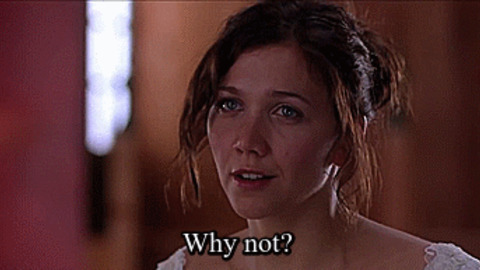
Dell'altro Grey, mio grave limite, conosco solo l'esistenza. Mi basta.
Raccolta assai poco soddisfacente, per quel che ricordo. Ma contiene un racconto, Segretaria, che ha il grandissimo pregio di aver ispirato (molto liberamente assai) Secretary del 2002, lieve film su sadomasochismo e amore a lieto fine illuminato dalla presenza di Maggie Gyllenhaal. In giorni di tristezza e masochismo elettorale, la visione di Maggie-Lee alle prese con il dominatore Grey (sic!) è un sollievo. Potere degli occhi azzurri.
Dell'altro Grey, mio grave limite, conosco solo l'esistenza. Mi basta.
February 21, 2009
Not every story in the collection is a "wow" but enough of them are and the book works as a whole. The story, Don't Cry, which I originally read in the New Yorker, and loved at the time, grows larger and more poignant within the context of the collection- which seems to me a hallmark of a great short story collection.
There's more formal range here than in Bad Behavior and Because They Wanted To. She takes some risks in this sense.
Yes, she has a bit of a potty mouth ;) This has never bothered me about Gaitskill because I think she is using it metaphorically, particularly in this collection where some of the somewhat crude sex talk is seemingly so casual and "thrown in". I think she is making a statement on how inured we have become as a culture to violence, and in Gaitskills book, sex is always a form of violence, even when it is consensual.
In that sense, what may strike some as crudeness seems essential to the development of the characters, who have all experienced emotional violation in some way-- at the hands of others, at the hands of the culture.
There's more formal range here than in Bad Behavior and Because They Wanted To. She takes some risks in this sense.
Yes, she has a bit of a potty mouth ;) This has never bothered me about Gaitskill because I think she is using it metaphorically, particularly in this collection where some of the somewhat crude sex talk is seemingly so casual and "thrown in". I think she is making a statement on how inured we have become as a culture to violence, and in Gaitskills book, sex is always a form of violence, even when it is consensual.
In that sense, what may strike some as crudeness seems essential to the development of the characters, who have all experienced emotional violation in some way-- at the hands of others, at the hands of the culture.

October 16, 2008
While reading: My boyfriend the Random House rep gave me a proof! I know this is attributing things to an author because of the content of their work, but I want Mary Gaitskill to beat me up, cut me and make me cry.
Afterward: Yeah. An interesting thing happened in this one- I can't remember whether it happened in the previous short story collections of hers that I've read, or whether maybe I haven't actually read them- where, as it went on, the stories got less, like, evil, and while they didn't become nice stories about nice people having nice things happen to them, they became less... brutal, I guess? Vicious? There were fewer people walking dazed through life post-institutionalization, and instead more self-aware, self-obsessed grad school assholes.
Combined with the fact that specifics would recur from story to story- I can't remember any right now, but like, y'know how if you use say the word 'stately' three times in three consecutive paragrpahs, it becomes a Thing that you've Noticed? that sort of thing- and with the consistent we're-all-assholes-and-we're-all-fucked tone, made it feel really unified, for a short story collection.
Also, one story, 'the Agonized Face,' is the first thing in a really long time to remind me of how much I used to see potential in and get excited about short stories. It threw me off guard! That happens so rarely any more. It's a combination of powderkeg feminist politics and an unreliable/likable/hateable narrator that had me super engaged, super critical, and ultimately super excited without feeling like any answers or solutions had been proposed. Just more like it was a new and eloquent way of saying, 'stuff is weird.'
Oh hey and speaking of answers and solutions! I love how, when the subject comes up, debasement usually is the only way to find any kind of release at all. Specifically: Sadism! Or: Masochism! It's a neat trick how eloquently she bathes everything in kink, and even neater how natural and logical she makes it seem. Like sometimes it's pretty overt and sometimes it's not, but maybe it's most overt in the first story or two and then it's less so but since it was so strong at first it feels more pervasive. Or maybe I'm just a pervert and I see kink in everything. Or maybe it's really there, or maybe all of 'em.
Either way, whatever. I can't recommend this thing highly enough, even though it doesn't even come out for six months or something, which means they might ruin it by then. In which case you can borrow my copy.
Afterward: Yeah. An interesting thing happened in this one- I can't remember whether it happened in the previous short story collections of hers that I've read, or whether maybe I haven't actually read them- where, as it went on, the stories got less, like, evil, and while they didn't become nice stories about nice people having nice things happen to them, they became less... brutal, I guess? Vicious? There were fewer people walking dazed through life post-institutionalization, and instead more self-aware, self-obsessed grad school assholes.
Combined with the fact that specifics would recur from story to story- I can't remember any right now, but like, y'know how if you use say the word 'stately' three times in three consecutive paragrpahs, it becomes a Thing that you've Noticed? that sort of thing- and with the consistent we're-all-assholes-and-we're-all-fucked tone, made it feel really unified, for a short story collection.
Also, one story, 'the Agonized Face,' is the first thing in a really long time to remind me of how much I used to see potential in and get excited about short stories. It threw me off guard! That happens so rarely any more. It's a combination of powderkeg feminist politics and an unreliable/likable/hateable narrator that had me super engaged, super critical, and ultimately super excited without feeling like any answers or solutions had been proposed. Just more like it was a new and eloquent way of saying, 'stuff is weird.'
Oh hey and speaking of answers and solutions! I love how, when the subject comes up, debasement usually is the only way to find any kind of release at all. Specifically: Sadism! Or: Masochism! It's a neat trick how eloquently she bathes everything in kink, and even neater how natural and logical she makes it seem. Like sometimes it's pretty overt and sometimes it's not, but maybe it's most overt in the first story or two and then it's less so but since it was so strong at first it feels more pervasive. Or maybe I'm just a pervert and I see kink in everything. Or maybe it's really there, or maybe all of 'em.
Either way, whatever. I can't recommend this thing highly enough, even though it doesn't even come out for six months or something, which means they might ruin it by then. In which case you can borrow my copy.

December 2, 2012
I remember the first time I read Self-Help and when I picked up Lust and Other Stories. There was this intimidation, this contempt, this other sadness. I wanted to be this good. I wanted to crawl, to burrow into the reader and make myself known.
Dammit.
Gaitskill's collection creeps in like that... at first I was kind of bored. I wasn't impressed with the beginning stories.. it was what I had been experiencing this entire year with the books that I've chosen to read. Meh. But, with Mirror Ball I began to feel that clenching, that annoying jealousy. With an opening line "He took her soul--though, being a secular-minded person, he didn't think of it that way." I was right back at that growling, mewling MINE stage.
Seriously, this sucks.
I am not a good person, I want to applaud these women, I want to feel some sisterly bonding with them, but I know that if I had the chance, I would so pull their hair and scratch at their eyes.
I am the effaced soul on the musician's floor, I am the agonized face, I am the monsters, the demons, the Alzheimer's, the malaria ridden day laborer, the stupid trysts.
I am angry.

March 13, 2009
Unmitigated, Unreadable Despair
The stories in Mary Gaitskill’s Don’t Cry reflect characters who are profoundly vexed, but not in a profound way. It seems that Ms. Gaitskill has contrived both them and their situations with the simple goal of shocking her reader. The stories are visceral, yes, but they lack substance, and the fact that Gaitskill herself seems to harbor nothing but disdain for her characters makes it impossible for the reader to feel anything for them either. That’s all that there is to this collection – a shame, because Gaitskill does seem like a talented writer, albeit one whose brain I would never want to pick over coffee. By the halfway point I began questioning the point in slogging through the rest of the collection, and when I was about seventy-five percent through I gave up. This is not something that I typically do. Yet I have no regrets.
I had decided to read this collection because I was interested in reading Gaitskill’s novel Veronica. Emphasis on was. Instead, I’ll be looking for a writer with a touch of empathy, whose goal is not to shock and appall for no purpose other than the joy of having shocked and appalled.
Grade: D
The stories in Mary Gaitskill’s Don’t Cry reflect characters who are profoundly vexed, but not in a profound way. It seems that Ms. Gaitskill has contrived both them and their situations with the simple goal of shocking her reader. The stories are visceral, yes, but they lack substance, and the fact that Gaitskill herself seems to harbor nothing but disdain for her characters makes it impossible for the reader to feel anything for them either. That’s all that there is to this collection – a shame, because Gaitskill does seem like a talented writer, albeit one whose brain I would never want to pick over coffee. By the halfway point I began questioning the point in slogging through the rest of the collection, and when I was about seventy-five percent through I gave up. This is not something that I typically do. Yet I have no regrets.
I had decided to read this collection because I was interested in reading Gaitskill’s novel Veronica. Emphasis on was. Instead, I’ll be looking for a writer with a touch of empathy, whose goal is not to shock and appall for no purpose other than the joy of having shocked and appalled.
Grade: D

Read
April 1, 2023this was not it

August 29, 2019
Mary Gaitskill's short story collection, Don't Cry, was first published in the USA in 2009, and in the United Kingdom in 2017. Gaitskill was not an author whom I had read before, but I'd heard such great things about her writing, and consequently picked up Don't Cry when browsing in my local library.
Described as 'full of jagged, lived emotion and powerful, incisive writing', I was certainly intrigued by this collection, which is made up of ten stories. Gaitskill's opening sentences are often quite startling and unusual, and sometimes packed a real punch. 'College Town, 1980', for instance, begins: 'Dolores did not look good in a scarf'; and 'Mirror Bowl' opens 'He took her soul - though, being a secular-minded person, he didn't think about it that way'. They also provide a sense of intrigue. 'Don't Cry', the title story, has 'Our first day in Addis Ababa, we woke up to wedding music playing outside our hotel' as its first sentence.
I admired Gaitskill's skill at creating striking sentences and images, but found that there was perhaps a little too much sexual content, darkness, and grit in Don't Cry for my personal taste. I found a few of the stories grotesque, and quite difficult to read in consequence. Whilst Gaitskill's stories are largely about everyday occurrences, she twists them around until they seem nasty and unsettling. Only some of her characters interested me, and I wasn't that taken by her quite matter-of-fact writing. The title story in the collection was by far my favourite, but it has not led me to want to pick up any more of Gaitskill's work in future.
Described as 'full of jagged, lived emotion and powerful, incisive writing', I was certainly intrigued by this collection, which is made up of ten stories. Gaitskill's opening sentences are often quite startling and unusual, and sometimes packed a real punch. 'College Town, 1980', for instance, begins: 'Dolores did not look good in a scarf'; and 'Mirror Bowl' opens 'He took her soul - though, being a secular-minded person, he didn't think about it that way'. They also provide a sense of intrigue. 'Don't Cry', the title story, has 'Our first day in Addis Ababa, we woke up to wedding music playing outside our hotel' as its first sentence.
I admired Gaitskill's skill at creating striking sentences and images, but found that there was perhaps a little too much sexual content, darkness, and grit in Don't Cry for my personal taste. I found a few of the stories grotesque, and quite difficult to read in consequence. Whilst Gaitskill's stories are largely about everyday occurrences, she twists them around until they seem nasty and unsettling. Only some of her characters interested me, and I wasn't that taken by her quite matter-of-fact writing. The title story in the collection was by far my favourite, but it has not led me to want to pick up any more of Gaitskill's work in future.
March 8, 2024
this was so crazy bc besides garth greenwell's cleanness and maybe brandon taylor's filthy animals (if u consider that) i can't think of another collection in which i've liked basically every story even the ones i was a little apprehensive about initially......safe to say mary gaitskill is one of my favourite authors now i think she somehow manages to fold in ordinary reality with something of the divine so every moment is just full of the gentlest significance i dont even really know how to describe it..there's an image in this book of a girl with a broken heart and a soul that's slipped out of her and she sits all night in the doorway of a record store which has a mirrorball and as the light fragments and curves off of it her heart opens and it's sooooo .....
— "The suffering girl walking in live darkness, the vast world of creatures all around. The girl and her suffering a small thing in this mysterious, still-soft, and beautiful world. Through this description of physical life, said Janice, mystery was bigger than human feeling, and yet physical life bore up human feeling as with a compassionate hand."
— "The suffering girl walking in live darkness, the vast world of creatures all around. The girl and her suffering a small thing in this mysterious, still-soft, and beautiful world. Through this description of physical life, said Janice, mystery was bigger than human feeling, and yet physical life bore up human feeling as with a compassionate hand."

September 4, 2023
Not exactly my kind of short stories. The writing was powerful. The people seemed realistic, the situations very troubling. Not happy, no easy endings. But the writing was admirable. Do I want to read more Gaitskill? Maybe, but not for awhile.
June 3, 2025
She wanted the Hempel nachos which is random because most people with value the Gaitskill nachos more than the Hempel nachos. The story “description “was really good though

October 18, 2011
This is a more expansive collection than Bad Behavior (published 20 years earlier), which mostly featured young women in personal and sexual turmoil. While the turmoil theme is still prominent here, there are plenty of other themes, the variety of characters (gender, age, sexual orientation) is quite wide, and the collection manages to tackle its themes from a variety of directions - in my opinion, this is the mark of a good collection of stories. Bad Behavior managed none of this, and it goes to show what a difference 20 years of experience can make.
What I love most about Gaitskill's writing is how very TRUE it feels. Her descriptions and situations are never idealized or glossy - everything is gritty and sharp and blatant, even when that means overtly sexual or disgusting or what many people would consider devient or perverted.
Of the 10 stories, I very much enjoyed 7 of them. Mirror Ball really spoke to me - I was fascinated by the way Gaitskill anthropomorphized the soul to explain what it's like to be utterly altered by someone you meet without understanding why or how it happened. The Arms and Legs of the Lake says so much about the cost of war to those who return. The final story, Don't Cry, juxtaposes different types of struggle - the struggle of war, the struggle of grief when you lose your spouse, and the struggle of trying to achieve something that seems impossible.
The choice of Don't Cry as the overall title of the collection was a good one. Each story very much speaks to the need for great inner strength. Only in Don't Cry, does a character break down, let go, and cry.
Themes: women, relationships, sex, turmoil, souls and soul-speak, writing, aging, grief, death (of a partner, in particular), inner strength
What I love most about Gaitskill's writing is how very TRUE it feels. Her descriptions and situations are never idealized or glossy - everything is gritty and sharp and blatant, even when that means overtly sexual or disgusting or what many people would consider devient or perverted.
Of the 10 stories, I very much enjoyed 7 of them. Mirror Ball really spoke to me - I was fascinated by the way Gaitskill anthropomorphized the soul to explain what it's like to be utterly altered by someone you meet without understanding why or how it happened. The Arms and Legs of the Lake says so much about the cost of war to those who return. The final story, Don't Cry, juxtaposes different types of struggle - the struggle of war, the struggle of grief when you lose your spouse, and the struggle of trying to achieve something that seems impossible.
The choice of Don't Cry as the overall title of the collection was a good one. Each story very much speaks to the need for great inner strength. Only in Don't Cry, does a character break down, let go, and cry.
Themes: women, relationships, sex, turmoil, souls and soul-speak, writing, aging, grief, death (of a partner, in particular), inner strength

April 20, 2009
i have a soft place in my heart for mary gaitskill for various reasons but this book was kind of bad most of the time. i admire what she does, because it is beautiful and truly grotesque, but there comes a point where it gets boring. most of the characters felt like either representations of or foils to gaitskill and that actually made me uncomfortable. but then again, it usually makes me uncomfortable to read literary fiction about people who write literary fiction. the last two stories are good, and linked, and "the agonized face" i liked in spite of myself, just because it addresses ideas about women's sexuality -- and how dangerous it can be for women to fetishize their own sexuality -- that i think about a lot of the time. i also really enjoyed some parts of "mirror ball" but half of it could have been edited out and made a much more beautiful story. all in all, it is not the worst thing i've read, but definitely a disappointment after bad behavior.

March 19, 2022
"He meant it when he kissed her good night and told her he'd call her. But out in the hall (which still smelled of onions), he changed his mind. He weighed her good qualities as he walked home in the interesting light of 4:00 a.m., but he did it like a man counting pocket change, yawning and half-interested."
Mary Gaitskill is just amazing. While I didn't love every story in here, every single one had moments of brilliance. She somehow finds a way to write about people in a way that's simultaneously relatable, disturbing, and unique, and this might be my favourite of her short story collections (although it's a close call between this and Because They Wanted To. I can't wait to read more from her.
Mary Gaitskill is just amazing. While I didn't love every story in here, every single one had moments of brilliance. She somehow finds a way to write about people in a way that's simultaneously relatable, disturbing, and unique, and this might be my favourite of her short story collections (although it's a close call between this and Because They Wanted To. I can't wait to read more from her.

January 31, 2009
None of the characters in this selection of short stories appealed to me. Their lives didn't make me want to learn more, and the obsession with sex that permeated the book just turned me off. Pity, because I usually like Gaitskill's work.

July 25, 2023
wrenching, beautifully and carefully rendered. made sense mystically, kind of gaitskill's thing. I thought: love what loves you back mangled, and cried at "The Little Boy"--suddenly, surprising myself

October 16, 2020
Mary Gaitskill is damn good.

May 13, 2021
'The Arms and Legs of a Lake' remains absolutely one of my favorite short stories of all time.

May 22, 2024
talented writer but this was weird af

November 27, 2025
3.5 a mixed bag… loved the first half but petered out massively

April 13, 2009
I really liked this collection of short stories. I can't wait to read more of Gaitskill's work but this is certainly my favorite of what I've read by her so far.
I've always appreciated her ability to wake me up--in particular, her ability to defamiliarize the understandings of intimacy that I become comfortable with--but in this collection the writing itself is so elegant that I feel encouraged to wake up, regardless of the reality that I'm waking up to.
Every once in a while I come across short fiction that shakes me awake, that functions in the way of Kafka's axe-metaphor by breaking the frozen sea within me. However, very rarely does the process of getting broken by a book feel as good as it did when I read Gaitskill's prose in this newest collection of her's. Even when the subject matter is disturbing, Gaitskill effectively mixed in enough comedy and poetic language to make me enjoy her stories without forgetting that I just might become enlightened by them.
For those that believe Gaitskill writes merely to shock us until we are strong enough to think about sex and desire and intimacy as they actually are should certainly read this beautifully poignant book, which, like her previous works, definitely does not coddle when it comes to her descriptions of the physical world(we see the serious philosophical inquiries of a stripper interuppted by the memory of a client who stuck his finger in her ass even though he had promised not to in one story and a jarring pastiche that features a woman who has sex with over 1,000 men, the mating habits of a turtle, and the famous John Henry of folk song legend in another) but the portrait that Gaitskill paints is not wholly dark, despite the reality that she encourages us to face in this collection.
Speaking of facing, I really like that she pays attention to faces in this book. I've been having a lot of difficulty trying to write faces in my fiction, regardless of how much time I've spent reading them lately. I recently consulted a portrait painter that I know for help with this problem that I've been having and, frustrated with her ease in reproducing faces, I was just about ready to decide that the problem is more with the language that I've been using, more with my medium of expression, and less with my own inadequacies--that is, until I started reading this book by Gaitskill.
In "Don't Cry", my favorite story, she offers the following description of a baby's face, which is just one instance of the precision and attention to detail that you'll find in this story alone:
"The baby was beautiful, fragile and small for his age, with a severe mouth, a high forehead, almond-shaped eyes, and slightly pointed ears that made his gaze seem radically attuned. When you held him, you felt the pure unprotected tenderness of an infant, but in those eyes there also was something uncanny and strong, nascent and vibrating with the desire to take form."
"Don't Cry", which takes place in Ethopia, is certainly my favorite story of the collection but I think the whole collection is very beautiful and worth reading for any Gaitskill fan or fan of short fiction.
I've always appreciated her ability to wake me up--in particular, her ability to defamiliarize the understandings of intimacy that I become comfortable with--but in this collection the writing itself is so elegant that I feel encouraged to wake up, regardless of the reality that I'm waking up to.
Every once in a while I come across short fiction that shakes me awake, that functions in the way of Kafka's axe-metaphor by breaking the frozen sea within me. However, very rarely does the process of getting broken by a book feel as good as it did when I read Gaitskill's prose in this newest collection of her's. Even when the subject matter is disturbing, Gaitskill effectively mixed in enough comedy and poetic language to make me enjoy her stories without forgetting that I just might become enlightened by them.
For those that believe Gaitskill writes merely to shock us until we are strong enough to think about sex and desire and intimacy as they actually are should certainly read this beautifully poignant book, which, like her previous works, definitely does not coddle when it comes to her descriptions of the physical world(we see the serious philosophical inquiries of a stripper interuppted by the memory of a client who stuck his finger in her ass even though he had promised not to in one story and a jarring pastiche that features a woman who has sex with over 1,000 men, the mating habits of a turtle, and the famous John Henry of folk song legend in another) but the portrait that Gaitskill paints is not wholly dark, despite the reality that she encourages us to face in this collection.
Speaking of facing, I really like that she pays attention to faces in this book. I've been having a lot of difficulty trying to write faces in my fiction, regardless of how much time I've spent reading them lately. I recently consulted a portrait painter that I know for help with this problem that I've been having and, frustrated with her ease in reproducing faces, I was just about ready to decide that the problem is more with the language that I've been using, more with my medium of expression, and less with my own inadequacies--that is, until I started reading this book by Gaitskill.
In "Don't Cry", my favorite story, she offers the following description of a baby's face, which is just one instance of the precision and attention to detail that you'll find in this story alone:
"The baby was beautiful, fragile and small for his age, with a severe mouth, a high forehead, almond-shaped eyes, and slightly pointed ears that made his gaze seem radically attuned. When you held him, you felt the pure unprotected tenderness of an infant, but in those eyes there also was something uncanny and strong, nascent and vibrating with the desire to take form."
"Don't Cry", which takes place in Ethopia, is certainly my favorite story of the collection but I think the whole collection is very beautiful and worth reading for any Gaitskill fan or fan of short fiction.

July 9, 2009
Mary Gaitskill is one of my favorite writers. Her ability to realistically plumb the human soul and its motives is astonishing. She also can do some lovely writing, turning phrases and metaphors that feel fresh and exact. So, I was excited that this book was out, and after hearing her read from "Mirror Ball" on KCRW's Bookworm, I knew I couldn't wait for paperback.
There are some excellent stories in this collection—stories that individually warrant more than the 3 star rating I gave the book. (The best being "The Agonized Face," "Description," and the aforementioned "Mirror Ball" which has an uncharacteristic-for-Gaitskill magical-realism bent to it.) The other stories—and there are 10 total—are good, but not great. The weakest was "College Town, 1980" which it turns out is a very old story of hers revamped and set out to pasture.
Still, though, "Agonized Face" and "Mirror Ball" were so good, they're still knocking around in my head. And it's not even really the scenes or ideas from the story, but just shades of feelings and tone that I'm retaining.
There are some excellent stories in this collection—stories that individually warrant more than the 3 star rating I gave the book. (The best being "The Agonized Face," "Description," and the aforementioned "Mirror Ball" which has an uncharacteristic-for-Gaitskill magical-realism bent to it.) The other stories—and there are 10 total—are good, but not great. The weakest was "College Town, 1980" which it turns out is a very old story of hers revamped and set out to pasture.
Still, though, "Agonized Face" and "Mirror Ball" were so good, they're still knocking around in my head. And it's not even really the scenes or ideas from the story, but just shades of feelings and tone that I'm retaining.

July 18, 2012
“Oggi sono tua” altro non è che una summa delle tre raccolte pubblicate in trent’anni dall’autrice, oltre a due romanzi (di cui uno, “Veronica”, edito quasi in contemporanea quest’anno per Nutrimenti).
Mary Gaitskill scrive molto bene e spesso stupisce perché è in grado di non fossilizzarsi su uno stile in particolare o di seguire sempre lo stesso canovaccio che funziona. Hanno tratti molto fisici le storie che racconta, con i corpi della donne che entrano di prepotenza nella visionarietà delle sue parole, colpendo e maltrattando le sensibilità coinvolte. Sessualità e tenerezza come opposti concordi che trovano nella vita di tutti i giorni terreno fertile dove crescere, scontrarsi e mescolarsi.
Per certi versi, anche se fondamentalmente diverse tra loro, mi ha ricordato altre grandi autrici di short stories americane come Alice Munro o Grace Paley.
Tra gli episodi migliori segnalo: “Papino buono e caro”, Perché sì”, “Consolazione”, “La ragazza dell’aereo”, “La faccia straziata” e “Oggi sono tua”.
http://www.subliminalpop.com/?p=6237
Mary Gaitskill scrive molto bene e spesso stupisce perché è in grado di non fossilizzarsi su uno stile in particolare o di seguire sempre lo stesso canovaccio che funziona. Hanno tratti molto fisici le storie che racconta, con i corpi della donne che entrano di prepotenza nella visionarietà delle sue parole, colpendo e maltrattando le sensibilità coinvolte. Sessualità e tenerezza come opposti concordi che trovano nella vita di tutti i giorni terreno fertile dove crescere, scontrarsi e mescolarsi.
Per certi versi, anche se fondamentalmente diverse tra loro, mi ha ricordato altre grandi autrici di short stories americane come Alice Munro o Grace Paley.
Tra gli episodi migliori segnalo: “Papino buono e caro”, Perché sì”, “Consolazione”, “La ragazza dell’aereo”, “La faccia straziata” e “Oggi sono tua”.
http://www.subliminalpop.com/?p=6237
June 19, 2021
we're chronologically and culturally removed from the provocations of 'bad behavior' but even so Gaitskill remains a worthwhile and talented writer, even if this collection is really uneven. these are all character sketches that indulge in Gaitskill's MO of exposing and applying everyday maliciousness or embarrassment that we keep hidden inside our personalities, whether those be prejudices or insecurities. Her focus here is often upperclass women who harbor an internalized misogyny born out of the simultaneous privilege and oppression they face. She's essentially writing pop lit with a mean streak, and the best of this leans into the latter and the worst the former. highlights: folk song and college town, 1980.

June 24, 2018
The ten stories in Mary Gaitskill’s Don’t Cry seem to be constructed in a more formal manner than, for instance, those in the Bad Behavior collection. I can’t be sure though. The author’s omniscience does read as solidly objective in the sliding views of Don’t Cry’s narrators. Then again, I don’t identify absolutely with the characters in Bad Behavior, like I do with the “monsters” (Gaitskill’s term) in Bad Behavior or Veronica. That remove might be allowing me to hang back and admire the craft in ways like never before, although with no danger that Don’t Cry might make me cry.

October 3, 2022
Mary Gaitskill is not the author for maiden aunts. Her stories are harsh, kinky (but not erotic), and replete with dysfunctional people just trying to make it through the day. Their unvarnished inner thoughts (often the cruel and violent kind) are on view here. It's hard to like any of these individuals, but it's impossible to miss their ultimate humanity. Gaitskill is a skillful writer--she made me want to keep reading even when, maybe especially when, the story ha a shocking or violent edge. I want to read more of her work, but definitely need to read something more light and uplifting before I could manage it.
Displaying 1 - 30 of 262 reviews