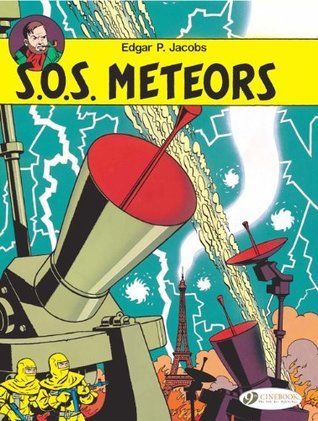
Extreme weather threatens Europe. When France calls on Mortimer to help solve this enigma, he goes to visit Professor Labrousse, chief French meteorologist. After the driver Labrousse sends to pick up Mortimer disappears, our friend is the prime suspect. Mortimer contacts Captain Blake to help him with this tricky situation. Then Blake disappears. Mortimer and Labrousse have two missing-person cases to investigate. They soon discover that the disappearances are linked to the climatic catastrophes.
Edgar Pierre Jacobs naît le 30 mars 1904 à Bruxelles. Il se passionne très tôt pour le dessin et la musique. Après avoir exercé quelques petits métiers, il travaille dans la publicité. Parallèlement, à partir de 1921, il devient figurant au Théâtre Royal de la monnaie à Bruxelles. Le 25 août 1922, le futur chanteur d'opéra signe son premier contrat d'artiste aux cotés de Mistinguett pour la Grande Revue du Casino de Paris. Le 29 août 1929, le baryton reçoit le premier grand prix de chant. Il sera engagé juste après, comme artiste lyrique, à l'opéra de Lille. En 1940, il doit abandonner la scène, à cause de la seconde guerre mondiale, chose qu'il regrettera toute sa vie. Le "baryton du neuvième art" allait dès lors s'illustrer dans des travaux graphiques alimentaires (publicité, catalogues, presse) qui le mèneraient à d'autres "planches", celles de la Bande Dessinée, dérisoires à ses yeux, qui pourtant lui assureraient une gloire de diva. En 1941, il entre au journal "Bravo". Après quelques illustrations pour divers contes, nouvelles et romans, il se voit confier, en 1942, la reprise de "Flash Gordon", cette saga américaine dessinée par Alex Raymond ne parvenant plus en Belgique. Il s'en acquitte avec bonheur mais la censure allemande interdit la série quelques semaines plus tard. En 1943, Jacobs élabore une nouvelle bande dessinée de science-fiction intitulée "Le Rayon U". Jusqu'en juillet 1946, il collabore à "Bravo". Entre-temps, il fait la connaissance d'Hergé. Ce dernier lui confie, à partir de 1944, la mise en couleur et les décors de ses albums. Il entreprend des corrections, des remises au format et les coloriages de "Tintin au Congo", de "Tintin en Amérique", du "Sceptre d'Ottokar" et du "Lotus Bleu". Il travaille également sur le "Trésor de Rackham le Rouge", les "Sept Boules de Cristal" et le "Temple du Soleil". Cette collaboration liera les deux hommes d'une profonde (et rivale) amitié qui culmine au lendemain de la guerre lorsque Jacobs n'hésite pas à jouer du gourdin pour défendre Hergé contre les épurateurs d'une autre espèce de "collaboration". En septembre 1946, Hergé invite son compère à participer au lancement du journal "Tintin". Le 26 septembre de cette année-là, dans un numéro 1 aujourd'hui recherché comme une pièce de trésor, paraît la première page du "Secret de l'Espadon". L'aventure de nos trois immortels héros : Blake (inspiré par son grand ami Jacques Laudy), Mortimer (inspiré par son autre grand ami Jacques Van Melkebeke) et Olrik (inspiré de Jacobs lui-même) commence. Ce dernier, colonel et gangster à monocle, est l'incombustible prince du mal que combattent deux chevaliers de l'ordre historique et scientifique : l'émérite capitaine d'aviation Francis Percy Blake, chef du "MI5", blond et flegmatique Gallois, et son "good old fellow", le professeur Philip Edgar Angus Mortimer, bouillant barbu rouquin (né aux Indes), spécialiste de physique nucléaire tout autant que de biologie moléculaire. En 1947, Jacobs abandonne sa collaboration avec Hergé et se consacre dès lors de manière quasi-exclusive à sa propre série où il fait vivre de multiples et périlleuses aventures à ses very British Héros. Après avoir gagné, grâce à l'Espadon (un sous-marin volant révolutionnaire), la troisième guerre mondiale menée par le diabolique colonel pour le compte des Jaunes (Hiroshima, en 1946, n'est pas encore un remords ...), Blake et Mortimer ne perceront "Le Mystère de la Grande Pyramide" (début de la parution le 24 mars 1950) qu'après un nouvel affrontement, en Egypte, avec Olrik,... qui s'en sortira, forcément, mais si déglingué qu'il deviendra l'esclave téléguidé d'un savant fou dans "La Marque Jaune" (début de la parution le 6 août 1953), semant la terreur dans Londres, où veillent heureusement Blake et Mortimer. Ces derniers ne laisseront échapper leur ennemi préféré que pour mi
بعد از مدت ها کمیک خوندن حس نوستالژیکی داشت. تصمیم دارم این مجموعه رو تا انتها برم البته این داستانش رو زیاد دوست نداشتم حالا نمیدونم مقتضای سن بود با کلا از این یکی زیاد خوشم نیومد. البته نسخه ای هم که ازش پیدا کردم کیفیتش پایین بود و چشام در اومد موقع خوندنش. قطعا این موضوع هم تو نمره نهاییش بی تاثیر نبود
SOS METEORE wurde erstmals 1959 veröffentlicht und ist inhaltlich ein Kind des Kalten Kriegs: Blake und Mortimer kommen nach Paris, um herauszufinden, warum das Wetter in ganz Europa verrückt spielt. Bald stellt sich heraus, dass nicht eine aus den Fugen geratene Natur, sondern üble Machenschaften hinter den Katastrophen stecken (ein paar Jahre später wurde die Idee in einer großartigen Folge der AVENGERS mit John Steed und Emma Peel aufgegriffen).
Beim Lesen des Comics war ich hin- und hergerissen. Positiv aufgefallen ist die wirklich tolle Artwork, ein perfektes Beispiel für die frankobelgische ligne claire. Tolle Zeichnungen, tolle Kolorierung, viel Zeit- und Lokalkolorit. Dafür 5 Sterne.
Die Handlung selbst beginnt durchaus spannend, auch wenn sie sich zunächst nur langsam entwickelt. Dann gerät sie leider aus dem Rhythmus und manche Passage geraten zu ausführlich. Und schließlich tun sich manche Ungereimtheiten auf, über die man großzügig hinwegsehen muss, um sich nicht den Spaß zu verderben. Daüfür gibt es 3 Sterne.
Dann aber das Hauptärgernis: Warum traut Jacobs seiner eigenen Artwork nicht? Mehr oder weniger jedes Panel hat ein Kästchen, in dem in Worten das zu lesen ist, was das Bild ohnehin schon an Information hergibt. Um das Maß vollzumachen, verbalisiert die Figur mittels Sprechblase das Geschehen zusätzlich. Das fühlt sich an, als würde ich im Fernsehen einen Film mit der Tonspur für Sehgeschädigte anschauen. Beispiel: Ein Bild zeigt Mortimer, wie er vor einer Mauer auf dem Boden kniet und sich mit einer Hand den Kopf hält (man vergegenwärtige sich: ligne claire, keine Missverständnisse möglich). Im Kästchen steht zu lesen: "Kurz vor der Mauer sinkt Mortimer in die Knie..." - okay, doppelt hält besser. Und in der Sprechblase von Mortimer lesen wir: "Ich kann nicht mehr!" Nun sollte es jeder begriffen haben. Dieses dauernde Schießen aus allen Rohren ist nervig, besonders, weil viele Kästchen größere Textmengen enthalten, die zum guten Teil überflüssig weil redundant sind. Außerdem wird so unnötig viel von der Artwork verdeckt, schade. Und: In der von mir gelesenen deutschen Ausgabe klingt die Sprache oft sehr hölzern. Vermutlich hat man zur Zeit der Erstveröffentlichung den Informationsüberfluß gar nicht wahrgenommen, aber aus heutiger Sicht wird das Lesevergnügen dadurch deutlich geschmälert. Aber vielleicht muss man ja mehrere Hefte der Reihe lesen, um sich in eine entsprechend nostalgische Stimmung zu bringen. Im Fazit drei Sterne für ein künstlerisch gelungenes Abenteuercomic.
Une intrigue joliment menée dans la banlieue parisienne, à une époque où des villes comme Massy, Jouy-en-Josas, étaient encore plus proche de la province que d'une espèce de méga-métropoloe, comme c'est maintenant le cas. Olrik dynamise évidement l'histoire, et le lien entre le microcosme (les aventures somme toute anecdotiques de Mortimer et de son chauffeur de taxi) et le macrocosme (la météo toute déréglée - par les essais nucléaires, déjà) donne un tour très personnel à l'histoire. C'est certes un tome moins facile d'accès que, par exemple, la marque jaune, mais il est cependant loin d'être inintéressant.
'S.O.S. Meteoren' is een rare titel voor een strip waar niet één meteoor in voorkomt, maar waar het weer een hoofdrol in speelt. Heel Europa is in aanhoudend slecht weer gedompeld en Blake en Mortimer zoeken in Parijs uit waarom. Voor het gemak ligt de bron van al het kwaad om de hoek. Het plot is niet de sterkste kant van dit verhaal, maar Jacobs houdt het mysterie lang in stand (ca. t/m tweederde van het verhaal) en er zit een erg spannende achtervolging in. Na de opbouw van al die spanning valt de finale wat tegen en eindigt zelfs in een anticlimax. Niet Jacobs' sterkste, maar niettemin een mooi voorbeeld van jaren vijftig science fiction en koude oorlog-denken.
Really liked the plot, and the "ligne claire"-artwork I also find very appealing. Someone should have introduced Edgar Jacobs to Twitter though, cause the frames are absolutely overloaded with text, much of it redundant. I think he should have had more faith in his artwork doing the talking.
A sidenote: This is the second Blake & Mortimer issue that I've read (the other one being "The secret of the swordfish" trilogy) and I have still yet to see a woman uttering a single word. Am I the only one who find this very peculiar? Guess it's a product of its time (and setting), but still...
Another instalment of the Blake & Mortimer saga. This time, the issues are weather modification and how manipulation might not be the the advantage of everyone. The main focus of the book is Mortimer this time, although Blake does make an appearance. Against the pair lies Olrik again, along with a range of his henchmen, in true Bond villain style. It has a stylistic approach to story telling, but I quite like this simple style, where good is good and bad is bad. It's very refreshing to get away from more nuanced stories. There is a twist at the end of this story - Olrik is captured and held for trial. That so obviously set the scene for the next volume to be almost criminal in itself.
I quite liked the artwork in this story. The dialogue could be a bit weighty at times, but the story just flowed along, without getting too bogged down at any point. The plot was a bit fantastical, but I was prepared to accept that. It is, after all, a work of fiction. I enjoyed reading this book. It's not at all long and has a nice pace to it. I wonder how Olrik will fare in future works?
Een goed verhaal uit de Blake & Mortimer-serie, maar behoort niet tot de beste uit de reeks. Dateert van eind de jaren vijftig en speelt zich ook in die tijd af: koude oorlog en zo. Ik heb het de afgelopen decennia al enkele keren gelezen. Wat me nu opvielen waren het ontbreken van meteoren en hoe vreselijk veel tekst er in de tekeningen geperst wordt. Het zorgt er voor dat tekstballonnetjes een prominente plaats innemen en zelfs dan nog wordt een heel klein lettertype gebruikt. Meestal heb ik mijn bril niet nodig om een strip te lezen, maar hier wel. "S.O.S. Meteorologie" of "S.O.S. Meteorologen" was misschien een betere titel geweest, want het is het weer dat problemen veroorzaakt en de weersvoorspellers die met de handen in het haar zitten.
Läntinen Eurooppa on poikkeuksellisen rajujen tulvien, rankkasateiden ja lumimyrskyjen runtelema. Nytkin on kyse ihmisen aiheuttamasta ilmastonmuutoksesta, mutta tällä kertaa jollakulla pahantahtoisella on hallussaan teknologiaa, jolla ilmastoa voi muokata mielensä mukaan. Mitäs siitä mahtaa seuratakaan?
Edgar P. Jacobsin "S.O.S. meteoreita" (Semic, 1991) on 1950-luvun loppupuolella ilmestynyt tieteis- ja seikkailusarjakuva, joka henkii kylmän sodan aikaista tunnelmaa. Tarina on vähäsen hömelö ja juoni karkaa loppupuolella ihan lapasesta.
Sarjakuva on visuaalisesti aika hieno, joskin piirrosjälki on hetkittäin vähän staattista ja jähmeää. Laitteet ja kulkuneuvot on piirretty pieteetillä.
Another outstanding sci-fi adventure where Mortimer is asked to help solve the bizarre weather conditions. The fact that they are limited to Western Europe seems to be more than coincidence so it means someone has managed to manipulate the weather - Could such a thing be possible? Here we meet a new personality - Professor Milosh Georgevich. However, we do not learn the identity of the mysterious "General" who wants to take over the world.
Le trame di Jacobs sono sempre avvincenti anche se, forse, questo SOS Meterore é leggermente più debole del segreto dell’Espadon, del mistero della grande piramide, del Marchio Giallo, dell’enigma di Atlantide o del raggio U. Ma rimane comunque degno della grande tradizione del romanzo d’avventura a cui ci ha abituato, e bene, l’autore belga. Ad avercene, oggi, di trame così.
Laten we eerlijk zijn, het mysterie-thriller gedeelte is goed, het einde is minder. We krijgen een klassiek Blake&Mortimer verhaal met wat James Bond elementen. En een snuifje SF uit de jaren 50.
Tekenwerk is klassiek en een paar grotere tekeningen hadden hier niet mis gestaan.
A very good book of the Blake & Mortimer series. I liked a lot this album. Blake & Mortimer has some science fiction, policial and mystery. The characters, the drawings, everything is good.
This one was better than the pyramid one. Again I loved the tintin drawings. This one had a better story and I loved the science fiction style of the 50s and 60s.
My favorite Blake & Mortimer comic book. I love everything about it. As usual with Edgar P. Jacobs the story is extraordinary but when I read this volume, I also experience a sort of nostalgia for Paris of the late 1950s'. This is one of the few books a re-read once a year.
Tatsächlich kann man heute die Verwirrung der Protagonisten dieses frankobelgischen bande dessinée nicht teilen, wenn es um das Wetter geht. Die letzten paar Jahre erlebt man das zumindest hier in Deutschland immer wieder - völlig verregnete Sommer, Winter, die erst im Januar beginnen und dann bis März gehen, das Verschwinden von Frühling und Herbst, Temperatursprünge von 20 Grad innerhalb zweier Tage...
Doch in diesem Comic hat man von Beginn an den Eindruck, dass nicht nur Petrus hier ein Wörtchen mitzureden hat. Natürlich sind Blake und Mortimer hier einem üblen Plan auf der Spur, und wer die Reihe kennt, weiß, dass es bei den Fällen des dynamischen Duos selten um weniger als die Weltherrschaft geht.
Oh, diese Reihe macht mir Kopfzerbrechen. Einerseits bin ich begeistert von den detaillierten Zeichnungen in ligne claire, andererseits sind die mit überquellendem, laberigem Text zugekleisterten Panels eine echte Hürde für das Tempo und die Atmosphäre.
Das erste Drittel, das allein Mortimer gehört, ist spannend und gut gemacht; das zweite Drittel, das Blake allein bestreitet, etwas bemüht, künstlich in die Länge gezogen, ebenso wie der Rest.
Wie gesagt, die Reihe bleibt mir ein Rätsel. Bei keiner anderen Comicreihe geht die Qualität von Zeichnungen und Erzählung so weit auseinander wie hier: Tolle Zeichnungen, furchtbare Erzählweise.
This was the first Blake and Mortimer volume I read and I was so looking forward to getting into this series as I love the art style and the concept. But once I started reading it, it became such a chore. The main problem with this comic is that it's famed in a way that is almost impossible to understand or get into and makes you wonder why Edgar P. Jacobs felt he had to do it this way. Nearly every panel of this comic has a caption box at the top describing precisely what's going on on the panel as if we can't see that for ourselves. And what's worse is that you can't skip over them because sometimes, the panel doesn't convey what's happening like comic panels are supposed to. I have no idea how Edgar P. Jacobs chose to do it this way or why this style is still being used by other writers years later, but I just hated it. As for the story, it's nothing special. As always, the art style is fantastic, but the story is a lot to wonder about, and there's very little in the way of accrual stakes. There's no overall threat or conflict in the story, as a lot of the story is about wandering around Paris until something happens. Also, I don't know why Olrick had to be in this story, considering that the Scientist who created the weather machine would have been a good enough villain on his own. I wanted to see more James Bond-style supination, but there's very little in the way of actual intranet or suspense. Also, Blake doesn't show up until Mortimer is captured in what is probably the only exciting part of the comic. I really wish this series was better, as it was written like every other comic, but I dread having to read another one of these, even though I can't stay away from it.
In tone, it feels a bit like The Yellow "M", with a slowly developing mystery and seemingly disconnected clues that must be put together. It all has something to do with Europe's strange weather patterns which may or may not be artificially influenced.
The build-up here is nicely done and well-paced, so it's a shame that the climax and resolution feel a bit rushed and perhaps slightly confusing. Even with the standard trope of "since I'm going to kill you I might as well reveal my fiendish plot!" it's still unclear who the villains were working for and what their goal was. Or maybe I missed a bit of exposition somewhere along the way.
I'm also getting the sense that every Blake and Mortimer story has to feature car chases. (For what it's worth, they're very well done.)
Whilst trying, with only partial success, to follow Professor Mortimer's investigations on a map of the area (a lot has obviously changed since 1954 when Jacobs wrote the story), I was pleasantly surprised to find that the good citizens of Toussus-le-Noble, a town that plays host to some of the action in this album, have named a road after the writer: Rue Ep Jacobs: Bien fait, mes amis!
I like the atmosphere in this one, all dark, rainy and brooding. The usual protagonists and villains, which you are either starting to get bored of or find comforting, like a bowl of your favourite soup after a cold, wet day. I incline to the latter.
Bello ma tralascia alcuni punti importanti come Per il resto trama un po' ripetitiva nei modi ma fantastica nei contenuti e ottime ambientazioni e personaggi.
Un'altra grande avventura, stavolta ambientata in Francia, nei dintorni di Parigi. Una storia molto ben costruita, con l'unica pecca di riciclare continuamente gli stessi avversari. Orlik dopo un poco stanca.