What is the good life that we so often hear talk of in our modern age?
Is it cars that drive fast, houses that resemble castles? Is it unbounded sexual pleasure, unrestrained personal gratification of all one’s desires? Is it quiet and solitude, individual removal from the storm and thunder of modern society? Or is it obedient Christian faith that causes spiritual corpses to burst forth with godly passion and holy worship that transforms one’s own life, one’s environment, and one’s eternal destiny?
This other way of life proceeds from an ancient book that lifts life in this age and all mothers to another plane. This is the truly good life, the path plotted for the steps of mankind by almighty God. It involves sacrifice, and hardship, and hard work. It means self-denial, self-abasement, and an others-centered mindset. It is radically God-centered and deeply rooted in Scripture. This, and no other path, offers the souls of humanity lasting happiness.
For Jonathan Edwards, submission to God and His will was the path to true fulfillment and the good life. Easily accessible and readable, you do not need to be a scholar to enjoy these insights about Jonathan Edwards and his writings.
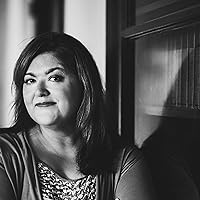
Dr. Owen Strachan is Provost and Research Professor of Theology at Grace Bible Theological Seminary (GBTS). Before coming to GBTS, he served as Associate Professor of Christian Theology and Director of the Residency PhD Program at Midwestern Baptist Theological Seminary (MBTS). He holds a PhD from Trinity Evangelical Divinity School, an MDiv from Southern Seminary, and an AB from Bowdoin College. Strachan has published fourteen books and writes regularly for the Christian Post, and Thoughtlife, his Patheos blog. Strachan hosts the City of God podcast. He is married and is the father of three children. You can also connect with Strachan on Facebook.
Fantastic. Jonathan Edwards, in my opinion, is not easy to read, but Strachan and Sweeney have done an amazing job in choosing sections from his sermons and introduce the reader to Edward's writings.
This is the first book I read from this collection, and I'm looking forward to read the other four books.
I like these little books. Still not a replacement for reading Edwards' own work, but a compelling case against the cultural idea that the Christian life opposes joy.
These authors take some of Edwards’ sermons and break them down into bite-sized chunks. The entire book is only 4 or 5 chapters but each chapter is split up into numerous sections. There is a lot of good stuff in here and it’s a great way to ease into Edwards who can be a bit hard to understand sometimes in my opinion. “The Bible is not merely a textbook or rulebook,but rather a living document that communicates the heart and mind of the Lord of the universe. It does not simply help us to sharpen and hone our lives or merely teaches us content about God. The Bible opens us to the character of God. It presents God and the things of God to us. From every corner of the Bible we gain wisdom, instruction, encouragement, and an understanding of the magnificence and beauty of Christ.”
Better books on "the good life" are 'Desiring God' by John Piper or 'The Happy Christian' by David Murray. Reading these series is becoming a bit of a slog, but I've (thankfully) only got one more to go. Not horrible, just not what I was hoping for.
Although the content is good and thought-provoking, the authors had more say on the issue than Edwards. I would like to have read Edwards' words on the topic and not a commentary on his works.
Jonathan Edwards was a pastor theologian who loved God with his heart, soul, and mind. In this book, the authors show through review of sermons and many writings that Edwards rejected worldly notions of happiness, which are temporal and fleeting. Rather, Edwards believed, preached, and exhorted his flock to trust and live lives that demonstrate that true happiness was found solely in Christ. Though believers may not have an easy life, a life spent on the road toward heaven was indeed the good life.
After reading this, I'm looking forward to the others in this collection (The Essential Edwards Collection).
The following are a few noteworthy quotes. -'Tis a thing infinitely good in itself that God's glory should be known by a glorious society of created beings. -At its deepest, most profound level, the good life is the life lived for the glory of God. -To save one's soul and experience deepest delight one must abandon the instinct to selfishly pursue one's well being. -The happiest Christians are not those who manage to accomplish all of their personal goals. Rather, the happiest Christians are those who embrace what God wants for their lives. -Edward held the fall of man and the sovereignty of God in tension, emphasizing each in turn as directed by the Scripture, but allowing for mystery due to the finitude of human understanding. -The ideal Christian life is not a prim, stifling affair in which we moralistically perform righteousness for the Lord as joylessly as possible. The ideal Christian life, the good life God intends for us, is a joyful, pleasurable, happy affair in which we shun sin and seek holiness because we treasure God and desire to taste His goodness in all facets of our lives. -A big view of God, the Bible, and the Christian life brings deep faith and happiness; a shallow view of God, the Bible, and the Christian life creates shallow faith and malnourished happiness. -The Bible is a powerful book. We need to read it often--not to check off a holiness box, but to come into direct contact with the Lord of heaven and earth. -One cannot read texts like Psalm 119 and claim that the Bible teaches anything but an inseparable connection between faith and holiness. -All our labor will be lost. If we spend our lives in the pursuit of a temporal happiness; if we set our hearts on riches and seek happiness in them; if we seek to be happy in sensual pleasures; if we spend our lives to seek the credit and esteem of men, the good will and respect of others; if we set our hearts on our children and look to be happy in the enjoyment of them, in seeing them well brought up, and well settled, etc., all these things will be of little significance to us. Death will blow up our hopes and expectations, and will put an end to our enjoyment of these things...Where will be all our worldly employments and enjoyments when we are laid in the silent grave? -Many Christians, Edwards knew, wanted to grow spiritually. They wanted to know God and go to heaven. But far fewer believers worked hard to deepen their faith and, subsequently, their enjoyment of God. Too many presumed upon God and His grace, expecting Him to simply drop a bag of maturity and happiness out of the sky for quick and easy use.
A Good introduction to Edwards. Edwards expands many things about God, He implores us to prod deeply into things of Divine. Divine Love is poured on us, nothing can separate us from the love of Christ. This is an excellent book, for every Christian.
Edwards says, In the end, the good life is not hoarding things. But living with God, walking in faith and keeping Eternal perspective in mind, focusing on Christ.
"Love God for the sake of Love, but not for something in return."
This series bills itself as an introduction to the theology and teachings of Jonathan Edwards; each small volume synthesizes Edwards' teachings on a particular subject and brings together excerpts from numerous writings and sermons with explicatory commentary by Strachan and Sweeney (both notable experts on Edwards and the puritans). This format is ideal for those who may not be familiar with America's premier theologian and might find his writing style dense and labourious.
In this volume, I found the organizational approach and the combination of multiple sources to be very useful: Strachan and Sweeney provided a structure and practical approach that underscored how much Edwards' teaching is bent on real-life application, not increasing knowledge. However, I found it lacked the transcendent, mind-blowing richness that I usually find in diving into puritan literature (especially Edwards). Yes, reading Edwards requires a pickax-like approach to mine the nuggets of gold (as opposed to the snow shovel fluffiness found in so many modern Christian books), but the end result is gold and gemstones, gloriously rich bits of insight that make the effort so worthwhile. I found that richness lacking in this volume, where the excerpts provided are short and there is never a chance to follow a string of thought all the way through to its conclusion.
That said, the truths are still there, and there is some profound insight in this small volume on what the Good Life is and how we are to live it. The emphasis on having a "taste" or preference for this spiritual life was a unique way of looking at it, and the emphasis on community, regularly partaking of the means of grace, and seeking discipleship was useful. I also loved how it upheld, in multiple places, that Scripture is not meant to be a dense, dry textbook, but a living, inspired Word of God able to impart to us riches of pleasure.
All in all, a wonderful Saturday afternoon read that would make a great devotional book. I am sure I will come back and read this (or sections of it) again.
The Essential Edwards Collection: Jonathan Edwards on The Good Life By Owen Strachan and Doug Sweeney
This was the final volume of the five-volume set that I read. This set was not sequential, each volume can be read individually. However, I highly recommend reading the entire set.
This volume covered Edwards’ view on a topic that is particularly relevant today. People are constantly striving for the good life. Both secular and “Christian” airwaves are full of advice on how to obtain the good life. Edwards’ definition of the good life, however, greatly contrasts what is generally thought as the good life. “The Edwardsean doctrine of happiness is rich with irony. To save one’s soul and experience deepest delight one must abandon the instinct to selfishly pursue one’s well being. True self-interest involves turning one’s life over to God…” Pg 33.
Edwards’ did believe that God desires His creation be happy, however that happiness is only found in Him, and not the material things of this world.
This book contains five chapters: 1) The Nearness of the Good Life, 2) The Distance of the Good Life, 3) The Taste of the Good Life, 4) The Pleasures of the Good Life, and 5) The Shape of the Good Life.
Jonathan Edwards is a life that is worth studying. It can be intimidating because of his deep thoughts and difficult writing style. Thankfully Strachan and Sweeney have done a great service and made Edwards more accessible. My desire is not to stop with this five volume set, but use it as a launching pad to more of Edwards’ writings. Edwards’ writings are available for free at http://edwards.yale.edu/.
When modern Reformed readers think of Jonathan Edwards, they probably think of the material covered in this book. While Edwards was certainly a multi-faceted man, the beautiful way he described Christianity as "the good life" is a priceless gift God gave to the church through this man. Christianity calls us not to ignore our emotions and our desires but rather to set them fully on God and, as a result, be fully satisfied in him. Sweeney and Strachan once again have made Edwards' theology wonderfully accessible to the modern reader.
In this small volume the authors concisely summarize and regularly quote from Jonathan Edwards to show not only what he taught about the good life but also how he lived the good life in Christ. I highlighted hundreds of passages both from the authors and from Edwards. This resource mad Edwards more accessible than anything else that I have read on Edwards. I'll look forward to reading the other volumes in the series.
This is the fifth book in this series which overviews Edwards' teaching on a variety of topics. In my opinion, this is where Edwards is at his best. He talks about the nature of Christian affections and the role of Christ, Prayer, and the Scriptures in tasting the good life.