Fiercely intimate in its history and fiercely formal in its measures, this major new collection by Molly Peacock, her fourth, shows the poet at the height of her powers. Using her trademark rhymes, characteristic humor, and daring sexual and psychological openness, Peacock's poems intertwine at least four types of original love: a narrative of meeting again and marrying in midlife; the tangled knot of mother/daughter love; a quest for the spiritual; and finally a vibrant love of the self, triumphantly recovered after childhood abuse.
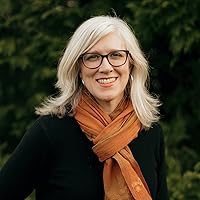
Molly Peacock is a widely anthologized poet, biographer, memoirist, and New Yorker transplanted to Toronto, her adopted city.
Her newest biography is FLOWER DIARY: IN WHICH MARY HIESTER REID PAINTS, TRAVELS, MARRIES & OPENS A DOOR (ECW Press). "In prose as subtle and enchanting as Mary Hiester Reid's own brushstrokes, FLOWER DIARY paints a compelling portrait of a talented and unjustly neglected paiter. Molly Peacock is unfailingly sensitive and intelligent, and at times deeply moving, as she shows how, despite the shade of domestic life and the unfavorable climate of the times, MHR brought forth her bright blossoms," writes Ross King.
Molly's latest book of poems is THE ANALYST (W.W. Norton & Company) where she takes up a unique task: telling the story of her psychotherapist who survived a stroke by reconnecting with her girlhood talent for painting. Peacock’s latest work of nonfiction is THE PAPER GARDEN: MRS. DELANY BEGINS HER LIFE'S WORK AT 72, a Canadian bestseller, named a Book of the Year by The Economist, The Globe and Mail, The Irish Times, The London Evening Standard and Booklist, published in the US, UK, Ireland, Australia and New Zealand. “Like her glorious and multilayered collages, Delany is so vivid a character she almost jumps from the page,” Andrea Wulf wrote in The New York Times Book Review.
Molly ventured into short fiction with ALPHABETIQUE: 26 CHARACTERISTIC FICTIONS magically illustrated by Kara Kosaka, published by McClelland & Stewart. Her memoir, PARADISE, PIECE BY PIECE, about her choice not to have children, is now an e-book.
Molly is featured in MY SO-CALLED SELFISH LIFE, a documentary about choosing to be childfree by Trixifilms, and she is one of the subjects of Renee McCormick’s documentary, A LIFE WITHOUT CONVENTION, https://vimeo.com/178503153. As a New Yorker, she helped create Poetry in Motion on the subways and buses; in Toronto she founded THE BEST CANADIAN POETRY IN ENGLISH. Molly is the widow of Michael Groden, a James Joyce scholar.
there's a great poem in here about telling a friend abt the source of happiness (of both parents' deaths) while at jj's restaurant, eating borscht and challah, while allen ginsberg sits down at another table eating steamed vegetables
Would it be cliché to say I love this book of poems about love?
This is Ms. Peacock's fourth book of poems, but it is the first of hers that I have read. This was another used book store gem of a find (the other was "Twelve Moons" by Mary Oliver which I have also reviewed). Most of the poems are free verse, but rhyme is often incorporated. Some of the poems are modern takes on formal poetry. All-in-all, it's a nice mix that continually surprises the reader.
The book is broken into three parts: Part 1 - First Love, Part II - Mother Love, and Part III - Another Love. The opening poem, "Why I Am Not a Buddhist", serves an introduction to book. The poem speaks about the author's love of emotion, of want, of desire. It includes the lines, "... I love the things I've sought-- / you in your beltless bathrobe, tongues of cash that loll / from my billfold--and love what I want: clothes, / houses, redemption. ...".
My favorite poem - "Lullaby" - occurs in Part I. The poem starts out, "Big as a down duvet the night / pulls the close Ontario sky / over the naked earth. ...". The other poems in part one explore the love of a boyfriend/spouse/significant other. In this section, I also particularly liked "The Wheel" and "The Purr". Ms. Peacock is does not shy away from explicit language, yet it never feels forced or vulgar.
Part II deals with Ms. Peacock's relationship with her mother. Part III explores religion, faith, and other types of love. A couple of poems that I particularly liked from the latter poritons of the book include:
"The Spider Heart" which begins, "Sleeping with my husband in my mother's bed / the night she died, I expected the tree-- / the one that Emerson said grew tall and wide / after his father died--but woke up instead / with a spider wedged in my rib cage..."
"The Guilt" which begins, "Guilt creeps like sheets of insects that erase / bodies down to their skeletons..."
This is another book I highly recommend. I've read this one so many times I've broken the hardback binding and need to get another copy.